Category: 3. Business

  • The ECB gets speculative

    The ECB gets speculative

    Stay informed with free updates

    There are many different techniques of bank supervision. Historically, the North American approach emphasises on-site inspections, while Europeans make use of regular supervisory reports and validation of internal models and controls. Comparatively little use, however, has been made of “dystopian collaborative fiction writing workshops”. Until now!

    The European Banking Authority carries out a full-dress stress test every other year to establish the banking system’s resilience to an economic downturn scenario. In the off-years, the ECB often does its own exercise, somewhat less demanding in scope and focused on a specific area of immediate concern. In 2024, for example, it was a climate risk scenario. Next year, the theme will be geopolitical risk.

    And it’s going to be a “reverse stress test”. Rather than being given a scenario to deal with . . . 

    . . . each bank will be asked to identify the most relevant geopolitical risk events that could lead to at least a 300-basis point depletion in its Common Equity Tier 1 (CET1) capital. In addition to reporting on how the geopolitical risk scenario would affect their solvency positions, banks will also be asked to provide information about how it may affect their liquidity and funding conditions.

    So it’s not quite “imagine the end of the world”, but rather “imagine something that would be quite bad, but not very bad, say about 300 basis points of capital ratio bad”. The ECB says that it will publish the main conclusions in summer of 2026.

    Unfortunately for Alphaville we shouldn’t expect a compendium of horrific 28 Days Later fantasies. Banks will tend towards prosaic but nonetheless real possibilities, like “a big tariff war”, “escalation of the Ukraine conflict” or “Donald Trump might sue us”.

    Hopefully there will be some wacky ones in there too though. The ECB plans to administer this reverse stress test to 110 banks, so surely there will be some of them that employ wannabe Tom Clancy types in the risk management department. It could kick off a new genre of fiction; in these stressful days, it might be nice to be able to pick up a low-stakes thriller where you know that the eventual outcome will only be three percentage points of Common Equity Tier One capital won or lost.

    But, of course, in this case the published results are not actually the important thing. One of the great fallacies of scenario analysis is attempting to get the exact right result. (This is in many ways an original sin of the discipline; scenario analysis really caught on after Shell was able to prosper in the 1970s because its earlier exercise had included something like the 1973 oil shock. This cemented the use of scenarios in corporate planning, but left lots of people hoping they’d be able score a hole-in-one like that every time).

    The real purpose of reverse stress testing (and all kinds of scenario analysis) is twofold. First, to instil flexibility and responsiveness in the management system and to choose strategies which are robust to a wide set of possibilities rather than super-optimised for current conditions. And second, to test reporting and information systems, to be sure that they are capable of representing the variety of possible outcomes.

    It’s this second function that the ECB is probably most interested in. As well as writing their nightmare journal, each banks is going to have to show how it produces a 300bp hit to capital. Which is not necessarily a trivial task. All the banks which are significant enough to be directly supervised by the ECB are meant to have “risk data aggregation and risk reporting” (RDARR) systems that are capable of carrying out scenario analysis, but this is the first time they’ve all been asked to prove it.

    Of course, delegating the task to the banks also conveniently means that the ECB itself gets out of having to design a “geopolitical risk” scenario, which is more or less by definition a piece of work that’s going to annoy somebody powerful. And it acts as a distributed brainstorming session across the industry, potentially identifying geopolitical problems that hadn’t reached Frankfurt.

    Most importantly, it might give us all something fun to read over the summer. More supervisors should do this!

    Continue Reading

  • Solar power covers 18% of Germany’s electricity consumption

    Solar power covers 18% of Germany’s electricity consumption

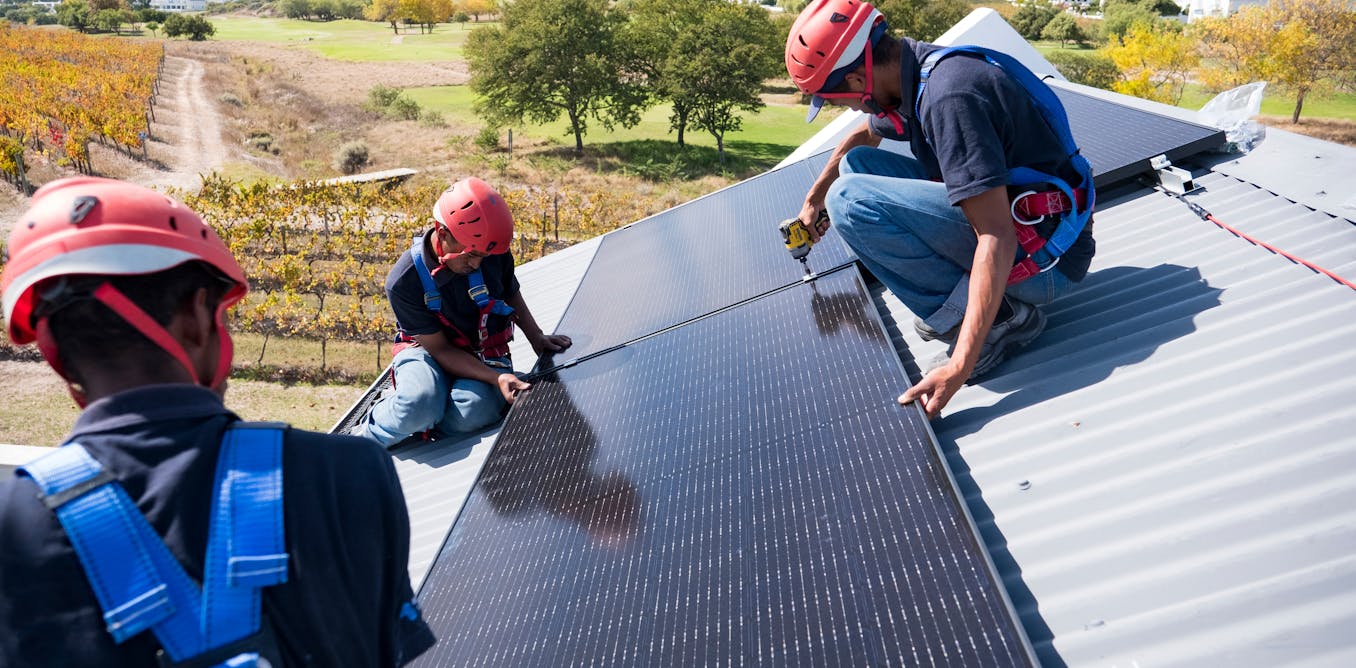
    Solar power in Germany generated significantly more electricity last year, with its share of domestic power production rising to around 18%, up from 14% in 2024, the German Solar Industry Association (BSW) said on Monday.

    That meant photovoltaic power overtook lignite, which accounted for about 14%, and natural gas, at roughly 16%, as sources of electricity generation, the association said.

    The figures are based on data from the Fraunhofer Institute for Solar Energy Systems.

    Wind power remained Germany’s largest source of electricity, with a share of 27%.

    According to preliminary annual figures, more than 5.5 million installed photovoltaic systems generated around 87 terawatt hours of electricity last year. That was about 15 terawatt hours more than in 2024 and marked another record high.

    Despite the strong increase in electricity generation from solar modules, the pace of expansion has stalled, the BSW said.

    In 2025, additional photovoltaic capacity of around 17.5 gigawatts was installed – roughly the same as in the previous year. That level of growth is insufficient to meet Germany’s legally binding expansion targets for 2030, the association said.

    Continue Reading

  • A federal ban could kill hemp farming

    A federal ban could kill hemp farming

    Raw hemp plants from farms near and far come in by the super sack to Sweetwater Hemp Company in rural Nebraska.

    The hemp is weighed, placed on pallets and then spends a few weeks in an industrial freezer before it goes through an ice-water extraction process to produce concentrates. Those concentrates will go into a variety of products from topical creams and tinctures to edibles.

    It’s a business model that became legal after the 2018 Farm Bill removed hemp – a type of cannabis plant from the same genus as marijuana – from the federal Controlled Substances Act. That made hemp and all its derivatives legal, so long as it contains less than 0.3% of delta-9 THC, the main psychoactive compound in marijuana, by dry weight.

    Often referred to as the “hemp loophole,” the law change inadvertently legalized a host of intoxicating and non-intoxicating hemp-derived THC products, and created a multi-billion dollar industry.

    Now that industry is at risk.

    Molly Ashford/Harvest Public Media

    Hemp from farms in Nebraska and elsewhere is often delivered to Sweetwater Hemp in super sacks. It then goes through a multi-week process to extract cannabinoids for intoxicating and non-intoxicating hemp products.

    Without legislative intervention, the vast majority of the products sold by Sweetwater Hemp and companies like it will become illegal in November. The bill that ended the longest government shutdown in U.S. history contained a provision to close the loophole. It would redefine hemp to limit the amount of any THC – not just delta-9 THC – to 0.3%, and limit the total amount of THC to 0.4 milligrams per container.

    “The federal hemp bill would basically eliminate full-spectrum products,” said Brett Mayo, Sweetwater’s chief extraction officer, as he walked through the warehouse. “You would be working with broad-spectrum products with no THC, which with my process you can’t really do. Everything we do takes everything from the plant – and the plant, naturally, is gonna have some THC in it.”

    Also impacted by the change would be the small but growing contingent of farmers who have adopted hemp into their crop rotations. Jonathan Miller, an attorney for national hemp advocacy organization U.S. Hemp Roundtable, said about 65% to 75% of all hemp farmed in the country is used for cannabinoid extraction. Most of the remaining hemp is grown for fiber and seed.

    While those smaller markets for hemp are emerging, Texas Hemp Business Council President Cynthia Cabrera said growing the crop for extraction keeps hemp farming profitable.

    “Everyone loves the idea of, you know, hemp world, where all the sidewalks are made out of hemp and all the houses are made out of hemp,” Cabrera said. “Realistically, however, that’s the future, right? If you want to keep farmers around so they can survive and contribute to that hemp future, you have to be able to allow them to be able to sell into these end markets.”

    Alternate markets? 

    While most hemp is grown for extraction, that isn’t the case in South Dakota, which has emerged as dominant in production of hemp fiber.

    Ken Meyer is the former president of the South Dakota Industrial Hemp Association, and he owns and operates a hemp processing facility outside of Winfred. The facility contracts with hemp farmers to process the raw bales into fiber and hurd.

    “The fiber, the stringy material from the outside of the plant, is used for textiles,” Meyer explained. “It’s also used for bioplastics, biocomposites, and also as a building material. It’s used to make insulation. And then the hemp hurd is sold and used for animal bedding and used also for building materials.”

    Meyer said South Dakota could be somewhat insulated from the impacts of the new highly restrictive hemp laws because of its dominance in the fiber market. But he worries that any large-scale prohibition on hemp would have trickle-down impacts on the parts of the industry that remain legal. And it comes at a time where farmers across the U.S. are showing increased interest in growing hemp for fiber – the amount of fiber hemp harvested across the country jumped by 56% between 2023 and 2024.

    With two full-service hemp processing centers, South Dakota is strides ahead of other states in its hemp processing capacity. For three years straight, the state grew the most industrial hemp of any state in the country. That faltered last year after farmers grew more hemp than processors could handle.

    Meyer said that shows that there’s still a long way to go before a robust supply chain is built up for the production of hemp goods.

    “It’s not like taking your corn or soybeans to the local elevator,” he said. “Whether you like the price or not, at least there’s always a place to go with it. We’re building those supply chains, and we’re optimistic, but it’s not perfect and all ironed out by any means.”

    Hope for a fix

    Few people in the hemp industry believe that the ban will go into effect as written.

    “I don’t think [hemp] is going to be eliminated,” Mayo, of Sweetwater Hemp, said. “It’s just not feasible that you’re going to get rid of a multi-billion dollar business, and the taxes and everything that it brings in – especially since the administration that made it legal took it away.”

    The sign for Sweetwater Hemp Company in rural Nebraska is coated from dust from the dirt roads. Brett Mayo, the company's chief extraction officer, said he would be shocked if the new hemp ban goes into effect as written.

    Molly Ashford/Harvest Public Media

    The sign for Sweetwater Hemp Company in rural Nebraska is coated from dust from the dirt roads. Brett Mayo, the company’s chief extraction officer, said he would be shocked if the new hemp ban goes into effect as written.

    In addition to the thousands of shops and hundreds of companies that would be forced to close under the ban, much of the hemp currently grown by farmers would become illegal overnight under the new total THC limit. U.S. Sen. Rand Paul (R-Kentucky), a consistent opponent of the ban, said in a November hearing that every hemp plant and hemp seed would have to be destroyed under the provisions.

    That’s at the same time as hemp acres – for seed, fiber and floral hemp – are rebounding after years of smaller harvests. Between 2023 and 2024, there was a 64% increase in hemp acres harvested across the U.S.

    The recent executive order from President Donald Trump rescheduling marijuana also includes language that hemp advocates see as promising. It orders Congress to update the definition of hemp-derived cannabinoid products to allow people to continue using “appropriate full-spectrum CBD products.” It also says agencies will work to develop a “regulatory framework” and expand research into the products.

    Many in the industry have been urging both state and federal lawmakers to enact basic regulations, like age restrictions and testing requirements, for years. Miller said federal lawmakers are already working on bills that would ensure good manufacturing practices like truth in labeling and third-party testing. One bill, introduced in early December, would set a cap of 50 milligrams of THC per container and 5 milligrams per serving.

    “We’re hopeful that one of those vehicles – or maybe a vehicle to be named later – will be helpful in getting this ban reversed and replaced with a full regulatory system,” Miller said.

    This story was produced in partnership with Harvest Public Media, a collaboration of public media newsrooms in the Midwest and Great Plains. It reports on food systems, agriculture and rural issues.


    Continue Reading

  • Gold price rises after US captures Venezuela’s Maduro

    Gold price rises after US captures Venezuela’s Maduro

    Precious metal prices have risen after the US capture of Venezuelan President Nicolás Maduro increased investors’ concerns about geopolitical risks.

    Gold was about 2.2% higher at $4,424 (£3,292) an ounce, while the price of silver was up by 3.9%, as money was moved into so-called “safe-haven” assets.

    Meanwhile, crude oil prices fell back and share indexes in Europe and Asia were mostly higher.

    Both gold and silver hit record highs in 2025 before losing ground in the last few days of the year.

    Despite dipping at the end of last year, gold still saw its best annual performance since 1979 after rising by more than 60%, reaching an all-time high of $4,549.71 on 26 December.

    Those gains were driven by several factors including expectations of more interest rate cuts, major purchases of bullion by central banks and investor concerns about global tensions and economic uncertainty.

    Oil fluctuated in early trade before slipping back as investors weighed whether Washington’s intervention in Venezuela would affect crude supplies. Brent crude was down 50 cents, or 0.8%, to $60.26 a barrel.

    US President Donald Trump has vowed to tap into Venezuela’s vast oil reserves after seizing Maduro and said that the US will “run the country until such time as we can do a safe, proper and judicious transition”.

    But industry analysts have said the move is unlikely to have an immediate impact on how much people and businesses pay for energy.

    Experts have also said it would cost billions of dollars to fix Venezuela’s oil infrastructure, which has been in sharp decline since the early 2000s.

    Venezuela’s crude production has been “lacklustre” for years and now only accounts for around 1% of global oil output, said investment strategist Vasu Menon from OCBC bank.

    The former chief executive of BP, Lord Browne, told the BBC’s Today programme that for Venezuela to revive its oil production would take “a tremendous amount of skill investment and time”.

    While there might be a “quick pick up” of some production, he added, output might actually fall while the industry is reorganising.

    Stock markets in Europe opened higher, with the UK’s FTSE 100 index up 0.3% and close to the 10,000 mark that it hit for the first time on Friday.

    Following the events of the weekend firms involved in the defence industry saw some of the biggest gains, with BAE Systems up 4.5% and Babcock International 3.6% higher.

    Mining firms also rose following the gain in precious metals prices, with Fresnillo up 3.6%.

    Share markets in Asia made gains as investors focused on news unrelated to developments in Venezuela.

    Japan’s Nikkei 225 was up by 2.6% on the first day of trading of the year and new data showed that manufacturing activity stabilised in December.

    Major indexes in South Korea and China were also higher.

    The jumps reflect confidence that the fallout from events in Venezuela will remain distant, said Zavier Wong from investment firm eToro.

    Continue Reading

  • Opening Remarks by Mr Jeffrey Siow, Acting Minister for Transport, at the Launch of the T5 In The Making Exhibition

    Opening Remarks by Mr Jeffrey Siow, Acting Minister for Transport, at the Launch of the T5 In The Making Exhibition

    Continue Reading

  • How demand for elite falcons in the Middle East is driving illegal trade of British birds | Birds

    How demand for elite falcons in the Middle East is driving illegal trade of British birds | Birds

    In the echoing exhibition halls of Abu Dhabi’s International Hunting and Equestrian Exhibition, hundreds of falcons sit on perches under bright lights. Decorated hoods fit snugly over their heads, blocking their vision to keep them calm.

    In a small glass room marked Elite Falcons Hall, four young birds belonging to an undisclosed Emirati sheikh are displayed like expensive jewels. Entry to the room, with its polished glass, controlled lighting and plush seating, is restricted to authorised visitors only.

    These falcons are granted Emirati passports, jet around the world and have entire hospitals that specialise in their healthcare. Some cost more than luxury cars – an American falcon at the exhibition will sell for AED 350,000 (£71,000). The most prestigious birds travel in Range Rovers and Bentleys fitted out with a perch between the front seats.

    Falcons on display in Abu Dhabi. The traditional hunting birds have become symbols of wealth and prestige in the UAE. Photograph: Courtesy of ARIJ

    For thousands of years, people have hunted using falcons over the vast Arabian desert. In the UAE, however, this Bedouin tradition has evolved into a spectacle of wealth and prestige to meet the tastes of the modern Gulf elite. As falconry has become a multimillion-dollar international industry that stretches around the world, an investigation by the Guardian and Arab Reporters for Investigative Journalism (ARIJ) shows that it is fed by a shadow industry of the smuggling and illegal capture of wild birds.

    Vanishing chicks

    Far from the hot plains and glass skyscrapers of Abu Dhabi, in rural counties across the UK conservationists and police are reporting a troubling pattern. Peregrine falcon chicks are vanishing from remote cliff ledges and treetop nests unreachable without specialist climbing gear. Later, some of these chicks are ending up in deserts in the Middle East, having been issued with fabricated documents, according to police witness statements from people who bought them thinking they were legitimate.

    The cold climate of northern Europe is considered the ideal for creating tough, fast birds, and British-bred birds from established lines carry additional prestige. Legally only captive-bred peregrine falcons can be traded. Birds cannot be taken from the wild, as they are strictly protected under the Wildlife and Countryside Act.

    Exclusive data shared with the Guardian and ARIJ by Royal Society for the Protection of Birds (RSPB) investigations shows that from 2014 to 2023 there were 126 reports of nests being raided, 21 of which have been confirmed using camera footage, DNA work or eyewitness accounts. All are believed to be linked to the peregrine falcon trade.

    “There are hundreds of birds going missing each year,” says Kevin Kelly, head of the National Wildlife Crime Unit (NWCU).

    Demand for wild birds appears to be coming from two directions, experts and police say. The first is direct from falconers in the Middle East who want wild birds for racing. The second is from some breeding facilities that need them as parents to feed a booming appetite for hybrid falcons and legally exportable, captive-bred birds.

    At the Abu Dhabi exhibition, traders will happily discuss their desire for wild-caught birds – although they are not formally advertised, as the practice is illegal.

    A female wild peregrine about to be released in Scotland. For falcon racing, Scottish wild birds are sought after for their superior strength and speed compared with captive bred racers. Photograph: Murdo MacLeod/The Guardian

    “British falcons are in very high demand in the UAE because of their record in winning races, their purity of bloodline and their speed,” says one employee of a high-profile Emirati falconry body. He says most Emirati falconers prefer wild-caught falcons since “farm-bred falcons might come from mixed bloodlines, while wild-caught birds are pure and perform better”. This preference for wild-caught British falcons was echoed by four other farm owners and sellers, as well as two falconers interviewed at the exhibition.

    The demand for British birds has driven soaring exports. Last year, 4,000 peregrine or peregrine hybrids were exported from the UK to the Middle East, and this year the number rose to 5,000, according to the police. In 2023 (the last year data is available), 88% of all peregrine falcons exported out of the UK were sent to the UAE, according to data extracted from the Convention on International Trade in Endangered Species (Cites) database. It is not known how many of those exported birds are wild caught, but police have identified at least some that are.

    Wild birds held captive

    To feed the booming export demand, there has also been a huge growth in UK breeders. There are now about 160 breeding facilities in the UK, up from about 27 in the 1980s, according to NWCU. All of the facilities have links to the Middle East (either owned by a resident from the region or selling directly to a buyer there).

    The most valuable falcon for export is the gyr peregrine – known for its speed and strength – which has a peregrine falcon as the mother and gyr falcon as the father. The female offspring are infertile, which is why there is high demand for female peregrine falcons in breeding facilities. In 2024, 1,200 peregrine falcons were registered in captive breeding facilities, up from 750 in 2000, freedom of information (FoI) data shows.

    DNA techniques – which rely on volunteers sending in hundreds of samples from wild birds – prove that some of these birds are wild caught. “The DNA work shows there are a number of wild birds within captive breeding centres up and down the country,” says PC Gavin Ross, who has led the crackdown on falcon thieves.

    Peregrine falcons are bred at facilities across the UK, in part to meet demand for the birds in the UAE. Photograph: Dan Kitwood/Getty Images

    Police don’t have the capacity to inspect all of the country’s facilities, but say more than half of the facilities they do investigate are non-compliant, with offences ranging from non-registration of birds and false declarations of parentage to selling birds that have been taken from the wild. There were 27 physical inspections of facilities breeding peregrine falcons in 2023 and 2024, according to FoI data – a significant increase from previous years. During those checks, 15 wild birds were discovered and confirmed using DNA testing.

    A ‘minor’ issue

    These findings have been disputed by some experts in the industry, who argue that the trafficking is minor or nonexistent. “In reality, the level of illegal take described by the NWCU is a handful of birds per year,” says Dr Nick Fox, director of International Wildlife Consultants (UK) Ltd, who has supplied the royal families of UAE and Bahrain with falcons.

    This year 5,000 falcons were exported from the UK to the Middle East, with the majority going to the UAE. Photograph: Courtesy of ARIJ

    Breeding falcons in the UK has increased hugely over the past 25 years as expertise has developed,” says Fox, who has an OBE for falcon conservation. “Basically we have succeeded in killing the market for wild birds.”

    The suggestion that Emirati falconers are actively seeking wild-caught British birds is false, says Julian Mühle, CEO of the International Association for Falconry and Conservation of Birds of Prey (IAF). “Comments gathered informally at an exhibition do not reflect the established preferences in the region,” he says.

    Mühle says the discovery of wild falcons in breeding facilities “should not be interpreted as evidence of widespread criminality”. Instances of chicks being taken from wild nests “while serious, are extremely rare and, crucially, not linked to the legitimate falconry community”.

    Khaled Bin Soufan, a prominent falcon trader in the UAE, says there is “zero” smuggling of wild birds from the UK: “It is not allowed.”

    The Abu Dhabi’s International Hunting and Equestrian Exhibition did not respond to a request for comment.

    Threatened by greed

    Wild peregrine falcons spend their lives soaring above cliffs and cathedrals up and down the UK, slicing through the cool air at breakneck speed. A few will swap that for a life of flying over golden deserts and sprawling glass cities. Yet many kept in captivity rarely – if ever – fly, according to Ross. Some who spend their lives in breeding facilities are “treated like battery chickens”, he says, fed supplements to produce up to 14 eggs a season.

    Peregrine falcons were on the verge of extinction in the UK in the 1950s until the banning of insecticide DDT and stronger legal protection. Their return has been a conservation success story, with 1,750 breeding pairs in the wild. Now they are threatened by greed, says Ross. “If a blind eye was turned to [the illegal taking of birds], the peregrine would again be under threat of extinction.”

    The return of peregrine falcons in Britain is a rare conservation success story but some experts say nest raiding has increased in recent years. Photograph: Steve Taylor ARPS/Alamy

    The population is now classed as stable, but some areas are more targeted than others. “Locally we’re seeing a decline in peregrine falcons,” says George Smith, who monitors 60 nests over an area of south-east Scotland. “When they disappear, the food chain gets wrecked.”

    Smith has been monitoring the birds for nearly 40 years. This year he believes that four nests containing at least 10 chicks in his area were raided for falconry, and that nationally about 100 are taken. He tries not to get too attached to the birds he monitors. “It’s pretty bad just now,” he says. “Nest raiding was bad in the early 70s, and now it has returned.”

    Find more age of extinction coverage here, and follow the biodiversity reporters Phoebe Weston and Patrick Greenfield in the Guardian app for more nature coverage

    Continue Reading

  • 10 big energy stories Canary Media is tracking in 2026

    10 big energy stories Canary Media is tracking in 2026

    In 2026, I want to see if politicians and regulators will recognize that electrification can in fact boost affordability, especially in newly built homes. — Alison F. Takemura, staff writer

    The geothermal breakthrough on the horizon

    Geothermal energy startups have raised huge sums of money in recent months and years to develop next-generation technologies for harnessing Earth’s heat. But so far, the companies have delivered relatively little carbon-free electricity to the grid.

    That will change this year, when Fervo Energy flips the switch on its Cape Station facility in Utah. The startup is building an enhanced geothermal system” that uses fracking techniques to create geothermal reservoirs in hard, impermeable rocks. The first 100 megawatts (of an eventual 500 MW) are slated to go online in October, which would make Cape Station the biggest project of its kind to connect to the grid worldwide.

    The development will send a powerful signal that next-generation geothermal is moving from promise to commercial reality,” said Jeremy O’Brien of geoscience software company Seequent. We expect this milestone to accelerate both investor interest and government support globally.”

    Fervo isn’t alone in its ambitions. The company Eavor will start working this spring to expand its first-of-a-kind geothermal project in Germany, and firms like Sage Geosystems, Quaise, XGS, and Zanskar are accelerating efforts to satisfy demand for clean, around-the-clock power. I’ll be watching closely to see whether 2026 proves to be the pivotal year the industry is hoping for. — Maria Gallucci, senior reporter

    The tug-of-war over clean energy in Ohio

    Ohio, where I report from, has for years been a hotbed for dark money and a testing ground for national efforts to hinder action on climate change. State lawmakers and regulators continue to throw up obstacles to renewable energy development, while giving preference to new fossil-fueled power plants. One pending bill, for example, calls for energy permitting decisions to make sure facilities employ affordable, reliable, and clean energy sources,” with reliable” meaning energy that’s available at all times and clean” defined to include natural gas. I’ll keep investigating those efforts in 2026 to hold the people in power accountable as the public struggles with rising energy costs and worsening climate change impacts.

    But it’s not all bad news in the Buckeye State, as some communities rally in support of clean energy. One story I’m particularly excited to cover is a May referendum that will give voters the chance to overturn a local solar and wind ban covering most of their county — an approach that could take off elsewhere in Ohio and in other states that allow local restrictions on renewable power. — Kathiann M. Kowalski, contributing reporter based in Ohio

    The AI boom’s battery awakening

    2026 will be the year we start seeing batteries bridge the gap between data centers’ sky-high power demand and what the U.S. grid can actually deliver.

    A well-placed battery system can secure electricity for AI computing hubs in the relatively few hours each year when the grid can’t supply them. That can allow data centers to get built far sooner than if they waited for pricey and time-consuming power network upgrades.

    Storage developers are reporting a frenzy of interest in such projects, but these typically are shrouded in secrecy. I recently reported on the first publicly confirmed project of this kind, which entered construction in Oregon for Aligned Data Centers and should start operating in 2026. Utility Portland General Electric will own that one and use it to guarantee power a few years earlier than it could have with conventional grid upgrades.

    What I found most intriguing is that the data center developer is paying for this smart grid upgrade. This arrangement lays out a rare positive vision for the nation’s energy future: The companies that stand to make boatloads of money on data centers could fund grid upgrades that benefit everyone, as opposed to the general public subsidizing those upgrades to pad the profits of AI ventures. In the year ahead, I’ll be tracking the proliferation of batteries for data centers, and what they mean for consumers’ energy bills. — Julian Spector, senior reporter

    The fate of coal in the Midwest

    Over the past decade, scores of Midwestern coal plants have closed, as environmental regulations kicked in and coal-fired generation became more expensive than natural gas or renewables.

    Now, the tables could be turning again.

    Utilities are pushing back retirement dates for coal plants as electricity-demand forecasts increase exponentially due to proposed data centers — many of which may never get built. The Trump administration is ordering plants on the brink of closure to stay open and easing up on rules around pollution from coal power. Indiana’s Republican Gov. Mike Braun issued an executive order last spring calling for coal plant life extensions,” and Illinois experts are researching controversial clean coal technologies,” including at a demonstration carbon-capture plant that went online in 2024.

    Coal is embedded in the culture in these states, and it’s highly political, as I’ve heard many times from elected officials, grassroots activists, and coal miners. In 2026, I’ll be closely tracking how this campaign to revive coal progresses and what it means on the ground in Midwest communities where it is burned and mined. After all, coal isn’t just an increasingly expensive way to generate electricity; it’s also incredibly polluting. — Kari Lydersen, contributing reporter based in Illinois

    The big push for offshore wind in Canada

    The future of America’s offshore wind sector may well be in Canada — a country prepping its first projects and willing to share power generated from its frigid ocean breezes with U.S. states just across the border.

    Thanks to President Trump’s ire, it’s likely that no new offshore wind farms will be completed in the U.S. until 2035, save for the five projects already being built, BloombergNEF predicted in early December. Even those projects aren’t guaranteed, a fact underscored by the 90-day pause on wind farm construction issued Dec. 22 by the Interior Department.

    In 2026, I’ll be keeping a close eye on whether these deals materialize — and what they mean for North America’s offshore wind workforce and supply chain, which grew under the Biden administration and could otherwise wither away under Trump 2.0. — Clare Fieseler, reporter

    {
    if ($event.target.classList.contains(‘hs-richtext’)) {
    if ($event.target.textContent === ‘+ more options’) {
    $event.target.remove();
    open = true;
    }
    }
    }”
    >

    Continue Reading

  • Deutsche Bank shares exceed book value for first time since 2008

    Deutsche Bank shares exceed book value for first time since 2008

    Unlock the Editor’s Digest for free

    Deutsche Bank shares have traded above their book value for the first time since the start of the global financial crisis, marking a milestone in the turnaround of Germany’s largest lender after years of legal setbacks, writedowns and restructuring.

    The stock rose to €33.95 in early trading on Monday, climbing above the bank’s most recent reported book value per share of €33.66, a measure of total assets minus liabilities excluding shareholders’ equity.

    Price to book ratio is a key valuation metric for banks, reflecting investor confidence in a lender’s assets, returns and growth outlook. Deutsche had traded at a discount to its book value since early 2008, when doubts about the health of the banking sector were mounting in the early stages of the financial crisis.

    Passing the milestone is a boost for chief executive Christian Sewing, who has vowed to turn the lender into “the European champion in banking”.

    At its lowest point in March 2020, the stock fell below €5, or 0.19 times book value, with investors fearing that the economic downturn caused by the Covid-19 pandemic could derail Sewing’s restructuring plan.

    At the time, Deutsche’s earnings were dragged down by the European Central Bank’s negative interest rates as well as billions of euros in restructuring costs, while its job-cutting plans were hit by delays.

    Investor confidence has slowly returned during a broad three-year rally in European bank shares. Deutsche has resolved long-running legal battles, including relating to mis-selling of mortgage-backed securities, exited lossmaking ventures such as its equities trading division, and increased its focus on fixed-income trading and corporate banking.

    Despite roughly doubling over the past year, the German bank’s shares are still around half their level in early 2008. The bank’s market capitalisation — then about €35bn — has risen to about €65bn, after it raised about €33bn in fresh equity, most recently in 2017, to shore up a balance sheet hit by legal penalties and the costly acquisition of retail lender Postbank.

    Deutsche reported in October its highest nine-month profits since 2007.

    Berlin’s debt-financed investment drive is expected to benefit Deutsche’s investment banking arm as an adviser on sovereign bond issuance and corporate restructuring, according to analysts, while its lending business should profit from rising corporate credit demand.

    Some investors remain cautious. “The recent share price gains simply reflect the move from negligible earnings to average profitability,” said Andreas Thomae, a strategist at Deka, a top-20 shareholder.

    Analysts are confident Deutsche will hit its target of a 10 per cent return on tangible equity — a key profitability measure — when it reports its results for 2025. Its goal of reaching returns of 13 per cent by 2028 still lags those of European peers, which are aiming for up to 22 per cent.

    Deutsche “will never reach the profitability levels of BBVA or Santander”, Thomae said, citing the bank’s capital-consuming investment banking division.

    Despite the recent rally in the bank’s share price, its annualised total return over the past decade still trails the Stoxx600 Banks index as well as rivals such as Italy’s UniCredit and France’s BNP Paribas.

    Deutsche’s performance is also overshadowed by domestic rival Commerzbank, whose price-to-book ratio has rebounded from 0.13 in March 2020 to more than 1.4 in 2025, helped by a potential takeover offer from UniCredit.

    Deutsche’s problems integrating Postbank have weighed on its retail arm, though profitability has improved after branch closures and job cuts. DWS, its asset management arm, continues to face pressure in alternative investments despite inflows into low-margin passive products such as exchange traded funds.

    While DWS is looking for acquisition targets, Sewing has ruled out major deals by the parent group. “When I still have the chance to get significantly better through my own effort, I don’t want to let anything hold me back from that,” he said last year.

    Continue Reading

  • 2026 Legal Trends to Watch | Insight

    2026 Legal Trends to Watch | Insight


    Map the biggest risks and opportunities in 2026 with this series of articles based on insights, commercial and operational trends, as well as shifting regulation. Explore key trends in AI, cybersecurity, employment, trade, tax, M&A and more, and discover practical insights to help take strategic action for a strong start to 2026.

    Continue Reading

  • Macan 4S in Cappadocia: Beyond the Asphalt

    Macan 4S in Cappadocia: Beyond the Asphalt

    It’s just after five o’clock in the morning. While no one knows exactly what’s going to happen in an hour, many people have already gathered on the roads of the Turkish town of Göreme. Bundled up, they sip on their tea, check the battery level of their cell phones, and wait for the sign.

    There’s snow on the ground in Cappadocia, which makes the plans all the more complicated. The thermometer reads minus nine degrees Celsius as light begins to fill the sky above the Central Anatolia region little by little. The volcanic landscape with its mysterious rock formations begins to take shape in a haze along the horizon, offering a preview of an area that, according to an old legend, once served as a playground of the gods.


    Macan 4S, Cappadocia, 2025, Porsche AG


    The light dusting of snow – like a sprinkle of icing sugar – makes the landscape even more magical. Cappadocia is supposedly home to hundreds of thousands of the unusual tuff formations, which magically sprout out of the ground like asparagus spears and are reminiscent of pointed hats and giant mushrooms. 

    Macan 4S, Cappadocia, 2025, Porsche AG


    Macan 4S Electric : Electric power consumption* combined (WLTP) 20.5 – 17.7 kWh/100 km, CO₂ emissions* combined (WLTP) 0 g/km, CO₂ class A

    Researchers agree that it took nature thousands of years to create this work of art. In addition to admiring the rocks, Cappadocians have also carved their homes and even churches into them. The rock formations were added to the UNESCO World Heritage list in 1985.

    The new Porsche Macan 4S will put its off-road capabilities to the test in Cappadocia, which it’s well equipped to do as standard. Both axles are driven by an efficient, powerful electric motor. When Launch Control is activated, the system output is 380 kW (516 PS) with a torque of 820 Nm. To minimize slip to the highest degree possible, the electronics control the interplay of both electric motors almost in real time. In other words, Porsche Traction Management (ePTM) distributes the immense power within ten milliseconds, which is around five times faster than conventional all-wheel drive systems.

    Adventure beyond the asphalt 

    When the Macan 4S’s Matrix Design LED headlights illuminate the first rock formations in Göreme, sunrise is no longer far off.

    Atıl Ulaş Cüce is taking us down narrow tracks that have never seen asphalt. The Cappadocia expert has been guiding tourists through the fascinating landscape in the heart of Türkiye for nearly 30 years, including some Porsche drivers. But none of them have gone as deep into the landscape as we will today, he says. The closer the Macan 4S gets to the mountains, the more demanding the route becomes, gradually deteriorating into ruts and bumps. Atıl’s face betrays his growing concern.

    Atıl Ulaş Cüce, Cappadocia, 2025, Porsche AG


    Atıl Ulaş Cüce: He came to Cappadocia around 30 years ago, fell in love with the region, and has never left. Atıl is now one of the most experienced guides in this extraordinary landscape, which is steeped in history.

    Two taps on the central display – and his smile is back. The activated off-road driving mode controls the all-wheel drive on challenging tracks. A virtual center differential lock limits the differential speed between the front and rear axles, which maximizes traction. The chassis also lifts to off-road height, with an additional 20 millimeters in the first setting.

    Macan 4S, Cappadocia, 2025, Porsche AG


    And if you opt for special terrain, the Macan 4S offers an increase in ground clearance of 40 millimeters. The optional off-road design package offers an approach angle of up to 17.4 degrees at the front of our vehicle. It’s unanimous: these 4×4 options are a game changer. The Macan can now navigate the terrain with confidence and ease. From the front seats, we can see how wild the tracks become, but don’t feel any strain in the chassis or the drive.

    Macan 4S, Cappadocia, 2025, Porsche AG


    Authentic: A rock jungle and Vesuvius Grey 21-inch wheels in off-road look on the outside, and high comfort with lots of leather and three perfectly framed screens on the inside.

    Atıl’s cell phone rings, which is the sign we’ve been waiting for: the hot-air balloons will fly at sunrise. The atmosphere changes instantly in the playground of the gods. We park the Macan 4S on a hill and watch as the valley fills with buses big and small. Among them, there are old off-road vehicles towing balloon baskets on long trailers. And then pink American convertibles from the 1970s maneuver into position. Their drivers have brought changing rooms made of tent material. Balloon trips are now the top tourist attraction in Cappadocia. When they start, it’s about so much more than just extraordinary views. It’s also about creating the perfect picture.

    One Porsche and a hundred balloons

    A short time later, the first 20 balloons lift off. The flames of their burners illuminate the envelopes, together creating an absolutely breathtaking postcard image. Colorful balloons float over a valley full of bizarre rock formations as the sun rises. What sounds kitschy is actually kind of magical. And in the center of it all – the new Macan 4S in Oak Green Metallic – like an object from the future. “It’s like nothing else, isn’t it?” asks Atıl, his eyes sparkling. Even after his many years in Cappadocia, he’s never grown tired of this sight. And we can understand why.

    The spectacle continues for about an hour. Around a hundred of the 170 hot-air balloons with an official permit are floating around us today. This number not only seems gigantic, it actually is. You could compare it with a bee colony scouring a single shrub for nectar all at once.  

    Macan 4S, Cappadocia, 2025, Porsche AG


    Sunrise in Cappadocia: The fully electric two-component sunroof with roller shade is lightly tinted and provides sweeping views.

    We follow one of the colorful balloons to its landing location. The route takes us through the rocky landscape – the tall, narrow rocks standing there like silent observers, the guardians of Cappadocia. 

    “Before the balloons began flying, I would take tourists hiking here,” says Atıl, showing the way. “There are some people who still hike, and others who only come for the balloons. The times are changing, and balloons are now the main attraction.”

    Çağlar Aksoylu lands the basket of his balloon directly on the trailer to the cheering and applause of the 18 passengers. Çağlar, sporting a pair of reflective sunglasses, responds with a wide grin. The 35-year-old former basketball player has been a professional balloon pilot for four years. “I even help develop the balloons, baskets, and burners. We produce them here in the area,” he explains proudly. What does he like most about his job? “I can float on a cloud every day.”

    Çağlar Aksoylu, Cappadocia, 2025, Porsche AG


    Çağlar Aksoylu: He pilots one of the 170 hot-air balloons permitted to lift off over Cappadocia. For Çağlar, it feels like floating on a cloud every morning. In addition to flying, he also helps develop balloons, burners, and baskets.

    News of the attraction seems to have spread far and wide around the world, accelerating local demand. How did it all start? “A German tour operator came up with the idea of flying a hot-air balloon over Cappadocia in the early 1990s,” explains Atıl. When the contract expired, the balloon pilot stuck around and continued offering flights. The services available expanded over the years to keep up with the interest. Social media ultimately fueled demand like a turbo engine.

    Macan 4S, Cappadocia, 2025, Porsche AG


    Light on its feet: Thanks to intelligent all-wheel drive and up to 820 Nm of torque, the Macan 4S can maneuver through the unique rocky landscape with ease.

    Located in the village of Ayvali some 20 minutes away, the Green Garden restaurant seems like the polar opposite of this development.

    Güler Gürbüz, Cappadocia, 2025, Porsche AG


    Güler Gürbüz: She has been cooking traditional Cappadocian fare for her guests for many years. Her charming restaurant called Green Garden features a rare, enchanting outdoor oven made from terra-cotta.

    The Macan 4S flaunts its softer side on the road, offering a quiet and highly comfortable drive, thanks in large part to the successful suspension management (PASM). With its two-valve technology, PASM can control the rebound and compression stages separately – and thus switch from performance to comfort in the blink of an eye. Or the other way around. Available in the Macan for the first time, rear-axle steering offers a steering angle of up to five degrees – yet another comfort highlight. 

    With 15 percent more direct steering ratio at the front axle, the increase in agility is most noticeable in dynamic performance. But rear steering can also help in city traffic and maneuvering, with the rear wheels turning in the opposite direction of the front wheels at speeds of up to around 80 kmh. 

    Güler Gürbüz is beaming from ear to ear as we enter her Green Garden restaurant, where she cooks traditional cuisine. Her most important tool is a special outdoor oven clad in terra-cotta, with which she prepares extremely tender meat dishes. Atıl tells us there are only two ovens like it remaining in the region.

    After the meal, Atıl takes us out to see a stunning gorge. A steep track wide enough just for us leads downward. There’s a phone number written on the striking rock walls. “That’s the towing service, in case anyone in a rental car gets stuck. It happens often enough,” explains the guide. The Macan 4S handles the track with ease – on the way down and then back up again.

    Regional delicacy, Cappadocia, 2025, Porsche AG


    Regional delicacy: Lamb delicately cooked in a clay pot with vegetables and garlic.

    Stress-free charging

    We take a leisurely drive back to Göreme at the end of the day. All the excitement of the morning has dissipated, and the tourists are all happily seated in the many restaurants. The Macan pulls up to one of the few charging stations in the small town. The high-voltage battery with 100 kWh of gross energy content is at around 45 percent. Thanks to the 800-volt system, the SUV battery could theoretically charge from 10 to 80 percent in just 21 minutes* if a CCS fast charging station were available. Here in Göreme, it’s 10.9 kW. But that’s not an issue, as we’re not going anywhere else today and can simply charge overnight.

    Macan 4S, Cappadocia, 2025, Porsche AG


    Our last appointment for the day is a three-minute walk up the mountain to the hotel that Zehra Daşdeler took over from her father. Nestled in a picturesque landscape, Amber Cave Suites is not just any hotel, as its rooms are built inside fairy chimneys – the tall, narrow rock formations the Cappadocians once carved their homes into. Guests have the opportunity to sleep in a cozy cave, without having to give up any of the amenities of a good hotel. Zehra operates the hotel with lots of love, creating an ambience that’s as tasteful as it is extraordinary.

    Zehra and Hasan Daşdeler, Cappadocia, 2025, Porsche AG


    Zehra and Hasan Daşdeler: Zehra took over Amber Cave Suites from her father, Hasan. An extraordinary hotel with rooms built inside fairy chimneys, as the Cappadocian rock caves are referred to.

    When she was growing up here, life and tourism were not quite so fast-paced. “Back then, people came for one or two weeks. Now they stay for a night or two. Some are only interested in taking a few photos for Instagram. But that, too, will change again.”

    Amber Cave Suites, Cappadocia, 2025, Porsche AG


    Magical: The view from the breakfast table at Amber Cave Suites, a hotel carved into rock in the town of Göreme.

    Her words echo as we embark on our journey of discovery at the next sunrise. With the Macan 4S’s battery full and the off-road program activated, we set off at a leisurely pace and let the day unfold. 

    Atıl takes us to a climbing trail for cars, where the sun appears to jump back and forth between the rocks as it rises. That’s the magic of Cappadocia – a playground of the gods.

    Info

    Text first published in the Porsche magazine Christophorus 415.

    Text: Dani Heyne
    Images: Philipp Rupprecht

    Copyright: All images, videos and audio files published in this article are subject to copyright. Reproduction in whole or in part is not permitted without the written consent of Dr. Ing. h.c. F. Porsche AG. Please contact newsroom@porsche.com for further information.

    Continue Reading