Category: 3. Business

  • Kuehne+Nagel opens new Container Freight Station to meet India’s growing trade needs

    Kuehne+Nagel opens new Container Freight Station to meet India’s growing trade needs


    Mumbai CFS

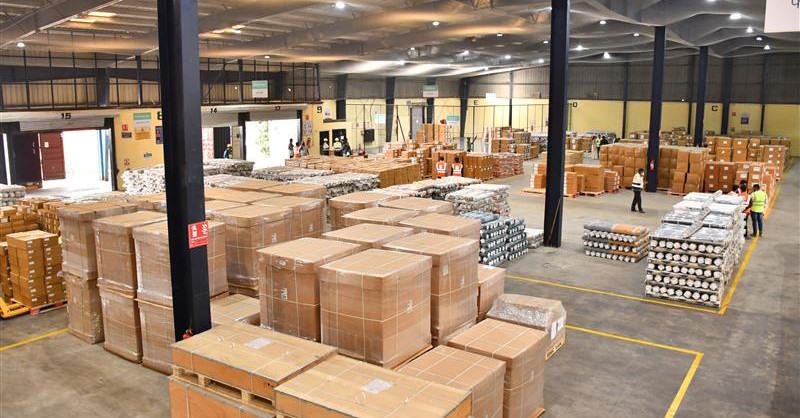
    Located near the Jawaharlal Nehru Port Authority (JNPA), India’s largest seaport, the facility provides direct access to a key maritime gateway that handles a significant share of the country’s containerised trade.

    The built-to-suit facility is designed for scalable operations, enabling efficient cargo handling and value-added logistics services. It follows strict safety and security protocols, with end-to-end surveillance, and meets global standards, including CTPAT (Customs Trade Partnership Against Terrorism), AEO (Authorised Economic Operator), and ISO (International Organization for Standardization). Sustainability is integral to the design, featuring electric material-handling equipment and solar-powered lighting to reduce environmental impact.

    Anish Kumar Jha, Managing Director for Kuehne+Nagel India, Sri Lanka, and the Maldives, says: “Our new CFS enables faster, more connected operations. It helps customers move shipments efficiently and reliably today; while supporting their logistics needs as they evolve in the future.”

    India is on track to become the world’s third-largest economy within this decade. With more than 70 per cent of its trade moving by sea, the demand for modern logistics infrastructure is accelerating and underscores the country’s growing influence in global commerce.

    Continue Reading

  • Baker McKenzie Advises Flowserve on USD 490M Strategic Acquisition of Trillium Flow Technologies’ Valves Division | Newsroom

    Baker McKenzie Advises Flowserve on USD 490M Strategic Acquisition of Trillium Flow Technologies’ Valves Division | Newsroom

    Baker McKenzie has advised Flowserve, a leading provider of flow control products and services for the global infrastructure markets, on its definitive agreement to acquire Trillium Flow Technologies’ Valves Division (“TVD”), a market leading provider of highly engineered mission-critical valves used in nuclear and traditional power generation, industrial, and critical infrastructure applications for USD 490 million in cash.

    The acquisition will expand Flowserve’s reach in both conventional and emerging markets by integrating TVD’s highly specialized valve and actuation product portfolio, differentiated power and nuclear technology, and scalable service offerings. The transaction is expected to close in the second quarter of 2026.

    The cross-border Baker McKenzie Transactional team was led by Partners, John Quattrocchi and Tanner Bodine (Dallas) and Robert Gray (London), and also included Senior Associates, Priya Shah (London) and Theodora Volsky (Dallas).

    Continue Reading

  • Akeso Receives Fifth Breakthrough Therapy Designation from NMPA for Ivonescimab in First-Line Treatment of Advanced Biliary Tract Cancer

    HONG KONG, Feb. 5, 2026 /PRNewswire/ — Akeso, Inc. (9926.HK) is pleased to announce that ivonescimab, its global first-in-class bispecific antibody targeting PD-1 and VEGF, has been granted its fifth Breakthrough Therapy Designation from the Center for Drug Evaluation (CDE) of the National Medical Products Administration (NMPA). This latest designation applies to ivonescimab in combination with chemotherapy for the first-line treatment of advanced biliary tract cancer (BTC).

    This milestone represents the fifth BTD awarded to ivonescimab by the NMPA, following three prior designations in lung cancer indications and one for triple-negative breast cancer (TNBC). The repeated recognition highlights ivonescimab’s broad clinical potential across multiple high unmet need tumor types.

    A randomized, controlled, multicenter, registrational Phase III clinical study (AK112-309/HARMONi-GI1) is evaluating ivonescimab plus chemotherapy versus durvalumab (a PD-L1 inhibitor) plus chemotherapy for first-line treatment of advanced BTC. Patient enrollment has been completed, and the BTD status for this indication underscores the promising clinical profile of ivonescimab. The BTD status is expected to accelerate both the ongoing clinical development and the regulatory review process in China.

    Encouraging results from a Phase 1b/II study, presented at the 2024 American Society of Clinical Oncology (ASCO) Annual meeting, support the potential of the ivonescimab combination therapy as a superior first-line treatment for advanced BTC. In the study, ivonescimab plus chemotherapy achieved an Objective Response Rate (ORR) of 63.6% and a Disease Control Rate (DCR) of 100%. The ivonescimab regimen also demonstrated a median Progression-Free Survival (mPFS) of 8.5 months and a median Overall Survival (mOS) of 16.8 months.

    These compelling Phase II results provide a robust foundation for the ongoing Phase III registrational trial and reinforce ivonescimab’s potential to address the significant unmet needs in advanced BTC, where current treatment options often yield limited durable responses.

    Forward-Looking Statement of Akeso, Inc.
    This announcement by Akeso, Inc. (9926.HK, “Akeso”) contains “forward-looking statements”. These statements reflect the current beliefs and expectations of Akeso’s management and are subject to significant risks and uncertainties. These statements are not intended to form the basis of any investment decision or any decision to purchase securities of Akeso. There can be no assurance that the drug candidate(s) indicated in this announcement or Akeso’s other pipeline candidates will obtain the required regulatory approvals or achieve commercial success. If underlying assumptions prove inaccurate or risks or uncertainties materialize, actual results may differ materially from those set forth in the forward-looking statements.

    Risks and uncertainties include but are not limited to, general industry conditions and competition; general economic factors, including interest rate and currency exchange rate fluctuations; the impact of pharmaceutical industry regulation and health care legislation in P.R.China, the United States and internationally; global trends toward health care cost containment; technological advances, new products and patents attained by competitors; challenges inherent in new product development, including obtaining regulatory approval; Akeso’s ability to accurately predict future market conditions; manufacturing difficulties or delays; financial instability of international economies and sovereign risk; dependence on the effectiveness of the Akeso’s patents and other protections for innovative products; and the exposure to litigation, including patent litigation, and/or regulatory actions.

    Akeso does not undertake any obligation to publicly revise these forward-looking statements to reflect events or circumstances after the date hereof, except as required by law.

    About Akeso
    Akeso (HKEX: 9926.HK) is a leading biopharmaceutical company committed to the research, development, manufacturing and commercialization of the world’s first or best-in-class innovative biological medicines. Founded in 2012, the company has established a robust R&D innovation ecosystem centered on its proprietary Tetrabody bispecific antibody platform, ADC (Antibody-Drug Conjugate) technologies, siRNA/mRNA modalities, and cell therapies. Supported by a global-standard GMP manufacturing infrastructure and a highly efficient, integrated commercialization model, the company has evolved into a globally competitive biopharmaceutical focused on innovative solutions. With fully integrated multi-functional platform, Akeso is internally working on a robust pipeline of over 50 innovative assets in the fields of cancer, autoimmune disease, inflammation, metabolic disease and other major diseases. Among them, 26 candidates have entered clinical trials (including 15 bispecific/multispecific antibodies and bispecific ADCs. Additionally, 7 new drugs are commercially available. Through efficient and breakthrough R&D innovation, Akeso always integrates superior global resources, develops the first-in-class and best-in-class new drugs, provides affordable therapeutic antibodies for patients worldwide, and continuously creates more commercial and social values to become a global leading biopharmaceutical enterprise.

    For more information, please visit https://www.akesobio.com/en/about-us/corporate-profile/ and follow us on Linkedin.

    Akeso Contacts:
    Media: [email protected]
    Investors: [email protected]

    SOURCE Akeso, Inc.

    Continue Reading

  • BOJ board member Masu calls for timely interest rate hikes – Reuters

    1. BOJ board member Masu calls for timely interest rate hikes  Reuters
    2. USD/JPY treads water above 155.00 as BoJ reinforces gradual tightening path  FXStreet
    3. BOJ’s Masu: Economic Activity, Prices, and Monetary Policy in Japan  Forex Factory
    4. BOJ’s Masu Sends Hawkish Signals as Inflation Nears Target  marketscreener.com
    5. Nomura sees BoJ rates rising to 1.5% by 2027, with hawkish risks beyond  investingLive

    Continue Reading

  • Monetary policy statement (with Q&A)

    Monetary policy statement (with Q&A)

    Christine Lagarde, President of the ECB,
    Luis de Guindos, Vice-President of the ECB

    Frankfurt am Main, 5 February 2026

    Jump to the transcript of the questions and answers

    Good afternoon, the Vice-President and I welcome you to our press conference.

    We would like to begin by congratulating Bulgaria on joining the euro area on 1 January 2026. We also warmly welcome Dimitar Radev, the Governor of Българска народна банка (Bulgarian National Bank), to the Governing Council. Membership of the euro area has almost doubled since 1999 and is testimony to the attractiveness of the single currency and the enduring benefits of European integration.

    We will now report on the outcome of today’s meeting.

    The Governing Council today decided to keep the three key ECB interest rates unchanged. Our updated assessment reconfirms that inflation should stabilise at our two per cent target in the medium term. The economy remains resilient in a challenging global environment. Low unemployment, solid private sector balance sheets, the gradual rollout of public spending on defence and infrastructure and the supportive effects of our past interest rate cuts are underpinning growth. At the same time, the outlook is still uncertain, owing particularly to ongoing global trade policy uncertainty and geopolitical tensions.

    We are determined to ensure that inflation stabilises at our two per cent target in the medium term. We will follow a data-dependent and meeting-by-meeting approach to determining the appropriate monetary policy stance. In particular, our interest rate decisions will be based on our assessment of the inflation outlook and the risks surrounding it, in light of the incoming economic and financial data, as well as the dynamics of underlying inflation and the strength of monetary policy transmission. We are not pre-committing to a particular rate path.

    The decisions taken today are set out in a press release available on our website.

    I will now outline in more detail how we see the economy and inflation developing and will then explain our assessment of financial and monetary conditions.

    Economic activity

    The economy grew by 0.3 per cent in the fourth quarter of 2025, according to Eurostat’s preliminary flash estimate. Growth has mainly been driven by services, notably in the information and communication sector. Manufacturing has been resilient despite the headwinds from global trade and geopolitical uncertainty. Momentum in construction is picking up, also supported by public investment.

    The labour market continues to support incomes, even though demand for labour has cooled further. Unemployment stood at 6.2 per cent in December, after 6.3 per cent in November. Growing labour incomes together with a lower household saving rate should bolster private consumption. Government spending on defence and infrastructure should also contribute to domestic demand. Business investment should strengthen further, and surveys indicate that firms are increasingly investing in new digital technologies. At the same time, the external environment remains challenging, owing to higher tariffs and a stronger euro over the past year.

    The Governing Council stresses the urgent need to strengthen the euro area and its economy in the present geopolitical context. Governments should prioritise sustainable public finances, strategic investment and growth-enhancing structural reforms. Unlocking the full potential of the Single Market remains crucial. It is also vital to foster greater capital market integration by completing the savings and investments union and the banking union to an ambitious timetable, and to rapidly adopt the Regulation on the establishment of the digital euro.

    Inflation

    Inflation declined to 1.7 per cent in January, from 2.0 per cent in December and 2.1 per cent in November. Energy inflation dropped to -4.1 per cent, after -1.9 per cent in December and -0.5 per cent in November, while food price inflation increased to 2.7 per cent, from 2.5 per cent in December and 2.4 per cent in November. Inflation excluding energy and food eased to 2.2 per cent, after 2.3 per cent in December and 2.4 per cent in November. Goods inflation edged up to 0.4 per cent, whereas services inflation declined to 3.2 per cent, from 3.4 per cent in December and 3.5 per cent in November.

    Indicators of underlying inflation have changed little over recent months and remain consistent with our two per cent medium-term target. Negotiated wage growth and forward-looking indicators, such as the ECB’s wage tracker and surveys on wage expectations, point to a continued moderation in labour costs. However, the contribution to overall wage growth from payments over and above the negotiated wage component remains uncertain.

    Most measures of longer-term inflation expectations continue to stand at around 2 per cent, supporting the stabilisation of inflation around our target.

    Risk assessment

    The euro area continues to face a volatile global policy environment. A renewed increase in uncertainty could weigh on demand. A deterioration in global financial market sentiment could also dampen demand. Further frictions in international trade could disrupt supply chains, reduce exports and weaken consumption and investment. Geopolitical tensions, in particular Russia’s unjustified war against Ukraine, remain a major source of uncertainty. By contrast, planned defence and infrastructure spending, together with the adoption of productivity-enhancing reforms and the adoption of new technologies by euro area firms, may drive up growth by more than expected, including through positive effects on business and consumer confidence. New trade agreements and a deeper integration of our European Single Market could also boost growth beyond current expectations.

    The outlook for inflation continues to be more uncertain than usual on account of the volatile global policy environment. Inflation could turn out to be lower if tariffs reduce demand for euro area exports by more than expected and if countries with overcapacity increase further their exports to the euro area. Moreover, a stronger euro could bring inflation down beyond current expectations. More volatile and risk-averse financial markets could weigh on demand and thereby also lower inflation. By contrast, inflation could turn out to be higher if there were a persistent upward shift in energy prices, or if more fragmented global supply chains pushed up import prices, curtailed the supply of critical raw materials and added to capacity constraints in the euro area economy. If wage growth moderated more slowly, services inflation might come down later than expected. The planned boost in defence and infrastructure spending could also cause inflation to pick up over the medium term. Extreme weather events, and the unfolding climate and nature crises more broadly, could drive up food prices by more than expected.

    Financial and monetary conditions

    Market rates have come down since our last meeting, while global trade and geopolitical tensions temporarily increased financial market volatility. Bank lending rates for firms ticked up to 3.6 per cent in December, from 3.5 per cent in November, as did the cost of issuing market-based debt. The average interest rate on new mortgages again held steady, at 3.3 per cent in December.

    Bank lending to firms grew by 3.0 per cent on a yearly basis in December, after 3.1 per cent in November and 2.9 per cent in October. The issuance of corporate bonds rose by 3.4 per cent in December. According to our latest bank lending survey for the euro area, firms’ demand for credit was up slightly in the fourth quarter, especially to finance inventories and working capital. At the same time, credit standards for business loans tightened again.

    Mortgage lending grew by 3.0 per cent, after 2.9 per cent in November and 2.8 per cent in October, in response to still rising demand for loans and an easing of credit standards.

    Conclusion

    The Governing Council today decided to keep the three key ECB interest rates unchanged. We are determined to ensure that inflation stabilises at our two per cent target in the medium term. We will follow a data-dependent and meeting-by-meeting approach to determining the appropriate monetary policy stance. Our interest rate decisions will be based on our assessment of the inflation outlook and the risks surrounding it, in light of the incoming economic and financial data, as well as the dynamics of underlying inflation and the strength of monetary policy transmission. We are not pre-committing to a particular rate path.

    In any case, we stand ready to adjust all of our instruments within our mandate to ensure that inflation stabilises sustainably at our medium-term target and to preserve the smooth functioning of monetary policy transmission.

    We are now ready to take your questions.

    * * *

    My first question is on the risk assessment. Given the events of recent weeks, including new tariff threats by the United States, would you say that inflation and economic risks on both sides have become more pronounced again, and has the ECB’s good place perhaps become a little less comfortable? And I’m also curious how you discussed the euro’s exchange rate this week during your meeting. Has the recent appreciation against the dollar perhaps increased any concerns in the Governing Council that inflation might turn out lower than expected?

    Let me first of all mention to all of you that the Governing Council took a unanimous decision to keep the rates at their current level, unchanged. In relation to our risk assessment, you will have seen that we take a “one hand, the other hand” approach, both in relation to activity and in relation to inflation. And if you look at the balancing act between the two, we are – as I would call it – in a broadly balanced situation when it comes to risk assessment. Some risks have ticked up. Others have ticked down. But on balance, taking the various specific elements that we make sure we list in a rather exhaustive way, we believe that we are in a broadly balanced situation at the moment.

    On the exchange rate, because I know that this is a question that has been on the mind of some, I just want to remind you – and this will not come as a surprise – that we do not target an exchange rate in terms of policy target, but we also recognise that it is important for both growth and the inflation outlook. So for that reason, we always keep a close eye on exchange rate developments, and the Governing Council discussed this matter today. What we observed collectively is that the dollar has depreciated measurably against the euro, but not in the last few days. But since March 2025. That’s when you saw the significant change, at the time. And in the last few weeks – actually since the summer – it has fluctuated within a range. And whether you look at the Euro/US dollar or whether you look at the nominal effective exchange rate, the story is the same. So as a result of that observation, we concluded that the impact of exchange rate appreciation since last year is incorporated in our baseline. But of course, as I said, we always monitor whether the impact is passing through as expected and how it affects our reaction function. That’s the analysis that we conducted. So it’s a topic that we touched upon, that we explored, and our conclusion is as I have just described. I would also observe that the current range within which the euro relative to the dollar is evolving is very much in line with the overall average of that exchange rate between the euro and the dollar for as long as the euro has been around.

    I have two questions. Firstly, on the role of the global euro, you wanted to push the importance of the euro globally. Don’t you have to take into account then also a stronger euro towards the rest of the world? My second question is: there are reports that you’re looking into repurposing the swap lines, enlarging the liquidity pool which is available of euro also beyond its current purpose, in order to also enlarge the importance of the euro. Perhaps you can tell us a little bit more about those plans, also in light of the fact that the independence of the Fed is actually currently questioned by the markets.

    Your first question has to do with the international role of the euro. And it is a point that I made about a year ago and that we collectively as Governing Council feel strongly about. First observation: it is not because you have an international currency that plays a global role that it necessarily implies that it is “strong” relative to others. There is currently a currency which is playing that role, but it does not necessarily come together with a currency being as a result strong. There is no fatality, if you will, or correlation between the two: being a strong international currency and appreciating relative to other currencies. Second observation: I have said in the past – in that speech which I think I gave in Berlin, if I recall – that for a currency to play an international global role, and to be powerful as a result, it requires a few other elements that build over the course of time. And it clearly goes with a reliable environment and a safe environment, where the rule of law is known and respected. I have no doubt about that particular aspect as far as the euro and the euro area is concerned. It requires a strong position relative to the rest of the world, and there are clearly investments that are flagged in our monetary policy statement, particularly in relation to defence and infrastructure that go in that direction, but where clearly work has to be done. There is a third component, which is also improving and has continued to improve recently, which is the capacity to trade with the rest of the world, and I would regard both the Mercosur, the EU-India trade agreement, and subsequent trade agreements in Australia and other corners of the world, where the Commission is doing hard work, as other components that are necessary for the currency to be strong. So yes, not necessarily aligned with an appreciation of the currency. More work needs to be done in those various directions. One of the attributes of a strong currency is to be the provider of liquidity. And while we are tied to the monetary purpose of what we do in terms of liquidity and we have to constantly assess the proportionality of what we do, it is a fact that we are looking at our liquidity framework and that the repo lines – to be distinguished from the swap lines – are in progress in terms of reframing them, opening up the access and making them more attractive to other national central banks outside the euro area and outside Europe. So this is in the works, and I hope to be able to announce a bit more in a few days.

    My first question is about the balance of risk. You said it’s broadly balanced. Could you give us some of the flavour of the discussion? Because I don’t see it in the opening statement. And the second question is about the good place. Are we still in a good place?

    You will have noted, because you are an avid reader of our monetary policy statement, that we no longer state in the monetary policy statement whether the risks are broadly balanced or tilted to the downside or tilted to the upside. We did that during the period of COVID because we thought it was good guidance to have at the time. Now what we do as a policy and as a general practice that we have not moved since COVID is we list the upside and the downside risks component, both in relation to growth and in relation to inflation and then it’s not for you to actually second guess. There is a debate that goes on in the Governing Council because it’s always a question of judgement and collective approach to those risks and the range of the risks and the extensiveness of the risks. That is debated. What I can tell you is that we are not seeing a reduction of the range of risks. But when I think of geopolitical risks, for instance, it’s ebb and flow. When I look at uncertainty about tariffs, it’s up and down and out and back. And that has been going on for quite a few quarters actually. So no reduction of the range, but equally the sentiment around the table of the Governing Council is that it’s broadly balanced.

    Are we still in a good place? I would certainly argue that we are in a good place and inflation is in a good place. Two words of explanation, because some of you might be riveted to the January data point: I would like just to remind you that our good place is a factor of whether we are convinced that we will reach our medium-term target of 2%. And we cannot be hostage to one data point. I’ve said that many times. We cannot be hostage to one reading of inflation, which is set to vary over the next months. I’m happy to go down into what’s underneath, but there are multiple causes of this 1.7%, and in the monetary policy statement we take really good care of saying what has gone up and what has gone down. You have a bit more of one category versus the others. So as a result of that, we have this particular reading. But some of them are idiosyncratic and will go away. There is a significant component on energy, which has gone to minus five point something and which is largely a base effect from last year’s energy costs. But it is also a fact that inflation is moving gradually down to our target, and we see it at target in the medium term.

    Under what conditions of inflation undershooting would the ECB consider easing monetary policy? How long and how far below 2%? And on another subject, in the United States, Kevin Warsh has been nominated to chair the Federal Reserve. Former central banker Mark Carney called it a fantastic choice. Do you share that view, and have you worked with Mr Warsh before?

    On Kevin Warsh, yes, I have known him for a long, long time since back in the financial crisis days, where he was in public service and I was Minister of Finance at the time. So we go back a long way, and I very much welcome the announcement of his appointment.

    I just want to take you back to the undershooting. We have projected undershooting in 2026 for a long time. And if you go back to our September projections, for instance, which were the last projections conducted by the ECB, we had actually this 1.7%, for the entire year. This was changed and moved up in December. In a way, we are going back to the track that we had anticipated, and this is also what markets and economists are anticipating. But if you look at our medium-term target, which is what we rely upon, we are at 2% in 2028. I myself am particularly attentive, as you know, to services. Services is declining a little bit. I’m also very attentive, as a result, to wages. We have the wage tracker, which seems to guide us towards more growth moderation. We will have more data and intelligence coming out of the March exercise, but there is nothing that is really changing the baseline at all. As I said, we will be looking at all data, not one single data point.

    My first question is on making sense of the mood music in the monetary policy statement. Some analysts noted that it seems to have a bit of a hawkish subtext because you’re emphasising the positive elements and also emphasising that inflation is on track to meet your target. Would you share that view that it’s more hawkish than dovish? My second question is on core inflation, which has fallen to, I think, the lowest level since October 2021 and is also below the ECB’s first-quarter forecast. Does the Governing Council see this as a good development, as it suggests inflation is coming down further and quicker than potentially expected? Or is this seen as a rather negative trend because disinflation might be stronger than you want it to be?

    On your first question, I would like to mention that our monetary policy is in good shape. And it’s in good shape because it is agile and it is prepared to do what is necessary in order to reach our medium-term 2% target in a symmetric way, as we decided in our strategy assessment determination back in July 2025. So I’m not trying to characterise the hawkishness or the dovishness. This is something that you enjoy doing and that markets look at very attentively. But we are data-dependent. We will decide meeting-by-meeting. We are not rate path predetermined. We do not give forward guidance. We are in this world of significant uncertainty, where geopolitics determine a lot of developments, and that’s what we’re going to continue doing.

    Core inflation, you’re right, is one of the underlying inflation elements that we consider. That is one which has gone from 2.4% to 2.2%. We’re still at 2.2% by the way, and I think that it’s following a path that we had anticipated and that we are pleased to see is taking us to target.

    I would like to emphasise one element, which you will allow me to pick up because I think it might be interesting. As you probably know, the leaders are meeting in a week’s time to examine competitiveness reforms and hopefully to accelerate the process. So in our monetary policy statement, as you well know, we always have this paragraph which has slightly evolved over the course of time, in which we stress the urgent needs to strengthen the euro area and its economy in the present geopolitical context. And you generally look at this paragraph and say “OK, still the same thing”. What we decided to do in anticipation of that meeting on 12 February is to actually give our checklist to the leaders, so I will send it to each of the leaders of the European Union, to the President of the European Commission and to the President of the European Council. And this is our checklist of what we regard as very much likely to enhance growth, to improve productivity and to really unleash the talent of Europe. We’re not shooting above our range, but we believe that whether it’s the savings and investment union, the digital euro and the tokenised wholesale central bank money, the deepening of the EU single market, the fostering of innovation and protection of open strategic autonomy, or simplifying legislation and strengthening core institutional framework, on these five accounts we hold views. We cannot deliver it all. We are delivering monetary policy and compliance with our mandate. But we strongly feel that significant reforms have to be either deepened or accelerated in order to deliver on what is the potential of Europe. So that’s something that I thought I would mention.

    I have a follow-up on the global euro debate, in particular with regard to euro bonds. You checked a few items that you think are important, but what about common defence spending as a critical element in this regard? Is it sufficient in terms of a global euro, or should the EU be even bolder when it comes to euro bonds and making it a permanent feature of a euro safe asset?

    It is definitely part of our checklist.

    Today’s statement talked about the low employment rate, but if you look at some of the other indicators of labour market resilience, they seem to be telling a slightly different story – things like labour demand, hiring intentions, vacancy rates. So I’m wondering how you’re balancing these different signals. Is the labour market potentially weaker than it may appear based on the unemployment rate? And I also wanted to ask about AI. I think you’ve mentioned a couple of times that we are seeing this benefit of AI investment in Europe, but I think in the global context there is this concern that Europe is falling behind, whether that means adoption or data centre investment. So I was just wondering if you could shed a little more light on what benefits we are actually seeing in terms of the economic impact in Europe and how that might impact broader growth.

    On the labour market: first of all, a lot of the data that we get on labour and the labour market in its various dimensions – you referred to vacancies and rotation – are a bit backdated. So very often in January we look at data that we get from the third quarter, some of it from the fourth, but it’s generally with a lag. What we are seeing is increased participation in the labour market. We are seeing slightly lower unemployment: 6.2% coming from 6.3%. We are seeing vacancies that are growing more moderately than we had in the past. It’s a labour market that is still active, as I said, where unemployment is almost at rock bottom. So we will continue to pay close attention because obviously it has an impact on particularly the wage negotiations that we pick in our wage tracker to try to understand where salaries and where the drift is going, which is a difficult part to determine, and where the one-offs are likely to arise as well. So that’s what I can tell you about employment, but we’re certainly not saying that the labour market is in difficulty.

    On AI investment, one of the good news stories, as far as the European economy is concerned, is that while the net export activity and contribution to growth is on the decline, the domestic market is responding strongly. Consumption is improving a little bit but not much, but investment is the big story. And whether you look at public investment, particularly in defence and infrastructure, and as a result – I’ll come to that in a second – construction is also a derivative of infrastructure investment. But it’s not just the public sector, it’s also the private sector. We see a significantly higher number in terms of private sector investment, and that is particularly the case in what I used to call ITC or ICT, which I think we have to be a bit more granular about because it’s AI-related but it’s everything having to do with AI. So it’s not just AI: it’s AI, it’s the infrastructure that comes with it, so construction of data centres in the pipeline and going through the process of licensing and authorisation, it’s software, it’s hardware, it’s a lot of investment that is coming out of that particular segment. The really interesting thing from our perspective is how it will impact productivity and how it will contribute or not to inflation, depending on the level of improved productivity. There is a little bit of that, but it’s going to take a while to unleash.

    Continue Reading

  • Amazon shares tumble as it joins the Big Tech AI spending spree – BBC

    Amazon shares tumble as it joins the Big Tech AI spending spree – BBC

    1. Amazon shares tumble as it joins the Big Tech AI spending spree  BBC
    2. Amazon.com Announces Fourth Quarter Results  Business Wire
    3. AWS revenue continues to soar as cloud demand remains high  TechCrunch
    4. Amazon’s Q4 operating income includes $1.1 bln for tax disputes resolutions related to Italy store businesses  marketscreener.com
    5. Amazon Earnings Preview: Cloud Payoff in Focus After $125B AI Spend, 30K Cuts  Investing.com South Africa

    Continue Reading

  • Samsung Leads the Market With AI and Hyperconnected Solutions – Samsung Global Newsroom

    Samsung Leads the Market With AI and Hyperconnected Solutions – Samsung Global Newsroom

    From February 2 to 4, the International Air-Conditioning, Heating, Refrigerating Exposition (AHR Expo) — North America’s largest heating, ventilation, air conditioning and refrigeration (HVACR) trade show — took place in Las Vegas. Hosted by the American Society of Heating, Refrigerating and Air-Conditioning Engineers (ASHRAE), this year’s event brought together more than 1,800 global companies, showcasing the latest technologies and industry trends from around the world.

    At the exhibition, Samsung Electronics operated a 350-square-meter booth and presented its vision for next-generation HVAC solutions under the theme “Enabling Better Living.” Spanning residential to commercial applications, Samsung demonstrated how AI-driven energy management and advanced maintenance innovations can deliver tangible benefits in real-world environments.

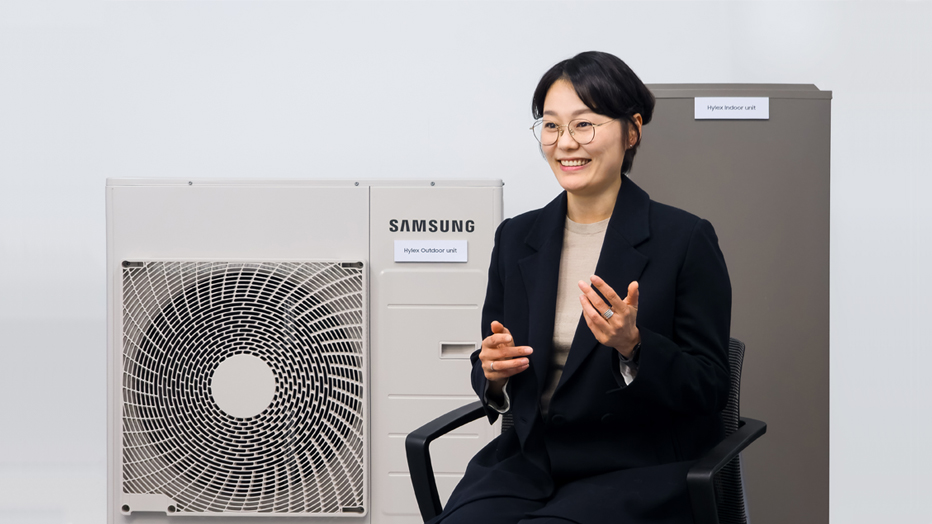
    Samsung Newsroom sat down with Hye-seong Baek, Vice President of the Digital Appliances (DA) Business at Samsung Electronics, to discuss the company’s HVAC innovations and strategies.

    ▲ Hye-seong Baek, Vice President of Digital Appliances (DA) Business at Samsung Electronics

    Q. What were the key factors behind Samsung’s participation in this year’s AHR Expo?

    Since Samsung’s first official debut in 2015, Samsung has showcased its latest innovations at the AHR Expo every year. Additionally, North America is the world’s second-largest HVAC market, and it represents a critical arena where the industry’s most advanced technologies compete.

    At this year’s exhibition, Samsung directly engaged with its partners to share its differentiated business vision and AI-based HVAC solutions, while further strengthening mid- to long-term partnerships built on mutual trust.

    Q. What were the key products and solutions showcased at this year’s Expo?

    Samsung unveiled a wide range of solutions that bring enhanced convenience and connectivity to diverse industrial applications and customer environments.

    In the commercial segment, Samsung introduced the DVM S2+, a high-efficiency, large-capacity air-conditioning solution with significantly enhanced AI capabilities. At its core is on-device AI that learns from its environment in real time to minimize energy consumption while delivering optimal indoor comfort.

    In line with residential sustainability trends, Samsung is targeting the North American unitary1 market with Hylex, an inverter-based outdoor unit that uses the low global warming potential (GWP)2 R454B refrigerant, as a key product. The newly introduced Hylex features inverter technology that delivers high energy efficiency, low noise and a compact design tailored to North American consumer preferences.

    Samsung also strengthened its EHS lineup of residential air-to-water heat pumps (AWHPs), offering a practical alternative to conventional fossil-fuel boilers while maximizing hot-water supply and heating efficiency.

    ▲ Samsung Electronics showcased its HVAC system and solutions at the AHR Expo 2026.

    Q. At this year’s CES, Samsung shared its vision of HVAC solutions serving as a new growth engine. Why is Samsung increasingly focusing on the HVAC sector?

    HVAC is a core technology that regulates temperature and humidity across residential, commercial and industrial facilities, and the HVAC sector plays an essential role in supporting everyday life by providing optimal air conditions in these spaces. In recent years, the market has gained further momentum amid global efforts to address climate change, paired with increasingly comprehensive regulations on eco-conscious energy use. Looking ahead, Samsung anticipates the market to grow annually at a stable rate of approximately 5%.

    Samsung is focusing on scaling HVAC services in connection with smart homes and smart cities. By integrating Samsung’s AI technologies and SmartThings across the broader HVAC market, Samsung expects to see strong potential to create meaningful synergies ranging from remote maintenance to energy cost optimization.

    Q. What do you see as the key trends shaping the U.S. HVAC market in 2026?

    This year, the key trends in the U.S. market are sustainability and high efficiency. Environmental regulations such as the adoption of low-GWP refrigerants are continuing to expand into the commercial sector, alongside new design and installation standards being introduced. In response, the market is shifting away from high energy-consuming, fixed-speed air conditioners toward high-efficiency inverter heat pump systems.

    In the residential segment, demand for eco-conscious HVAC heat pumps is steadily increasing, while the adoption of VRF (Variable Refrigerant Flow) systems is accelerating in the commercial sector. This is driving greater diversification across HVAC solutions, while rising demand for AI data centers and high-performance computing is fueling the growth of precision cooling systems as an increasingly important market segment.

    Moreover, AI-based predictive maintenance and optimization technologies — along with comfort and energy-saving solutions enabled by a wide range of IoT sensors — are becoming more widespread, with improvements in energy and operational efficiency emerging as a key industry trend.

    Q. What sets Samsung apart from its competitors in the highly competitive North American HVAC market?

    In North America, the residential segment accounts for approximately 70% of the HVAC market, while the commercial segment represents about 30%. In the residential space, Samsung is expanding its regional distribution network with Samsung Lennox HVAC North America, its joint venture with leading residential HVAC provider Lennox. Through this venture, Samsung leverages its energy-efficient, inverter-based ductless lineup.

    In the commercial segment, Samsung is working closely with FläktGroup, Europe’s largest HVAC equipment provider — which the company recently acquired. Together, the companies offer comprehensive, customized solutions centered on modular chillers,3 tailored for high-value applications such as data centers and cleanrooms.

    Above all, Samsung’s most distinctive strength lies in the hyperconnectivity enabled by SmartThings and SmartThings Pro. In residential settings, this means continuously evolving experiences as a result of seamless connectivity, while in commercial environments, it manifests as advanced solutions that significantly enhance building-wide energy optimization and maintenance efficiency.

    Q. What are Samsung’s goals in the North American HVAC market?

    The goal is clear: to leap forward as a top-tier HVAC player in the North American market by leveraging advanced technologies and a diverse product portfolio.

    Building on Samsung’s unique strengths in the ductless segment, Samsung is planning to expand into the ducted market — where centralized systems are the norm — through strategic synergies with FläktGroup. With the combination of Samsung’s chiller technologies and FläktGroup’s advanced cooling solutions, Samsung will deliver optimized solutions for data center applications.

    In parallel, Samsung will continue to accelerate the rollout of products with low GWP and further strengthen AI-powered energy-saving technologies. Through these efforts, Samsung aims to deliver a differentiated, integrated energy management experience for consumers in the North American residential market, where heating and cooling account for a significant share of electricity consumption.


    Continue Reading

  • TD Bank Group Provides Insurance Catastrophe Information

    TD Bank Group Provides Insurance Catastrophe Information

    TORONTO, Feb. 5, 2026 /CNW/ – TD Bank Group (“TD” or the “Bank”) (TSX: TD) (NYSE: TD) announced today that it expects catastrophe claims of approximately $7 million after reinsurance and before tax to be reflected in the Bank’s Wealth Management & Insurance segment’s first quarter results. 

    Catastrophe claims are insurance claims that relate to any single event that occurred in the relevant fiscal quarter, for which the aggregate insurance claims are equal to or greater than an internal threshold of $5 million before reinsurance. The Bank’s internal threshold may change from time to time. The total amount of catastrophe claims presented reflects the estimated pre-tax cost of these claims net of recoveries from related reinsurance coverage and, when applicable, includes the cost of reinsurance reinstatement premiums. The total amount of catastrophe claims is included in Insurance service expenses and amounts related to reinsurance coverage are included in Other income (loss) on the Bank’s Consolidated Statement of Income.

    Additional information about the Bank’s insurance catastrophe claims (including catastrophe claims, net of reinsurance for the comparative quarter) is available on its website here: https://www.td.com/ca/en/about-td/for-investors/investor-relations/financial-information       

    Quarterly Earnings Announcement

    TD will release its first quarter fiscal 2026 financial results and host an earnings conference call on Thursday, February 26, 2026.

    Caution Regarding Forward-Looking Statements

    This document contains forward-looking statements. All such statements are made pursuant to the “safe harbour” provisions of, and are intended to be forward-looking statements under, applicable Canadian and U.S. securities legislation, including the U.S. Private Securities Litigation Reform Act of 1995. Forward-looking statements are typically identified by words such as “will”, “would”, “should”, “believe”, “expect”, “anticipate”, “intend”, “strive”, “confident”, “estimate”, “forecast”, “outlook”, “plan”, “goal”, “commit”, “target”, “possible”, “potential”, “predict”, “project”, “may”, and “could” and similar expressions or variations thereof, or the negative thereof, but these terms are not the exclusive means of identifying such statements. By their very nature, these forward-looking statements require the Bank to make assumptions and are subject to inherent risks and uncertainties, general and specific. Especially in light of the uncertainty related to the physical, financial, economic, political, and regulatory environments, such risks and uncertainties – many of which are beyond the Bank’s control and the effects of which can be difficult to predict – may cause actual results to differ materially from the expectations expressed in the forward-looking statements. Please refer to the “Risk Factors and Management” section of the Management’s Discussion and Analysis in the Bank’s 2025 Annual Report, as may be updated in subsequently filed quarterly reports to shareholders. All such factors, as well as other uncertainties and potential events, and the inherent uncertainty of forward-looking statements, should be considered carefully when making decisions with respect to the Bank. The Bank cautions readers not to place undue reliance on the Bank’s forward-looking statements. Any forward-looking statements contained in this document represent the views of management only as of the date hereof and are presented for the purpose of assisting the Bank’s shareholders and analysts in understanding the Bank’s financial position, objectives and priorities and anticipated financial performance as at and for the periods ended on the dates presented, and may not be appropriate for other purposes. The Bank does not undertake to update any forward-looking statements, whether written or oral, that may be made from time to time by or on its behalf, except as required under applicable securities legislation.

    About TD Bank Group

    The Toronto-Dominion Bank and its subsidiaries are collectively known as TD Bank Group (“TD” or the “Bank”). TD is the sixth largest bank in North America by assets and serves over 28.1 million customers in four key businesses operating in a number of locations in financial centres around the globe: Canadian Personal and Commercial Banking, including TD Canada Trust and TD Auto Finance Canada; U.S. Retail, including TD Bank, America’s Most Convenient Bank®, TD Auto Finance U.S., and TD Wealth (U.S.); Wealth Management and Insurance, including TD Wealth (Canada), TD Direct Investing, and TD Insurance; and Wholesale Banking, including TD Securities and TD Cowen. TD also ranks among North America’s leading digital banks, with more than 13 million active mobile users in Canada and the U.S. TD had $2.1 trillion in assets on October 31, 2025. The Toronto-Dominion Bank trades under the symbol “TD” on the Toronto Stock Exchange and New York Stock Exchange.

    SOURCE TD Bank Group

    For further information: For further information contact: Brooke Hales, Senior Vice President, Investor Relations, 416-307-8647, Brooke.Hales@td.com; Gabrielle Sukman, Senior Manager, Corporate and Public Affairs, 416-983-1854, Gabrielle.Sukman@td.com

    Continue Reading

  • Fed Open Market Committee Meeting January 2026

    Fed Open Market Committee Meeting January 2026

    Matthew Hornbach: Welcome to Thoughts on the Market. I’m Matthew Hornbach, Global Head of Macro Strategy.


    Michael Gapen: And I’m Michael Gapen, Morgan Stanley’s Chief U.S. Economist.


    Matthew Hornbach: Today we’ll be talking about the Federal Open Market Committee meeting that occurred last week.


    It’s Thursday, February 5th at 8:30 am in New York.


    So, Mike, last week we had the first Federal Open Market Committee meeting of 2026. What were your general impressions from the meeting? And how did it compare to what you had thought going in?


    Michael Gapen: Well, Matt, I think that the main question for markets was how hawkish a hold or how dovish a hold would this be. As you know, it was widely expected the Fed would be on hold. The incoming data had been fairly solid. Inflation wasn’t all that concerning, and most of the employment data suggested things had stabilized. So, it was clear they were going to pause.


    The question was would they pause or would they be on pause, right? And in our view, it was more of a dovish hold. And by that, it suggests to us, or they suggested to us, I should say, that they still have an easing bias and rates should generally move lower over time.


    So, that really was the key takeaway for me. Would they signal a prolonged pause and perhaps suggest that they might be done with the easing cycle? Or would they say, yes, we’ve stopped for now, but we still expect to cut rates later? Perhaps when inflation comes down and therefore kind of retain a dovish bias or an easing bias in the policy rate path. So, to me, that was the main takeaway.


    Matthew Hornbach: Of course, as we all know, there are supposed to be some personnel changes on the committee this year. And Chair Powell was asked several questions to try to get at the future of this committee and what he himself was going to do personally. What was your impression of his response and what were the takeaways from that part of the press conference?


    Michael Gapen: Well, clearly, he’s been reluctant to, say, pre-announce what he may do when his term is chair ends in May.   But his term as a governor extends into 2028. So, he has options. He could leave normally that’s what happens. But he could also stay and he’s never really made his intentions clear on that part. I think for maybe personal or professional reasons. But he has his own; he has his own reasons and, and that’s fine.


    And I do think the recent subpoena by the DOJ has changed the calculus in that. At least my own view is that it makes it more likely that he stays around. It may be easier for him to act in response to that subpoena by being on staff. It’s a request for additional information; he needs access to that information. I think you could construct a reasonable scenario under which, ‘Well, I have to see this through, therefore, I may stay around.’ But maybe he hasn’t come to that conclusion yet.


    And then stepping back, that just complicates the whole picture in the sense that we now know the administration has put forward Kevin Warsh as the new Fed chair. Will he be replacing the seat that Jay Powell currently sits in? Will he be replacing the seat that Stephen Myron is sitting in?


    So yes, we have a new name being put forward, but it’s not exactly clear where that slot will be; and what the composition of the committee will look like.


    Matthew Hornbach: Well, you beat me to the punch on mentioning Kevin Warsh…


    Michael Gapen: I kind of assumed that’s where you were going.


    Matthew Hornbach: It was going to be my next question.   I’m curious as to what you think that means for Fed policy later this year, if anything. And what it might mean more medium term?


    Michael Gapen: Yeah. Well, first of all, congratulations to Mr. Warsh on the appointment. In terms of what we think it means for the outlook for the Fed’s reaction function and interest rate policy, we doubt that there will be a material change in the Fed’s reaction function.


    His previous public remarks don’t suggest his views on interest rate policy are substantively outside the mainstream, or at least certainly the collective that’s already in the FOMC. Some people would prefer not to ease. The majority of the committee still sees a couple more rate cuts ahead of them.


    Warsh is generally aligned with that, given his public remarks. But then also all the reserve bank presidents have been renominated. There’s an ongoing Supreme Court case about the ability of the administration to fire Lisa Cook. If that is not successful, then Kevin Warsh will arrive in an FOMC where there’s 16 other people who all get a say. So, the chair’s primary responsibility is to build a consensus; to herd the cats, so to speak. To communicate to markets and communicate to the public.


    So, if Mr. Warsh wanted to deviate substantially from where the committee was, he would have to build a consensus to do that. So, we think, at least in the near term, the reaction function won’t change. It’ll be driven by the data, whether the labor market holds up, whether inflation, decelerates as expected. So, we don’t look for material change.


    Now you also asked about the medium term. I do think where his views differ, at least with respect to current Fed policy is on the size of the Fed’s balance sheet and its footprint in financial markets. So, he has argued over time for a much smaller balance sheet. He’s called the Fed’s balance sheet bloated. He has said that it creates distortions in markets, which mean interest rates could be higher than they otherwise would be. And so, I think if there is a substantive change in Fed policy going forward, it could be there on the balance sheet.


    But what I would just say on that is it’ll likely take a lot of coordination with Treasury. It will likely take changes in rules, regulations, the supervisory landscape. Because if you want to reduce the balance sheet further without creating volatility in financial markets, you have to find a way to reduce bank demand for it. So, this will take time, it’ll take study, it’ll take patience. I wouldn’t look for big material changes right out of the box.


    So Matt, what I’d like to do is, if I could flip it back to you, Warsh was certainly one of the expected candidates, right? So, his name is not a surprise. But as we knew financial markets, one day we’re thinking it’d be one candidate. The next day it’d be thinking at the next it was somebody else.


    How did you see markets reacting to the announcement of Mr. Warsh? For the next Fed share, and then maybe put that in context of where markets were coming out of the last FOMC meeting.


    Matthew Hornbach: Yeah, so the markets that moved the most were not the traditional, very large macro markets like the interest rate marketplace or the foreign exchange market. The markets that moved the most were the prediction markets. These newer markets that offer investors the ability to wager on different outcomes for a whole variety of events around the world.   But when it comes to the implications of a Kevin Warsh led Fed – for the bigger macro markets like interest rates and currencies, the question really comes down to how?


    If the Fed’s balance sheet policies are going to take a while to implement, those are not going to have an immediate effect, at least not an effect that is easily seen with the human eye. But it’s other types of policy change in terms of his communication policy, for example. One of the points that you raised in your recent note, Mike, was how Kevin Warsh favored less communication than perhaps some of the recent, Federal Open Market Committees had with the public.


    And so, if there is some kind of a retrenchment from the type of over-communication to the marketplace, from either committee members or non-voters that could create a bit more volatility in the marketplace. Of course, the Fed has been one of the central banks that does not like to surprise the markets in terms of its monetary policy making. And so, that contrasts with other central banks in the G10. For example, the Swiss National Bank tends to surprise quite a lot. The Reserve Bank of Australia tends to surprise markets. More often, certainly than the Fed does. So, to the extent that there’s some change in communication strategy going forward that could lead to more volatile interest rate in currency markets.


    And that then could cause investors to demand more risk premium to invest in those markets. If you previously were comfortable owning a longer duration Treasury security because you felt very comfortable with the future path of Fed policy, then a Kevin Warsh led Fed – if it decides to change the communication strategy – could naturally lead investors to demand more risk premium in their investments. And that, of course, would lead to a steeper U.S. Treasury curve, all else equal. So that would be one of the main effects that I could see happen in markets as a result of some potential changes that the Fed may consider going forward.


    So, Mike, with that said, this was the first FOMC meeting of the year, and the next meeting arrives in March. I guess we’ll just have to wait between now and then to see if the Fed is on hold for a longer period of time or whether or not the data convinced them to move as soon as the March meeting.


    Thanks for taking time to talk, Mike.


    Michael Gapen: Great speaking with you, Matt.


    Matthew Hornbach: And thanks for listening. If you enjoy Thoughts on the Market, please leave us a review wherever you listen and share the podcast with a friend or colleague today. 

    Continue Reading

  • Stock market today: Live updates

    Stock market today: Live updates

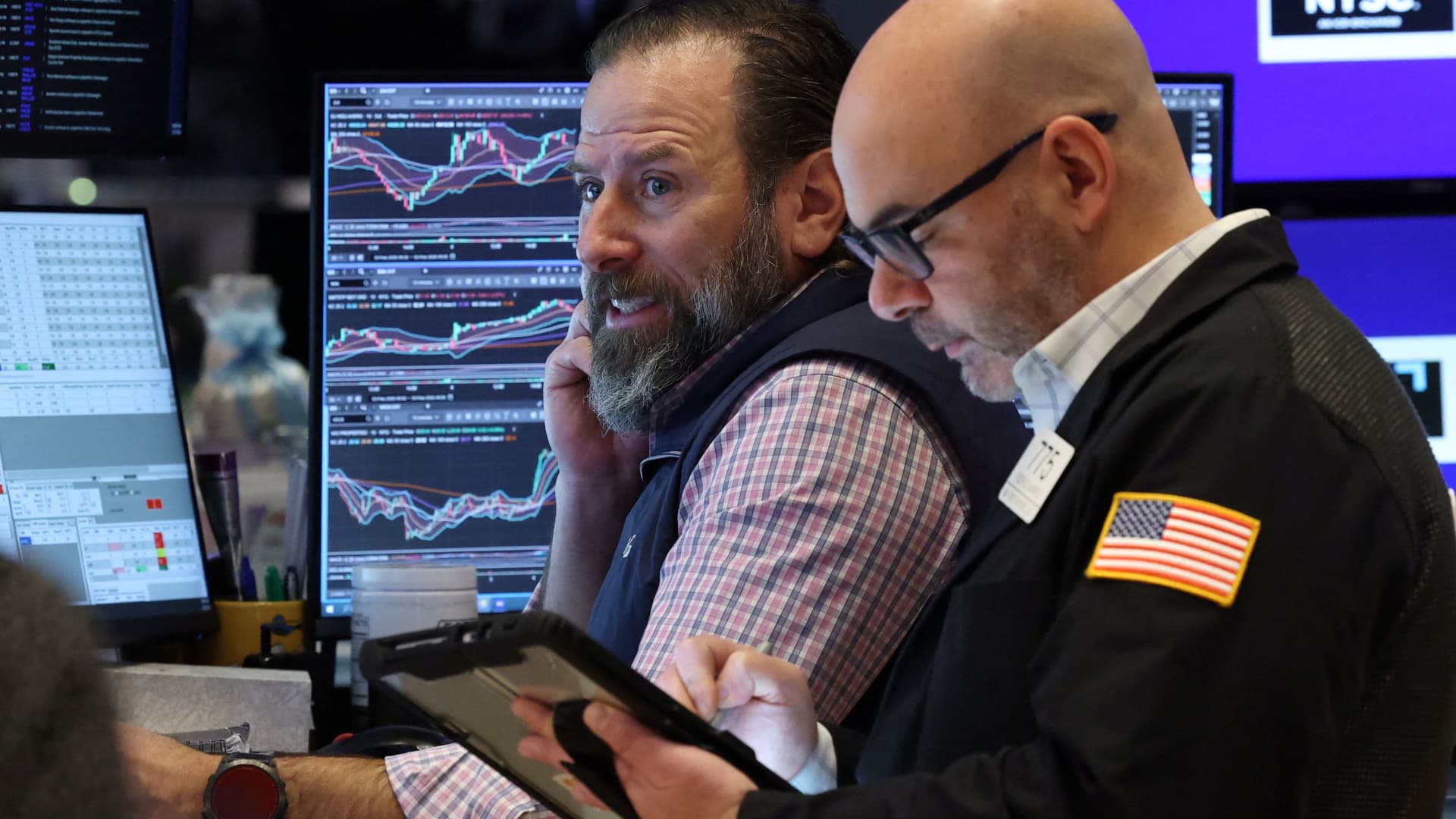
    Traders work on the floor at the New York Stock Exchange (NYSE) in New York City, U.S., Feb. 5, 2026.

    Brendan McDermid | Reuters

    U.S. equities fell for another day on Thursday as investors took a risk-off stance, leading popular trades in technology and bitcoin to unravel.

    The Dow Jones Industrial Average shed 561 points, or 1.1%. The S&P 500 lost 1.2%, landing in negative territory for the year, while the Nasdaq Composite declined 1.6%. The 30-stock Dow was down nearly 700 points, or about 1.4%, at session lows, while the broad market S&P 500 and Nasdaq dropped 1.5% and 1.9%, respectively.

    Alphabet was the latest of the “Magnificent Seven” companies to report earnings results. The company projected a sharp increase in artificial intelligence spending that spooked some investors, calling for 2026 capital expenditures of up to $185 billion. Shares were last down 1%.

    “The fact that some of these companies do release and they announce just additional capex spending — and it is astronomical at this point — we’re actually viewing that as a positive sign for the market’s health in general, because … it’s more that the market is discerning at this point rather than just irrational exuberance,” said Stephen Tuckwood, director of investments at Modern Wealth Management.

    Alongside Alphabet, Qualcomm came under pressure, sliding 9% after posting a weaker-than-expected forecast because of a global memory shortage.

    Elsewhere, the sell-off in the cryptocurrency market continued to gain steam, as bitcoin fell below $67,000 after earlier sinking below $70,000 — which is considered a key support level. In the precious metals space, pressure on silver resumed. The metal’s prices snapped a two-day rebound and dropped as much as 16%. It had plummeted nearly 30% last Friday.

    Bad news for the labor market

    Adding to the downbeat sentiment, concerns surrounding labor market weakness grew after outplacement firm Challenger, Gray & Christmas reported that U.S. employers announced 108,435 layoffs in January, marking the highest January total since the global financial crisis.

    On top of that, initial jobless claims for the week ended Jan. 31 rose more than expected, and job openings in December fell to their lowest level since September 2020.

    This comes ahead of next week’s release of the Bureau of Labor Statistics’ January jobs report, which was pushed back as a result of the partial government shutdown that ended Tuesday.

    “It feels like we’re shifting out of this no-hire, no-fire period that we’ve been in for the past several months,” Tuckwood said, adding that the upcoming BLS jobs report “could likely confirm what we’re seeing here with the others, where the firing and layoffs pieces is starting to turn negative.”

    If that turns out to be the case, he believes that the Federal Reserve will deliver an interest rate cut at the end of at least one of its March or April meetings.

    Wall Street is coming off a turbulent trading session, which saw a sell-off software and chip stocks that drove the S&P 500 to a second straight day of losses. Those stocks were pummeled as fears of AI disruption in the industry had investors rotating out of tech en masse and into other more attractively valued parts of the market.

    The sell-off on software stocks, which entered a bear market last week, could be getting ahead of itself, Tuckwood told CNBC. He said, “We’re not quite there yet in terms of wanting to avoid catching a falling knife, but at some point for that particular subsector, there’s going to be an opportunity once things do get a bit too overdone there on the sell side.”

    Continue Reading