On Thursday, Nvidia Corp (NASDAQ:NVDA) CEO Jensen Huang said during a visit to Taiwan that surging AI demand is rapidly increasing the need for advanced memory.
Huang said the future of artificial intelligence will be shaped as much by memory as by computing power, reported UDN, one of the leading media platforms in Taiwan.
He noted that modern AI models need to think, respond and reason at extremely high speeds, driving a sharp rise in memory capacity requirements across the industry.
Don’t Miss:
The Nvidia CEO also highlighted that the company collaborates with every major high-bandwidth memory supplier, including SK Hynix, Samsung Electronics (OTC:SSNLF) and Micron Technology Inc (NASDAQ:MU).
He said Nvidia relies heavily on these partners to meet soaring demand this year.
Huang rejected concerns that the U.S. has shifted about 40% of Taiwan’s semiconductor manufacturing capacity stateside.
Instead, he said global chip production should be viewed as expanding, with new capacity being added in the U.S., Europe and Japan while Taiwan remains a key manufacturing hub.
Trending: Blue-chip art has historically outpaced the S&P 500 since 1995, and fractional investing is now opening this institutional asset class to everyday investors.
Huang praised Taiwan Semiconductor Manufacturing Co. (NYSE:TSM) as the world’s best foundry partner, citing its technology leadership, execution and flexibility.
He said TSMC will need to significantly scale capacity over the next decade, with most production staying in Taiwan alongside overseas expansion.
Huang dismissed rumors circulating in mainland China that Nvidia’s H200 AI chips have received regulatory approval, saying no orders have been placed and final clearance is still pending.
If approval comes, he said, Nvidia is prepared to move quickly with partners to deliver products.
Previously, it was reported that the clearance was granted during Huang’s visit to China, where he’s kicking off the company’s annual events ahead of the Lunar New Year in mid-February.
See Also: Private-Market Real Estate Without the Crowdfunding Risk—Direct Access to Institutional-Grade Deals Managed by a $12B+ Real Estate Firm
Nvidia’s H200 AI chip has become a flashpoint in U.S.-China tech tensions. While Washington has approved shipments, Beijing has yet to fully clear imports.
Make better investment decisions with Simply Wall St’s easy, visual tools that give you a competitive edge.
Reports suggest Nvidia and Apple are exploring using Intel’s foundry and advanced packaging capacity for future chips from around 2028.
The discussions center on Intel’s 18A and 14A process nodes as part of its push to grow external foundry services.
Any formal agreements could influence the balance of global chip manufacturing capacity and U.S. supply chain planning.
Intel (NasdaqGS:INTC) is best known for its PC and data center processors. Management has been repositioning the company as a contract manufacturer for other chip designers. Interest from Nvidia and Apple would place Intel more directly in competition with established foundries that handle much of the world’s advanced chip output. For investors, this development relates to whether Intel’s manufacturing roadmap is attracting large, technically demanding customers.
The potential partnerships are still at the discussion stage and any production would be years away. As a result, this is more about future capacity and customer mix than near-term earnings. If even part of this foundry work materializes, it could broaden Intel’s revenue sources and give the company stronger ties across the U.S. chip supply chain. The key question for you is how much weight to put on these early signals when assessing Intel’s longer-term role in global manufacturing.
Stay updated on the most important news stories for Intel by adding it to your watchlist or portfolio. Alternatively, explore our Community to discover new perspectives on Intel.
NasdaqGS:INTC Earnings & Revenue Growth as at Jan 2026
How Intel stacks up against its biggest competitors
For Intel, having Nvidia and Apple explore using its foundry and advanced packaging capacity from around 2028 points to early customer interest in its push to manufacture chips for others, an area where Taiwan Semiconductor Manufacturing and Samsung are key competitors. Given Intel’s recent Q4 2025 net loss of US$591 million and guidance for a Q1 2026 loss per share, investors may see these talks as relevant to whether the foundry segment can eventually become a meaningful contributor alongside the existing PC and data center businesses.
The reports fit closely with the existing Intel narrative that focuses on an AI centric product roadmap and building trust in its foundry services with large, technically demanding customers. Interest from Nvidia and Apple lines up with the idea that Intel’s manufacturing roadmap and advanced packaging could support external clients, which is one of the ways analysts have framed a possible improvement in revenue mix and use of Intel’s manufacturing assets over time.
Potential validation of Intel’s 18A and 14A manufacturing processes if talks eventually convert into concrete foundry or packaging contracts.
Possible progress toward the turnaround story that links AI workloads, foundry customers and better use of existing fabs, especially after recent cost cuts and job reductions.
The discussions are early and any production is years away, while Intel is currently loss making and guiding to another quarterly loss, so the financial impact is uncertain.
Execution risk remains high as Intel still faces internal supply constraints and tough competition from TSMC, AMD and Nvidia in key product categories.
From here, the key things to track are whether Intel, Nvidia or Apple confirm any binding agreements, how Intel’s foundry segment losses evolve, and whether upcoming guidance gives more clarity on capacity, yields and capital spending. If you want to see how this potential foundry work fits with different long term viewpoints on Intel, check community narratives and fair value debates through the community narratives for Intel on Simply Wall St.
This article by Simply Wall St is general in nature. We provide commentary based on historical data and analyst forecasts only using an unbiased methodology and our articles are not intended to be financial advice. It does not constitute a recommendation to buy or sell any stock, and does not take account of your objectives, or your financial situation. We aim to bring you long-term focused analysis driven by fundamental data. Note that our analysis may not factor in the latest price-sensitive company announcements or qualitative material. Simply Wall St has no position in any stocks mentioned.
Companies discussed in this article include INTC.
Have feedback on this article? Concerned about the content? Get in touch with us directly. Alternatively, email editorial-team@simplywallst.com
The stock markets have been on an amazing run in recent years, with the S&P 500 more than doubling since the beginning of the decade and the Dow rising by nearly 75%.
What does the future hold for the stock markets? We asked leading AI chatbots ChatGPT, Grok and Gemini that question. Here’s what they had to say — along with what it could mean for your wallet.
ChatGPT and Grok are on the same page regarding how the stock market will perform over the next couple of years, with both forecasting moderate growth that will likely not match the stellar gains of 2025.
Here’s what ChatGPT expects during the next one to three years:
The U.S. stock market should continue rising through 2026, though gains “may be more moderate” than the strong run of recent years. Expect high-single-digit to low-double-digit returns, supported by corporate earnings and economic resilience.
Here’s Grok’s near-term call:
“Solid but more moderate performance” compared to the “exceptional” gains of the early 2020s, driven primarily by AI-related productivity and earnings growth, while facing headwinds from elevated valuations and potential economic uncertainties.
Gemini takes a slightly more bullish view, projecting an average S&P 500 return of 9% to 12% in 2026, with upside as high as 15%. That’s roughly in line with Goldman Sachs’ forecast of a 12% gain for the S&P 500 in 2026.
Here are some other near-term forecasts from Gemini:
While tech has led the way in recent years, 2027 and 2028 are expected to see healthcare, Industrials and small-caps “catch up” as interest rates stabilize.
Read More: Self-Made Millionaires Suggest 5 Stocks You Should Never Sell
Find Out: 9 Low-Effort Ways To Make Passive Income (You Can Start This Week)
Forecasts beyond the next three to five years are more uncertain, as unforeseen events can significantly impact markets. According to ChatGPT, many forecast models “suggest lower average annual returns” of 4% to 7% compared with recent decades, due to higher valuations and structural shifts. Grok cites a similar range based on average long-term forecasts.
These are some other long-term market forecasts from AI:
Grok: Optimistic scenarios see “much higher returns” if AI truly transforms the economy, but baseline views assume more gradual adoption and potential volatility if earnings disappoint.
Gemini: Major institutions like Goldman Sachs and J.P. Morgan generally expect the S&P 500 to grow at a slower, more “normalized” pace as high valuations and aging demographics act as a drag, partially offset by an “AI productivity boom.”
Make better investment decisions with Simply Wall St’s easy, visual tools that give you a competitive edge.
If you are wondering whether Campbell’s current share price makes sense, you are in the right place to look at what the numbers are really implying.
The stock last closed at US$27.98, with a 4.4% return over the past 7 days, 0.4% over 30 days, 1.0% year to date, but a 24.2% decline over 1 year and a 38.3% decline over 3 years.
These mixed returns have come alongside ongoing interest in Campbell’s position in the packaged food sector and how investors view its long term prospects. Recent attention has focused on how the business fits into consumer staples portfolios and whether the share price now reflects a more cautious stance on the stock.
On our checks, Campbell’s has a valuation score of 5/6. This sets up a closer look at how different valuation methods stack up, and it also hints at an even richer way to think about value that we will come back to at the end of this article.
Find out why Campbell’s’s -24.2% return over the last year is lagging behind its peers.
A Discounted Cash Flow, or DCF, model looks at the cash Campbell’s is expected to generate in the future and discounts those cash flows back to today to estimate what the business could be worth now.
Campbell’s last twelve month free cash flow is reported at about $658.3 million. Analysts have provided explicit forecasts out to 2028, with free cash flow for that year projected at $763.5 million. Beyond that, Simply Wall St extrapolates additional annual free cash flow figures out to 2035 using a 2 Stage Free Cash Flow to Equity model, with projections such as $848.2 million in 2026 and $896.2 million in 2035 before discounting.
Pulling all of those projected cash flows together, the DCF model arrives at an estimated intrinsic value of about $59.68 per share. Compared with the recent share price of US$27.98, this implies the stock is 53.1% undervalued based on these inputs and assumptions.
Result: UNDERVALUED
Our Discounted Cash Flow (DCF) analysis suggests Campbell’s is undervalued by 53.1%. Track this in your watchlist or portfolio, or discover 868 more undervalued stocks based on cash flows.
CPB Discounted Cash Flow as at Jan 2026
Head to the Valuation section of our Company Report for more details on how we arrive at this Fair Value for Campbell’s.
For a profitable company like Campbell’s, the P/E ratio is a straightforward way to relate what you pay per share to the earnings that support that price. It is a quick check on how the market is weighing current profitability against what it expects in the future.
A higher or lower P/E often reflects what investors think about future growth and risk. Strong growth expectations or lower perceived risk can support a higher P/E, while slower growth or higher risk tends to justify a lower one.
Campbell’s currently trades on a P/E of 14.4x. That sits below the Food industry average of about 21.2x and also below the peer group average of 15.8x. Simply Wall St goes a step further with its proprietary “Fair Ratio” of 19.1x for Campbell’s, which estimates the P/E you might expect given factors such as earnings growth, industry, profit margins, market cap and key risks.
This Fair Ratio is more tailored than a simple peer or industry comparison because it weighs company specific characteristics rather than treating all food companies as alike. Since Campbell’s current P/E of 14.4x is meaningfully below the Fair Ratio of 19.1x, the shares appear inexpensive on this measure.
Result: UNDERVALUED
NasdaqGS:CPB P/E Ratio as at Jan 2026
P/E ratios tell one story, but what if the real opportunity lies elsewhere? Discover 1417 companies where insiders are betting big on explosive growth.
Earlier we mentioned that there is an even better way to think about valuation, so let us introduce you to Narratives, which are simply your own story about Campbell’s linked directly to numbers such as fair value, future revenue, earnings and margins.
On Simply Wall St’s Community page, used by millions of investors, you can create or follow Narratives that connect what you believe about Campbell’s business to a concrete forecast and then to a fair value. You can then quickly compare that fair value with the current share price to help decide whether the stock looks attractive or not for you.
Because Narratives on the platform update automatically when new information such as news or earnings is added, your story and valuation stay current without you having to rebuild your view from scratch each time.
For example, one Campbell’s Narrative on the Community page might assume a higher fair value based on stronger revenue and margin assumptions, while another assumes a lower fair value based on more conservative expectations. You can see both side by side to judge which better matches your outlook.
Do you think there’s more to the story for Campbell’s? Head over to our Community to see what others are saying!
NasdaqGS:CPB 1-Year Stock Price Chart
This article by Simply Wall St is general in nature. We provide commentary based on historical data and analyst forecasts only using an unbiased methodology and our articles are not intended to be financial advice. It does not constitute a recommendation to buy or sell any stock, and does not take account of your objectives, or your financial situation. We aim to bring you long-term focused analysis driven by fundamental data. Note that our analysis may not factor in the latest price-sensitive company announcements or qualitative material. Simply Wall St has no position in any stocks mentioned.
Companies discussed in this article include CPB.
Have feedback on this article? Concerned about the content? Get in touch with us directly. Alternatively, email editorial-team@simplywallst.com
French Connection is back on the trail of global expansion with the aid of its cheeky initials-based slogan that made it so popular in the late 1990s.
The label once known for clothes bearing FCUK is seeking to reinvent itself again under the ownership of a group of British entrepreneurs based in the north of England who rescued it in 2021.
This week, the former high street darling signed a licensing agreement to develop and distribute men’s and women’s apparel and accessories across North America, which is understood to include plans to revive the FCUK branding.
It is the latest chapter in a rollercoaster story of success and setback. French Connection was founded in 1972 by Stephen Marks, who named it after the film starring Gene Hackman released the previous year.
The entrepreneur hired the French designer Nicole Farhi to head his design studio in the 1970s and she later launched her own label under the company’s umbrella. Together they made French Connection a hit, with a London stock market float in 1983 helping make Marks the UK’s 15th richest man for a time.
The pair also became partners romantically and had a daughter together before separating at about the end of the decade. By that point the brand had fallen out of favour, prompting Marks to retake directorial control in 1991.
It recaptured the public’s imagination thanks to the swear-adjacent slogan coined by the ad man Trevor Beattie in 1997 after he noticed the initials used in French Connection internal memos. It was emblazoned on T-shirts in phrases such as “FCUK Fashion” and “Hot as FCUK”.
For several years over this period Marks’s wife, Alisa, had a key design role, but they split in late 2003 after a decade of marriage and their expensive divorce forced Marks to sell shares in the business, relinquishing majority control.
Stephen Marks, who founded French Connection in 1972 and was once one of the richest men in the UK, in 2001. He sold up in 2021. Photograph: David Sillitoe/The Guardian
By the mid-noughties, shoppers had tired of the FCUK joke and it was dropped in 2005. The company, which still owns the Great Plains brand and once owned the YMC and Toast labels as well as Nicole Farhi, struggled to find a new identity and was also hit by bad debts partly related to the collapse of House of Fraser, where it had concessions.
A return to the bawdy branding in 2016 failed to revive the company in the face of heavy competition from cheaper rivals such as Asos, Zara and H&M.
Marks ran the business until he sold up in 2021, eventually relinquishing control after years of losses and mounting pressure from investors as the value of the firm dived from half a billion pounds in its heyday to less than £50m.
Its new owners no longer use FCUK in the chain’s handful of British stores, although the brand has been sold for short periods in the UK via retailers such as Urban Outfitters as a retro label that appeals to 1990s nostalgia.
It has, however, become a hit in India, where local licensee Myntra describes the clothing as having “distinct laid-back attitude for when you don’t want to look like you are trying hard to look good” accompanied by “powerful, provocative slogans”.
Apinder Singh Ghura, a Newcastle-based businessman, oversaw the £29m rescue takeover in 2021 of the brand that took it off the London Stock Exchange. The current owners also include his Manchester-based business partner, Amarjit Singh Grewal, and KJR Brothers, which is led by Rafiq Patel, a textile businessman.
A new French Connection design. Photograph: French Connection
The group’s new North American licensing deal with G-III Apparel Group, which controls brands including Calvin Klein, Karl Lagerfeld and DKNY, forms part of the road to reinvention. G-III will take over French Connection’s existing team in the US and oversees distribution via more than 700 boutiques and department stores.
Ghura, who spent years in the clothing industry before shifting to other investments including property and care homes and the Bench streetwear brand, which he has now sold, said French Connection was targeting the 25-plus market with good-quality garments at an affordable price.
“I see French Connection as a great brand with great equity and recognition, everything a blue-chip brand should have we have got,” he said.
Ghura said the UK government “hadn’t done the business community any favours” with its decisions on tax and pay, but the label could compete against cut-price competitors such as Shein as “every brand has its place and we appeal to our customers because of the DNA we possess”.
A summer sale sign at French Connection on Oxford street in central London in 2007. Photograph: Kevin Foy/Alamy
The brand, which at one time had more than 140 stores in the UK and hundreds of franchise outlets elsewhere, now has just 10 French Connection stores in the UK and 15 discount outlets but sells through 60 concessions, including every John Lewis.
It is also distributed on the websites of Marks & Spencer, Asos and Next in the UK and Otto in Germany and Austria, and is planning a small number of new high-street outlets.
In 2024, the brand’s sales fell 10% to £108m, but pre-tax profits shot up to £1.6m from just £0.3m a year before according to the latest accounts filed at Companies House.
The FCUK logo once felt ubiquitous, but is no longer used in the chain’s British stores. Picture taken in 2010. Photograph: Universal Images Group North America LLC/Alamy
Sales at established stores are now rising by more than 10% after the group improved quality, ditched poor-performing branches and brought in a new head of design – Helen Gallagher – from fashion brand Mint Velvet.
The performance stands out among the UK’s mid-market fashion brands, which have been hit by lacklustre spending as younger shoppers have less spare cash amid rising energy and phone bills and other costs such as Netflix subscriptions, gym memberships and music festivals.
The revival comes as fellow 90s stalwart Topshop attempts to win its way back into wardrobes via a new online stores and outlets in John Lewis, while River Island battles for survival with a rescue restructure.
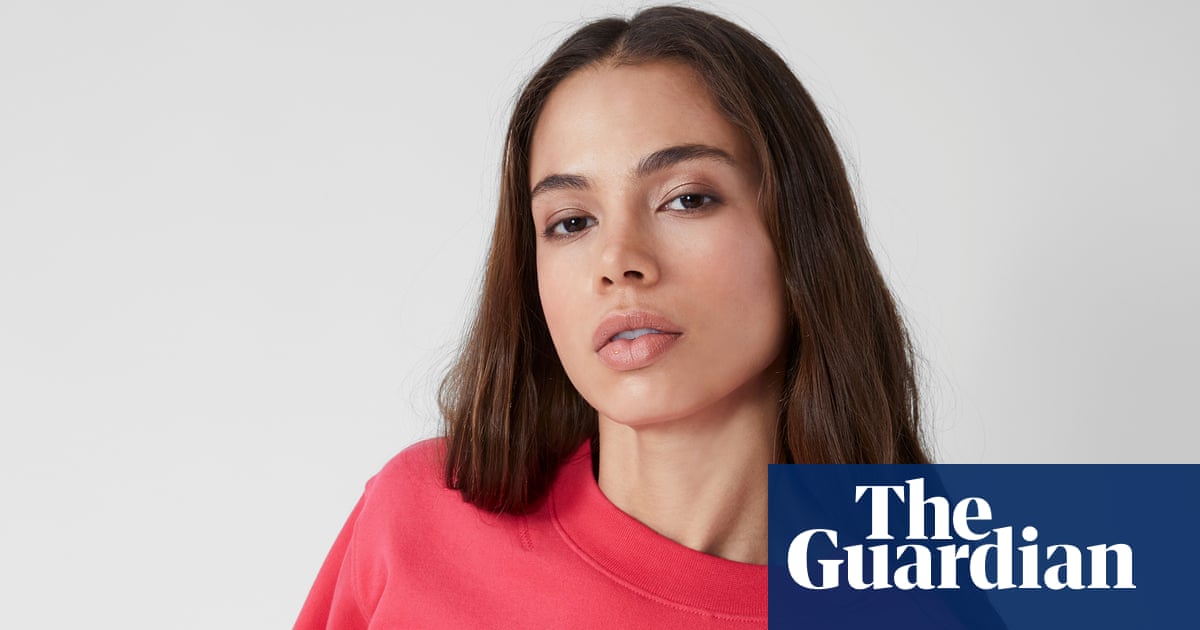
A model sports new designs from French Connection. Illustration: French Connection
Ghura said French Connection would be focusing on “capital light” expansion via licensees, with hopes to find partners in south-east Asia and China and to widen its footwear and accessories ranges, rather than opening dozens of expensive UK outlets.
Simon Donoghue, the managing director of French Connection’s retail and online business, said the company had “zero tolerance of loss-making stores” and was now in its third season of strong underlying growth as it got the “value for money equation really sorted”.
“Prices are now similar to four years ago, but it is better quality and that resonates,” he said. “It comes back to design and product. Getting that right gives confidence to invest more in inventory.”
Kraft Heinz announced plans to split into two separately traded companies, reversing its 2015 megamerger, which was orchestrated by billionaire investor Warren Buffett.
As both consumers and regulators push back against ultra-processed foods, the companies that make them have been splitting up or divesting iconic brands. Last year, Unilever spun off its ice cream business into The Magnum Ice Cream Company. Kraft Heinz is preparing to break up later this year, undoing much of the merger forged more than a decade ago by Warren Buffett’s Berkshire Hathaway and private equity firm 3G Capital. And Keurig Dr Pepper is planning a similar split after it finishes its acquisition of JDE Peet’s.
In 2024, nearly half of mergers and acquisitions activity in the consumer products industry came from divestitures, according to consulting firm Bain. Over the next three years, 42% of M&A executives in the consumer products industry are preparing an asset for sale, a Bain survey found.
Of course, the trend isn’t confined to just the consumer packaged goods industry. Industrial companies like GE and Honeywell have pursued their own breakups in recent years. It’s happening too in legacy media; Comcast spun off many of its cable assets into CNBC owner Versant, while Warner Bros. Discovery is planning to spin off its cable networks later this year as Netflix acquires its streaming and studios division.
“In many of the spaces that we’re seeing this type of activity, there are many very fierce competitive pressures that are making it harder to operate,” said Emilie Feldman, a professor at The Wharton School at the University of Pennsylvania.
The squeeze on packaged food and beverage companies comes from lower demand, which has led to shrinking volume for many of their products. To turn around their businesses and win back investors, they are counting on dumping underperforming brands.
February will bring both quarterly earnings reports and presentations at the annual CAGNY Conference, offering investors more opportunities to hear about food executives’ plans for their portfolios. Companies to watch include Kraft Heinz, which could share more details on its upcoming split, and Nestle, which is considering selling off multiple brands in its portfolio.
Cases of Dr. Pepper are displayed at a Costco Wholesale store on April 27, 2025 in San Diego, California.
Kevin Carter | Getty Images
Shrinking sales
For more than a decade, consumers have been buying fewer groceries from the inner aisles of the grocery store, instead focusing on the outer aisles with fresh produce and protein. The pandemic served as the exception, as many consumers returned to the brands that they knew. However, price hikes and “shrinkflation” as life eased back to normal largely erased that shift in behavior.
More recently, regulators, emboldened by the “Make America Healthy Again” agenda espoused by Health and Human Services Secretary Robert F. Kennedy Jr., have put both more pressure and a bigger spotlight on processed foods. And the rise of GLP-1 drugs to combat diabetes and obesity have meant some of food companies’ key consumers have lost their appetite for the sweet and salty snacks that they used to eat.
As a percentage of overall spending, the consumer packaged goods industry has held onto its market share. But the biggest companies are losing customers to upstart brands or private-label products, according to Bain partner Peter Horsley.
On average, about 35% of large consumer products companies’ portfolios are in categories with more than 7% growth, Horsley said. For comparison, over half of private-label brands are in high-growth categories, like yogurt and functional beverages, and for insurgent brands, it’s even higher.
For Big Food, the result has been slowing — or even declining — sales, followed by stock declines. In some cases, activist investors push for companies to focus more on their core offerings and to offload so-called distractions.
“You’re seeing a lot of pressure from a valuation standpoint, especially for these publicly traded companies,” said Raj Konanahalli, partner and managing director of AlixPartners. “One way to reset expectations is to really kind of focus more on the core offerings and dispose or divest the slower, capital-intensive or non-core businesses.”
While getting bigger helped food companies develop scale, enter new markets and grow their sales, it also made their businesses much more complex, according to Konanahalli. Become too big, and it becomes too difficult to make decisions quickly or to decide how and where to invest back into the business.
To be sure, some of these divestitures and breakups follow deals that seem to have been ill-advised from the start. Look no further than the merger of Keurig Green Mountain and Dr Pepper Snapple Group in 2018, to form Keurig Dr Pepper.
“Frankly the surprise to us was the decision back in 2018 when Keurig Green Mountain acquired the Dr Pepper Snapple Group in an $18.7 billion deal to create Keurig Dr Pepper in the first place,” Barclays analysts Patrick Folan and Lauren Lieberman wrote in a note to clients in August when the breakup was announced. “At the time, it was seen as both odd and a very left field deal with the questionable logic of combining coffee and [carbonated soft drinks].”
(When the merger was announced in 2018, Lieberman said on a conference call with executives from both companies that she was still “scratching my head” about the logic of the deal for both players).
Shares of Keurig Dr Pepper have risen 37% since the merger. The S&P 500 has climbed 150% over the same period.
To sell or not to sell
Like many industries, the packaged food industry has gone through cycles of expansion and contraction, according to Feldman. For example, Kraft spun off a snacking business that includes Oreos into Mondelez in 2012, just three years before it merged with Heinz.
However, in recent years, expanding through acquisitions has required more sophisticated thinking and execution.
“If you go back to those glory years of pre-2015, the rules of the game in consumer products felt fairly simple, at least if you’re a global company,” Bain’s Horsley said. “You bought another company that was relatively similar to you. You integrated it together, you pulled out the cost synergies … and then that gave you good top-line and bottom-line growth. But the rules of the game have changed.”
Around 2015, upstarts like Chobani or BodyArmor began stealing market share from legacy brands. As a result, food giants needed to become more thoughtful about what they were acquiring and how they were managing their portfolios, according to Horsley.
For a cautionary tale, look no further than Kraft Heinz, formed by a mega-merger in 2015. Investors initially cheered the deal, but their enthusiasm waned as the combined company’s U.S. sales began lagging. Then came write-downs of many of its iconic brands, like Kraft, Oscar Mayer, Maxwell House and Velveeta, in addition to a subpoena from the Securities and Exchange Commission related to its accounting policies and internal controls.
With the benefit of hindsight, analysts and investors have blamed much of Kraft Heinz’s downward spiral on the brutal cost-cutting strategy imposed after the merger. The company’s leadership was too focused on slashing costs and not enough on investing back into its brands, particularly at a time when consumer tastes were changing.
Since Kraft Heinz began trading as one company, shares have tumbled 73%.
But not everyone is sold that getting rid of underperforming brands will benefit shareholders.
“If you don’t fix the underlying capability, it doesn’t matter how many brands you sell or don’t sell,” RBC Capital Markets analyst Nik Modi said. “They’re not addressing the root problem. It’s just something to make investors happy because it seems like they’re making a change.”
One breakup that Modi agrees with is that of Kellogg, which split into the snacks-focused Kellanova and cereal-centric WK Kellogg in 2023. Last year, chocolatier Ferrero snapped up WK Kellogg for $3.1 billion, while Mars closed its $36 billion acquisition of Kellanova.
From Modi’s perspective, the breakup created more value for shareholders than the combined business did. Kellogg’s high-growth snack business was much more viable as an acquisition target without the sluggish cereal division attached. Plus, the two strategic buyers are both privately held companies that don’t have to worry about sharing quarterly earnings with the public.
Some investors are hoping for the same outcome with Kraft Heinz.
“The view that many have had is the best way to create value is split the companies and hope that you can create a Kellanova 2.0 where both entities get acquired at some point down the line, and that’s where value creation happens,” said Peter Galbo, analyst at Bank of America Securities.
Kraft Heinz hired Steve Cahillane, the former CEO of Kellogg and then Kellanova, as its chief executive. Once the company separates, Cahillane will serve as chief executive of Global Taste Elevation, the placeholder name for the spinoff with high-growth brands like Heinz and Philadelphia.
Steve Cahillane, President and CEO, Kellogg Company accepts Salute To Greatness Corporate Award during 2020 Salute to Greatness Awards Gala at Hyatt Regency Atlanta on January 18, 2020 in Atlanta, Georgia.
Paras Griffin | Getty Images Entertainment | Getty Images
But acquiring either company resulting from the Kraft Heinz split would be a pretty big acquisition, making it less likely that either is snapped up, according to Galbo. And the resulting uncertainty about the value creation from the breakup is maybe why Berkshire Hathaway, the company’s largest shareholder, is preparing to exit its 27.5% stake in Kraft Heinz.
Food divestitures pick up
A month into the new year, it’s unlikely that the divestiture trend will slow down.
On Tuesday, General Mills announced that it is selling its Muir Glen brand of organic tomatoes to focus on its core brands. And last week, Bloomberg reported that Nestle is preparing the sale of its water unit; the Swiss giant is also reportedly considering offloading upscale coffee brand Blue Bottle and its underperforming vitamin brands.
And if Big Food is making any acquisitions, the deals are more likely to involve “insurgent brands,” according to Bain. Over the last five years, acquisitions with a value of less than $2 billion represented 38% of total consumer products deals, up from 16% in the period from 2014 to 2019, the firm said. For example, last year, PepsiCo bought prebiotic soda brand Poppi for $1.95 billion and Hershey snapped up LesserEvil popcorn for $750 million.
Bigger deals are harder to come by because of the current regulatory environment, Konanahalli said. Buyers might not be strategic players, but instead private equity firms with plenty of cash on hand. For example, in January, L Catterton bought a majority stake in cottage cheese upstart Good Culture.
But a flashy divestiture or acquisition might not be the solution to a food conglomerate’s woes — or a surefire way to lift the stock price. Sometimes, good old-fashioned elbow grease can work even better.
“Just because it seems like the wind is blowing your way, it doesn’t mean that you can’t put in some hard work and turn things around,” AlixPartners’ Konanahalli said.
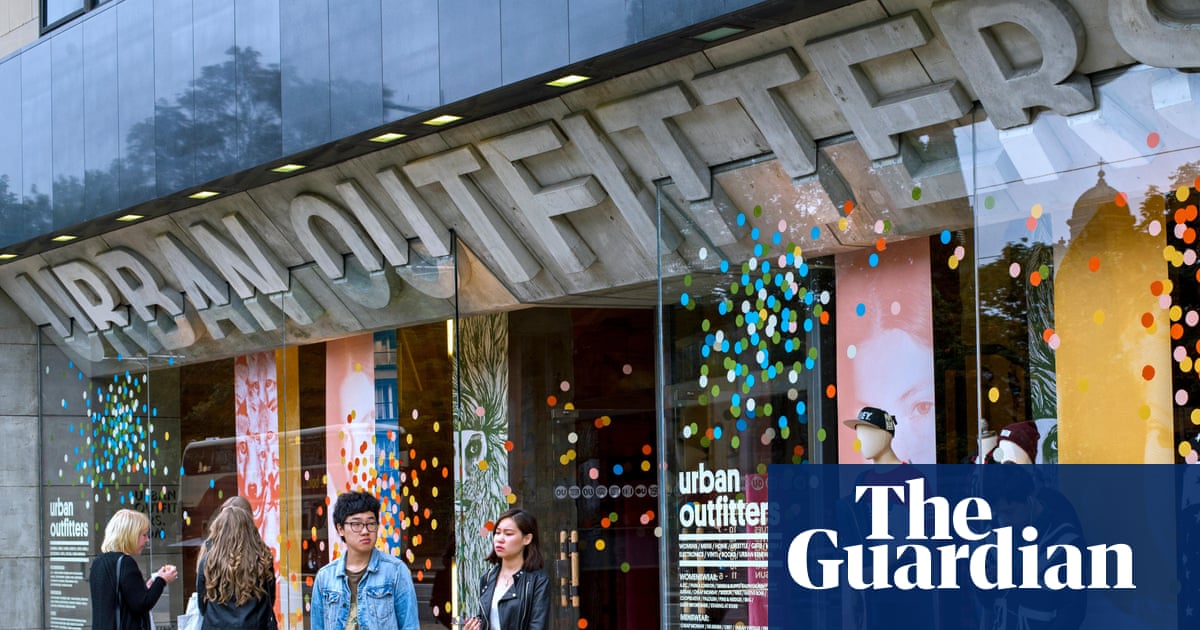
The fashion retailer Urban Outfitters, the bed specialist Dreams and the operator of several Royal Parks cafes have been criticised for the use of the gig economy app Temper to take on staff – some of whom can end up earning below minimum wage.
The TUC is urging the government to bring forward promised reforms to protect gig economy workers amid concerns that those hired by apps such as Temper are missing out on significant employment rights including sick pay, rest breaks, holiday pay and a minimum hourly rate.
It suggested that such apps are leading to bogus self-employed roles. “We find it hard to see how roles like shop assistant can be self-employed,” the trade union body said.
A year ago a number of major high street chains including Lush and Uniqlo stopped using apps such as Temper and the now defunct YoungOnes to take on freelancers, after outrage over the spread of gig economy working into the retail sector.
Last week Outernet, the central London music and digital art venue – which was advertising for £13-an-hour temporary “cloakroom hosts” on Temper – said it had removed jobs from the site after being contacted by the Guardian. “This was the first time we used this site and we won’t be again,” a spokesperson said.
The continued use of Temper by retailers and coffee shops indicates that freelancing continues to spread beyond delivery workers, such as Deliveroo riders, to store staff, baristas and warehouse workers.
Charges imposed by Temper to guarantee swift payment – taken up by 80% of users according to the app – mean than some workers can receive less than the legal minimum wage for those aged 21 and over of £12.21 an hour. Freelance workers are not guaranteed the minimum wage, unlike employees.
In recent weeks, Urban Outfitters has been advertising a number of posts paying £12.50 an hour – including a stock assistant to help with the annual stock take in Exeter and sales assistants in Gateshead and Birmingham. The latter location has 70 reviews, suggesting it is a regular user of the service.
Workers who take up the Urban Outfitter roles and wish to be paid in fewer than 14 days must pay the 2.9% fee, taking their hourly rate down to £12.14, 7p an hour below the legal minimum wage for those aged 21 and over.
It was a similar story at Colicci Cafe, a family-owned business that runs cafes in London’s Royal Parks including Richmond Park, wherewas offering as low as £12.50 an hour for barista shifts in recent weeks. Anyone not wishing to wait up to 30 days for payment would have to pay the Temper fee, taking their hourly rate below the legal minimum for most workers.
Urban Outfitters and Colicci did not respond to requests for comment.
Dreams has advertised a number of posts in recent weeks including two paying £12.71 an hour, one of which involves helping delivery drivers with loading and unloading deliveries to customers’ homes and another for receiving and dispatching deliveries in its warehouse until 11pm. It has also offered a delivery driver post at £15.14.
However, those who do not wish to wait for up to 60 days to be paid must pay the 2.9% fee to Temper – reducing their pay to £12.35 and £13.68 an hour – as they must pay the fee to Temper in order to be paid shortly after their shift instead.
Dreams declined to comment.
Temper has a “Free Security” insurance scheme that covers sick pay, but this falls short of protections workers would be entitled to if they were employed. Temper workers must have worked through the app at least 10 times within the previous three months to receive sick pay, and will only receive such payments after being off for more than two weeks.
Statutory sick pay for employees currently kicks in after three days and from day one from April under new rights guaranteed in the Employment Rights Act.
Paul Nowak, the general secretary of the TUC, said: “Cynical bosses should not be able to exploit gaps in the law to deny workers proper pay and conditions. The historic Employment Rights Act will bring welcome new protections. But without action on bogus self-employment, bad employers will make greater use of legal loopholes and talent platforms to deny workers their rights.”
Temper, which claims it is gaining 1,000 new sign-ups a week through word of mouth, said in a statement: “We fully refute the comment that Temper constitutes ‘bogus’ self-employment.”
It said workers who signed up to its site could enjoy better protections than those on zero-hours contracts, including compensation of half what they would have earned on a shift if it is cancelled with less than 48 hours’ notice.
“Everyone who works via Temper is doing so on a self-employed basis, and this is made clear at sign-up and throughout the app (to both individuals and companies). It’s also the reality of how the platform operates, and people working via Temper: choose which shifts to apply for (or not), negotiate pay, are free to work for multiple clients and platforms and have the right to arrange a substitute to complete a shift.
“We are committed to remaining fully compliant with UK employment law. If there are any changes to worker status definitions in the future, we will, of course, adapt our platform and model to remain fully compliant.
“Many people value the flexibility of freelance work, and the challenge for policymakers is to balance flexibility with fairness.”
Temper said it set a “floor” of £12.50 an hour, before fees, for hiring workers via its app and this would rise to £13 for all shifts from 1 February. It said applicants were free to negotiate on rates if they believed they were too low and could be taken on full time without any fees.
Never miss an important update on your stock portfolio and cut through the noise. Over 7 million investors trust Simply Wall St to stay informed where it matters for FREE.
Hexcel (HXL) has drawn investor attention after recent trading left the stock with mixed short term performance, including a 2.1% one day decline, alongside stronger returns over the month and past 3 months.
See our latest analysis for Hexcel.
At a share price of $82.81, Hexcel’s recent 12.1% 1 month share price return and 16.0% 3 month share price return suggest improving momentum. The 28.5% 1 year total shareholder return points to a stronger longer term picture.
If Hexcel’s recent move has you thinking about where else capital might work in the sector, it could be a good time to scan aerospace and defense stocks for other aerospace and defense names on your radar.
So with Hexcel trading at $82.81, showing a 14.6% intrinsic discount, and sitting just shy of its analyst price target, should you view this as a genuine entry point, or has the market already priced in the growth story?
Hexcel’s most followed narrative puts fair value at $76.86, which sits below the current $82.81 share price, and that gap is what the story tries to explain.
Regular long term supply agreements and the ability to negotiate price increases and pass throughs in contract renewals as inflation raises input costs, despite some headwinds from legacy contracts, should gradually support better pricing, net margins, and EPS over time, especially as volumes recover and more contracts come up for renewal.
Read the complete narrative.
Curious what earnings path and margin rebuild need to hold for that fair value to stack up? The narrative leans heavily on compounding profit growth and a future valuation multiple that assumes investors stay comfortable with those projections.
Result: Fair Value of $76.86 (OVERVALUED)
Have a read of the narrative in full and understand what’s behind the forecasts.
However, you still need to weigh the risk that key customers adjust production plans or that long term contracts continue to squeeze margins if costs remain elevated.
Find out about the key risks to this Hexcel narrative.
While the popular narrative sees Hexcel as about 8% overvalued at a fair value of $76.86, our DCF model tells a different story. On that framework, Hexcel at $82.81 is trading roughly 15% below an estimated fair value of $96.92, which points to a potential mismatch between narrative caution and cash flow math. Which lens do you trust more when the story and the spreadsheet diverge?
Look into how the SWS DCF model arrives at its fair value.
HXL Discounted Cash Flow as at Jan 2026
Simply Wall St performs a discounted cash flow (DCF) on every stock in the world every day (check out Hexcel for example). We show the entire calculation in full. You can track the result in your watchlist or portfolio and be alerted when this changes, or use our stock screener to discover 868 undervalued stocks based on their cash flows. If you save a screener we even alert you when new companies match – so you never miss a potential opportunity.
If you see the numbers differently or simply want to stress test your own assumptions, you can quickly build a custom view and Do it your way
A great starting point for your Hexcel research is our analysis highlighting 2 key rewards and 1 important warning sign that could impact your investment decision.
If Hexcel has sharpened your thinking, do not stop here. A wider watchlist can help you spot opportunities you might otherwise miss entirely.
This article by Simply Wall St is general in nature. We provide commentary based on historical data and analyst forecasts only using an unbiased methodology and our articles are not intended to be financial advice. It does not constitute a recommendation to buy or sell any stock, and does not take account of your objectives, or your financial situation. We aim to bring you long-term focused analysis driven by fundamental data. Note that our analysis may not factor in the latest price-sensitive company announcements or qualitative material. Simply Wall St has no position in any stocks mentioned.
Companies discussed in this article include HXL.
Have feedback on this article? Concerned about the content? Get in touch with us directly. Alternatively, email editorial-team@simplywallst.com
France’s move this week to push millions of state workers to use a homegrown alternative to Zoom and Microsoft Teams marks the latest chapter in a decades-long effort by European governments to wean themselves off US Big Tech.
France’s Prime Minister Sébastien Lecornu sent a letter to ministries on Thursday ordering them to shift their video calls to Visio, an internally developed Zoom alternative, by the end of the year.
“To guarantee the security, confidentiality and resilience of public electronic communications, it is therefore imperative to deploy a unified videoconferencing solution, controlled by the State, based on sovereign technologies,” he wrote.
The same logic was evident on Friday, when the French government blocked satellite operator Eutelsat from selling its ground antenna business to private equity firm EQT, citing the group’s strategic nature as a rival to Elon Musk’s Starlink internet service.
Despite long-standing struggles to persuade Europeans to switch from the likes of Microsoft, Google and Amazon to local options, renewed concern about US President Donald Trump’s foreign policy has brought new urgency to calls for a so-called “tech decoupling”.
That has fuelled fresh efforts by European governments to spur local alternatives from communications apps and cloud providers to satellites and artificial intelligence.
This week’s French moves came just days after the European parliament passed a resolution calling on member states to “strengthen European technological sovereignty by facilitating the procurement of European digital products and services, where possible”.
The EU still relies on non-EU countries — primarily the US — for more than 80 per cent of its digital services and infrastructure, according to the parliament’s report.
For decades, efforts to create European versions of cloud computing, messaging and enterprise software have foundered because people and companies are loath to switch over to often inferior or inconvenient alternatives.
The small number of successful examples has largely been piecemeal. In October, for instance, the German state of Schleswig-Holstein celebrated a “milestone for digital sovereignty” with the migration of some 40,000 state workers’ email mailboxes from Microsoft Exchange and Outlook to open-source alternatives.
France’s President Emmanuel Macron has been one of the most prominent advocates for Europe to become more independent from the US on everything from technology to weapons systems.
He has championed local cloud-computing providers as well as Paris-based artificial intelligence company Mistral, seen as one of Europe’s few bulwarks against US and Chinese dominance of AI.
Now, Trump’s threats to invade Greenland, which is part of Denmark, have raised the spectre of a trade war in which Europe’s reliance on Silicon Valley could prove a big economic liability.
“What has changed today, more than the nature of the problem, is the likelihood that it could materialise abruptly: extraterritorial sanctions, access restrictions, regulatory blackmail,” said Francesca Musiani, a research director at France’s National Center for Scientific Research (CNRS).
“In that context, decoupling stops being a theoretical hypothesis and becomes a risk-management scenario.”
France itself has a chequered history of failed state-backed technology initiatives that were announced with great fanfare by presidents from Jacques Chirac to Macron, only for them to prove to be a waste of public money and time.
In 2008, France and Germany poured hundreds of millions of euro into developing Quaero — a locally made search engine billed as a sovereign alternative to Google and Yahoo — then closed it after five years. Google’s market share in search in Europe still stands at about 90 per cent.
Then, Paris tried to spur the development of a “sovereign cloud” by backing two competing projects led by telecoms groups Orange and SFR, arguing that the US cloud providers could not ensure that French user data stayed in Europe and was not vulnerable to US law enforcement or spying.
Again, uptake was minimal since the services were not as good, so the government instead regulated changes to try to make US and other foreign products more secure for the public sector and companies.
Saul Klein, London-based tech investor at Phoenix Court, said countries should be working together to ensure Europe has strong players in the industry’s next frontiers, citing Dutch chip equipment giant ASML’s €1.3bn investment in Mistral last year.
“I don’t see the point of a French Zoom,” he said. “It’s unlikely for any sovereign state to be able to do something on their own that will compete scientifically or technologically against an American or Chinese alternative . . . One has to fight the next set of battles.”
According to the research firm IDC, European companies still spent about 80 per cent of their total $25bn investments on cloud computing infrastructure in 2024 at the top five US cloud providers, which have themselves made deeper commitments to store European data locally.
David Amiel, France’s junior minister for the civil service, told the FT that the country would not be able to reach President Macron’s goals of “strategic autonomy” — meaning reducing dependencies across the economy — without a renewed push for European companies to provide more of its technology.
“We must wean ourselves off our addiction to non-European tools,” he said. “But they must be up to the best quality standards, otherwise they will fail.”
The Visio project piloted by Amiel’s ministry has the long-term goal of creating more tools for the public sector that eventually could replace Microsoft Office or Google Suite.
Last year, it launched an internal secure-messaging app called Tchap that now has about 300,000 users and aims to supplant WhatsApp or Signal.
Amiel said some applications would be done in partnership with European tech companies so the government would not develop only on its own.
A military official told the FT. “If we want to become more independent, we need to do this even if it’s not convenient at first,” the person said.
Another staffer was more critical: “I hate Tchap and already have enough apps to check!”