Category: 3. Business

  • Netherlands watchdog probing Roblox over risks to children | News

    Netherlands watchdog probing Roblox over risks to children | News

    Regulator launches investigation into US gaming platform over potential risks to underage users in the EU.

    The Dutch consumer watchdog has launched an investigation into Roblox to see if the popular online gaming system is doing enough to protect children from exposure to violent and sexual imagery.

    The Netherlands Authority for Consumers and Markets (ACM) said on Friday its probe would examine “potential risks to underage users in the EU” and would likely last about one year.

    Recommended Stories

    list of 4 itemsend of list

    “The platform regularly makes the news, for example, due to concerns about violent or sexually explicit games that minors are exposed to,” the ACM said in a statement.

    Other concerns include reports of “ill-intentioned” adults targeting children on the platform and the use of misleading techniques to encourage purchases.

    The ACM said that, having received reports of such allegations, it “considers this sufficient reason to launch a formal investigation into possible violations of the rules by Roblox”.

    New measures

    Under the European Union’s Digital Services Act (DSA), platforms must take “appropriate and proportionate measures” to ensure a high level of safety and privacy for minors.

    The ACM said it could impose a “binding instruction, fine, or penalty” on Roblox if it concludes the rules have been broken.

    In 2024, the ACM slapped a 1.1-million-euro ($1.2m) fine on Fortnite maker Epic Games, judging that vulnerable children were exploited and pressured into making purchases in the game’s Item Shop.

    A Roblox spokesperson said the company is “strongly committed to complying with the EU Digital Services Act” and referred to the gaming platform’s announcement last November that it would require age verification via facial recognition to limit communication between children and adults.

    “We look forward to providing the ACM with further clarity on the many policies and safeguards we have in place to protect minors,” the spokesperson said.

    Continue Reading

  • Tonix Pharmaceuticals Holding Corp. (TNXP)

    Tonix Pharmaceuticals Holding Corp. (TNXP)


    TONMYA demonstrated significant reduction in fibromyalgia pain compared with placebo in the Phase 3 RESILIENT study

    Unique sublingual formulation designed for bedtime dosing bypasses first-pass metabolism, optimizing parent-drug exposure during sleep and decreasing levels of the persistent active metabolite

    Treatment was well tolerated with minimal effects on weight or blood pressure

    CHATHAM, N.J., Jan. 30, 2026 (GLOBE NEWSWIRE) — Tonix Pharmaceuticals Holding Corp. (Nasdaq: TNXP) (“Tonix” or the “Company”), a fully integrated, commercial biotechnology company, presented data on TONMYA™, which was investigated as TNX-102 SL, at the 2026 Non-Opioid Pain Therapeutics Summit, on January 29, 2026, in Boston, Massachusetts. A copy of the Company’s presentation, titled “TNX-102 SL (Sublingual Cyclobenzaprine HCl): a Centrally Acting Non-Opioid Analgesic for the Treatment of Fibromyalgia,” is available under the Scientific Presentations tab of the Tonix website at www.tonixpharma.com.

    “Fibromyalgia is a chronic pain disorder affecting more than 10 million adults in the U.S., with existing treatments often limited by tolerability and side effects,” said Seth Lederman, M.D., Chief Executive Officer of Tonix Pharmaceuticals. “The data presented at the Non-Opioid Pain Therapeutics Summit by our Chief Medical Officer, Gregory Sullivan, M.D. highlight TONMYA’S role as a centrally-acting, differentiated non-opioid treatment. TONMYA’S unique sublingual formulation is designed for bedtime administration and to bypass first-pass metabolism, resulting in a pharmacokinetic profile that favors parent-drug exposure during sleep while limiting daytime exposure to the active metabolite. Since fibromyalgia patients are commonly prescribed opioids off-label, there is a clear need for effective non-opioid alternatives.”

    The data presented at the Summit come from RESILIENT, a 14-week randomized, double-blind, placebo-controlled Phase 3 trial at 34 U.S. sites, with 456 intent-to-treat participants who met the 2016 American College of Rheumatology criteria for fibromyalgia. Participants received TONMYA or placebo administered sublingually at bedtime. Treatment with TONMYA resulted in a statistically significant reduction in weekly average pain scores at Week 14 (p<0.0001) versus placebo, with an effect size of 0.38. The study also demonstrated significant improvements in key secondary endpoints, including sleep disturbance (p<0.001), fatigue (p<0.001), and the Symptoms (p<0.001) and Function (p=0.001) domains of the Fibromyalgia Impact Questionnaire-Revised (p<0.001 for both). TONMYA was well tolerated, with minimal impact on weight and blood pressure, and a rate of adverse event-related discontinuations of 6.1% on TONMYA vs. 3.5% on placebo. The most common adverse events were mild and self-limited oral cavity reactions that rarely led to study withdrawal.

    “TONMYA’S sublingual formulation largely bypasses first-pass hepatic metabolism, which reduces formation of norcyclobenzaprine, the persistent active metabolite that we believe otherwise interferes with the duration of the treatment effect,” said Dr. Sullivan. “This results in a distinct pharmacokinetic profile compared to oral cyclobenzaprine, with greater relative bioavailability of the parent drug during sleep and reduced active metabolite exposure during daytime. Bedtime sublingual administration is also designed to target the non-restorative sleep that is central to fibromyalgia pathophysiology, translating to broad-spectrum activity across the core symptoms of fibromyalgia, including pain, sleep disturbance, and fatigue, with a favorable tolerability profile that may reduce the need for polypharmacy.”

    TONMYA was approved on August 15, 2025, by the FDA for the treatment of fibromyalgia in adults. It is the first new prescription medicine approved for fibromyalgia in more than 15 years.

    Tonix Pharmaceuticals Holding Corp.*
    Tonix is a fully-integrated biotechnology company with marketed products and a pipeline of development candidates. Tonix markets FDA-approved TONMYA™, a first-in-class, non-opioid analgesic medicine for the treatment of fibromyalgia, a chronic pain condition that affects millions of adults. TONMYA is the first new prescription medicine approved by the FDA for fibromyalgia in more than 15 years. TONMYA was investigated as TNX-102 SL. Tonix also markets two treatments for acute migraine in adults: Zembrace® SymTouch® (sumatriptan injection) and Tosymra® (sumatriptan nasal spray). Tonix’s development portfolio* is focused on central nervous system (CNS) disorders, immunology, immuno-oncology, rare disease and infectious disease. TNX-102 SL is being developed to treat acute stress reaction and acute stress disorder under an Investigator-Initiated IND at the University of North Carolina in the OASIS study funded by the U.S. Department of Defense (DoD). TNX-102 SL is also in development for major depressive disorder. Tonix’s immunology development portfolio consists of biologics to address organ transplant rejection, autoimmunity and cancer, including TNX-1500, which is a Phase 2- ready Fc-modified humanized monoclonal antibody targeting CD40-ligand (CD40L or CD154) being developed for the prevention of allograft rejection and for the treatment of autoimmune diseases. Tonix’s rare disease portfolio includes TNX-2900, intranasal oxytocin potentiated with magnesium, in development for Prader-Willi syndrome and expected to start a potential pivotal Phase 2 study in 2026. Tonix’s infectious disease portfolio includes TNX-801, a vaccine in development for mpox and smallpox, as well as TNX-4800, a Phase 2- ready long-acting humanized monoclonal antibody for the seasonal prevention of Lyme disease. Finally, TNX-4200 for which Tonix has a contract with the U.S. DoD’s Defense Threat Reduction Agency (DTRA) for up to $34 million over five years, is a small molecule broad-spectrum antiviral agent targeting CD45 for the prevention or treatment of high lethality infections to improve the medical readiness of military personnel in biological threat environments. Tonix owns and operates a state-of-the art infectious disease research facility in Frederick, Md.

    * Tonix’s product development candidates are investigational new drugs or biologics; their efficacy and safety have not been established and have not been approved for any indication.

    Forward Looking Statements
    Certain statements in this press release are forward-looking within the meaning of the Private Securities Litigation Reform Act of 1995 including those relating to the completion of the offering, the satisfaction of customary closing conditions, the intended use of proceeds from the offering and other statements that are predictive in nature. These statements may be identified by the use of forward-looking words such as “anticipate,” “believe,” “forecast,” “estimate,” “expect,” and “intend,” among others. These forward-looking statements are based on Tonix’s current expectations and actual results could differ materially as a result of a number of factors, including the ability of the Company to satisfy the conditions to the closing of the offering and the timing thereof, as well as those described in the Company’s Annual Report on Form 10-K for the year ended December 31, 2024, as filed with the SEC on March 18, 2025, and periodic reports filed with the SEC on or after the date thereof. Tonix does not undertake an obligation to update or revise any forward-looking statement. All of Tonix’s forward-looking statements are expressly qualified by all such risk factors and other cautionary statements. The information set forth herein speaks only as of the date thereof.

    Investor Contacts
    Jessica Morris
    Tonix Pharmaceuticals 
    investor.relations@tonixpharma.com 
    (862) 799-8599 

    Brian Korb 
    astr partners 
    (917) 653-5122 
    brian.korb@astrpartners.com 

    Media Contacts
    Ray Jordan 
    Putnam Insights 
    ray@putnaminsights.com 

    INDICATION
    TONMYA is indicated for the treatment of fibromyalgia in adults.

    CONTRAINDICATIONS
    TONMYA is contraindicated:
    In patients with hypersensitivity to cyclobenzaprine or any inactive ingredient in TONMYA. Hypersensitivity reactions may manifest as an anaphylactic reaction, urticaria, facial and/or tongue swelling, or pruritus. Discontinue TONMYA if a hypersensitivity reaction is suspected. With concomitant use of monoamine oxidase (MAO) inhibitors or within 14 days after discontinuation of an MAO inhibitor. Hyperpyretic crisis seizures and deaths have occurred in patients who received cyclobenzaprine (or structurally similar tricyclic antidepressants) concomitantly with MAO inhibitors drugs.

    During the acute recovery phase of myocardial infarction, and in patients with arrhythmias, heart block or conduction disturbances, or congestive heart failure. In patients with hyperthyroidism.

    WARNINGS AND PRECAUTIONS
    Embryofetal toxicity: Based on animal data, TONMYA may cause neural tube defects when used two weeks prior to conception and during the first trimester of pregnancy. Advise females of reproductive potential of the potential risk and to use effective contraception during treatment and for two weeks after the final dose. Perform a pregnancy test prior to initiation of treatment with TONMYA to exclude use of TONMYA during the first trimester of pregnancy.

    Serotonin syndrome: Concomitant use of TONMYA with selective serotonin reuptake inhibitors (SSRIs), serotonin norepinephrine reuptake inhibitors (SNRIs), tricyclic antidepressants, tramadol, bupropion, meperidine, verapamil, or MAO inhibitors increases the risk of serotonin syndrome, a potentially life-threatening condition. Serotonin syndrome symptoms may include mental status changes, autonomic instability, neuromuscular abnormalities, and/or gastrointestinal symptoms. Treatment with TONMYA and any concomitant serotonergic agent should be discontinued immediately if serotonin syndrome symptoms occur and supportive symptomatic treatment should be initiated. If concomitant treatment with TONMYA and other serotonergic drugs is clinically warranted, careful observation is advised, particularly during treatment initiation or dosage increases.

    Tricyclic antidepressant-like adverse reactions: Cyclobenzaprine is structurally related to TCAs. TCAs have been reported to produce arrhythmias, sinus tachycardia, prolongation of the conduction time leading to myocardial infarction and stroke. If clinically significant central nervous system (CNS) symptoms develop, consider discontinuation of TONMYA. Caution should be used when TCAs are given to patients with a history of seizure disorder, because TCAs may lower the seizure threshold. Patients with a history of seizures should be monitored during TCA use to identify recurrence of seizures or an increase in the frequency of seizures.

    Atropine-like effects: Use with caution in patients with a history of urinary retention, angle-closure glaucoma, increased intraocular pressure, and in patients taking anticholinergic drugs.

    CNS depression and risk of operating a motor vehicle or hazardous machinery: TONMYA monotherapy may cause CNS depression. Concomitant use of TONMYA with alcohol, barbiturates, or other CNS depressants may increase the risk of CNS depression. Advise patients not to operate a motor vehicle or dangerous machinery until they are reasonably certain that TONMYA therapy will not adversely affect their ability to engage in such activities. Oral mucosal adverse reactions: In clinical studies with TONMYA, oral mucosal adverse reactions occurred more frequently in patients treated with TONMYA compared to placebo. Advise patients to moisten the mouth with sips of water before administration of TONMYA to reduce the risk of oral sensory changes (hypoesthesia). Consider discontinuation of TONMYA if severe reactions occur.

    ADVERSE REACTIONS
    The most common adverse reactions (incidence ≥2% and at a higher incidence in TONMYA-treated patients compared to placebo-treated patients) were oral hypoesthesia, oral discomfort, abnormal product taste, somnolence, oral paresthesia, oral pain, fatigue, dry mouth, and aphthous ulcer.

    DRUG INTERACTIONS

    MAO inhibitors: Life-threatening interactions may occur.

    Other serotonergic drugs: Serotonin syndrome has been reported.

    CNS depressants: CNS depressant effects of alcohol, barbiturates, and other CNS depressants may be enhanced.

    Tramadol: Seizure risk may be enhanced.

    Guanethidine or other similar acting drugs: The antihypertensive action of these drugs may be blocked.

    USE IN SPECIFIC POPULATIONS
    Pregnancy: Based on animal data, TONMYA may cause fetal harm when administered to a pregnant woman. The limited amount of available observational data on oral cyclobenzaprine use in pregnancy is of insufficient quality to inform a TONMYA-associated risk of major birth defects, miscarriage, or adverse maternal or fetal outcomes. Advise pregnant women about the potential risk to the fetus with maternal exposure to TONMYA and to avoid use of TONMYA two weeks prior to conception and through the first trimester of pregnancy. Report pregnancies to the Tonix Medicines, Inc., adverse-event reporting line at 1-888-869-7633 (1-888-TNXPMED).

    Lactation: A small number of published cases report the transfer of cyclobenzaprine into human milk in low amounts, but these data cannot be confirmed. There are no data on the effects of cyclobenzaprine on a breastfed infant, or the effects on milk production. The developmental and health benefits of breastfeeding should be considered along with the mother’s clinical need for TONMYA and any potential adverse effects on the breastfed child from TONMYA or from the underlying maternal condition.

    Pediatric use: The safety and effectiveness of TONMYA have not been established.

    Geriatric patients: Of the total number of TONMYA-treated patients in the clinical trials in adult patients with fibromyalgia, none were 65 years of age and older. Clinical trials of TONMYA did not include sufficient numbers of patients 65 years of age and older to determine whether they respond differently from younger adult patients.

    Hepatic impairment: The recommended dosage of TONMYA in patients with mild hepatic impairment (HI) (Child Pugh A) is 2.8 mg once daily at bedtime, lower than the recommended dosage in patients with normal hepatic function. The use of TONMYA is not recommended in patients with moderate HI (Child Pugh B) or severe HI (Child Pugh C). Cyclobenzaprine exposure (AUC) was increased in patients with mild HI and moderate HI compared to subjects with normal hepatic function, which may increase the risk of TONMYA-associated adverse reactions.

    Please see additional safety information in the full Prescribing Information.
    To report suspected adverse reactions, contact Tonix Medicines, Inc. at 1-888-869-7633, or the FDA at 1-800-FDA-1088 or www.fda.gov/medwatch.

    Source: Tonix Pharmaceuticals Holding Corp.

    Continue Reading

  • Stock market today: Live updates

    Stock market today: Live updates

    Traders work on the floor of the New York Stock Exchange (NYSE) in New York, US, on Wednesday, Jan. 28, 2026.

    Michael Nagle | Bloomberg | Getty Images

    Stock futures fell Friday, a day after the S&P 500 posted a second consecutive losing session. The moves followed sharp declines in gold and silver, as the rallies that took the precious metals to record highs lost momentum.

    Futures tied to the broad market index were down 0.8%, and Nasdaq 100 futures lost about 0.9%. Dow futures dropped 355 points, or 0.7%.

    Gold futures dropped more than 4%, while contracts tied to silver plunged 12%. Despite the declines, gold and silver remain higher over the past year by 80% and 209%, respectively.

    Wall Street also turned its eyes to Washington after President Donald Trump said Thursday night that he would announce his choice to replace Federal Reserve Chair Jerome Powell on Friday morning. Former Fed Governor Kevin Warsh has emerged as a favorite in prediction markets, but BlackRock’s fixed income chief Rick Rieder and National Economic Council director Kevin Hassett have also been in contention.

    Apple shares inched lower even after the company beat fiscal first-quarter earnings and revenue expectations, aided by a significant surge in iPhone sales. Data storage stock Sandisk popped 19% on the back of strong guidance. KLA Corp lost more than 8% after guidance for non-GAAP gross margin in the fiscal third quarter came in light.

    “This week brought the first wave of major tech earnings, with investors focused on results, guidance, and AI spending as a key market driver. … A clear theme is emerging, in our view,” said Angelo Kourkafas, senior global investment strategist at Edward Jones.

    “Companies are ramping up AI related infrastructure spending, and markets are rewarding those that can turn these investments into earnings,” he added. “Firms without a clear monetization strategy are facing more scrutiny.”

    He added that while the tech sector is still expected to deliver strong profit growth, it’s slowing from earlier quarters as other sectors accelerate. This development supports “what we see as this year’s key theme: a broadening of market leadership,” Kourkafas said.

    Week to date, the S&P 500 and Nasdaq have each added nearly 0.8%. The 30-stock Dow is down nearly 0.1% on the week.

    Continue Reading

  • Omdia recognises Telefónica Tech’s leadership in private 5G networks

    Telefónica Tech has been recognised as a leading provider of private 5G networks by technology research group Omdia in its report ‘Omdia Market Radar: CSPs Private 5G Networks Strategies and Products 2025-26′. The analyst firm attributes this category to companies with leading solutions and that it considers worthy of inclusion in most technology selection lists.

    Private networks are telecommunications infrastructures dedicated exclusively to a company or organisation for the purpose of interconnecting all its smart devices in a secure, customisable and low-latency manner to drive its digital transformation.

    Omdia recognises that Telefónica Tech has a solid portfolio and credentials, as well as a more industrial focus than most of its competitors. It highlights, in particular, Telefónica Tech’s portfolio of private network products and solutions, its services and applications, and its additional offering for the enterprise segment.

    Darío Cesena, CEO of Geprom part of Telefónica Tech, says: “At Telefónica Tech, we offer specialised services aimed at industrial companies by providing connectivity and being a trusted technology integrator, a value that we have enhanced following the acquisition of Geprom. To offer the best customer service, we have a 5G private network strategy that gives us direct visibility into the needs of each of our customers, and all of our professionals dedicated to private 5G are certified in the technologies of the different providers we work with.”

    Telefónica Tech has a comprehensive private network solution that is vendor-agnostic, as it has the capacity to integrate advanced 4G/5G connectivity with complementary technologies such as IoT, artificial intelligence, cybersecurity and cloud services. This enables it to offer a catalogue of associated industrial solutions, including Intelligent Robotics (autonomous vehicles and drones) and IT-OT integration (digital twin and computer vision).

    The company provides uninterrupted multilingual support and proactively monitors 5G private networks from its Network Operations Centre (NOC) for customers in critical sectors such as Industry, Healthcare and Energy to ensure their proper functioning and to detect and respond to incidents and problems before they affect network systems and users.

    Telefónica Tech also has a visualisation and orchestration tool for private networks, which allows different architectures and products from various manufacturers to be managed.

    About Telefónica Tech
    Telefónica Tech is the leading company in digital transformation. The company offers a wide range of services and integrated technological solutions for Cyber Security, Cloud, IoT, Big Data, AI and Blockchain. For more information, please visit: https://telefonicatech.com/en

    Continue Reading

  • PAG Completes Sale of Anyang Nitrogen Fertilizer to Indorama Corporation

    • Transaction marks another milestone in PAG’s divestment of AirPower
    • Indorama’s acquisition strengthens its position in world’s largest fertilizer market


    January 29, 2026 – PAG announced today the completion of the sale of Anyang Nitrogen Fertilizer to Indorama Corporation (“Indorama”). This marks a further milestone for PAG after its divestment of Hangzhou Yingde Gases (formerly “AirPower Technologies”) in January 2025.

    Headquartered in Henan Province, Anyang Nitrogen Fertilizer is a part of AirPower’s clean energy portfolio and is a leading fertilizer producer in China. Its core product is urea, complemented by a diversified range of by-products such as ammonia, automotive-grade urea, and industrial gases.

    Established in 1997, Indorama is a leading global producer of essential materials, including fertilizers, polymers, fibers, yarns, and medical gloves, with a network of manufacturing sites around the world. This acquisition marks a significant expansion of Indorama’s presence in China and reinforces its commitment to supporting global food security and promoting sustainable agricultural practices.

    Mr. Amit Lohia, Vice Chairman of Indorama Corporation, commented, “We are excited to welcome Anyang Nitrogen Fertilizer into the Indorama family. This milestone not only solidifies our presence in the world’s largest fertilizer market but also aligns with our strategic focus on investing in high-quality assets that deliver reliable and sustainable solutions. We look forward to building on Anyang’s strong operating base in Henan, leveraging our global expertise to further enhance product offerings and drive long-term growth in China.”

    Mr. David Wong, Partner and Co-Head of Private Equity at PAG, stated: “We are pleased to have supported the development and growth of Anyang Nitrogen Fertilizer. We are confident that under Indorama’s ownership, the company will achieve further success and drive continued innovation.”

    In January 2025, PAG successfully completed the landmark divestment of the onshore industrial gas operations of AirPower Technologies, now known as Hangzhou Yingde Gases Ltd. The transaction marks the largest control buyout exit in China’s private equity industry. PAG acquired 100% of Yingde Gases through a take-private transaction in 2017, later integrating it with Baosteel Gases. After the 2025 divestment, PAG continued to hold AirPower’s clean energy assets in China, including Anyang Nitrogen Fertilizer.

    This sale of Anyang Nitrogen Fertilizer is another example of PAG’s application of long-term strategic vision and deep expertise in the energy and chemical industries, delivering substantial and sustainable value over the long-term.


    About PAG

    PAG is a leading alternative investment firm focused on APAC with three core strategies: Credit & Markets, Private Equity, and Real Assets. We manage capital on behalf of nearly 300 institutional fund investors, including some of the most sophisticated global asset allocators. PAG has more than 390 investment professionals in 15 key offices globally, and over USD55 billion in assets under management.


    Media contact:

    PR@pag.com


    Continue Reading

  • US futures and Asian shares slip after a wild day on Wall St ends with a whimper

    US futures and Asian shares slip after a wild day on Wall St ends with a whimper

    Shares slipped Friday in Asia after a day of dramatic swings on Wall Street that included Microsoft’s worst drop in nearly six years.

    Oil prices dropped and the prices of gold and silver weakened.

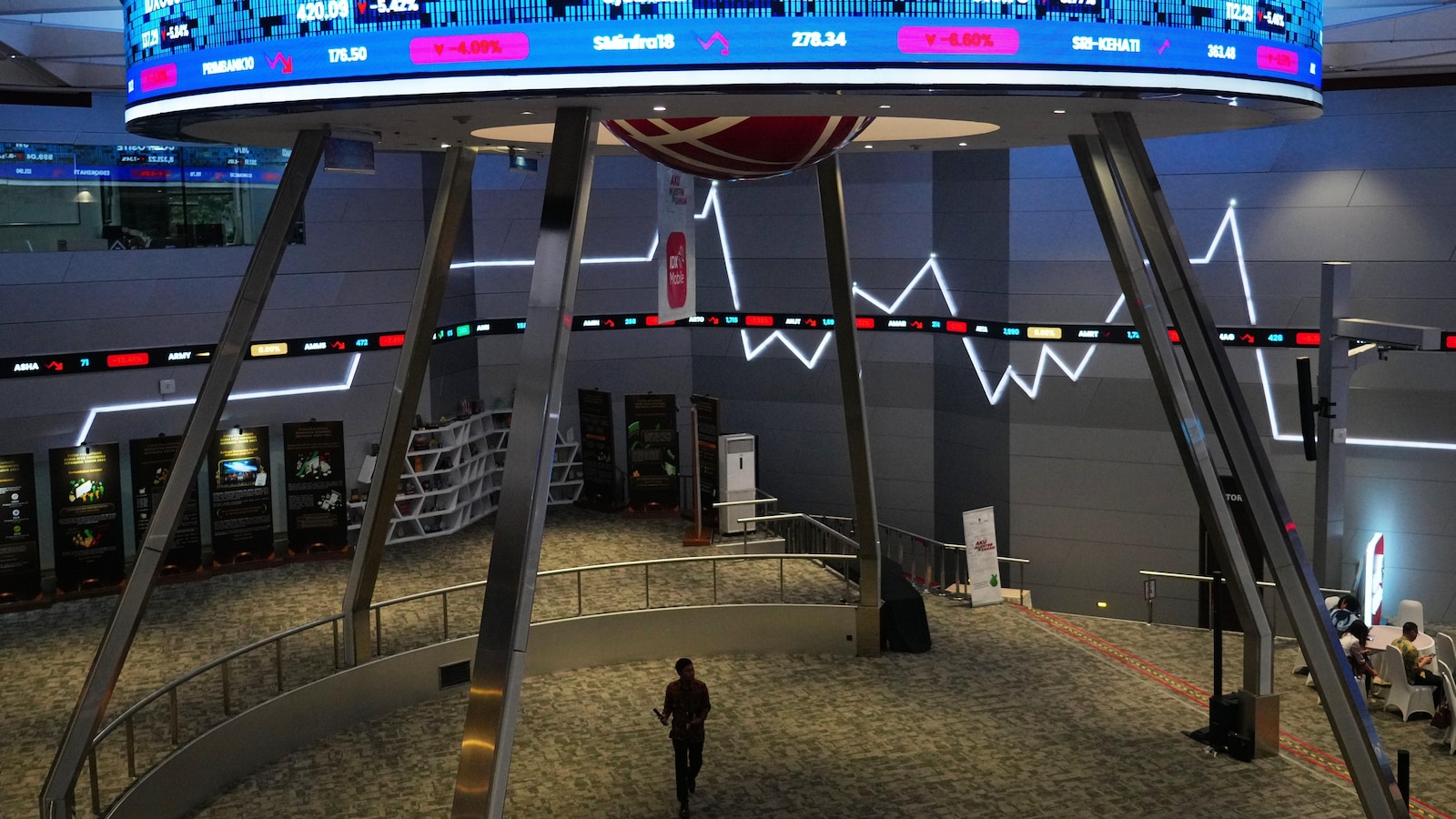
    The CEO of Indonesia’s stock market, Imam Rachman, resigned Friday “As part of a commitment toward recent market conditions,” the exchange said in an announcement.

    Jakarta’s benchmark gained 1.2% following news of his resignation. It had been trading at all-time highs but sank 7.4% on Wednesday and 1.1% on Thursday after MSCI, a U.S. provider of global equity, fixed income and real estate indices, warned about market risks such as a lack of transparency.

    Chinese markets retreated, with the Hang Seng in Hong Kong down 1.8% to 27,455.13. Shares in major ports operator CK Hutchison Holdings dropped 5% after Panama’s Supreme Court ruled that the concession held by a subsidiary to operate ports at either end of the Panama Canal was unconstitutional.

    That advanced a U.S. effort to block any influence by China over the strategic waterway.

    The Shanghai Composite index slipped 0.9% to 4,122.61.

    Tokyo’s Nikkei 225 fell back, losing 0.1% to 53,322.85 as stocks related to artificial intelligence declined. Testing equipment maker Advantest lost 4.5% and computer chip equipment maker Disco Corp. lost 1.7%.

    South Korea’s Kospi gave up most of its gains late in the session, edging 0.1% higher to 5,224.36 after the Yonhap News Agency reported that a first day of talks with U.S. Commerce Secretary Howard Lutnick aimed at resolving trade tensions had not yielded an agreement. The talks are due to continue Friday.

    Earlier this week, President Donald Trump said he planned to raise tariffs on South Korean exports if the U.S. ally did not swiftly ratify a trade agreement worked out months ago.

    In Australia, the S&P/ASX 200 declined 0.7% to 8,869.10.

    Taiwan’s benchmark lost 1.5%.

    On Thursday, U.S. stocks finished with relatively modest moves.

    The S&P 500 slipped 0.1% after flirting with its record high in the morning and dropping by as much as 1.5% later in the day. The Dow Jones Industrial Average rose 0.1% and the Nasdaq composite fell 0.7%.

    Microsoft was the heaviest weight on the market by far, tumbling 10% even though it reported stronger profit and revenue for the latest quarter than analysts expected. It was the stock’s worst day since the market’s COVID crash in 2020.

    Tesla also weighed on the market after falling 3.5%. It delivered a bigger profit for the latest quarter than analysts expected, but the results were sharply lower than from a year earlier.

    Companies are under pressure to deliver solid growth in profits following record-setting runs for their stock prices. Stock prices tend to follow the path of corporate profits over the long term, and earnings need to rise to quiet criticism that stocks have grown too expensive.

    In other dealings early Friday, the price of gold slipped 2.8% to $5,205 per ounce after it rallied briefly to near $5,600 on Thursday. Gold’s price topped $5,000 for the first time just this week and it has nearly doubled over the last 12 months.

    Silver, which has been zooming higher in its own feverish run, declined 4.1% to nearly $110.41.

    Prices for precious metals have been surging as investors look for safer investments while weighing a wide range of risks, including a U.S. stock market that critics say is expensive, political instability, threats of tariffs and heavy debt loads for governments worldwide.

    The U.S. dollar has seen its value sink over the last year because of many of the same risks that drove gold’s price higher. Early Friday, the dollar was trading at 153.85 Japanese yen, up from 152.97 yen. The euro slipped to $1.1921 from $1.1967.

    Oil prices slipped after jumping more than 3% on Thursday due to worries about tensions between the United States and Iran, which could ultimately constrict the flow of crude. Defense Secretary Pete Hegseth warned the U.S. military “will be prepared to deliver whatever the president expects,” just a day after President Donald Trump told Iran to “make a deal” on its nuclear program.

    U.S. benchmark crude oil lost $1.07 to $64.35 per barrel. Brent crude, the international standard, shed $1.10 to $68.49 per barrel.

    Continue Reading

  • Belgium: Higher Fines for Belgian Labor Law Offenses | Insight

    Belgium: Higher Fines for Belgian Labor Law Offenses | Insight

    In brief

    Belgium is introducing two significant changes that will increase financial exposure for employers who breach Belgian labor legislation. As of 1 February 2026, (i) the statutory multiplier used to calculate criminal and administrative fines will increase, and (ii) a new mandatory minimum penalty will apply in certain cases involving an aggravating factor. Together, these reforms will strengthen the overall sanctioning framework and heighten compliance risks — particularly for serious offenses under the Social Criminal Code.

    Increase of criminal and administrative fines

    Under Belgian law, the actual amount of criminal or administrative fines is calculated by applying a statutory multiplier (“opdeciemen”/”décimes additionnels”) to the basic fine amounts set out in the relevant legislation. Currently, this statutory multiplier is eight. As a result, basic fines must be multiplied by eight to determine the amounts effectively payable.

    As of 1 February 2026, the statutory multiplier will increase to 10, leading to a proportional rise in all administrative and criminal fines.

    Within the framework of the Social Criminal Code — which categorizes infringements into four sanction levels depending on their seriousness — the table below sets out (i) the applicable sanction levels and (ii) the corresponding fines (including the statutory multiplier), both before and after the legislative change. The table does not include imprisonment penalties associated with Level 4 infringements.

    Sanction level
     Administrative fine Criminal fine
       Before After Before After
     Level 1 EUR 80-800 EUR 100-1,000 N/A N/A
     Level 2 EUR 200-2,000 EUR 250-2,500 EUR 400-4,000 EUR 500-5,000
     Level 3 EUR 800-8,000 EUR 1,000-10,000 EUR 1,600-16,000 EUR 2,000-20,000 
     Level 4 EUR 2,400-28,000 EUR 3,000-35,000 EUR 4,800-56,000 EUR 6,000-70,000

    Importantly, the Social Criminal Code often provides that fines may be multiplied by the number of employees affected, up to a maximum of 100 employees. This multiplication mechanism — combined with the increased statutory multiplier — means that the total financial exposure in cases involving multiple employees may increase substantially.

    Mandatory minimum fine for Level 4 infringements with an aggravating factor

    Following the recent reform of the Social Criminal Code, the relevant enforcement authorities must take an “aggravating factor” into account when determining sanctions for infringements punishable at Level 4. As a general rule, an aggravating factor refers to situations where the infringement was committed knowingly and intentionally.

    Under the current regime, the existence of an aggravating factor obliges the judge or competent administrative authority to consider it when determining the sanction — e.g., by imposing a fine toward the higher end of the statutory range — or when assessing whether additional sanctions (such as an operating ban or business closure) are justified. However, the law does not currently require the court or administrative authority to exceed the minimum threshold for the sanctions.

    This will change as of 1 February 2026. Where a Level 4 infringement is found to have been committed with an aggravating factor, the imposed fine cannot be lower than half of the maximum statutory fine for Level 4. This introduces a binding statutory minimum that materially restricts judicial and administrative discretion and ensures that aggravated Level 4 infringements are sanctioned at a substantially higher baseline level.

    However, the legislation provides for a limited exception. The mandatory minimum does not apply where the fact that the infringement was committed “knowingly and intentionally” has already served as the aggravating circumstance justifying a reclassification of the infringement from a lower sanction level to Level 4. In these situations, the intentional nature of the conduct cannot be relied on a second time to trigger the new mandatory minimum fine.

    Continue Reading

  • UK’s first rapid-charging battery train ready for boarding this weekend | Rail industry

    UK’s first rapid-charging battery train ready for boarding this weekend | Rail industry

    The UK’s first superfast-charging train running only on battery power will come into passenger service this weekend – operating a five-mile return route in west London.

    Great Western Railway (GWR) will send the converted London Underground train out from 5.30am to cover the full Saturday timetable on the West Ealing to Greenford branch line, four stops and 12 minutes each way, and now carrying up to 273 passengers, should its celebrity stoke up the demand.

    The battery will recharge in just three and a half minutes back at West Ealing station between trips, using a 2,000kW charger connected to a few metres of rail that only becomes live when the train stops directly overhead.

    The train can travel up to 200 miles on a single charge. Photograph: Steve Cotton/Alamy

    There are hopes within government and industry that this technology could one day replace diesel trains on routes that have proved difficult or expensive to electrify with overhead wires, as the decarbonisation of rail continues.

    The train has proved itself capable of going more than 200 miles on a single charge – last year setting a world record for the farthest travelled by a battery-electric train, smashing a German record set in 2021.

    The GWR train and the fast-charge technology has been trialled on the 2.5-mile line since early 2024, but has not yet carried paying passengers.

    GWR’s engineering director, Simon Green, said: “This is a significant moment for all those involved in this innovative project and comes at a crucial time as we focus on plans to replace our ageing diesel fleet.

    The new train can carry 237 passengers. Photograph: James Manning/PA

    “Our fast-charge trial has successfully demonstrated that battery technology offers a reliable and efficient alternative to power electric trains, in cases where overhead lines aren’t possible or desirable.”

    Network Rail’s western route director, Marcus Jones, whose teams installed the fast-charge infrastructure, said the trial had shown “how promising this technology is and today marks another important milestone for the industry”.

    “Rail is already the greenest form of public transport, and battery‑powered trains will play a crucial role in our commitment to a low‑emission railway and ambition to reach net‑zero by 2050,” he said.

    Hybrid battery-electric trains, running on battery where power lines are not available, are already established in Japan and elsewhere. Merseyrail also has trains running a short distance on batteries, but primarily powered and recharging from a third rail.

    However, the rapid charging technology used in the new GWR service means trains can be built using batteries alone, which are safer for the public than using a high-voltage third rail, and have less impact on local electricity grids.

    The electrification of the Great Western mainline was ended in 2020, curtailed due to its enormous cost overruns. GWR believes the technology could now allow it to switch away from diesel on much longer routes in south-west England.

    Continue Reading

  • Emerging markets make roaring start to 2026 as dollar slides

    Emerging markets make roaring start to 2026 as dollar slides

    Emerging-market stocks, bonds and currencies are making a roaring start to 2026 as the dollar’s fall to a four-year low hastens a push by investors to diversify into markets beyond the US.

    Bourses in Turkey, Brazil, South Africa, Chile, Mexico and Taiwan have gained at least 10 per cent in dollar terms this month, with Colombia and Korea up more than 20 per cent, as currencies and commodity prices have surged and investors have shifted bets on AI to Asia’s chipmakers.

    The Brazilian real, Mexican peso, Chilean peso and South African rand are among the world’s best performing major currencies this year, gaining 5 to 6 per cent against the dollar when including returns from the relatively high interest rates in those countries.

    “Fundamentals in emerging markets have been improving for a while but it took the weak dollar for global investors to pay attention,” said David Hauner, head of global emerging markets fixed-income strategy at Bank of America.

    Many emerging-market central banks have boosted interest rates well above inflation in recent years in an attempt to retain capital that was being enticed away by the rise in US interest rates since 2022, which helped drive a decade-long strengthening in the dollar.

    While such efforts had previously been overshadowed by US markets, said James Lord, global head of FX and emerging markets strategy at Morgan Stanley: “Now, [central bankers] are really reaping the rewards of [their] enhanced credibility as the dollar cycle has turned.”

    Some content could not load. Check your internet connection or browser settings.

    An MSCI benchmark index of emerging market stocks is up nearly 11 per cent so far in January, after a 31 per cent gain last year that was its best performance since 2017. The value of stocks in the index has risen by more than a trillion dollars this year to $28tn, up from $21tn at the start of 2025.

    In comparison, the MSCI World index of advanced economy stocks is up 2.8 per cent this year, while the S&P 500 index of US blue-chip stocks is up 1.6 per cent.

    A recent Bank of America analysis of thousands of global “long-only” funds managing trillions of dollars found that last year they bought $109bn in shares in Asian markets outside Japan, and $59bn across other emerging markets, as they sold $160bn of US shares.

    This year’s early gains include chipmaker stocks in Taiwan and Korea that have been key suppliers to US AI companies and now make up a large part of the emerging markets-wide benchmark. Elsewhere, MSCI’s bluechip South African index — mostly miners and banks — is up 15 per cent this year to a record high.

    What these rallies had in common, said Archie Hart, equity portfolio manager at Ninety One, was that, “if you look at charts of the gold price, the silver price, and the [memory chip] price, they have all gone vertical”. Some spot prices for memory chips have almost quadrupled since October as AI demand has led to shortages.

    “The positive overlay on that is obviously a weaker dollar,” given that emerging market equity performance had tended to be inversely correlated with the dollar for decades, Hart said. However, he noted, the dollar had still only weakened slightly from historically high levels. “If I look at the trade-weighted dollar over the last 25 years, about 75 per cent of the time it has been lower than it is now.”

    Some content could not load. Check your internet connection or browser settings.

    Edward Evans, an emerging market equity portfolio manager at Ashmore Group, said stocks were being driven by more than the AI boom and dollar weakness, arguing that many companies in developing markets, such as fintech and ecommerce groups in Latin America, were “market leaders [that are] competitive globally”.

    Fixed-income assets are also outperforming developed-world peers. A JPMorgan index of EM local currency bonds is up more than 2 per cent since the start of the year, following a 19 per cent return in 2025. Meanwhile, US high-yield bonds, which compete for a similar pool of investor capital, are up less than 1 per cent this month, according to an ICE Bank of America index.

    Latin American bonds in the JPMorgan index have returned almost 6 per cent this year, most of which has been driven by currency moves.

    Alper Gocer, head of emerging market debt at Pictet Asset Management, said fixed-income investors were not selling dollar assets to invest the proceeds in emerging markets, but were looking for options for new capital.

    “Investors have started to look at diversification from, rather than escaping, the dollar,” he said. “Emerging markets, especially local currency debt, are one of the good alternatives.”

    Some content could not load. Check your internet connection or browser settings.

    Local currency sovereign and corporate bond markets in developing nations have grown to almost $25tn, or close to the size of the US Treasury market. But global investor holdings of this debt in markets outside China largely stagnated over the past decade because of the dollar’s strength, before picking up over the past year.

    Last week, investors added $1.5bn to funds investing in emerging market local currency bonds, according to fund monitor EPFR. This was the biggest weekly jump in allocations since 2018 — a further sign that interest in emerging markets is gaining momentum even after strong returns in 2025.

    This week, the rally has shrugged off warnings that possible intervention to prop up the Japanese yen against the US dollar could hit so-called “carry trades”, in which investors borrow in currencies with low interest rates — such as the yen — to profit from higher yields in emerging markets.

    “This isn’t just hedge funds doing carry trades in short-term FX markets — there is actual buying of emerging-market local currency bonds,” which is showing up in official balance of payments data this month, said Lord at Morgan Stanley.

    The yen, which had been falling against the dollar since May last year, has jumped almost 3 per cent against the greenback since reports late last week that the US was contemplating co-ordinated intervention with Japan in the dollar/yen FX market.

    “In the past, episodes of unwinding short positions in the yen would lead to positioning reductions across carry trades, hurting emerging market assets in the process,” Barclays analysts said. This year, they noted, this has not happened.

    “The confidence shock on the dollar is triggering a long overdue strategic catch-up in emerging-market local currency allocations,” they said, adding that this could fuel further demand.

    Continue Reading

  • Trade Resilience and Structural Shifts

    Trade Resilience and Structural Shifts

    China’s import-export hit a record US$6.36 trillion in 2025, buffering against domestic weakness amid increasing geopolitical tensions. High-tech and green exports have replaced low-cost manufacturing as the primary growth engine.


    Against a backdrop of geopolitical fragmentation, slowing global demand, and persistent trade protectionism, China’s foreign trade performance in 2025 underscored the adaptability of the world’s second‑largest economy. Total imports and exports reached a record RMB 45.47 trillion (US$6.36 trillion), marking a 3.8 percent year‑on‑year increase and affirming China’s continued centrality to global trade flows. Export growth remained the primary driver, rising 6.1 percent to RMB 26.99 trillion (US$3.77 trillion), while imports showed tentative recovery, edging up 0.5 percent to RMB 18.48 trillion (US$2.58 trillion).

    Beyond the aggregate numbers, the data reflects a deeper shift underway. China is moving decisively away from its traditional role as a low‑cost manufacturing hub toward a trade profile anchored in high‑end manufacturing, green technologies, and strategically diversified markets. Expanding trade ties with ASEAN and Belt and Road partners have reduced exposure to geopolitical friction with developed economies, reinforcing China’s position not only as a global production center, but also as an increasingly sophisticated consumer and innovation market for multinational companies.

    Overview of China’s import-export in 2025

    The trade surplus set a record

    chart visualization

    A defining feature of China’s 2025 trade landscape was the widening import‑export gap, which pushed the annual trade surplus past the US$1 trillion threshold for the first time, reaching a record US$1.19 trillion. This divergence was driven primarily by sustained export momentum, which continued to outpace the relatively modest increase in imports, bringing total import value to US$2.65 trillion.

    From a temporal perspective, trade performance followed a distinct V‑shaped trajectory over the course of the year. After a sluggish start marked by contraction in the first two months, trade activity stabilized in the second quarter before gaining momentum through the second half of the year. This acceleration culminated in December, when monthly imports and exports reached a new record of US$617 billion. In dollar terms, exports exceeded market expectations with a 6.6 percent year‑on‑year increase, while imports also accelerated, rising 5.7 percent and signaling a strong finish to the year.

    Find Business Support

    This resilience was not cyclical alone, but structural in nature, underpinned by consistent policy support aimed at stabilizing foreign trade throughout 2025. In response to rising protectionism and heightened external uncertainty, Beijing rolled out targeted measures to stabilize export orders, support trade‑oriented enterprises, and encourage market diversification. These interventions helped buffer external shocks and sustain trade activity. As a result, China achieved positive import growth for three consecutive quarters starting in Q2, further supported by the scale and depth of its domestic market.

    Structural shift in export landscape

    chart visualization

    China’s export performance in 2025 was defined by a clear divergence between technology‑intensive sectors and traditional labor‑intensive goods, underscoring the country’s ongoing industrial upgrading. Mechanical and electrical products remained the backbone of outbound shipments, delivering consistent year‑on‑year growth of around 8 percent throughout the year and accelerating to 8.4 percent in December. High‑tech exports mirrored this trajectory, expanding steadily and ending the year with a strong 7.5 percent annual increase, reflecting robust external demand for electronics, advanced machinery, and technology‑enabled products.

    In contrast, traditional manufacturing categories faced persistent downward pressure. Exports of garments, footwear, furniture, toys, and travel goods declined on a year‑on‑year basis throughout 2025, with contractions deepening toward year‑end. Apparel and footwear exports, for example, fell by more than 10 percent year‑on‑year in December, highlighting both weak global consumer demand and intensifying competition in price‑sensitive markets. Textile exports proved comparatively more resilient, hovering close to flat growth by year‑end, suggesting partial stabilization rather than a full recovery.

    Resource‑ and material-related exports showed mixed dynamics. Steel and aluminum products recorded mild contractions, while fertilizer exports surged mid‑year before tapering off, indicating sensitivity to global commodity cycles and seasonal demand. Agricultural exports stood out for their stability, maintaining low but positive growth across all months.

    Overall, the 2025 export landscape reflects a structural shift toward higher‑value, technology‑driven growth, even as traditional sectors continue to adjust to global demand rebalancing and price pressures.

    chart visualization

    The most explosive growth occurred in the “New Three” industries: electric vehicles (EVs), lithium batteries, and solar products. Combined exports for these green technologies surged 27.1 percent in 2025. Within this green energy ecosystem, specific niches saw hyper-growth:

    • Wind power: Exports of wind turbine generators jumped 48.7 percent.
    • Batteries: Lithium battery exports grew 26.2 percent.
    • Green transport: Exports of electric motorcycles and railway locomotives increased by 18.1 percent and 27.1 percent, respectively.

    Beyond green energy, broader high-tech product exports climbed 13.2 percent to reach US$750 billion. A significant milestone in 2025 was China’s transition into a net exporter of industrial robots. Exports of industrial robots surged 48.7 percent, signaling that domestic technology has matured enough to compete in advanced automation markets globally. Similarly, exports of high-end machine tools and specialized equipment rose by over 20 percent, further eroding the market share of traditional industrial powers.

    Diversification of trading partners

    chart visualization

    The 2025 data confirm a definitive geopolitical realignment of China’s supply chains. Trade with BRI partner countries reached US$3.39 trillion, capturing 51.9 percent of China’s total trade value. This majority share represents a critical structural hedge. By prioritizing these markets, China has partially insulated its export engine from Western decoupling pressures, building a trade ecosystem less dependent on G7 demand cycles.

    ASEAN solidified its position as China’s largest trading partner, with total bilateral trade exceeding US$1.02 trillion. This relationship has evolved from simple commodity exchange to deep industrial integration, with Southeast Asia increasingly serving as the primary extension of China’s manufacturing base. Beyond Asia, the “Global South” delivered the year’s most impressive growth stories:

    • Africa: Trade surged 18.4 percent, driven by China’s export of heavy machinery and infrastructure projects, which offset weaker consumer demand elsewhere.
    • Latin America: Trade grew 6.5 percent, deepening ties in agricultural supplies and industrial equipment.

    In stark contrast, trade with the United States (US) contracted sharply. Exports to the US fell 20 percent, while imports declined 14.6 percent. However, businesses must interpret this data with nuance. Rather than a simple evaporation of demand, much of this contraction likely reflects supply chain rerouting. Chinese intermediate goods are increasingly shipped to third-party hubs, such as Vietnam or Mexico, for final assembly before entering the U.S., masking the continued interdependence of the two economies.

    The picture with the European Union (EU) is mixed. While overall volume growth has slowed compared to emerging markets, sectoral integration remains tight. Notably, European automotive parts and healthcare products continue to see robust demand in China, while Chinese green technology exports to the EU grew 11.5 percent in December, defying broader protectionist headwinds.

    Find Business Support

    This shift may suggest that the “China + 1” strategy is evolving to more regionalized supply-chain configurations. It is no longer just about alternative sourcing, but about regionalized supply hubs. China is transitioning from a final assembly point for the West to the core industrial engine supplying intermediate goods to Southeast Asia and the BRI nations. Consequently, strategies are shifting from “In China, For China” to “In China, For Global,” leveraging the Chinese mainland supply chains to serve high-growth markets in the Global South.

    Import dynamics and domestic demand

    chart visualization

    Despite modest full‑year growth of just 0.5 percent, China’s imports followed a clear V‑shaped recovery pattern in 2025. Year‑on‑year declines persisted from January to May, bottoming out at ‑8.4 percent in the January-February period, before giving way to a steady rebound from June onward. Import growth peaked at 7.4 percent in September and remained resilient through year‑end, closing December at 5.7 percent. This improvement was led primarily by industrial input, reflecting stabilizing manufacturing activity and firm underlying production demand despite continued price headwinds.

    chart visualization

    On the other hand, beneath the surface of China’s flat headline import growth lies a story of resilient industrial demand and evolving consumer tastes. The import growth figure was heavily suppressed by a global dip in commodity prices. A closer look at volumes reveals a robust industrial appetite that the dollar figures obscure.

    The “price effect” created a divergence between value and volume in 2025. While the import value of key industrial commodities barely moved, physical volumes surged, confirming that China’s factory floors kept humming.

    • Crude Oil: Import volumes increased by 4.4 percent, signaling steady energy needs for manufacturing and transport, even as import value settled at US$295.2 billion.
    • Iron Ore: Import volumes climbed 5.2 percent, driven by infrastructure projects and machinery production, with total value reaching US$122.7 billion. This divergence confirms that the “sluggish” import growth was a monetary phenomenon, not a reflection of collapsing domestic activity.
    chart visualization

    Meanwhile, despite national self-sufficiency campaigns, China remains deeply integrated into global supply chains. Integrated circuits were the single largest import item, with full-year imports surpassing US$424 billion. This massive inflow underscores a critical reality for foreign tech firms: China’s demand for advanced processing power continues to outpace its domestic capacity, making it a vital market for global semiconductor majors.

    While discretionary spending on big-ticket items like property softened, household consumption showed resilience in specific high-quality segments. Imports of “lifestyle” agricultural goods outperformed the broader market, signaling a continued upgrade in consumption habits among the middle class. For example:

    • Edible vegetable oil: Imports surged 16.6 percent year-on-year to US$8.6 billion.
    • Fresh & dried fruits: Imports grew 5.6 percent to US$19.4 billion. These bright spots indicate that Chinese consumers are prioritizing premium food and health products, offering a clear growth avenue for global agricultural exporters.

    The 2025 import profile clarifies where commercial opportunities are becoming more concentrated. The “China opportunity” is narrowing but deepening in two specific lanes: high-tech components that China cannot yet manufacture at scale and premium consumer goods that cater to a discerning middle class. Exporters positioning themselves in these “deficit gaps” will find robust demand, regardless of the broader macroeconomic headwinds.

    The role of private enterprise

    In 2025, private enterprise did not just participate in China’s trade resilience but engineered it. The data confirms that private firms have cemented their status as the “main engine” of the country’s external economy, effectively decoupling their performance from the slower-moving state-owned sector.

    Private companies generated US$3.74 trillion in import and export value, a 7.1 percent increase year-on-year. This growth outpaced the national average, pushing the private sector’s share of total foreign trade to a commanding 57.3 percent. For foreign investors, this metric is a crucial indicator: the vitality of China’s market is now overwhelmingly driven by non-state actors, who comprise over 80 percent of the 780,000 entities with active trade records.

    The agility of private firms proved decisive in navigating the geopolitical fractures of 2025. Unlike larger, policy-bound state-owned enterprises (SOEs), private exporters were faster to pivot supply chains and sales networks toward emerging markets. They were the primary drivers of double-digit trade growth in Africa and Latin America, rapidly customizing products, from affordable smartphones to agricultural machinery, to meet local market needs. This adaptability allows them to capture market share in regions where Western competitors are often slower to mobilize.

    Find Business Support

    Crucially, 2025 signaled a maturity milestone as Chinese firms are moving aggressively from original equipment manufacturing (OEM) to original brand manufacturing (OBM). Exports of products under “self-owned brands” grew by 12.9 percent, significantly faster than the headline export rate. This surge drove the share of branded exports up by 1.4 percentage points. This shift warns global competitors that Chinese rivals are no longer content with razor-thin margins on contract manufacturing; they are capturing the premium value of brand equity, competing directly on identity and reputation in global markets

    Outlook for 2026 and challenges ahead

    Looking ahead to 2026, China’s foreign trade is expected to remain resilient but more constrained, shaped by a combination of slowing global momentum and ongoing structural upgrading at home. Export growth is likely to moderate to around 4 percent, down from 2025 but still outperforming the global average, as market diversification and product upgrading continue to offset external headwinds. The deeper drivers of this resilience lie in China’s highly complete industrial chain and entrenched competitiveness in key manufacturing segments, even as global trade growth slows and protectionist barriers multiply.

    The reconfiguration of global supply chains is paradoxically accelerating China’s export upgrade from mid‑ to low‑end consumer goods toward higher‑value intermediate and capital goods. Demand from emerging markets such as ASEAN, Africa, and Latin America will remain a core support, fueled by faster industrialization and continued reliance on Chinese intermediate inputs and equipment. At the same time, global investment in AI computing capacity is expected to sustain strong demand for China’s power equipment and data‑center‑related exports. That said, policymakers face a balancing challenge: guarding against excessive short‑term declines in labor‑intensive exports that could create employment pressures.

    By market, 2026 may see a pattern of narrowing drag from the US and easing momentum in non‑US markets, though the latter will remain the primary growth engine. A potential easing of US‑China tariff tensions, combined with expansionary US fiscal and monetary policies, could help stabilize bilateral trade. Meanwhile, exports to ASEAN, Latin America, and the EU should stay firm, though growth may cool modestly due to higher base effects from transshipment trade and tightening regulatory and trade rules in advanced economies.

    On the import side, China is likely to rely more heavily on domestic stimulus and institutional opening‑up to stabilize demand. Continued “trade‑in” programs for appliances and automobiles, expansion of Free Trade Zones, and deeper integration under RCEP and the China‑ASEAN FTA 3.0 will support both imports and regional trade integration. Strategically, 2026 points toward localization and insulation as key trade themes: firms that anchor production in China for the domestic market, while leveraging ASEAN as a regional connector, will be best positioned to navigate an increasingly fragmented global trade environment.


    Dezan Shira & Associates provides supply chain and tariff advisory to help businesses improve resilience, optimize sourcing, and manage cross-border exposure. From supplier consolidation in China to expansion into Vietnam, India, or ASEAN, we support partner identification, due diligence, tariff engineering, and continuity planning. Backed by 30+ years of experience, we help businesses build agile, future-ready supply chains. To arrange a consultation, please contact China@dezshira.com.


    About Us

    China Briefing is one of five regional Asia Briefing publications. It is supported by Dezan Shira & Associates, a pan-Asia, multi-disciplinary professional services firm that assists foreign investors throughout Asia, including through offices in Beijing, Tianjin, Dalian, Qingdao, Shanghai, Hangzhou, Ningbo, Suzhou, Guangzhou, Haikou, Zhongshan, Shenzhen, and Hong Kong in China. Dezan Shira & Associates also maintains offices or has alliance partners assisting foreign investors in Vietnam, Indonesia, Singapore, India, Malaysia, Mongolia, Dubai (UAE), Japan, South Korea, Nepal, The Philippines, Sri Lanka, Thailand, Italy, Germany, Bangladesh, Australia, United States, and United Kingdom and Ireland.

    For a complimentary subscription to China Briefing’s content products, please click here. For support with establishing a business in China or for assistance in analyzing and entering markets, please contact the firm at china@dezshira.com or visit our website at www.dezshira.com.


    Continue Reading