The Deputy Prime Minister/Foreign Minister, Senator Mohammad Ishaq Dar, will leave tonight for Saudi Arabia, to participate in the Extraordinary Session of the OIC Council of Foreign Ministers scheduled to be held in…
Author: admin
-

Earth’s growing heat imbalance driven more by clouds than air pollution, study finds
By Diana Udel, University of Miami News
Earth is taking in more energy than it releases back to space — a growing “energy imbalance” that is fueling global warming. A new study led by scientists at the University of Miami…
Continue Reading
-
The State of Play in Banking and Digital Assets: Welcome Developments from the Banking Agencies | Insights
The environment has never been more favorable for existing banking organizations launching a digital asset business and those Fintech and other nonbank companies considering acquiring or chartering a full-service or limited-purpose bank in order to operate a digital asset business. At the end of 2025, U.S. banking regulators continued to take major steps signaling a considerably more open supervisory posture regarding digital asset activities.
First, in December, the Office of the Comptroller of the Currency (OCC) conditionally approved five applications to either newly charter or convert existing institutions into national trust banks that will engage in digital asset activities. Sidley represented FMR LLC, the parent company of Fidelity Investments, in obtaining an approval permitting the conversion of its New York limited purpose trust company into a national trust bank. These approvals built upon a series of interpretive letters released by the OCC in 2025 expanding the range of permissible digital asset activities for national banks as well as the OCC’s rescission of an earlier interpretive letter that required formal nonobjection from the regulator before a national bank or federal savings association could engage in certain digital asset activities. Finally, on January 8, the OCC issued a proposed rulemaking that would clarify, but not change the scope, of its authority to charter national trust banks.
Second, the Board of Governors of the Federal Reserve System (the Federal Reserve) (i) rescinded and replaced a 2023 policy statement regarding state member bank novel activities with a new, more permissive policy statement and (ii) published a request for information seeking public comment on a proposed special purpose Federal Reserve Bank “payment account” prototype (informally, a “skinny master account”) aimed at institutions focused on payments innovation.
Finally, the U.S. Department of the Treasury (Treasury) published an advance notice of proposed rulemaking (ANPRM) seeking public comment relating to the implementation of the Guiding and Establishing National Innovation for U.S. Stablecoins Act (GENIUS Act), while the Federal Deposit Insurance Corporation (FDIC) issued a notice of proposed rulemaking (NPRM) establishing an application process for subsidiaries of FDIC-supervised insured depository institutions to issue payment stablecoins under the GENIUS Act.
OCC Conditional Approvals for National Trust Bank Charters
On December 12, 2025, the OCC announced the conditional approval of five national trust bank charter applications from institutions proposing to offer digital asset products and services. Of the five applications, two were for de novo national trust bank charters, while three were for conversions from a state trust company to a national trust bank. National trust banks engage in a limited set of activities and generally do not take insured deposits or engage in commercial lending. Importantly, national trust banks benefit from federal preemption of certain state laws that may apply to a state-chartered trust company, such as money transmitter licensing laws. The proposed activities of the five institutions include digital asset custody, settlement, clearing, transfer, escrow, staking, trade execution, and brokerage services; fiduciary, exchange, and payment agent services; stablecoin issuance; and the provision of services, including reserve asset custody, to affiliated stablecoin issuers. The Tier 1 capital requirements for these institutions range from $6.05 million to $25 million. Several other national trust bank charter applications remain pending, and a range of institutions is considering or actively preparing similar applications. The OCC has indicated its intent to process applications on their merits in a timely manner, generally within 120 days from the receipt of a complete application. This clearly signals an open window for credible, well-advised applicants who are interested in chartering or acquiring a national bank.
OCC Crypto-Focused Interpretive Letters
Building on earlier interpretive letters issued in 2020 and 2021, in 2025 the OCC issued several interpretive letters broadening the scope of digital asset activities expressly acknowledged as permissible for national banks.1
Interpretive Letter 1184: Cryptoasset Custody Services
In May 2025, the OCC confirmed that national banks and federal savings associations may engage in the purchase or sale of digital assets held in custody at the custodial customer’s direction. The OCC further confirmed that national banks and federal savings associations may outsource permissible digital asset activities, including custody and execution services, to third parties so long as appropriate third-party risk management practices are in place.
Interpretive Letter 1186: Paying Cryptoasset Network Fees and Holding Cryptoassets as Principal
In November 2025, the OCC confirmed that national banks may pay blockchain network fees (commonly known as “gas fees”) in connection with otherwise permissible activities and may hold digital assets as principal (i.e., on balance sheet) in amounts necessary to make such reasonably foreseeable payments. The OCC additionally clarified that national banks may hold digital assets as principal in amounts needed to test otherwise permissible digital asset platforms, whether internally developed or obtained from a third party.
Interpretive Letter 1188: Riskless Principal Transactions in Cryptoassets
In December 2025, the OCC confirmed that national banks may engage in riskless principal digital asset transactions on behalf of their customers. In such transactions, as distinct from agency transactions, a bank enters into two offsetting trades as principal, with the net result being that the bank generally does not hold digital assets in inventory and does not retain market exposure to the assets.
OCC Release of Nonobjection Requests
In March 2025, the OCC rescinded Interpretive Letter 1179, which required formal supervisory nonobjection (SNO) from the regulator before a national bank or federal savings association could undertake certain digital asset activities. Later, in connection with a report to Congress on debanking in December 2025,2 the OCC published a chart summarizing each formal SNO request submitted by an OCC-supervised institution under Interpretive Letter 1179 from the letter’s issuance on November 18, 2021, to its rescission on March 7, 2025, including the OCC’s response where applicable. Of the 21 SNO requests during this period, nine resulted in the OCC providing SNO. Eight of the nine granted requests involved the use of an internal blockchain to support financial transactions, and the remaining granted request involved the provision of traditional issuing and paying agent services to issuer clients, where those clients used a third-party clearinghouse’s private permissioned distributed ledger technology network to issue notes. Most of the remaining requests were withdrawn by the applicants in the face of agency resistance to expanded digital asset activities.
OCC Proposal to Clarify Chartering Authority for National Trust Banks
On January 8, the OCC issued a proposed rulemaking to clarify its longstanding authority to charter national banks limited to the operations of trust companies and activities related thereto, including to engage in nonfiduciary activities in addition to their fiduciary activities. The proposal would neither expand nor contract the OCC’s authority to charter a national bank but seeks to address ambiguity regarding how the OCC interprets its authority to charter banks under the National Bank Act. Comments on all aspects of the proposed rule are due 30 days after it is published in the Federal Register.
Federal Reserve Replacement of 2023 Section 9(13) Policy Statement
In February 2023, the Federal Reserve adopted a policy statement interpreting Section 9(13) of the Federal Reserve Act with respect to the Federal Reserve’s regulation of “novel and unprecedented activities” engaged in by state member banks. Section 9(13) of the Federal Reserve Act describes the manner in which activities of state member banks may be regulated and provides that the Federal Reserve may limit the activities of such banks to those permissible for national banks. The 2023 policy statement established a presumption that state member banks, whether insured or uninsured, would be limited to activities permissible for national banks or otherwise authorized by federal statute or FDIC regulation, even where broader activities were authorized under the laws of the state that chartered the bank. In practice, this limited the ability of state member banks to pursue novel or innovative activities, including certain digital asset activities.
In December 2025, the Federal Reserve rescinded the 2023 policy statement and withdrew its accompanying discussion of digital asset activities in response to an “evolving understanding of the risks of the crypto-asset sector” and a desire to facilitate innovation in the industry consistent with preserving the stability of the U.S. financial system. The Federal Reserve simultaneously adopted a new policy statement articulating a principles-based approach to the exercise of its authority under Section 9(13). Under the new framework, the Federal Reserve generally permits insured state member banks to engage in activities that are permitted for national banks or otherwise authorized by the FDIC for state banks (whether by regulation or special application). With respect to uninsured member banks seeking to engage in activities not permitted for national banks or otherwise authorized by the FDIC, the Federal Reserve emphasizes a supervisory assessment focused on risk, safety and soundness, and financial stability rather than categorical presumptions based on national bank powers. The new policy reflects a shift toward evaluating activities based on their risk profile and the institution’s ability to manage those risks, creating greater regulatory flexibility for member banks as they consider emerging business models, including those involving digital assets and payment innovation.
Federal Reserve Request for Information on New “Payment Accounts”
Federal Reserve master accounts provide institutions with the ability to hold balances at a Federal Reserve Bank and directly access services such as Fedwire and ACH. While traditional banks have long had such access, proposals for access by nontraditional or narrowly focused institutions have prompted heightened scrutiny from the Federal Reserve. This scrutiny reflects regulatory questions about eligibility, risk management, and the appropriate regulatory perimeter of the Federal Reserve System.
Against this backdrop, the Federal Reserve Board voted in December 2025 to seek public comment on a proposed special purpose “payment account” framework. These accounts, often referred to as “skinny master accounts,” would be more limited than traditional master accounts and would have the primary purpose of supporting the clearing and settling of payment activity. The payment account concept signals the Federal Reserve’s willingness to reconsider how access to core payment infrastructure might be structured for institutions pursuing innovative payment models, including those related to digital assets and tokenized payments, while limiting broader balance sheet, credit, or risk exposures traditionally associated with full master accounts. At the same time, the request for comment underscores that several questions remain unresolved, including eligibility standards, permissible uses, operational constraints, and the relationship between payment accounts and existing master account policies. How the Federal Reserve ultimately resolves these issues (e.g., by excluding ACH from the proposal) may have significant implications for banks, bank-adjacent entities, and payments-focused institutions seeking more direct participation in the U.S. payment system.
Treasury Seeks Input on GENIUS Act Implementation
In September 2025, the Treasury published an ANPRM seeking public comment on questions relating to the implementation of the GENIUS Act. The ANPRM invited comments across a broad set of issues that may inform Treasury’s forthcoming rulemaking under the GENIUS Act, including regulatory clarity, prohibitions on certain issuances and marketing, anti-money-laundering and sanctions obligations, the balance of state and federal oversight, comparability of foreign regulatory regimes, and tax implications.
Treasury’s ANPRM posed questions organized into key topic areas such as stablecoin issuers and service providers, illicit finance, foreign payment stablecoin issuers, taxation, insurance, and economic data and also sought input on definitions and potential safe harbors under the GENIUS Act. Commenters were encouraged to address how best to implement statutory provisions, including protections for consumers and financial stability, as well as Treasury’s role as chair of the Stablecoin Certification Review Committee. The comment period was extended to and closed on November 4, 2025.
As an ANPRM, Treasury’s notice does not create binding requirements but was intended to inform the development of future notices of proposed rulemaking and regulations under the GENIUS Act. Treasury’s solicitation of comments will be followed by one or more NPRMs addressing specific aspects of GENIUS Act implementation and shaping the stablecoin regulatory framework.
FDIC Issues NPRM on Bank-Issued Payment Stablecoins
In December 2025, the FDIC approved an NPRM that would establish application procedures for FDIC-supervised institutions (including state nonmember banks and state-chartered savings associations) seeking to issue payment stablecoins through an approved subsidiary under the GENIUS Act. The FDIC’s proposed rule is the FDIC’s first formal step in implementing the GENIUS Act’s stablecoin framework for bank-linked stablecoin issuance.
The NPRM outlines eligibility criteria, application requirements, review timelines, and appeal rights. Applicants would be required to submit detailed information regarding the business plan for stablecoin issuance, financial information, governance and control arrangements, and relevant information for the FDIC to evaluate risk controls and compliance readiness for stablecoin issuance.
Key open questions include how the FDIC will apply and evaluate safety and soundness standards in practice and how future rulemakings under the GENIUS Act will shape the broader regulatory environment for stablecoin issuance. For additional detail, see our previous Sidley Update.
1 See OCC Interpretive Letter 1186 (Nov. 18, 2025); OCC Interpretive Letter 1188 (Dec. 9, 2025).
2 See https://occ.gov/news-issuances/news-releases/2025/nr-occ-2025-114.html.
Continue Reading
-
The State of Play in Banking and Digital Assets: Welcome Developments from the Banking Agencies | Insights
The environment has never been more favorable for existing banking organizations launching a digital asset business and those Fintech and other nonbank companies considering acquiring or chartering a full-service or limited-purpose bank in order to operate a digital asset business. At the end of 2025, U.S. banking regulators continued to take major steps signaling a considerably more open supervisory posture regarding digital asset activities.
First, in December, the Office of the Comptroller of the Currency (OCC) conditionally approved five applications to either newly charter or convert existing institutions into national trust banks that will engage in digital asset activities. Sidley represented FMR LLC, the parent company of Fidelity Investments, in obtaining an approval permitting the conversion of its New York limited purpose trust company into a national trust bank. These approvals built upon a series of interpretive letters released by the OCC in 2025 expanding the range of permissible digital asset activities for national banks as well as the OCC’s rescission of an earlier interpretive letter that required formal nonobjection from the regulator before a national bank or federal savings association could engage in certain digital asset activities. Finally, on January 8, the OCC issued a proposed rulemaking that would clarify, but not change the scope, of its authority to charter national trust banks.
Second, the Board of Governors of the Federal Reserve System (the Federal Reserve) (i) rescinded and replaced a 2023 policy statement regarding state member bank novel activities with a new, more permissive policy statement and (ii) published a request for information seeking public comment on a proposed special purpose Federal Reserve Bank “payment account” prototype (informally, a “skinny master account”) aimed at institutions focused on payments innovation.
Finally, the U.S. Department of the Treasury (Treasury) published an advance notice of proposed rulemaking (ANPRM) seeking public comment relating to the implementation of the Guiding and Establishing National Innovation for U.S. Stablecoins Act (GENIUS Act), while the Federal Deposit Insurance Corporation (FDIC) issued a notice of proposed rulemaking (NPRM) establishing an application process for subsidiaries of FDIC-supervised insured depository institutions to issue payment stablecoins under the GENIUS Act.
OCC Conditional Approvals for National Trust Bank Charters
On December 12, 2025, the OCC announced the conditional approval of five national trust bank charter applications from institutions proposing to offer digital asset products and services. Of the five applications, two were for de novo national trust bank charters, while three were for conversions from a state trust company to a national trust bank. National trust banks engage in a limited set of activities and generally do not take insured deposits or engage in commercial lending. Importantly, national trust banks benefit from federal preemption of certain state laws that may apply to a state-chartered trust company, such as money transmitter licensing laws. The proposed activities of the five institutions include digital asset custody, settlement, clearing, transfer, escrow, staking, trade execution, and brokerage services; fiduciary, exchange, and payment agent services; stablecoin issuance; and the provision of services, including reserve asset custody, to affiliated stablecoin issuers. The Tier 1 capital requirements for these institutions range from $6.05 million to $25 million. Several other national trust bank charter applications remain pending, and a range of institutions is considering or actively preparing similar applications. The OCC has indicated its intent to process applications on their merits in a timely manner, generally within 120 days from the receipt of a complete application. This clearly signals an open window for credible, well-advised applicants who are interested in chartering or acquiring a national bank.
OCC Crypto-Focused Interpretive Letters
Building on earlier interpretive letters issued in 2020 and 2021, in 2025 the OCC issued several interpretive letters broadening the scope of digital asset activities expressly acknowledged as permissible for national banks.1
Interpretive Letter 1184: Cryptoasset Custody Services
In May 2025, the OCC confirmed that national banks and federal savings associations may engage in the purchase or sale of digital assets held in custody at the custodial customer’s direction. The OCC further confirmed that national banks and federal savings associations may outsource permissible digital asset activities, including custody and execution services, to third parties so long as appropriate third-party risk management practices are in place.
Interpretive Letter 1186: Paying Cryptoasset Network Fees and Holding Cryptoassets as Principal
In November 2025, the OCC confirmed that national banks may pay blockchain network fees (commonly known as “gas fees”) in connection with otherwise permissible activities and may hold digital assets as principal (i.e., on balance sheet) in amounts necessary to make such reasonably foreseeable payments. The OCC additionally clarified that national banks may hold digital assets as principal in amounts needed to test otherwise permissible digital asset platforms, whether internally developed or obtained from a third party.
Interpretive Letter 1188: Riskless Principal Transactions in Cryptoassets
In December 2025, the OCC confirmed that national banks may engage in riskless principal digital asset transactions on behalf of their customers. In such transactions, as distinct from agency transactions, a bank enters into two offsetting trades as principal, with the net result being that the bank generally does not hold digital assets in inventory and does not retain market exposure to the assets.
OCC Release of Nonobjection Requests
In March 2025, the OCC rescinded Interpretive Letter 1179, which required formal supervisory nonobjection (SNO) from the regulator before a national bank or federal savings association could undertake certain digital asset activities. Later, in connection with a report to Congress on debanking in December 2025,2 the OCC published a chart summarizing each formal SNO request submitted by an OCC-supervised institution under Interpretive Letter 1179 from the letter’s issuance on November 18, 2021, to its rescission on March 7, 2025, including the OCC’s response where applicable. Of the 21 SNO requests during this period, nine resulted in the OCC providing SNO. Eight of the nine granted requests involved the use of an internal blockchain to support financial transactions, and the remaining granted request involved the provision of traditional issuing and paying agent services to issuer clients, where those clients used a third-party clearinghouse’s private permissioned distributed ledger technology network to issue notes. Most of the remaining requests were withdrawn by the applicants in the face of agency resistance to expanded digital asset activities.
OCC Proposal to Clarify Chartering Authority for National Trust Banks
On January 8, the OCC issued a proposed rulemaking to clarify its longstanding authority to charter national banks limited to the operations of trust companies and activities related thereto, including to engage in nonfiduciary activities in addition to their fiduciary activities. The proposal would neither expand nor contract the OCC’s authority to charter a national bank but seeks to address ambiguity regarding how the OCC interprets its authority to charter banks under the National Bank Act. Comments on all aspects of the proposed rule are due 30 days after it is published in the Federal Register.
Federal Reserve Replacement of 2023 Section 9(13) Policy Statement
In February 2023, the Federal Reserve adopted a policy statement interpreting Section 9(13) of the Federal Reserve Act with respect to the Federal Reserve’s regulation of “novel and unprecedented activities” engaged in by state member banks. Section 9(13) of the Federal Reserve Act describes the manner in which activities of state member banks may be regulated and provides that the Federal Reserve may limit the activities of such banks to those permissible for national banks. The 2023 policy statement established a presumption that state member banks, whether insured or uninsured, would be limited to activities permissible for national banks or otherwise authorized by federal statute or FDIC regulation, even where broader activities were authorized under the laws of the state that chartered the bank. In practice, this limited the ability of state member banks to pursue novel or innovative activities, including certain digital asset activities.
In December 2025, the Federal Reserve rescinded the 2023 policy statement and withdrew its accompanying discussion of digital asset activities in response to an “evolving understanding of the risks of the crypto-asset sector” and a desire to facilitate innovation in the industry consistent with preserving the stability of the U.S. financial system. The Federal Reserve simultaneously adopted a new policy statement articulating a principles-based approach to the exercise of its authority under Section 9(13). Under the new framework, the Federal Reserve generally permits insured state member banks to engage in activities that are permitted for national banks or otherwise authorized by the FDIC for state banks (whether by regulation or special application). With respect to uninsured member banks seeking to engage in activities not permitted for national banks or otherwise authorized by the FDIC, the Federal Reserve emphasizes a supervisory assessment focused on risk, safety and soundness, and financial stability rather than categorical presumptions based on national bank powers. The new policy reflects a shift toward evaluating activities based on their risk profile and the institution’s ability to manage those risks, creating greater regulatory flexibility for member banks as they consider emerging business models, including those involving digital assets and payment innovation.
Federal Reserve Request for Information on New “Payment Accounts”
Federal Reserve master accounts provide institutions with the ability to hold balances at a Federal Reserve Bank and directly access services such as Fedwire and ACH. While traditional banks have long had such access, proposals for access by nontraditional or narrowly focused institutions have prompted heightened scrutiny from the Federal Reserve. This scrutiny reflects regulatory questions about eligibility, risk management, and the appropriate regulatory perimeter of the Federal Reserve System.
Against this backdrop, the Federal Reserve Board voted in December 2025 to seek public comment on a proposed special purpose “payment account” framework. These accounts, often referred to as “skinny master accounts,” would be more limited than traditional master accounts and would have the primary purpose of supporting the clearing and settling of payment activity. The payment account concept signals the Federal Reserve’s willingness to reconsider how access to core payment infrastructure might be structured for institutions pursuing innovative payment models, including those related to digital assets and tokenized payments, while limiting broader balance sheet, credit, or risk exposures traditionally associated with full master accounts. At the same time, the request for comment underscores that several questions remain unresolved, including eligibility standards, permissible uses, operational constraints, and the relationship between payment accounts and existing master account policies. How the Federal Reserve ultimately resolves these issues (e.g., by excluding ACH from the proposal) may have significant implications for banks, bank-adjacent entities, and payments-focused institutions seeking more direct participation in the U.S. payment system.
Treasury Seeks Input on GENIUS Act Implementation
In September 2025, the Treasury published an ANPRM seeking public comment on questions relating to the implementation of the GENIUS Act. The ANPRM invited comments across a broad set of issues that may inform Treasury’s forthcoming rulemaking under the GENIUS Act, including regulatory clarity, prohibitions on certain issuances and marketing, anti-money-laundering and sanctions obligations, the balance of state and federal oversight, comparability of foreign regulatory regimes, and tax implications.
Treasury’s ANPRM posed questions organized into key topic areas such as stablecoin issuers and service providers, illicit finance, foreign payment stablecoin issuers, taxation, insurance, and economic data and also sought input on definitions and potential safe harbors under the GENIUS Act. Commenters were encouraged to address how best to implement statutory provisions, including protections for consumers and financial stability, as well as Treasury’s role as chair of the Stablecoin Certification Review Committee. The comment period was extended to and closed on November 4, 2025.
As an ANPRM, Treasury’s notice does not create binding requirements but was intended to inform the development of future notices of proposed rulemaking and regulations under the GENIUS Act. Treasury’s solicitation of comments will be followed by one or more NPRMs addressing specific aspects of GENIUS Act implementation and shaping the stablecoin regulatory framework.
FDIC Issues NPRM on Bank-Issued Payment Stablecoins
In December 2025, the FDIC approved an NPRM that would establish application procedures for FDIC-supervised institutions (including state nonmember banks and state-chartered savings associations) seeking to issue payment stablecoins through an approved subsidiary under the GENIUS Act. The FDIC’s proposed rule is the FDIC’s first formal step in implementing the GENIUS Act’s stablecoin framework for bank-linked stablecoin issuance.
The NPRM outlines eligibility criteria, application requirements, review timelines, and appeal rights. Applicants would be required to submit detailed information regarding the business plan for stablecoin issuance, financial information, governance and control arrangements, and relevant information for the FDIC to evaluate risk controls and compliance readiness for stablecoin issuance.
Key open questions include how the FDIC will apply and evaluate safety and soundness standards in practice and how future rulemakings under the GENIUS Act will shape the broader regulatory environment for stablecoin issuance. For additional detail, see our previous Sidley Update.
1 See OCC Interpretive Letter 1186 (Nov. 18, 2025); OCC Interpretive Letter 1188 (Dec. 9, 2025).
2 See https://occ.gov/news-issuances/news-releases/2025/nr-occ-2025-114.html.
Continue Reading
-
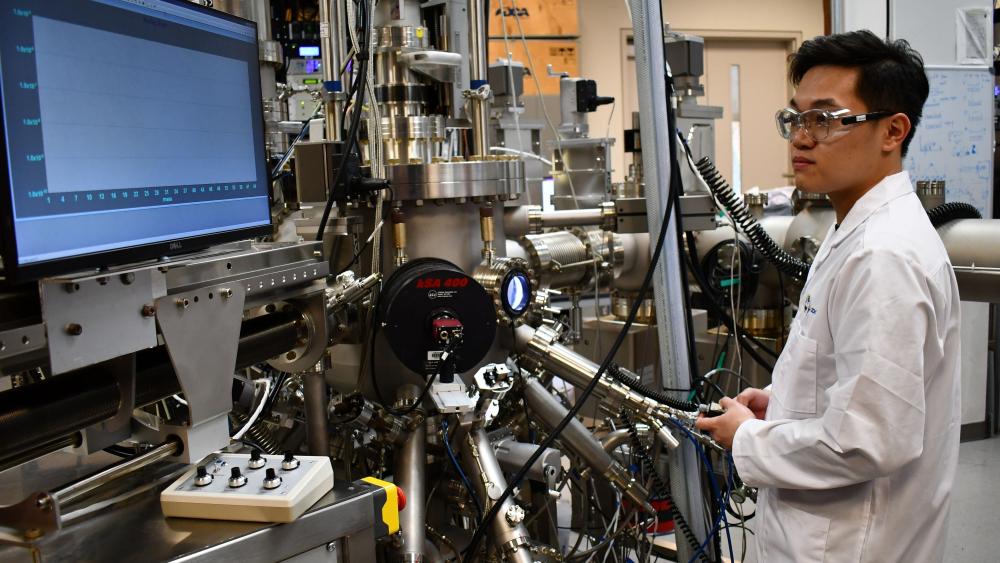
Q&A: Growing novel ultra-pure materials for tomorrow’s electronics
UNIVERSITY PARK, Pa. — Pairing elements such as sulfur, selenium or tellurium with metals produces compounds whose atomic interactions give them unusual and useful electrical, optical and magnetic behavior. These materials, called…
Continue Reading
-

JMU Heads to Atlanta for Rematch With Georgia State
ATLANTA – James Madison women’s basketball will complete its regular-season series versus Georgia State with a Saturday afternoon tilt in Atlanta. Action inside the GSU Convocation Center is scheduled for 1 p.m. and will stream on ESPN+.LAST…
Continue Reading
-
Today in Energy – U.S. Energy Information Administration (EIA)
In-brief analysisJan 9, 2026
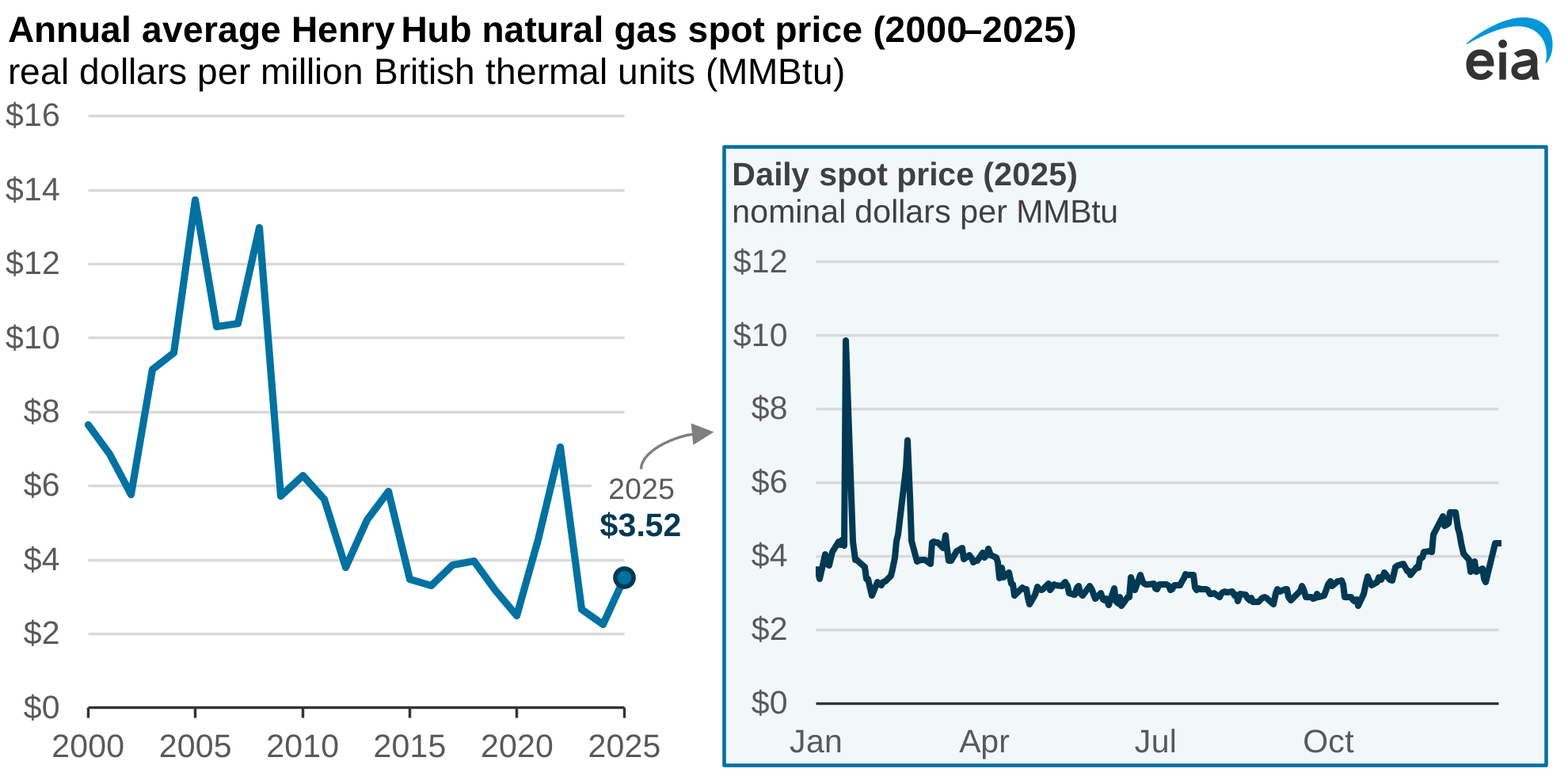
In 2025, the wholesale U.S. natural gas spot price at the national benchmark Henry Hub in Louisiana averaged $3.52 per million British thermal units (MMBtu), based on data from LSEG Data. The 2025 average Henry Hub natural gas spot price increased 56% from the 2024 annual average, which—when adjusted for inflation—was the lowest on record. On a daily basis, the Henry Hub natural gas spot price ranged from $2.65/MMBtu to $9.86/MMBtu, reflecting a narrower range of daily prices compared with the previous year.
Read More ›
In-brief analysisJan 7, 2026
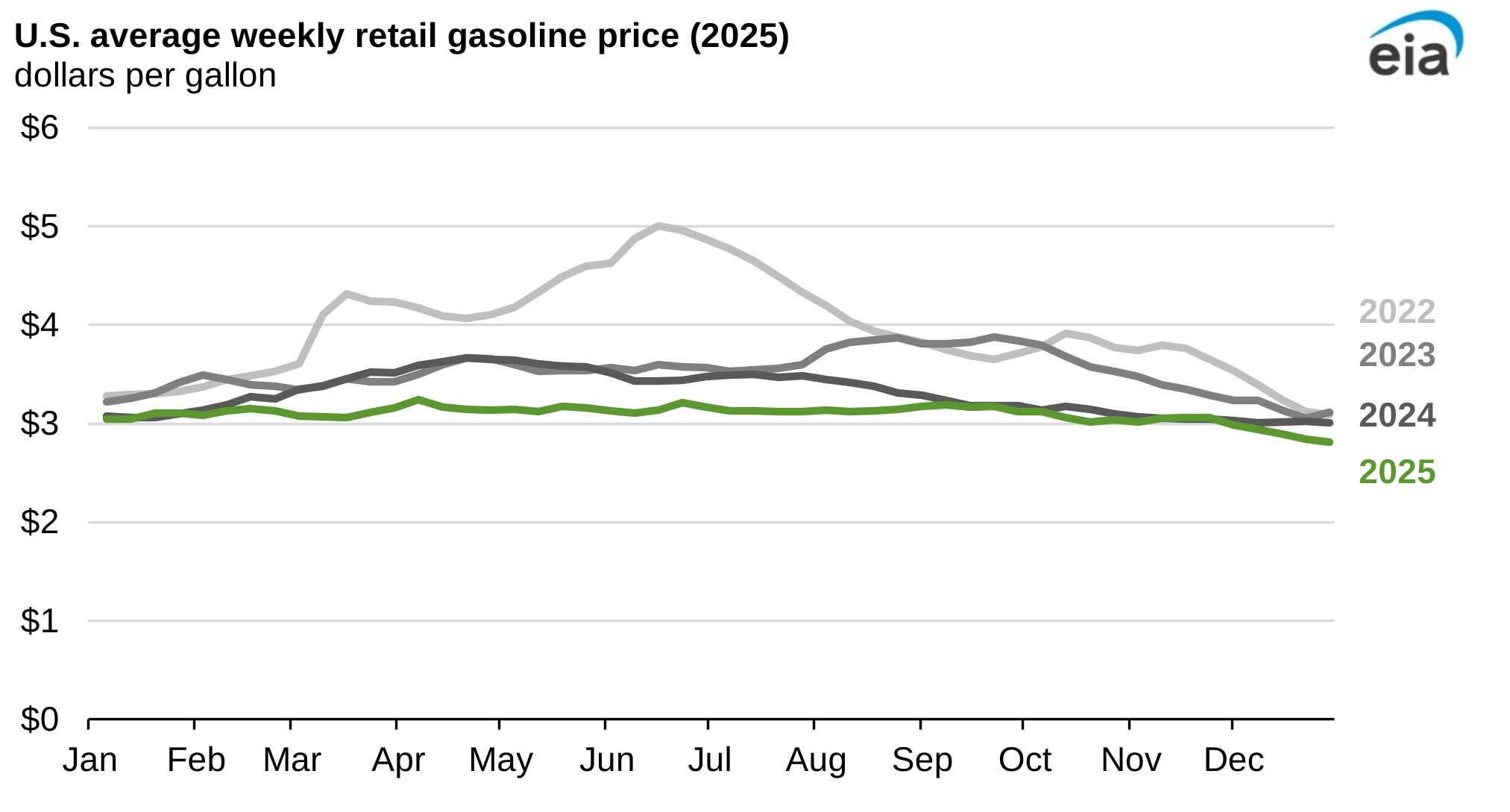
The U.S. retail price for regular grade gasoline averaged $3.10 per gallon (gal) in 2025, $0.21/gal less than in 2024. This year marks the third consecutive year of declining nominal retail gasoline prices, according to data from our Gasoline and Diesel Fuel Update.
Read More ›
In-brief analysisJan 5, 2026
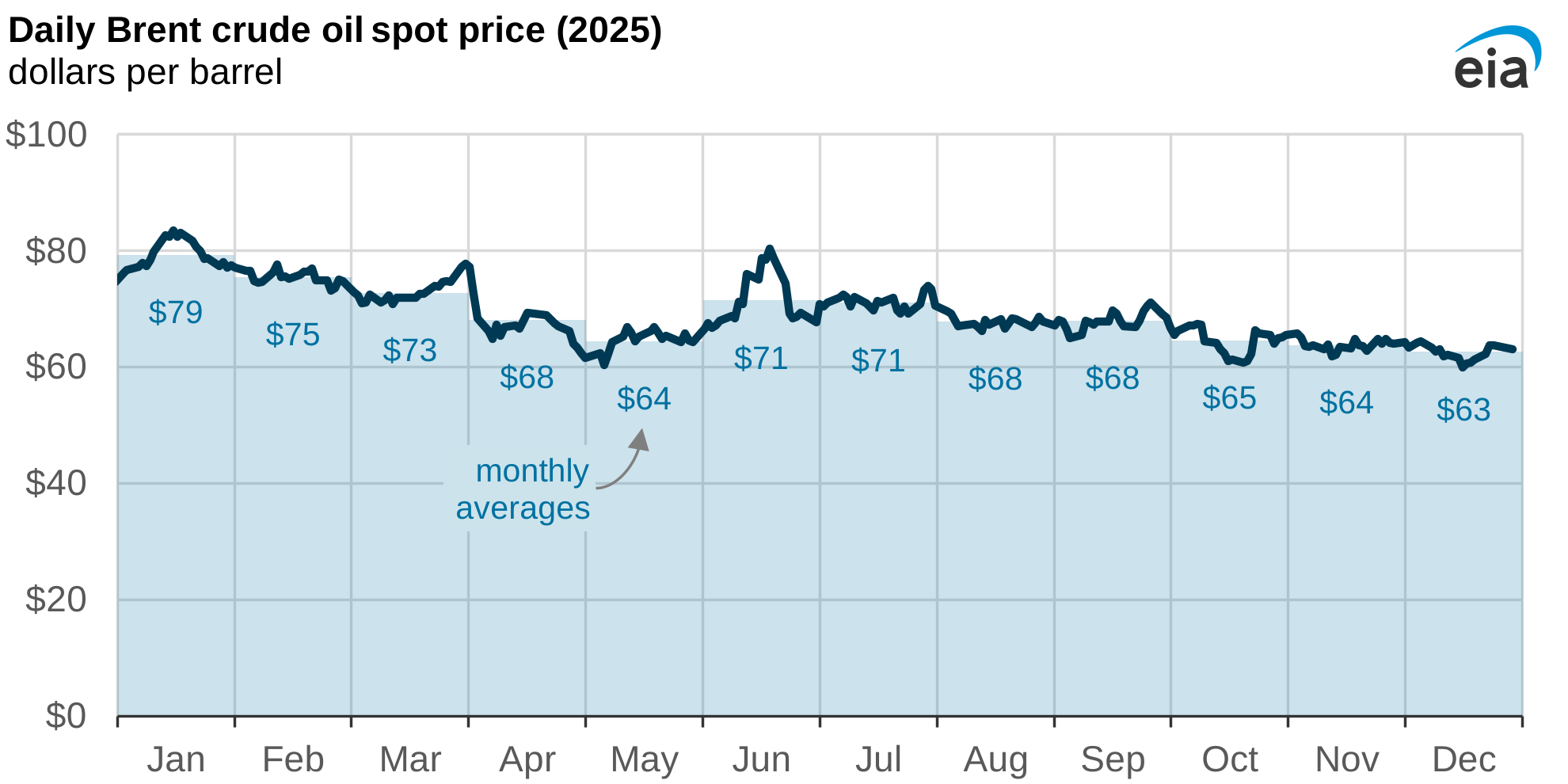
Data source: U.S. Energy Information Administration, based on Thomson Reuters data
Data values: Europe Brent Spot Price FOB (free on board)
Crude oil prices generally declined in 2025 with supplies in the global crude oil market exceeding demand. Crude oil inventory builds in China muted some of the price decline. Events such as Israel’s June 13 strikes on Iran and attacks between Russia and Ukraine targeting oil infrastructure periodically supported prices.
Read More ›
In-brief analysisDec 22, 2025

Source: U.S. Energy Information Administration
Below is a list featuring some of our most popular and favorite articles from 2025. We will resume regular Today in Energy publications on January 5, 2026. Thanks for your continued readership of Today in Energy.
Read More ›
In-brief analysisDec 19, 2025
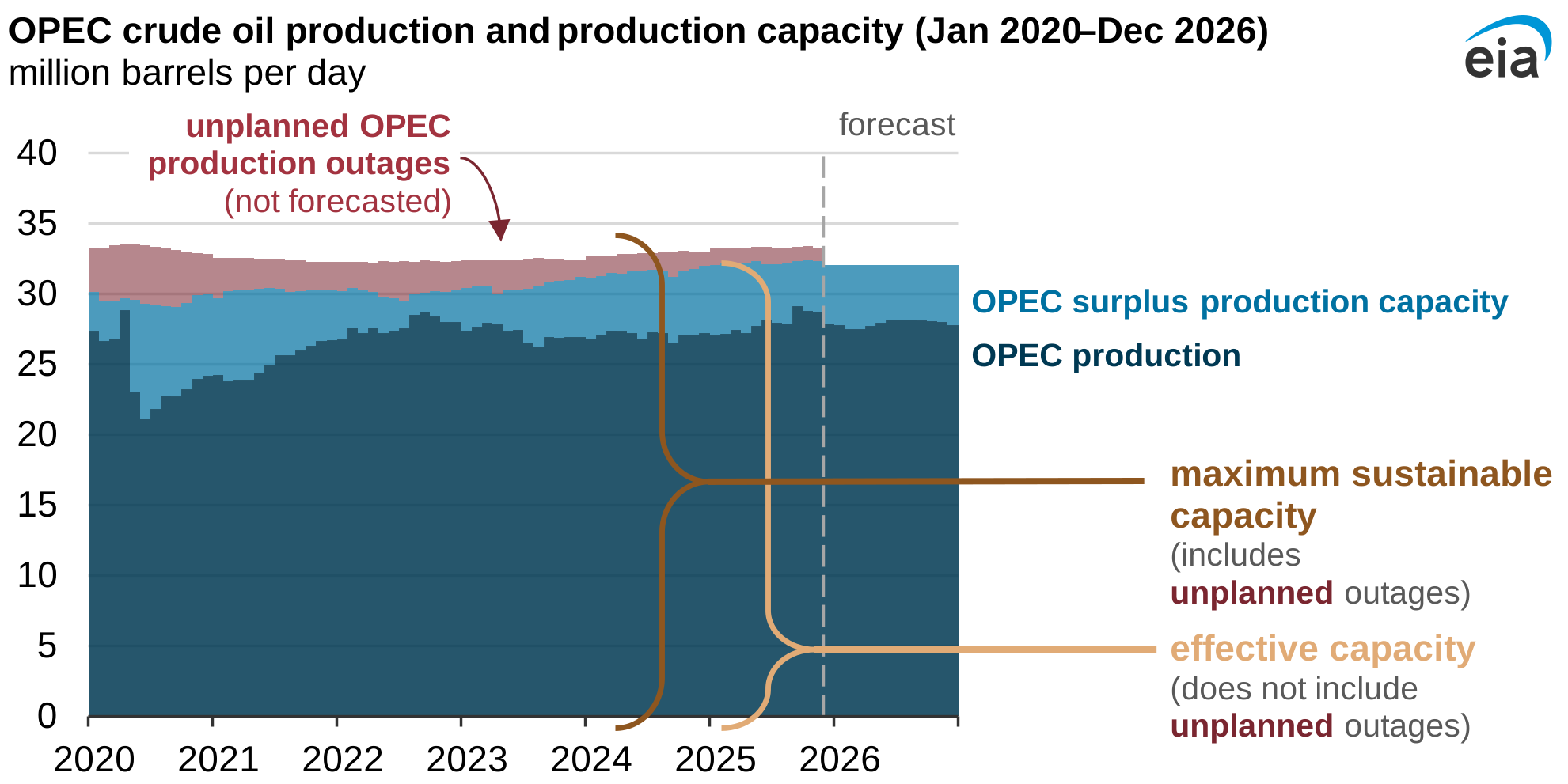
Data source: U.S. Energy Information Administration, Short-Term Energy Outlook
Data values: Total Crude Oil Production
Note: While EIA does not forecast unplanned production outages, they are assumed to remain at the most recent historical month’s level throughout the forecast period.
Each month we publish estimates of key global oil market indicators that affect crude oil prices and movements in our Short-Term Energy Outlook (STEO). Among the most important indicators for global crude oil markets are estimates of OPEC’s effective crude oil production capacity and surplus production capacity, as well as any disruptions to liquid fuels production. Low surplus production capacity among OPEC countries can put upward pressure on crude oil prices in the event of unplanned supply disruptions or strong growth in global oil demand.
Read More ›
In-brief analysisDec 17, 2025
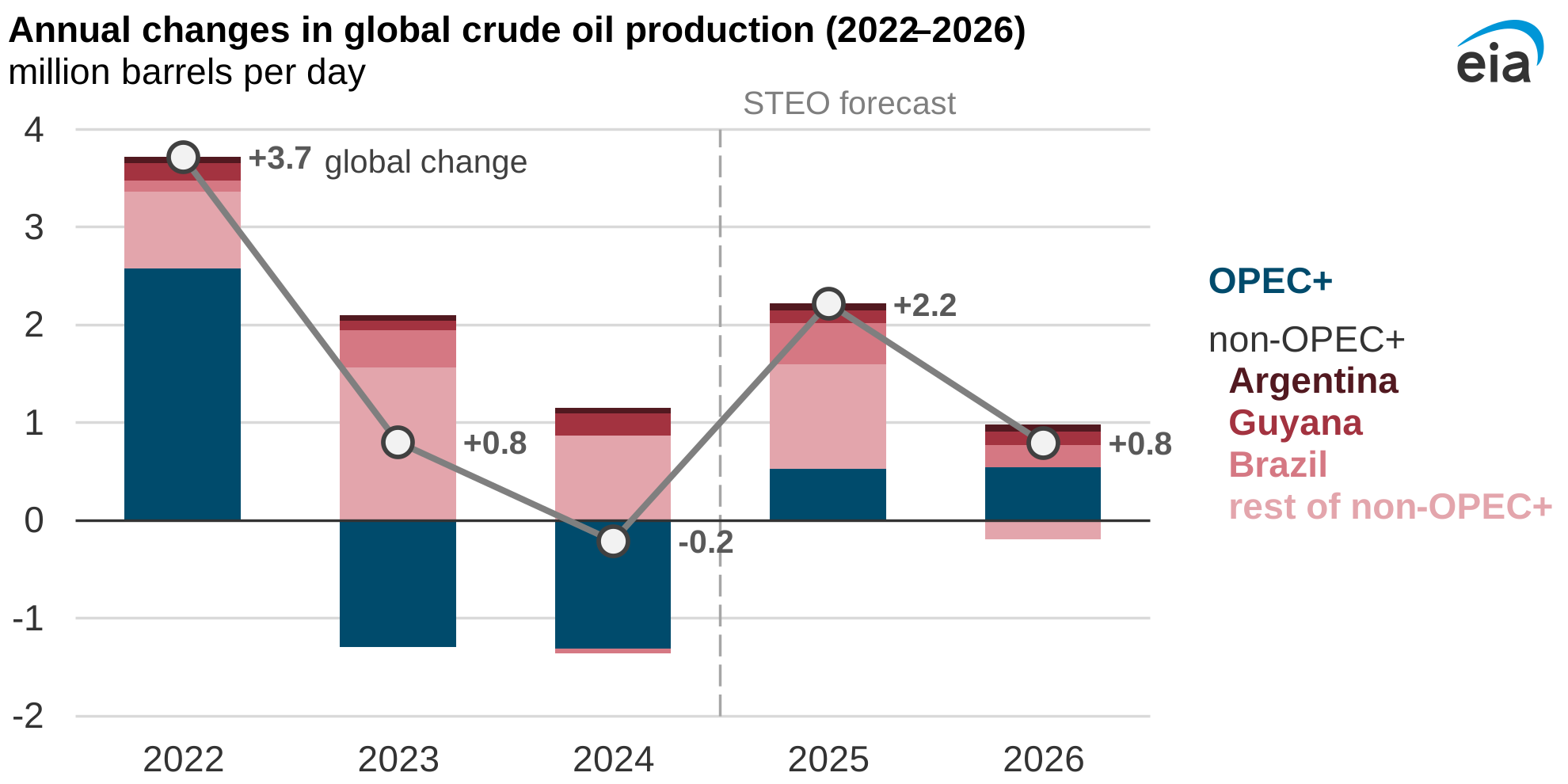
We forecast that global crude oil production will increase by 0.8 million barrels per day (b/d) in 2026, with supply from Brazil, Guyana, and Argentina accounting for 0.4 million b/d of the expected global growth forecast in our December Short-Term Energy Outlook (STEO). Global crude oil production growth since 2023 has been driven by countries outside of OPEC+.
Read More ›
In-brief analysisDec 15, 2025
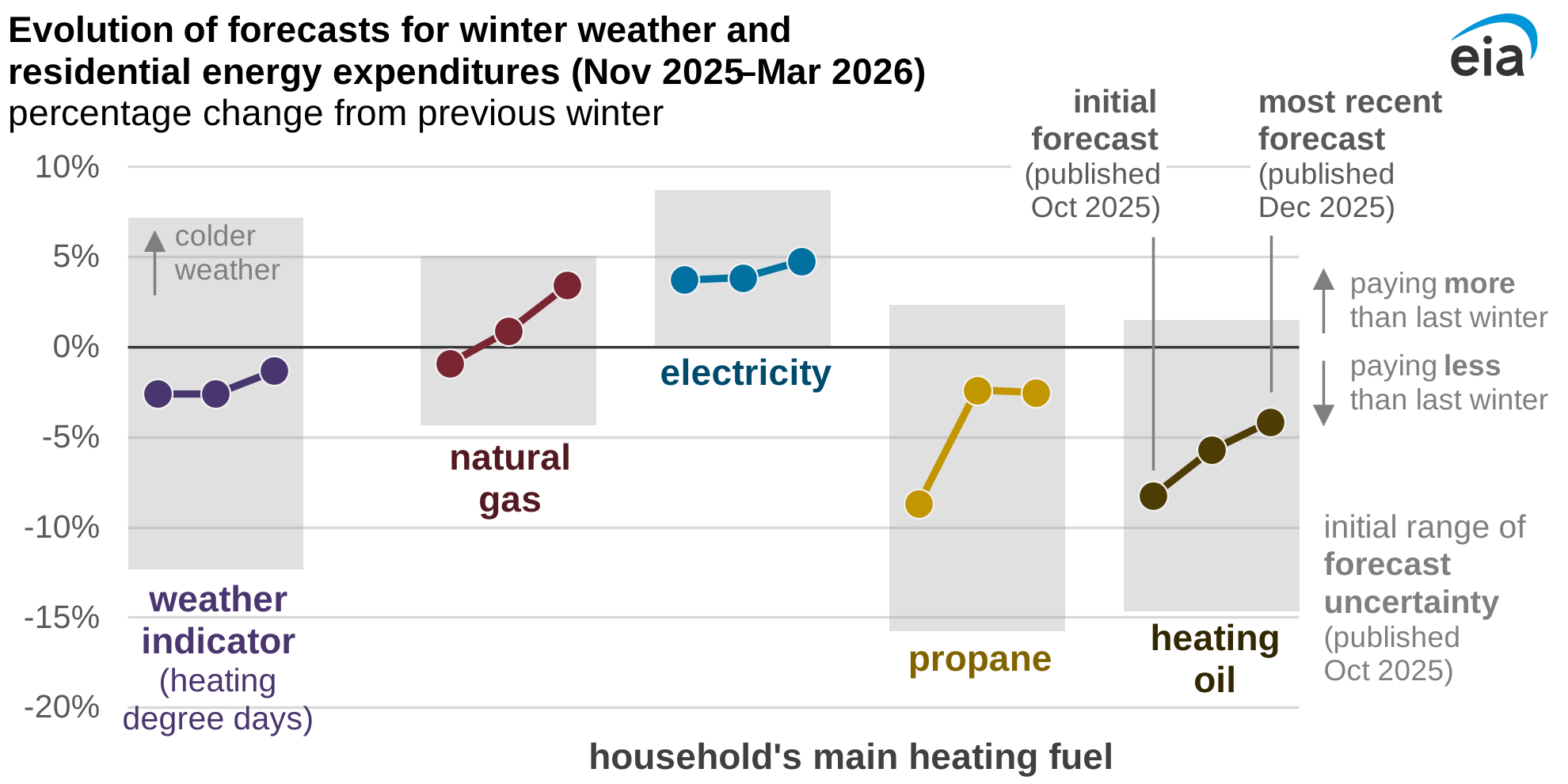
Our estimates for residential energy expenditures this winter (November 2025 through March 2026) have increased since the publication of our initial Winter Fuels Outlook forecasts in mid-October. We now expect a colder winter, and our retail energy price forecasts have risen, especially for natural gas and propane.
Read More ›
In-brief analysisDec 12, 2025
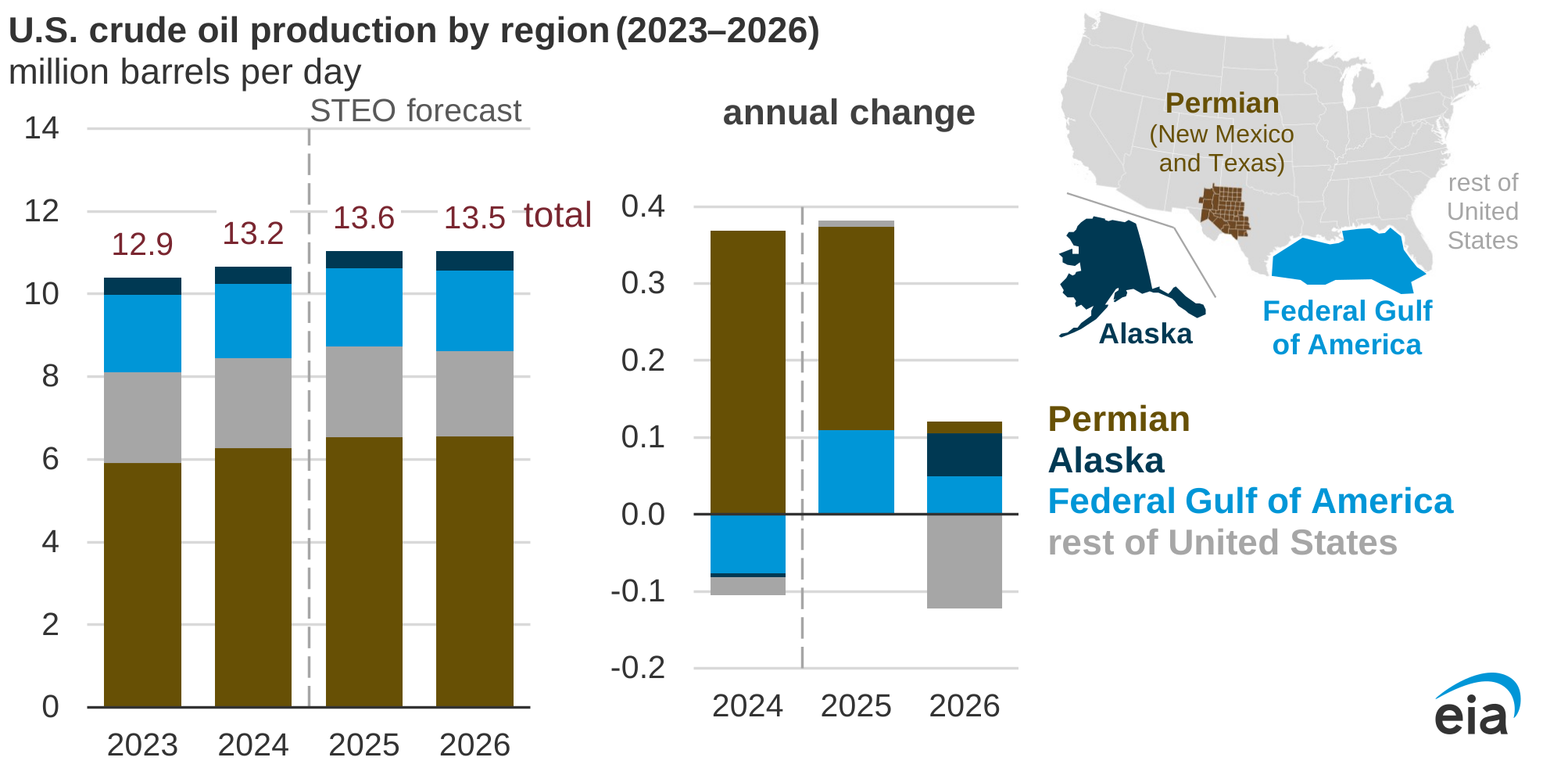
- In our latest Short-Term Energy Outlook, we forecast U.S. crude oil production will average 13.5 million barrels per day (b/d) in 2026, about 100,000 b/d less than in 2025.
- This forecast decline in production follows four years of rising crude oil output.
- Production increased by 0.3 million b/d in 2024 and by 0.4 million b/d in 2025, mostly because of increased output in the Permian Basin in Texas and New Mexico.
- In 2026, we forecast modest production increases in Alaska, the Federal Gulf of America, and the Permian will be offset by declines in other parts of the United States.
- We forecast that the West Texas Intermediate crude oil price will average $65 per barrel (b) in 2025 and $51/b in 2026, both lower than the 2024 average of $77/b.
Read More ›
In-brief analysisDec 10, 2025
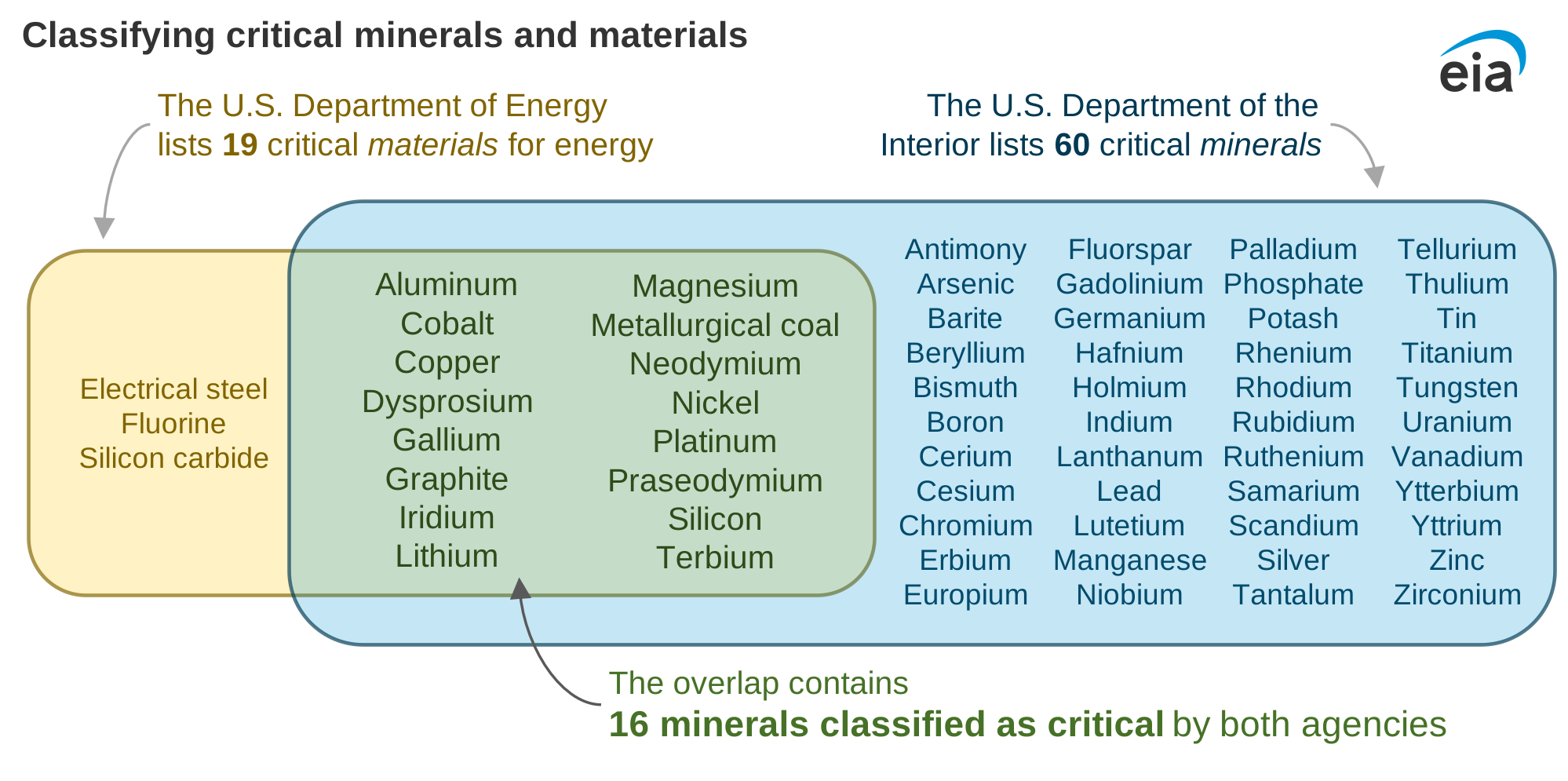
Data source: U.S. Department of the Interior’s 2025 list of critical minerals; U.S. Department of Energy’s 2023 list of critical materials and a recently proposed addition
Note: This Today in Energy article launches the Energy Minerals Observatory, a new project of the U.S. Energy Information Administration. In 2026, as part of the Observatory and the Manufacturing Energy Consumption Survey (MECS), EIA plans to conduct field studies of three minerals: graphite, vanadium, and zirconium.
Critical minerals, such as copper, cobalt, and silicon, are vital for energy technologies, but most critical minerals markets are less transparent than mature energy markets, such as crude oil or coal. Like other energy markets, many supply-side and demand-side factors influence pricing for these energy-relevant critical minerals, but critical minerals supply chains contain numerous data gaps.
Read More ›
In-brief analysisDec 8, 2025
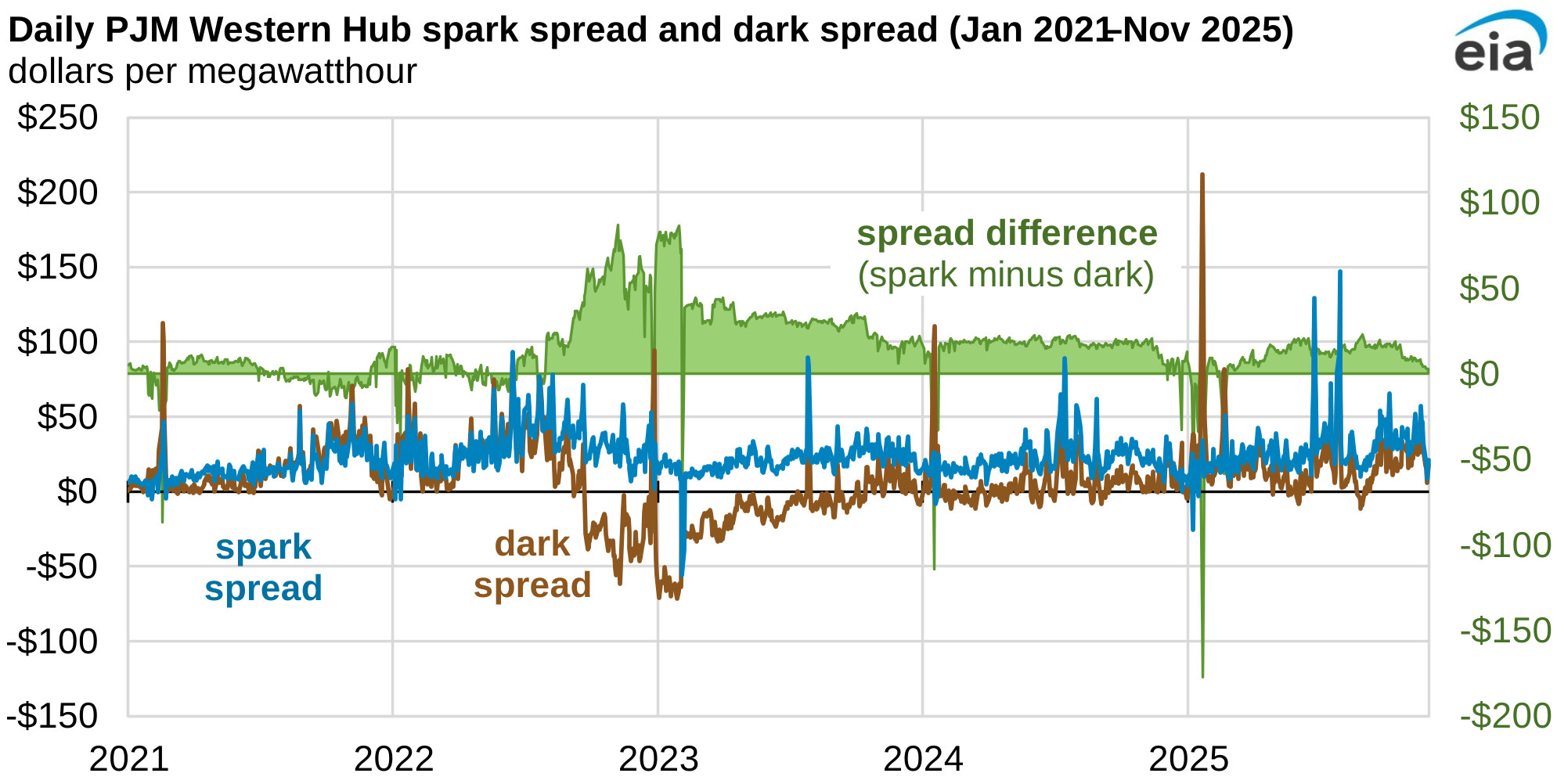
Data source: U.S. Energy Information Administration, based on data from S&P Global Market Intelligence
Data note: The specifics of the calculation methodology are detailed in a previous article with minor adjustments to heat rates used. The heat rate used for the dark spread was 10,500 British thermal units per kilowatthour (Btu/kWh), while the heat rate for the spark spread was 7,000 Btu/kWh.
Higher average daily wholesale electricity prices between January and November 2025 may be improving the operational competitiveness of some natural gas- and coal-fired generators in the PJM Interconnection compared with the same period in 2024. PJM is the largest wholesale electricity market in the United States. The spark and dark spreads, common metrics for estimating the profitability of natural gas- and coal-fired electric generators, have both increased over the past two years.
Read More ›
In-brief analysisDec 5, 2025
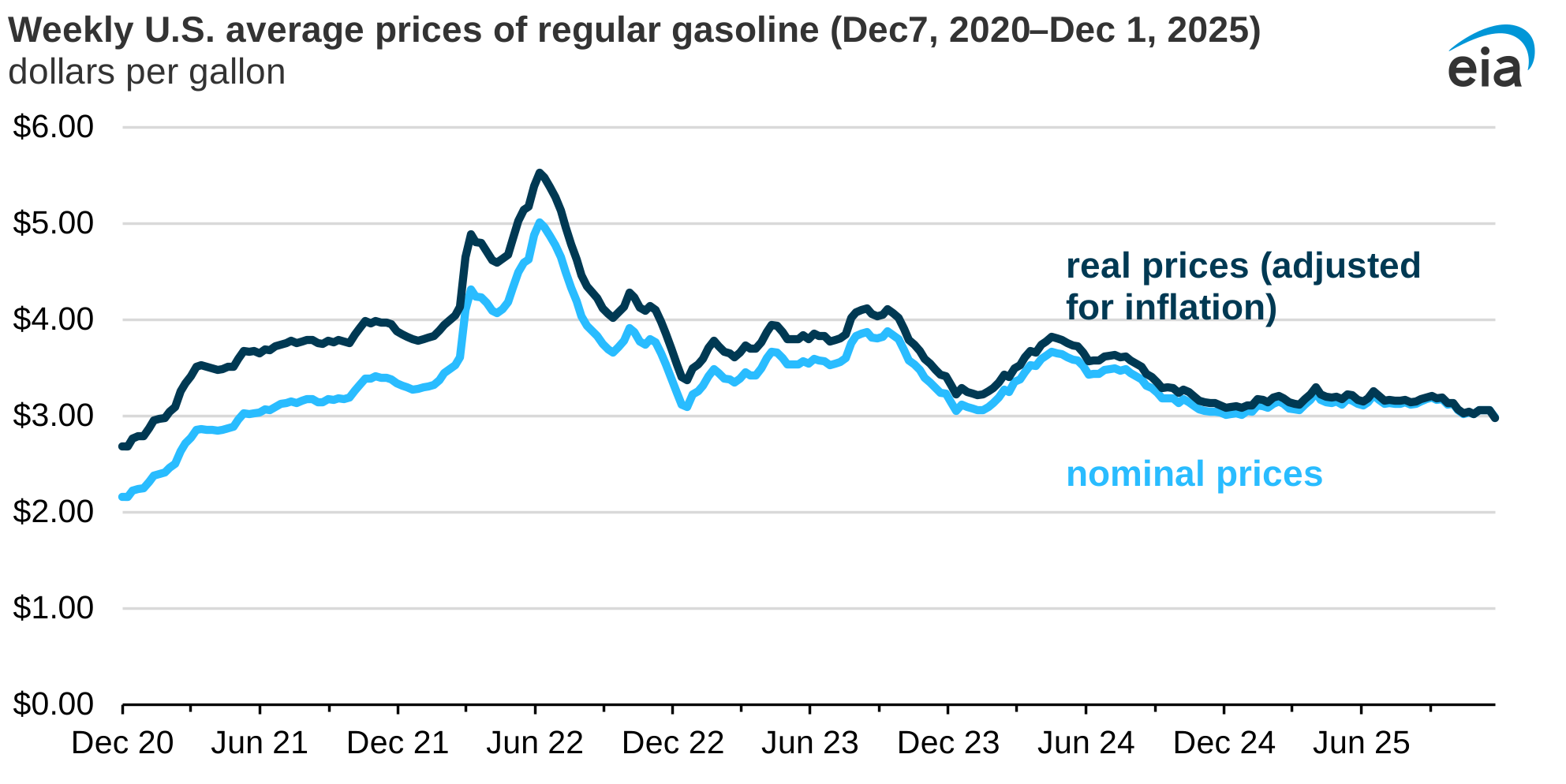
- On December 1, 2025, the U.S. average retail price of regular gasoline fell below $3.00 per gallon (gal) to $2.98/gal, according to data from our Gasoline and Diesel Fuel Update. When adjusted for inflation, the December 1 price is the lowest average U.S. gasoline price since February 2021.
- The falling price of crude oil, which typically accounts for about half of the retail gasoline price, has led to a drop in the price consumers pay for gasoline.
- Gasoline prices vary by region. On December 1, regular gasoline prices ranged between a low price of $2.55/gal on the U.S. Gulf Coast and a high price of $4.03/gal on the U.S. West Coast.
Read More ›
In-brief analysisDec 3, 2025
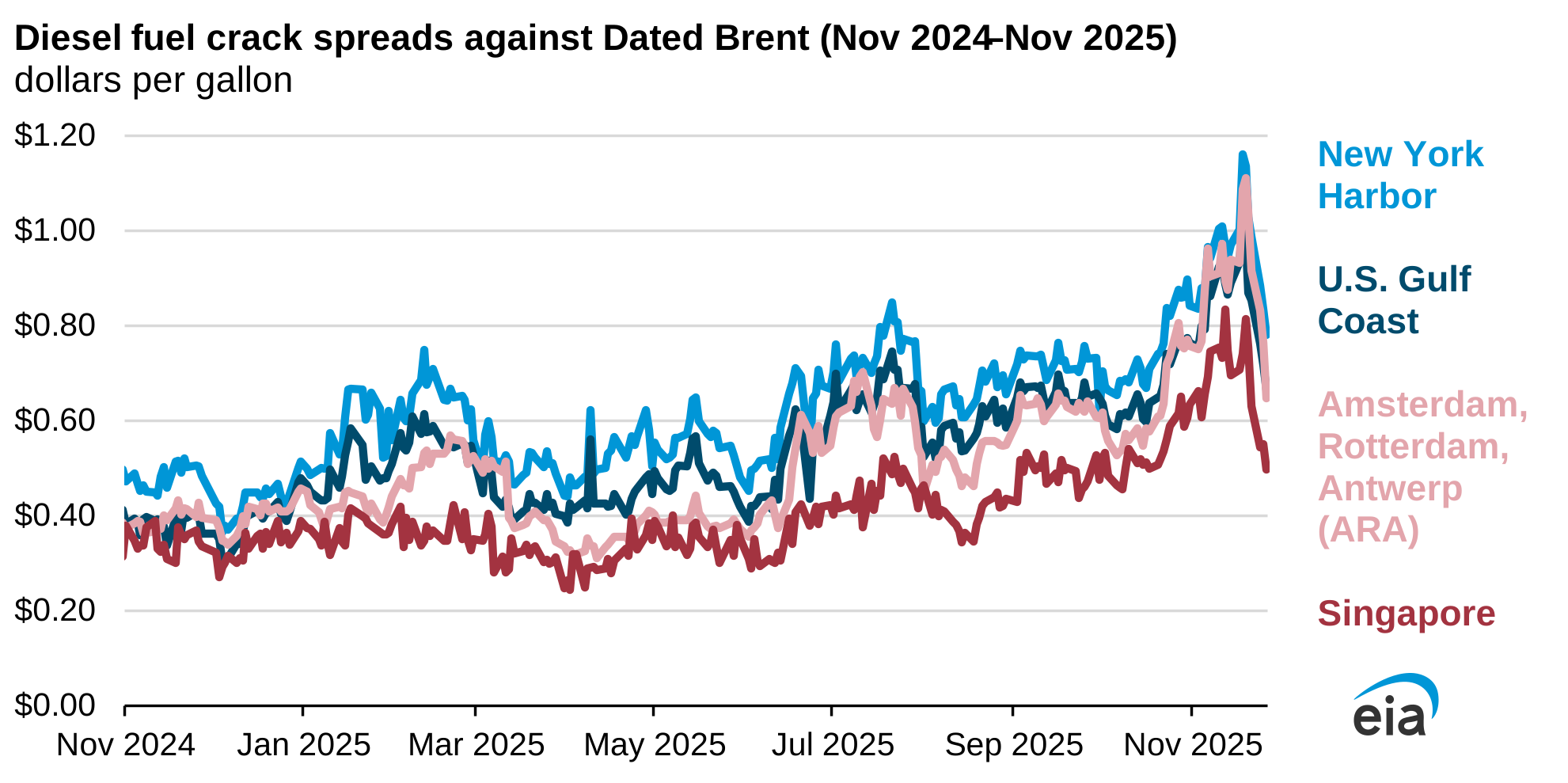
Data source: Bloomberg L.P.
Note: Data through November 26, 2025. All crack spreads are calculated against the Dated Brent crude oil spot price.
Global refinery margins for diesel have widened since late October and increased to their highest level all year, following refinery outages in Russia and in the Middle East and new sanctions on Russia’s crude oil, leading to limited refinery production and a decreased global diesel supply. The impact was most pronounced in the Atlantic Basin, contributing to higher prices at the Amsterdam, Rotterdam, Antwerp (ARA) shipping hub, a key benchmark for European prices, as well as at New York Harbor and the U.S. Gulf Coast. The higher global prices also affected prices in the United States because U.S. refiners can sell into both domestic and international markets.
Read More ›
In-brief analysisDec 1, 2025
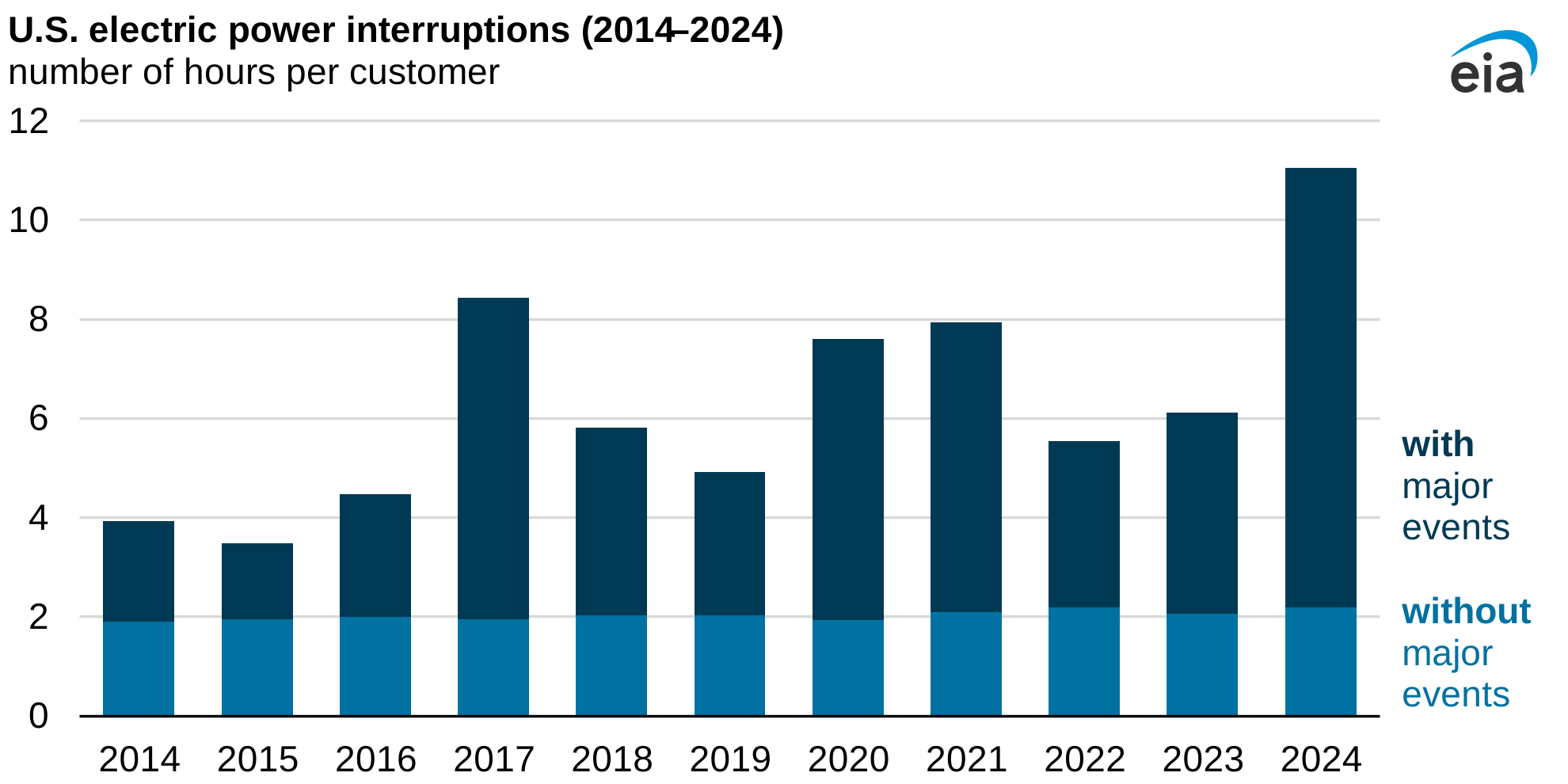
U.S. electricity customers experienced an average of 11 hours of electricity interruptions in 2024, or nearly twice as many as the annual average experienced in the decade before, according to our Electric Power Annual 2024 report. Major events such as Hurricanes Beryl, Helene, and Milton accounted for 80% of the hours without electricity in 2024.
Read More ›
In-brief analysisNov 26, 2025
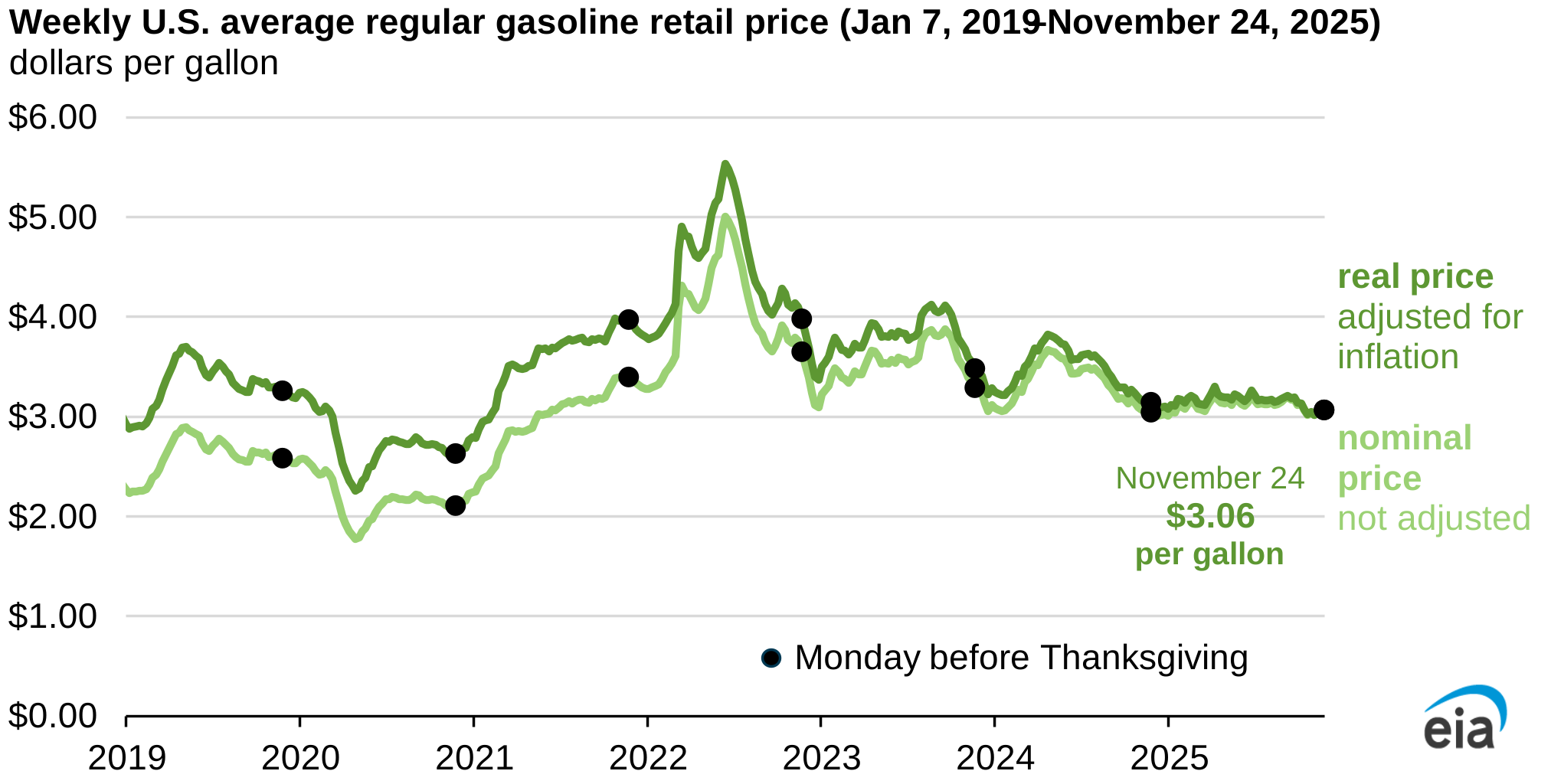
Data source: U.S. Energy Information Administration, Gasoline and Diesel Fuel Update; U.S. Bureau of Labor Statistics (BLS)
Note: Weekly data reflect U.S. average regular gasoline retail price for all formulations; real price is calculated using Consumer Price Index from BLS.
On the Monday before Thanksgiving, the U.S. retail price for regular-grade gasoline averaged $3.06 per gallon (gal), just 2 cents/gal higher than the same time last year. After adjusting for inflation, however, this year marks the lowest average gasoline price for the Monday before the Thanksgiving holiday weekend since 2020, when the pandemic disrupted gasoline demand and travel plans.
Read More ›
In-brief analysisNov 24, 2025

Data source: U.S. Energy Information Administration, Electric Power Monthly
Note: Coal represents less than 1% each year.
Although natural gas generation still provides more electricity than any other source in California, electricity generation from natural gas has decreased over the past several years while generation from solar has increased.
Read More ›
Continue Reading
-
Cape Breton to shine on global sports stage
Women’s hockey championship will bring visitors and a boost for local businesses
January 9, 2026 · Membertou, NS · Atlantic Canada Opportunities Agency (ACOA)
Sports unites us, sparks pride and strengthens the communities we call home….
Continue Reading
-

Maryland Agricultural Commission Meeting Notice
Maryland Agricultural Commission Meeting Notice
The Maryland Agricultural Commission will meet on Tuesday, January 13th at 10:00 AM at the Maryland Department of Agriculture Headquarters in Annapolis….
Continue Reading
-

Fiserv Launches Unknown Shopper at NRF, Helping Merchants Better Understand In-Store Customers :: Fiserv, Inc. (FISV)
New capability delivers actionable insights from card-present transactions
MILWAUKEE–(BUSINESS WIRE)–
Fiserv, Inc. (NASDAQ: FISV), a leading global provider of payments and financial services technology, today announced the launch of Unknown Shopper from Fiserv, a new analytics capability designed to help merchants and their marketing partners better understand in-store customer behavior and build actionable customer segments from card-present transactions.Unknown Shopper enables merchants to unlock value from in-store payment activity by transforming payment data into actionable insights that support more relevant engagement, and better customer experiences. Built on Fiserv’s payments intelligence platform and informed by billions of historical transactions, the solution helps merchants across retail, restaurant, and fuel environments—industries where insight into card-present transactions has historically been limited—gain deeper visibility into purchasing patterns.
Addressing an in-store payments challenge
In traditional card-present environments, merchants often have limited visibility of their customers unless a transaction is tied to a loyalty program. As a result, a significant portion of in-store activity remains difficult to analyze, measure, or activate. Unknown Shopper helps close this gap by enriching transaction data with demographic information, enabling merchants to better understand in-store purchasing patterns.
Unknown Shopper allows businesses to link transactions to actionable customer segments based on real purchase behavior, even without a loyalty program. To that end, the solution helps businesses, with the assistance of their marketing partners, to:
- Create a more unified view of in-store and digital purchasing behavior at the segment level
- Build customer segments based on actual spending patterns rather than inferred demographics
- Deliver more relevant offers and experiences to non-loyalty customers
- Improve campaign measurement and reduce media waste through stronger attribution and regularly refreshed insights
“Unknown Shopper allows merchants to translate in-store transaction data into meaningful insights and customer segments—helping them serve their customers more effectively,” said Prasanna Dhore, Chief Data Officer, Fiserv.
Unknown Shopper is now available to merchants and marketing agencies. Learn more about Unknown Shopper.
Fiserv will demonstrate the solution at NRF 2026: Retail’s Big Show, January 11-13, at the Jacob J. Javits Convention Center (Booth #5451).
About Fiserv
Fiserv, Inc. (NASDAQ: FISV), a Fortune 500 company, moves more than money. As a global leader in payments and financial technology, the company helps clients achieve best-in-class results through a commitment to innovation and excellence in areas including account processing and digital banking solutions; card issuer processing and network services; payments; e-commerce; merchant acquiring and processing; and Clover®, the world’s smartest point-of-sale system and business management platform. Fiserv is a member of the S&P 500® Index, one of TIME Magazine’s Most Influential Companies™ and one of Fortune® World’s Most Admired Companies™. Visit fiserv.com and follow on social media for more information and the latest company news.
FISV-G
View source version on businesswire.com: https://www.businesswire.com/news/home/20260109022168/en/
Media Relations:
Chase Wallace
Director, Communications
Fiserv, Inc.
+1 470-481-2555
chase.wallace@fiserv.comAdditional Contact:
Melissa Moritz
Vice President, External Communications
Fiserv, Inc.
+1 516-410-1188
melissa.moritz@fiserv.comSource: Fiserv, Inc.
Released January 9, 2026
Continue Reading