Authorship: In addition to Waldor, Mass General Brigham authors include Deborah R Leitner (co-first author), Stephen R Walsh (co-first author), Masataka Suzuki, Michaël Desjardins, Alisse Hannaford, Amy C Sherman, Hannah Levine, Lena Carr,…
Author: admin
-
SEC Proposes Amendments to the Small Entity Definitions for Investment Companies and Investment Advisers for Purposes of the Regulatory Flexibility Act
The Securities and Exchange Commission today proposed amendments to the rules that define which registered investment companies, investment advisers, and business development companies qualify as small entities for purposes of the Regulatory Flexibility Act (RFA).
The RFA requires federal agencies to conduct certain analyses, with the goal of minimizing the significant economic impact of federal rulemaking on small entities. This proposal would raise the small entity thresholds for investment companies and advisers. It is designed to help the Commission better tailor its analyses to address the specific regulatory challenges that these small entities face and consider adapting its rulemaking accordingly.
“The Commission has a longstanding commitment to understanding and addressing the concerns of small entities,” said SEC Chairman Paul S. Atkins. “Today’s proposal – consistent with the SEC’s intent to modernize regulatory requirements – would further this commitment by more accurately capturing the types and numbers of investment advisers and investment companies that are ‘small.’ This, in turn, would help the Commission more appropriately promote the effectiveness and efficiency of its regulations, with the goal of minimizing the significant economic impact on small entities.”
Specifically, this proposal would:
- Increase the asset-based thresholds under which investment companies and investment advisers are deemed small entities;
- Update the way that related funds’ assets are aggregated for purposes of defining small entities; and
- Provide for inflation adjustments to the asset-based thresholds by order every 10 years.
The proposing release will be published in the Federal Register. The public comment period will remain open until 60 days after the date of publication of the proposing release in the Federal Register.
Continue Reading
-

People who stop taking weight-loss jabs regain weight in under two years, study reveals | Health
People who stop taking weight loss jabs regain all the weight originally lost in under two years, significantly faster than those on any other weight loss plan, according to a landmark study.
Weight loss medications, known as GLP-1 agonists, were…
Continue Reading
-

Common food preservatives linked to cancer and type 2 diabetes
Common preservatives used to keep food safe and extend shelf life may be linked to a higher risk of several cancers and type 2 diabetes, according to two new studies from France.
“These…
Continue Reading
-
UK Sees Tanker Seizure as Show of Europe’s Role in US Security – Bloomberg.com
- UK Sees Tanker Seizure as Show of Europe’s Role in US Security Bloomberg.com
- US seizes Russian-flagged tanker in Atlantic as UK confirms it gave support to operation BBC
- Reflagged by Russia, spied on by UK, seized by US: why so much interest in…
Continue Reading
-
Distinct membrane binding properties of the two non-visual arrestins
Gurevich, V. V. & Gurevich, E. V. GPCR signaling regulation: the role of GRKs and arrestins. Front. Pharm. 10, 125 (2019).
Luttrell, L. M. & Lefkowitz, R. J. The role of beta-arrestins in the…
Continue Reading
-

Ashley Tisdale Quit ‘Toxic’ Celebrity Mom Group Due To ‘Misalignment Of Values’
More details are emerging surrounding the dramatic fallout between Ashley Tisdale and her group of celebrity friends, which included Meghan Trainor, Mandy Moore, and fellow Disney alum Hilary Duff.
The rumors of a brewing feud began after Ashley…
Continue Reading
-

Gatakers Artspace sets new visitor record in 2025
Published on 08 January 2026
Gatakers Artspace in Maryborough has recorded its biggest year yet, welcoming 15,000 visitors who explored 28 exhibitions across the Gallery and Studio during 2025.
Deputy Mayor…
Continue Reading
-
Bank Alfalah exits Afghanistan
Frozen reserves, regulatory risks drive exit as border closures choke Pak-Afghan commerce
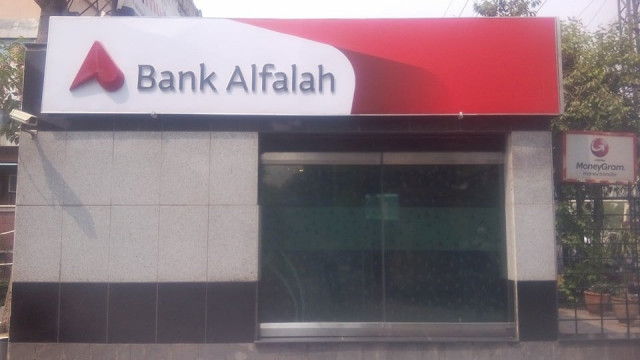
Bank Alfalah. PHOTO: EXPRESS
KARACHI:Bank Alfalah has decided to exit its operations in Afghanistan amid persistent political, economic and regulatory challenges in the country, a move that reflects both country-specific risks and a broader strategic shift underway across Pakistan’s banking sector.
According to a statement and market commentary, the decision comes against the backdrop of frozen Afghan foreign reserves, uncertainty surrounding international recognition of the Taliban-led government, and prolonged disruptions to cross-border trade and financial flows.
Banking sector analyst Asad Ali of Topline Securities said that, given the prevailing conditions in Afghanistan, the bank’s decision was pragmatic and largely expected.
“Amid ongoing challenges in Afghanistan, including frozen reserves and uncertainty over international recognition, the bank has decided to exit its operations in the country,” he told The Express Tribune. “The Afghanistan business was limited in scale, comprising only two branches, and the decision is not expected to have a material impact on the bank’s balance sheet.”
He added that the move should not be viewed in isolation. “Globally, banks are reassessing cross-border operations, particularly in high-risk jurisdictions. Afghanistan’s situation is one factor, but there are internal strategic reasons as well. If you look at other banks, you will see the same trend – many are closing or have already closed their foreign subsidiaries,” he said, pointing to heightened compliance costs, tighter global regulatory scrutiny and capital allocation priorities.
On January 7, 2026, Bank Alfalah moved closer to formally exiting the Afghan market, where it has operated since 2005. The State Bank of Pakistan and Da Afghanistan Bank have granted in-principle approval to Ghazanfar Bank to commence due diligence for the acquisition of Bank Alfalah’s Afghanistan operations. This follows an earlier, unsuccessful attempt to divest the unit in 2019 and signals a more definitive step toward disengagement from the Afghan financial system.
The bank’s exit coincides with a critical phase in Pakistan-Afghanistan economic relations. Secretary of the Pakistan-Afghanistan Joint Chamber of Commerce and Industry (PAJCCI), Muhammad Shoaib, said the bilateral economic relationship is at a “very sensitive juncture,” marked by a prolonged border crisis and a visible withdrawal of Pakistani financial institutions from Afghanistan.
Since October 10, 2025, major trade crossings, including Torkham, Chaman-Spin Boldak and Ghulam Khan, have remained largely closed following deadly military clashes and escalating security tensions. The three-month-long standstill has effectively paralysed bilateral trade and transit activity, severely disrupting supply chains.
Approximately 12,000 containers and thousands of trucks carrying transit goods are reportedly stranded at Karachi Port and along various border points. Traders are incurring heavy financial losses, with daily demurrage and detention charges estimated at $150 to $200 per container.
The impact has been particularly severe for Pakistan’s export-oriented sectors. The 2025-26 citrus (kinnow) season has been described by exporters as “completely damaged,” as Afghanistan typically absorbs around 60% of Pakistan’s citrus exports. With the Afghan transit route blocked, exports to Russia and Central Asian states have also stalled, leaving large quantities of produce unsold. Exports of potatoes and bananas to Central Asia have similarly come to a halt, while cement and pharmaceutical manufacturers have seen a key regional market effectively disappear.
Afghanistan, meanwhile, is facing its own economic fallout. Essential imports ordered from global markets remain stuck in Pakistan, contributing to supply shortages and rising food prices, including tomatoes, grapes and apples, in Afghan markets. Seasonal Afghan exports such as pomegranates, grapes and coal have also been restricted, resulting in significant revenue losses for local producers.
In response to the prolonged closures, Afghanistan has accelerated efforts to bypass Pakistan by developing alternative trade routes. Afghan traders are increasingly using Iran’s Chabahar port and overland corridors through Uzbekistan, Turkmenistan and Tajikistan. Iran and Afghanistan have also agreed to boost rail freight capacity on the Khaf-Herat line. Despite tensions with Pakistan, Afghanistan’s total trade volume reportedly reached around $14 billion in 2025, suggesting that alternative routes are partially offsetting the disruption.
Addressing the border situation, DG ISPR Lt Gen Ahmed Sharif recently stated that Pakistan’s trade and cross-border movement are restricted due to security concerns, emphasising that national security remains the state’s top priority.
Continue Reading
-
News Item | House Committee on Small Business
<br /> News Item | House Committee on Small Business <br />
Skip to Content
Please include a Document ID when viewing this page.
Continue Reading