
Eight digital platforms can be used in the NHS while further evidence is collected over the next three years the draft guidance recommends. The platforms provide people with asthma the option to use apps or online tools to receive access to…
Author: admin
-
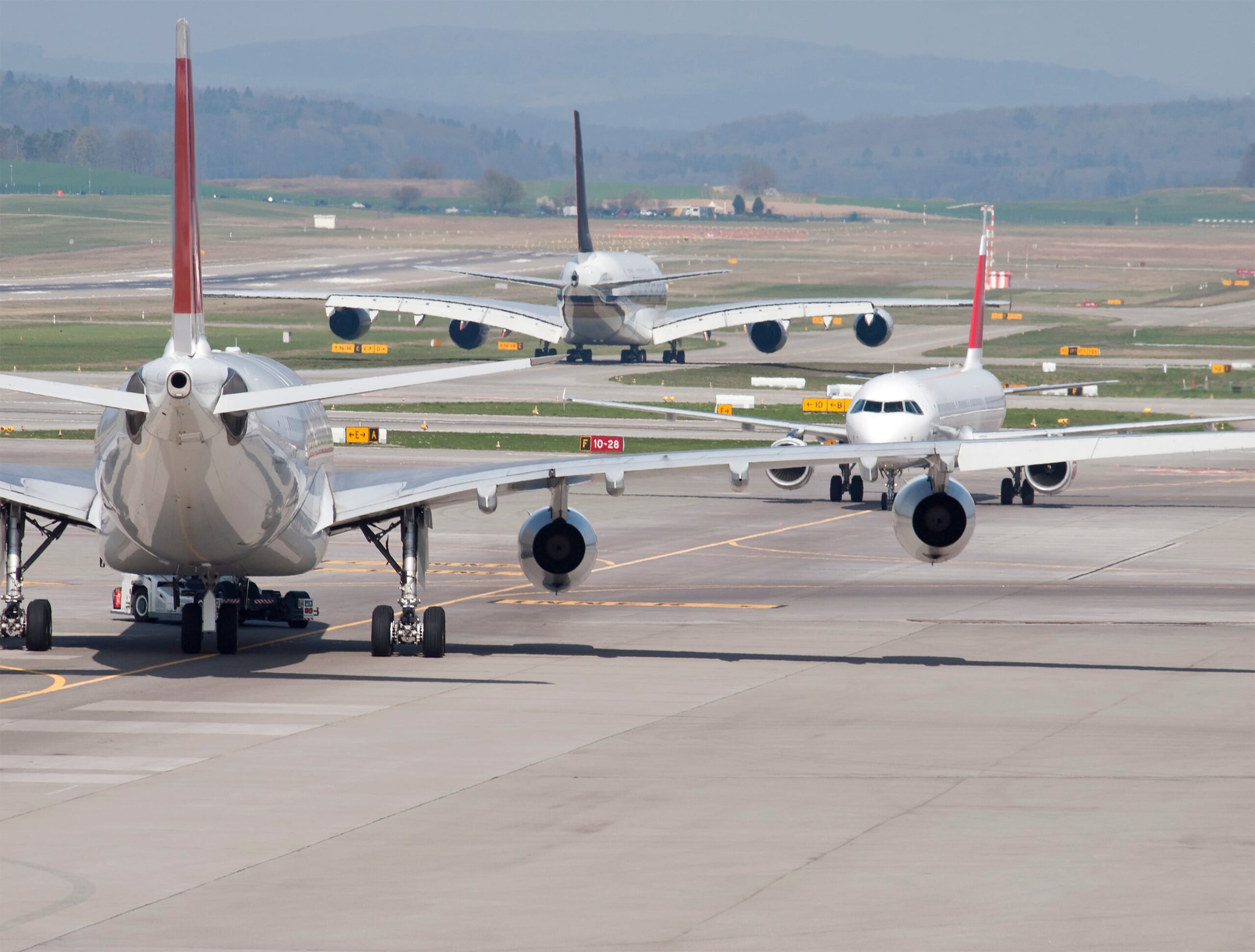
Global aviation emissions could be halved through maximising efficiency gains, new study shows
Published today in Nature Communications Earth & Environment, the researchers analysed more than 27 million commercial flights in 2023, covering 26,000 city pairs and nearly 3.5 billion passengers. This revealed enormous variability in emissions efficiency, with some routes producing nearly 900 grams of CO₂ per kilometre for each paying passenger – almost 30 times higher than the most efficient, at around 30 grams of CO₂ per kilometre.
Our results clearly show that efficiency-focused policy could swiftly reduce aviation emissions by more than half, without reducing flight numbers or waiting for future fuels. These are tools that we can use right now.
Co-author Dr Milan Klöwer, Department of Physics, University of Oxford
Globally, average aviation emissions were 84.4 grams of CO₂ per kilometre for each paying passenger in 2023. But the study identifies three practical levers to reduce this figure: operating only the most fuel-efficient aircraft, removing premium-class seating to carry more passengers, and raising passenger loads to 95%.
Aircraft model alone was found to make a significant difference, with emissions ranging from 60–360 gram CO₂ per kilometre for each passenger. According to the analysis, replacing all aircraft with the most efficient models – the Boeing 787-9 (long-haul) and the Airbus A321neo (short and medium-haul) – would result in fuel savings of 25% to 28%.
Co-author Dr Milan Klöwer (Department of Physics, University of Oxford) said: ‘While economically and practically unfeasible to replace all older aircraft short term, this analysis shows the potential more efficient aircraft have in comparison to other efficiency gains. Realistically, this would be a long-term transition – one that could be promoted by policies that reward efficiency, so that the most efficient aircraft are favoured whenever replacement decisions are made.’
Seating configurations also matter, since business and first-class seats are up to 5 times more CO₂-intense than economy class seats. The researchers found that increasing passenger numbers to the maximum seating configuration for the most efficient aircraft would further reduce emissions by 22% to 57%.
In 2023, aircraft passenger occupancy ranged from 20% to 100%, with an average of 79%. According to the analysis, increasing average occupancy to 95% would further reduce emissions by 16%.
If these three measures were applied globally, the study estimates that emissions could be reduced by between 50% and 75% -though this full reduction would require systemic changes. Nevertheless, the analysis found that airlines could reduce emissions by around 11% right now by flying their most efficient aircraft on routes where they already operate.
Increasing the average occupancy of flights could significantly reduce aviation emissions. Image credit: StockSnap, Pixabay.
Lead author Professor Stefan Gössling (Linnaeus University) said: ‘Efficiency-based policies have a great potential to curb aviation emissions, and can be in airlines’ own economic interest. But the reality is that many airlines continue to fly with old aircraft, low passenger occupancies, and growing proportions of premium-class seating.’
The researchers suggest that efficiency improvements could be promoted using policy tools and market-based measures, such as emissions ratings for airlines, adjusted landing fees based on aircraft performance, and carbon intensity caps – drawing parallels to standards used in sectors like household appliances and vehicles.
The study was based on data from Airline Data, the International Civil Aviation Organization, and the International Air Transport Association. This showed that the regions with the most inefficient flights were Africa, Oceania, the Middle East, Central Asia, and North America. The regions with the most efficient flights were Brazil, India, and Southeast Asia.
The study also involved researchers from atmosfair providing data and the Munich University of Applied Sciences.
The study ‘Large carbon dioxide emissions avoidance potential in improved commercial air transport efficiency’ has been published in Nature Communications Earth & Environment.
For more information about this story or republishing this content, please contact [email protected]
Continue Reading
-

4 Oakland events
We are kicking off 2026 with two events to keep you on the dance floor. If you like to move to the sounds of cumbia and salsa, Eli’s and Mad Oak are where you need to be. The Eli’s event is a one-off, but you can become a regular at…
Continue Reading
-

Taylor & Francis announces expanded scope for flagship PeerJ journal
Taylor & Francis newsMultidisciplinary open access journal offers new publishing option for researchers in Chemistry, Engineering and Materials…
Continue Reading
-

No. 12/NR Florida State Defeats Villanova on Senior Day
TALLAHASSEE, Fla. – The No. 12/NR Florida State swimming and diving team was victorious in 30 of 34 events to defeat Villanova on Senior Day at the Morcom Aquatics Center on Tuesday afternoon.
The 12th-ranked Seminole men defeated the…Continue Reading
-

La Crosse native featured in National Geographic | La Crosse News
La Crosse native featured in National Geographic | La Crosse News | wxow.com
We recognize you are attempting to access this website from a country belonging to the European…
Continue Reading
-

AI hallucinations and the dilemma of false or misleading information
The strangest thing recently happened involving a lying AI chatbot.
It was at the end of November when I was reporting on gamified cryptocurrency and the ethics of allowing kids to play.
I needed a response from a company called Aavegotchi, given…
Continue Reading
-
Landmark Study of Supercentenarians Sheds Light on What Drives Longevity among Brazilians – Folha de S.Paulo
- Landmark Study of Supercentenarians Sheds Light on What Drives Longevity among Brazilians Folha de S.Paulo
- Brazil’s genetic treasure trove: Supercentenarians reveal secrets of extreme human longevity Medical Xpress
- Living Past 110: Brazilian…
Continue Reading
-

Jason Sinnarajah named Nationals President of Business Operations
The Nationals continued a busy offseason of hirings by announcing Jason Sinnarajah as their president of business operations on Tuesday.
In this role, Sinnarajah will oversee all of the franchise’s business-related aspects.
“Jason is a…
Continue Reading