THE GAME: Oregon State will return home Thursday to take on Seattle U.
TELEVISION: The game will be televised on ESPN+
RADIO: The game will air live on Beaver Sports Radio Network with Mike Parker calling the action.
LIVE STATS: Live stats…
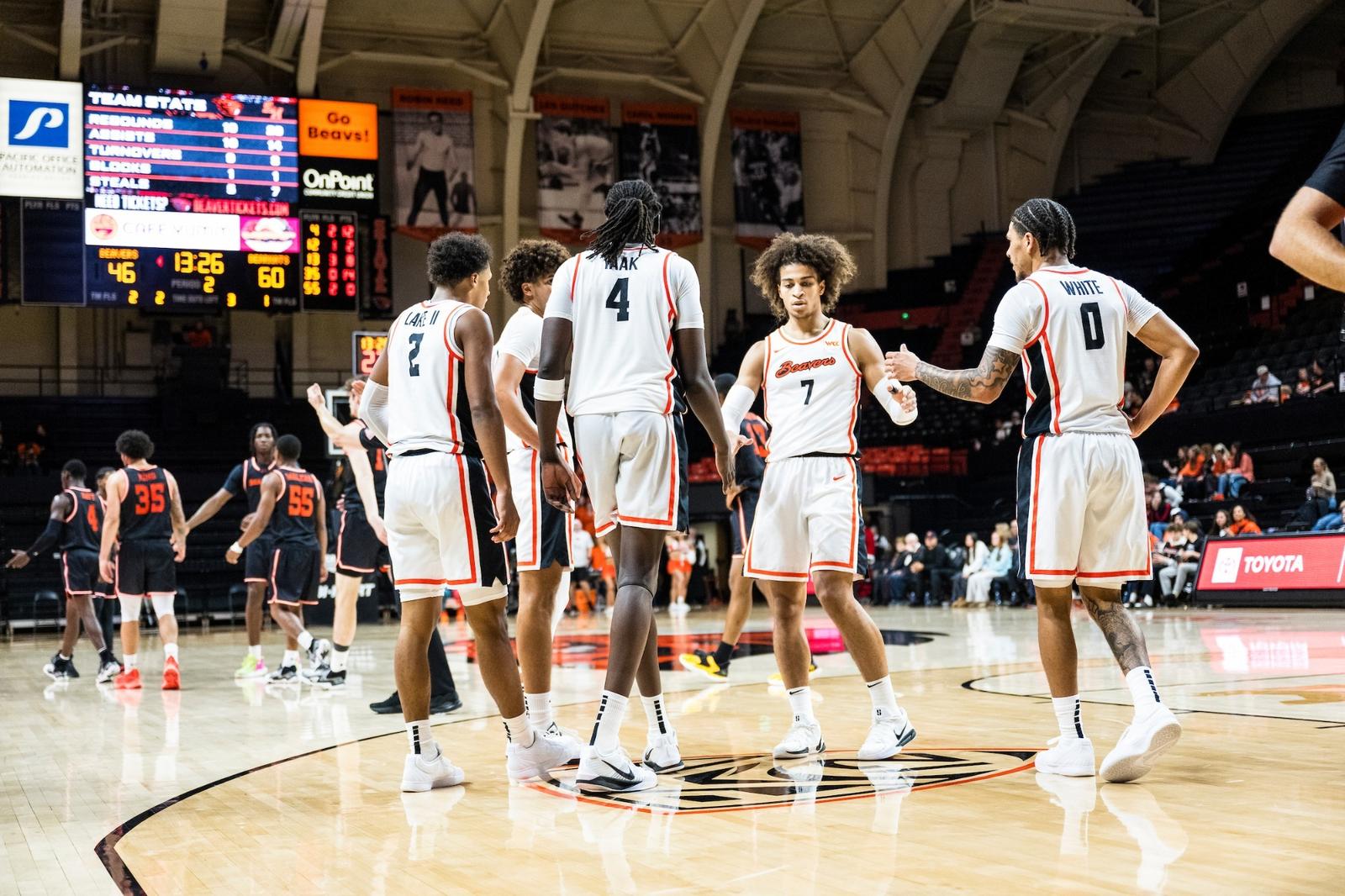
THE GAME: Oregon State will return home Thursday to take on Seattle U.
TELEVISION: The game will be televised on ESPN+
RADIO: The game will air live on Beaver Sports Radio Network with Mike Parker calling the action.
LIVE STATS: Live stats…

Governor Kathy Hochul today announced that ElevenLabs — a leader in artificial intelligence that develops foundational models and products for seamless human-computer interaction — will significantly expand its United States operations in New York City. The expansion underscores New York City’s continued emergence as a leading hub for AI innovation, attracting fast-scaling technology companies and high-skilled talent from around the world.
“New York is becoming one of the world’s premiere destinations for artificial intelligence companies, and ElevenLabs’ decision to expand here is proof that our strategy is working,” Governor Hochul said. “With 230 new high-quality jobs, a $33 million R&D investment, and a fast-growing global footprint, ElevenLabs is choosing the Empire State because of our unmatched talent, energy and commitment to responsible technological advancement. We look forward to supporting the company’s continued growth in New York.”
Founded in 2022 by Mati Staniszewski and Piotr Dąbkowski, childhood best friends from Warsaw who were inspired by the poor dubbing of content in their native Poland, the company started with creating human-like AI voice models and have expanded to a suite of frontier audio models used to power an Agents Platform for omnichannel customer engagement, as well as a creative platform for generating speech, music, image, and video. ElevenLabs serves millions of users and thousands of businesses from the fastest growing startups to the largest enterprises.
As part of this expansion, ElevenLabs will create 230 new engineering and corporate jobs, retain 36 existing New York City positions, and invest $33 million in research and development. Nearly 100 of the projected new roles will be software engineering positions, strengthening New York’s growing AI and technology workforce. The company will relocate from its current Spring Street offices to a larger space at 40 Crosby Street in Manhattan’s Soho neighborhood. Empire State Development (ESD) is supporting ElevenLabs with up to $4.4 million in performance-based Excelsior Jobs Program tax credits, which are tied to the company’s planned job creation and research and development investments.
Empire State Development President, CEO and Commissioner Hope Knight said, “ElevenLabs is at the forefront of innovation in generative AI audio, and its expansion in New York City reinforces our state’s leadership in attracting the world’s most dynamic technology companies. This project will create hundreds of good-paying jobs, deepen New York’s bench of engineering talent, and support cutting-edge R&D that strengthens our growing AI ecosystem. ESD is proud to support ElevenLabs as it scales its U.S. operations here in the Empire State.”
ElevenLabs Co-Founder Mati Staniszewski said, “New York City is a global center for innovation, talent, and creative energy, making it the ideal place for ElevenLabs to scale our U.S. presence. This expansion allows us to deepen our investment in frontier AI research, expand our industry partnerships, and advance our mission of reimagining human-technology interaction. We want to lead New York’s rapidly expanding AI ecosystemand this investment puts us in position to do so.”
Assemblymember Steve Otis said, “News of the ElevenLabs expansion is another success story in New York’s program to attract cutting-edge technology growth in our state. Governor Hochul, Empire State Development, and the Legislature have prioritized making New York a leader as a home for growing technology companies and responsible artificial intelligence development. Time and time again companies choose New York because of our educated workforce, the work of our economic development team at ESD, and the synergy we are creating by bringing so many technology innovators to New York. Congratulations to Governor Hochul and ElevenLabs on the expansion announced today.”
ElevenLabs’ expansion aligns with Governor Hochul’s statewide commitment to ensuring New York becomes a national leader in responsible artificial intelligence development. Through initiatives such as the Empire AI Consortium, new workforce training programs, and investments designed to support safe, transparent, and equitable AI innovation, New York is building an ecosystem that attracts world-class companies, strengthens research capacity, and prepares New Yorkers for the jobs of the future. By locating and growing in Manhattan, ElevenLabsjoins a fast-emerging network of AI firms, universities, and innovation partners helping advance the Governor’s vision of making New York a global hub for responsible, next-generation AI technologies.
About Empire State Development
Empire State Development is New York’s chief economic development agency, and promotes business growth, job creation, and greater economic opportunity throughout the state. With offices in each of the state’s 10 regions, ESD oversees the Regional Economic Development Councils, supports broadband equity through the ConnectALL office, and is growing the workforce of tomorrow through the Office of Strategic Workforce Development. The agency engages with emerging and next generation industries like clean energy and semiconductor manufacturing looking to grow in New York State, operates a network of assistance centers to help small businesses grow and succeed, and promotes the state’s world class tourism destinations through I LOVE NY. For more information, please visit esd.ny.gov, and connect with ESD on LinkedIn, Facebook and X (formerly Twitter).
About ElevenLabs
ElevenLabs is reimagining human-technology interaction through advanced AI research and products. Its Agents Platform enables businesses to deploy reliable, intelligent voice and chat agents at scale, with built-in integrations, testing, monitoring and enterprise-grade reliability. Its Creative Platform empowers creators and marketers to generate and edit speech, music, images, and video in more than 70 languages. Both platforms are powered by ElevenLabs’ industry-leading AI research. The company pioneered the first human-like AI voice model and has since expanded its capabilities across dubbing, transcription, music, sound effects and speech-to-speech technologies.
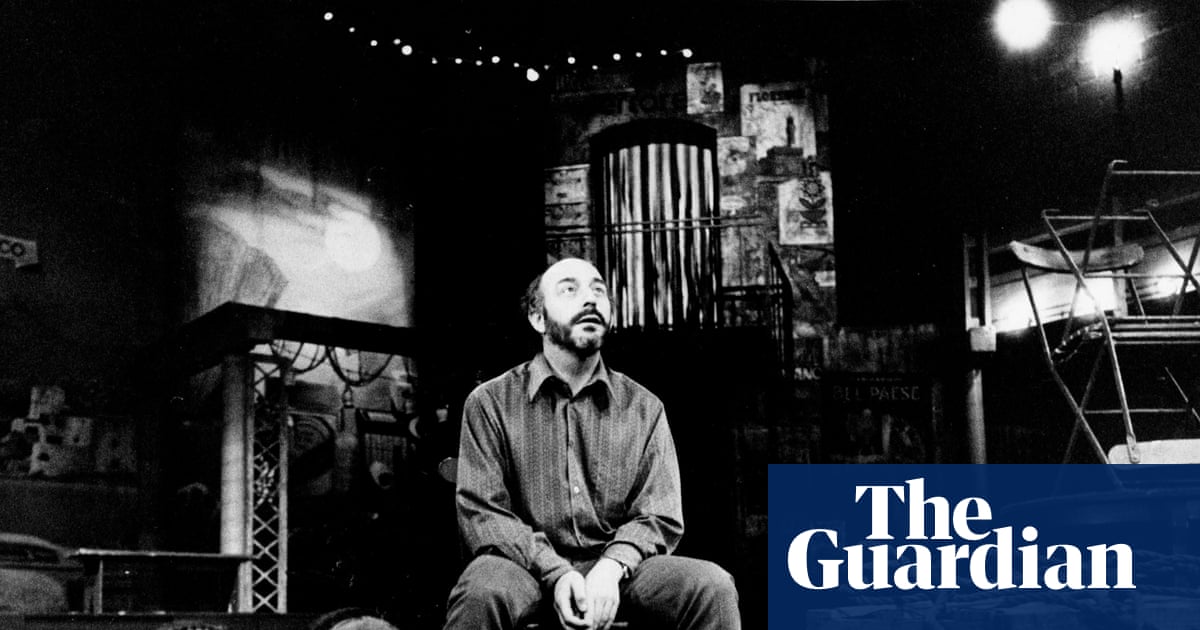
A pocket dynamo of a man who seemed to bounce as he walked along, Frank Dunlop will be remembered for many outstanding and remarkable achievements, but most notably as the founding director of the Young Vic in 1969 and as a controversial director…

Available for 29 days
When describing the Venezuela operation, Trump dusted off the 1823 Monroe Doctrine and its promise of US supremacy in the western hemisphere – re-branding it the “Donroe Doctrine”. We check in with journalists covering…

While peering into some of the oldest regions of the known universe — dating back to just 1.4 billion years after the Big Bang — an international team of astronomers made a puzzling discovery.
As detailed in a paper published the journal…
The partners of global law firm K&L Gates LLP have voted to elect the following individuals from across the firm’s global platform as new partners with the firm, effective January 1. The group comprises 26 individuals from all nine of the firm’s practice areas and represents 17 offices, including Boston, Charleston, Charlotte, Kansas City, Los Angeles, Nashville, New York, Newark, Paris, Pittsburgh, Portland, Raleigh, Research Triangle Park, Seattle, Singapore, Sydney, and Washington, DC.
K&L Gates Global Managing Partner Stacy Ackermann stated: “We are proud to welcome such an accomplished group to our partnership. Their skill, integrity, and unwavering commitment to client service strengthen our global platform and the collaborative culture that defines K&L Gates. We congratulate each of them and look forward to the positive impact they will make for our clients and communities in the years ahead.”
The lawyers joining the firm’s partnership are:
Lauren Ammons (Nashville) represents clients in public and private securities offerings, including initial public offerings, follow-on offerings, high-yield and investment grade debt offerings, and de-SPAC transactions. She regularly counsels public companies regarding Exchange Act reporting and disclosure, proxy solicitation, shareholder activism, stock exchange rules, environmental, social, and governance (ESG) reporting, Section 16 reporting, and corporate governance.
Samantha Beatty (Pittsburgh) advises on ERISA and tax compliance issues with regard to the design, drafting, and administration of tax-qualified and non-qualified employee benefits plans. She also focuses on public company executive compensation governance and disclosure issues (principally in connection with proxy statements), pension de-risking transactions, and benefits matters in mergers and acquisitions.
Christopher Bozydaj (New York) focuses on mergers and acquisitions, private equity investments and financings, and general corporate governance matters. He has represented clients in a broad range of industries, including life sciences, digital advertising, industrial goods, electronic chemicals, and renewable energy.
Brian Bozzo (Pittsburgh) counsels clients on preserving and enforcing intellectual property rights for emerging technologies, including cryptocurrencies, the internet-of-things, quantum computing, and the emerging commercial space industry, and is intimately familiar with the flowdown of intellectual property rights earned under government contracts.
Karla Cure (Washington, DC) focuses her practice on US customs laws, trade remedies, the Committee on Foreign Investment in the United States (CFIUS), export controls, economic sanctions, and related areas of national security and international trade laws.
Kaitlyn DeYoung (Kansas City) advises developers, sponsors, and financing parties throughout the full lifecycle of energy and infrastructure projects, including site control, permitting, financing, construction, operation, and the purchase and/or sale of both development and operating projects. Her experience spans a broad spectrum of energy technologies, including renewable energy, conventional power, and emerging technologies.
Neil Eddington (Los Angeles) handles a broad range of employment-related cases. He is most often called upon to leverage his experience litigating and advising on wage and hour issues. He oversees single plaintiff and collective actions (class action and PAGA claims) alleging wage and hour violations, including regular rate of pay, overtime and meal and rest break issues, to name a few.
Jonathan Edel (Charlotte) focuses his practice on restructuring and insolvency matters, including bankruptcies (whether under Chapter 7, 11, or 15), assignments for the benefit of creditors, distressed sales and acquisitions, and other out-of-court arrangements. His clients span the spectrum of interested parties in restructuring cases, including debtors and creditors, affiliates of and investors in debtors and potential debtors, and defendants in related litigation.
Cecilia Ehresman (Charleston) represents employers of all sizes across numerous industries in complex employment and trade secret misappropriation litigation, wage and hour class and collective actions, high-stakes governmental investigations, and with employment diligence in corporate transactions. Her experience spans federal and state courts and regulatory agencies across the nation, and she routinely handles employment-related matters and issues outside of the United States.
Harsharan Gill (Sydney) is a banking and finance lawyer who regularly advises global financial institutions, private debt funds, investors, sponsors, and borrowers on a range of finance transactions, whether in the domestic or cross-border market. With significant experience in syndications, private credit and restructures, Harsharan advises clients across a variety of industries on corporate and acquisition finance, funds finance, resource and renewable financing, real estate finance and derivatives.
Thibaut Gribelin (Paris) assists policyholders under a broad range of insurance policies such as fraud, cyber risks, product recall and liability, property damage, business interruption, and professional liability. More recently, he has started acting on behalf of crypto-assets holders claiming coverage against insurers covering blockchain-related risks.
Adam Husik (Newark) has a proven track record in successfully managing, litigating, and resolving complex cases and large dockets, including multi-district and other consolidated litigation. He is particularly well-versed in the e-discovery space, leveraging his technical experience to optimize the discovery process and skillfully gather critical evidence.
Nicholas Kitko (Charlotte) focuses his practice on mergers and acquisitions, private equity investments, joint ventures and general corporate matters. He regularly represents both strategic and financial buyers and sellers of businesses, debt and growth equity investors, and other participants in a variety of transactions across a number of industries, including business services, manufacturing and distribution, environmental services, telecommunications, healthcare, life sciences, technology and media.
Geoffrey Locher (Pittsburgh) focuses his practice on mergers and acquisitions, venture capital financing, asset and corporate finance, and general corporate governance. He represents clients in multiple industries of varying sizes, ranging from start-ups to large public companies.
McNair Nichols (Research Triangle Park) serves as counsel for broker-dealers, investment advisers, registered investment companies, cryptocurrency exchanges and issuers, banks, publicly-traded companies, hospitals, and other entities and individuals in connection with investigations and enforcement inquiries from the US Securities and Exchange Commission, the Financial Industry Regulatory Authority, the Department of Justice, US Attorneys’ Offices, and a wide range of state regulatory authorities.
Lucas Nicolet-Serra (Singapore) advises clients across the life sciences, digital health, and fintech sectors. His practice focuses on complex cross-border transactions, regulatory compliance, and technology-driven innovation, with a particular emphasis on AI, data privacy, digital assets, and medical technology. He is qualified in France and England & Wales. He is also registered to practice in Singapore on corporate and commercial matters only.
Christopher Phillips-Hart (Boston) focuses on advising both established and emerging sponsors of private funds with respect to legal and regulatory issues associated with private fund formation and ongoing operational matters related to private funds. He has advised both institutional and boutique sponsors on fundraises in the United States, Europe, and globally.
Jessica Pingleton (Portland) advises clients on domestic and cross-border mergers and acquisitions, from early-stage growth investments to large multi-party acquisitions. Representing buyers, sellers, and investors across diverse industries, she advises companies on all aspects of the merger and acquisition lifecycle, helping clients navigate complex legal and commercial issues while staying focused on business objectives. She also regularly advises corporate clients on commercial contracting and licensing, contract management, regulatory compliance, commercial leasing, and commercial real estate purchase and sale transactions.
Wesley Prichard (Pittsburgh) has diversified experience across all phases of litigation and includes the areas of industrial incidents, emerging chemicals such as ethylene oxide, deal litigation, mass torts, environmental claims, breach of contract, breach of fiduciary duties, closely held businesses, and construction disputes.
Jarel Rosser (New York) focuses his practice on commercial real estate finance and loan servicing. He regularly represents national, international, and regional lenders and servicers in connection with various structured finance transactions, including CMBS and balance sheet mortgage loans, private bank lending, mezzanine debt, and other credit facilities secured by all commercial asset classes.
Christian Scarlett (Seattle) represents clients on a range of commercial real estate transactions including financings, acquisitions, joint ventures, and development projects across diverse asset classes such as hospitality, office, multifamily, retail, industrial, data centers, and agribusiness. He has extensive experience on both the lending side, handling loan originations, intercreditor and co-lending structures, and secondary market transactions, and the ownership side, particularly representing hospitality owners, operators, and investors in negotiating their acquisitions, dispositions, joint ventures, and management agreements.
Jenny Sneed (Raleigh) advises both public and private companies on transactional and corporate governance matters, including mergers and acquisitions, venture capital, securities and general corporate law matters.
Elle Stuart (Washington, DC) advises clients on statutes and regulations related to the US maritime sector, including cabotage laws, US Customs and Border Protection rulemakings, and Federal Maritime Commission regulations. She also advocates before the US Congress and various federal agencies for a wide variety of maritime industry companies and organizations, including ship owners and operators, equipment providers, and trade associations that support the domestic maritime industry.
Derek Sutton (Raleigh) has particular experience defending companies in class action and multidistrict litigation, as well as in enforcement actions brought by the US Department of Justice Antitrust Division, Federal Trade Commission, and state attorneys general.
Zachary Timm (Los Angeles) focuses his practice on intellectual property litigation, complex commercial disputes, and appeals. He has represented public and private companies in high-stakes litigation involving claims for trade secrets misappropriation, tortious interference, privacy, consumer protection, breach of contract, false advertising, unfair competition, and fraud.
Brett White (Raleigh) has more than 10 years of experience in drafting and prosecuting patent applications and is skilled in novel artificial intelligence architectures and their innovative uses, including large language models (LLMs) and generative models. He also assists in patent-related diligence matters for mergers, acquisitions, and asset purchases.
HOUSTON, TX January 6, 2025 – For nearly a century, humanity’s vision of spaceflight has been shaped not only by engineers and astronauts, but by those who dared to imagine it first. Few individuals influenced that collective dream…


 Getty Images
Charlotte Church has said she “would be dead” without the influence of her father, after growing up in the spotlight.
The Cardiff-born singer…