In women with BRCA1/2 mutations, the use of menopausal hormone therapy does not increase the risk of breast cancer, according to research published in the Journal of the National Cancer Institute.
Because of their high risk…

In women with BRCA1/2 mutations, the use of menopausal hormone therapy does not increase the risk of breast cancer, according to research published in the Journal of the National Cancer Institute.
Because of their high risk…

Serious bacterial infections during birth hospitalizations are linked to higher health care utilization and costs among newborns in the United States. Newborns with bacterial meningitis or sepsis experienced longer hospital…


Meezan Bank Limited has appointed Syed Amir Ali as its President and Chief Executive Officer (CEO) with effect from December 30, 2025, according to a formal notice issued to the Pakistan Stock Exchange (PSX) on Tuesday.
“We have to inform you that Dr. Syed Amir Ali has been appointed as the President & Chief Executive Officer of Meezan Bank Limited with effect from December 30, 2025, in place of Mr. Irfan Siddiqui, Founding President & Chief Executive Officer,” read the notice.
He succeeds Irfan Siddiqui, who served as the bank’s founding President and CEO and played a central role in establishing Meezan Bank as Pakistan’s largest Islamic bank and a key player in the global Islamic finance industry.
The bank’s board of directors placed on record its appreciation for Siddiqui’s contributions, citing his leadership in building the foundations of Islamic banking in Pakistan and steering the institution through a sustained period of growth and expansion.
Meezan Bank said Siddiqui will continue to serve as a member of its board of directors following the leadership transition.
According to Meezan Bank, Dr Syed Amir Ali had been serving as Deputy Chief Executive Officer and CEO-designate prior to his appointment as President and Chief Executive Officer. He holds a PhD in Business Administration, earned after completing advanced coursework and original research.
His doctoral research, titled “SME Financing through the Islamic Digital Banking Ecosystem,” examined how the integration of digital platforms with Shariah-compliant financial models can improve access to capital for small and medium enterprises in emerging economies, including Pakistan.
Dr Amir Ali has extensive experience across finance, treasury, investment and corporate banking, having worked with domestic and international organisations including A.F. Ferguson & Co, Shell, BankIslami Pakistan Limited and Meezan Bank. During his earlier tenure at Meezan Bank, he led the corporate and investment banking group before moving to BankIslami in 2018, where he served as President and Chief Executive Officer.
His academic and professional credentials include qualifications as a Chartered Accountant, CFA charterholder, MBA and LL.B., along with certification in software engineering. He is also an alumnus of the Advanced Management Program at Harvard Business School.


The United States has now entered the seventh year of the COVID-19 pandemic, and the country is moving through what the Pandemic Mitigation Collaborative (PMC) characterizes as the 12th major wave. What makes the present period politically…
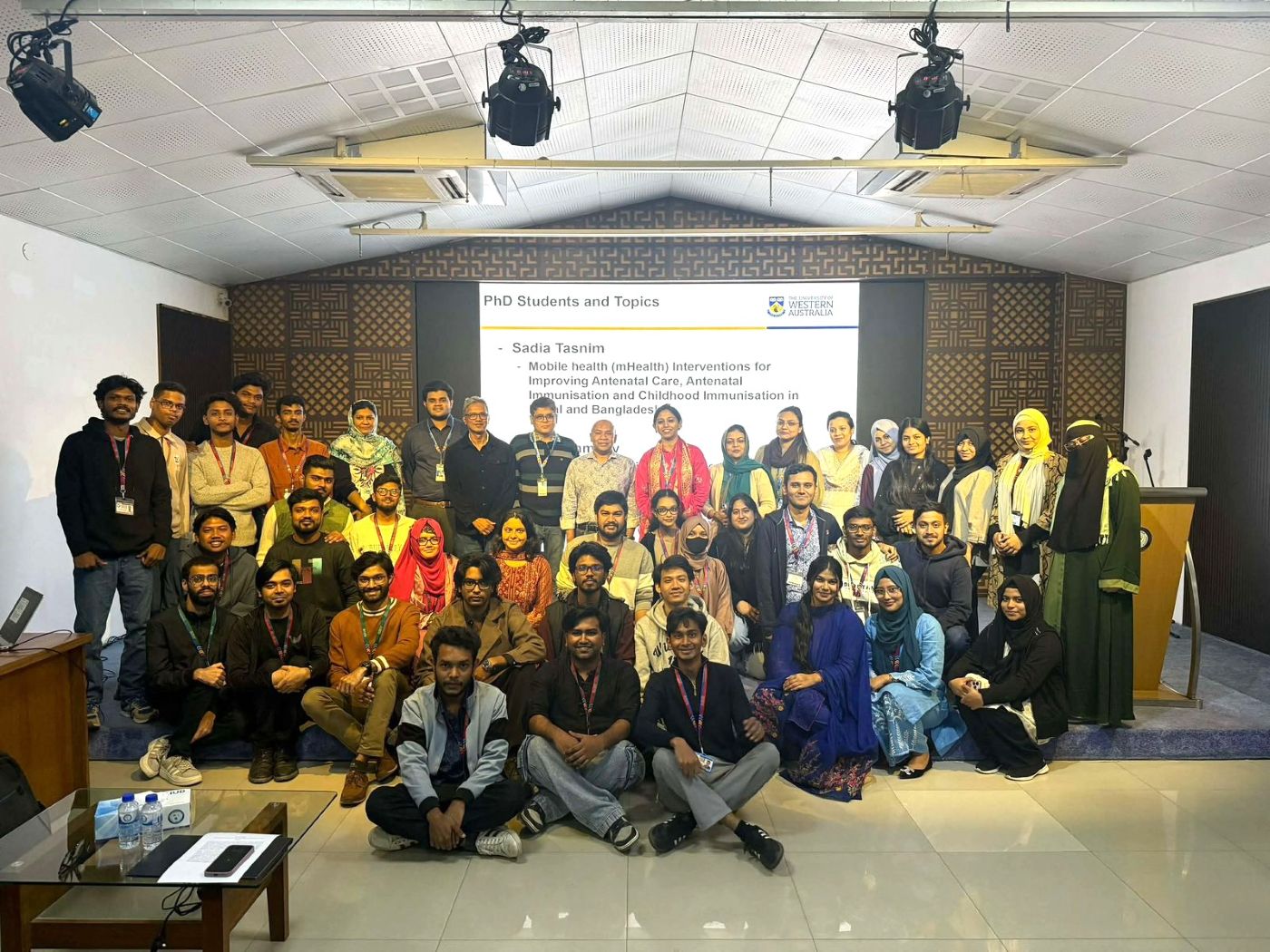
The Department of Economics has successfully organized an informative academic session titled “Higher Education in Australia: Career Pathways in a Global Economy” on Tuesday, 23 December 2025, from 4:30 PM to 5:30 PM. The session was held at the Media Studio, Annex 2, Level 2, AIUB, with the objective of familiarizing students and faculty members with global higher education opportunities, particularly in Australia.
The session was conducted by Dr. Enamul Hoque, Senior Lecturer at the School of Population and Global Health, The University of Western Australia. Drawing on his extensive academic and international experience, Dr. Hoque provided a comprehensive overview of Australia’s higher education system, emphasizing its global recognition, research excellence, and student-centered learning environment. He highlighted various academic pathways for international students, including undergraduate, postgraduate, and research opportunities, and explained how these pathways align with the evolving demands of the global labor market.
Dr. Hoque also discussed a wide range of global career opportunities and professional prospects, underscoring the importance of international exposure, interdisciplinary skills, and global networking in enhancing employability in an increasingly interconnected global economy. Furthermore, he addressed emerging trends in global education, such as international collaboration, cross-border research, and the growing significance of fields like global health, sustainability, and data-driven disciplines. He concluded by offering practical guidance on building strong academic profiles and developing successful international academic and career trajectories.
The session was attended by Head of the Department of Economics, Dr. Faria Sultana, along with other respected faculty members of the Department of Economics, Public health and Social Sciences. Their participation contributed to the academic significance of the session and encouraged meaningful discussion and interaction. Overall, the event provided an engaging platform for knowledge sharing on international higher education and global career development, reaffirming AIUB’s commitment to fostering global perspectives among its academic community.


Pichavant, M. & Manning, D. Petrogenesis of tourmaline granites and Topaz granites; the contribution of experimental data. Phys. Earth Planet. Inter. 35, 31–50. https://doi.org/10.1016/0031-9201(84)90032-3 (1984).
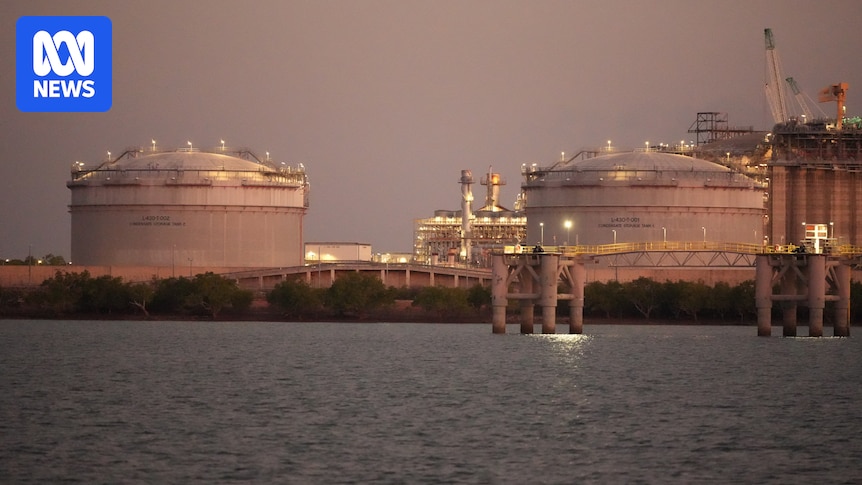
The Northern Territory environment regulator is re-examining the licence conditions of major gas facilities in Darwin, after one of its biggest operators admitted to under-reporting toxic emissions.
In October, Inpex revealed it drastically under-reported several emissions in the 2023–24 financial year at its Ichthys onshore gas processing facility, including a 13,000 per cent increase in levels of benzene — a known carcinogen.
Levels of benzene remained high in the 2024–2025 reporting year.
The oil and gas giant has maintained levels of emissions were well within government guidelines and posed no increased health risk to the community or workers — though the error has triggered an ongoing investigation by the federal and NT governments.
In November, workers at Inpex spoke out against the company, alleging they were exposed to potentially dangerous air pollutants.
Last Tuesday, in a joint statement with the NT chief health officer, Paul Burgess, the NT Environment Protection Authority (NT EPA) said following an independent review of Inpex’s emissions data, it had ordered a review of the gas facility’s licence conditions “to ensure they adequately address human health risks from air emissions”.
That includes Inpex’s Ichthys facility and Santos’s Darwin LNG facility.
On Monday, Inpex’s senior vice-president Bill Townsend said the company was “firmly committed to the safety of our people and the community, the protection of the environment, and the continued safe operations of Ichthys LNG”.
Santos declined to comment.
Melissa Haswell, a professor of health, safety and environment at the Queensland University of Technology, said the renewed scrutiny was a “positive step”.
“It’s a step towards gaining more trust from the community that the NT EPA is taking this seriously,” she said.
“But we’ll see what the outcomes are, how they do it, and whether they allow the community to know what’s in the air they’re breathing.”
Professor Haswell said the review needed to be “modern” and must take seriously the potential health impacts of chemicals released from gas facilities, particularly given their close proximity to Darwin’s population.
“To have such a major error go without a very, very comprehensive follow-up would be just unthinkable,” she said.
Professor Haswell said an updated literature review was essential to determine what constituted safe levels of exposure to the chemicals, and that the reviews must be carried out by highly skilled, independent experts.
Santos’s Darwin LNG tank is set to be filled again as part of Santos’ Barossa gas project. (ABC News: Pete Garnish)
In its statement, the NT EPA said it had engaged “air quality expert consultants” to review Inpex’s emissions data “to ensure accuracy and completeness”.
“The draft review was provided to the department on 17 December and is now nearing completion. It will inform further requirements for Inpex to address,” the statement said.
“To safeguard community health outcomes and provide evidence-based assurance, the chief health officer commissioned an independent human health risk assessment. The independent assessment will be completed in the new year.”