A reserve of natural gas bubbling from a cage of ice discovered on the ocean floor to the west of Greenland may be the deepest gas hydrate cold seep on record, and it happens to be teeming with animal life.
The Freya gas hydrate mounds were…

A reserve of natural gas bubbling from a cage of ice discovered on the ocean floor to the west of Greenland may be the deepest gas hydrate cold seep on record, and it happens to be teeming with animal life.
The Freya gas hydrate mounds were…

(Bloomberg) — Asian stocks rose for a seventh straight day, helping extend a global equities rally, while silver gyrated after jumping to yet another record.
A gauge of Asian shares advanced 0.5% on Monday, with the tech sector leading gains. A seven-day winning streak would be its longest since mid-September. Mining stocks in the region climbed as a broad measure of commodities gained for a sixth day. US futures edged lower after the S&P 500 finished near an all-time high on Friday.
Silver turned volatile after smashing through $80 an ounce for the first time amid a historic surge powered by a structural imbalance in supply and demand. Gold was lower after reaching a new peak in the previous session, while copper jumped more than 6% to hit a record following a two-day break on the London Metal Exchange.
Precious metals have emerged as a hot corner of financial markets in recent months, boosted by elevated central-bank purchases, inflows to exchange-traded funds and three successive rate cuts by the Federal Reserve. Lower borrowing costs are a tailwind for the commodities, which don’t pay interest, and traders are betting on more rate cuts in 2026.
“We are witnessing a generational bubble playing out in silver,” Tony Sycamore, market analyst at IG Australia, wrote in a note Sunday. “Relentless industrial demand from solar panels, EVs, AI data centers and electronics, pushing against depleting inventories, has driven physical premiums to extremes.”
In the last week, frictions in Venezuela — where the US has blockaded oil tankers — and strikes by Washington on Islamic State in Nigeria have added to the haven appeal of precious metals. With silver inventories near their lowest on record, there’s a risk of supply shortages that could impact multiple sectors.
“This is not good. Silver is needed in many industrial processes,” Elon Musk said on X on Saturday in response to a series of tweets on the supply shortage.
What Bloomberg Strategists say…
“Silver has particular drivers which mean it is understandable for it to be outperforming the general rally in metals, precious and otherwise, against the US dollar. Nevertheless it is very tough to justify the parabolic ramp-up in silver as it leaves peers behind.”
Garfield Reynolds, Markets Live Strategist. For full analysis, click here.
The MSCI All Country World Index — one of the broadest measures of the equity market — edged higher in Asia after climbing 1.4% last week to an all-time high as a much-expected year-end rally took hold.
Chinese stocks on the mainland underperformed the Asian benchmark on Monday. Data over the weekend showed industrial profits fell for a second month in November, adding to signs that weakening domestic demand and persistent deflation are weighing on corporate earnings.
The nation on Sunday pledged to broaden its fiscal spending base in 2026, signaling sustained government support to drive growth in a challenging external environment. Separately, Chinese state media cautioned against making one-way bets on the yuan, signaling growing official discomfort about the pace of recent gains in the currency. The yuan advanced past 7 per dollar last week in offshore trading for the first time since September 2024.
Geopolitics also drew attention at the start of a new week. Defense stocks in China and Taiwan rose as the former conducted military drills in waters and airspace surrounding Taiwan starting Monday. Meanwhile, Donald Trump said he made “a lot of progress” in talks with Ukrainian President Volodymyr Zelenskiy over a possible peace deal, but that it might take a few weeks to get it done and there’s no set timeline.
Elsewhere in markets, oil was higher on prospects for improved Chinese demand in 2026. It is still on track for a fifth monthly drop in December, which would be the longest losing streak in more than two years. Bitcoin advanced while a gauge of the dollar edged lower.
The gauge equities gauge has risen nearly 22% in 2025, heading for a third straight annual gain and the biggest since 2019.
Trends in AI, the key driver of this year’s rally, as well as the path of the Fed’s interest rates are seen by investors as two of the most crucial factors that will determine how equities perform in 2026.
“The focus this week will be on the release of the FOMC minutes” from the Fed’s December meeting, according to Sycamore. “Markets will scour the minutes for deeper insights into the committee debates on the balance of risks and the timing of future easing.”
Stocks
S&P 500 futures were little changed as of 12:43 p.m. Tokyo time Japan’s Topix rose 0.2% Australia’s S&P/ASX 200 fell 0.3% Hong Kong’s Hang Seng rose 0.4% The Shanghai Composite rose 0.3% Euro Stoxx 50 futures rose 0.3% Currencies
The Bloomberg Dollar Spot Index was little changed The euro was little changed at $1.1774 The Japanese yen rose 0.1% to 156.37 per dollar The offshore yuan was little changed at 7.0085 per dollar Cryptocurrencies
Bitcoin rose 2.6% to $89,809.32 Ether rose 3.2% to $3,030.85 Bonds
The yield on 10-year Treasuries was little changed at 4.14% Australia’s 10-year yield advanced two basis points to 4.76% Commodities
West Texas Intermediate crude rose 1.1% to $57.34 a barrel Spot gold fell 0.4% to $4,515.50 an ounce This story was produced with the assistance of Bloomberg Automation.
–With assistance from Carmeli Argana, Rita Nazareth and Ruth Carson.
©2025 Bloomberg L.P.

29 December 2025
Allen & Gledhill advised Clifford Capital Holdings Pte. Ltd. (“CCH”) on the issue of US$500 million 3.97% notes due 2028 (“Notes”).
The issuance is CCH’s debut bond transaction, and the first unguaranteed issuance of bonds by the Clifford Capital Group.
Advising CCH as to Singapore law were Allen & Gledhill Partners Yeo Wico, Jeanne Ong and Sunit Chhabra.
Advising CCH as to English law was Allen & Gledhill Partner (Foreign Law) Maree Quinn.

LOS ANGELES — — Dillan Shaw scored 18 points and Rory Hawke secured the victory with a 3-pointer with five seconds remaining as Saint Mary’s knocked off Loyola Marymount 78-73 on Sunday in a West Coast Conference opener.
Shaw shot…

Samsung Electronics today announced that they are working to bring Google Photos to Samsung TVs to give users a seamless way to enjoy the moments that matter most, from trips and hobbies to…

Company will also showcase a new Bespoke AI Wine Cellar and newly designed cooking appliances
Samsung Electronics, the global leader in soundbars, today introduced its 2026 sound device lineup, marking a new chapter…
In 2002, archeologists excavating a neolithic burial site in Mehrgarh Balochistan discovered among the dust and bones of a six-thousand year old grave a few copper beads. Trapped within one of the beads were wispy white strands. Metallurgical…

“I trust Josh Allen with the ball in his hands, and I do it over again,” head coach Sean McDermott said.
Instead of a dramatic game-winning play, Josh Allen’s pass sailed wide of Khalil Shakir in the back of the end zone on the…
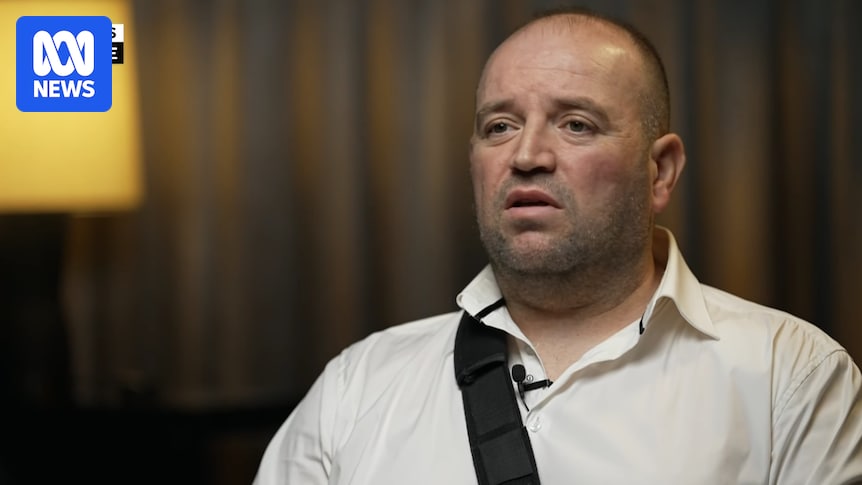
The man deemed a hero after risking his life to save “countless others” during the Bondi Beach terrorist attack has spoken of his determination to protect the innocent.
Ahmed Al Ahmed went viral after footage showed him sneaking up behind one of…