The Industrial Development Authority Board made a presentation at the last Butler County Fiscal Court meeting. Jason Jones and Denny Drake made the presentation recommending that the fiscal court purchase 40 acres within the Morgantown city…
Author: admin
-

What Mattered in 2025 for IP Practice
“Taken together, 2025 was a year of recalibration rather than reinvention—one where how IP rights are managed, challenged, and enforced evolved despite stagnant patent law reform efforts in Congress.” – Richard D. Coller III, Sterne, Kessler, Goldstein & Fox
Each year IPWatchdog surveys the IP community to get their thoughts on what the biggest moments in IP were that year. Some years, the comments vary greatly depending on respondents’ practice or perspective. Other years, there are clear winners for what mattered most that year, and 2025 fits this bill. With a few outliers for big trademark moments, the comments below almost exclusively highlight U.S. Patent and Trademark Office (USPTO) Director John Squires’ and Deputy Director Coke Morgan Stewart’s aggressive approach to reining in Patent Trial and Appeal Board (PTAB) proceedings and the various court decisions on artificial intelligence (AI) and copyright that have come down. These two issues promise to change IP practice most substantively in the near future and we’re sure to see more on both fronts in 2026. So without further delay, here is what our respondents had to say.

“One of the most consequential IP developments of 2025 has been Director Squires reclaiming PTAB institution authority, meaning he now personally decides whether the PTAB will institute AIA trials. For years, that power rested with PTAB panels of administrative patent judges. By pulling it back into the Director’s office, he shifted the balance of power in post-grant practice and transformed institution from an adjudicatory determination into an explicit policy choice. Initially, this resulted in the summary denial of every IPR petition he reviewed. Although industry pushback led to the institution of a handful of petitions, the broader signal remains unmistakable: the Director, not the Board, will decide when patents enter post-grant review. The impact has been immediate and measurable. With most petitions now being summarily denied, filings have fallen from an average of roughly 110 per month to just 66 in November. At that pace, IPR filings could slow to a trickle by early next year, reshaping the post-grant landscape in a way that will reverberate well beyond 2025.”

“One of the biggest IP stories of 2025 was that courts finally reached the merits on whether copying copyrighted works for AI training can be fair use. The key district court decisions did not settle the debate, but they turned it from a policy argument into an evidence-driven one that clients must plan around.
In Thomson Reuters v. Ross, the court rejected a fair use defense where Westlaw headnotes were used to train a competing research tool. The opinion highlighted how market substitution and the competitive relationship between products can dominate the fair use analysis.
Bartz v. Anthropic drew a sharper line. The court treated training itself as fair use on the record presented, yet kept large exposure on the table for building and retaining a pirated central library of books. That split result showed that provenance can matter as much as transformation.
Kadrey v. Meta then focused attention on proof of market harm, treating theories about lost licensing and market dilution as testable rather than rhetorical.
Together, these decisions tell AI developers and rightsholders that training cases will turn on concrete facts about data sourcing, product design, and measurable economic impact. That is a real shift.”
“In 2025, U.S. IP practice was reshaped by a flurry of agency guidance and evolving litigation strategy.
A recent key moment came when the USPTO reaffirmed that AI systems cannot be named as inventors, clarifying that traditional inventorship standards still apply even when AI plays a meaningful role in R&D.
At the PTAB, procedural and discretionary developments continued to influence how post-grant challenges are brought and defended. The early returns have been a significant drop in IPR institution rates, especially for older patents subject to the “settled expectations” doctrine. This has opened the door to increased use of ex parte reexamination by some patent challengers.
Meanwhile, patent litigation trends reflected growing sophistication, with increased use of analytics, AI-enabled tools, and portfolio-level strategy by both operating companies and patent assertion entities.
Taken together, 2025 was a year of recalibration rather than reinvention—one where how IP rights are managed, challenged, and enforced evolved despite stagnant patent law reform efforts in Congress.”


“Several developments defined IP in 2025. First, the continued decline of IPR challenges, driven by Commissioner Squires’ expanded decision-making authority and increased discretionary denials based on “settled expectations,” significantly reduced predictability in PTAB institution decisions. While Squires’ authority may have limited the success of settled expectations arguments, the overall effect weakened a key defensive tool for patent infringement defendants.
Second, the USPTO issued memoranda on Subject Matter Eligibility Declarations (SMED), allowing applicants to rely more heavily on objective factual evidence when responding to subject-matter eligibility rejections. This shift provides practitioners with a clearer and more structured path to address §101 challenges during prosecution.
Relatedly, the USPTO updated the MPEP following the precedential Appeals Review Panel decision in Ex Parte Desjardins. These updates clarified how examiners should evaluate improvements to computer functionality or other technologies, reinforcing Federal Circuit guidance from Enfish v. Microsoft and strengthening arguments for software and technology-based inventions.
Finally, the Supreme Court’s unanimous decision in Dewberry Group v. Dewberry Engineers limited disgorgement of profits to named defendants only, excluding legally separate corporate affiliates. This ruling forces plaintiffs to identify all relevant profit centers early in litigation. The Court’s denial of cert on the right to a jury trial for trademark disgorgement claims left a significant circuit split unresolved, preserving uncertainty in trademark enforcement strategy.”
“This year’s most significant developments in IP centered on AI and the system’s ongoing effort to keep pace. The Federal Circuit’s April decision in Recentive Analytics set a more demanding tone for AI-related patentability. The court held that simply applying established AI techniques in a new context, without advancing the underlying technology, does not amount to a patentable invention. This set a higher bar for claims that rely on AI tools but do not meaningfully improve them.
In November, the USPTO’s updated guidance on AI-assisted invention arrived as a moderating force. It reaffirmed that inventorship must be grounded in human contribution, but called for greater transparency in how AI is used during conception and drafting. The guidance positioned the Office to strike a middle path: acknowledging AI’s role while preserving a meaningful threshold for human ingenuity.
Even with the USPTO’s August memo reminding examiners to issue Section101 rejections only when ineligibility is ‘more likely than not,’ Recentive introduced uncertainty about how the Office’s current approach to AI-related eligibility must adapt.
This year will be remembered for when the patent system directly confronted the realities of AI-enabled innovation and exposed the widening gap between administrative guidance and case law.”

“The increased exercise of Director authority over PTAB proceedings was, hands down, the Biggest Moment in IP for 2025. From expanded use of discretionary denials of IPR institution, to moving institution decisions from the PTAB to the Director, to increased use of Director Review to address issues such as inconsistent claim-construction positions between underlying district-court cases and IPRs, both Director Squires and (then-Acting and now) Deputy Director Stewart have fundamentally changed the calculations of both patent owners and challengers. Although mandamus challenges to several of these actions remain pending at the Federal Circuit, none have been successful so far.”
“The USPTO has dramatically changed the way in which it handles petitions for inter partes review, and these changes have substantially altered patent litigation defense strategies.
In the past few months, the USPTO has proposed rule changes that would substantially reduce serial and parallel challenges to patentability, which the USPTO has concluded “have undermined the reliability of patent rights and deterred investment in new technologies.” While these proposed rule changes remain under consideration, USPTO Director Squires has announced that the Director will be making decisions on both the merits of patent challenges and whether petitions for IPR should be denied based on discretionary factors.
The net result of these changes is that IPR institution rates have dropped dramatically, and what has historically been seen as a favorable venue for parties challenging patent validity may no longer be available to many litigants. As a result, many defendants in patent litigation will likely be forced to alter their defense strategies and present prior art-based challenges in district court and ITC proceedings. Similarly, defendants named in multi-defendant parallel infringement actions, will be heavily incentivized to coordinate their defense strategies if the USPTO adopts rules designed to avoid parallel IPR proceedings.”
“In 2015, Vegadelphia Foods registered the trademark for “Where Great Taste Is Plant-Based.” Vegadelphia Foods v. Beyond Meat Inc (U.S. District Court for the District of Massachusetts, No. 1:23-cv-10690). Beyond Meat launched national advertising campaigns using the slogans “Plant-Based, Great Taste” and later “Great Taste, Plant-Based,” in partnership with Dunkin’ Donuts for breakfast sandwiches. Vegadelphia alleged that these slogans were confusingly similar to its trademark. Despite receiving notice of Vegadelphia’s rights, Beyond Meat continued using the slogans, prompting Vegadelphia to file suit for trademark infringement.
The jury found Beyond Meat liable for trademark infringement, concluding that its slogans were confusingly similar to Vegadelphia’s registered mark. The court rejected Beyond Meat’s fair use defense, noting that the company had applied to register its own slogans as trademarks, undermining its claim of purely descriptive use. The jury awarded an astounding $38.9 million in combined actual damages and disgorged profits, making this one of the largest trademark verdicts in the food industry in recent years.”
“Among the larger IP developments during 2025 are the summary judgment rulings in the Bartz v. Anthropic and Kadrey v. Meta cases, as these determined that, as of now, it appears to be transformative fair use per se to use copyrighted materials as training data for an AI model. Related to this was the settlement of the Anthropic case for the unlawfully procured copies of copyrighted works, since the courts have determined that it is lawful to train an AI model using copyrighted material, provided you lawfully obtained the copyrighted material. Another development from December 2025 is the settlement/collaboration between Disney and OpenAI to provide licensing of Disney characters and access to OpenAI’s generative AI capabilities.”
“In trademark law, what mattered was the Supreme Courts’ Dewberry Group, Inc. v. Dewberry Engineers, Inc. opinion, where the Court held that the Lanham Act only allows recovery of disgorgement damages for the named plaintiff, and not affiliated companies, even if they are under common ownership. Moving forward in 2026, companies may need to look at, and revise, their structures for IP ownership and selection of plaintiffs to avoid a similar result.
In copyright law, what mattered is, to quote the band Rush, if you choose not to decide, you still have made a choice. In its 2025 cert denial in McGucken v. Valnet, Inc., the Supreme Court declined to decide whether the 9th Circuit’s ‘server test’ for copyright infringement claims involving embedded works should be overruled. Thus, the dispute between proponents of the ‘server test’ vs. those citing the Copyright Act’s § 106 display right remains unresolved. Which may be a good thing in 2026. Or not.
In trade secret law, what mattered was the Supreme Court’s cert denial of the 7th Circuit’s Motorola Solutions v. Hytera Communications decision that allowed the plaintiff to pursue foreign damages under the Defend Trade Secrets Act (DTSA), so long as an ‘act in furtherance’ of the misappropriation occurred in the United States. Given the Court’s more restrictive 2023 holding on extraterritorial damages under the Lanham Act (Abitron Austria GmbH), and the multiple large DTSA verdicts in 2025, companies can expect a likely surge in claims in 2026.”
“One of the most significant IP developments of 2025 was the USPTO’s deliberate effort to restore greater balance and predictability to the U.S. patent system. Through updated eligibility guidance, proposed PTAB changes, and a renewed emphasis on consistent examination, the Office signaled a clear intent to strengthen patent rights rather than weaken them.
At the same time, these developments highlight how much of modern patent law is now being shaped by administrative action rather than clear statutory or common law guidance. That reality, while perhaps necessary in the short term, is not indicative of a healthy system operating according to established functions defined by the separation of powers as envisioned by the Framers – where Congress sets policy, courts interpret the law, and the executive branch faithfully executes it.”
Ahsan Shaikh
 , McDermott Will & Schulte
 “The biggest IP moment of 2025 was the pair of Northern District of California decisions, Bartz v. Anthropic and Kadrey v. Meta, holding that training large language models on lawfully acquired copyrighted books can qualify as transformative fair use.
For the first time, courts drew a clear distinction between (i) training on legitimately obtained works for a genuinely new purpose, and (ii) training on pirated datasets or using outputs that substitute for the originals. While those rulings did not bless AI training wholesale, IP lawyers nonetheless seemed to move almost overnight from existential uncertainty (“Is model training infringing?”) to operational governance (“Which datasets? Which licenses? Which indemnities?”).
This shift — copyright doctrine translated into practical AI-risk management — is the development that will shape IP and AI strategy for the foreseeable future.”
“The most consequential development of 2025 was the PTAB’s total reversal over instituting IPRs. What had previously been a high institution rate with few opportunities to defeat institution on anything but the merits became a low institution rate with most petitions failing on procedural grounds. That tectonic shift has significantly changed the landscape for patentees looking to monetize their patents.
The other headline for 2025 is the prominence of AI. Inventions concerning AI have produced diametrically opposed results at the Patent Office and in the courts. The Patent Office whole-heartedly embraced AI innovations. But, in Recentive Analytics, the Federal Circuit determined that most AI-based innovations are patent ineligible.
Lawyers’ use of AI has also been the subject of much debate. Although many lawyers see AI as a tool that can increase efficiency, it is also a cause of great concern. Attorneys are being sanctioned for improper reliance on cases found by AI that might or might not actually exist. And, as AI use for patent analyses is still in its infancy, significant time is often required to verify those analyses. Given the high-stakes and complex nature of patent work, that may always be the case.”
Continue Reading
-
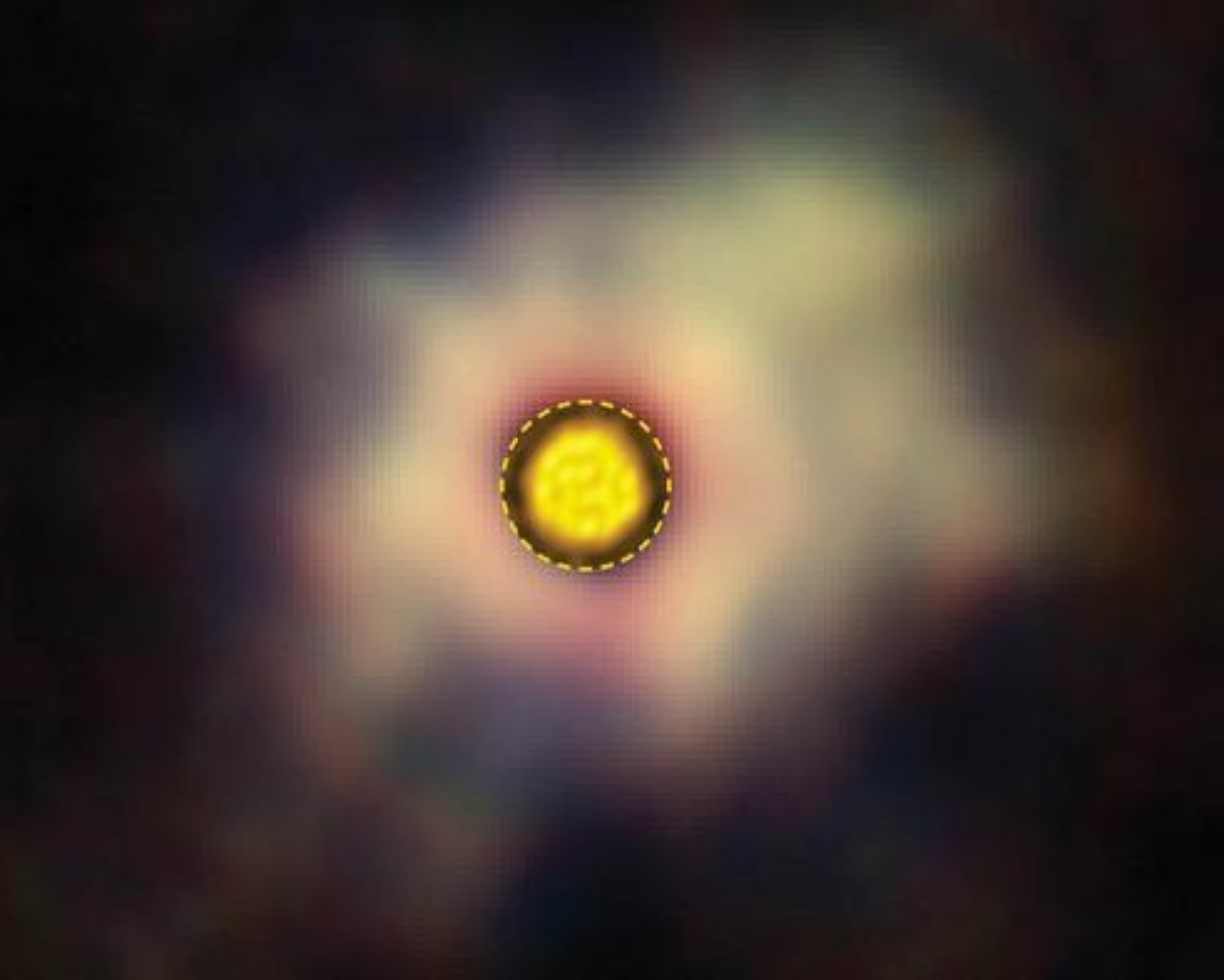
Stardust contains life’s ingredients – but how do they travel?
For decades, scientists thought dust helped aging stars push gas into space – but a nearby star shows that may not be true.
Astronomers closely examined the material flowing from R Doradus, a Sun-like star in its late-life asymptotic giant…
Continue Reading
-

COVID-19: Most-Read Stories of 2025
The landscape of COVID-19 shifted from a unified public health front to a complex web of regional restrictions and individual choices in 2025. As federal agencies diverged and pandemic fatigue hit record highs, the burden of clarity fell on…
Continue Reading
-
Enhanced EAADE: a quantum-resilient and privacy-preserving authentication protocol for secure data exchange in vehicular social networks
Butt, T. A., Iqbal, R., Shah, S. C. & Umar, T. Social internet of vehicles: Architecture and enabling technologies. Comput. Electr. Eng.69, 68–84 (2018).
Khan, A. R. et al. Dsrc technology in vehicle-to-vehicle (v2v) and vehicle-to-infrastructure (v2i) iot system for intelligent transportation system (its): A review. Recent trends in mechatronics towards industry 4.0: selected articles from iM3F 2020, Malaysia 97–106 (2022).
Cynthia, J., Sakthipriya, G., Sudhahar, J. C. & Suguna, M. Intelligent transportation system: A review of vanet applications for urban areas, technologies, and protocols. Sustainable Digital Technologies for Smart Cities 99–112 (2023).
Xing, L., Zhao, P., Gao, J., Wu, H. & Ma, H. A survey of the social internet of vehicles: Secure data issues, solutions, and federated learning. IEEE Intell. Transp. Syst. Mag.15, 70–84 (2022).
Kaur, T. & Kaur, P. D. The emergence of the social internet of vehicles (siov): A comprehensive analysis of architecture, technologies, and applications. In International Conference on Advancements in Smart Computing and Information Security, 335–347 (Springer, 2024).
Ismail, S., Hammad, E. & Iqbal, R. Towards holochain-based adaptive trust management in social internet of vehicles. In 2025 IEEE 15th Annual Computing and Communication Workshop and Conference (CCWC), 00878–00884 (IEEE, 2025).
Roopa, M. et al. Dtcms: Dynamic traffic congestion management in social internet of vehicles (siov). IOT16, 100311 (2021).
Hemmati, A., Zarei, M. & Souri, A. Blockchain-based internet of vehicles (biov): A systematic review of surveys and reviews. Secur. Privacy6, e317 (2023).
Vegni, A. M. & Loscri, V. A survey on vehicular social networks. IEEE Commun. Surv. Tutorials17, 2397–2419 (2015).
Hassan, I. M. & Hassan, K. R. Vehicular social networks and vehicular ad-hoc networks, applications, modelling tools and challenges: A survey. Int. J. Comput. Appl.176, 32–38 (2020).
Mohammed, B. A. et al. Service based veins framework for vehicular ad-hoc network (vanet): A systematic review of state-of-the-art. Peer-to-Peer Netw. Appl.17, 2259–2281 (2024).
Chang, S. Y., He, J. & Nallanathan, A. Application of Gromov-Wasserstein matching for vehicular social network security profiling. IEEE Trans. Veh. Technol. https://doi.org/10.1109/TVT.2025.3564560 (2025).
Cui, M. et al. Secure data sharing for consortium blockchain enabled vehicular social networks. IEEE Trans. Veh. Technol.73, 19682–19695 (2024).
Wan, Q., Liu, M., Wang, L., Wang, F. & Zhang, M. Dual-policy attribute-based searchable encryption with secure keyword update for vehicular social networks. Electronics14, 266 (2025).
Mazhar, S. et al. State-of-the-art authentication and verification schemes in vanets: A survey. Veh. Commun.49, 100804 (2024).
Azam, F. Ensuring security and privacy in vanet: A comprehensive survey of authentication approaches. J. Comput. Netw. Commun.2024, 1818079 (2024).
Mishra, D. & Nagar, M. Comprehensive survey of post-quantum secure lattice-based authentication schemes for vanets. In 2025 International Conference on Computational, Communication and Information Technology (ICCCIT), 787–792 (IEEE, 2025).
Sood, S. K. et al. Scientometric analysis of quantum algorithms for vanet optimization. IEEE Trans. Syst. Man Cybern. Syst. https://doi.org/10.1109/TSMC.2024.3428707 (2024).
Dwivedi, S. K. et al. Dbke: Design of blockchain-envisioned vehicle-to-vehicle secure key management protocol using ecc. IEEE Trans. Intell. Transp. Syst. https://doi.org/10.1109/TITS.2025.3572305 (2025).
Tao, Q., Cui, X., Ding, H., Shen, Z. & Li, Y. Elsp-ma: An efficient lightweight and security-enhanced privacy-preserving message authentication scheme for vanets. IEEE Trans. Veh. Technol. https://doi.org/10.1109/TVT.2025.3571380 (2025).
Bai, Y. A lightweight bidirectional secure authentication protocol for mobile edge computing in 6g networks. Internet Technol. Lett.8, e70001 (2025).
Suman, A., Suman, P., Varshney, S. & Kumar, C. Secured vanet using privacy-preserving authentication approach. SN Comput. Sci.6, 1–11 (2025).
Lwamo, N. M. et al. Suaa: A secure user authentication scheme with anonymity for the single & multi-server environments. Inf. Sci.477, 369–385 (2019).
Xiao, J., Li, W.-J., Geng, H.-Y. & Zhai, Y.-B. An anti-dos attack rfid security authentication protocol in the internet of vehicles. J. Beijing Univ. Posts Telecommun.42, 114 (2019).
Zhu, H., Liu, T., Wei, G. & Li, H. Ppas: privacy protection authentication scheme for vanet. Clust. Comput.16, 873–886 (2013).
Limbasiya, T. & Das, D. Secure message confirmation scheme based on batch verification in vehicular cloud computing. Phys. Commun.34, 310–320 (2019).
Shekhawat, H. & Gupta, D. S. A survey on lattice-based security and authentication schemes for smart-grid networks in the post-quantum era. Concurr. Comput. Pract. Exp.36, e8080 (2024).
Dharminder, D. et al. Secure cloud-based data storage scheme using postquantum integer lattices-based signcryption for iot applications. Trans. Emerg. Telecommun. Technol.33, e4540 (2022).
Imran, M. A quantum algorithm for semidirect discrete logarithm problem on elliptic curves. IACR Cryptol. ePrint Arch.2023, 1052 (2023).
Abdullah, A. & Mahalanobis, A. A zero minor solves the elliptic curve discrete logarithm problem. Exp. Math. https://doi.org/10.1080/10586458.2025.2525844 (2025).
Wong, H. Y. Shor’s algorithm. In Introduction to Quantum Computing: From a Layperson to a Programmer in 30 Steps, 289–298 (Springer, 2023).
Kumar, M. & Mondal, B. Study on implementation of shor’s factorization algorithm on quantum computer. SN Comput. Sci.5, 413 (2024).
Akçay, L. & Yalçın, B. Ö. Lightweight asip design for lattice-based post-quantum cryptography algorithms. Arab. J. Sci. Eng.50, 835–849 (2025).
Nguyen, T.-H., Pham, C.-K. & Hoang, T.-T. A high-efficiency modular multiplication digital signal processing for lattice-based post-quantum cryptography. Cryptography7, 46 (2023).
Singh, D. K. & Bhardwaj, D. An eaade: Effective authentication approach for data exchange in vehicular social network for iov. Secur. Privacy8, e457 (2025).
Sikarwar, H. & Das, D. Smmap. Secure mac-based mutual authentication protocol for iov In 330–335 (2023).
Chen, C.-M. et al. A provably secure key transfer protocol for the fog-enabled social internet of vehicles based on a confidential computing environment. Veh. Commun.39, 100567 (2023).
Ayed, S., Hbaieb, A. & Chaari, L. Blockchain and trust-based clustering scheme for the iov. Ad Hoc Netw.142, 103093 (2023).
Arafeh, M. et al. Data independent warmup scheme for non-iid federated learning. Inf. Sci.623, 342–360 (2023).
Al-Mekhlafi, Z. G., Al-Shareeda, M. A., Manickam, S., Mohammed, B. A. & Qtaish, A. Lattice-based lightweight quantum resistant scheme in 5g-enabled vehicular networks. Mathematics11, 399 (2023).
Continue Reading
-
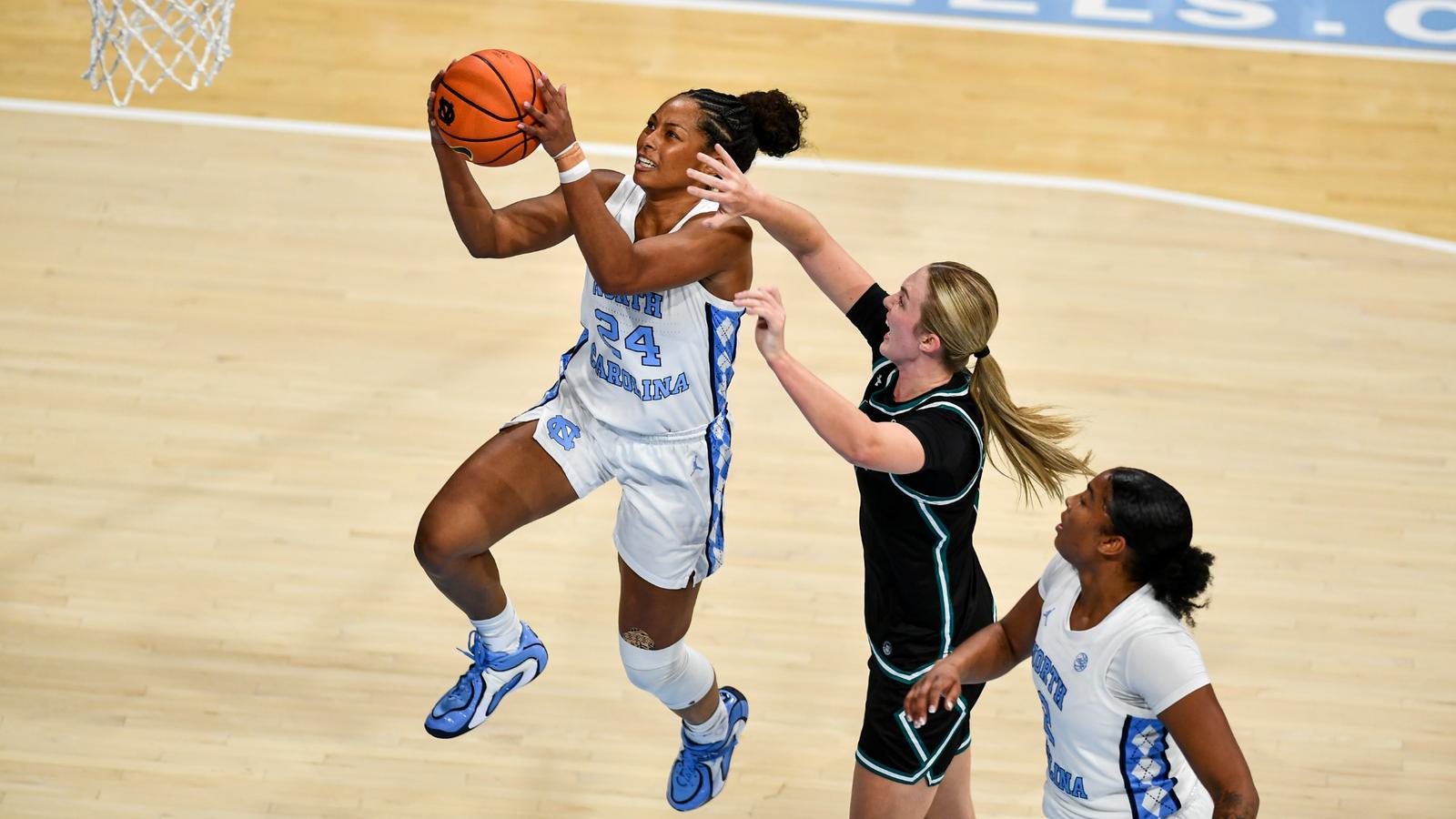
Tar Heels Travel North, Facing Boston College Monday
CHESTNUT HILL, MASS. — Carolina women’s basketball is back in action, as the No. 16 ranked Tar Heels hit the road for the first time in Atlantic Coast Conference play with a trip to Boston College on Monday. A win over the Eagles would make it…Continue Reading
-

Primates Quiz: Go ape and test your knowledge on our closest relatives
Primates — the mammalian group that includes humans — are found pretty much everywhere on Earth, from equatorial rainforests to scientific research stations in Antarctica. This hugely diverse order appeared before the dinosaurs went…
Continue Reading
-
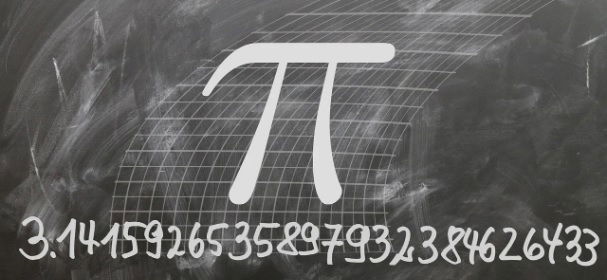
A Century Later, Ramanujan’s Pi Equations Are Helping Physicists Unlock the Secrets of Nature
In 1914, Indian mathematician Srinivasa Ramanujan published a short paper detailing several unusual formulas for calculating the value of the number π. Using only a few mathematical terms, the formulas generated far…
Continue Reading
-

Epinephrine Use for Non-Medics in Acute Allergic Reactions
NEW RECOMMENDATIONS for administering epinephrine during acute allergic reactions (AAR) will enable patients, medical practitioners, and importantly non-medical personnel to improve AAR recognition, management, and ultimately…
Continue Reading
-
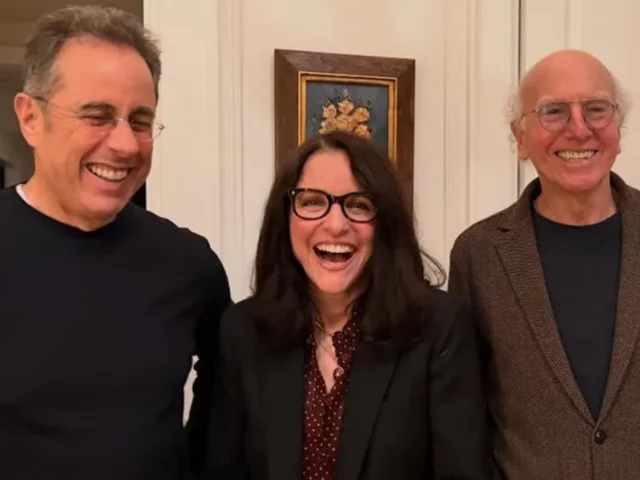
Jerry Seinfeld, Julia Louis‑Dreyfus and Larry David Share rare Christmas Eve reunion
“‘The creatures were stirring…’ Christmas Eve 2025,” Seinfeld wrote on Instagram
Legendary Seinfeld cast member Jerry Seinfeld treated fans to a…
Continue Reading