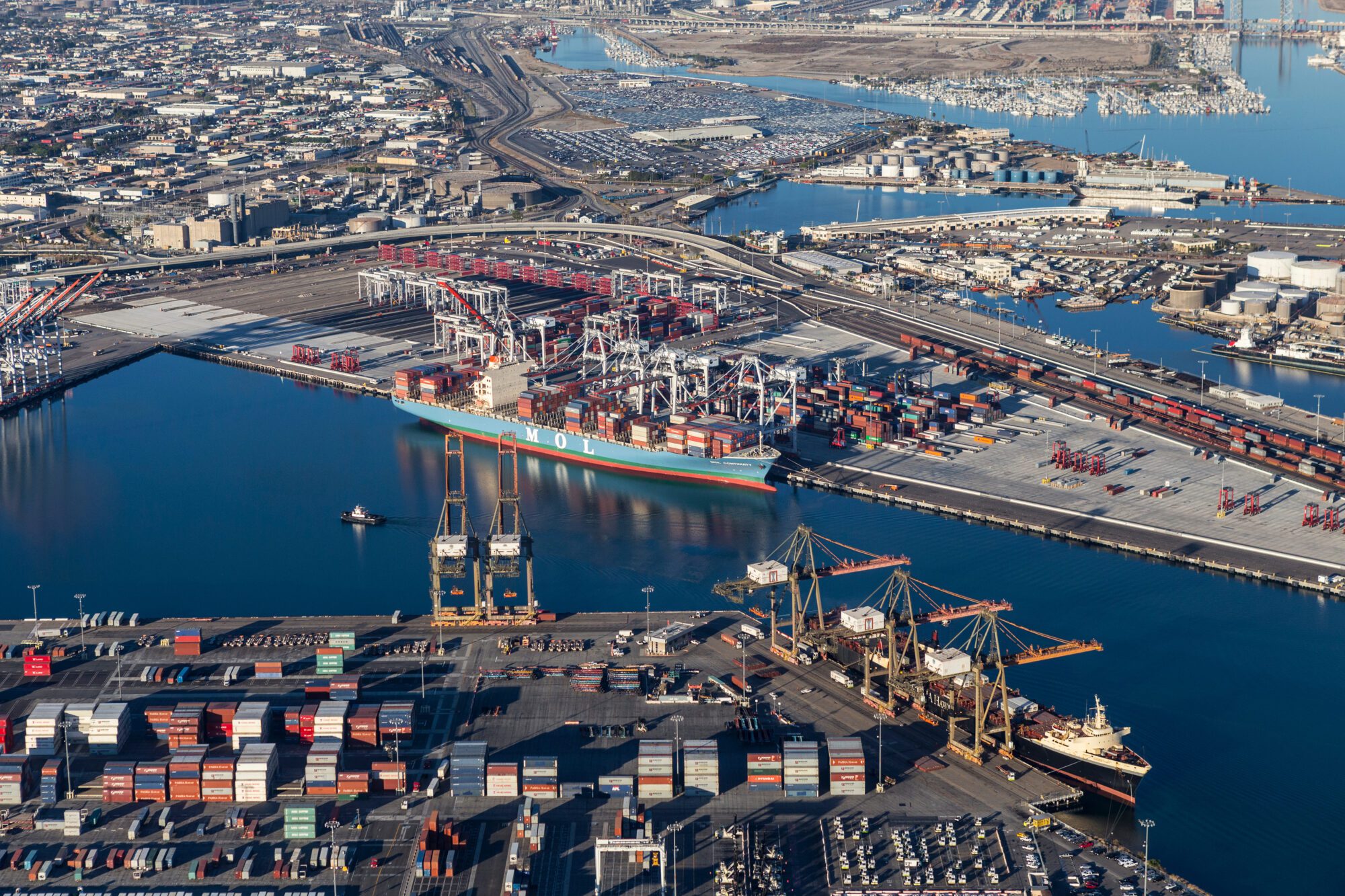
To reduce air pollution from ships, California Air Resources Board (CARB) implemented emissions control regulations for oceangoing vessels and commercial harbor craft. Shore power, which allows ships to plug into shore-based electrical power sources to operate their electrical systems while turning off their auxiliary engines, can effectively eliminate local air pollutant emissions, and has been identified as a key compliance strategy in CARB’s regulations. However, despite shore power’s role in California’s emissions control regulations and its growing adoption internationally, the magnitude of electricity demand from widespread shore power use and its implications for grid planning remain unclear.
To address this knowledge gap, this brief estimates the annual and hourly demand from shore power in California through 2050 under four scenarios, comparing these projections against statewide electricity demand forecasts. The study also quantifies air quality and health benefits from maximizing shore power use in California.
The analysis finds that shore power electricity demand would be less than 0.2% of California’s forecasted electricity deliveries in 2050 even under the maximum adoption scenario. Additionally, eliminating all at-berth auxiliary engine emissions through shore power could have avoided approximately 30 premature deaths annually in California, representing $321 million in economic benefits.
As technologies for the electrification of boiler functions mature, California could extend emissions control requirements to boilers, substantially increasing both air quality benefits and shore power infrastructure requirements. Such expansion would require coordinated planning between ports, utilities, and regulators to ensure adequate generation, transmission, and distribution capacity.
Over the past 25 years, artificial neural networks have exploded in size, expanding from 60,000 parameters in 1998 (LeNet) to 70 billion in 2024 (Llama 3). Computational neuroscience has benefited from these large models’ ability…
KEMBLE, UK and EVERETT, Wash., Dec. 22, 2025 /PRNewswire/ — ZeroAvia today announced that it has completed a further round of financing, led by Barclays Climate Ventures, Breakthrough Energy Ventures, Ecosystem Integrity Fund, Horizons Ventures, Summa Equity, and AP Ventures, with participation from the National Wealth Fund and the Scottish National Investment Bank.
With additional investment secured, ZeroAvia has extended its cash runway for the next two years and will continue to fully industrialize its hydrogen power and propulsion technology for the aviation and defense markets.
The company is already supplying its SuperStack Flex modular fuel cell power generation system to the defense sector, and there is increasing interest in the systems for unmanned aerial vehicles. The dual-use potential is strong: ZeroAvia is also in active customer discussions with eVTOL and fixed-wing commercial players in relation to deploying the compact, lightweight, flexible systems.
The SuperStack Flex can enable both electric propulsion and enhanced on-board electrical power generation with greater power density than battery systems. It unlocks all of the benefits of electrical operation – lower thermal and noise signatures, reduced maintenance costs, enhanced reliability and zero-emissions – and with significantly enhanced endurance. With Design Organisation Approval granted by the UK CAA in November, ZeroAvia is well positioned to deliver the first fuel cell systems for aviation with regulatory approvals.
As well as a standalone power generation system with a wide variety of defense and civil applications, the SuperStack Flex is a core module of ZeroAvia’s first planned full hydrogen-electric powertrain, ZA600, designed for 10-20 seat commercial aircraft. With a prototype extensively flight tested, hundreds of engine orders in place with airline customers (including a launch customer), and funding in place to support the entry-in-service of 15 aircraft in Norway, ZeroAvia’s focus is now on pushing towards its first certification to support these opportunities.
Val Miftakhov, Founder and CEO, ZeroAvia, said: “The support shown in this investment to power the next phase for the company is a great vote of confidence in the company’s technology and roadmap. With this latest financing we are able to progress at pace on the most immediate market opportunities – such as the SuperStack Flex – which will enable us to derisk later stages of our roadmap.”
For more information on the SuperStack Flex, download the brochure or get in touch with the team.
About ZeroAvia ZeroAvia is leading the transition to a clean future of flight by developing hydrogen-electric propulsion technologies for aviation and defense to unlock lower costs and emissions, lower detectability, cleaner air, reduced noise, energy independence and increased connectivity. The company is developing hydrogen-electric (fuel cell-powered) engines for existing commercial aircraft segments and also supplying hydrogen and electric propulsion component technologies for novel electric air transport applications (including battery, hybrid and fuel cell powered electric fixed-wing aircraft, novel eVTOL designs, rotorcraft and Unmanned Aerial Vehicles). ZeroAvia has submitted its first full engine for up to 20-seat planes for certification and is working on a larger powertrain for 40–80-seat aircraft, with significant flight test and regulatory milestones achieved with the U.S. FAA and UK CAA.
For more, please visit ZeroAvia.com, follow @ZeroAvia on Facebook, Twitter/X, Instagram, LinkedIn, and YouTube.
The Moon is coming back from complete darkness, but it’s still showing just a hint of light. Over the next few nights, it will get bigger and brighter, and soon we’ll be able to spot…
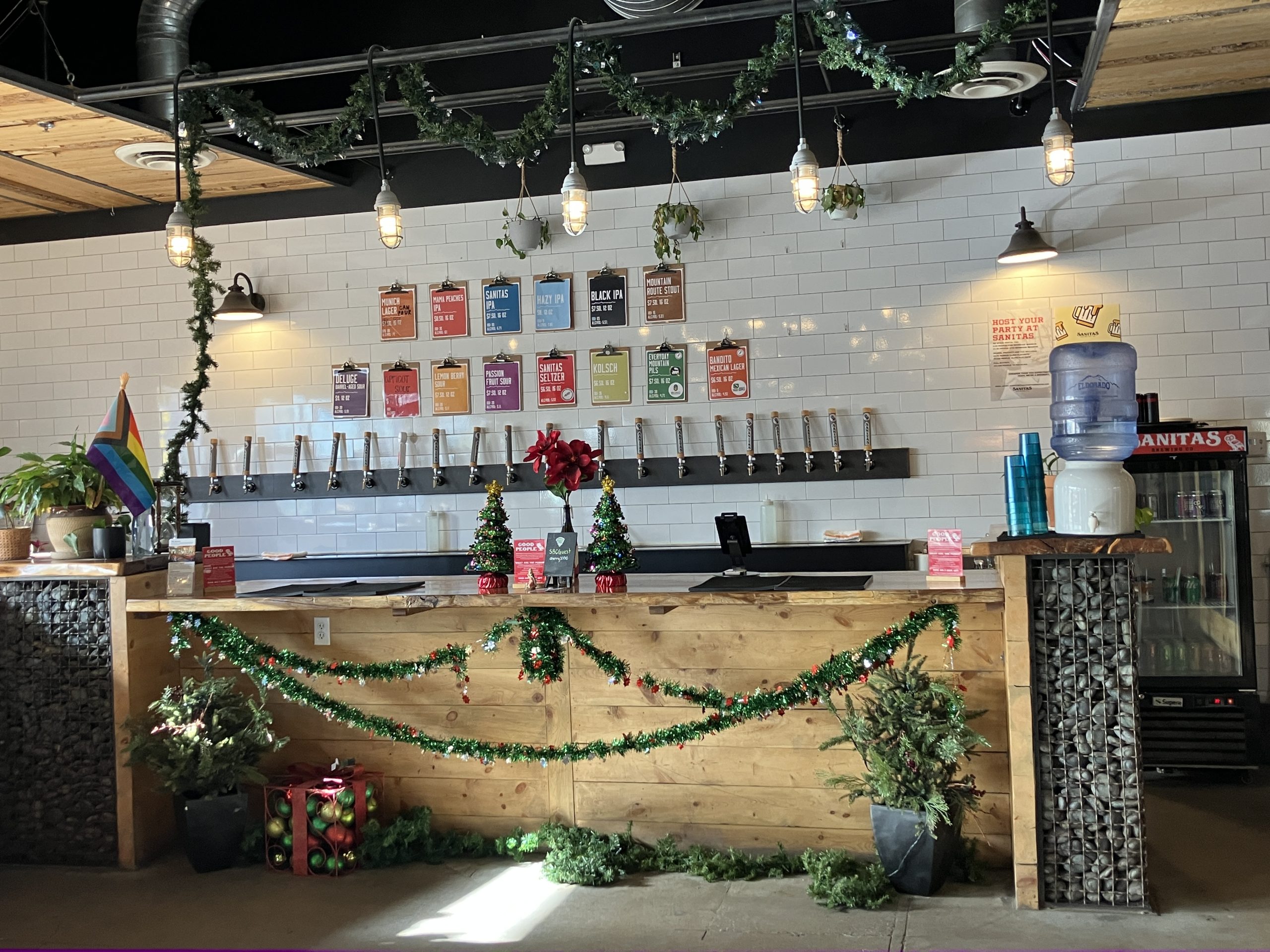
In mid-November, Boulder-based Sanitas Brewing Co. announced it would close by the end of the year. By Dec. 20, the brewery had poured its final beers, becoming one of the latest casualties of a difficult period for the craft beer industry.
The Lafayette taproom closed Dec. 18, followed by the Englewood location on Dec. 19 and the flagship Boulder taproom on Dec. 20.
Sanitas isn’t the only Colorado brewery ceasing operations this winter. Trinity Brewing Co., in Colorado Springs, poured its final beers Dec. 21, and Denver’s Call to Arms Brewing Co. is set to shutter on Dec. 23.
“I think I’ve counted 10 to 15 breweries nationwide that are closing between [December] 20th and the 23rd,” said Sanitas CEO and co-founder Michael Memsic, who expects more announcements to come. Memsic sees this latest wave of closures as the craft beer industry adjusting to a more stable phase.
“As brewers, we’ve been a part of an emerging industry, and now we’re in a mature industry,” Memsic stated. “Once you’re in a mature industry, there are going to be winners and losers on a steady basis.”
For the past two decades, the craft beer industry nationwide experienced explosive growth, a pace Memsic said was not sustainable. “As an industry, we opened way too many breweries in a really short period of time,” he said.
Michael Memsic, CEO and co-founder of Sanitas Brewing Co., said the brewery’s closure reflects broader shifts in the craft beer industry. Credit: McKenzie Watson-Fore
The Denver metro area has been a longtime hotspot for craft beer. The Great American Beer Festival, held in Denver every autumn, is hosted by the Boulder-based Brewers Association, which advocates for independent brewers.
Colorado drinkers benefited from years of intense competition and creativity, but as the scene constricts, many local breweries are unable to keep going. Speaking regionally, Memsic said, “We have been hit the hardest on the back end” of the industry’s contraction.
Asked what’s driving these shifts, Memsic joked, “I blame Gen Z.” He’s not serious, though changing attitudes toward alcohol are one factor among many. “It’s like a stew of issues,” he said. “There are so many ingredients, and some of those ingredients stand out more than others.”
Rising property values have made it harder for breweries to afford the space required to brew beer. “It’s a hard industry to make money in,” Memsic added, “and it became obvious to us that we didn’t have the access to capital for another round, if you will.”
Over its 12-year tenure, Sanitas demonstrated an ability to pivot as the industry evolved. Initially, Memsic and his co-founder and chief brewing officer Chris Coyne envisioned Sanitas as a regional brewery, similar to Oskar Blues, Odell Brewing Co. and Avery Brewing Co.
Their first major adjustment came around 2018. “That’s when we realized that we weren’t hitting the regional side of things,” said Memsic. “Distribution was not our strength; our strength was the taproom.” After that, the owners prioritized building out taprooms as robust community spaces.
The pandemic interrupted their initial expansion plans, but Sanitas went on to open additional taprooms in Englewood in 2023 and Lafayette in 2024. Each space became a beloved hangout spot in its own right and helped incubate and launch other businesses, including C. Burger in Englewood and Portal Thermaculture in Boulder.
The entrance to Sanitas Brewing Co.’s flagship Boulder taproom, which closed in December. Credit: McKenzie Watson-Fore
However, even what it takes to be a successful taproom has changed over time. “People seeking that experience aren’t just going to go to a warehouse for two or three pints and think that it’s cool like we once did,” Memsic said. In his view, today a successful taproom has to be “restaurant adjacent,” offering food, hospitality and an experience. “A lot of these taprooms are not built for that.”
Despite the challenges facing the beer industry, Memsic believes the role of the pub will never fully recede from society. Gathering, drinking and telling stories are ancient human practices, he said, and social spaces still matter. “There are health benefits to socializing and community,” he said.
Ultimately, the community aspects of Sanitas Brewing will live on. “I’m optimistic that this space will be reborn,” he added. When asked what he’ll carry forward, Memsic said, “We did something that mattered to Boulder.”