At a glance
- 235 health facilities in Kenya are trialling a switch from ten-dose to five-dose measles-rubella (MR) vaccine vials. It promises to be an impactful change.
- Ten-dose vials of MR vaccine incur the risk of waste: if too few…

The US Centers for Disease Control and Prevention (CDC)’s vaccine advisers voted on Friday morning to limit hepatitis vaccines in a major move signaling the Trump administration’s regressive approach to vaccines that have been given safely…

An overview of hospital-based bacterial and fungal outbreaks worldwide during the COVID-19 pandemic underscores the strain placed that was place on infection prevention and control (IPC) programs, researchers…
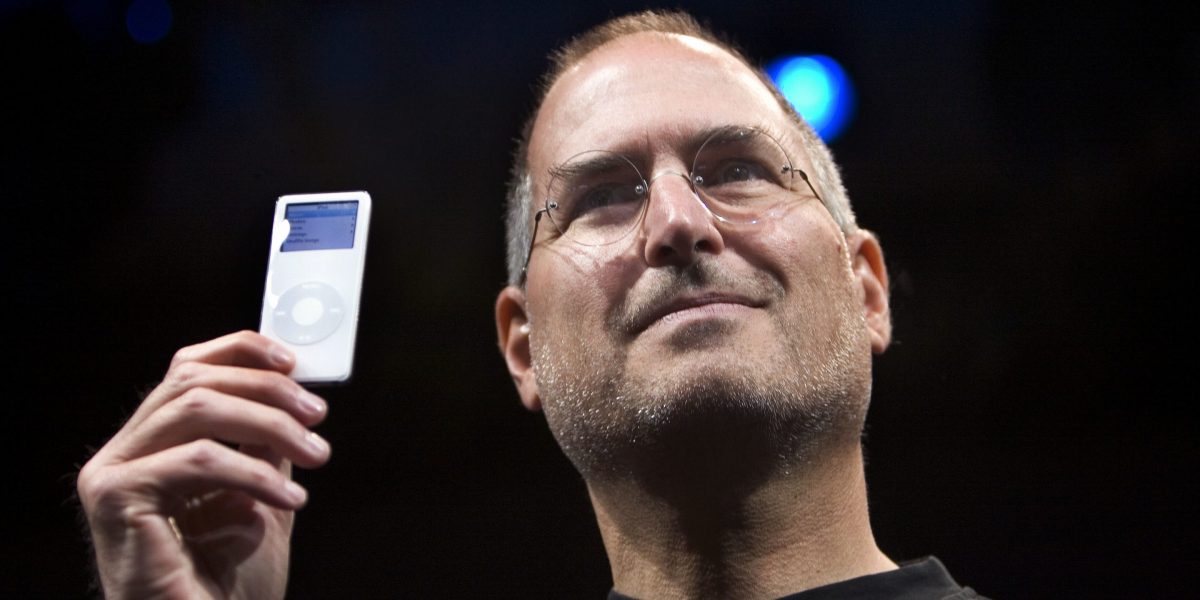
Apple is currently undergoing the most extensive executive overhaul in recent history, with a wave of senior leadership departures that marks the company’s most significant management realignment since its visionary cofounder and CEO, Steve Jobs, died in 2011. The leadership exodus spans critical divisions from artificial intelligence to design, legal affairs, environmental policy, and operations, which will have major repercussions for Apple’s direction for the foreseeable future.
On Thursday, Apple announced Lisa Jackson, its VP of environment, policy, and social initiatives, as well as Kate Adams, the company’s general counsel, will both retire in 2026. Adams has been Apple’s chief legal officer since 2017, and Jackson joined Apple in 2013. Adams will step down late next year, while Jackson will leave next month.
Jackson and Adams join a growing list of top executives who have either left or announced their exits this year. AI chief John Giannandrea announced his retirement earlier this month, and its design lead, Alan Dye, who took charge of Apple’s all-important user interface design after Jony Ive left the company in 2019, was just poached by Mark Zuckerberg’s Meta this week.
The scope of the turnover is unprecedented in the Tim Cook era. In July, Jeff Williams, Apple’s COO, who was long considered Cook’s successor as CEO, decided to retire after 27 years with the company. One month later, Apple’s CFO, Luca Maestri, also decided to step back from his role. And the design division, which just lost Dye, also lost Billy Sorrentino, a senior design director, who left for Meta with Dye. Things have been particularly turbulent for Apple’s AI team: Ruoming Pang, who headed its AI foundation models team, left for Meta in July and took about 100 engineers with him. Ke Yang, who led AI-driven web search for Siri, and Jian Zhang, Apple’s AI robotics lead, also both left for Meta.
While all of these departures are a big deal for Apple, the timing may not be a coincidence. Both Bloomberg and the Financial Times have reported on Apple ramping up its succession plan efforts in preparation for Cook, who has led the company since 2011, to retire in 2026. Cook turned 65 in November and has grown Apple’s market cap from about $350 billion to a whopping $4 trillion under his tenure. Bloomberg reports John Ternus has emerged as the leading internal candidate to replace him.
Apple choosing Ternus would be a pretty major departure from what’s worked for Apple during the past decade, which has been letting someone with an operational background and a strong grasp of the global supply chain lead the company. Ternus, meanwhile, is focused on hardware development, specifically for the iPhone, iPad, Mac, and Apple Watch. But it’s that technical expertise that’s made him an attractive candidate, especially as much of the recent criticism about Apple has revolved around the company entering new product categories (Vision Pro, but also the ill-fated Apple Car), as well as its struggling AI efforts.
Now, of course, with so many executives leaving Apple, succession plans extend beyond the CEO role. Apple this week announced it’s bringing in Jennifer Newstead, who currently works as Meta’s chief legal officer, to replace Adams as the company’s general counsel starting March 1, 2026. Newstead is expected to handle both legal and government affairs, which is essentially a consolidation of responsibilities among Apple’s leadership team, merging the roles of Adams and Jackson into one.
Alan Dye, meanwhile, will be replaced by Stephen Lemay, a move that’s reportedly being celebrated within Apple and its design team in particular. John Gruber, who’s reported on Apple for decades and has deep ties within the company, wrote a pretty scathing critique of Dye, and in that same breath said employees are borderline “giddy” about Lemay—who has worked on every major Apple interface design since 1999, including the very first iPhone—taking over.
Meanwhile, on the AI team, Giannandrea will be replaced by Amar Subramanya, who led AI strategy and development efforts at Google for about 16 years before a brief stint at Microsoft.
All of the above departures cover critical functions for Apple: AI competitiveness, design innovation, regulatory navigation, and operational efficiency. Each replacement brings specialized expertise that aligns with the challenges Cook’s successor will inherit.
The real test will be execution across multiple fronts simultaneously. Can Subramanya accelerate Apple’s AI development to match competitive threats? Will Lemay’s design leadership maintain Apple’s interface advantages as AI reshapes user interaction? Can Newstead navigate regulatory challenges while preserving Apple’s privacy-first approach?
What’s certain is the company will look fundamentally different in 2026 as the executive team that grew Apple into a $4 trillion behemoth is departing. The transformation could be as profound as any since Jobs handed the reins to his COO at the time, Tim Cook, 14 years ago.

Nvidia CEO Jensen Huang said earlier this month that he could see his company’s evolution in his head before it translated into reality.
“Manifest your belief as deeply as you can,” Huang said in the interview at the University of Cambridge…

Key Takeaways:

Brazil’s Cerrado and Amazon landscapes are at the heart of global food and fiber supply chains and are globally critical for their environmental services. Transforming how they are managed is essential for a sustainable future – for climate, nature and people. The Landscape Accelerator Brazil – LAB is leading this transformation by uniting business, finance, policymakers, and producers to scale regenerative agriculture and land use. This year, the LAB’s journey – from the inaugural Cerrado Summit, to foundational research (check out Cerrado and Amazon assessment) and the LAB Action Plan, to dynamic pre-COP and COP30 events – has set the ambition for scaled investment and regenerative outcomes on the ground in the coming years.
Note Opportunity encompasses the transition of the Cerrado and Amazon biomes to regenerate landscapes
Source BCG analysis
The LAB Action Plan outlines how diverse stakeholders can work together to scale regenerative landscapes across two critical biomes in Brazil: the Cerrado and Amazon. It focuses on three pillars:
Together, these pillars underpin the LAB ambition to mobilize USD $5 billion by 2030 to accelerate regenerative land-use models and strengthen resilience in these biomes, as part of a longer-term investment opportunity approaching USD $100 billion.
At the pre-COP events, the LAB has been an active platform for convening business leaders, government representatives, civil society, finance stakeholder, and producers to align around regenerative solutions. These dialogues helped shaping the agenda and direction on land-use priorities for the private sector, ensuring that Brazil’s leadership in sustainable land use is recognized and supported globally.

At the Sustainable Innovation Forum in Sao Paulo, WBCSD, BCG and CEBDS convened over 50 leaders from corporates, finance, MDBs, producers, and civil society to strategize on accelerating blended investment into regenerative landscapes. The roundtable identified two key LAB roles going forward:
Participants brainstormed actionable opportunities, such as creating a directory of funds, harmonizing eligibility criteria, and integrating MRV & finance unlocks to accelerate regenerative outcomes on the ground. The session underscored the importance of de-risking transitions for farmers and tailoring financial solutions to their needs.
Later the same day, WBCSD’s Executive Vice President Diane Holdorf represented our collective work in a multistakeholder panel alongside leaders from the International Finance Corporation, WBCSD member Louis Dreyfus Company, the Rwanda Green Fund and a local organic producer.

This working session in partnership with CEBDS and with participation from the Brazilian Ministries of Agriculture and Environment, the Central Bank, producer associations and other key technical partners showcased LAB’s progress in aligning metrics for regenerative landscapes and MRV guidance tailored to Brazil , highlighting the benefits and challenges of a vision for regenerative agriculture focused on impact instead of practices alone. Key opportunities to explore in 2026 include:
Together, these engagements reinforced LAB’s role as a bridge between global priorities and local action, making regenerative agriculture scalable and investable.
At COP30, the Action Agenda on Regenerative Landscapes (AARL) underscored the global momentum for land restoration by announcing over $9 billion in private-sector commitments, spanning 210 million hectares and 12 million farmers since COP28. This signaled both the scale of opportunity and the urgency for country-led pathways to translate ambition into impact.
Brazil’s launch of RAIZ (Resilient Agriculture Investment for net-Zero land degradation) provides exactly that pathway. RAIZ focuses on mapping degraded landscapes, identifying investable restoration solutions, and structuring blended finance to mobilize capital at scale. It offers a practical route to convert degraded soils into productive, resilient land while advancing climate, biodiversity, and rural development goals.
The LAB plugs directly into this architecture as the implementation engine, showing how RAIZ and AARL commitments can materialize on the ground. As a place-based coalition set to promote coordinated technical and financial support in 2026, the LAB demonstrates how to turn global commitments and national strategies into investable, farmer-centered action.
Looking ahead: LAB’s path forward
At COP30, the LAB and its members and partners demonstrated the power of systemic collaboration to align local investment and action with global climate and biodiversity goals. By connecting people, policies, and investments, the LAB is making regenerative landscapes scalable and investable, turning ambition into action and setting a blueprint for the path ahead and for others to follow.
Learn more about our work on our website and reach out to Matt Inbusch (inbusch@wbcsd.org) to explore collaboration opportunities.