Author: admin

  • UCB Upgrades 2025 Financial Guidance Based on Strong Performance

    Brussels (Belgium), December 5, 2025 – 07:00 (CET) – UCB today announced an additional upgrade to its 2025 financial guidance, reflecting excellent launch execution for UCB’s growth drivers and its unwavering ambition to deliver sustainable growth and to transform lives through breakthrough science.

    2025 performance sets a strong foundation: With revenue expected to exceed €7.6 billion (+24% year-on-year), UCB is poised for continued and focused growth. The upgraded guidance reflects – next to the continued growth of RYSTIGGO®, ZILBRYSQ®, FINTEPLA® and EVENITY® – the exceptional performance of BIMZELX®, including a strong momentum in hidradenitis suppurativa (HS) and a favorable payer mix in the U.S.

    Underlying profitability -adjusted EBITDA- is set to benefit from a sale of established brands completed as part of UCB’s ongoing portfolio-simplification efforts. Excluding this non-recurring impact, the 2025 adjusted EBITDA margin is anticipated to be higher than 31%, driven by an enhanced gross margin profile, greater operating leverage, and the increasing earnings contribution from EVENITY®.

    UCB’s strong 2025 guidance further reinforces confidence in the company’s decade-plus growth ambition. While BRIVIACT® is expected to face loss-of-exclusivity in 2026 and the expanding use of BIMZELX® in the U.S. may affect its net pricing, UCB remains committed through disciplined execution to sustain its long-term growth trajectory.

    Sandrine Dufour, CFO UCB says: “UCB’s continued growth reflects our unwavering commitment to delivering value for patients and executing our strategic vision. With exceptional commercial performance and remarkable R&D accomplishments, we approach 2026 with confidence and a clear path forward delivering continued growth. Our focus remains on driving sustainable growth while making a profound impact on the lives of those we serve.”

    UCB will publish the Full Year 2025 results and formal financial guidance for 2026 on February 26, 2026.

    *Adjusted EBITDA is set to benefit from a sale of established brands. Excluding this non-recurring impact, the 2025 adjusted EBITDA margin is anticipated to be higher than 31%.
     

    For further information, contact UCB: 

    Investor Relations
    Antje Witte 
    T +32.2.559.94.14 
    email antje.witte@ucb.com

    Sahar Yazdian
    T +32.2.559.91.37 
    email sahar.yazdian@ucb.com  

    Corporate Communications
    Laurent Schots 
    T +32.2.559.92.64 
    Email laurent.schots@ucb.com

    About UCB 
    UCB, Brussels, Belgium (www.ucb.com) is a global biopharmaceutical company focused on the discovery and development of innovative medicines and solutions to transform the lives of people living with severe diseases of the immune system or of the central nervous system. With approximately 9,000 people in approximately 40 countries, the company generated revenue of €6.1 billion in 2024. UCB is listed on Euronext Brussels (symbol: UCB).

    Forward looking statements 
    This document contains forward-looking statements, including, without limitation, statements containing the words “potential”, “believes”, “anticipates”, “expects”, “intends”, “plans”, “seeks”, “estimates”, “may”, “will”, “continue” and similar expressions. These forward-looking statements are based on current plans, estimates and beliefs of management. All statements, other than statements of historical facts, are statements that could be deemed forward-looking statements, including estimates of revenues, operating margins, capital expenditures, cash, other financial information, expected legal, arbitration, political, regulatory or clinical results or practices and other such estimates and results. By their nature, such forward-looking statements are not guaranteeing future performance and are subject to known and unknown risks, uncertainties, and assumptions which might cause the actual results, financial condition, performance or achievements of UCB, or industry results, to be materially different from any future results, performance, or achievements expressed or implied by such forward-looking statements contained in this document. 
    Important factors that could result in such differences include but are not limited to: global spread and impacts of wars, pandemics and terrorism, the general geopolitical environment, climate change, changes in general economic, business and competitive conditions, the inability to obtain necessary regulatory approvals or to obtain them on acceptable terms or within expected timing, costs associated with research and development, 

    changes in the prospects for products in the pipeline or under development by UCB, effects of future judicial decisions or governmental investigations, safety, quality, data integrity or manufacturing issues, supply chain disruption and business continuity risks; potential or actual data security and data privacy breaches, or disruptions of UCB’s information technology systems, product liability claims, challenges to patent protection for products or product candidates, competition from other products including biosimilars or disruptive technologies/business models, changes in laws or regulations, exchange rate fluctuations, changes or uncertainties in laws and/or rules pertaining to tax and duties or the administration of such laws and/or rules, and hiring, retention and compliance of employees. There is no guarantee that new product candidates will be discovered or identified in the pipeline, or that new indications for existing products will be developed and approved. Movement from concept to commercial product is uncertain; preclinical results do not guarantee safety and efficacy of product candidates in humans. So far, the complexity of the human body cannot be reproduced in computer models, cell culture systems or animal models. The length of the timing to complete clinical trials and to get regulatory approval for product marketing has varied in the past and UCB expects similar unpredictability going forward. Products or potential products which are the subject of partnerships, joint ventures or licensing collaborations may be subject to disputes between the partners or may prove to be not as safe, effective or commercially successful as UCB may have believed at the start of such partnership. UCB’s efforts to acquire other products or companies and to integrate the operations of such acquired companies may not be as successful as UCB may have believed at the moment of acquisition. Also, UCB or others could discover safety, side effects or manufacturing problems with its products and/or devices after they are marketed. The discovery of significant problems with a product similar to one of UCB’s products that implicate an entire class of products may have a material adverse effect on sales of the entire class of affected products. Moreover, sales may be impacted by international and domestic trends toward managed care and health care cost containment, including pricing pressure, political and public scrutiny, customer and prescriber patterns or practices, and the reimbursement policies imposed by third-party payers as well as legislation affecting biopharmaceutical pricing and reimbursement activities and outcomes. Finally, a breakdown, cyberattack or information security breach could compromise the confidentiality, integrity and availability of UCB’s data and systems.
    Given these uncertainties, the public is cautioned not to place any undue reliance on such forward-looking statements. These forward-looking statements are made only as of the date of this document, and do not reflect any potential impacts from the evolving event or risk as mentioned above as well as any other adversity, unless indicated otherwise. The company continues to follow the development diligently to assess the financial significance of these events, as the case may be, to UCB.
    UCB expressly disclaims any obligation to update any forward-looking statements in this document, either to confirm the actual results or to report or reflect any change in its forward-looking statements with regard thereto or any change in events, conditions or circumstances on which any such statement is based, unless such statement is required pursuant to applicable laws and regulations.

    Continue Reading

  • Top 10 mood-boosting foods: Nutritionist shares what to eat to beat anxiety and depression

    Top 10 mood-boosting foods: Nutritionist shares what to eat to beat anxiety and depression

    Depression can make you feel lonely, even if you have supportive people around you. It’s a daily battle that you have to fight until you overcome it. Along with medication and therapy, eating well can also improve mental health and help lift…

    Continue Reading

  • Energy employment has surged, but growing skills shortages threaten future momentum – News

    Energy employment has surged, but growing skills shortages threaten future momentum – News

    IEA report shows employment in the global energy sector expanding twice as fast as the rate for the overall economy, even as skilled labour bottlenecks pose rising risks

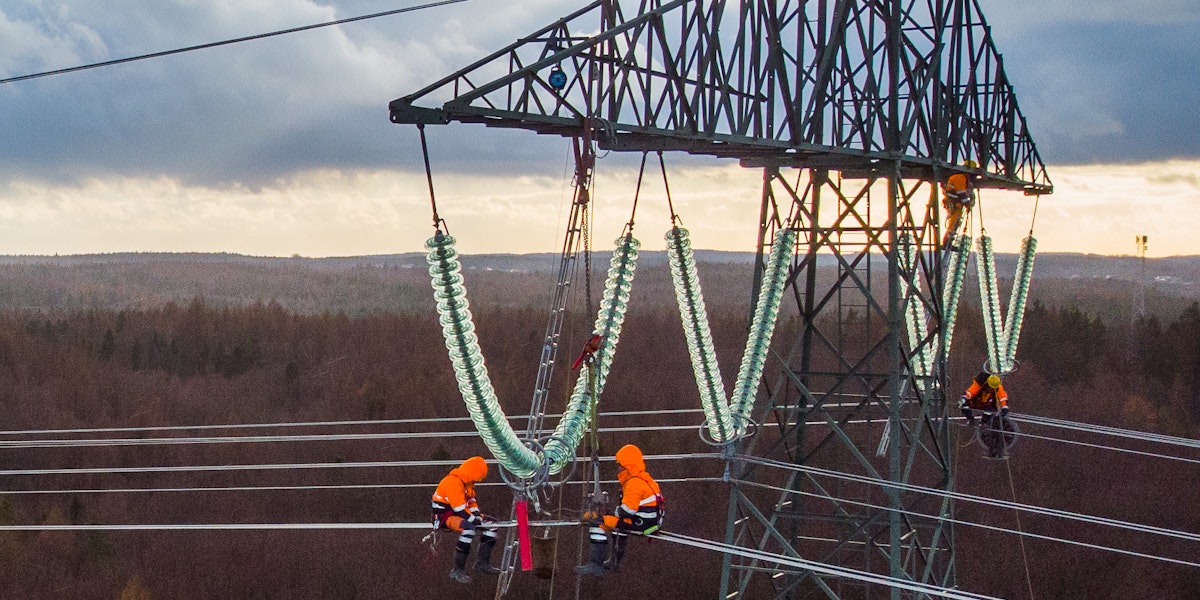
    Strong investment in energy infrastructure drove a 2.2% rise in energy jobs last year, nearly double the rate of employment growth for the wider global economy, according to a new IEA report, which highlights the dynamic trends across the sector as well as bottlenecks for skilled labour in key areas.

    The World Energy Employment 2025 report released today finds that global energy sector employment reached 76 million people worldwide in 2024, up more than 5 million from 2019. The sector has contributed 2.4% of all net jobs created across the global economy over the past five years.

    The power sector is leading the way on job creation, accounting for three-quarters of recent employment growth, and is now the largest employer in energy, overtaking fuel supply. Solar PV is a key driver of growth, complemented by rapid expansions in hiring in nuclear power, grids and storage. Increasing electrification of other sectors of the economy is also reshaping employment trends, with jobs in EV manufacturing and batteries surging by nearly 800,000 in 2024.

    Fossil fuel employment remained resilient in 2024. Coal jobs rebounded in India, China and Indonesia, pushing employment in the coal industry 8% above its 2019 levels despite steep declines in advanced economies. The oil and gas industry has also regained most of the jobs lost in 2020, although low prices and economic uncertainties have triggered job cuts in 2025. Based on early data, energy employment growth is expected to moderate to 1.3% in 2025, reflecting persistently tight labour markets and heightened trade and geopolitical tensions that are making some firms more cautious about hiring.

    Despite the strong recent performance of the overall energy sector, the report warns of deepening skilled labour shortages. Out of 700 energy-related companies, unions and training institutions participating in the IEA’s Energy Employment Survey, more than half of them reported critical hiring bottlenecks that threaten to slow the building of energy infrastructure, delay projects and raise system costs.

    “Energy has been one of the strongest and most consistent engines of job creation in the global economy during a period marked by significant uncertainties,” said IEA Executive Director Fatih Birol. “But this momentum cannot be taken for granted. The world’s ability to build the energy infrastructure it needs depends on having enough skilled workers in place. Governments, industry and training institutions must come together to close the labour and skills gap. Left unaddressed, these shortages could slow progress, raise costs and weaken energy security.”

    Applied technical roles such as electricians, pipefitters, line workers, plant operators and nuclear engineers are in especially short supply. These occupations alone have added 2.5 million positions since 2019 and now represent over half of the entire global energy workforce, more than double their share of total employment in the broader economy.

    An ageing workforce is intensifying the pressure, with 2.4 energy workers in advanced economies nearing retirement for every new entrant under 25. Nuclear- and grid-related professions face some of the steepest demographic challenges, with retirements outnumbering new entrants by ratios of 1.7 and 1.4 to 1 respectively.

    At the same time, the supply of newly qualified workers is not keeping pace with the sector’s needs. To prevent the skills gap from widening further by 2030, the number of new qualified entrants into the energy sector globally would need to rise by 40%. The report shows that this would require an additional $2.6 billion per year of investment globally, representing less than 0.1% of spending on education worldwide.

    Policy measures can make a major difference. According to the IEA’s Energy Employment Survey, the main barriers preventing people from entering energy-related training include costs, foregone wages and limited awareness of available programmes. Effective policy tools include targeted financial incentives for learners, expanded apprenticeships, greater private-sector involvement in curriculum design, and investment in training facilities. Reskilling within the energy sector itself is also essential. Some regions already face declines in fossil fuel employment, but targeted retraining could help workers transfer into other parts of the energy system that are growing.

    Continue Reading

  • Crisis backs danger call with Grundon over sleeping in bins risks

    Crisis backs danger call with Grundon over sleeping in bins risks

    Grundon A picture of a man, wearing a bin liner and other plastic wrap, emerging from a green waste bin.Grundon

    A Grundon worker found a man sleeping in a bin last year

    A campaign is warning about the dangers of sleeping in bins to seek refuge as temperatures plummet this winter.

    Grundon Waste Management has teamed up with homelessness charity Crisis to raise awareness of the risks of seeking shelter in them.

    The company, which has depots in Banbury and Wallingford in Oxfordshire, as well as Beenham in Berkshire, said one of its drivers found a man sleeping inside one of them last December.

    David Goodwin, who works in Banbury, found the bin was heavy and on investigating further found the occupant.

    “As drivers, we are always trained to be alert to anything unusual and it was one of those split-second moments when you realise something isn’t right,” he said.

    “I immediately stepped back from the bin and was hugely relieved to find that although the gentleman inside was a bit shaken up, he was unharmed.

    “He told me that previously, he would listen out for the sound of a diesel engine as a warning of a vehicle approaching.

    “Because I was in an electric vehicle, which is much quieter, he didn’t hear it approach.”

    Reg Hodson, Grundon’s head of safety, health, environment and quality, said as quieter electric vehicles became more common, its staff would need to be “more vigilant”.

    Typical signs that someone might be inside a bin might include broken locks, rubbish scattered on the ground and evidence of a person’s belongings nearby.

    Francesca Albanese, Crisis’s executive director of policy and social change, said: “We are tragically seeing more and more people forced to sleep on our streets.

    “Faced with danger and uncertainty, people can seek shelter from the cold and to keep themselves hidden from view for their own safety.

    “We are pleased to be able to work with Grundon on this campaign, which we hope will keep more people safe from harm.”

    Continue Reading

  • Minkkinen Flies to First Career Victory in Oestersund Sprint

    Minkkinen Flies to First Career Victory in Oestersund Sprint

    Finland’s Suvi Minkkinen, one of last season’s breakout stars, took another hug step today, winning the Oestersund Women’s 7.5 km Sprint, the first World Cup victory in the 201st start in her 12-year biathlon career. Minkkinen, on fire from…

    Continue Reading

  • Pediatric Melioidosis in Central India: A Clinico-Epidemiological Study From a Landlocked Region

    Pediatric Melioidosis in Central India: A Clinico-Epidemiological Study From a Landlocked Region

    Continue Reading

  • TikTok to comply with ‘upsetting’ Australian under-16 ban

    TikTok to comply with ‘upsetting’ Australian under-16 ban

    Australia’s world-first legislation comes into effect December 10, curbing the world’s most popular social media platforms and websites, including TikTok, Instagram, and…

    Continue Reading

  • OPPO A6x 5G Launched in India With Dimensity 6300 & 6,500mAh Battery

    OPPO A6x 5G Launched in India With Dimensity 6300 & 6,500mAh Battery

    While flagship phones like the OPPO Find X9 get all the press coverage, budget phones are what most people buy. And OPPO has just launched the all-new A6x, which promises smooth performance, a sleek design, and a 120Hz display at a starting…

    Continue Reading

  • Kimchi may boost immune function, recent study shows

    Kimchi may boost immune function, recent study shows

    Kimchi has been enjoyed for centuries in Korea. But the spicy fermented cabbage dish has recently gained popularity in other parts of the world not only because of its delicious taste, but because of its potential to positively influence the many…

    Continue Reading

  • Meta pivots to AI smart glasses as metaverse bet struggles

    Meta pivots to AI smart glasses as metaverse bet struggles

    Meta is shifting some of its investments in the metaverse to AI glasses and wearables, hoping to capitalise on the “momentum” in that segment, a company spokesperson has said.

    Over the last decade, Meta has poured billions of dollars to build the metaverse, which lets people to interact in a virtual reality. However, the tech giant has struggled to convince investors of the viability of the nascent technology.

    Bloomberg first reported on Thursday that Meta would cut its metaverse investment by as much as 30%. Its shares climbed more than 3.4% following the news.

    The strategic shift to the Metaverse was the reason why Facebook changed its name to Meta in 2011.

    “We aren’t planning any broader changes than that,” said Meta’s spokesperson, without commenting on whether the shift in investments will result in layoffs.

    Now, the company is seeking to build on an early advantage on AI-enabled glasses, after the positive reception to the latest models launched in September.

    The glasses feature a small display within the lens that can describe what it sees and even translate text. That feature is widely seen as a breakthrough that enhances the technology’s usefulness while making the design more compact.

    Many players in the industry, including firms in China, have also joined the race to build smart glasses and wearable technology.

    Meta has struggled in recent years to convince investors about the metaverse. Many have been sceptical over its vision for an immersive digital space and the demand for virtual reality (VR) headsets, which are key to that technology.

    The company has invested heavily in such headsets and its metaverse platform, Horizon Worlds, where users can interact as avatars.

    Demand for other technologies, especially artificial intelligence (AI), have also surged ahead while Meta prioritised the metaverse.

    The firm has recently shifted its focus to building large AI models, like the software integrated into WhatsApp, and developing smart gadgets like its new glasses.

    Continue Reading