Ioane, of course, will hope to emulate the impact of his long-time All Black centre partner Jordie Barrett, who shone during his spell at Leinster last season.
Barrett scored seven tries in 15 Leinster appearances and controversially started the…

Ioane, of course, will hope to emulate the impact of his long-time All Black centre partner Jordie Barrett, who shone during his spell at Leinster last season.
Barrett scored seven tries in 15 Leinster appearances and controversially started the…

Schiphol is taking an important step towards improving the quality of ground handling and the work done by ground handlers. On 4 December, the tendering procedure will begin for the selection of three ground handling companies who will be responsible for the baggage process and work done around aircraft, such as loading and unloading baggage, placing chocks under aircraft wheels and connecting ground power units. With this tender, the airport aims to improve quality of service and ensure better working conditions for thousands of employees who contribute to safe and efficient operations every day. There are currently six parties carrying out these activities.
Ground handling companies and their employees play a crucial role at Schiphol. They ensure that passengers and baggage enter and leave the aircraft on time and that all work around the aircraft is carried out with care. By outsourcing ground handling, we can intentionally select our partners and organise the collaboration more effectively.
From open market to higher standard
The current open market is characterised by fierce competition and limited control over quality. The introduction of a sector-wide collective labour agreement (CLA) in 2023 was an important step towards improving working conditions. This tender follows the decision by the Ministry of Infrastructure and Water Management, on the initiative of Schiphol, to work with a select group of handling companies. They will work at the airport under a concession agreement based on contracts they enter into with the airlines.
Quality requirements
Reducing the number of handling companies offers opportunities for smarter and more efficient organisation. Ground handling companies are being asked to make more joint use of handling equipment, which creates space on the apron and ensures more sustainable use of resources. In addition, we are setting further requirements on the working conditions for employees and the quality of service. Travellers will notice this in the form of shorter waiting times for their baggage on arrival. The award criteria for this tender have been carefully drawn up and consulted with airlines, handlers, stakeholders and the trade union.
';
In this month’s Science Corner, we highlight the discovery of a ‘genetic stop sign’ that makes horses highly effective athletes and how more time in the paddock turns foals into more successful racehorses. Also, building a better picture of…
You don’t have permission to access “http://www.spglobal.com/commodity-insights/en/news-research/latest-news/lng/120325-nov-jkm-futures-traded-volumes-and-end-month-open-interest-reach-record-highs” on this server.
Reference #18.ca6656b8.1764851082.666224d4
https://errors.edgesuite.net/18.ca6656b8.1764851082.666224d4

The number of people with flu in hospitals across England is more than 50% higher compared with the same time last year, according to official statistics.
The figures, published by NHS England as part of its first weekly snapshot of the…

Press Release
Brussels, 4 December
Today, the European Commission launched the 3rd auction of the European Hydrogen Bank (EHB), with a budget of €1.3 billion supplemented by the mobilisation of another €1.7 billion from national budgets, bringing the total allocation to €3 billion.
This comes on top of the regular Innovation Fund call which will dedicate €2.9 billion for manufacturing of clean technologies and decarbonisation projects, meaning a cumulative €6 billion is potentially available to the hydrogen sector.
The EHB auction will allocate funds across multiple segments:
In addition, Germany and Spain have announced national top-up funds via the Auction-as-a-Service (AaaS) mechanism:
These commitments underscore the growing importance of the AaaS model as a tool to scale national hydrogen projects across Member States, leveraging on the EU evaluation process. The deadline for bids to the 3rd auction is set for the 19 February 2026.
Furthermore, the European Commission launched the Innovation Fund 2025 (IF25) call for Net-Zero Technologies (regular grants). The total budget amounts to €2.9 billion, distributed across five topics:
The cleantech, medium-scale, and pilot baskets have been increased by 40-50% each since IF24, while the large-scale and small-scale topics remain the same size. The deadline for the IF call is 23 April 2026.
Daniel Fraile, Chief Policy Officer of Hydrogen Europe, states: “The launch of the 3rd auction and call for grants is excellent news as we continue to support the growth of a decarbonised hydrogen market. We encourage the European Commission to continue supporting the Hydrogen Bank and Innovation Fund as a means of unlocking public and private investments into this important technology.”
Hydrogen Europe also welcomes:
However, we are concerned that the new resilience criteria, focused on components origin, creates loopholes for easy circumvention. This is a step back from the second auction’s process-based approach, which better captured real EU added value and safeguarded Europe’s industrial base.
We urge the European Commission to announce subsequent auctions and continue this valuable funding mechanism for the hydrogen sector.
For more information:
European Commission announcement: €5.2 billion of EU Emissions Trading revenues earmarked for clean transition technologies
Call document for 3rd EHB auction: Call document for the call “Innovation Fund fixed premium auction call 2025 for Hydrogen”
Call document for IF25 NZT call: Call document for the call “Innovation Fund call 2025 Net Zero Technologies”
European Hydrogen Bank
Link to Fixed Premium Auction for RFNBO hydrogen production call: EU Funding & Tenders Portal | EU Funding & Tenders Portal
Link to Fixed Premium Auction for RFNBO and/or electrolytic low-carbon hydrogen production call: EU Funding & Tenders Portal | EU Funding & Tenders Portal
Link to Fixed Premium Auction for RFNBO and/or electrolytic low-carbon hydrogen production for the maritime and aviation sectors call: EU Funding & Tenders Portal | EU Funding & Tenders Portal
Innovation Fund
Link to Innovation Fund 2025 Net Zero Technologies – General decarbonisation – Large-Scale Projects call: EU Funding & Tenders Portal | EU Funding & Tenders Portal
Link to Innovation Fund 2025 Net Zero Technologies – Pilot projects call: EU Funding & Tenders Portal | EU Funding & Tenders Portal
Link to Innovation Fund 2025 Net Zero Technologies – Clean-tech manufacturing call: EU Funding & Tenders Portal | EU Funding & Tenders Portal
Link to Innovation Fund 2025 Net Zero Technologies – General decarbonisation – Small-Scale Projects call: EU Funding & Tenders Portal | EU Funding & Tenders Portal
Link to Innovation Fund 2025 Net Zero Technologies – General decarbonisation – Medium-Scale Projects call: EU Funding & Tenders Portal | EU Funding & Tenders Portal

If you thought that running 26.2 miles was physically hard, try going 12 rounds in the ring. And what do professional pugilists always do when they’re training? Yep, skipping.
Because what started off as a schoolyard game is actually one of the…

Kimchi has been enjoyed for centuries in Korea. But the spicy fermented cabbage dish has recently gained popularity in other parts of the world not only because of its delicious taste, but because of its potential to positively influence the…
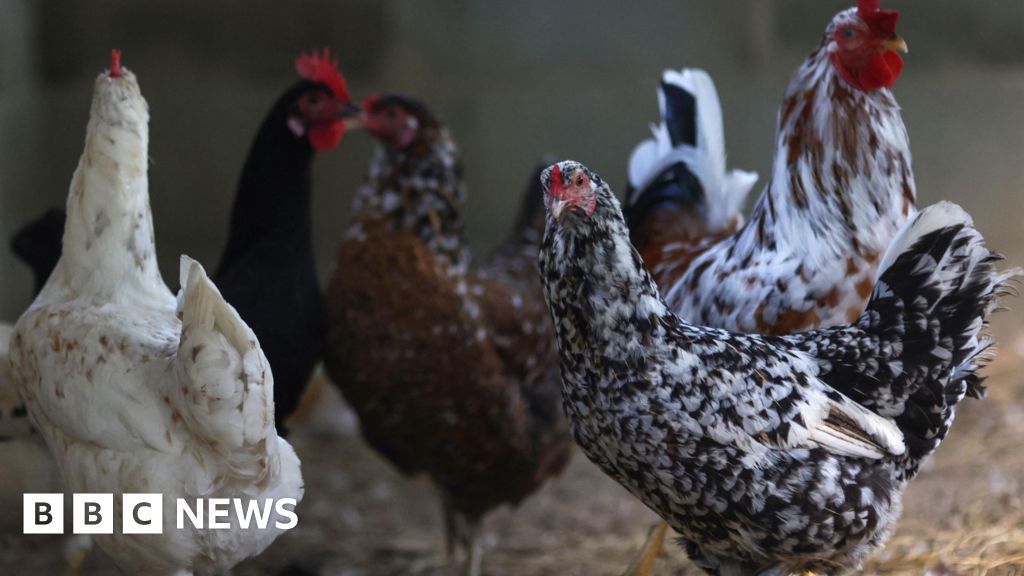
A case of bird flu has been confirmed in a “backyard flock” of poultry.
The Department for Environment, Food and Rural Affairs (Defra) said the H5N1 virus was found in poultry and captive birds near Chedburgh, in Suffolk on Wednesday.
A 3km…
America’s top vaccines official promised, in a long and argumentative memo to staff on Friday, to revamp vaccine regulation after claiming that at least 10 children died from Covid vaccination – but he offered no evidence for that allegation and scant details on the new approach.
The top-down changes, without input from outside advisers or publication of data, worries experts who fear vaccines such as the flu shot may quickly disappear and that public trust will take a major hit.
“The ultimate outcome will be fewer vaccines and more vaccine-preventable illness,” said Dan Jernigan, former director of the National Center for Emerging and Zoonotic Infectious Diseases until this year.
The 10 child deaths were among children aged seven to 16 in 2021 to 2024 and reported in the Vaccine Adverse Event Reporting System (VAERS), a crowdsourced database to which anyone may submit reports, according to Vinay Prasad, director of the Center for Biologics Evaluation and Research (CBER) and the chief medical and scientific officer at the US Food and Drug Administration.
Prasad offered no other details about the children’s cases, including which conditions led to their deaths, how those deaths were linked to vaccination, or why initial investigations ruled the deaths unrelated and why subsequent investigations disagreed.
“For the first time, the US FDA will acknowledge that Covid vaccines have killed American children,” Prasad wrote in the memo, reviewed by the Guardian, calling into question whether Covid vaccines killed “more healthy kids than it saved”.
Paul Offit, an infectious diseases physician at Children’s Hospital of Philadelphia, said of the memo: “When you make that kind of sensational claim, I think it’s incumbent upon you to provide evidence that supports that claim. He didn’t supply any evidence.”
The Covid vaccines have been given to millions of people around the world and are safe and effective. The statements and the approach diverge sharply from the regulatory agency’s history.
“I just have never seen anything like this,” said Jernigan, who worked at the Centers for Disease Control and Prevention (CDC) for 31 years, frequently in close collaboration with the FDA.
It’s highly unusual for the top vaccines regulator to share information in an email to all staff without first convening the Vaccines and Related Biological Products Advisory Committee (VRBPAC), or publishing the data in a public presentation or study, Jernigan said.
While there are no causes for mortality mentioned in the memo, Prasad highlights myocarditis, or heart inflammation, a very rare side effect that appeared after initial vaccination. Myocarditis is much more common and severe with Covid infection, and vaccination reduces the risk of infection and of severe illness. If myocarditis were behind some or all of the children’s deaths, an autopsy would reveal such damage – and autopsies are standard for children who die unexpectedly, Offit said.
It would also be necessary to prove that myocarditis was caused by vaccination, not by infection with Covid or any other viruses that may cause heart damage, Offit added.
Tracy Beth Høeg, a sports medicine physician who is now senior advisor for clinical sciences at FDA, began leading the investigation over the summer, Prasad said. Elsewhere in his memo, Prasad credited the FDA commissioner, Marty Makary, for finding these cases, vowing that the new regulatory changes would prevent such future searches.
“Never again will the US FDA commissioner have to himself find deaths in children for staff to identify it,” Prasad wrote.
The deaths are “certainly an underestimate” and “[t]he real number is higher”, Prasad wrote, without offering any evidence for the claim.
The health department and Prasad did not respond by press time to the Guardian’s questions about evidence for attributing the children’s deaths to Covid vaccination or details of how regulations for vaccine approvals would change.
The development of Covid vaccines under the first Trump administration was “one of the greatest scientific and medical advances in our lifetime”, said Offit, a member of VRBPAC until he was removed earlier this year. “Now you have the head of CBER saying that your vaccine killed at least 10 children?”
The White House did not respond to the Guardian’s questions about claims that the Covid vaccines resulted in child deaths.
With the deployment of Covid vaccines, officials stepped up communication about how to report any adverse events that happen after vaccination.
“As Covid emerged, with it being a new vaccine and with the rollout to so many people, CDC increased its advertising and its requests for people to submit reports, essentially mandating physicians to report anything that they might see and then making sure that people knew that they could report them,” Jernigan said.
The CDC even established a new system called V-safe, where recent vaccines received text messages asking about side effects and encouraging them to report all symptoms to VAERS, resulting in an influx of reports.
Another database, called Vaccine Safety Datalink (VSD), draws on the medical records of about 10% of the US population, including 500,000 children. The VSD is a “robust” way to study whether the signals caught in VAERS are appearing in confirmed medical records, Jernigan said. That was how myocarditis was first detected after vaccination, and it was how very rare blood clots from the Johnson and Johnson Covid vaccine were quickly detected.
While the Prasad memo focused largely on Covid vaccines, it made two apparent nods to other concerns common among anti-vaccine activists.
Officials at the FDA “have not been focused on understanding the benefits and harms of giving multiple vaccines at the same time,” Prasad said, without listing such potential harms, for which there is no available evidence.
The benefits, on the other hand, include greater access to and uptake of vaccines, since families have to make fewer trips to doctors’ offices, experts said. Yet Prasad said the FDA guidelines on offering multiple vaccines would be changed, without specifying how.
“Concomitant vaccines have been used with the existing system for a long time with no evidence of harm,” said Dorit Reiss, professor of law at UC Hastings College of Law. Changing that “without evidence of harm will make it harder to put vaccines on the market”.
The memo also briefly addressed measles, mumps, and rubella (MMR) vaccines. They provide benefits to those around them “when administered to high enough fractions of society”, Prasad wrote, but it is not clear if he believes the MMR shots would still be beneficial if uptake falls.
Because of these determinations, the FDA will change how it regulates vaccines, including requiring randomized trials showing clinical outcomes – like the reduction of illness – instead of demonstrating immune responses for most new products, Prasad wrote. The FDA will “revise the annual flu vaccine framework”, including the surrogate assays – tests to understand how well the vaccines work, he wrote.
For vaccines like the flu, conducting new trials each year instead of checking for immune responses is “not possible”, Offit said. Such studies would need to be conducted during flu season, which would mean the vaccines would be outdated and available far too late.
While the new rules present challenges for all respiratory vaccines, updated flu and Covid shots especially “cannot be delayed”, Reiss said. “I don’t know if we will have influenza vaccines next year in the US.”
Making the shots less accessible in the US would lead to preventable deaths, and it follows the second-worst influenza season on record, she said, noting: “It’s not a great time to take away influenza vaccines.”
Undermining confidence in vaccines is “so dangerous and irresponsible”, Offit said. And the stakes are high, he said. “Children are getting hospitalized and children are still dying from this virus.”
The confusion makes it harder for the public and physicians to understand what the evidence says and to trust the health agencies offering guidelines, Jernigan said.
“It’s getting harder for them to know which recommendations to follow and who they can trust,” he said.