Author: admin

  • Japanese Stocks Rally, Bond Sale Sees Solid Demand: Markets Wrap

    Japanese Stocks Rally, Bond Sale Sees Solid Demand: Markets Wrap

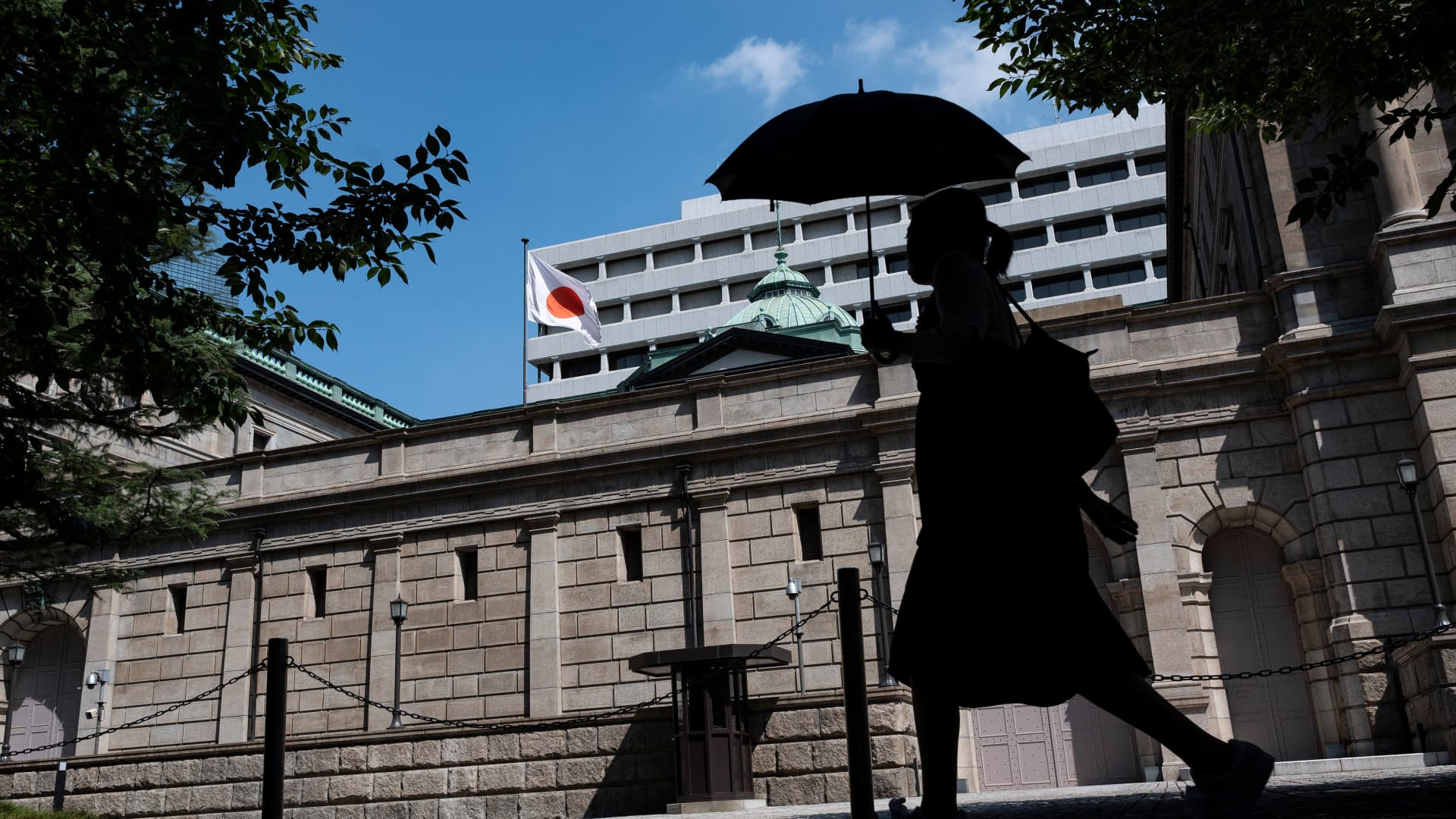
    (Bloomberg) — Japanese assets took the spotlight in Asia on Thursday. The nation’s shares led gains in the region after US data boosted odds of a Federal Reserve interest-rate cut next week, while a sale of its 30-year government bonds drew the strongest demand since 2019.

    The Topix and Nikkei 225 rose more than 1.7% each versus a gain of 0.5% for MSCI Inc.’s broader gauge of Asian equities. Indexes in South Korea and Taiwan snapped a two-day advance. US stock futures were steady after the S&P 500 climbed 0.3% overnight, while Bitcoin hovered around $93,000 after a two-day rally.

    Data on Wednesday showed US companies shed payrolls in November by the most since early 2023, reinforcing concerns about a more pronounced labor market weakening. Swaps pricing indicated rising expectations for a December cut Wednesday, with traders assigning more than a 90% chance to a 25-basis-point reduction.

    “Unlike many other markets in Asia, Japan is more sensitive to developments around Fed rate-cut expectations, partly because the Fed may set the pace for the Bank of Japan via the FX channel” said Frederic Neumann, chief Asia economist at HSBC Holdings Plc. “A strengthening conviction over Fed rate cuts, by easing pressure on the yen, could offer more runway for the BOJ to remain accommodative for longer.”

    Japan’s 30-year bonds gained following the auction result, which came after a sale of 10-year notes earlier in the week also drew firm demand. Together, the results have offered some relief to the market that has seen yields surge due to renewed fiscal concerns and on bets for a potential rate hike at the Dec. 19 BOJ policy decision.

    What Bloomberg’s Strategists Say…

    “JGB investors seem to have found the yield level they love for 30-year bonds, with a huge 4.04 bid-to-cover ratio. That is the highest demand since 2019, with the low price well above the pre-sale forecast, which is another positive signal. Moreover, Nomura was the biggest buyer — typically a sign of long-term investors getting involved.”

    — Mark Cranfield, Markets Live strategist. Click here for the full analysis.

    Meanwhile in Australia, bond yields rose to the highest level this year amid growing speculation the central bank will switch back to raising rates to curb inflation.

    In currency markets, a gauge of the dollar was steady after dropping 0.4% in the previous session, when US treasuries climbed across the curve, pushing two-year yields down to around 3.48%. The Indian rupee fell to a record low against the dollar as sentiment remained weak amid delays in securing a trade deal with the US.

    Separately, China set its daily reference rate for the yuan at a level that was significantly weaker than estimates, suggesting the central bank is aiming to limit gains in the managed currency which is inching close to a keenly watched level of 7 per dollar.

    Tech Drags

    Cyclical stocks such as industrials and financials were among the top contributors to gains for the MSCI Asia Pacific Index on Thursday. While its moves this week have been small, the regional gauge is on course for a third straight session daily advance. It jumped 2.7% last week, the most since early October.

    “The relief over the US November ADP employment data and growing hopes for the Fed’s rate cut next week seem to be contributing to a better sentiment for APAC equity markets,” said Homin Lee, a senior macro strategist at Lombard Odier Singapore.

    In commodities, silver fell but continued to trade near an all-time high on the reinforced bets of a Fed cut. Gold edged lower. Oil held a modest gain as investors weighed the outlook for a ceasefire in Ukraine and the fallout from tensions between the US and Venezuela.

    Trade and geopolitics were also on investors’ radar. French President Emmanuel Macron and Chinese leader Xi Jinping met in Beijing on Thursday, where they would discuss a range of issues including economic ties, trade tensions, Taiwan and the war in Ukraine. Commerce Secretary Howard Lutnick said that the US is expecting a large investment pledge from Taiwan in trade talks.

    Fed Outlook

    Despite the apparent confidence among investors, US policymakers have been torn as to whether they’ll cut rates for a third straight meeting as they attempt to balance the slowdown in the job market with still-elevated inflation.

    Data on Wednesday showed US services activity expanded at a slightly faster pace, while a measure of prices paid dropped to a seven-month low.

    Before their final policy meeting of the year, Fed officials will get a dated reading on their preferred inflation gauge. On Friday, the September income and spending report is due to be released — long delayed because of the government shutdown.

    The figures will include the personal consumption expenditures price index and a core measure that excludes food and energy. Economists project a third straight 0.2% increase in the core index. That would keep the year-over-year figure hovering just below 3%, a sign that inflationary pressures are stable, yet sticky.

    “Right now, the data argues for additional Fed funds rate cuts. US labor demand is weak, consumer spending is showing early signs of cracking, and upside risks to inflation are fading,” said Elias Haddad at Brown Brothers Harriman & Co.

    Corporate News

    Paramount Skydance Corp. more than doubled the proposed breakup fee in its offer to acquire Warner Bros. Discovery Inc. to $5 billion, according to people familiar with the company’s offer, part of a sweetened proposal designed to outshine rival bids. Singapore’s stock exchange is considering buying Cboe Global Markets Inc.’s Australian unit, the Australian Financial Review reported. On one of Larry Fink’s frequent trips to Australia, the BlackRock Inc. chief sized up a boutique finance firm run by an Olympic swimming champ — a prelude to a A$25 million ($16.5 million) play to crack open one of the world’s richest retirement systems. Hong Kong builder New World Development Co. failed to get full support from creditors in a key bond-exchange plan that required them to accept cuts in the value of their holdings. Microsoft Corp. slid 2.5% on a report of lower demand for some artificial-intelligence tools even as the company said aggregate sales quotas for AI products have not been reduced. Some of the main moves in markets:

    Stocks

    S&P 500 futures were little changed as of 2:35 p.m. Tokyo time Japan’s Topix rose 1.7% Hong Kong’s Hang Seng rose 0.1% The Shanghai Composite fell 0.1% Euro Stoxx 50 futures rose 0.5% Currencies

    The Bloomberg Dollar Spot Index was little changed The euro was little changed at $1.1660 The Japanese yen was little changed at 155.35 per dollar The offshore yuan was little changed at 7.0647 per dollar Cryptocurrencies

    Bitcoin fell 0.7% to $93,075.12 Ether rose 0.6% to $3,184.46 Bonds

    The yield on 10-year Treasuries advanced two basis points to 4.08% Australia’s 10-year yield advanced six basis points to 4.70% Commodities

    West Texas Intermediate crude rose 0.6% to $59.33 a barrel Spot gold fell 0.2% to $4,194.37 an ounce This story was produced with the assistance of Bloomberg Automation.

    –With assistance from Aya Wagatsuma, Winnie Hsu and Richard Henderson.

    ©2025 Bloomberg L.P.

    Continue Reading

  • Why is volcanic ash a safety concern for flights? | Explained

    Why is volcanic ash a safety concern for flights? | Explained

    Ash billows from the eruption of the long-dormant Hayli Gubbi Volcano in Ethiopia’s Afar region, on November 23.
    | Photo Credit: AP

    The story so…

    Continue Reading

  • Cassette tapes are making a comeback. Yes, really

    Cassette tapes are making a comeback. Yes, really

    For a supposedly obsolete music format, audio cassette sales seem to be set on fast forward at the moment.

    Cassettes are fragile, inconvenient and relatively low-quality in the sound they produce – yet we’re increasingly seeing them…

    Continue Reading

  • A Smarter Way to Predict Profit Starts With HR Data Analytics | SPARK Blog

    A Smarter Way to Predict Profit Starts With HR Data Analytics | SPARK Blog


    Trends


    Janet Berry-Johnson, CPA


    Leaders discussing HR data analytics


    Leaders are boosting traditional financial forecasts by using workforce data as an early indicator of business performance. Combined with AI, HR insights on engagement, turnover and skills help spot trends sooner, enabling faster, more accurate decisions and better margin management.

    What business leader doesn’t want clearer foresight and better visibility into next quarter’s revenue, upcoming cost pressures and the health of their margins? Yet most forecasting models still rely almost entirely on financial data, even though financials tend to tell the story last.

    The earliest signs of change, good or bad, nearly always appear in HR data analytics. And workforce trends may surface weeks or months before they show up on a balance sheet or income statement.

    That’s why forward-looking leaders are rethinking their approach. With clean people data supported by responsible artificial intelligence (AI), organizations can turn early signals into reliable forecasts, spot risks sooner, plan resources more effectively and make decisions faster.

    You don’t have to replace your existing financial forecasting model. Instead, power it with workforce insights you’ve been leaving untapped.

    HR data analytics in motion

    Financial outcomes tend to build slowly. When leaders learn to treat people data as “data in motion,” they discover workforce signals consistently move ahead of financial results.

    For example, when employee engagement scores slip, production delays, quality issues and customer experience impacts often follow, creating avoidable revenue drag. Higher attrition drives recruitment costs, onboarding time and overtime to cover gaps, forecasting compressed margins in the next quarter. Slow time-to-fill or shortages in critical skills signal that teams may struggle to meet demand, limiting revenue potential or delaying projects.

    None of these insights requires complex analytics. They simply require paying attention to how fast certain signals are changing and in which direction. When viewed this way, people data enhances forecasting. Instead of guessing where performance is headed, you observe it in real time through the people who drive it and maximize the value of your investments.

    “You need to align your HR data analytics efforts to what’s important to the organization and the HR strategy that you have in place,” said Kathy Gawronski, VP Value Engineering at WorkForce Software – an ADP Company.

    “First, it’s important to get support for driving more value out of your HR system and using available data to drive that value. It won’t be that difficult to get support to do that, because it’s getting more value out of what you’ve already invested in,” said Gawronski. “Begin small and leverage the value of initial studies to establish additional support and necessary investments. Be sure to communicate the impact to the bottom line of the initial insights. Lather, rinse, repeat.”

    AI as the accelerator

    High-quality people data creates early visibility, but responsible AI turns that visibility into sharper, faster and more reliable forecasting. Instead of manually stitching together spreadsheets, leaders can use AI to reduce reporting errors, uncover patterns earlier and model scenarios in seconds.

    The benefits are practical and immediate:

    • Fewer reporting mistakes: AI reduces manual entry and reconciliation work, helping eliminate the small but costly inaccuracies that distort forecasts.
    • Faster scenario modeling: Leaders can test questions like, “What if attrition rises 35%?” or “How would a slowdown in hiring velocity affect project capacity?” without days of analysis.
    • Improved budgeting accuracy: By detecting small shifts in workforce behavior early, AI gives HR and finance teams more time to adjust headcount plans, training investments and labor budgets.

    According to McKinsey & Company, organizations using AI-driven forecasting saw forecasting errors drop 20% to 50% compared with traditional spreadsheet methods.

    Forecast in action

    Consider a regional business that began tracking absenteeism in conjunction with team performance. Initially, the metrics appeared unrelated. But eventually leaders noticed a pattern: when absenteeism crept up, productivity dipped shortly afterward, often before anyone flagged a problem.

    By linking these signals, the company built a simple model that projected how rising absenteeism would affect output and labor costs. When the data began trending upward for one quarter, the model forecasted a margin decline nearly two months earlier than traditional financial reports would have. Armed with that insight, leaders acted quickly. They adjusted staffing plans, shifted workloads, and tightened scheduling practices, avoiding the overtime expenses that would have eroded margins.

    This is the power of forecasting through people data. Even a basic connection between workforce behavior and financial outcomes can reveal issues earlier, strengthen planning and prevent cost overruns before they occur.

    Quick start framework

    You don’t need a full analytics function or complex modeling to begin forecasting with workforce insights. A simple, structured approach can help HR and business leaders build confidence, improve accuracy and demonstrate value quickly. But you do need technology that’s up to the task; a platform that can flex and expand with your needs and has AI capabilities built in. And it’s essential that you evaluate and address any shortfalls in the quality of your data. Clean and accurate data is essential to the success and output of everything that follows.

    Step 1: Clean existing workforce data and link it to business goals

    Data quality is critical. Start by validating what you already have, such as turnover, time-to-fill, engagement scores, training hours or skills inventories. The goal is consistency. Tie each data point back to a business question, such as “How does turnover affect margin?” or “How do skills gaps impact project delivery?”

    Step 2: Partner with finance to define key forecasting inputs

    HR shouldn’t forecast in a vacuum. Collaborate with finance to identify which workforce signals meaningfully impact revenue, cost or capacity. Agree on shared definitions, data sources and the thresholds that should trigger a conversation.

    Step 3: Start small: one metric, one model or one reporting cycle

    Pick a single leading indicator, such as voluntary turnover. Build a simple predictive workflow around it and track how that metric moves and signals change. This keeps experimentation manageable and shows value early.

    Step 4: Expand as patterns emerge

    Once you see reliable relationships between people data and financial results, scale gradually. Add new metrics, automate reporting, incorporate AI and refine your models. Each added layer improves accuracy and strengthens long-term planning.

    See the road ahead with workforce intelligence

    Forecasting through people data transforms traditional HR metrics into true leading indicators of business performance. When leaders understand how shifts in engagement, turnover, skills and hiring velocity shape operational capacity and financial outcomes, they gain a clearer view of what’s coming next.

    With an integrated perspective across workforce, payroll and financial data, ADP empowers leaders to make smarter, more confident forecasting decisions.

    Learn how ADP helps businesses connect people analytics with profit prediction.

    Continue Reading

  • Trump pardons entertainment exec indicted by his own justice department | US news

    Trump pardons entertainment exec indicted by his own justice department | US news

    Donald Trump quietly pardoned on Tuesday a sports and entertainment executive, Tim Leiweke, who was indicted by the president’s own justice department this year.

    Leiweke, who co-founded Oak View Group, was indicted in July for what federal prosecutors alleged was his role in “orchestrating a conspiracy to rig the bidding process for an arena at a public university in Austin, Texas”.

    Leiweke had pleaded not guilty to charges of conspiracy to restrict trade and was due to stand trial next year.

    According to a copy of the pardon posted on a justice department website on Wednesday, Trump signed “a full and unconditional pardon” for Leiweke on Tuesday.

    The office of the pardon attorney posted the pardon on its website on Wednesday, the fifth Trump granted in the past week to powerful people, with no explanation as to why he had terminated a corruption case brought by prosecutors who work for him.

    “As outlined in the indictment, the Defendant rigged a bidding process to benefit his own company and deprived a public university and taxpayers of the benefits of competitive bidding,” assistant attorney general Abigail Slater of the justice department’s antitrust division said in July. “The Antitrust Division and its law enforcement partners will continue to hold executives who cheat to avoid competition accountable.”

    “Unfair business practices, like those employed here, make it very difficult for the American people to pursue prosperity like our founders intended,” Justin Simmons, the US attorney for the western district of Texas said in July. Simmons was appointed interim US attorney for that office by Trump’s attorney general, Pam Bondi, in June.

    skip past newsletter promotion

    “I do not have the words to adequately convey my profound gratitude to President Trump,” Leiweke said in a statement to Sports Business Journal on Wednesday. “This has been a long and difficult journey for my wife, my daughter, and me. The President has given us a new lease on life with which we will be grateful and good stewards.”

    Continue Reading

  • Court sides with Adidas in appeal over Kanye West collaboration

    Court sides with Adidas in appeal over Kanye West collaboration

    Adidas has fended off an appeal from shareholders who accused it of hiding misconduct by rapper-entrepreneur Kanye West – otherwise known as Ye – before their partnership broke down in 2022.

    A San Francisco court said the sportswear giant did not mislead investors, who claimed they had lost money after Adidas shares plunged when it cut ties with West.

    The Yeezy tie-up with West had been one of Adidas’ most successful partnerships, but its collapse after a spate of anti-Semitic comments by the rapper cost the brand hundreds of millions of dollars.

    The BBC has contacted Adidas for comment but could not reach the firm leading the class action or West’s team.

    West, who is not party to the lawsuit, was widely criticised after repeatedly making antisemitic remarks and promoting conspiracy theories.

    His Yeezy brand collaboration with Adidas was put under review after he showed a “White Lives Matter” T-shirt design at a fashion show in 2022. Shortly after, he posted anti-Semitic comments online, which prompted Adidas to pull his products from sale.

    West’s behaviour also prompted several companies, including Gap and JP Morgan, to sever ties with the rapper.

    Court documents filed on Wednesday show that HLSA-ILA Funds, the firm representing investors, alleged that Adidas continued its partnership with West despite knowing about his controversial conduct for years.

    The filing claims Adidas “internally grappled” with West’s behaviour but misled shareholders by failing to disclose the risk in its reports.

    The 9th US Circuit Court of Appeals in San Francisco ultimately sided with Adidas.

    The court said on Wednesday that a reasonable investor would know that a partnership with a celebrity like West could come with “inherent risks relating to improper behaviour”.

    A district court had previously dismissed HLSA-ILA’s case, and the firm later appealed.

    The collapse of Adidas’ partnership with West caused the German firm’s share price to tank in 2023.

    Yeezy, luxury sneakers designed by West, had been a particularly lucrative line of products for Adidas, generating around €1.5bn (£870m; $1.17bn) in sales in 2021.

    The partnership breakdown left Adidas with more than €1bn worth of Yeezy shoes sitting in storage. In 2023, the brand announced that it would sell those products and donate some of the proceeds to charities who worked on combating hate.

    Continue Reading

  • Breast density alerts may cause confusion and raise anxiety among women

    Breast density alerts may cause confusion and raise anxiety among women

    New research by experts at the University of Sydney shows that breast density notification is leaving some women confused and anxious about their breast health.

    The notification program is designed to advise women that their…

    Continue Reading

  • Access Denied


    Access Denied

    You don’t have permission to access “http://indianexpress.com/article/sports/cricket/australia-vs-england-live-cricket-score-ashes-2nd-test-aus-vs-eng-match-scorecard-today-updates-10400856/” on this server.

    Reference…

    Continue Reading

  • Sudden cardiac death risk is sharply elevated in people with diabetes

    Sudden cardiac death risk is sharply elevated in people with diabetes

    The risk of sudden cardiac death is higher both for people with type 1 and type 2 diabetes, according to a large study published in the European Heart Journal today (Thursday). The increase in risk is especially noticeable among…

    Continue Reading

  • Retinal organoids provide a powerful tool to diagnose and study Leber congenital amaurosis

    Retinal organoids provide a powerful tool to diagnose and study Leber congenital amaurosis

    Leber Congenital Amaurosis (LCA) is an inherited retinal disease leading to severe vision impairment from early infancy, affecting 2-3 out of every 100,000 newborns. LCA is caused by variants in certain genes from which proteins…

    Continue Reading