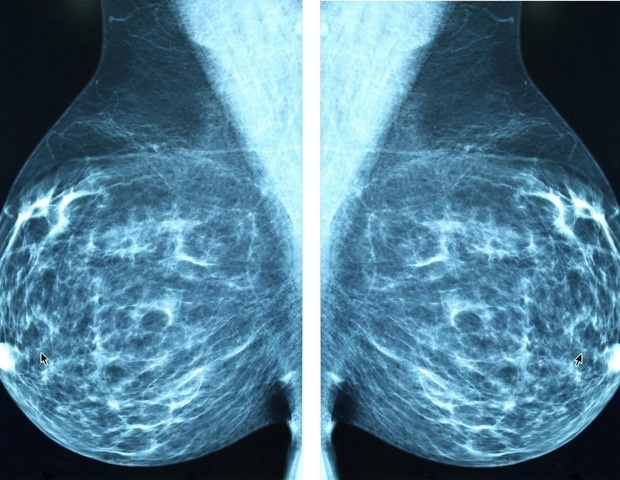
Breast cancer is able to modify the lymphatic vessels through which it travels to the draining lymph nodes. From there, it can then spread to other parts of the body. A new finding by Finnish researchers may help develop targeted…
Author: admin
-

December 3, 2025 — Moxley vs. Castagnoli, Samoa Joe and Kingston Face-To-Face, More
Tonight, AEW Dynamite is LIVE in Fishers, Indiana, from the Fishers Event Center at 8 p.m. ET/7 p.m. CT on TBS and streaming on HBO Max! The road to AEW Worlds End on December 27 in Chicago, Illinois, continues with action in both the 2025…
Continue Reading
-
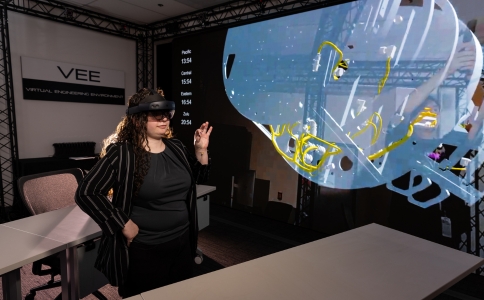
Skunk Works® Stands Up New 5G Pixel Streaming Kit
Lockheed Martin Skunk Works® is redefining the future of mission-critical communications with the unveiling of its 5G Pixel Streaming Kit. This cutting-edge technology revolutionizes the delivery of immersive, interactive and data-rich content – including 3D and high-resolution visuals – to the warfighter, empowering them to make faster, more informed decisions.
5G Pixel Streaming Kit is a revolutionary, all-in-one private 5G networking solution that leverages advanced hardware and software technologies to live stream high-quality, interactive applications and content to edge compute devices, enabling unparalleled performance and user experience.
What the Experts are Saying:
“Just as video streaming has changed the way that we consume content at home, 5G pixel streaming is transforming the way we interact with software applications and consume digital data.” said Marc O’Brien, senior manager, Virtual Prototyping at Lockheed Martin Skunk Works. “This new compute paradigm – all part of our 1LMX transformation – empowers and equips our business and customers to make more informed decisions that decrease cost, support delivery schedules and mitigate risk while improving quality.”
Why it Matters:
- Enhanced security by streaming pixels versus downloading data to edge devices; no real data resides on edge devices.
- Simplifies IT management and content change management through localized or cloud servers.
- Increases data accessibility through a hardware and Operating System (OS) agnostic approach; any device, any OS, any configuration.
- Improves user experience and provides more feature-rich capabilities where and when needed.
- Enables a blended workforce skill set; doing more with less.
- Opportunities for 5G Pixel Streaming can include indoor or outdoor operations, fixed or portable solutions, connected or disconnect operations and short or long range connectivity.
Where the Impact Lands:
- Maintenance and repair
- Manufacturing and assembly
- Design and modeling
- Field service
- Training
- Logistics and warehousing
This system focuses on content streaming for sustainment where advanced visualization capabilities are critical to supporting maintainers with Resilient Logistics in a Contested Environment (RLCE). One significant use-case for 5G Pixel Streaming technology is the support of the Multi-Capable Airman, where 5G Pixel Streaming enables Lockheed Martin’s “Maintainer as a Node” concept, by which a 5G connection streams all the information to the maintainer where, when and how they need it in a latency-critical environment.
This effort aligns with Lockheed Martin’s 5G.MIL® efforts by showcasing the value of 5G systems to enable advanced data-sharing applications, improving security, resiliency, interoperability and performance with a combination of commercial and government-driven technology.
Through our ongoing strategic collaboration with Hololight and HTC G REIGNS, we’ve validated key technology areas such as:
- 5G at the edge for latency critical interactions of complex visualization applications, such as augmented and virtual reality experiences.
- Streaming of large, complex, high resolution, real-time 3D digital twin visualization content.
- Streaming to edge compute devices, including tablets, mobile, Head Mounted Displays (HMDs) and more.
- 5G streaming kit hardware and software technology stack that emphasizes easy-to-use operation.
The 5G Pixel Streaming Kit is another example of how Lockheed Martin is transforming its approaches with urgency to deliver the speed, agility and insights our customers need to stay ahead of rapidly-evolving threats.
Continue Reading
-

Abu Dhabi Grand Prix 2025
Here’s what to expect from the Fanzones…
Art Installations, Carving Cards & Calligraphy Car: Tap into your creative side with hands-on art stations and vibrant installations across the circuit. Watch live calligraphy being painted onto a show…
Continue Reading
-

Matthew Perry’s parents say doctor is ‘among most culpable of all’ ahead of first sentencing over star’s death | Ents & Arts News
Matthew Perry’s parents have criticised the “jackals” involved in dealing drugs to the star – and accused a doctor of being “among the most culpable of all” ahead of his sentencing today.
Emotional victim impact statements by Perry‘s…
Continue Reading
-

The electrogenicity of the Na+/K+-ATPase poses challenges for computation in highly active spiking cells
Quantitative estimates of metabolic costs in this study are based on the ATP that is required to fuel the Na+/K+ pump. This includes the cost of the restoration of sodium and potassium ions that flow to support action potentials, resting potentials, and postsynaptic potentials.
The co-expression of pumps and sodium leak channels (see Figure 1) and even an ideal voltage dependence of the pump (see Figure 6) have a direct impact on the metabolic cost related to this ATP-fueled Na+/K+ pump. By integrating the net pump current over time and dividing by one elemental charge, we find the rate of ATP that is consumed for either compensatory mechanism. When compensating a relatively `constant’ Na+/K+-pump current with sodium leak channels, the amount of ATP spent on pumping sodium is 33% higher than it would be for a voltage-dependent pump (see Equation 22, Methods).
The impact that either of these compensatory mechanisms has on the whole cell, however, also depends on other costs, such as those related to cellular maintenance. A voltage-dependent pump would save costs related to Na+/K+ pumping, which, based on energy budgets formerly estimated for AP-firing neurons in the brain (Howarth et al., 2012), is likely to be one of the main contributors to the total metabolic cost (in cerebellar cortex, for example, amounting to >50% of the total metabolic cost). Because the peak load of a voltage-dependent pump, however, is four times higher than a relatively constant pump, four times more Na+/K+ pumps would need to be expressed on the cell membrane. To be more exact, if a single pump translocates around 450 sodium ions per second (Gennis, 2013), 8×10¹⁰ pumps are required to support constant pumping, and 32×1010 pumps are needed to support voltage-dependent pumping. If one assumes the electrocyte is a perfect cylinder, and its membrane surface were smooth (an approximation not too realistic), the total available membrane space would be 3.4 mm2 (Ban et al., 2015). If the Na+/K+ATPase expression density would be as high as in the outer medulla of rabbit kidney (Deguchi et al., 1977), where ATPases are densely packed, a smooth electrocyte membrane would `fit’ 4.2×10¹⁰ pumps, which is two times less than necessary for constant pumping, and eight times less than required for voltage-dependent pumps. According to our model, therefore, the invaginations on the posterior side of the membrane (Ban et al., 2015) are necessary to drastically increase membrane area in order to support the large number of pumps required for ion restoration. This, in turn, would increase the `housekeeping’ costs of the cell related to turnover of macromolecules, axoplasmic transport, and mitochondrial proton leak, which in different brain areas are estimated to occupy 25–50% of the total energy budget (Kety, 1957; Attwell and Laughlin, 2001). As there is insufficient data on the ratio between costs related to Na+/K+ pumping and `housekeeping costs’, and the fraction of housekeeping costs related to Na+/K+-pump maintenance, a quantitative comparison of the metabolic cost of the two compensatory mechanisms remains challenging. Future experiments that would aid in answering this question could involve blockage of electrocyte Na+/K+ pumps and comparing oxygen consumption to a control where electrocyte Na+/K+ pumps are functional.
Another compensatory mechanism that was discussed in this article is extracellular potassium buffering (see Figure 4), which in electrocytes likely occurs via its extensive capillary beds (Ban et al., 2015) that transport excess extracellular potassium to the kidney. Assuming that an equal amount of ATP is needed in total to fuel Na+/K+ pumps, either all in the electrocyte, or partly at the electrocyte and partly in the kidney, the additional costs incurred by the extracellular potassium buffer would be dominated by the structural and maintenance costs of the capillaries. We are, however, not aware of an accurate estimate of these costs, especially since the capillaries also have additional functions such as providing other resources and transporting other waste products.
Lastly, a strong synapse was said in the article to support cell entrainment under fluctuating pump currents (see Figure 5), but also to incur additional metabolic costs. In the example shown in the main text, however, baseline Na+/K+ costs are smaller for a stronger synapse; see Figure 5B (weak synapse) vs. Figure 5E (strong synapse). This is the case because, similarly as shown in Figure 7B in Joos et al., 2018, a weak synapse elicits smaller postsynaptic potentials, which lowers the AP peak with respect to a stronger synapse. To make a fair comparison on the metabolic costs between a weak and a strong synapse, voltage-gated sodium conductances were scaled to maintain a peak amplitude of 13 mV (see Table 2, Methods). For weak synaptic stimulation, a higher voltage-gated sodium conductance was needed to reach this peak amplitude, which, due to the excess inflow of sodium through these voltage-gated channels, resulted in an increase of 10% in ATP consumption by Na+/K+ pumps with respect to strong synaptic stimulation.
There are, however, additional costs that scale with synapse strength, such as the restoration of presynaptic calcium, the restoration of (presumably small amounts of) postsynaptic calcium, and neurotransmitter packaging and recycling. In the brain, these costs are estimated to be 0.18–1 times the cost of fueling the Na+/K+ pumps that restore the sodium ions that traverse neurotransmitter receptor channels (Howarth et al., 2012; Liotta et al., 2012). In our model, merely 11% of sodium ions enter the electrocyte via neurotransmitter receptor channels in the strong-synapse case. Assuming that the above-mentioned additional costs are equal to those related to Na+/K+ pumping of neurotransmitter-related currents (according to the upper bound estimate by Liotta et al., 2012), a weak synapse (half the size of the strong synapse) would incur a cost increase of 5.5% and a strong synapse would incur an increase of 11%. This would, however, still result in a 4% higher cost efficiency of a strong synapse compared to a weak synapse.
There is reason to believe that the fraction of the energy budget related to the restoration of presynaptic calcium, the restoration of (presumably small amounts of) postsynaptic calcium, and neurotransmitter packaging and recycling in the electrocyte could differ significantly from those estimated by Howarth et al., 2012; Liotta et al., 2012. First, to the best of our knowledge, such energy budget estimations have only been done for neurons active at significantly lower firing rates than electrocytes (by a factor of approximately 100), and, second, operate mostly under the glutamate neurotransmitter, while electrocyte receptor channels are activated by acetylcholine. An accurate estimate of the impact of synapse strength on the electrocyte energy budget, therefore, requires quantitative data on the rapid dynamics of acetylcholine production in the presynaptic neuron and recycling in the synaptic cleft, which, currently, is also hard to estimate.
Supported by the above-mentioned considerations, we argue that the impact of mechanisms that compensate for Na+/K+-pump currents on an electrocyte’s metabolic cost could be significant. Due to the absence of more detailed experimental quantification, a plausible quantitative cost estimate remains beyond the scope of this article. We note, however, that although the metabolic costs of potassium buffering and synaptic strength are likely to differ between cell types, the energetic estimate of the respective ATP requirements by Na+/K+ pumps for constant vs. voltage-dependent pumping generalizes and extends to all excitable cell types (as is discussed in the Discussion in the main text, see ‘Generalization to other cell types’).
Continue Reading
-

Asian Equestrian Championships 2025: Ashish Limaye strikes gold in eventing as India finish with five medals
India wrapped up their FEI Asian Equestrian Championships 2025 campaign with a historic five-medal haul in Pattaya, Thailand, on Wednesday.
Indian riders made their mark across the eventing and dressage competitions.
Ashish Limaye led the charge…
Continue Reading
-
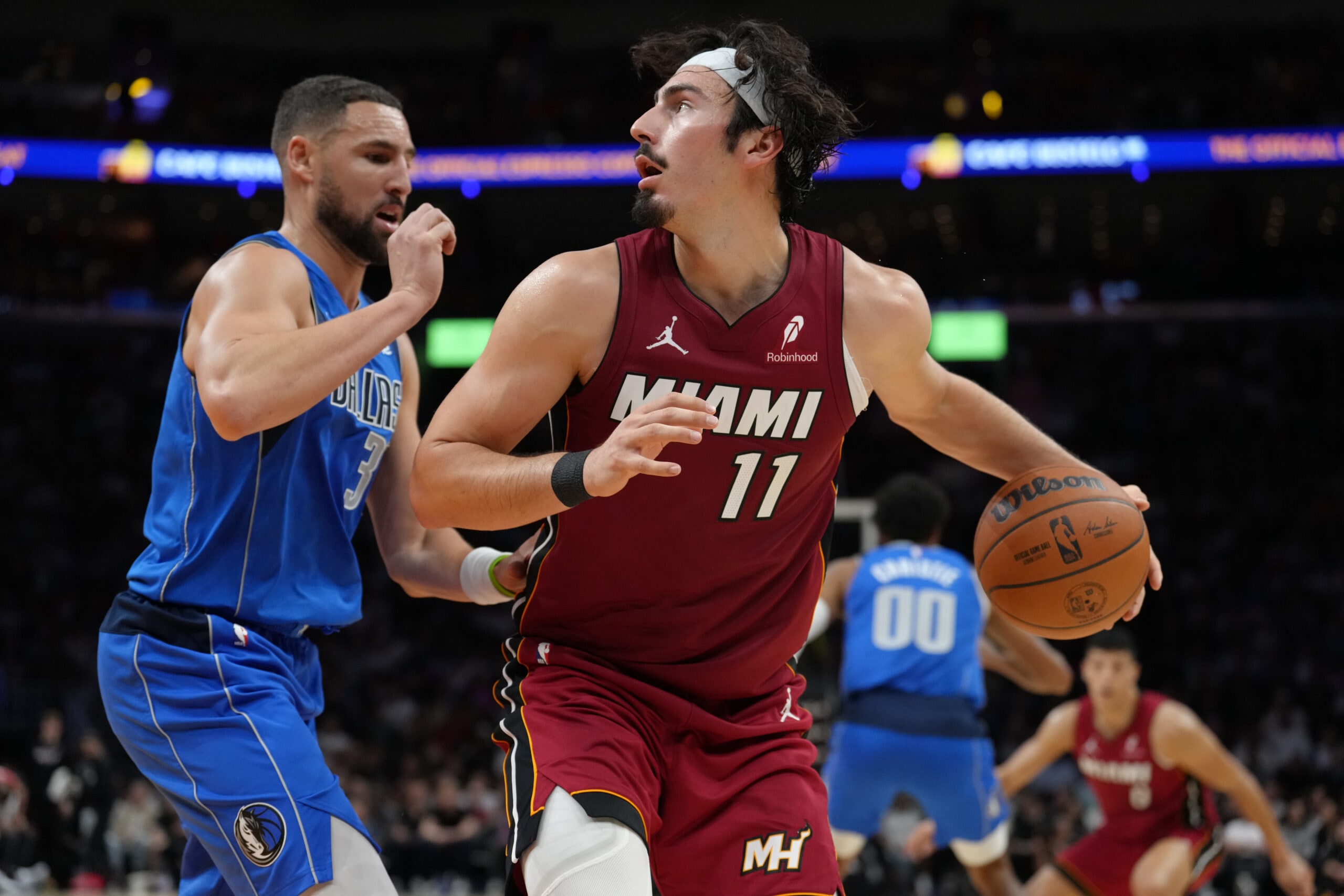
3 things to watch in Mavericks-Heat on NBA TV
Cooper Flagg and Dallas will face off against Miami on Wednesday.
The Miami Heat (14-7, 3rd in Eastern Conference) head to Dallas on Wednesday to start a stretch of six road games in their next seven when they face the Mavericks (7-15). Here are…
Continue Reading
-
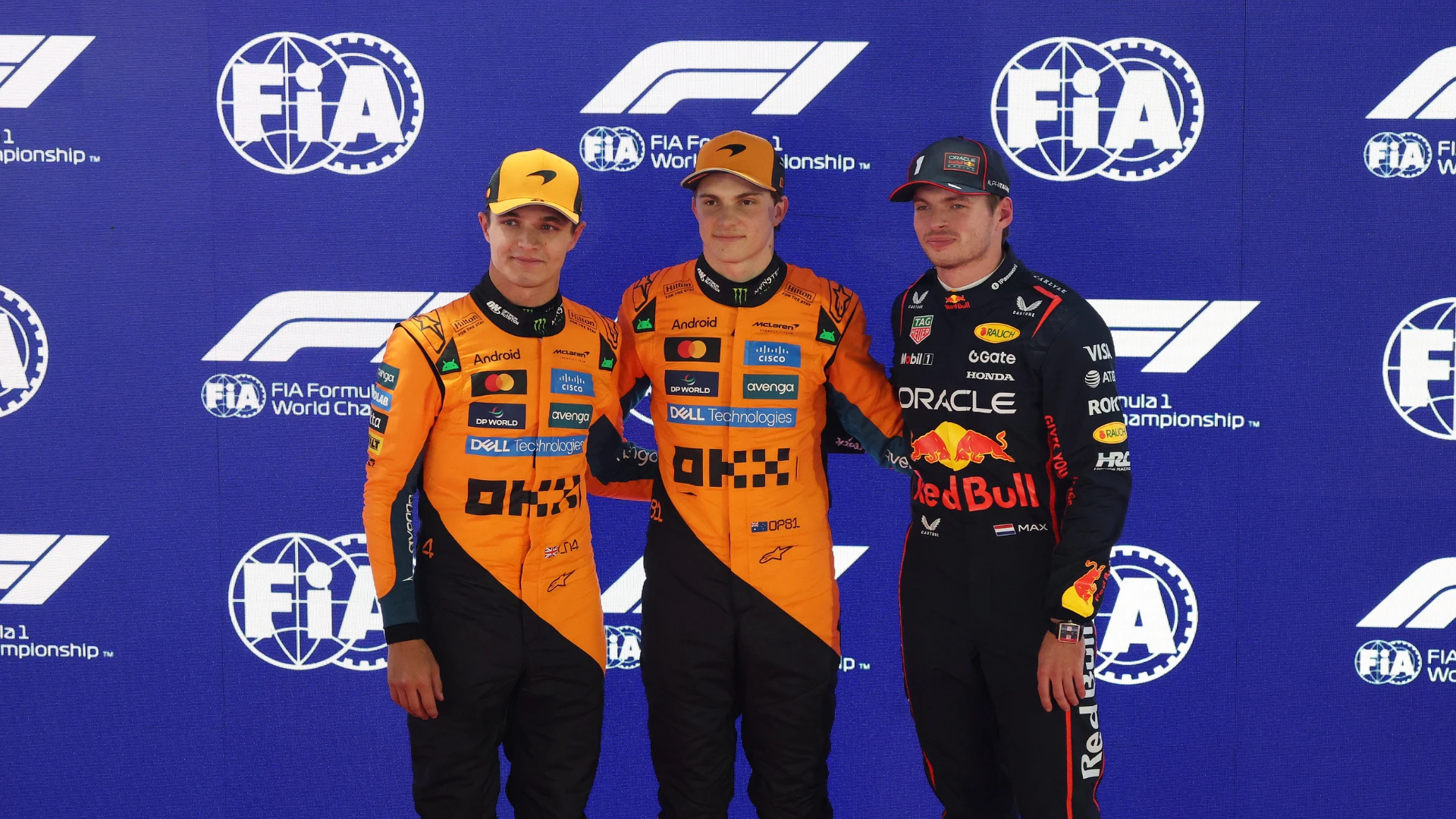
Lando Norris, Max Verstappen and Oscar Piastri’s seasons compared as they face Abu Dhabi title decider
After a season filled with various twists and turns, the three-way battle for the 2025 Drivers’ Championship will finally be decided at this weekend’s finale in Abu Dhabi.
Lando Norris remains in the lead of the standings, but McLaren’s…
Continue Reading
-

NASA Rover Detects Electric Sparks in Mars Dust Devils, Storms
Thirty-five other discharges were associated with the passage of convective fronts during regional dust storms. These fronts feature intense turbulence that favor triboelectric charging and charge separation, which occurs when two objects touch,…
Continue Reading