
The Society for Cardiovascular Angiography & Interventions (SCAI) and Cardiovascular Research Technologies (CRT) today announce a new collaboration to elevate the field of interventional cardiology through shared education…
Author: admin
-
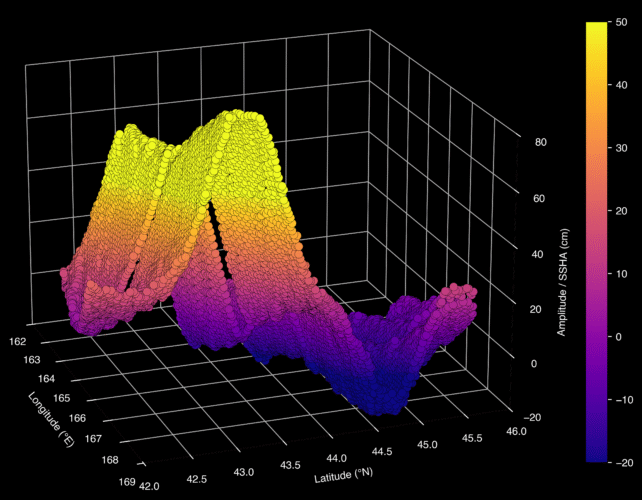
First Detailed Look at a Tsunami From Space Reveals Unexpected Feature
A satellite has tracked a tsunami in greater detail than ever before, which could help improve models of these giant waves and allow for better prediction and warning systems.
Launched in 2022 by NASA and the French space agency Centre National…
Continue Reading
-

Fragmented sleep worsens recovery outcomes after traumatic brain injury
A new study highlights how important uninterrupted sleep is to recovery after a traumatic brain injury, finding that fragmented sleep in injured mice is linked to a loss of rapid-eye-movement (REM) sleep and increased…
Continue Reading
-

People who received emergency or hospital care for hallucinogens six times more likely to be diagnosed with mania
People who have received emergency or hospital care in Canada due to hallucinogen use have a six-fold increased risk of receiving care for mania in the next three years, according to a study published December 2nd in the open-access…
Continue Reading
-

Minorities commission gets legal powers
Joint sitting approves body as EU links GSP-Plus access to strengthened HR safeguard
ISLAMABAD:…
Continue Reading
-

Understanding dental drill acoustics to help reduce patient anxiety
Dental anxiety, also known as odontophobia, prevents people from getting their regular cleanings and keeping up with necessary dental hygiene.
One aspect of the anxiety comes from the sound of the dental drill, which makes a…
Continue Reading
-

The future of cancer detection could be just a blood test away, say scientists
The prospect of diagnosing cancer through painless methods—such as a simple AI-assisted blood or urine test that detects tiny particles known as exosomes—is becoming increasingly realistic. Scientists predict that this approach…
Continue Reading
-

Politics of confrontation – Newspaper
THE possibility of governor rule in KP has been widely discussed for months but it now seems imminent. The mounting tension between the provincial and federal governments appears to have reached a critical point. Recent statements by some…
Continue Reading
-

Protein tied to ALS and dementia plays a role in regulating DNA mismatch repair
New Houston Methodist research has revealed that a protein associated with neurodegenerative diseases such as dementia and amyotrophic lateral sclerosis (ALS) also plays a role in regulating DNA mismatch repair, a…
Continue Reading
-
Hyundai Motor Group Unveils Production-Ready Autonomous Mobility Robot Platform ‘MobED’ at iREX 2025
- MobED, Hyundai Motor Group Robotics LAB’s first mass-produced mobility robot platform, is designed for diverse industrial and everyday applications
- MobED debuts an innovative approach to robotics functionality, defined by Adaptive Mobility (H/W), Intuitive Autonomy (S/W) and Infinite Journey (applications)
- MobED features AI-based autonomous navigation, LiDAR-camera fusion sensors, and an eccentric posture control mechanism for stable and adaptive movement
- Design blends precision and elegance, with integrated sensors and Drive-and-Lift (DnL) modules ensuring exceptional balance and optimized functionality
- MobED Pro and MobED Basic models scheduled for sales in the first half of 2026; both units demonstrated at the Group’s iREX booth
- Technical seminar and MobED capability showcase at the Group’s iREX 2025 booth (West Hall 3-4, W3-44) from December 3 to 6
SEOUL, December 2, 2025 – Hyundai Motor Group (the Group) today unveiled MobED (Mobile Eccentric Droid), its first mass-produced mobility robot platform developed by Hyundai Motor Group’s Robotics LAB, at the International Robot Exhibition 2025 (iREX 2025) in Tokyo, Japan.First shown as a concept robot at Consumer Electronics Show (CES) 2022, MobED has been refined into a production-ready, fully autonomous mobility robot platform using artificial intelligence (AI). The new model takes center stage at the Group’s iREX 2025 booth (West Hall 3-4, W3-44), running from December 3 to 6. Promotional videos showcasing MobED are also accessible via the Group’s official YouTube channel. Watch the video here.
“Beyond a simple mobility platform, MobED offers a next-generation solution adaptable to diverse industries and everyday life. MobED will set new standards in the global robotics market and accelerate a future where humans and robots coexist.” – Dong Jin Hyun, Vice President and Head of Hyundai Motor Group Robotics LAB.
What are MobED’s Key Product Features?
MobED introduces a groundbreaking approach to robotics functionality, defined by three pillars: Adaptive Mobility (hardware), Intuitive Autonomy (software) and Infinite Journey (applications).
Adaptive Mobility: Redefining Movement with Advanced Technology
MobED revolutionizes mobile robotics with its cutting-edge eccentric mechanism, enabling precise posture control and seamless terrain adaptability. These features redefine movement across diverse surfaces, powered by the Group’s automotive-grade engineering:
- Eccentric Control Mechanism: Actively stabilizes the platform by dynamically adjusting posture and height on uneven or inclined surfaces.
- Seamless Terrain Navigation: Effortlessly adapts to varied environments, spanning narrow indoor pathways to rugged outdoor terrains.
- Automotive-Grade Engineering: Combines durability with the scalability of laboratory-level precision to real-world applications.
By integrating adaptive motion technology, MobED eliminates the need for environment-specific robot designs.
Intuitive Autonomy: Democratizing Robotics for Everyone
MobED simplifies autonomous navigation technology, delivering accessibility and ease of use without requiring technical expertise. Key highlights include:
- Accessible Control Interface: A wide touchscreen controller and intuitive 3D UI/UX make operation approachable for all users.
- Safe Navigation: AI-powered sensors combine LiDAR and cameras to autonomously recognize and avoid obstacles.
- Reliable Autonomy: Predictive navigation algorithms ensure safe and precise operations in both crowded and confined spaces. MobED’s intuitive design represents robotics technology accessible to universal users, merging safety with ease of operation.
Infinite Journey: A Versatile Platform for Multi-Purpose ApplicationsBuilt as a modular platform, MobED supports diverse use cases across industries, from delivery and research to logistics and video production. Key features:
- Customizable Modular Design: Supports universal mounting rails and APIs, enabling simple integration of attachments for various tasks.
- Indoor and Outdoor Functionality: Operates seamlessly across environments, reducing the need for specialized robots and cutting costs.
- Future-Proof Solution: Adapts readily to evolving needs with long-term reliability and robust construction.
With one versatile platform, MobED creates infinite possibilities for robotics applications, offering flexibility and scalability unlike traditional robots.
How many different MobED models are there?
MobED is available in two different configurations, adapted to suit various needs through differentiated technologies and features:
- MobED Pro: Equipped with advanced autonomy, this model integrates additional sensors and features, such as LiDAR-camera fusion and ‘follow-me’ mode. Ideal for outdoor or commercial applications requiring reliability in autonomous navigation
- MobED Basic: Designed as a foundation for research and development, this model provides users with flexibility to build custom applications without pre-installed autonomy features
With these two options MobED ensures flexibility, enabling users to address evolving demands across industries while expanding the applications of robotics technology.
What defines MobED’s advanced design?
MobED’s design embodies the ‘Refined Edge’, a harmony of straight lines and flowing curves that balances technical precision with understated elegance. Straight lines express its robust purpose, while integrated sensors and Drive-and-Lift (DnL) modules create a visual balance and refinement.
High-quality metals deliver exceptional straightness, and precise shaping ensures smooth transitions into curves that enhance MobED’s dynamic movements. Subtle surface reflections highlight the robot’s motion engineering integrity.
The result is a robotics platform that fuses practicality with sophistication, reaffirming the Group’s commitment to both innovation and design excellence.
What engineering innovations make MobED a robotics game-changer?
At MobED’s core is its proprietary DnL modules that integrate posture control, driving and steering motors for seamless multi-directional movement. Its eccentric-based posture control mechanism maintains level positioning, adjusts height dynamically, and adapts to irregular or inclined surfaces.
An optimization-based control algorithm inspired by multi-joint robotics ensures stability on uneven terrain and reliable navigation over obstacles like curbs. These capabilities enable MobED to perform in industrial and indoor/outdoor environments where precision and adaptability are essential.
For navigation, MobED uses LiDAR and cameras to perceive surroundings in real time, supporting predictive navigation, obstacle avoidance, optimal route generation, and moving object recognition or tracking. Its AI-powered detection system ensures safe, reliable operation in crowded settings or confined spaces.
A wide touchscreen controller with an intuitive 3D UI/UX makes MobED easy for anyone to operate, enabling self-mapping, location designation and autonomous driving.
By uniting adaptability, precision and autonomy, MobED sets new standards for robotics engineering.
MobED at iREX 2025
Hyundai Motor Group is showcasing MobED at its iREX 2025 booth from December 3 to 6. Attendees can interact with the platform at the Group’s booth (West Hall 3-4, W3-44), where live demonstrations of MobED navigating different terrains highlight its precision and adaptability. Visitors can see MobED Pro and Basic demonstrating applications such as Loading/Unloading, Delivery, Golf, Urban Hopper and Broadcasting, and functions including autonomous navigation and charging.
The Group will also host a technical seminar, called ‘A novel hybrid-type Mobile Robot Platform: MobED (Mobile Eccentric Droid)’ on December 3 at Tokyo Big Sight, West Hall 4, from 11:30-12:10. This offers insights into Robotics LAB’s vision and strategy, as well as MobED’s integrated technologies and key features.
MobED’s mass production is scheduled to begin in the first half of 2026. Additional product details and purchase options are available on the Hyundai Motor Group Robotics LAB website.
MobED Specifications
Category
Pro
Basic
Product Specifications
Specs
Product Size
(W * L * H (mm))Up to 750 × 1150 × 650
(including antenna height)Up to 750 x 1150 x 430
Tare Weight (kg)
Up to 88
Up to 78
Maximum payload (kg)
Up to 47
Up to 57
Product Features
Structural Characteristics
360° rotating eccentric structure
(eccentric rotation radius: 100 mm)Drive Modes
Autonomous
(Autonomous, Smart Assist) / Manual (Basic, Freestyle, Zigzag)Manual (Basic, Freestyle, Zigzag)
Posture while driving
Outward deployment, inward deployment, backward, forward
Driving Speed
Autonomous Driving
Normal Driving
Inward posture
Up to 0.3 m/s
Autonomous Driving: Not included
*A custom autonomous driving kit can be installed on the top moduleOther postures
Up to 2.8 m/s
Manual Driving
Follows BASIC specifications
Inward posture
Up to 0.3 m/s
Other postures
Up to 2.8 m/s
Maximum Slope angle (°)
Max ±10°
(slopes over 10° automatically avoided)←
(Operation is subject to user discretion according to the environment and local traffic regulations)Curbstone Clearance Height (mm)
100 ~ 200
Curbstone location specified by the user when creating a map
Functional Safety
Sensor
Radar
Driving Speed
Up to 2.8 m/s
(10kph) or lessEnvironmental Conditions
Operating Temperature / Charging Temperature
0–40°C / 1–35°C
←
Storage Temperature
0–40°C
←
Battery
Operating Voltage
Rated capacity: 1.47 kWh; battery pack voltage: 36–49.2 V; rated discharge current: 33.6 A
Operating Time
≥ 4 hours
(BMS SOC 90% → 10%)←
Charging Time
≤ 2 h 30 min
(BMS SOC 10% → 90%)←
Certifications
UL2271
←
Top Module
Port InterfaceMechanical Specifications
Mounting rail
←
Communication Specifications
API provided – Ethernet
(Pro only)API provided – RS422
(BASIC Only)Power Specifications
Top module port: 24V, 300W / 48V, 500W
←
Software Update & Diagnostics
Wired update, diagnostic scanner
←
Certifications
CE (ISO13482 / ISO3691-4),
UL (UL3100 / UL3300)In Progress
Ingress Protection
IP54
Charging
Charging Station Certification
IEC / UL / KC60335, KC / CE / FCC
Charging Method
Manual charger, charging station
(*Automatic charging module sold separately)Manual charger
Warranty
Quality Guarantee
1 year
1 year
###
About Hyundai Motor Group
Hyundai Motor Group is a global enterprise that has created a value chain based on mobility, steel, and construction, as well as logistics, finance, IT, and service. With about 250,000 employees worldwide, the Group’s mobility brands include Hyundai, Kia, and Genesis. Armed with creative thinking, cooperative communication, and the will to take on any challenges, we strive to create a better future for all.
More information about Hyundai Motor Group can be found at: http://www.hyundaimotorgroup.com or Newsroom: Media Hub by Hyundai, Kia Global Media Center (kianewscenter.com), Genesis Newsroom
Contact:
Seoyong Choi
Global PR / Hyundai Motor Group
syc@kia.comContinue Reading