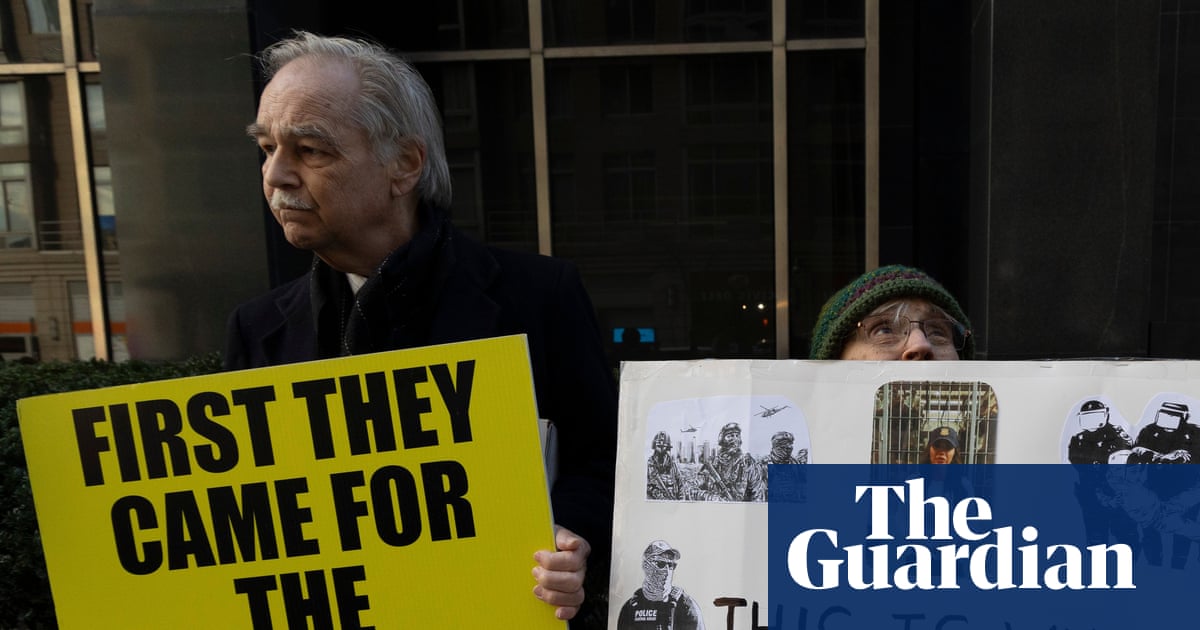
Donald Trump said on Tuesday he is terminating all documents, including pardons, that he said his predecessor Joe Biden signed using an autopen – an unprecedented attempt to rollback a previous president’s actions using what legal thinkers…
A new International Labour Organization (ILO) report launched on 1 December shows that workplaces are proving vital in closing HIV testing gaps among men, while advancing inclusive health and wellness for all workers through its Voluntary…
Atmospheric dust plays an important role in the way Earth absorbs and reflects sunlight, impacting the global climate, cloud formation, and precipitation. Much of this dust comes from the continuous reshaping of Earth’s surface through…
People from ethnic minority backgrounds are more likely to experience worse migraine care and to fear discrimination because of their condition, a survey by a leading UK charity has found.
Migraines are characterised by a severe headache,…
Ads for Nike, Superdry and Lacoste have been banned in the UK for misleading consumers about the environmental sustainability credentials of their products.
The Advertising Standards Authority (ASA) said paid-for Google ads run by all three retailers used terms such as “sustainable”, “sustainable materials” or “sustainable style” without providing evidence proving the green claims.
An ad from Nike that has been banned in the UK for exaggerating the environmental benefits of their products and misleading customers. Photograph: ASA/PA
Nike’s ad, for tennis polo shirts, referred to “sustainable materials”. The company said the promotion was “framed in general terms” and argued consumers would interpret it as referring to some, but not all, products offered.
An ad from Superdry that has been banned in the UK for exaggerating the environmental benefits of their products and misleading customers. Photograph: ASA/PA
Similarly, Superdry, which urged consumers to “unlock a wardrobe that combines style and sustainability”, said the purpose of the ad was to highlight that it manufactured, sourced and sold a wide range of products that have “sustainability attributes and credentials”.
An ad from Lacoste promoting sustainable kids clothing that has been banned in the UK for exaggerating the environmental benefits of their products and misleading customers. Photograph: ASA/PA
Lacoste, promoting sustainable kids clothing, said it had been working for several years to reduce the carbon footprint of all its products, but admitted that claims such as “green”, “sustainable” and “eco-friendly” were “very difficult to substantiate”.
The ASA said the UK code of advertising states that environmental claims must be clear and “supported by a high level of substantiation”.
It said that in each case the retailers’ use of the phrase “sustainable” was without any additional information, making the claim “ambiguous and unclear”.
“The claim was absolute and therefore a high level of substantiation in support needed to be produced,” the watchdog said. “We had not seen evidence to support it. We therefore concluded the ad was likely to mislead.”
The ASA also pointed to a lack of evidence to show the products were not detrimental to the environment when their whole life cycle was taken into account.
It banned each of the ads and told the retailers to “ensure that the basis of future environmental claims, and their meaning, was made clear, and that a high level of substantiation must be held to support absolute claims”.
skip past newsletter promotion
after newsletter promotion
Separately, the ASA also banned an ad for gambling firm Betway featuring Formula One star Sir Lewis Hamilton because it was likely to appeal to under-18s.
The paid-for Facebook ad, which ran before the British Grand Prix at Silverstone in July, featured a video of three Formula One drivers standing in a grandstand watching a race with their backs to the viewer, with Hamilton’s name written on the back of his red driver’s uniform.
A complainant challenged whether the use of Hamilton broke UK ad rules, which do not allow celebrities who are likely to be of strong appeal to under-18s to appear in gambling ads.
Betway did not dispute that Hamilton has a strong appeal to under-18s, but claimed the way he was presented in the ad limited that appeal because it did not show his face or frontal view.
The ASA said consumers, including those aged under 18, would have clearly recognised the figure as being Hamilton, concluding that the ad was “irresponsible and breached the code”.
Last week, we saw some renders for the nubia Fold – the brand’s first book-style foldable alongside the nubia Flip3 clamshell. Japanese telecom Y!mobile has now listed the nubia Fold on its website, complete with its key specs and…
“I think that there is a certain kind of something that is in your blood as a New Yorker,” actress Kyra Sedgwick says over Zoom while discussing her new movie, The Best You Can. “You’re fast, you’re moving, you’re rushing. You’ve got places to…
Ben & Jerry’s audit conducted ahead of Magnum’s spin out from Unilever
Magnum trying to work with foundation to strengthen governance
Ben & Jerry’s a greater risk to Magnum than prior corporate owner Unilever
NEW YORK, Dec 2 (Reuters) – An audit of the Ben & Jerry’s Foundation, a U.S.-based non-profit solely funded by the brand, found that it had deficiencies in financial controls and governance, according to Magnum, the Unilever unit set to be spun off next week that will own the ice-cream maker.
The audit also found deficiencies in other compliance policies such as conflicts of interest, according to the statement from the Magnum Ice Cream Co, an independent unit of Unilever.
Sign up here.
Magnum is set to inherit a long-standing feud between Unilever (ULVR.L), opens new tab and Ben & Jerry’s stemming from the politically progressive brand’s stance on the Israeli-occupied Palestinian territories.
Magnum conducted the audit as a matter of good governance in preparation for the upcoming spin-off, it said.
A Unilever spokesperson echoed those reasons in a comment to Reuters, adding that Magnum is “taking appropriate steps” in response to the findings.
Ben & Jerry’s and the foundation did not respond to requests for comment, but its co-founder Ben Cohen said in October that he expects the conflict between the brand and its new owner to grow after the spin-off.
Magnum did not make public the details of its findings but said it has shared them with the Ben & Jerry’s Foundation and is trying to work with them on strengthening corporate governance by adopting a code of ethics, conflict-of-interest policy, term limits for trustees and due diligence and financial controls on grants.
Magnum said the trustees have not fully addressed the deficiencies. The Unilever subsidiary shared the statement in response to Reuters’ questions about the audit.
The trustees signed a code of ethics in recent weeks, according to two sources familiar with the matter, who asked not to be identified because they were not authorized to speak to the media. The sources added the audit did not find wrongdoing, ethical malpractice or violations.
Unilever and Magnum have been upping the pressure on Ben & Jerry’s ahead of the spinout, as the renowned ice cream brand will make up a larger portion of the new company’s sales. The brand has been one of the few voices in corporate America speaking out against policies backed by U.S. President Donald Trump and Israel’s war in Gaza.
Ben & Jerry’s annual revenue of 1.1 billion euros ($1.28 billion) accounts for almost 14% of Magnum’s global turnover, compared to just 1.8% of Unilever.
Earlier this year, Unilever threatened to pull funding from the charity unless it agreed to the audit, Reuters reported. The foundation receives about $5 million annually from Ben & Jerry’s, and Magnum said it plans to continue fully funding the organization, provided the issues raised are addressed.
Ben & Jerry’s co-founder Jerry Greenfield, who resigned as a “brand ambassador” earlier this year, is stepping down as trustee from the foundation, the sources said. Greenfield did not respond to a Reuters request for comment.
LONG-LASTING FEUD
Ben & Jerry’s secured substantial leeway in its 2000 merger with Unilever that others who have sold to big corporations have not enjoyed, including an independent board.
The agreement also preserved the foundation, set up in 1985. It uses contributions from Ben & Jerry’s to make donations to other non-profit organizations focused on issues ranging from racial equity to environmental protection.
But the relationship soured in 2021, when Ben & Jerry’s said it would stop selling in the Israeli-occupied West Bank, which had financial consequences for Unilever as investors supporting Israel pulled out of the global consumer goods conglomerate.
The Ben & Jerry’s independent board has sued Unilever twice, most recently accusing its corporate parent of wrongfully muzzling it over statements it wanted to make on Gaza; Unilever has said the brand has evolved into one-sided advocacy on controversial topics.
Cohen has launched an effort to buy back the brand; Magnum has said the unit is not for sale.
He has said Magnum is censoring Ben & Jerry’s ability to speak out on progressive causes like Palestinian rights and U.S. immigration, a claim Magnum denies.
In a draft prospectus for its public listing, Magnum warned that actions by Ben & Jerry’s could result in reputational damage, boycotts or investor claims.
(This story has been refiled to fix a typo in paragraph 10)
Reporting by Jessica DiNapoli in New York and Alexander Marrow in London; Editing by Aurora Ellis
Our Standards: The Thomson Reuters Trust Principles., opens new tab
Purchase Licensing Rights
New York-based reporter covering U.S. consumer products and the companies that make them, and the role they play in the economy. Previously reported on corporate boards and distressed companies. Her work has included high-impact stories on CEO pay, Wall Street bubbles and retail bankruptcies.
Chief companies correspondent for Russia, Alexander covers Russia’s economy, markets and the country’s financial, retail and technology sectors, with a particular focus on the Western corporate exodus from Russia and the domestic players eyeing opportunities as the dust settles. Before joining Reuters, Alexander worked on Sky Sports News’ coverage of the 2016 Olympics in Brazil and the 2018 World Cup in Russia.