Author: admin

  • A rapid deployment of a space traffic management platform

    A rapid deployment of a space traffic management platform

    Each year, SpaceNews selects the people, programs and technologies that have most influenced the direction of the space industry in the past year. Started in 2017, our annual celebration recognizes outsized achievements in a business in which no ambition feels unattainable. This year’s winners of the 8th annual SpaceNews Icon Awards were announced and celebrated at a Dec. 2 ceremony hosted at the Johns Hopkins University Bloomberg Center in Washington, D.C. Congratulations to all of the winners and finalists.

    In 2018, the first Trump administration directed the development of a civil space traffic management system led by the Department of Commerce, taking over work that had for years been handled by the Defense Department. In 2025, that effort reached the finish line following years of procedural and financial challenges. It came even as the second Trump administration proposed canceling the program instead.

    The development of the Traffic Coordination System for Space, or TraCSS, got off to a slow start because of a lack of funding from Congress and skepticism that the Commerce Department was the best place to handle space traffic coordination. A 2020 report by the National Academy of Public Administration, concluded Commerce was the best agency for the job rather than NASA or the FAA. But it wasn’t until fiscal year 2023 that the Office of Space Commerce received the budget increase it needed to accelerate work on TraCSS.

    Once funding started, the office moved quickly to scale up and start putting TraCSS together. Leaders took on an agile development approach commonly used in software development to TraCSS, focusing first on making a basic “minimum viable product” and then incorporating new features and changes based on feedback.

    Besides the technical work needed to set up TraCSS, the Office of Space Commerce also had to build up relationships with the Space Force, which would be supplying the data for the system, as well as with companies that could also offer data and services. That included making sure that the basic and free space safety services that TraCSS would offer, such as notices of potential collisions, did not compete with more advanced offerings from those companies.

    In September 2024, the office started phase 1.0 of TraCSS, a beta test involving several satellite operators. Over time, more companies joined the test, including SpaceX, by far the largest satellite operator in the world with its Starlink constellation. The office started adding features to TraCSS in preparation for entering full service in early 2026.

    All that has taken place despite political headwinds in the last year. A move by the Commerce Department to lay off probationary, or new, employees in February temporarily included the TraCSS program manager, Dmitry Poisik, until he was brought back several days later. The fiscal year 2026 budget proposal for NOAA, which includes the Office of Space Commerce, proposed terminating TraCSS entirely, arguing private companies could handle the work.

    The commercial space industry has rallied behind TraCSS, saying it is essential to safe space operations. House and Senate appropriations bills would restore some of TraCSS budget. That’s enough, Poisik said in August, to do the “basic mission” of TraCSS, which has become more essential as the number of satellites in orbit grows.

    This article first appeared in the December 2025 issue of SpaceNews Magazine.

    Continue Reading

  • How To See Your Apple Music Replay 2025

    How To See Your Apple Music Replay 2025

    Music lovers, are you ready to revisit your favorite songs and artists of 2025?

    On Dec. 2, Apple Music rolled out its 2025 Apple Music Replay. Like Spotify Wrapped, Apple Music Replay compiles Apple Music users’ most played songs, albums and…

    Continue Reading

  • Asia and the Pacific: Southeast and South Asia Cyclones and Floods Humanitarian Snapshot (Covering 17 November to 3 December 2025)

    Attachments

    Catastrophic flooding and landslides, driven by intensifying cyclones and seasonal monsoons, are devastating communities across South and Southeast Asia. Since 17 November, Sri Lanka, Indonesia, Thailand, Viet Nam and…

    Continue Reading

  • Taylor Swift’s “most thrilling chapter” is documented in new “Eras” concert film and docu-series

    Taylor Swift’s “most thrilling chapter” is documented in new “Eras” concert film and docu-series

    ‘Tis the season to be a Swiftie!

    “Taylor Swift | The Eras Tour | The Final Show” is finally coming to Disney+ on December 12.

    The concert film was captured in Vancouver, B.C. at the final show of the record-breaking Eras tour and features the set…

    Continue Reading

  • Taylor Swift’s “most thrilling chapter” is documented in new “Eras” concert film and docu-series

    Taylor Swift’s “most thrilling chapter” is documented in new “Eras” concert film and docu-series

    ‘Tis the season to be a Swiftie!

    “Taylor Swift | The Eras Tour | The Final Show” is finally coming to Disney+ on December 12.

    The concert film was captured in Vancouver, B.C. at the final show of the record-breaking Eras tour and features the set…

    Continue Reading

  • the promise of an HIV vaccine

    the promise of an HIV vaccine

    IAVI and the International AIDS Society (IAS) released an advocacy brief outlining what can be gained through sustained investments in HIV vaccine research. From advancing the clinical pipeline, to conducting faster, smarter, and inclusive…

    Continue Reading

  • Subclade K flu gets an early start in Japan, could affect the U.S.

    Subclade K flu gets an early start in Japan, could affect the U.S.

    Dec. 2 (UPI) — A new flu variant called Subclade K is spreading in Japan and poses a significant risk to the United States as cold and flu season arrives this winter.

    The flu variant is a new version of the type A flu virus that commonly…

    Continue Reading

  • Manchester City edge Fulham thriller and Erling Haaland sets record – but how concerning is their defence?

    Manchester City edge Fulham thriller and Erling Haaland sets record – but how concerning is their defence?

    Manchester City prevailed in a nine-goal feast at Fulham thanks to the sort of attacking display that would normally have title rivals quaking in their boots.

    Unfortunately for Pep Guardiola’s side, City’s defensive display will have had those…

    Continue Reading

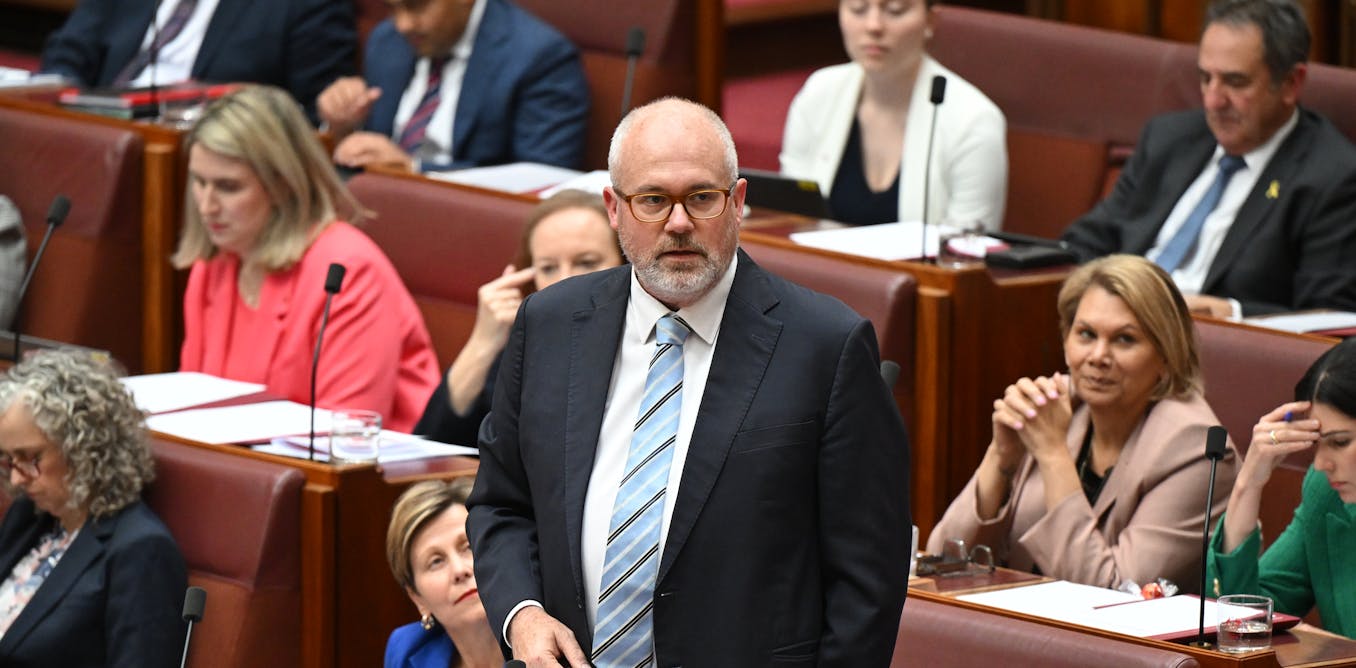
  • Tim Ayres on the AI rollout’s looming ‘bumps and glitches’

    Tim Ayres on the AI rollout’s looming ‘bumps and glitches’

    The federal government released its National AI Strategy this week, confirming it has dropped its earlier proposal for mandatory guardrails for high-risk artificial intelligence (AI).

    In responding to AI, the government has found itself caught between the unions, which have pushed for stricter regulation to protect workers and their jobs, and business wanting a “light-touch” approach to AI.

    To talk about how the government will keep up with effectively managing AI, as well as a long-overdue response to a “jobs for mates” review, we’re joined by the minister for industry, innovation and science, Tim Ayres.

    On the government’s decision not to introduce AI-specific laws, Ayres denies the Albanese government ended up going with a “light-touch” approach.

    It’s a pragmatic Australian approach that’s about the circumstances that Australia is in, in strategic terms and economic terms. We’ve got an existing regulatory framework now. Australian law applies now.

    The [new] AI Safety Institute is about making sure that we support our regulators. Advised, of course, by the best advice, whether it’s in the intelligence communities or security agencies, engaging with the trade union movement and civil society, getting the best advice to make sure that we’re uplifting government capability to analyse threats, to get into the new AI models and make sure that we’ve tested them properly, and supporting government capability across the board.

    On whether the rollout of AI will lead to some mistakes as Australian workers and industry get used to the technology, Ayers acknowledges there will be some “bumps”:

    I don’t want to be glib about that, but I do think that’s true […] that of course big social and technological changes are rarely free of bumps and glitches. We’re really keenly aware in the government of the human challenges here.

    And that’s why I just keep emphasising getting people together and having Australians and Australian institutions working together for a better deal is much better than standing back and letting these developments flow without us rolling our sleeves up and getting involved.

    Drawing on examples he’s seen in his role as minister for science, Ayres says AI had could deliver real benefits for Australians over the next five to ten years.

    [For example], the capacity of artificial intelligence to dramatically speed up pharmaceutical design so that we get more drugs, more targeted design developed in Australia into pharmacies to support Australians’ health, cancer treatment designs, composite material design. And in the energy sector, being able to […] smartly manage the energy grid so that we can expand renewables and expand electricity capability. There there is almost no area of technological improvement that won’t be touched by artificial intelligence.

    But with that rapid expansion comes real costs, including the vast amounts of electricity and water data centres consume.

    Ayres said he’ll resume working with state and territory governments on developing “data centre principles” very early next year. The Sydney Morning Herald and others have reported that the government is weighing up making new data centres invest in big wind and solar projects or else build their own batteries on-site.

    Ayres says if data centres and new digital infrastructure end up paying for new generation and transmission capability, “that’s a net addition to the electricity system, not a drain on resources”.

    Microsoft’s […] recent investment in Australia has been has underpinned and underwritten the development of a massive 300 megawatt solar farm north of Albury at Walla Walla. There are opportunities here if we have a planned approach to make sure that this supports development in the electricity system.

    Following week’s release of the review into “jobs for mates” – which the government held onto for two years and now declines to accept all recommendations – Ayres argues Labor “done has a lot to restore integrity” since being elected in 2022.

    I think what we saw was the previous government so debauched the process that Australians lost confidence in the appointments process. Now we’ve done a lot to restore integrity and a sense of purpose to these appointments.

    […] The rules that [finance minister] Katy Gallagher’s announced and that the government’s adopted today go a long way towards restoring public confidence. But of course, as every as every day goes on, we will continue to demonstrate that we actually take our responsibility in this area seriously and that our appointments reflect the public interest.


    Read more:
    Albanese government shies away from tougher recommendations from ‘jobs for mates’ inquiry


    Continue Reading

  • Govt lifts export development surcharge, easing cost pressures on exporters

    Govt lifts export development surcharge, easing cost pressures on exporters

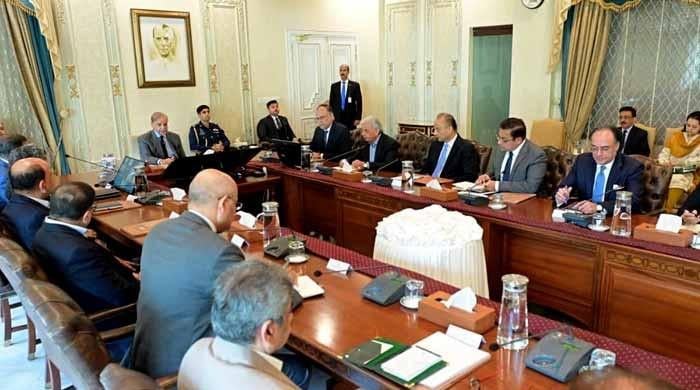
    Prime Minister Shehbaz Sharif chairs a meeting on November 24, 2025, where the Working Group on the Export Sector presented its briefing. — PID
    • SBP says all earlier circulars related to the surcharge now stand…

    Continue Reading