22 of the identified accounts are operated by Fitna al-Khawarij, reveal security sources
Pakistani security agencies have traced 33 social media accounts…

22 of the identified accounts are operated by Fitna al-Khawarij, reveal security sources
Pakistani security agencies have traced 33 social media accounts…
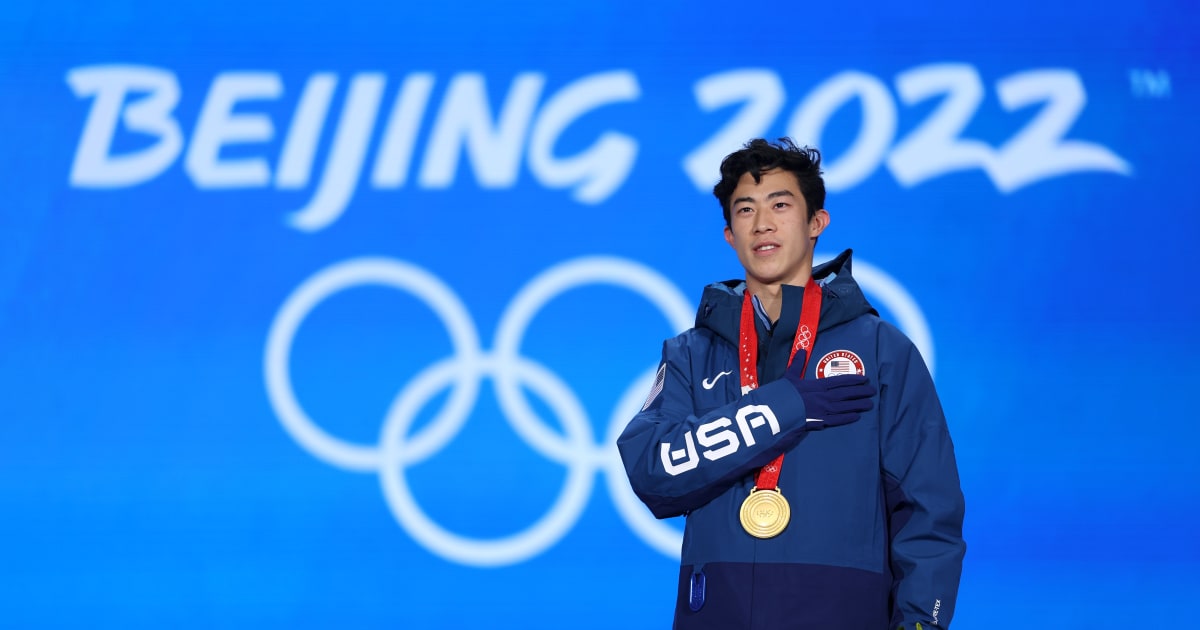
Beijing 2022 Olympic figure skating champion Nathan Chen will be inducted into the U.S. Figure Skating Hall of Fame next month, the organisation announced Tuesday (2 December).
Chen will be inducted on 9 January in St. Louis, Missouri, in the…
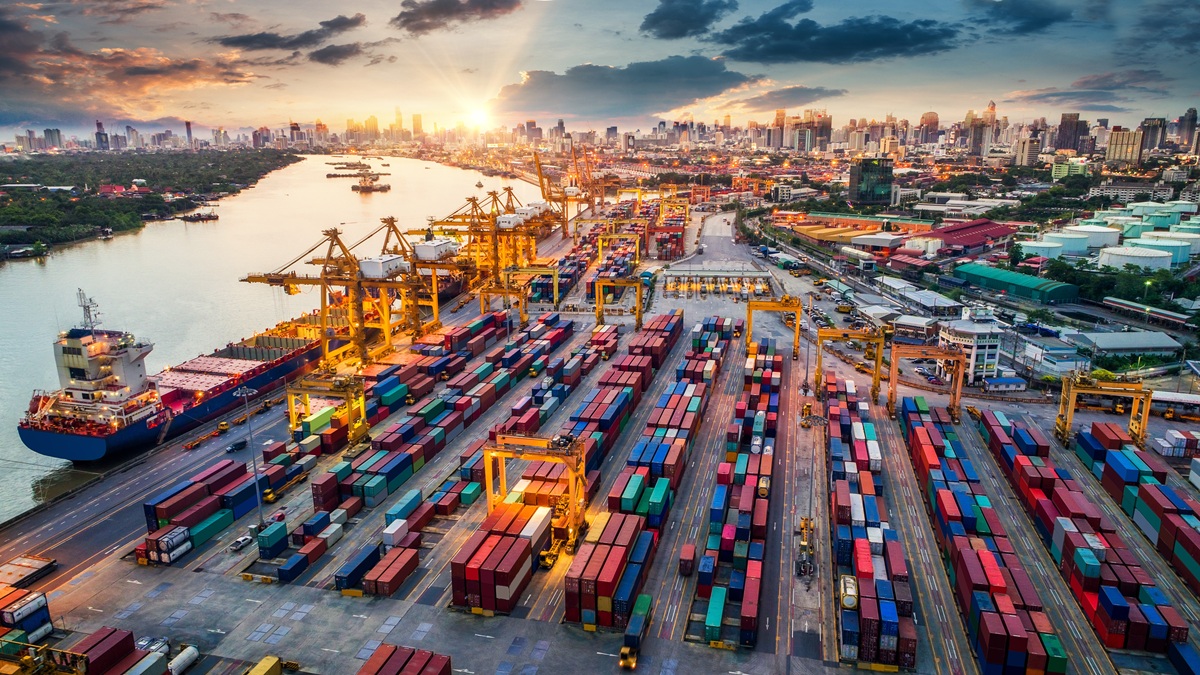
Global growth will slow to 2.6% in 2025, down from 2.9% in 2024, as global trade and investment face growing pressure from financial volatility and geopolitical uncertainty, according to UN Trade and Development’s new “Trade and Development Report 2025: On the Brink – Trade, finance and the reshaping of the global economy”. The report shows that shifts in financial markets move global trade almost as strongly as real economic activity, influencing development prospects worldwide.
UN Trade and Development (UNCTAD) Secretary-General Rebeca Grynspan said the findings show how financial conditions increasingly determine the direction of global trade: “Trade is not just a chain of suppliers. It is also a chain of credit lines, payment systems, currency markets and capital flows.”
Global trade rose by about 4% early in 2025, driven in part by firms accelerating imports ahead of tariff changes, but also by structural shifts: Services are expanding faster, supported by growth in the digital economy and artificial intelligence, and South–South trade is growing above average. Beneath these factors, underlying trade growth is estimated at between 2.5% and 3% and is expected to ease further as financial conditions influence production and investment decisions more strongly.
More than 90% of global trade depends on bank finance. Dollar liquidity and cross-border payment systems are also crucial for international trading activities. This deep reliance on financial channels makes trade closely linked to global financial and monetary conditions. A shift in interest rates or investor sentiment in a major financial centre can affect trade volumes worldwide. For developing countries, where access to affordable credit is limited, these financial pressures can undermine otherwise viable trade transactions.
The report also highlights the increasing role of financial factors of commodity markets, particularly in essential food systems.
For several major food trading companies, more than 75% of income now stems from financial operations rather than the physical movement of goods.
Developing economies are forecast to grow by 4.3%, significantly faster than advanced economies. But they face higher financing costs, greater exposure to sudden shifts in capital flows and rising climate-related financial risks. These factors limit the fiscal and investment space needed to sustain growth.
The global South accounts for more than 40% of world output, nearly half of global merchandise trade and more than half of global investment inflows.
Yet its role in global financial markets remains limited. Excluding China, developing countries represent only about 12% of global equity market value and around 6% of global bond issuance.
Because their domestic financial markets are small, many developing economies rely on external borrowing at significantly higher cost. Borrowing rates of 7% to 11% are common, compared with 1% to 4% in major advanced economies.
These elevated costs often reflect structural issues in the international financial architecture rather than economic fundamentals, reducing long-term investment and slowing growth.
Climate vulnerability adds to financial pressures. Countries repeatedly exposed to extreme weather now pay an estimated 20 billion dollars more each year in interest because lenders perceive them as riskier. Since 2006, these additional premiums have cost climate-vulnerable economies about 212 billion dollars – resources that could have supported social investment or climate adaptation.
Despite gradual diversification of international reserves, the dollar remains central to global finance. Its share of international payments through SWIFT has risen from 39% to about 50% in five years.
The United States also accounts for half of global equity market value and about 40% of global bond issuance.
While this provides stability in uncertain periods, it also links developing economies to financial cycles over which they have limited influence.
UNCTAD outlines a set of practical reforms aimed at reducing financial vulnerability, improving predictability and supporting stronger alignment between trade, finance and development. The report calls for:
Rebeca Grynspan said reconnecting trade and finance is essential for lasting stability: “What does genuine resilience require? Integrated policy frameworks that recognize links between trade, finance and sustainability.” She added that coordinated reforms can strengthen long-term development prospects: “Fundamentally, we cannot understand trade isolated from finance.”
Natalie ShermanBusiness reporter
 Getty Images
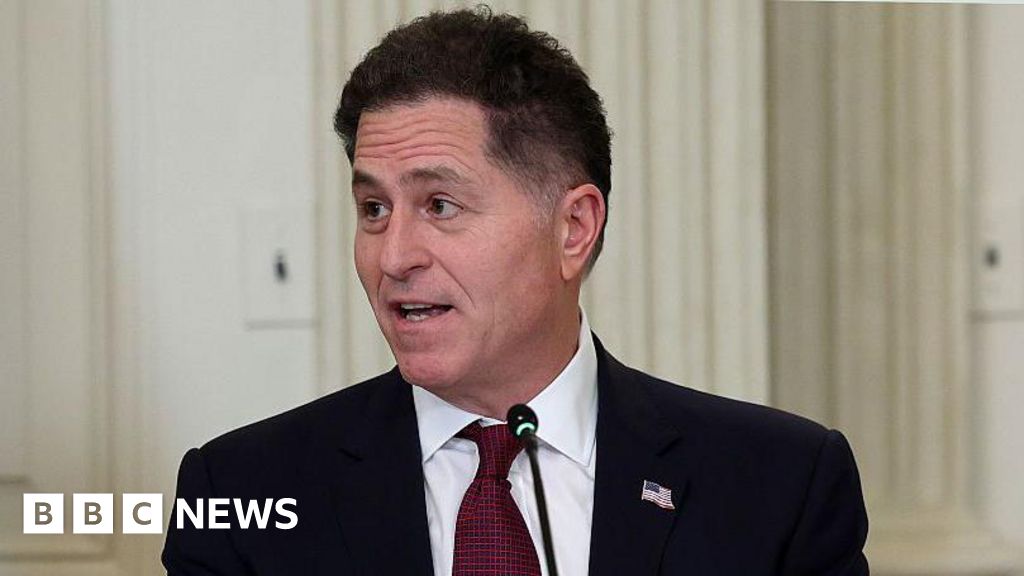
Tech billionaire Michael Dell and his wife, Susan, have announced plans to donate $250 to 25 million children across the US.
The $6.25bn (£4.72bn) gift will bolster Trump-branded investment accounts, which were authorised by Congress as part of its tax and spending bill earlier this year with the aim of encouraging families save for retirement.
As part of that scheme, babies born between 2025 and 2028 are also eligible to receive $1,000 from the government.
The Dells said their gift, which targets children age 10 and under, was intended to help seed those accounts and expand the savings opportunity to even more children.
“We’ve seen what happens when a child gets even a small financial headstart – their world expands,” Michael Dell said in a video on social media announcing the donation.
Unlike the government plan, the Dells said children age 10 and under, who were born before 1 January 2025 were eligible for their gift, provided they live in areas where the median income is below $150,000.
The Dells said they expected the gift to reach almost 80% of children age 10 and under in the US. It is among the largest ever private donations to go directly to Americans.
Dell, the chief executive of Dell Technologies with a fortune that Forbes estimates at almost $150bn, also urged other philanthropists and employers to make similar commitments.
“Two great people. I love Dell!!!” President Donald Trump wrote in all capital letters on social media in response to the announcement.
The money will be routed through the new Trump-branded accounts, which by law must be invested in an index fund that reflects the wider stock market.
It is not currently possible to set up a Trump account. The government has said that process will launch next year, with more details available at that time.
Parents are eligible to contribute up to $5,000 in after-tax funds to the accounts, a figure that will be adjusted for inflation, with employers, charitable organisations and others also able to donate.
The child can access the money at age 18 at which point the account converts into a retirement account. While the money grows tax free, withdrawals are subject to taxes and possibly a penalty if made before the age of 59 and a half.
The White House Council of Economic Advisers earlier this year estimated that $1,000 could grow to more than $5,800 over the course of 18 years, assuming a 10.3% rate of return.
When they were created earlier this year, the Trump accounts met with significant scepticism from critics, who argued that the accounts would primarily benefit better off families, who have extra money to set aside, while being less flexible than other, existing savings vehicles.
The Tax Foundation, a think tank focused on tax policy, on Tuesday said that Trump accounts were “well intentioned” but would “add another layer to an already overcomplicated savings account system in the United States”.
“Trump Accounts do not offer much of an additional incentive to save,” it added. “Rather, the main benefit is in the form of the $1,000 initial deposit from the federal government and whatever employers choose to contribute.”
Treasury Secretary Scott Bessent also drew criticism from Democrats after promoting the scheme as a way to support alternatives to government-funded retirement benefits, calling it a “backdoor to privatizing Social Security”.

Nayeema Raza, the creator and host of the podcast “Smart Girl Dumb Questions,” has signed CAA for representation.
Raza, previously a senior staff editor with The New York Times’ opinion section, ran the “Sway” podcast…


The launch pad of Russia’s Baikonur Cosmodrome spaceport in Kazakhstan sustained significant damage following a botched Soyuz launch last week.
While the Soyuz MS-28 crew on board the rocket, including cosmonauts Sergey Kud-Sverchkov and…