It was 4 a.m. on Nov. 25 at the top of Hawaii’s dormant Maunakea volcano. The process to view the comet took less time than expected.
On the main screen, the subject at hand, interstellar comet 3I/ATLAS was a small, fuzzy blob drifting through a…

It was 4 a.m. on Nov. 25 at the top of Hawaii’s dormant Maunakea volcano. The process to view the comet took less time than expected.
On the main screen, the subject at hand, interstellar comet 3I/ATLAS was a small, fuzzy blob drifting through a…
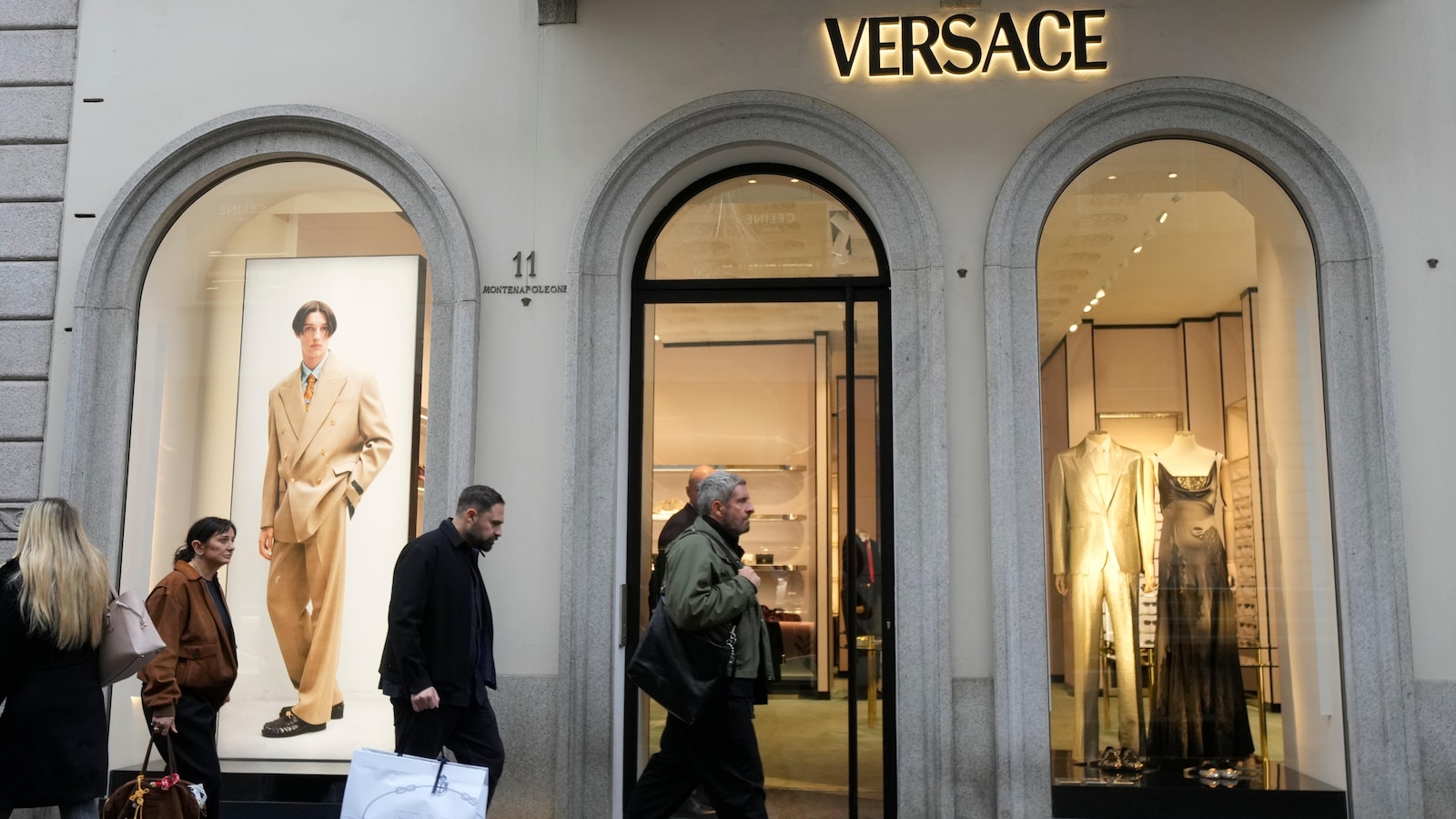
MILAN — The Prada Group closed the purchase of Milan fashion rival Versace in a $1.375 billion cash deal that puts the fashion house known for its sexy silhouettes under the same roof as Prada’s “ugly chic” aesthetic and Miu Miu’s youth-driven appeal.
The highly anticipated deal is expected to relaunch Versace’s fortunes, after middling post-pandemic performance as part of the U.S. luxury group Capri Holdings.
Prada said in a one-line statement that the acquisition had been completed after receiving all regulatory clearances. Capri Holdings, which owns Michael Kors and Jimmy Choo, said the money would be used to pay down debt.
Donatella Versace welcomed the deal in an Instagram post, which also marked the birthday of the brand’s late founder, her brother, Gianni Versace.
“Today is your day and the day Versace joins the Prada family. I am thinking of the smile you would have had on your face,” she wrote in a post that also featured a 1979 photo of Gianni Versace with Miuccia Prada.
Prada heir Lorenzo Bertelli is set to steer Versace’s next phase as executive chairman, in addition to his roles as group marketing director and sustainability chief.
The son of co-creative director Miuccia Prada and longtime Prada Group chairman Patrizio Bertelli has said he doesn’t expect to make any swift executive changes at Versace, although he also noted that the company, which is among the top 10 most recognized brands in the world, has long been underperforming in the market.
Prada has underlined that the 47-year-old Versace brand offered “significant untapped growth potential.’’
Versace is undergoing a creative relaunch under a new designer, Dario Vitale, who previewed his first collection during Milan Fashion Week in September. He was previously head of design at Miu Miu, but his move to Versace was unrelated to the Prada deal, executives have said.
Capri Holdings paid $2 billion for Versace in 2018, but had been struggling to position the brands’ bold profile in the recent era of “quiet luxury.″
Capri Holdings chairman John D. Idol said in a statement that “Prada is the ideal partner to guide this celebrated luxury house into its next era of growth.”
Versace represented 20% of Capri Holdings’ 2024 revenue of 5.2 billion euros,
Prada said when the deal was announced in April that Versace would represent 13% of the Prada Group’s pro-forma revenues, with Miu Miu coming in at 22% and Prada at 64%. The Prada Group, which also includes Church’s footwear, reported a 17% boost in revenues to 5.4 billion euros last year.
The Prada Group has already begun preparations to incorporate crosstown rival Versace into its Italian manufacturing system, a point of pride for the group.
“Making a bag for one brand or another, the know-how is the same,” Bertelli told reporters last week at the group’s Scandicci leather goods factory, which already makes bags for the Prada and Miu Miu brands and will soon add Versace.
Artisans stitched handles onto leather bags, and cut leather with laser machines inside the leather goods factory, where trainees were learning the trade as part of Prada’s 25-year-old academy. It has trained some 570 new artisans in an in-house training program in the Tuscany, Marche, Veneto and Umbria regions.
Last year, Prada hired 70% of the 120 artisans who trained in the academy. The number of trainees rose by 28% to 152 this year.
The Prada Group has invested 60 million euros in its supply chain this year, including a new leather goods factory near Siena, a new knitwear factory near Perugia, as well as increasing production at its Church’s footwear factory in Britain and expanding another Tuscan factory. That’s on top of 200 million euros in investments from 2019-24.

When menopause hits, it can feel as though your whole life has been thrown off balance – the hot flushes, the sleepless nights, the mood swings and the constant discomfort can be exhausting and deeply disruptive. Going through something so…
Published On 2 Dec 2025
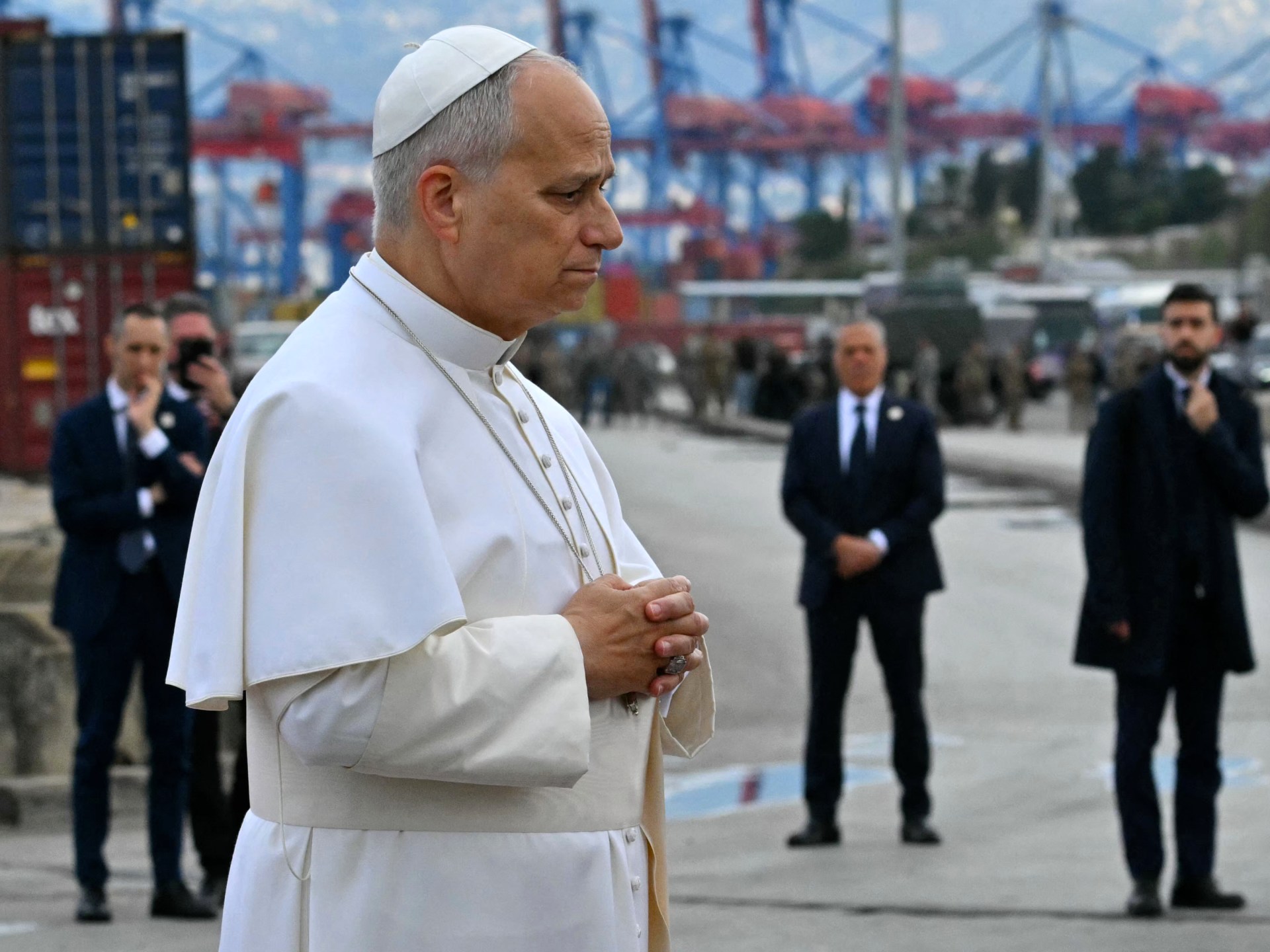
Pope Leo XIV has prayed at the site of the deadly 2020 Beirut port explosion and offered words of consolation to the Lebanese people on the final day of his first…
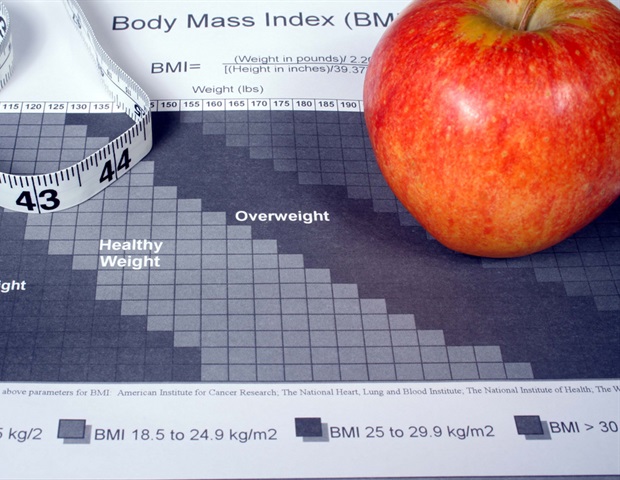
A Curtin University-led study has found that where Australians live has a measurable influence on their body weight, with local food environments and neighbourhood design playing a big part in shaping health outcomes.
The research…
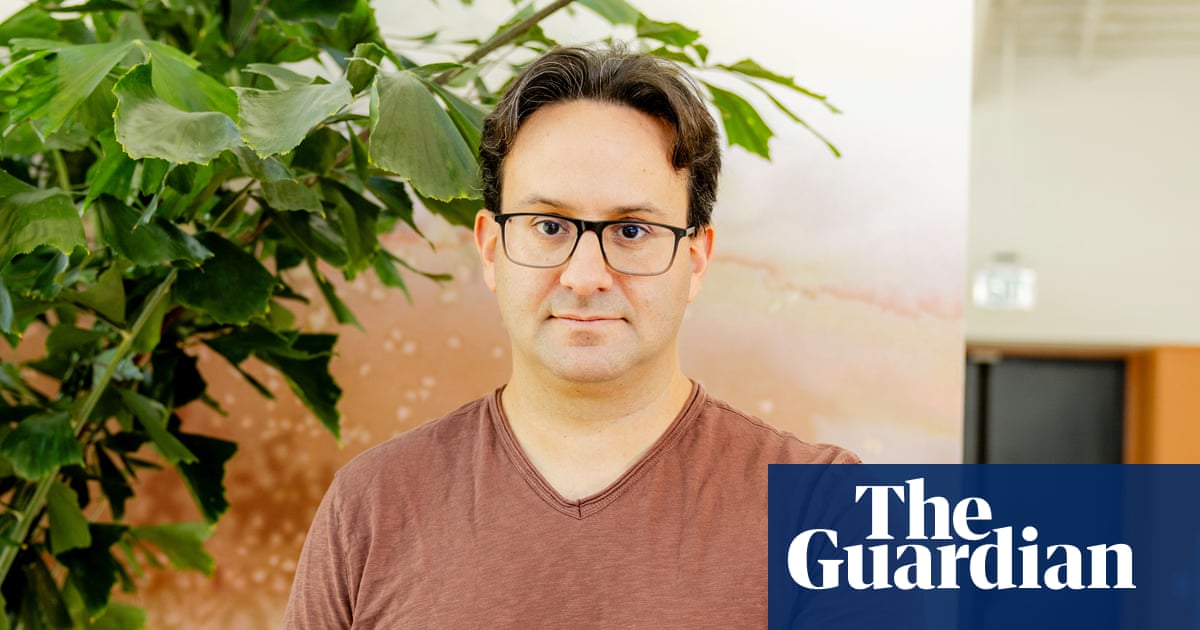
Humanity will have to decide by 2030 whether to take the “ultimate risk” of letting artificial intelligence systems train themselves to become more powerful, one of the world’s leading AI scientists has said.
Jared Kaplan, the chief scientist and co-owner of the $180bn (£135bn) US startup Anthropic, said a choice was looming about how much autonomy the systems should be given to evolve.
The move could trigger a beneficial “intelligence explosion” – or be the moment humans end up losing control.
In an interview about the intensely competitive race to reach artificial general intelligence (AGI) – sometimes called superintelligence – Kaplan urged international governments and society to engage in what he called “the biggest decision”.
Anthropic is part of a pack of frontier AI companies including OpenAI, Google DeepMind, xAI, Meta and Chinese rivals led by DeepSeek, racing for AI dominance. Its widely used AI assistant, Claude, has become particularly popular among business customers.
Kaplan said that while efforts to align the rapidly advancing technology to human interests had to date been successful, freeing it to recursively self-improve “is in some ways the ultimate risk, because it’s kind of like letting AI kind of go”. The decision could come between 2027 and 2030, he said.
“If you imagine you create this process where you have an AI that is smarter than you, or about as smart as you, it’s [then] making an AI that’s much smarter.”
“It sounds like a kind of scary process. You don’t know where you end up.”
Kaplan has gone from being a theoretical physicist scientist to an AI billionaire in seven years working in the field. In a wide-ranging interview, he also said:
AI systems will be capable of doing “most white-collar work” in two to three years.
That his six-year-old son will never be better than an AI at academic work such as writing an essay or doing a maths exam.
That it was right to worry about humans losing control of the technology if AIs start to improve themselves.
The stakes in the race to AGI feel “daunting”.
The best-case scenario could enable AI to accelerate biomedical research, improve health and cybersecurity, boost productivity, give people more free time and help humans flourish.
Kaplan met the Guardian at Anthropic’s headquarters in San Francisco, where the interior of knitted rugs and upbeat jazz music belies the existential concerns about the technology being developed.
Kaplan is a Stanford-and Harvard-educated professor of physics who researched at Johns Hopkins University and at Cern in Switzerland before joining OpenAI in 2019 and co-founding Anthropic in 2021.
He is not alone at Anthropic in voicing concerns. One of his co-founders, Jack Clark, said in October he was both an optimist and “deeply afraid” about the trajectory of AI, which he called “a real and mysterious creature, not a simple and predictable machine”.
Kaplan said he was very optimistic about the alignment of AI systems with the interests of humanity up to the level of human intelligence, but was concerned about the consequences if and when they exceed that threshold.
He said: “If you imagine you create this process where you have an AI that is smarter than you, or about as smart as you, it’s [then] making an AI that’s much smarter. It’s going to enlist that AI help to make an AI smarter than that. It sounds like a kind of scary process. You don’t know where you end up.”
Doubt has been cast on the gains made from deploying AIs in the economy. Outside Anthropic’s headquarters, a billboard for another tech company pointedly asked “All that AI and no ROI?”, a reference to return on investment. A Harvard Business Review study in September said AI “workslop” – substandard AI enabled-work that humans have to fix – was reducing productivity.
Some of the clearest gains have been in using AIs to write computer code. In September, Anthropic revealed its cutting-edge AI, Claude Sonnet 4.5, a model for computer coding that can build AI agents and autonomously use computers.
It maintained focus on complex multistep coding tasks for 30 hours unbroken, and Kaplan said that in some cases using AI was doubling the speed with which his firm’s programmers were able to work.
But in November Anthropic said it believed a Chinese state-sponsored group had manipulated its Claude Code tool – not only to help humans launch a cyber-attack but to execute about 30 attacks itself, some of which were successful. Kaplan said allowing AIs to train the next AIs was “an extremely high-stakes decision to make”.
“That’s the thing that we view as maybe the biggest decision or scariest thing to do … once no one’s involved in the process, you don’t really know. You can start a process and say, ‘Oh, it’s going very well. It’s exactly what we expected. It’s very safe.’ But you don’t know – it’s a dynamic process. Where does that lead?”
He said if recursive self-improvement, as this process is sometimes known, was allowed in an uncontrolled way there were two risks.
“One is do you lose control over it? Do you even know what the AIs are doing? The main question there is: are the AIs good for humanity? Are they helpful? Are they going to be harmless? Do they understand people? Are they going to allow people to continue to have agency over their lives and over the world?”
“I think preventing power grabs, preventing misuse of the technology, is also very important.”
“It seems very dangerous for it to fall into the wrong hands”
The second risk is to security resulting from the self-taught AIs exceeding the human capabilities at scientific research and technological development.
“It seems very dangerous for it to fall into the wrong hands,” he said. “You can imagine some person [deciding]: ‘I want this AI to just be my slave. I want it to enact my will.’ I think preventing power grabs – preventing misuse of the technology – is also very important.”
Independent research into frontier AI models, including ChatGPT, shows the length of tasks AIs can do has been doubling every seven months.
The rivals racing to create super-intelligence. This was put together in
collaboration with the Editorial Design team. Read more from the series.
Nick Hopkins, Rob Booth, Amy Hawkins, Dara Kerr, Dan Milmo
Rich Cousins, Harry Fischer, Pip Lev, Alessia Amitrano
Fiona Shields, Jim Hedge, Gail Fletcher
Kaplan said he was concerned that the speed of progress meant humanity at large had not been able to get used to the technology before it leaped forward again.
“I am worried about that … people like me could all be crazy, and it could all plateau,” he said. “Maybe the best AI ever is the AI that we have right now. But we really don’t think that’s the case. We think it’s going to keep getting better.”
He added: “It’s something where it’s moving very quickly and people don’t necessarily have time to absorb it or figure out what to do.”
Anthropic is racing with OpenAI, Google DeepMind and xAI to develop ever more advanced AI systems in the push to AGI. Kaplan described the atmosphere in the Bay Area as “definitely very intense, both from the stakes of AI and from the competitiveness viewpoint”.
“The way that we think about it is [that] everything is on this exponential trend in terms of investment, revenue, capabilities of AI, how complex the tasks [are that] AI can do,” he said.
The speed of progress means the risk of one of the racers slipping up and falling behind is great. “The stakes are high for staying on the frontier, in the sense that you fall off the exponential [curve] and very quickly you could be very far behind at least in terms of resources.”
By 2030, datacentres are projected to require $6.7tn worldwide to keep pace with the demand for compute power, McKinsey has estimated. Investors want to back the companies closest to the front of the pack.
At the same time, Anthropic is known for encouraging regulation of AI. Its statement of purpose includes a section headlined: “We build safer systems.”
“We don’t really want it to be a Sputnik-like situation where the government suddenly wakes up and is like, ‘Oh, wow, AI is a big deal’ … We want policymakers to be as informed as possible along the trajectory so they can take it into account.”
In October, Anthropic’s position triggered a put-down from Donald Trump’s White House. David Sacks, the US president’s AI adviser, accused Anthropic of “fearmongering” to encourage state-by-state regulation that would benefit its position and damage startups.
After Sacks claimed it had positioned itself as “a foe” of the Trump administration, Dario Amodei, Kaplan’s co-founder and Anthropic’s chief executive, hit back by saying the company had publicly praised Trump’s AI action plan, worked with Republicans and that, like the White House, it wanted to maintain the US’s lead in AI.