At least four persons, including North Waziristan Assistant Commissioner, and two policemen, were killed when militants ambushed his vehicle in Pakistan’s northwestern Province Khyber Pakhtunkhwa on Tuesday (December 2, 2025), police said.
Supporting equality in countries where Baker Hughes operate is embedded in the company’s DNA. Meet Luiza who recently returned from such a project.
As Senior Finance Compliance Manager for Baker Hughes in Poland, Luiza Souza is driven by a deep sense of integrity. “The field of compliance is magnetic to me,” she says, “because it brings attention to the right way of doing things.” As a Brazilian working with Baker Hughes first in Hungary and then in Poland for the past 11 years, she has sought to foster community in her new European environment. Luiza joined in in every Baker Hughes Employee Resource Group (ERG) and led one of them locally – the Women’s Network, while she worked in Budapest.
Luiza Souza, Baker Hughes
She says, “The ERGs provide an environment of inclusion and belonging,” a place to meet and engage with people she wouldn’t necessarily meet in the course of her work and “an opportunity to grow beyond my role at Baker Hughes”.
The principles of inclusion, equality and appreciation of diversity came together with the Baker Hughes Foundation support of Nurturing Minds, a charity nominated by the Multicultural ERG. The organization provides a framework for volunteers to spend time as English Fluency Role Models at the SEGA Girls’ Secondary School in Tanzania. Nurturing Minds’ mission is to support quality education, life skills, and entrepreneurship to help at-risk girls in Tanzania become leaders in their communities. They run four programs: the SEGA School, a community outreach initiative, a career development and continuing education scholarship program, and a micro-loan and business development program. Together, they serve more than 2,500 girls and women across the country.
The Multicultural ERG, within Baker Hughes, aims to foster a global sense of community where diverse cultures, perspectives, and employee experiences come together. The team’s purpose is to build cultural awareness and leverage diverse experiences to enrich collective growth through education, engagement, and collaboration.
Active in over 70 countries, and with more than 5000 members, the group strives to create an inclusive workplace where everyone feels respected, empowered, and truly belongs. Find out more about Baker Hughes Employee Resources Groups here.
Photo of the group of students, at SEGA Girls’ Secondary School in Tanzania
“In Tanzania”, explains Luiza, “young girls are rarely encouraged to pursue an education beyond primary school. Poverty can force them into early marriage and teen pregnancy.” To progress to secondary school, girls must pass a national exam. If they are successful and their families can afford it, their education continues with lessons in English. This is a difficult transition to negotiate, as school began in the local Kiswahili language.
Nurturing Minds and SEGA, which runs a scholarship program for qualifying girls from families in poverty, recognized the need for a fun and engaging English immersion program. This would help girls cross the language divide and more confidently pursue their studies. When Luiza applied to join the program as a volunteer in Tanzania for two weeks in October 2025, she wasn’t entirely sure what to expect.
This is the story of how her journey unfolded and reinforced her lifelong desire to help change young lives for the better.
School building, at SEGA Girls’ Secondary School in Tanzania
What were your first impressions of Tanzania?
My first impression was great! At the airport, when our plane arrived there was a welcome, a presentationwith local music and people dancing. It was a very nice surprise. I travel a lot, and this was the first time I’ve ever experienced this kind of welcoming presentation for everybody who arrives from anywhere in the world. I had just landed and there was a party!
Where did you stay while you were volunteering?
Nurturing Minds provides two volunteering opportunities: the English Fluency Program and the STEAM Program (STEM Adventures), which encourages girls to explore science and engineering. As a volunteer in either program, you stay in onsite accommodation, separate to the dormitories of girls who board there.
How many girls were you assigned to work with?
The school itself has around 280 students between the ages of 12 and 16, depending at what age they passed the national exams to get into secondary school. My cohort of volunteers was responsible for 12 girls each.
Luiza Souza (right) with the group of students she taught, at SEGA Secondary School for Girls, Tanzania
What struck you about the girls? In your LinkedIn post you say that they are smart, kind and full of light, and that they live with intention. How do they live with intention?
All the girls in the school come from situations where life is tough. They are not privileged. The way they approach life is very genuine. They know theyare there to learn, so they are curious. Often, they are shy because they don’t yet fully understand English, but they are very eager. They learn so fast because they want to. At the same time, they are very caring and want to help with everything.
Kanga fashion show, where the students presented their style using the cultural Kanga garment with different designs, Tanzania
Whatwere the challenges of this volunteering experience? What did it demand of you that you’re not used to?
Nurturing Minds welcomes participants even if they don’t have a background in teaching. I had never had the experience of teaching, but they have an amazing, organized way of arranging the classes so that anyone can understand how to do it.
The challenge is in getting used to talking with kids, to give the lessons in a way that they understand. Sometimes you have to change the program a bit because you can see in their eyes that they aren’t fully following. As you get to know them, you recognize how to express things so that they understand better. By the third lesson you have your own way, and you really start to engage. The way that Nurturing Minds hasprepared the lessons and materials, which include songs and books for storytelling, is awesome for people like me who have never taught before. And the volunteers all support each other, sharing advice on what worked for them in their classes.
Luiza Souza (3rd left) with volunteers from the 2025 English Fluency Program, organized by Nurturing Minds, at SEGA’s “Modern Girls” location, Tanzania
How were your days at the school structured?
In the mornings and afternoons, we held classes on various themes and topics. For example, one lesson was designed to help the girls get used to learning the present and past tense in English. After classes, we would meet with the volunteers and the main organizer of the English Fluency Program to discuss how the class went, what could be improved, what worked well, and what didn’t. We would also talk about the plan for the next day. Each group is led by two volunteers, and together, at the end of the day, we would prepare the activities and class materials for the following day.
We also went on a two-day safari to Mikumi National Park. The girls were so excited. They talked a lot and played games on the bus. It was a nice opportunity to bond with them in an out-of-school environment. A guide came with us, and the girls were asking so many questions, genuinely curious and expressing how much they love the animals. We saw hippos, zebras, antelopes, lions, a buffalo and a lot of giraffes – it was so beautiful!
For many of the girls going on a Safari had been nothing more than a dream, because they come from very poor villages. On the way back to school they fell asleep in the bus, from exhaustion after all the excitement.
Luiza Souza (right), in the bus with the students after the safari experience in Mikumi National Park, Tanzania
How do you think this experience will influence you in your life, or your career?
To be honest, it was very hard for me to come back. I don’t quite know how to explain it, but you connect in a way that makes you realise that as a volunteer you can positively impact people’s lives. It takes a lot out of you to volunteer, but you are also fulfilled with a sense of so much that is good. The girls in Tanzania don’t have guaranteed or easy access to education, so to see the impact thatthis opportunity has on them has beenincredibly rewarding.
I realize how privileged I am to have this experience. Not everybody has the time, not everybody has the support from their employer, not everybody has the financial conditions to do it.
I want to give more of me to those who need help, or to guide young people. I already mentor three young women graduates who want to grow professionally. I was connected with them through the Global Mentorship Initiative, a non-profit organization, which I also discovered via one of the Baker Hughes ERGs. But I want to create something that has a bigger impact in society. I have the eagerness, I have the means, I have the strength, and I have the genuine desire in my heart to do that. Tanzania opened my eyes to how much need there is in the world, and how I can collaborate better with others to change things.
Asia-Pacific private equity managers are more upbeat on the deal outlook, expecting stronger returns and fewer geopolitical risks than their global counterparts, even as deal activity in the region continues to soften, a new survey shows.
Respondents in the region expected an average net return of 17.4 per cent from the private equity industry this year, slightly higher than the 17.1 per cent expected by North American, European, Middle Eastern and African (EMEA) executives, according to Dechert’s annual global private equity outlook report.
The law firm worked with Mergermarket to survey 100 senior-level executives at different private equity firms across regions in July.
Do you have questions about the biggest topics and trends from around the world? Get the answers with SCMP Knowledge, our new platform of curated content with explainers, FAQs, analyses and infographics brought to you by our award-winning team.
Regarding the threat of geopolitical conflicts to deal making over the next 12 to 18 months, only 30 per cent of Asia-Pacific managers cited it as a top risk, compared with 49 per cent globally and 65 per cent in EMEA.
The findings pointed to cautious optimism in Asia-Pacific, underpinned by interest in healthcare and technology deals and the wider use of flexible structures such as earnouts.
“We expect this optimism to translate into improved deal flow in Asia-Pacific in 2026,” Maria Tan Pedersen, co-head of emerging markets at Dechert, said in a written response to the Post.
The life sciences and healthcare, and technology sectors were expected to lead activity in the region, Pedersen said. The focus on these two sectors reflected regional governments’ priorities, the global push into artificial intelligence and demographic shifts as populations in markets such as India and the Philippines expanded while those in Japan and China aged, she added.
About three-quarters of respondents planned to invest in both sectors over the next two years.
Investments in expanding or fast-growing businesses would benefit from additional use of private credit support and earnout structures, according to Pedersen.
Such structures allow part of the purchase price to be paid only if the acquired company hits the agreed performance targets after the deal. Sixty per cent of Asia-Pacific private equity managers favoured earnout structures to bridge valuation gaps, higher than the global average of 48 per cent.
Populations in both China and Japan are expected to age, driving activity in the life science sector. Photo: Xinhua alt=Populations in both China and Japan are expected to age, driving activity in the life science sector. Photo: Xinhua>
“We expect a meaningful uptick in deal volumes in Asia-Pacific across buyouts, bolt-ons and secondary and continuation vehicles, with improved close rates driven by flexible structures like earnouts,” Pedersen said.
Asian executives saw weak economic growth as the most significant headwind to the deal environment, with half of the respondents citing it as a top threat – compared with the global average of 37 per cent.
Asia-Pacific private equity deal value fell 3.8 per cent to US$107.7 billion in the first three quarters of this year from the same period a year ago, while deal volume slid 5.2 per cent to 1,874 as deal makers assessed the impact of shifting US tariff policy on the region’s export-led businesses.
In China, the region’s largest private equity market, ongoing regulatory and macro uncertainty, coupled with persistent property-sector weakness, was set to depress real-estate deal flow, widen valuation gaps and curb risk appetite, Pedersen said.
Private-equity activity in China had nonetheless shown signs of a rebound, driven by a surge in domestic merger and acquisition (M&A) transactions, multinational companies reshaping their portfolios and private equity funds poised for a wave of exits, said Pedersen, who is also Dechert’s partner for M&A and private equity in Singapore.
“We expect this rebound to broadly continue in 2026,” she said. However, it could be “an uneven and gradual thaw” concentrated in selected verticals such as technology and data, and healthcare, she added.
If you’re wondering how the upcoming Samsung Galaxy S26 will differ from the already available S25, or the S26+ from the S25+, you’re in luck as the prolific leaker Ice Universe has just provided this information in the form of two…
Read more Featured Stories like this in The Strad Playing Hub
The Juilliard Quartet enters a new chapter this season with the arrival of violinist Leonard Fu as its second violinist. Though the ensemble has undergone many…
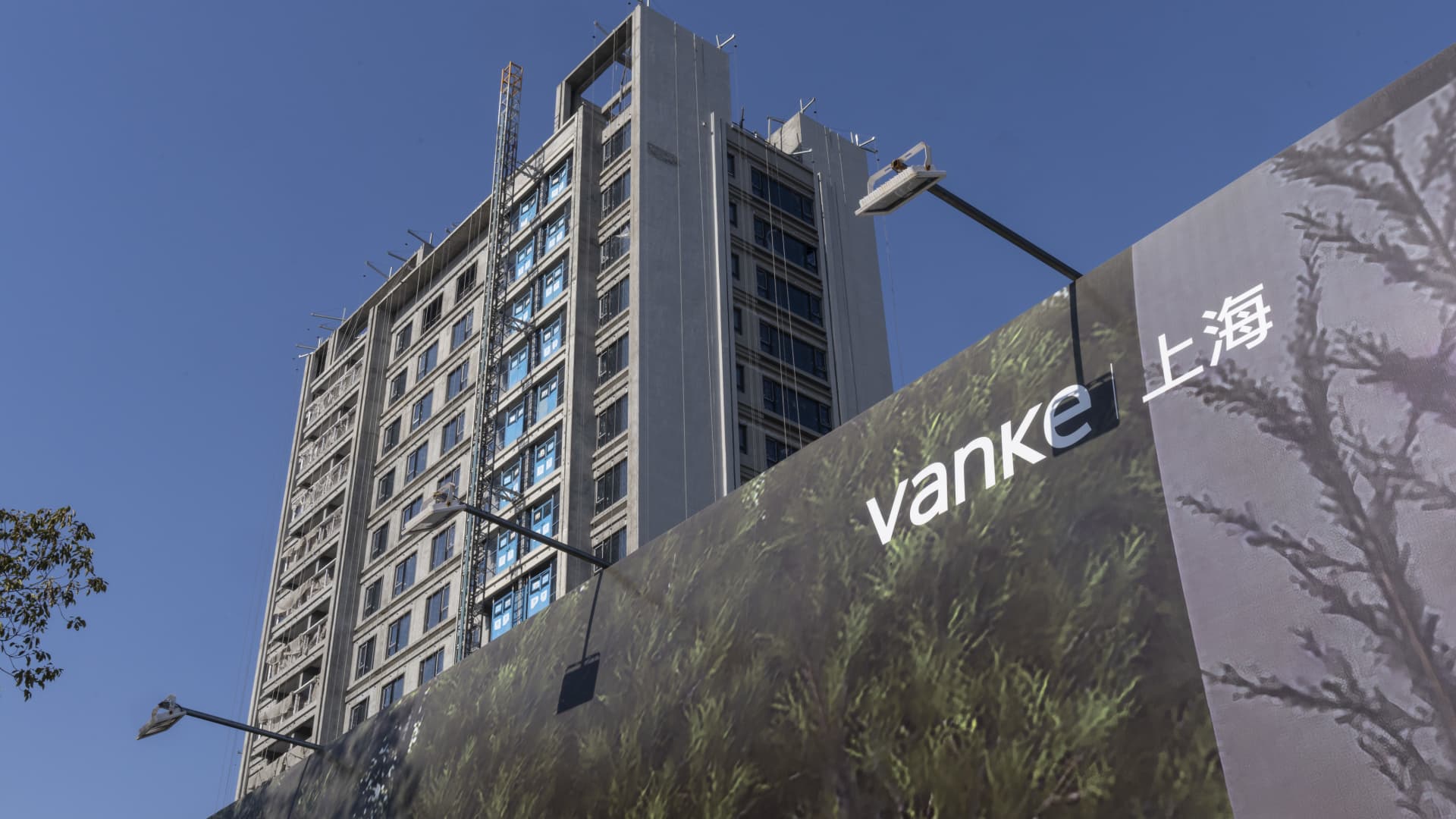
China’s housing market is flashing fresh warning signs as the property downturn runs into its fifth year, with excess inventory dragging home prices. Sales of the top 100 developers plunged 36% in terms of value in November from a year earlier, despite a modest pick-up from a 42% decline in October, according to data published Monday by China Real Estate Information Corp . In the first 11 months of the year, home sales shrank 19% from a year ago. “The worsening of the property data was real and concerning,” Hui Shan, chief China economist at Goldman Sachs, said in a note Monday, suggesting that the likelihood of another round of housing stimulus measures had increased. Separately, industry research body China Index Academy said Monday that secondary home prices in 100 Chinese cities surveyed dropped 7.95% in November, widening slightly from the prior month. The research firm attributed the deepening price slump to high listing volumes and weak homebuyer sentiment. Morgan Stanley estimates average sales of 25 major developers declined 42% year on year in November, with that sluggishness likely extending into spring next year. Beijing’s goal to “halt the declines in housing market,” announced in September last year, appears “increasingly unrealistic,” said William Wu, a property analyst at Daiwa Capital Market, citing “renewed turmoil” in the sector in the fourth quarter amid accelerating home price declines and “resurfacing of high-profile defaults.” Government support? Real estate giant China Vanke’s recent decision to seek bondholders’ approval for a 1-year deferral on its onshore bond, maturing Dec. 15, has sparked fresh fears about liquidity in the sector. Vanke, once considered one of China’s healthier developers, was able to avert default risks largely thanks to financial support from its deep-pocketed state-owned shareholder Shenzhen Metro. In early November, Shenzhen said it would request collateral for pledges for about 20 billion yuan worth of previously unsecured loans to Vanke, rattling creditors and sending bond prices to record lows. The surprise move “reflects a liquidity crisis that will likely end in a comprehensive restructuring,” said Cathy Lu, a credit analyst at financial data provider Octus, formerly known as Reorg, adding that a broader wave of extensions or defaults following Vanke’s postponement remains unlikely. “The property crisis has weeded out [developers with] weak balance sheets,” Lu noted, adding that the government is unlikely to launch a broad bail-out plan to contain Vanke’s fall, but focusing on “restructuring” its debt and ensuring home deliveries. Rating agency S & P Global last Friday downgraded Vanke’s long-term issue credit ratings to “CCC-” from “CCC” due to heightened risk of a “distressed restructuring” at the embattled developer within the next six months. The company’s bonds extended losses on Tuesday, with several yuan bonds falling over 20%, triggering a trading suspension by the Shenzhen Stock Exchange . In May last year, Chinese authorities provided 300 billion yuan to financial institutions to lend to local state-owned enterprises so they can buy unsold apartments that have already been built. That amount seems to have not been large enough to meaningfully lift the sector out from its slump, with excess inventory overhang remaining a key drag on housing price recovery. The number of completed and unsold inventory stood at about 762 million square meters as of end-August 2025, up from 753 million square meters as of end-December 2024, according S & P Global . The agency expects inventory destocking to remain a policy priority. Should policy measures become effective in tightening land supplies to developers, which would reduce apartment inventory, home prices could bottom out as early as the first half of 2027, according to Economist Intelligence Unit. The inventory turnover ratio, calculated by dividing residential inventory by average monthly sales, in China has shortened by five months from its peak of 25.9 months in April 2025, EUI economists said in a note last week. A shorter inventory turnover cycle, whether driven by shrinking supply or rising demand, signals price stabilization. At the current pace, it may take another year and a half for the clearance cycle to shorten to 12-18 months — a relatively healthy range by historical standards, the research firm said. Several economists whom CNBC spoke to expect China’s authorities to unleash incremental policy easing measures to stem the slump in a sector that has long been an important engine of its economy. The falling prices and fewer property sales have further strained cash-strapped developers, prompting banks to list more foreclosed properties on the market — “this is precisely the type of ‘negative feedback loop’ that policymakers need to cut off,” Goldman’s Shan warned. Beijing may consider an “interest-rate subsidy” which would lower homebuyers’ cost of mortgages without hurting banks, stabilize home prices and “buy time for a gradual demand-led recovery,” according to Morgan Stanley. The Wall Street bank estimates that a 1 percentage point cut in mortgage costs in the second quarter of 2026 could lift new home sales and help ease deflation pressures next year, with prices likely to find a floor in higher-tier cities.