A team of scientists from several U.S. institutions, including the University of Minnesota, discovered six million year old ice in Antarctica — the oldest dated ice on the planet.
The collaborative NSF COLDEX team recovered…

A team of scientists from several U.S. institutions, including the University of Minnesota, discovered six million year old ice in Antarctica — the oldest dated ice on the planet.
The collaborative NSF COLDEX team recovered…

Switzerland’s federal prosecutor has filed charges against the failed bank Credit Suisse and its new owner, UBS, over the long-running “tuna bonds” loan scandal that crashed Mozambique’s economy nearly a decade ago.
The Swiss attorney general said on Monday that it had brought money-laundering charges against an unnamed employee of Credit Suisse, but was also taking action against the lender and its rival-turned-owner UBS.
The attorney general’s office accused the banks of “organisational deficiencies” that ultimately failed to prevent wrongdoing and meant the suspicious transactions were not reported until 2019, after the US Department of Justice announced it was launching its own criminal proceedings.
The prosecutor added: “In 2016, in particular, considerable defects existed in the companies’ risk management, compliance and internal directives systems in connection with combating money laundering.”
UBS took over Credit Suisse as part of an emergency rescue deal brokered by Swiss authorities in 2023. UBS said: “We firmly reject the office of the attorney general’s conclusions and will vigorously defend our position.”
The tuna bonds scandal arose from $2bn (£1.5bn) worth of loans that Credit Suisse arranged for the Republic of Mozambique between 2013 and 2016. The loans were said to be going to government-sponsored investment schemes including maritime security projects and a state tuna fishery, located in the south-east African country’s capital, Maputo.
However, a portion of the funds went unaccounted for, with one of Mozambique’s contractors later found to have secretly arranged “significant kickbacks” worth at least $137m, including $50m for bankers at Credit Suisse, meant to secure more favourable deals on the loans, according to the Financial Conduct Authority.
The scam snowballed and eventually caused the International Monetary Fund to suspend its assistance to Mozambique, leading to a crash in the country’s economy.
Credit Suisse had already settled the case with US and UK regulators in 2021, having paid $275m to American watchdogs and £147m to Britain’s Financial Conduct Authority.
UBS also subsequently agreed to settle the case with Mozambique in October 2023, shortly before a trial was due to kick off in London courts. Mozambique had been pursuing $1.5bn in damages over economic losses after the IMF and international donors pulled their financial support.
The Swiss attorney general’s office accused Credit Suisse and its owner of “not taking all the required and reasonable organisational measures in the relevant period in 2016 to prevent the money laundering that was allegedly committed”.
Credit Suisse was sold to UBS in an emergency deal in March 2023, when customers started to pull money from the lender amid a mini-banking crisis that primarily affected US lenders but later spread to Zurich.
Credit Suisse had for years been mired in scandals, but panic over its future grew after its largest shareholder, Saudi National Bank, ruled out any extra funding for the Swiss lender despite the growing turmoil.
The crisis of confidence eventually forced Swiss authorities to offer emergency loans to Credit Suisse, before eventually orchestrating a shotgun takeover by Switzerland’s largest bank, UBS, which bought the lender for a cut price of 3bn Swiss francs. It left UBS handling a raft of legacy scandals from its former rival.
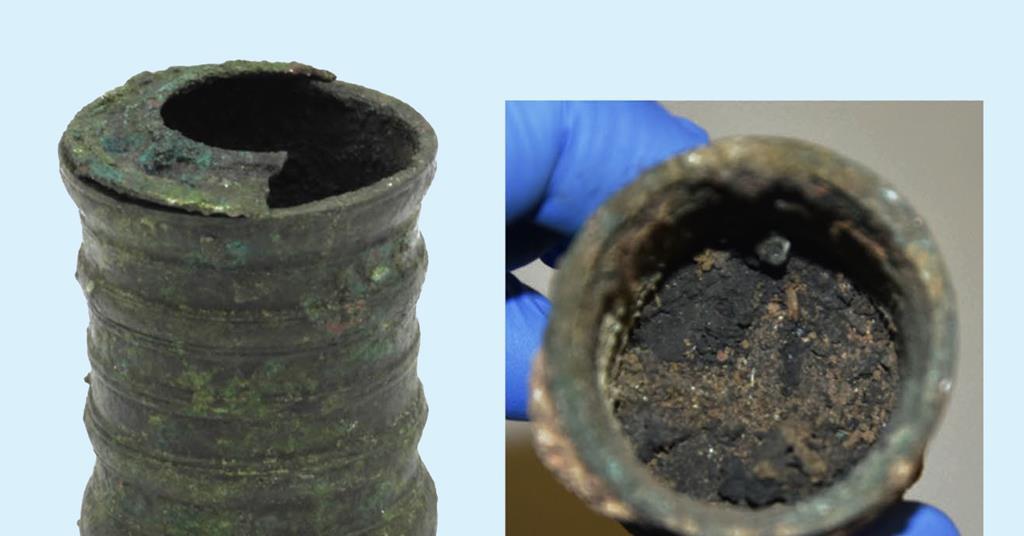
Archaeologists excavating the remains of a Roman city in Portugal have discovered a rare bronze inkwell filled with the residue of 1st century Roman ink, revealing the ink had a chemical complexity not expected for hundreds of years.
The…
Minimal residual disease (MRD) assessment and circulating tumor DNA (ctDNA) monitoring are emerging as important tools that may refine clinical management in lymphoma. In an interview with OncLive®, Sarah Rutherford, MD, discussed how ctDNA is beginning to demonstrate meaningful clinical value, particularly in diffuse large B-cell lymphoma (DLBCL), where post-treatment PET scans frequently pose interpretive challenges. Rutherford noted that ctDNA may help clinicians distinguish between true residual disease and inflammatory findings, improving confidence in both surveillance and follow-up decision-making.1,2
She highlighted that much of the foundational progress in MRD and ctDNA technology has come from the solid tumor field, where these assays are already widely used. That experience, she explained, has helped establish reimbursement pathways and clinical familiarity that may ease the transition into hematologic practice. Recent studies evaluating ctDNA at baseline and end-of-treatment in DLBCL have shown its prognostic relevance, supporting its potential role in risk stratification and monitoring.
Rutherford also pointed to the personalized, tumor-informed Signatera assay (Natera), one of the few ctDNA platforms currently available for clinical use. By leveraging patient-specific tumor sequencing and noninvasive blood sampling, the assay enables individualized ctDNA tracking that may inform surveillance and, eventually, guide therapeutic intervention. As next-generation sequencing and ctDNA-based MRD testing continue to advance in parallel, Rutherford emphasized that these modalities are likely to become increasingly integrated into risk assessment, treatment tailoring, and long-term disease monitoring for patients with lymphoma.
Rutherford is an associate professor of clinical medicine in the Division of Hematology/Oncology at Weill Cornell Medicine in New York, New York.
Rutherford: As a community, we are so excited that ctDNA is starting to be used more in these diseases, especially DLBCL. There are difficult situations within the management of patients in which we’re not sure exactly how to interpret PET scans, for example, and I believe ctDNA is going to be a great tool to help us guide patients along their journey from diagnosis to treatment and follow-up.
It is interesting that there are more advancements, in some ways, in this area of monitoring in solid tumors compared to hematologic malignancies. What I have been most concerned about, from a practical standpoint, is making sure the patients aren’t getting bills related to this type of testing. The fact that it’s already being done in solid tumors [paves] a way that, I hope, will lead to reimbursement, so that we can be checking this and feel confident that the patients won’t get a bill for it.
ctDNA in lymphoma is being [assessed] in clinical trials and not as much in clinical practice, although I believe we’re on the brink of that changing. There have been some compelling studies published and reported over the last couple years. One is the DIRECT study [NCT04226937] that was done in the UK, showing both at baseline and after treatment that the ctDNA amount is prognostic for progression-free survival. [Additionally], data that came from the HOVON group that were reported at ASCO this past year that I found to be the most useful showed what the ctDNA results are at the end of treatment, for example, in DLBCL.
Sometimes we have a PET scan that’s hard to interpret; we’re not sure exactly what to make of it. ctDNA testing will help us feel more confident monitoring someone—even if they have a positive PET scan at the end of treatment—but we know their ctDNA was negative. On the flip side, if someone has positive ctDNA, then I believe we’re going to be much more cautious about the monitoring and their follow-up from there.
At this point most of us are not using ctDNA to make decisions quite yet, but we’re close to being able to do that. I know there’s a clinical trial being done in patients who have ctDNA positivity at the end of treatment for DLBCL that is putting them potentially onto a novel therapy, such as CAR T-cell therapy.
Where I see it most useful in the current state is in monitoring patients. Over the years, studies looking at surveillance PET scans have shown that if someone’s in a complete response after treatment for DLBCL, it’s never been shown to improve overall survival to do lots of PET scans. There are negative aspects [such as] radiation exposure, cost, and anxiety. How I would first use ctDNA testing in DLBCL would be in those surveillance situations. When they come in for their 3-month follow-up visit, we’ll feel reassured if we get a result back showing their ctDNA is undetectable. However, if we find ctDNA is detectable, then we can do a PET scan, assess, potentially do a biopsy, and figure out if they need another line of therapy.
The Signatera [assay] is one of the only available assays for ctDNA to be used in the clinical setting. Many of the assays are research-based and aren’t available for us to use. I work at an academic institution, and we have familiarity as a group because this company—the company that makes the Signatera assay—is very well established in solid tumor malignancies. My understanding is that they create a personalized and tumor-informed assay for each person based on their tumor tissue that then can be tracked using a noninvasive strategy of collecting peripheral blood for ctDNA analysis.
They’re ramping up in terms of collecting data in DLBCL. There have been some studies already showing that it can be predictive of outcomes and may enable surveillance, and also potentially intervention. For example, if someone has positive findings at the end of treatment, perhaps eventually we’ll have a clear-cut way of managing those patients so that we can optimize their outcomes.
It will be helpful to have it done at baseline so that it’s clear—because the tumor tissue is needed to develop this personalized assay, I believe we should be sending the test at baseline so that we can have that information available. One of the biggest hurdles is just ensuring insurance company acceptance and payment for this.
I also believe that it is a little challenging to know what to do with the information right now. At end of treatment, if patients have positive ctDNA and I don’t have a clinical trial available that would potentially treat a patient in that situation, it’s hard to treat them based on that information. So, more clinical trial information about what to do in that situation is a hurdle. And again, making sure it’s covered by insurance is a key part. But if I could ensure that, I would be comfortable using it at baseline and then in the follow-up monitoring setting to really augment our clinical data and hopefully avoid unnecessary imaging studies.
One of the key other tests we’re starting to do more in DLBCL is next-generation sequencing [NGS] panels. In some of the other diseases, particularly hematologic malignancies, we have already been doing NGS for years, but it hasn’t been that effective yet in terms of giving us different strategies for how to treat [patients with] DLBCL.
But there are a couple groups who have created genetic clusters and algorithms. One is the DLBCL classifier developed by the Harvard group, where you can input mutation information and it helps figure out the genetic subtype a patient has. At this point, we don’t treat patients differently based on that information, but there is a clinical trial through the National Clinical Trials Network being planned where patients will be randomized to different treatments based on their genetic cluster.
I see this field moving forward with both next-generation sequencing and ctDNA/MRD approaches hand-in-hand, so that we can tailor treatment strategies—not just the type of therapy but also the length of treatment and monitoring in remission. Both will make a big difference in our patients’ lives in the coming years.
We’ve heard the term MRD for years, and there were different assays used previously, such as chromosome-based assays. These newer technologies for ctDNA analysis are likely more accurate and will be more accessible. It’s important for us to look at the clinical trials being done, learn from those, and decide together as a field how we’re going to use this in practice so that we can tailor treatment correctly for patients.

NEW DELHI: As Sri Lanka continues to deal with heavy flooding and destruction caused by Cyclone Ditwah, former Sri Lanka cricketer Angelo Mathews has acknowledged the support coming from India, Pakistan and other countries. Mathews said the…

Let’s get down to business: it’s December, and you’re not quite finished with your holiday shopping. But now that Black Friday is winding down, you need somewhere to go to find the best tech deals. Our recommendation? Visit the ASUS Shop….
BEIJING, Dec. 1 (Xinhua) — The overall prevalence of AIDS is kept at a low level in China, with transmission through blood transfusion largely curbed, and mother-to-child and drug-injection transmission effectively controlled, according to…

Though he initially seemed destined for football, Pietrangeli eventually followed his father’s footsteps and drifted – slowly but surely – toward tennis. It was only at 19 that he hung up his…