
The iPhone Air is not selling particularly well and that may have discouraged at least three rival brands from attempting their own takes on the slim and light form factor. A new report from DigiTimes suggests that several Chinese brands,…
Author: admin
-
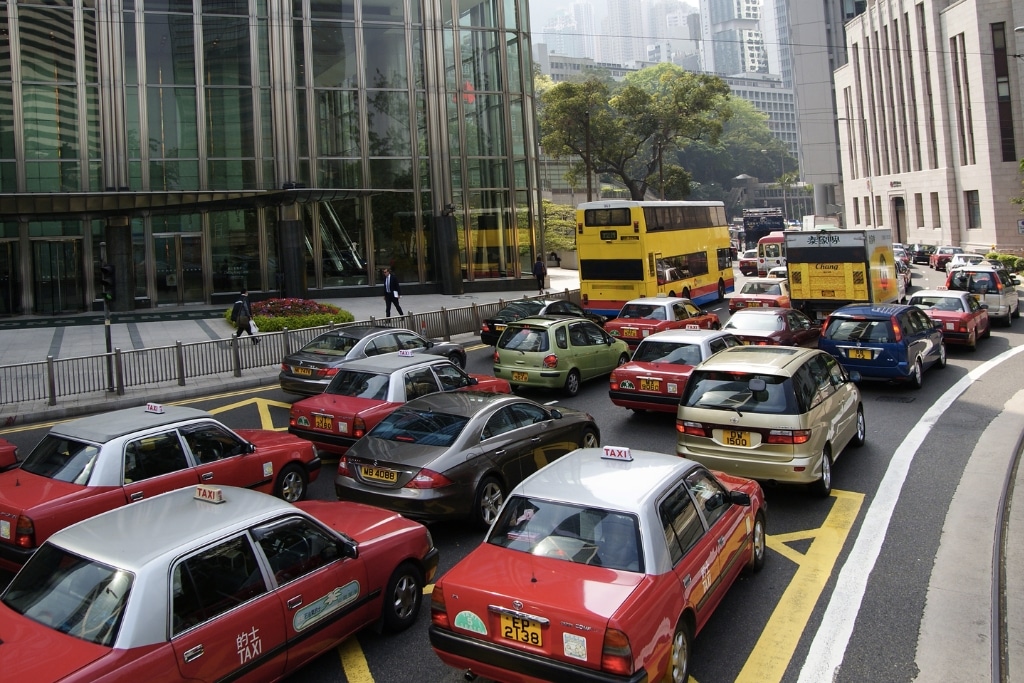
Challenges and Opportunities of Adopting Hydrogen in Hong Kong
In Hong Kong, the government is promoting the adoption of hydrogen fuel cell vehicles to achieve net-zero emissions in the transportation sector by 2050.
—
Road transport is a major source of emissions for nitrogen oxides (NOx), carbon monoxide (CO), and volatile organic compounds (VOC). During vehicle engine combustion, significant amounts of these pollutants are released, degrading air quality and contributing to ozone and particulate matter pollution.
In 2023, road transport was responsible for approximately 45% of CO emissions and about 20% of NOx and VOC emissions in Hong Kong. Additionally, vehicle engines emit carbon dioxide, a potent greenhouse gas and the leading cause of climate change. It is estimated that transportation contributes to approximately 20% of the city’s total carbon emissions.
Green transport is a key decarbonization strategy of Hong Kong’s Climate Action Plan 2050. The government has been promoting the adoption of “new energy” vehicles, such as hydrogen fuel cell (HFC) and electric vehicles (EVs), and the development of relevant supporting infrastructure. These efforts could help Hong Kong achieve its goals of reducing carbon emissions by 50% compared with the 2005 level by 2035 and reaching carbon neutrality by 2050.
As of the latest Chief Executive’s Policy Address, unveiled in September, the government is looking to promote HFC vehicle adoption in Hong Kong by establishing hydrogen standard certification, building public hydrogen filling stations, and collaborating with neighboring Guangdong Province in mainland China.
Hydrogen Energy
There are three main types of hydrogen energy: gray hydrogen, blue hydrogen, and green hydrogen.
Gray hydrogen is currently the most common and cost-effective type of hydrogen on the market. It is typically produced through steam methane reforming, using natural gas as a feedstock. During this process, methane reacts with steam and forms hydrogen and carbon dioxide. As this production method involves emitting carbon dioxide into the atmosphere, gray hydrogen is considered unsustainable.
Blue hydrogen is also produced through steam methane reforming, but with the addition of a carbon capture and storage device to offset the carbon emissions. The carbon dioxide is captured and stored deep underground to prevent its release into the atmosphere.
More on the topic: The Problem With Blue Hydrogen Energy
Green hydrogen is considered a clean energy source. It is produced by electrolysis of water using renewable energy. Throughout the process, only water and oxygen are released, with no carbon dioxide emissions.
Advantages of Hydrogen
HFC vehicles produce zero tailpipe emissions. Powered by electrochemical reactions instead of combustion, they emit only water and no carbon dioxide or other harmful air pollutants. Therefore, widespread adoption can significantly improve air quality in Hong Kong.
When using green hydrogen, HFC vehicles further help mitigate global warming and support Hong Kong’s goal of achieving net-zero emissions in the transportation sector by 2050.
HFC vehicles powered by green hydrogen also benefit businesses. While public transportation operators can reduce scope one emissions from their vehicles, other companies can cut upstream scope three emissions generated by employee commuting. As a result, these companies can enhance their reputation and attract more investment.
Supporting Policies in Hong Kong
Last June, the Hong Kong government outlined the four points of its Strategy of Hydrogen Development.
Improving Legislation
Currently, hydrogen is categorized as Class 2 dangerous goods and is not covered by the Gas Safety Ordinance, which governs the importation, manufacturing, storage, transportation, supply, and use of gas. To address this, the government introduced the Gas Safety (Amendment) Bill 2025 to the Legislative Council this year, establishing a regulatory framework for hydrogen fuel. In July, the amendment was gazetted. The government will introduce relevant subsidiary legislation to the Legislative Council in 2026. Both the amended ordinance and the subsidiary legislation will come into effect on the same day.

Secretary for Environment and Ecology, Mr Tse Chin-wan, delivers a speech at the launch event for the Strategy of Hydrogen Development in Hong Kong on June 17, 2024. Photo: GovHK. Establishing Standards
The government has established various safety standards and technical guidelines for the industry. In 2024, the Electrical and Mechanical Services Department published guidance for conducting quantitative risk assessment of hydrogen installations and codes of practice for hydrogen-fuelled vehicles, maintenance workshops, and hydrogen filling stations. Currently, the government is working on a new code about hydrogen fuel cell power generation systems, set to be published this year.
The government also plans to establish a green hydrogen certification framework to promote green hydrogen production and consumption. The government commenced a study last year to review existing certification systems in mainland China and overseas, in order to develop a system suited to Hong Kong’s circumstances by 2027.
Aligning with the Market
In Hong Kong, hydrogen energy is predominantly applied in land transport. Therefore, the government is exploring HFC vehicle models that are suitable for Hong Kong by strengthening liaison with both mainland China and overseas manufacturers. According to its hydrogen development strategy, the government plans to build public hydrogen filling stations spanning Hong Kong Island, Kowloon, and the New Territories by 2027.
The government has also provided various financial incentives to support HFC technology development, including the New Energy Transport Fund, the Green Tech Fund, and the Environmental and Conservation Fund.
In July 2014, the government introduced a new subsidy scheme under the New Energy Transport Fund. Under this scheme, local companies can apply for subsidies to test the performance of HFC heavy vehicles and compare it with that of conventional or battery-electric heavy vehicles. The applicant can receive a maximum of HK$10 million (US$1.29 million) to cover the costs of purchasing HFC heavy vehicles and hydrogen fuel, and installing a hydrogen filling facility.
Advancing with Prudence
China is the world’s largest hydrogen producer, with an annual production output of approximately 33 million tonnes. Therefore, the Hong Kong government is facilitating technology exchange and knowledge sharing with the mainland, and says it is working closely with its hydrogen suppliers to ensure a steady supply of hydrogen to the city.
Green group Friends of the Earth supported the plan, saying last year that the government “must seize the opportunity to strengthen cooperation with the mainland in hydrogen development, leverage the country’s industrial base and policy support, and jointly promote hydrogen innovation.”
H2 Solution, a company that focuses on research and development and industrialization of hydrogen energy and HFC technology, has signed more than 10 agreements with Hong Kong operators for cross-border HFC transport, said the company’s consultant, Zion Lee Sheung-yuk, according to the South China Morning Post.
Qian Wei, founder of Hong Kong-based H2 Solution, suggests Hong Kong can utilize cheaper hydrogen and refueling infrastructure in Foshan – a Chinese province north of Hong Kong – to boost the hydrogen economy.
“Since starting commercial adoption of hydrogen in 2019, Foshan has learned some valuable lessons,” Qian told the South China Morning Post.
However, the economic feasibility of this operation needs to be worked out, according to the Civic Exchange. Lawrence Lu, executive director of the public policy think tank, said that although trucks can refuel with cheap hydrogen in Foshan, extra time and fuel cost are incurred. Therefore, the feasibility will depend on whether there is substantial transport demand for goods originating from Foshan.
Trial Projects Underway
As of September, there are 28 hydrogen trial projects in Hong Kong.
Sinopec, a Chinese oil and gas company, completed the city’s first public hydrogen refueling station last November. The station can provide a daily capacity of 1,000 kilograms of hydrogen for a variety of transportation and operational vehicles, including buses, sanitation vehicles, passenger cars, and engineering vehicles.
Citybus, a major bus operator in Hong Kong, has launched projects to develop hydrogen energy. In 2022, the company purchased the world’s first tri-axle hydrogen double-deck bus, and in 2023, it completed Hong Kong’s first hydrogen refueling station. After testing and training, the first hydrogen-powered bus started serving customers last year. Committed to having a fully zero-emission bus fleet by 2045, Citybus has stopped purchasing diesel buses and plans to slowly replace them with hydrogen and electric buses.
The Food and Environmental Hygiene Department has also deployed three HFC street-washing vehicles. Rachel Li, an engineer from the Electrical and Mechanical Services Department, pointed out that HFC vehicles require fewer and smaller batteries than pure electric vehicles, thereby reducing future battery disposal concerns. “Hydrogen energy, therefore, has significant potential for wider use in heavy-duty vehicles,” Li said.
Other ongoing trial projects include HFC goods vehicles for local and cross-boundary transport, HFC coaches for shuttle services, HFC heavy vehicles for refuse collection, and an HFC minibus for passenger services.
Challenges
Despite various policy supports, HFC vehicles are currently facing high costs and a lack of refueling infrastructure.
In June 2024, Hong Kong’s Secretary for Environment and Ecology Tse Chin-wan said that the city would adopt hydrogen where it would be cost-effective.
“The cost of hydrogen is quite expensive, much more so than other fuels that we use now,” he said, admitting that mass adoption of hydrogen as an energy source was still “a considerable distance away.”
He added that achieving carbon neutrality would require the adoption of green hydrogen.
Currently, approximately 95% of the world’s hydrogen is produced as gray hydrogen. Producing green hydrogen remains expensive due to the high capital costs and limited market scale. While the cost of using gray hydrogen is double that of using diesel, the cost of using green hydrogen is still two to three times more expensive than gray hydrogen.
What’s more, the city needs adequate ancillary facilities, such as hydrogen production and storage facilities, hydrogen refueling stations, and maintenance facilities. A complete supply network can attract the public and businesses to use HFC vehicles. However, developing these facilities requires long-term planning and investment.
Currently, the government provides subsidies for operators purchasing electric taxis and buses through the New Energy Transport Fund. However, no such subsidy is available for purchasing HFC vehicles – the current support is limited to trial projects. As businesses prioritize profit maximization and cost minimization, they have little incentive to develop HFC vehicles under high operating costs.
Take the franchised bus sector as an example. Citybus currently operates just one HFC bus, while another major operator, Kowloon Motor Bus (KMB), has no plans to adopt HFC buses. Instead, KMB is developing electric buses, which have relatively more mature technology and abundant supporting infrastructure at this stage.

Hydrogen fuel cell-powered double-deck bus in Hong Kong. Photo: Citybus. Research suggests that Hong Kong will fail to achieve carbon neutrality in the public transport sector by 2050 without targeted government intervention, such as providing purchasing and fuel subsidies for HFC buses. In 2050, the projected market shares of hydrogen, electric, and diesel buses will be 34%, 32%, and 34% respectively.
Due to the lack of refueling infrastructure, the study, published in 2023, shows that operating costs for HFC buses will remain higher than those for electric and diesel buses until 2035. Therefore, it is predicted that bus companies will be more likely to select electric buses before 2044.
To address this issue efficiently, researchers proposed that the government provide a higher long-term purchase subsidy, develop refueling stations, and enhance public awareness at the same time. The measures will accelerate the development of HFC buses and enable the transport sector to achieve net-zero emissions by 2050.
This story is funded by readers like you
Our non-profit newsroom provides climate coverage free of charge and advertising. Your one-off or monthly donations play a crucial role in supporting our operations, expanding our reach, and maintaining our editorial independence.
About EO | Mission Statement | Impact & Reach | Write for us
Continue Reading
-

Zoë Kravitz and Harry Styles Nail Cozy Couple Style
From the first images that confirmed their romance, Zoë Kravitz and Harry Styles have established a minimalist, put-together, coordinating style lexicon. While couples like Hailey and Justin Bieber delight in their polar opposite sartorial…
Continue Reading
-

In air thick with acrid smoke, people in Hong Kong are reeling and angry | Hong Kong apartment fires
More than 24 hours after the first tower caught fire, the Hong Kong residential complex was still burning. Fire crews blasted water from cherrypickers at the mid-level floors, but above that, the fires were roaring out of reach.
Wang Fuk Court, in…
Continue Reading
-

Energy from overseas, including Sakhalin-1, important for energy security, Japan says
TOKYO, Nov 28 (Reuters) – Securing energy from overseas, including from the Sakhalin Project, is extremely important for Japan’s energy security, Japan’s industry ministry said late on Thursday when asked about U.S. sanctions on a key shareholder in the Sakhalin-1 project.
Last month, Washington sanctioned Russian oil majors Rosneft (ROSN.MM), a Sakhalin-1 shareholder, and Lukoil (LKOH.MM) in the most recent step to force the Kremlin to end the war in Ukraine. The waiver to end operations expired on November 21.Sign up here.
“Japan government continues to recognize that securing energy from overseas, including the Sakhalin Project, is extremely important for Japan’s energy security,” the Ministry of Economy, Trade and Industry said in a statement to Reuters.
“We will take necessary measures to ensure that Japan’s stable energy supply is not compromised,” the statement added but declined to comment specifically on the sanctions’ impact on the project where METI is a shareholder.
U.S. ExxonMobil (XOM.N), which used to own a 30% stake in Sakhalin-1, left Russia in 2022 after the Kremlin’s full-scale invasion of Ukraine in February of that year.Before Exxon’s exit, Rosneft and India’s ONGC Videsh (ONVI.NS) owned a 20% stake in the project each and another 30% was controlled by the SODECO consortium involving METI, Marubeni (8002.T), Itochu (8001.T), Japan Petroleum Exploration (1662.T) and Inpex (1605.T).Reporting by Katya Golubkova; editing by Diane Craft
Our Standards: The Thomson Reuters Trust Principles.
Continue Reading
-
Trump says one National Guard member has died – Reuters
- Trump says one National Guard member has died Reuters
- National Guard shooting suspect worked with CIA in Afghanistan before coming to US BBC
- Afghans say last path to safety shuts as US halts visas after DC shooting Dawn
- Alleged National Guard…
Continue Reading
-
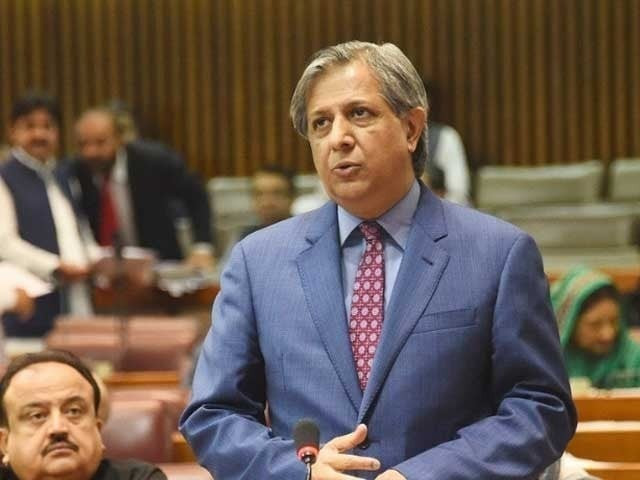
Tarar, Raja to contest PBC poll
Law Minister Azam Tarar, PTI General Secretary Salman Akram Raja are contesting election
Federal Minister for Law Azam Nazeer Tarar. PHOTO: EXPRESS/FILE
…Continue Reading
-

Dana White Announces First Key Bouts For 2026
Former bantamweight champion “Suga” Sean O’Malley will also be featured on the main card, taking on longtime contender No. 5-ranked Song Yadong as both men make their case to get into the title conversation. Two more former champions—
Continue Reading
-

‘DWTS’ Robert Irwin’s victory sparks record fan engagement
‘DWTS’ Robert Irwin’s victory sparks record fan engagement Dancing with the Stars season 34 has been on record breaking streak all the way up to its finale.
In the three-hour episode of finale, which was aired…
Continue Reading