A plume of volcanic ash from Ethiopia has swept across the Red Sea through Oman and Yemen and reached the Indian capital Delhi.
The eruption of the Hayli Gubbi volcano in Ethiopia – reported to be dormant for several thousand years – began on…
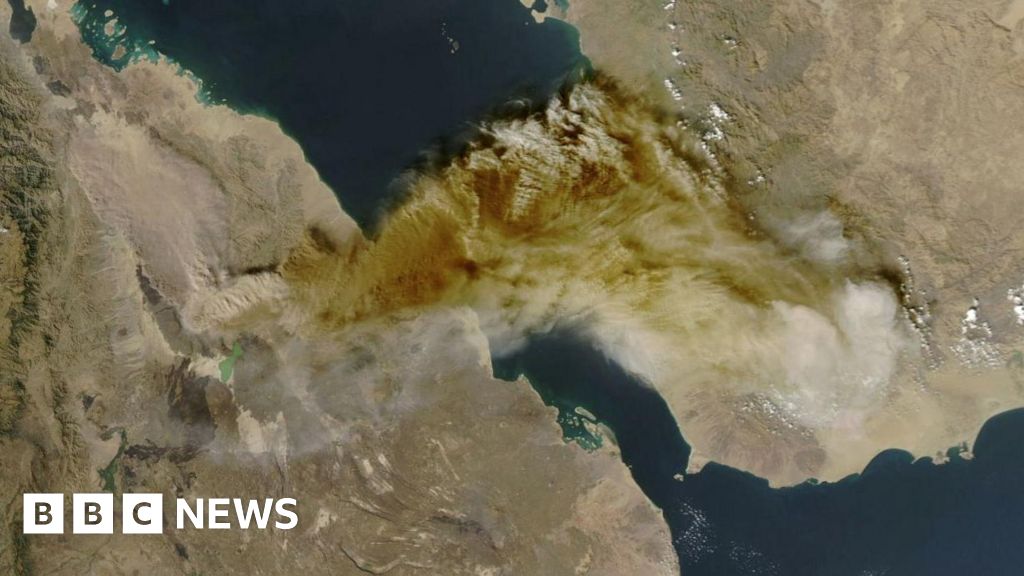
A plume of volcanic ash from Ethiopia has swept across the Red Sea through Oman and Yemen and reached the Indian capital Delhi.
The eruption of the Hayli Gubbi volcano in Ethiopia – reported to be dormant for several thousand years – began on…

Apple is set to expand one of its recent camera upgrades to more devices, with reports suggesting that the upcoming iPhone 17e may include the new 18MP Centre Stage front camera. The feature debuted across this year’s iPhone 17 lineup, which…
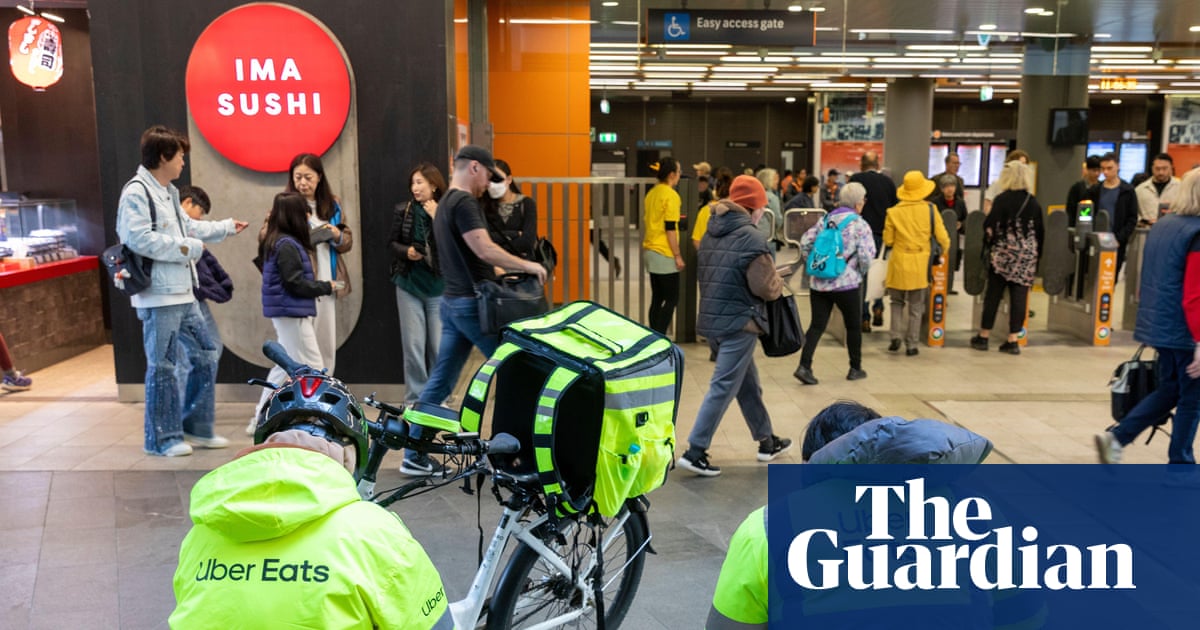
Food delivery companies in Australia have teamed up with the Transport Workers’ Union to set new minimum standards for delivery drivers, including a minimum hourly wage and accident insurance for injuries sustained on the job.
In a deal described as a “world first”, the country’s two largest food delivery services, DoorDash and Uber Eats, have submitted a joint application with the Transport Workers’ Union to the Fair Work Commission.
The deal still requires approval from the industrial umpire, but here’s what we know so far.
The application to the FWC comes after a wide range of workplace reforms was introduced by the Albanese government, which included empowering the industrial umpire to set minimum standards for gig workers.
DoorDash, Uber Eats and the TWU have agreed on new protections for delivery drivers after years of talks. The deal is likely to have involved concessions from either side of the negotiating table, including the union agreeing to call the workers “employee-like”.
Among the protections that would be legally enforceable under the new standards is a minimum “safety net” rate of pay of at least $31.30 an hour which would come into effect from 1 July 2026 and increase slightly from 1 January 2027.
The safety net would apply to all modes of transport used by delivery drivers, with the rate varying slightly depending on the type of vehicle used.
The protections also include new dispute resolution processes, new engagement and feedback mechanisms, representation rights and accident insurance for injured workers.
Eric Ireland, a driver in Melbourne who has worked for several platforms, believes the new standards will result in an increase in pay because it means he and his colleagues will get paid even if they have to wait for a restaurant to finish preparing the food.
“The peace of mind that you are actually getting paid while you’re on the job … can only be a good thing,” he says.
Ireland says while some working conditions have improved since he started delivering food six years ago, pay has not kept up with the cost of living.
“I sort of worked out on average I get about $22 an hour before I pay for petrol,” he says. “Sometimes you can earn a lot more than that if you do what they call a ‘quest’, which is doing 10 jobs in a weekend or something.”
However, as the workplace relations expert Prof Alex Veen points out, the safety net is different to a “minimum wage” in the way you may typically think of one.
The deal does not include penalty rates for things such as working late at night and, Veen says, the minimum hourly rate does not apply to time spent waiting between delivery jobs.
“What it materially means for gig workers is that when they’re working in periods of low demand they are unlikely to make that as their hourly pay,” Veen, a lecturer at the University of Sydney’s business school, says.
But he says there are many positives to the deal, including clarifying who is responsible for insuring both vehicles and the workers themselves.
The application to the FWC states that workers are responsible for maintaining third-party insurances on the vehicles they use for deliveries, so if they get in an accident and damage another vehicle the delivery platform will not be liable for the cost.
On the other hand, Uber Eats and DoorDash will have to organise and pay for personal accident insurance that “provides a reasonable minimum level of cover” for their delivery workers. As Veen points out, that is “obviously open to interpretation”.
The TWU says 23 gig workers have been killed in Australia since 2017 and the figure could be higher because some are never reported as workplace deaths.
While Uber Eats and DoorDash are yet to confirm how they plan to fund an increase in operating costs, Veen says the platforms are most likely to pass them on to consumers.
“They may try to pass some of the costs on to restaurants and they could take a smaller [profit] margin themselves, although that’s not in their interests to do so,” he says.
Dr Michael Rawling, an associate professor who teaches workplace law at the University of Technology Sydney, says there may be a small increase in the price of a takeaway ordered through a third-party delivery app.
“In Australia we like to see workers treated fairly and if the consumer knows that then I think they’ll cop a small increase,” he says.
Rawling agrees the deal is “world leading” and “very significant”.
He says while the deal hasn’t been ratified by the FWC, the “major players” who will be affected by the new standard have agreed on its content, which the industrial umpire will factor into its decision.
“[Typically] what the parties have actually consented to is a preferred direction for the FWC to go into for that particular matter,” he says.
The FWC needs to approve the deal before it can come into effect.
Prof Andrew Stewart, a workplace relations expert at the Queensland University of Technology, says it is “not a done deal”, especially as the FWC will have to consult with other stakeholders – including other delivery platforms.
“Potentially a huge fly in the ointment is that the FWC is going to have to come to a view as to whether the workers are eligible for a minimum standards order,” he says. “Because there’s a perfectly credible argument that the workers are already employees [and not employee-like].”
Stewart says if the FWC ruled that food delivery drivers were employees and not “employee-like” this would be a landmark ruling that would likely result in a challenge from the delivery platforms that could go all the way to the high court.
He is not ruling out this outcome, even though he says it is more likely the FWC will accept the application as it stands.
“I do not want to understate the significance of this deal,” he says. “It is a really important agreement that makes it much more likely we will get a minimum standards order much more quickly than we would if the TWU and the platforms were fighting over the details.”
Overall, Stewart says the agreement on the application brings Australia a lot closer to having a safety net for at least one part of the gig economy.
It could also influence future FWC decisions relating to minimum standards. At the moment, the commission is considering similar gig workers in other sectors including package delivery. And the TWU has previously flagged it will submit an application to cover ride-share drivers.
You don’t have permission to access “http://www.business-standard.com/technology/tech-news/youtube-music-2025-recap-ai-chat-personalised-listening-insights-125112500413_1.html” on this server.
Reference…

Phages attacking bacteria under the microscope
Image source: University of Southampton
Different phages work a bit like different keys – each one can only “unlock” (infect) certain strains of the bacteria. The Klebsiella Phage Collection…

BANGKOK — Asian shares mostly gained on Tuesday after U.S. stocks rallied on hopes the Federal Reserve will cut interest rates soon.
U.S. futures edged lower and oil prices also declined.
Tokyo’s Nikkei 225 was nearly unchanged at 48,628.85, after reopening from a holiday.
A plunge in technology giant SoftBank’s shares weighed on the market. It fell 10.3% on concerns that returns from its heavy investments in OpenAI may be threatened by the next generation Gemini artificial intelligenc e model that Google launched last week.
In South Korea, the Kospi gained 0.3% to 3,859.12. Taiwan’s Taiex jumped 1.5%.
Chinese markets also advanced. In Hong Kong, the Hang Seng climbed 0.4% to 25,821.47, while the Shanghai Composite index jumped 0.9% to 3,872.45.
E-commerce giant Alibaba, which was due to report its earnings late Tuesday, gained 1.6%.
Australia’s S&P/ASX rebounded to edge 0.1% higher, closing at 8,537.00.
U.S. markets will be closed on Thursday for the Thanksgiving holiday. A day later, it’s on to the rush of Black Friday and Cyber Monday.
The U.S. stock market rallied on Monday, at the start of a week with shortened trading because of the Thanksgiving holiday.
The S&P 500 climbed 1.5% to 6,705.12 in one of its best days since the summer. The Dow Jones Industrial Average rose 0.4% to 46,448.27, and the Nasdaq composite jumped 2.7% to 22,872.01.
Stocks got a lift from rising hopes that the Fed will cut its main interest rate again at its next meeting in December, a move that could boost the economy and investment prices.
The market also benefited from strength for stocks caught up in the artificial-intelligence frenzy. Alphabet, which has been getting praise for its newest Gemini AI model, rallied 6.3% and was one of the strongest forces lifting the S&P 500. Nvidia rose 2.1%.
Monday’s gains followed sharp swings in recent weeks, not just day to day but also hour to hour, caused by uncertainty about what the Fed will do with interest rates and whether too much money is pouring into AI and creating a bubble. All the worries are creating the biggest test for investors since an April sell-off, when President Donald Trump shocked the world with his “Liberation Day” tariffs.
Despite all the recent fear, the S&P 500 remains within 2.7% of its record set last month.
Several tests for the market lie ahead this week. One of the biggest will arrive Tuesday when the U.S. government will deliver data on inflation at the wholesale level in September.
Economists expect it to show a 2.6% rise in prices from a year earlier, the same as in August. A higher-than-expected reading could deter the Fed from cutting its main interest rate in December for a third time this year, because lower rates can worsen inflation. Some Fed officials have already argued against a December cut in part because inflation has stubbornly remained above their 2% target.
Traders are nevertheless betting on a nearly 85% probability that the Fed will cut rates next month, up from 71% on Friday and from less than a coin flip’s chance seen a week ago, according to data from CME Group.
In other dealings early Tuesday, U.S. benchmark crude oil lost 25 cents to $58.59 per barrel. Brent crude, the international standard, shed 30 cents to $62.42 per barrel.
The dollar fell to 156.70 Japanese yen from 156.91 yen. The euro slipped to $1.1517 from $1.1521.
Bitcoin fell 1.1% to $88,100. It was near $125,000 last month.
ALERT! You are entering into a secured area! Your IP, Login Time, Username has been noted and has been sent to the…

Aimed squarely and unabashedly at viewers who love soldiers, gore and dinosaurs – as well as dinosaurs goring soldiers – this adaptation of Ethan Pettus’s 2017 novel is deeply repetitive but weirdly watchable. Although shot in Australia…
Amsterdam,
ING announced today that, as part of our €1.1 billion share buyback programme announced on 30 October 2025, in total 2,767,892 shares were repurchased during the week of 17 November up to and including 21 November 2025.
The shares were repurchased at an average price of €21.60 for a total amount of €59,777,931.11.
In line with the purpose of the programme to reduce the share capital of ING, the total number of shares repurchased under this programme to date is 7,899,202 at an average price of €22.02 for a total consideration of €173,950,206.98. To date approximately 15.81% of the maximum total value of the share buyback programme has been completed.
For detailed information on the daily repurchased shares, individual share purchase transactions and weekly reports, see share buy back programme.
More on investor information, go to the investor relations section on this site.
For news updates, go to the newsroom on this site or via X (@ING_news feed).
For ING photos such as board members, buildings, go to Flickr.
ING is a global financial institution with a strong European base, offering banking services through its operating company ING Bank. The purpose of ING Bank is: empowering people to stay a step ahead in life and in business. ING Bank’s more than 60,000 employees offer retail and wholesale banking services to customers in over 100 countries.
ING Group shares are listed on the exchanges of Amsterdam (INGA NA, INGA.AS), Brussels and on the New York Stock Exchange (ADRs: ING US, ING.N).
ING aims to put sustainability at the heart of what we do. Our policies and actions are assessed by independent research and ratings providers, which give updates on them annually. ING’s ESG rating by MSCI was reconfirmed by MSCI as ‘AA’ in August 2024 for the fifth year. As of December 2023, in Sustainalytics’ view, ING’s management of ESG material risk is ‘Strong’. Our current ESG Risk Rating, is 17.2 (Low Risk). ING Group shares are also included in major sustainability and ESG index products of leading providers. Here are some examples: Euronext, STOXX, Morningstar and FTSE Russell. Society is transitioning to a low-carbon economy. So are our clients, and so is ING. We finance a lot of sustainable activities, but we still finance more that’s not. Follow our progress on ing.com/climate.
Elements of this press release contain or may contain information about ING Groep N.V. and/ or ING Bank N.V. within the meaning of Article 7(1) to (4) of EU Regulation No 596/2014 (‘Market Abuse Regulation’).
ING Group’s annual accounts are prepared in accordance with International Financial Reporting Standards as adopted by the European Union (‘IFRS- EU’). In preparing the financial information in this document, except as described otherwise, the same accounting principles are applied as in the 2024 ING Group consolidated annual accounts. All figures in this document are unaudited. Small differences are possible in the tables due to rounding.
Certain of the statements contained herein are not historical facts, including, without limitation, certain statements made of future expectations and other forward-looking statements that are based on management’s current views and assumptions and involve known and unknown risks and uncertainties that could cause actual results, performance or events to differ materially from those expressed or implied in such statements. Actual results, performance or events may differ materially from those in such statements due to a number of factors, including, without limitation: (1) changes in general economic conditions and customer behaviour, in particular economic conditions in ING’s core markets, including changes affecting currency exchange rates and the regional and global economic impact of the invasion of Russia into Ukraine and related international response measures (2) changes affecting interest rate levels (3) any default of a major market participant and related market disruption (4) changes in performance of financial markets, including in Europe and developing markets (5) fiscal uncertainty in Europe and the United States (6) discontinuation of or changes in ‘benchmark’ indices (7) inflation and deflation in our principal markets (8) changes in conditions in the credit and capital markets generally, including changes in borrower and counterparty creditworthiness (9) failures of banks falling under the scope of state compensation schemes (10) non- compliance with or changes in laws and regulations, including those concerning financial services, financial economic crimes and tax laws, and the interpretation and application thereof (11) geopolitical risks, political instabilities and policies and actions of governmental and regulatory authorities, including in connection with the invasion of Russia into Ukraine and the related international response measures (12) legal and regulatory risks in certain countries with less developed legal and regulatory frameworks (13) prudential supervision and regulations, including in relation to stress tests and regulatory restrictions on dividends and distributions (also among members of the group) (14) ING’s ability to meet minimum capital and other prudential regulatory requirements (15) changes in regulation of US commodities and derivatives businesses of ING and its customers (16) application of bank recovery and resolution regimes, including write down and conversion powers in relation to our securities (17) outcome of current and future litigation, enforcement proceedings, investigations or other regulatory actions, including claims by customers or stakeholders who feel misled or treated unfairly, and other conduct issues (18) changes in tax laws and regulations and risks of non-compliance or investigation in connection with tax laws, including FATCA (19) operational and IT risks, such as system disruptions or failures, breaches of security, cyber-attacks, human error, changes in operational practices or inadequate controls including in respect of third parties with which we do business and including any risks as a result of incomplete, inaccurate, or otherwise flawed outputs from the algorithms and data sets utilized in artificial intelligence (20) risks and challenges related to cybercrime including the effects of cyberattacks and changes in legislation and regulation related to cybersecurity and data privacy, including such risks and challenges as a consequence of the use of emerging technologies, such as advanced forms of artificial intelligence and quantum computing (21) changes in general competitive factors, including ability to increase or maintain market share (22) inability to protect our intellectual property and infringement claims by third parties (23) inability of counterparties to meet financial obligations or ability to enforce rights against such counterparties (24) changes in credit ratings (25) business, operational, regulatory, reputation, transition and other risks and challenges in connection with climate change, diversity, equity and inclusion and other ESG-related matters, including data gathering and reporting and also including managing the conflicting laws and requirements of governments, regulators and authorities with respect to these topics (26) inability to attract and retain key personnel (27) future liabilities under defined benefit retirement plans (28) failure to manage business risks, including in connection with use of models, use of derivatives, or maintaining appropriate policies and guidelines (29) changes in capital and credit markets, including interbank funding, as well as customer deposits, which provide the liquidity and capital required to fund our operations, and (30) the other risks and uncertainties detailed in the most recent annual report of ING Groep N.V. (including the Risk Factors contained therein) and ING’s more recent disclosures, including press releases, which are available on www.ING.com.
This document may contain ESG-related material that has been prepared by ING on the basis of publicly available information, internally developed data and other third-party sources believed to be reliable. ING has not sought to independently verify information obtained from public and third-party sources and makes no representations or warranties as to accuracy, completeness, reasonableness or reliability of such information. This document may also discuss one or more specific transactions and/or contain general statements about ING’s ESG approach. The approach and criteria referred to in this document are intended to be applied in accordance with applicable law. Due to the fact that there may be different or even conflicting laws, the approach, criteria or the application thereof, could be different.
Materiality, as used in the context of ESG, is distinct from, and should not be confused with, such term as defined in the Market Abuse Regulation or as defined for Securities and Exchange Commission (‘SEC’) reporting purposes. Any issues identified as material for purposes of ESG in this document are therefore not necessarily material as defined in the Market Abuse Regulation or for SEC reporting purposes. In addition, there is currently no single, globally recognized set of accepted definitions in assessing whether activities are “green” or “sustainable.” Without limiting any of the statements contained herein, we make no representation or warranty as to whether any of our securities constitutes a green or sustainable security or conforms to present or future investor expectations or objectives for green or sustainable investing. For information on characteristics of a security, use of proceeds, a description of applicable project(s) and/or any other relevant information, please reference the offering documents for such security.
This document may contain inactive textual addresses to internet websites operated by us and third parties. Reference to such websites is made for information purposes only, and information found at such websites is not incorporated by reference into this document. ING does not make any representation or warranty with respect to the accuracy or completeness of, or take any responsibility for, any information found at any websites operated by third parties. ING specifically disclaims any liability with respect to any information found at websites operated by third parties. ING cannot guarantee that websites operated by third parties remain available following the publication of this document, or that any information found at such websites will not change following the filing of this document. Many of those factors are beyond ING’s control.
Any forward-looking statements made by or on behalf of ING speak only as of the date they are made, and ING assumes no obligation to publicly update or revise any forward-looking statements, whether as a result of new information or for any other reason.
This document does not constitute an offer to sell, or a solicitation of an offer to purchase, any securities in the United States or any other jurisdiction.

New findings from the University of Birmingham suggest that regularly eating foods rich in flavanols, including tea, berries, apples, and cocoa, may help protect men’s blood vessels from the negative effects that occur during long periods of…