
Microsoft has begun rolling out its Xbox Full Screen Experience (FSE) to all Windows-based handheld gaming devices on November 21 – it’s answer to all complaints about slower gaming performance on Windows 11 compared to Linux and…
Author: admin
-
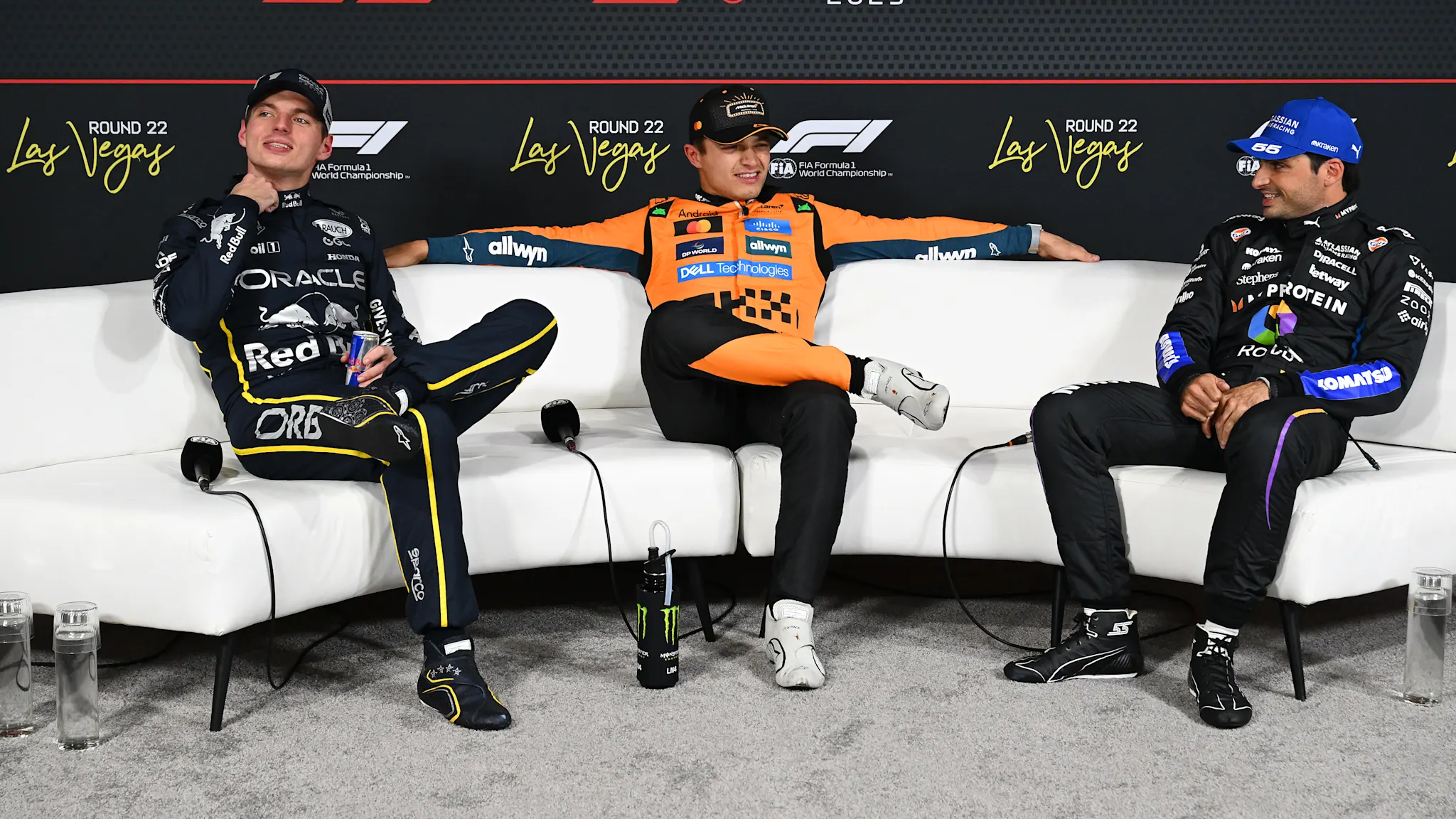
FIA post-Qualifying press conference – 2025 Las Vegas Grand Prix
1. Lando Norris (McLaren), 2. Max Verstappen (Red Bull), 3. Carlos Sainz (Williams)
PARC FERMÉ INTERVIEWS
(Conducted by James Hinchcliffe)Q: Lando, congratulations on the pole position. Great final lap — first two sectors — big moment coming…
Continue Reading
-
Geriatric Lung Cancer Care at SIOG 2025
Geriatric lung cancer care took center stage at the SIOG 2025 Roundtable Discussion “Perspectives on Complexities in Treatment Selection for Older Adults with Lung Cancer,” which brought together pulmonologists, oncologists, geriatricians, and supportive care specialists for a candid, case-based exploration of one of the most challenging areas in oncology. Chaired by Fabio Gomes (Manchester), the roundtable emphasized the nuanced decisions required when caring for older adults with lung cancer.
A Case-Based Roundtable on Geriatric Lung Cancer
The session revolved around a real clinical case of an older adult newly diagnosed with lung cancer. The case highlighted diagnostic uncertainty, comorbidity burden, functional limitations, and competing priorities that often shape treatment selection far beyond what guidelines alone reveal. Early symptoms, diagnostic findings, and initial management steps were presented to frame the discussion.
When Specialties See the Same Patient Differently
Under the moderation of Prof. Lore Decoster, panelists examined the case from pulmonology and geriatric oncology perspectives. The conversation showed how imaging choices, biopsy decisions, and risk stratification can diverge depending on the clinician’s specialty lens. It also illustrated how critical details — especially functional and psychosocial factors — may remain unspoken when geriatric insight is not part of multidisciplinary tumor board discussions.
Toxicity, Treatment Interruptions, and Lessons Learned
The patient’s treatment pathway served as a turning point. Systemic therapy had been initiated without a geriatric assessment, and the patient soon experienced significant toxicity that disrupted the plan. This opened a wider discussion on what might have been anticipated: frailty indicators, polypharmacy concerns, cognitive issues, or functional decline that routine oncology workups often miss. Panelists noted that many complications are predictable — and sometimes preventable — when geriatric principles guide decision-making.
Why Geriatric Assessment Changes the Trajectory
The session then focused on practical solutions. Siri Rostoft (Oslo) and Theodora Karnakis (São Paulo) outlined how geriatric assessment can be feasibly integrated into lung cancer care. Even brief screening tools help identify vulnerabilities that influence dosing decisions, treatment intensity, and supportive care needs. They emphasized that geriatric assessment is more than an “extra step” — it is a safety mechanism that leads to more individualized, realistic treatment plans.
Insights From Global Clinical Practice
Audience members from multiple regions shared reflections, describing cases where the absence of geriatric assessment led to overly aggressive therapy, avoidable toxicities, or missed opportunities for supportive care intervention. The discussion highlighted the shared global challenge of treating older adults with lung cancer who often present with overlapping medical, functional, and social issues.
Closing Message: Bridging the Gap in Lung Cancer Care
In his concluding remarks, Fabio Gomes returned to the central lesson of the roundtable: improving outcomes for older adults with lung cancer requires coordinated, multidisciplinary decision-making informed by geriatric principles. Diagnostics, treatment planning, and toxicity management must reflect the whole patient — not just the tumor. Integrating geriatric assessment, embedding structured pathways, and recognizing when a more measured approach may be safer are essential steps toward better care.
This roundtable made one thing clear: while complexity is unavoidable, thoughtful collaboration across disciplines can transform the treatment experience for older adults with lung cancer.
For more information click here.
Continue Reading
-

Deep radar scan uncovers potential oasis under Mars’ frozen surface
Rather than assuming that modern Mars is too cold and dry to sustain liquid water, new evidence is challenging that belief. Data from the Mars Advanced Radar for Subsurface and Ionosphere Sounding (MARSIS) instrument has revealed unusually…
Continue Reading
-

Cross Country Teams Conclude Strong Seasons at 2025 NCAA Championships
Men’s Results | Women’s ResultsCOLUMBIA, MO – The Tulane men’s and women’s cross country programs wrapped up their seasons Saturday, Nov. 22, at the 2025 NCAA Cross Country Championships held at the Gans Creek Cross Country Course. The Green Wave…
Continue Reading
-

Get Marvel’s Spider-Man 2 On PS5 For Less Than $30 With This Black Friday Deal
It took a long time to get the next chapter of Peter Parker’s journey after that Venom tease at the end of the first game, but we finally got here. Marvel’s Spider-Man 2 more than lives up to the first game and the Miles Morales-focused PS5…
Continue Reading
-
Pakistan condemns human rights violations in IIOJK, urges international action
- FO spokesperson expresses concern over arbitrary arrests and detentions after New Delhi blast
- Accuses India of altering demographics and eroding Kashmiri cultural heritage
- Calls for international bodies to ensure accountability and allow…
Continue Reading
-

T-Mobile is about to become unrecognizable, and you need to prepare accordingly
Some time back, we received multiple reports from T-Mobile employees claiming that the carrier was about to start shutting down stores to force everyone into…Continue Reading
-

Newcastle 2-1 Man City (Nov 22, 2025) Game Analysis
Harvey Barnes fired Newcastle to a welcome 2-1 Premier League victory over Manchester City with a quickfire double in a thrilling encounter at St James’ Park.
The former Leicester winger struck after 63 and 70 minutes either side of Ruben Dias’…
Continue Reading
-

Christopher Nolan Jokes ‘Batman Begins’ Was “Consolation Prize”
After 20 years, Christopher Nolan is finally getting his ancient Greek cinematic moment with his upcoming adaptation of Homer’s The Odyssey.
The 2x Oscar winner recently joked that his directing gig on Batman Begins was a…
Continue Reading