
A team of researchers at IOCB Prague headed by Dr. Tomáš Slanina has developed a new method for labeling molecules with fluorescent dyes that surpasses existing approaches in both precision and stability. The new fluorescent label…
Author: admin
-

Study finds early neural markers of addiction risk differ between boys and girls
The roots of addiction risk may lie in how young brains function long before substance use begins, according to a new study from Weill Cornell Medicine. The investigators found that children with a family history of substance use…
Continue Reading
-
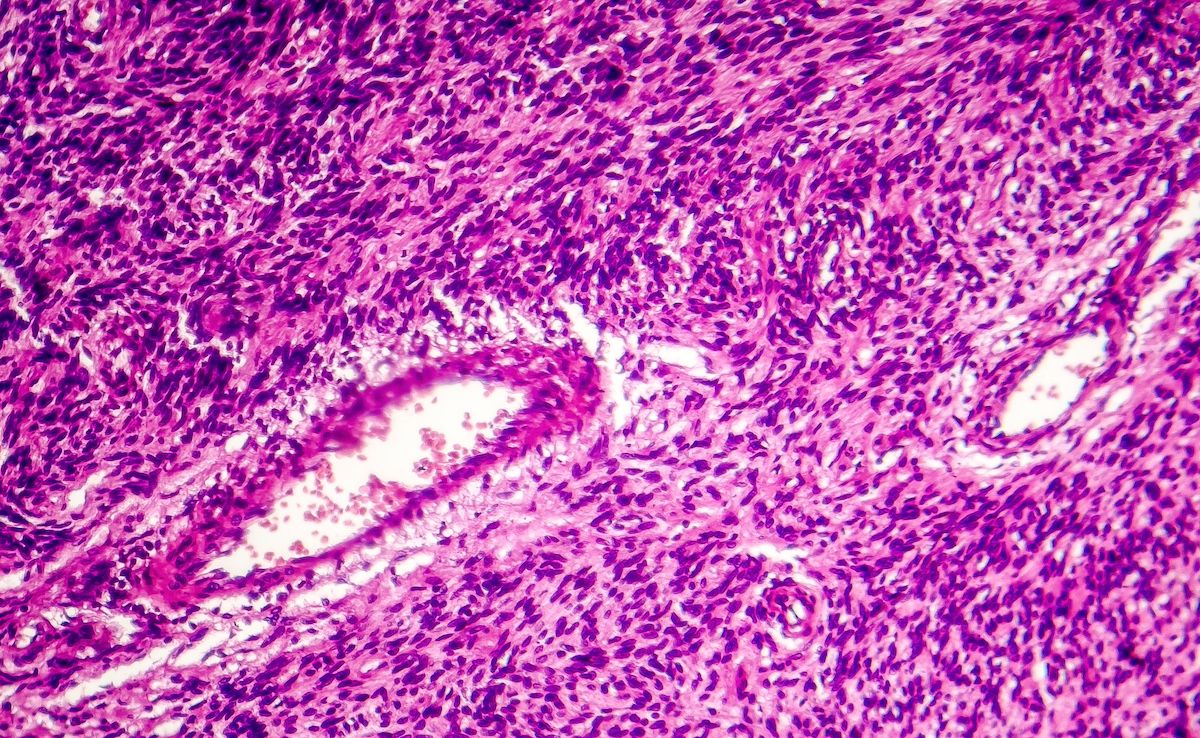
Trial Data Yield Risk-Based NRSTS Treatment Strategies
A new report affirms that surgical resection is generally sufficient for pediatric patients with low-risk non-rhabdomyosarcoma
soft tissue sarcoma (NRSTS) and suggests that patients with completely resected high-risk tumors do not necessarily benefit from adjuvant radiation.The findings,
which were published in Pediatric Blood & Cancer , were based on findings from 2 trials that were designed to help develop a new risk-stratification system and compare different therapeutic regimens for patients with different risk profiles.1Corresponding author Monika Sparber-Sauer, MD, of the Stuttgart Cancer Center, in Germany, and colleagues, wrote that the current standard of care for pediatric NRSTS is based around surgical resection.
“Primary tumor resection with wide margins in the NRSTS treatment mainstay, and is safe without further adjuvant treatment for low-risk disease,” they wrote.
In unresectable tumors, neoadjuvant radiotherapy and/or chemotherapy can be used in hopes of facilitating later resection, as these patients have a low chance of a cure, they added. However, they said the role—or lack thereof—of adjuvant chemotherapy or radiotherapy in patients with primarily resected NRSTS remains an open question.
The new study is based on data from two prospective trials, the CWS-96 and CWS-2002P trials, both of which were designed to limit chemotherapy and radiotherapy by using a risk-based treatment strategy.2,3
Between the 2 trials, a total of 1,249 patients with localized NRSTS were enrolled (483 in CWS-96 and 445 in CWS-2002P). In the former, patients were risk-stratified based on Intergroup Rhabdomyosarcoma Study (IRS) group, histology, and grade. In the CWS-2002P trial, patients were stratified based on IRS group, lymph node status, tumor histology, and tumor size.
In both trials, low-risk patients were treated with surgical resection alone. Standard-risk patients in both trials were given hyperfractionated accelerated radiotherapy (HART) by 44.8 Gy. In CWS-96, adjuvant chemotherapy with vincristine, actinomycin-D, ifosfamide, and 160–240 mg/m2 adriamycin (VAIA) was added for high-grade tumors, Sparber-Sauer and colleagues said.
High-risk patients were given 6 cycles of VAIA in CWS-96 and an intensified adriamycin regimen (VAIA-III, 320 mg/m2 adriamycin) in CWS-2002P, along with delayed resection and/or 44.8 Gy radiotherapy. In some patients in CWS-2002P, maintenance treatment with cyclophosphamide and vinblastine was also given, the authors said.
Overall, the investigators said patients in the CWS-2002P trial had a superior 5-year overall survival (OS; 81% versus 73%; P = 0.024), which they said was partly a result of the CWS-2002P trial’s inclusion of a greater number of entities like fibromyxoid sarcoma, which have a lower metastatic potential. The investigators added that improvements in surveillance, imaging, and surgical techniques over time also likely affected the outcomes.
“We found that the IRS group alone was a strong predictor of EFS (event-free survival) and OS; despite incorporating multiple independent risk factors in CWS-2002P—including IRS, histology, lymph node size, and initial tumor size—no refinement to the risk-stratification system was achieved,” they said.
Though CWS-2002P had improved OS in general, Sparber-Sauer and colleagues said the higher dose of anthracycline used in that trial did not appear to improve survival.
Furthermore, they said low-risk patients who underwent surgery alone had a 5-year EFS and OS of 82% and 93% across both trials, suggesting that surgery alone is sufficient in most cases.
“One remaining question is the role of chemotherapy in standard-risk disease,” they said. That’s because while radiotherapy alone was recommended for standard-risk patients in the CWS-2002P trial, in real-world usage clinicians often gave both chemotherapy and radiotherapy, as was the recommendation in the CWS-96 trial. Thus, the authors said, it is not possible to draw clear conclusions.
Sparber-Sauer and colleagues concluded that in high-risk patients, clinicians should seek out entity-specific clinical trial data whenever possible.
“Where no clinical trial is available, vincristine and actinomycin-D can be omitted, and the ifosfamide/doxorubicin regimen should be used, preferably with a reduced anthracycline dose in postoperative chemotherapy cycles,” they wrote.
They added that their finding that high-risk patients undergoing R0 resection have a comparable prognosis to patients with high-risk disease who receive radiation following incomplete resection warrants further investigation.
References
- Heinz AT, Schönstein A, Koscielniak E, et al. Children and Adolescents With Localised Non-Rhabdomyosarcoma Soft Tissue Sarcoma: Results of the CWS-96 and CWS-2002P Prospective Trials With Reclassification of the Trial Data Incorporating the Recent Soft Tissue Sarcoma Registry. Pediatr Blood Cancer. Published online November 11, 2025. doi:10.1002/pbc.32159
- Sparber-Sauer M, Ferrari A, Kosztyla D, et al. Long-term results from the multicentric European randomized phase 3 trial CWS/RMS-96 for localized high-risk soft tissue sarcoma in children, adolescents, and young adults. Pediatr Blood Cancer. 2022;69(9):e29691. doi:10.1002/pbc.29691
- Koscielniak E, Blank B, Vokuhl C, et al. Long-term clinical outcome and prognostic factors of children and adolescents with localized rhabdomyosarcoma treated on the CWS-2002P protocol. Cancers (Basel). 2022;14(4):899. doi:10.3390/cancers14040899
Continue Reading
-
ESMO Preceptorship on Breast Cancer 2025: Singapore
The ESMO Preceptorship on Breast Cancer 2025: Singapore is a two-day educational event focused on various aspects of breast cancer management, co-chaired by Rebecca Dent and Matteo Lambertini.
Scheduled for December 3–4,…
Continue Reading
-

ESPN+ Presents Third-Round Featured Groups Coverage of CME Group Tour Championship – LPGA
- ESPN+ Presents Third-Round Featured Groups Coverage of CME Group Tour Championship LPGA
- After 36 Holes, It’s a Packed Leaderboard at CME Group Tour Championship Skratch Golf
- Ko in contention season-end tournament nzsportswire.com
- Thitikul nearly…
Continue Reading
-
Merck Recommends Rejection of Tutanota’s “Mini-Tender” Offer
RAHWAY, N.J.–(BUSINESS WIRE)–
Merck (NYSE: MRK), known as MSD outside the United States and Canada, has been notified that Tutanota LLC (Tutanota) has commenced an unsolicited “mini-tender” offer, dated November 10, 2025, to purchase up to 1,000,000 shares of Merck common stock at $65.00 per share. The offer price is approximately 24.66% below the closing price of Merck common stock on November 7, 2025 ($86.28), the last trading day before the date of the offer, and approximately 31.56% below the closing price of Merck common stock on November 20, 2025 ($94.97), the day prior to this release.Merck does not endorse Tutanota’s offer and recommends that Merck shareholders reject the offer and not tender their shares in response to Tutanota’s unsolicited mini-tender offer. This mini-tender offer is at a price below the closing price for Merck’s shares (as of the day prior to this release) and is subject to numerous conditions, including Tutanota’s ability to obtain financing. Merck is not associated in any way with Tutanota, its mini-tender offer or the offer documentation.
Tutanota has made similar unsolicited mini-tender offers for shares of other publicly traded companies. Mini-tender offers seek to acquire less than 5% of a company’s outstanding shares. This lets the offering company avoid many of the disclosure and procedural requirements the U.S. Securities and Exchange Commission (SEC) requires for tender offers. As a result, mini-tender offers do not provide investors the same level of protections as provided by larger tender offers under U.S. federal securities laws.
On its website, the SEC advises that the people behind mini-tender offers “frequently use mini-tender offers to catch shareholders off guard” and that investors “may end up selling at below-market prices.” The SEC’s website also contains important tips for investors regarding mini-tender offers.
Like Tutanota’s other offers, this one puts individual investors at risk because they may not realize they are selling their shares at a discount. Merck urges shareholders to obtain current stock quotes for their shares of Merck common stock, to review the terms and conditions of the offer, to consult with their brokers or financial advisers, and to exercise caution with respect to Tutanota’s mini-tender offer.
Merck shareholders who have already tendered are advised they may withdraw their shares by following the procedures for withdrawal described in the Tutanota offer documents prior to the expiration of the offer, which is currently scheduled for 5:00 p.m. EST on December 15, 2025.
Merck encourages brokers, dealers, and other investors to review the SEC’s letter regarding broker-dealer mini-tender offer dissemination and disclosure.
Merck requests that a copy of this news release be included with all distribution of materials related to Tutanota’s offer for shares of Merck common stock.
About Merck
At Merck, known as MSD outside of the United States and Canada, we are unified around our purpose: We use the power of leading-edge science to save and improve lives around the world. For more than 130 years, we have brought hope to humanity through the development of important medicines and vaccines. We aspire to be the premier research-intensive biopharmaceutical company in the world – and today, we are at the forefront of research to deliver innovative health solutions that advance the prevention and treatment of diseases in people and animals. We foster a diverse and inclusive global workforce and operate responsibly every day to enable a safe, sustainable and healthy future for all people and communities. For more information, visit www.merck.com and connect with us on X (formerly Twitter), Facebook, Instagram, YouTube and LinkedIn.
Forward-Looking Statement of Merck & Co., Inc., Rahway, N.J., USA
This news release of Merck & Co., Inc., Rahway, N.J., USA (the “company”) includes “forward-looking statements” within the meaning of the safe harbor provisions of the U.S. Private Securities Litigation Reform Act of 1995. These statements are based upon the current beliefs and expectations of the company’s management and are subject to significant risks and uncertainties. If underlying assumptions prove inaccurate or risks or uncertainties materialize, actual results may differ materially from those set forth in the forward-looking statements.
Risks and uncertainties include but are not limited to, general industry conditions and competition; general economic factors, including interest rate and currency exchange rate fluctuations; the impact of pharmaceutical industry regulation and health care legislation in the United States and internationally; global trends toward health care cost containment; technological advances, new products and patents attained by competitors; challenges inherent in new product development, including obtaining regulatory approval; the company’s ability to accurately predict future market conditions; manufacturing difficulties or delays; financial instability of international economies and sovereign risk; dependence on the effectiveness of the company’s patents and other protections for innovative products; and the exposure to litigation, including patent litigation, and/or regulatory actions.
The company undertakes no obligation to publicly update any forward-looking statement, whether as a result of new information, future events or otherwise. Additional factors that could cause results to differ materially from those described in the forward-looking statements can be found in the company’s Annual Report on Form 10-K for the year ended December 31, 2024 and the company’s other filings with the Securities and Exchange Commission (SEC) available at the SEC’s Internet site (www.sec.gov).
Source: Merck & Co., Inc., Rahway, NJ, USA
Continue Reading
-
Merck Recommends Rejection of Tutanota’s “Mini-Tender” Offer
RAHWAY, N.J.–(BUSINESS WIRE)–
Merck (NYSE: MRK), known as MSD outside the United States and Canada, has been notified that Tutanota LLC (Tutanota) has commenced an unsolicited “mini-tender” offer, dated November 10, 2025, to purchase up to 1,000,000 shares of Merck common stock at $65.00 per share. The offer price is approximately 24.66% below the closing price of Merck common stock on November 7, 2025 ($86.28), the last trading day before the date of the offer, and approximately 31.56% below the closing price of Merck common stock on November 20, 2025 ($94.97), the day prior to this release.Merck does not endorse Tutanota’s offer and recommends that Merck shareholders reject the offer and not tender their shares in response to Tutanota’s unsolicited mini-tender offer. This mini-tender offer is at a price below the closing price for Merck’s shares (as of the day prior to this release) and is subject to numerous conditions, including Tutanota’s ability to obtain financing. Merck is not associated in any way with Tutanota, its mini-tender offer or the offer documentation.
Tutanota has made similar unsolicited mini-tender offers for shares of other publicly traded companies. Mini-tender offers seek to acquire less than 5% of a company’s outstanding shares. This lets the offering company avoid many of the disclosure and procedural requirements the U.S. Securities and Exchange Commission (SEC) requires for tender offers. As a result, mini-tender offers do not provide investors the same level of protections as provided by larger tender offers under U.S. federal securities laws.
On its website, the SEC advises that the people behind mini-tender offers “frequently use mini-tender offers to catch shareholders off guard” and that investors “may end up selling at below-market prices.” The SEC’s website also contains important tips for investors regarding mini-tender offers.
Like Tutanota’s other offers, this one puts individual investors at risk because they may not realize they are selling their shares at a discount. Merck urges shareholders to obtain current stock quotes for their shares of Merck common stock, to review the terms and conditions of the offer, to consult with their brokers or financial advisers, and to exercise caution with respect to Tutanota’s mini-tender offer.
Merck shareholders who have already tendered are advised they may withdraw their shares by following the procedures for withdrawal described in the Tutanota offer documents prior to the expiration of the offer, which is currently scheduled for 5:00 p.m. EST on December 15, 2025.
Merck encourages brokers, dealers, and other investors to review the SEC’s letter regarding broker-dealer mini-tender offer dissemination and disclosure.
Merck requests that a copy of this news release be included with all distribution of materials related to Tutanota’s offer for shares of Merck common stock.
About Merck
At Merck, known as MSD outside of the United States and Canada, we are unified around our purpose: We use the power of leading-edge science to save and improve lives around the world. For more than 130 years, we have brought hope to humanity through the development of important medicines and vaccines. We aspire to be the premier research-intensive biopharmaceutical company in the world – and today, we are at the forefront of research to deliver innovative health solutions that advance the prevention and treatment of diseases in people and animals. We foster a diverse and inclusive global workforce and operate responsibly every day to enable a safe, sustainable and healthy future for all people and communities. For more information, visit www.merck.com and connect with us on X (formerly Twitter), Facebook, Instagram, YouTube and LinkedIn.
Forward-Looking Statement of Merck & Co., Inc., Rahway, N.J., USA
This news release of Merck & Co., Inc., Rahway, N.J., USA (the “company”) includes “forward-looking statements” within the meaning of the safe harbor provisions of the U.S. Private Securities Litigation Reform Act of 1995. These statements are based upon the current beliefs and expectations of the company’s management and are subject to significant risks and uncertainties. If underlying assumptions prove inaccurate or risks or uncertainties materialize, actual results may differ materially from those set forth in the forward-looking statements.
Risks and uncertainties include but are not limited to, general industry conditions and competition; general economic factors, including interest rate and currency exchange rate fluctuations; the impact of pharmaceutical industry regulation and health care legislation in the United States and internationally; global trends toward health care cost containment; technological advances, new products and patents attained by competitors; challenges inherent in new product development, including obtaining regulatory approval; the company’s ability to accurately predict future market conditions; manufacturing difficulties or delays; financial instability of international economies and sovereign risk; dependence on the effectiveness of the company’s patents and other protections for innovative products; and the exposure to litigation, including patent litigation, and/or regulatory actions.
The company undertakes no obligation to publicly update any forward-looking statement, whether as a result of new information, future events or otherwise. Additional factors that could cause results to differ materially from those described in the forward-looking statements can be found in the company’s Annual Report on Form 10-K for the year ended December 31, 2024 and the company’s other filings with the Securities and Exchange Commission (SEC) available at the SEC’s Internet site (www.sec.gov).
Source: Merck & Co., Inc., Rahway, NJ, USA
Continue Reading
-
Merck Recommends Rejection of Tutanota’s “Mini-Tender” Offer
RAHWAY, N.J., November 22, 2025–(BUSINESS WIRE)–Merck (NYSE: MRK), known as MSD outside the United States and Canada, has been notified that Tutanota LLC (Tutanota) has commenced an unsolicited “mini-tender” offer, dated November 10, 2025, to purchase up to 1,000,000 shares of Merck common stock at $65.00 per share. The offer price is approximately 24.66% below the closing price of Merck common stock on November 7, 2025 ($86.28), the last trading day before the date of the offer, and approximately 31.56% below the closing price of Merck common stock on November 20, 2025 ($94.97), the day prior to this release.
Merck does not endorse Tutanota’s offer and recommends that Merck shareholders reject the offer and not tender their shares in response to Tutanota’s unsolicited mini-tender offer. This mini-tender offer is at a price below the closing price for Merck’s shares (as of the day prior to this release) and is subject to numerous conditions, including Tutanota’s ability to obtain financing. Merck is not associated in any way with Tutanota, its mini-tender offer or the offer documentation.
Tutanota has made similar unsolicited mini-tender offers for shares of other publicly traded companies. Mini-tender offers seek to acquire less than 5% of a company’s outstanding shares. This lets the offering company avoid many of the disclosure and procedural requirements the U.S. Securities and Exchange Commission (SEC) requires for tender offers. As a result, mini-tender offers do not provide investors the same level of protections as provided by larger tender offers under U.S. federal securities laws.
On its website, the SEC advises that the people behind mini-tender offers “frequently use mini-tender offers to catch shareholders off guard” and that investors “may end up selling at below-market prices.” The SEC’s website also contains important tips for investors regarding mini-tender offers.
Like Tutanota’s other offers, this one puts individual investors at risk because they may not realize they are selling their shares at a discount. Merck urges shareholders to obtain current stock quotes for their shares of Merck common stock, to review the terms and conditions of the offer, to consult with their brokers or financial advisers, and to exercise caution with respect to Tutanota’s mini-tender offer.
Merck shareholders who have already tendered are advised they may withdraw their shares by following the procedures for withdrawal described in the Tutanota offer documents prior to the expiration of the offer, which is currently scheduled for 5:00 p.m. EST on December 15, 2025.
Continue Reading
-

For Good’ Easter Eggs, Broadway Changes, References Explained
SPOILER ALERT: This article contains major spoilers for plot points, cameos and the ending of “Wicked: For Good” now playing in theaters, as well as minor spoilers for the “Wicked” stage show.
Get ready to…
Continue Reading
-

Sundar Pichai’s Cheeseburger Flex Sums up Google’s Amazing Comeback
In 2017, Google was criticized for a bad emoji. This week, CEO Sundar Pichai fixed it. How he did this says a lot about the progress Google has made in generative AI.
The internet giant schooled the rest of the tech…
Continue Reading