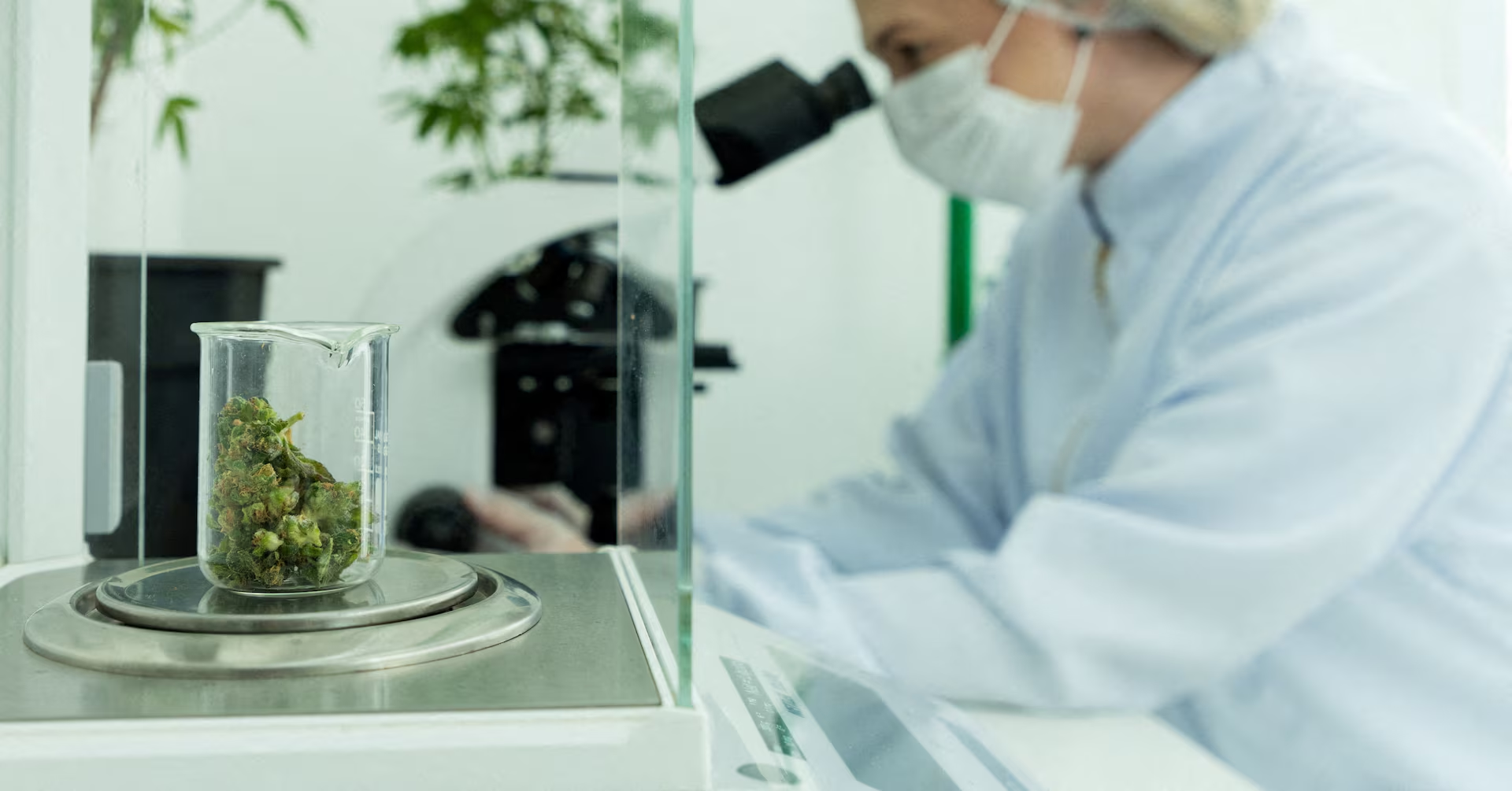
Item 1 of 3 Cannabis buds used to extract medicinal CBD oil are placed in a beaker as Kiara Cardoso, founder of DNA Solucoes em Biotecnologia, works, in Petrolina, Pernambuco, Brazil, February 7, 2025. REUTERS/Kira Duarte/File Photo
[1/3]Cannabis buds used to extract medicinal CBD oil are placed in a beaker as Kiara Cardoso, founder of DNA Solucoes em Biotecnologia, works, in Petrolina, Pernambuco, Brazil, February 7, 2025. REUTERS/Kira Duarte/File Photo Purchase Licensing Rights, opens new tab
SAO PAULO, Nov 21 (Reuters) – Brazilian agricultural research agency Embrapa has received the greenlight from health agency Anvisa to research the cannabis plant, a landmark move that puts farming powerhouse Brazil a step closer towards authorizing its cultivation.
In an interview on Friday, Embrapa researcher Daniela Bittencourt welcomed Anvisa’s decision this week, which gives the agency unprecedented permission to build its first-ever cannabis seed bank and develop projects to genetically improve the plant for various applications.
Sign up here.
Embrapa will also research hemp used to produce fibers, Bittencourt said.
“This is only the beginning,” Bittencourt said by telephone from Brasilia. “Our plan is to carry out research for 12 years but it may possibly go on forever, like what happens with soy and corn.”
Similar research efforts from Embrapa since the 1970s opened up vast regions of Brazil for large-scale soybean farming, kicking off a significant increase in the country’s output of the oilseed to make it the world’s largest producer and exporter.
Embrapa scientists, who breed genetic varieties of grains, cotton and vegetables best suited for Brazil’s tropical climate, applied in September of 2024 for authorization from health agency Anvisa to carry out cannabis research.
Embrapa’s work may also grab international attention from cannabis companies, which have shown interest in Brazil’s potential for the development and domestic sale of medicinal and industrial cannabis products for a long time.
An initial 13 million reais ($2.41 million) in public funding will imminently be released to fund Embrapa’s cannabis research, Bittencourt said, adding the agency is open to studying the plant in partnership with the private sector.
Despite recent delays, Bittencourt also said she is confident that by March 2026, Anvisa will issue pending regulation for cannabis cultivation in Brazil after a court ruling obliged it to do so in November 2024.
In 2019, Anvisa had approved regulations for the rollout of medicinal cannabis products but in a separate vote blocked a proposal to allow domestic medical marijuana plantations.
In the decision authorizing Embrapa’s cannabis research, Anvisa said it is developing rules for growing cannabis “for medicinal and scientific purposes.”
Planting and selling recreational marijuana remains prohibited in Brazil, though purchasing and possessing up to 40 grams of marijuana for personal use is no longer a crime.
($1 = 5.3926 reais)
(This story has been corrected to say that Embrapa applied for authorization to conduct cannabis research in September 2024, not February 2024, in paragraph 6)
Reporting by Ana Mano; Editing by Richard Chang
Our Standards: The Thomson Reuters Trust Principles., opens new tab
Purchase Licensing Rights
Ana Mano reports on agricultural commodities companies and markets in farming powerhouse Brazil, a crucial part of the Reuters’ global file. Based in São Paulo, she has covered the rise of ‘national meat champions’ JBS and Marfrig in the early 2000s, reported on Brazil’s logistics transformation to boost exports to China via northern ports, and more recently broke news on the threats to the Soy Moratorium, an industry pact credited with slowing soy-driven deforestation in the Brazilian Amazon
The US federal government will not publish official data on inflation for October, depriving policymakers at the Federal Reserve of key information as they consider whether to cut interest rates.
The Bureau of Labor Statistics canceled the release of the closely watched consumer price index (CPI) for October, citing the government shutdown – the longest in history, before it ended earlier this month – and stating it could not “retroactively collect” the data required for the report.
The decision, announced on Friday, heightens uncertainty around the strength of the US economy. Jerome Powell, the Fed chair, had already likened the central bank’s task of guiding the economy, without standard data on its performance, to “driving in the fog”.
a line graph
Price growth remains above typical levels, according to recent CPI releases. Donald Trump, who for months denied inflation was still high, has in recent weeks taken several steps to tackle concerns around affordability.
Fed officials, under pressure from persistent demands from Trump, are meanwhile weighing whether to cut interest rates. The central bank raised rates aggressively in 2022 and 2023 to combat inflation, and started cautiously cutting them late last year.
Powell has made clear he planned to trade carefully in the absence of important information on the economy’s strength, and direction. “We’re going to collect every scrap of data we can find, evaluate itand think carefully about it,” he said last month. “What do you do if you’re driving in the fog? You slow down.”
That said, a speech by one Fed policymaker lifted expectations of another rate cut in December. John Williams, the president of the Federal Reserve Bank of New York, said on Friday that he still saw “room for a further adjustment in the near term” to rates.
a bar graph
The latest jobs report, for September, was a mixed bag, with 119,000 jobs added, but the unemployment rate ticked up to its highest level since 2021, and growth estimates for the preceding months were revised lower.
The September jobs report was also disrupted by the shutdown, and released more than a month later. The complete October report will not be released at all, although data on the number of jobs created or lost in that month will be published alongside the full report for November – a week after the next Fed meeting.
A member of the BBC’s board has resigned after stating he was cut out of the discussions that led up to the shock resignation of its director general, Tim Davie.
Shumeet Banerji, a tech industry executive, was away in the crucial days before the departure of Davie and the head of BBC News, Deborah Turness.
The pair quit after tense board discussions over how to respond to allegations of liberal bias made by Michael Prescott, a former independent external adviser to the BBC’s editorial guidelines and standards committee. Prescott left that role in the summer.
Verra has published VMR0016 Flaring or Use of Landfill Gas, v1.0 in the Verified Carbon Standard (VCS) Program. This constitutes a revision to the Clean Development Mechanism (CDM) methodology ACM0001: Flaring or use of landfill gas (external).
VMR0016 applies to project activities that involve the destruction of methane emissions and the replacement of fossil fuels. Projects achieve this by capturing landfill gas and flaring the methane, using it to produce electricity or thermal energy, and/or supplying it to consumers through natural gas distribution networks, dedicated pipelines, or trucks. The methodology is globally applicable.
Both ACM0001 and AMS-III.G.: Landfill methane recovery will be inactivated as standalone methodologies under the VCS Program as of December 1, 2026, and replaced by VMR0016.
French publisher Ubisoft has unveiled an R&D experiment called ‘Teammates‘ that leverages generative AI technology to turn NPCs into what it calls “living companions.”
During a behind-closed-doors briefing at Ubisoft’s Paris studio attended by…
Nano-sized medicine boosts anti-cancer immune response, eradicates tumors in mice
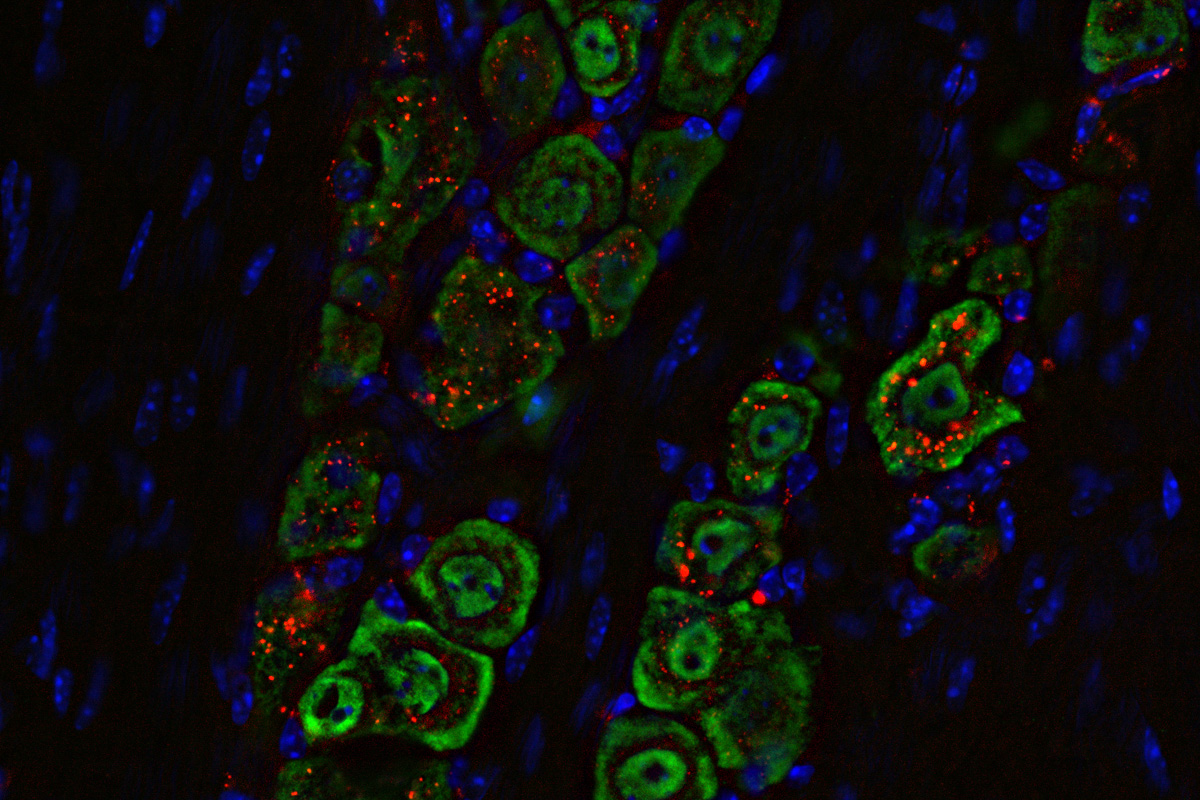
Image courtesy Alexander Stegh
Researchers at WashU Medicine have developed a noninvasive medicine delivered through the nose that successfully eliminated deadly brain tumors in mice. The medicine is based on a spherical nucleic acid, a nanomaterial (labeled red) that travels along a nerve (green) from the nose to the brain, where it triggers an immune response to eliminate the tumor.
Researchers at Washington University School of Medicine in St. Louis, along with collaborators at Northwestern University, have developed a noninvasive approach to treat one of the most aggressive and deadly brain cancers. Their technology uses precisely engineered structures assembled from nano-size materials to deliver potent tumor-fighting medicine to the brain through nasal drops. The novel delivery method is less invasive than similar treatments in development and was shown in mice to effectively treat glioblastoma by boosting the brain’s immune response.
The findings were published this month in PNAS.
Glioblastoma tumors form from brain cells called astrocytes and are the most common kind of brain cancer, affecting roughly three in 100,000 people in the U.S. Glioblastoma generally progresses very quickly and is almost always fatal. There are no curative treatments for the disease, in part because delivering medicines to the brain remains extremely challenging
“We wanted to change this reality and develop a noninvasive treatment that activates the immune response to attack glioblastoma,” said Alexander H. Stegh, PhD, a professor and vice chair of research in the WashU Medicine Taylor Family Department of Neurosurgery and co-corresponding author of the study. Stegh also is research director of The Brain Tumor Center at Siteman Cancer Center, based at Barnes-Jewish Hospital and WashU Medicine. “With this research, we’ve shown that precisely engineered nanostructures, called spherical nucleic acids, can safely and effectively activate powerful immune pathways within the brain. This redefines how cancer immunotherapy can be achieved in otherwise difficult-to-access tumors.”
Cold tumors warmed with STING
Glioblastoma tumors are known as “cold tumors” because they do not induce the body’s natural immune response as do so-called “hot tumors” that are easier to treat with immunotherapies. Researchers have developed ways to spark an immune reaction against tumors by stimulating a pathway within cells called STING, which stands for stimulator of interferon genes. STING is triggered when a cell detects foreign DNA and activates the immune system to respond to the threat.
Past studies have shown that drugs activating STING in glioblastoma tumors can prime the body’s immune system to better fight the cancer. However, these agents break down quickly in the body and must be delivered directly into the tumor to work. Because repeated dosing is required for sustained benefit, relying on direct intratumoral administration requires highly invasive procedures.
“We really wanted to minimize patients having to go through that when they are already ill, and I thought that we could use the spherical nucleic acid platforms to deliver these drugs in a noninvasive way,” said Akanksha Mahajan, PhD, a postdoctoral research associate in Stegh’s lab and the first author on the study.
To overcome the problem, the Stegh team collaborated with co-corresponding author Chad A. Mirkin, PhD, director of the International Institute for Nanotechnology and the Rathmann Professor of Chemistry at Northwestern University, and his team. Mirkin invented spherical nucleic acids, a class of nanostructures that arrange DNA or RNA densely around a nanoparticle core, and he has shown that they have greater therapeutic potency compared to the standard delivery methods. The WashU Medicine and Northwestern researchers prepared a new class of spherical nucleic acids with gold cores studded with short snippets of DNA to trigger activation of the STING pathway in specific immune cells. To deliver these drugs to the brain, the team turned to the nose.
Intranasal therapy has been explored as a potential delivery method for medications targeting the brain, but no nanoscale therapies had yet been developed using this method to activate immune responses against brain cancers.
“This is the first time that it has been shown that we can increase immune cell activation in glioblastoma tumors when we deliver nanoscale therapeutics from the nose to the brain,” Mahajan said.
The team wanted to show that this approach could be used to deliver the medicine selectively to the brain, and that it would act on the appropriate cells once it got there. For the first objective, they used a molecular tag on the spherical nucleic acid that was visible under near-infrared light. They found that the nanomedicine, when delivered as droplets into the nasal passages of mice with glioblastoma, traveled along the path of the main nerve that connects facial muscles to the brain. The immune response evoked in the brain by the medicine was concentrated in the specific immune cells, especially those in the tumor itself, and triggered some helpful responses in the lymph nodes. The medicine did not spread to other parts of the body where it might cause unwanted side effects.
Examinations of immune cells in and near the tumor showed that the therapy successfully activated the STING pathway and armed the immune system to fight the tumor.
When applied in combination with drugs designed to help activate T lymphocytes, another type of immune cell, the new therapy eradicated the tumors with just one or two doses and induced long-term immunity against their recurrence. Taken together, the results were much better than those of current STING-activating immune therapies.
Stegh cautioned that firing up the STING pathway isn’t capable of curing glioblastomas without reinforcement from other therapeutic approaches. Turning on the STING pathway by itself isn’t enough to fight glioblastoma, because the tumor has many ways to block or shut down the immune response that STING is meant to activate. His team is looking to add capabilities to their nanostructure that activate other immune responses. This could allow physicians to double or triple the therapeutic targets all in a single therapy.
“This is an approach that offers hope for safer, more effective treatments for glioblastoma and potentially other immune treatment-resistant cancers, and it marks a critical step toward clinical application,” said Stegh.
Simply sign up to the Investments myFT Digest — delivered directly to your inbox.
Advertising agency WPP has struggled to stem an exodus of customers at the same time that it is tailoring its business model to address the changes which have been wrought across the industry through digitalisation and artificial intelligence.
Takeover speculation gave the company’s shares a small boost this week, but its market valuation remains almost two-thirds lower over the past 12 months.
Clearly, the commercial challenges it faces required fresh perspectives. Philip Jansen joined as non-executive chair towards the end of 2024, while Cindy Rose was appointed as chief executive in September of this year.
Between them, the two principals collectively acquired £286,900 worth of shares on November 13. Rose recently reassured shareholders that “in [her] first 60 days we are already moving at pace, with some initiatives already announced and more to come”.