After over a month of government shutdown, NASA finally released new images of mysterious interstellar object 3I/ATLAS on Wednesday.
During the livestreamed event,…
After over a month of government shutdown, NASA finally released new images of mysterious interstellar object 3I/ATLAS on Wednesday.
During the livestreamed event,…

SpaceX rolled out an upgraded version of its Starship rocket booster in South Texas on Thursday to begin testing, and just a few hours later, something inside it exploded.
Live streamers who watch SpaceX’s Starbase complex closely caught the…

Harvard University in Cambridge, Massachusetts, experienced a data breach in October. Credit: Ilnur Khisamutdinov/Alamy
On 10 November, hackers gained access to a Princeton University database containing the personal information of those in the institution’s community, including alumni, donors and students. In October, similar data breaches occurred at the University of Pennsylvania in Philadelphia and Harvard University in Cambridge, Massachusetts.
These incidents are part of a broader trend. Over the past few years, cyberattacks have been on the rise at academic institutions around the globe. Not only are attacks time-consuming and costly to contain and clean up, but they have also caused university employees to lose access to essential digital services, such as e-mail and research software, for weeks — or even months — at a time.
“The number of cyberattacks is not relenting,” says Harjinder Singh Lallie, a cybersecurity specialist at the University of Warwick, UK.
Universities have been working to implement more robust security systems, but specialists say that academic institutions need to do more to shore up defences, especially against attacks that are assisted by artificial intelligence (AI), which might enable hackers to conduct breaches with greater speed and ease.
Toby Murray, a cybersecurity researcher at the University of Melbourne in Australia, says that in today’s political climate, in which competition between countries has been on the rise, “universities remain a really attractive target”. It’s often difficult to trace where attacks come from, but some have been traced to state-sponsored groups, and often involve the use of ransomware, malicious software that blocks data or systems until a payment is made.

NEWS: Cyberattacks are hitting research institutions — with devastating effects
Across all sectors, from government organizations to private companies, cyberattacks have been increasing. Specialists say that universities are particularly vulnerable because of the valuable data they house, such as employee records and intellectual property, and because these institutions are difficult to secure. Many universities have older, outdated security systems as well as diverse digital infrastructures and communities that can make it easy for hackers to infiltrate such systems.
“It’s going to get worse,” says David Batho, the director of security at Jisc, an organization that provides digital infrastructure to educational institutions in the United Kingdom. “Prevention is no longer enough. Building resilience is essential.”
A UK government survey carried out between August and December last year, revealed that the country’s educational institutions have had a high prevalence of cybersecurity breaches and were more likely to experience such incidents than were other businesses. According to an accompanying report, 91% of higher education institutions and 85% of further education colleges reported having experienced such an incident in the past 12 months.

Quantum hacking looms — but ultra-secure encryption is ready to deploy
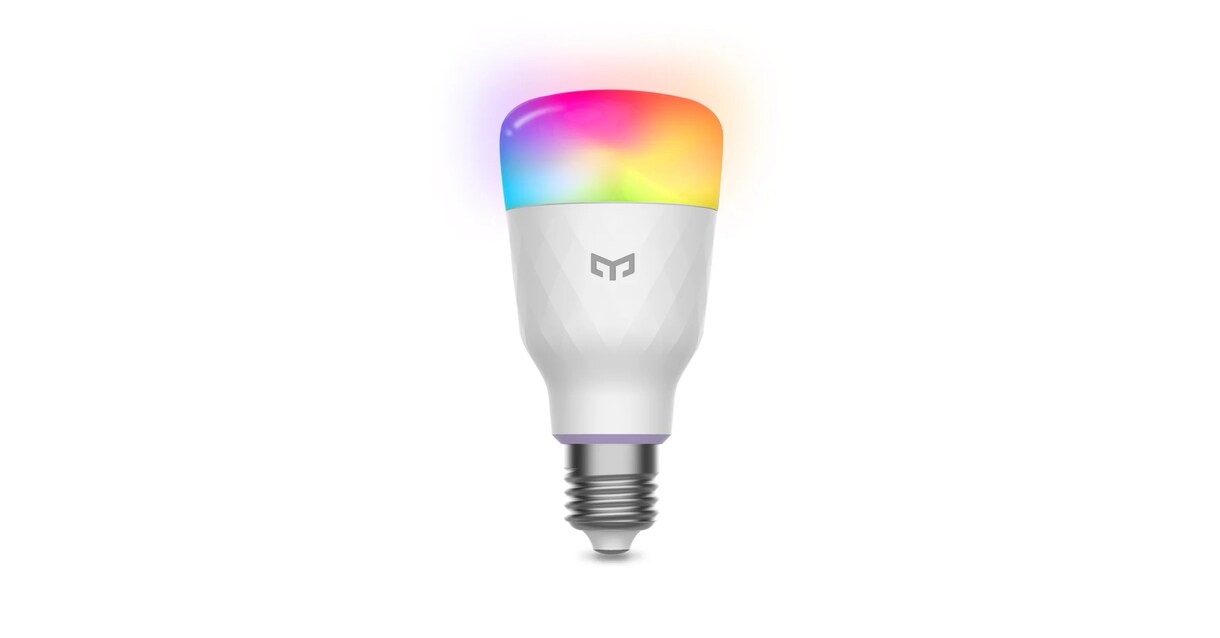
LOS ANGELES, Nov. 21, 2025 /PRNewswire/ — Yeelight, a leading global provider of smart lighting solutions, today announced the launch of its latest innovation — an 11W RGBCW smart bulb delivering an impressive 1300…
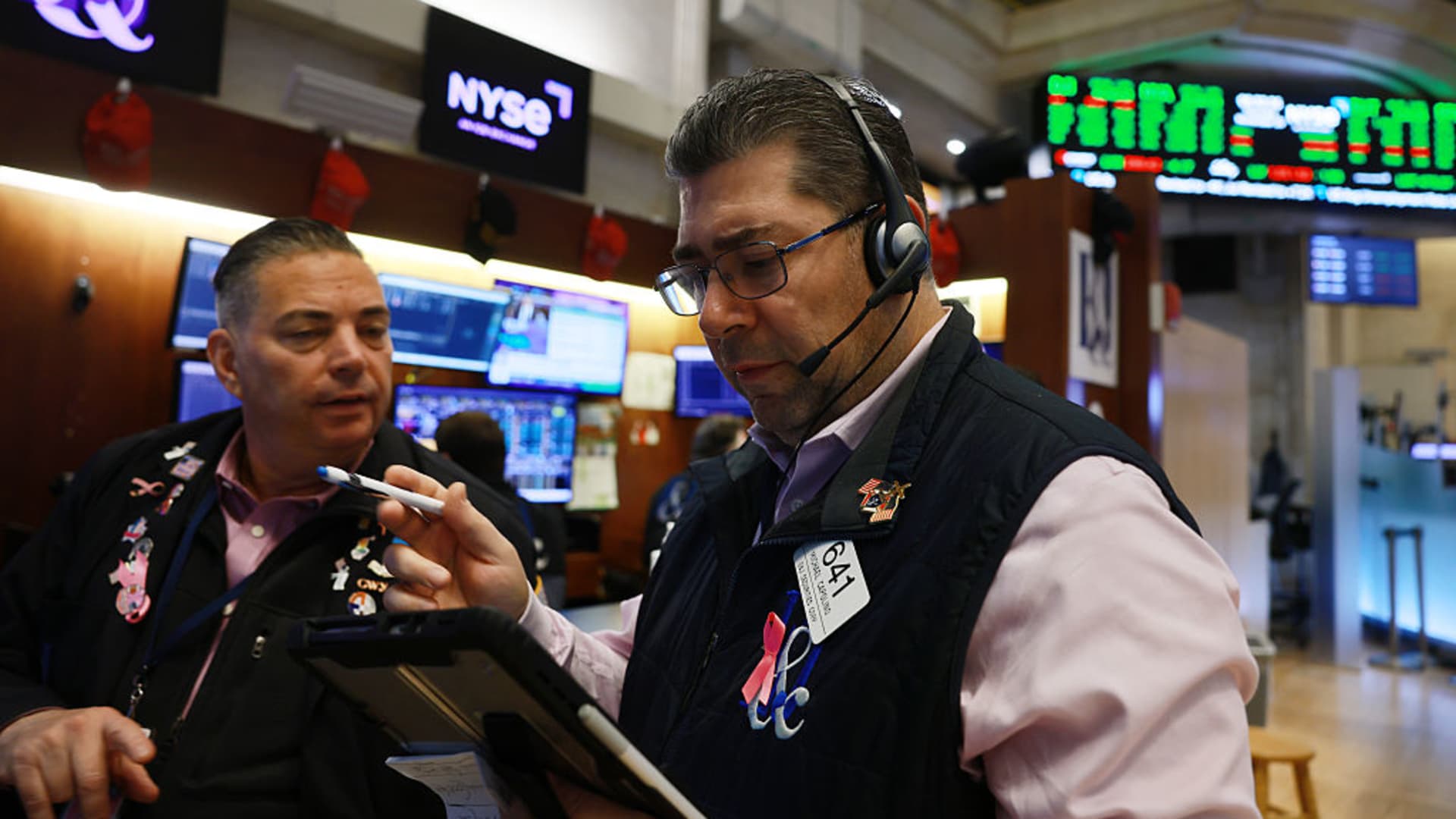
Traders work on the floor of the New York Stock Exchange (NYSE) on November 20, 2025 in New York City.
Spencer Platt | Getty Images News | Getty Images
U.S. equities rebounded Friday after New York Federal Reserve President John Williams suggested the central bank could cut rates again in December.
The Dow Jones Industrial Average gained 225 points, or 0.5%. The S&P 500 gained 0.4%, while the Nasdaq Composite rose 0.2%.
The comments by a notable Fed member like Williams broke the equity market out of its artificial intelligence-stock slump and raised traders’ bets that the central bank would in fact cut next month for the third time this year. Fed funds futures traders are currently pricing in a more than 70% chance of a quarter percentage point cut, a spike from the 39.1% likelihood priced in the day before, according to the CME FedWatch tool.
“I view monetary policy as being modestly restrictive, although somewhat less so than before our recent actions,” Williams said in remarks for a speech in Santiago, Chile. “Therefore, I still see room for a further adjustment in the near term to the target range for the federal funds rate to move the stance of policy closer to the range of neutral, thereby maintaining the balance between the achievement of our two goals.”
AI stocks, which were headed for another tough session before Williams’ comments, cut their losses in premarket trading. Nvidia and AMD both turned positive. Investors hope easier monetary policy can revive a sluggish economy and justify historically high tech-stock valuations.
Stock benchmarks are coming off a brutal market reversal in the last session and are still headed for big losses this week. The Dow at one point on Thursday rose more than 700 points as investors cheered a blockbuster Nvidia fiscal third-quarter earnings report. The benchmark, along with the S&P 500 and Nasdaq Composite, ended the day sharply lower as the Nvidia rally fizzled and worries grew that the Fed would stand pat in December on rates.
The S&P 500 is still down more than 2% week to date, while the Dow has declined almost 3%. The Nasdaq has shed around 3%.
Some investors believe that Thursday’s market dip is not a sign of a deeper decline, but rather a normal pullback following strong gains earlier in the year.
“At the start of the month things were getting a tad frothy, but now with the past three weeks of frustration for investors, various signs of sentiment are flashing extreme levels of fear and worry. From a contrarian point of view, this was necessary to shake out any weak hands,” said Ryan Detrick, chief market strategist at Carson Group.
On Friday, bitcoin dropped nearly 2%, putting its week-to-date losses at around 10%. The cryptocurrency has fallen to levels not seen since April as investors have pulled back on their risk-taking in the market.
A sign with the company logo sits outside of the headquarters of Eli Lilly in Indianapolis, Indiana, on March 17, 2024.
Scott Olson | Getty Images
Eli Lilly reached a $1 trillion market capitalization on Friday, the first health-care company in the world to join the exclusive club dominated by tech firms.
Eli Lilly briefly hit the $1 trillion mark in morning trading before retreating. It was last trading around $1,048 a share.
The company’s stock has climbed more than 36% this year as investors applaud the gains it has made over chief rival Novo Nordisk in the GLP-1 drug space. The Indianapolis, Indiana-based drugmaker’s stock has been riding the skyrocketing popularity of its weight loss injection Zepbound and diabetes treatment Mounjaro. Demand is only expected to grow as both approvals for treatments’ uses and insurance coverage expand.
Eli Lilly’s stock has soared on the back of the success of its drugs Mounjaro and Zepbound.
Eli Lilly will likely remain a dominant player in the weight loss drug market, which some analysts believe could be worth more than $150 billion by the early 2030s.
Eli Lilly, a pharmaceutical chemist and Union veteran of the U.S. Civil War, founded his namesake company in 1876. It has long been at the forefront of the diabetes treatment space, introducing the world’s first commercial insulin in 1923.
Eli Lilly became a publicly traded company on the New York Stock Exchange by 1952, and for decades relied on a slate of widely successful products to drive much of its profits and revenue. They include its insulins, the antidepressant pill Prozac and the earliest polio vaccine.
An Eli Lilly & Co. Zepbound injection pen, March 28, 2024.
Bloomberg | Bloomberg | Getty Images
Eli Lilly hit the jackpot with the May 2022 approval of tirzepatide for diabetes, which is sold as Mounjaro. It started to compete with Novo Nordisk’s diabetes injection Ozempic, which had entered the market a few years earlier.
But Eli Lilly brought a new way to treat diabetes and eventually, obesity. Tirzepatide works by imitating two hormones produced in the gut called GLP-1 and GIP. GLP-1 helps reduce food intake and appetite. GIP, which also suppresses appetite, may also improve how the body breaks down sugar and fat.
Meanwhile, Novo Nordisk’s semaglutide, the active ingredient in Ozempic and its weight loss drug Wegovy, only targets GLP-1.
Mounjaro achieved “blockbuster” status – meaning it generated more than $1 billion in annual sales – during its first full year on the market.
Eli Lilly then won approval for tirzepatide as a treatment for obesity, which is sold as Zepbound and now competes with Novo Nordisk’s Wegovy.

Once in a generation, a television series comes along that can serve a greater good. All in the Family raised social consciousness through comedy. Extreme Makeover: Home Edition gave down-on-their-luck Americans a big, beautiful new home (and…

The liver plays a central role in storing and supplying energy to the body. In type 2 diabetes and metabolic dysfunction-associated steatotic liver disease (MASLD, commonly referred to as fatty liver disease), mitochondria—the cell’s…

BILLIONS continue to live with the daily effects of headache disorders, research shows, and new global estimates highlight how little progress has been made in reducing the disability they cause, despite growing awareness and treatment…

Police reportedly believe more than one person may have helped hide Celeste Rivas’ body in D4vd’s Tesla
The investigation into the death of teenager…