This New Year, for the first time in the show’s history, EastEnders is set to air an entire flashforward episode which will offer viewers a unique glimpse into the drama that is set to unfold in 2026 and beyond…
In a 30-minute instalment on…
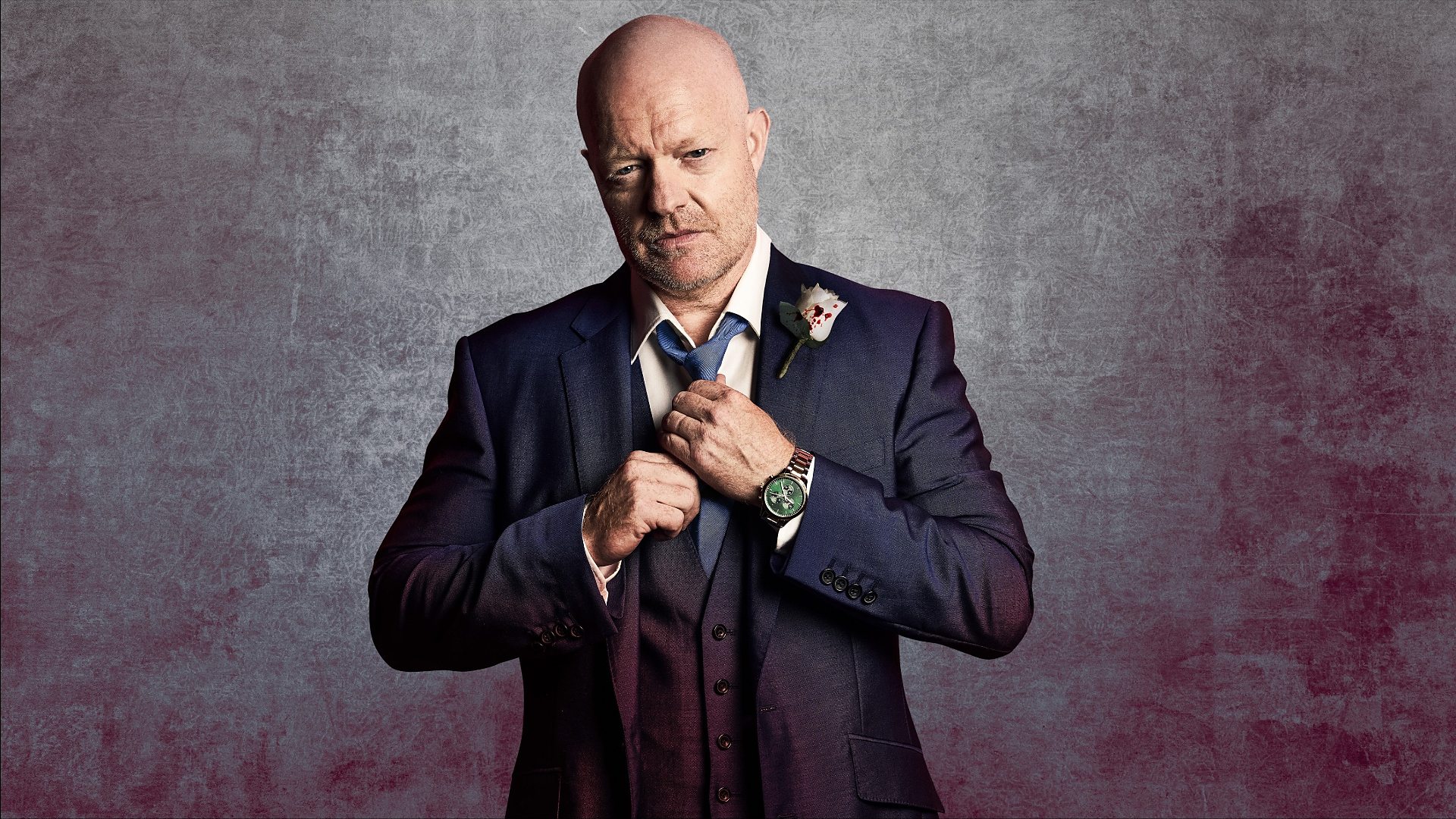
This New Year, for the first time in the show’s history, EastEnders is set to air an entire flashforward episode which will offer viewers a unique glimpse into the drama that is set to unfold in 2026 and beyond…
In a 30-minute instalment on…

Our tech team tests dozens of products every year and Best Buy is one of their go-to places when it comes to shopping for headphones, laptops and TVs. In fact, the tech retailer sells our editors’ picks for the best wireless earbuds for working…

The latest wage figures show no sign of wages growth powering inflation, as the real value of private-sector wages fell in the September quarter.
Other than inflation, the figures the Reserve Bank of Australia most keeps an eye on are the quarterly wages growth figures. These give us a sense of whether there is so much competition for jobs that employers are offering higher wages and workers can demand higher wages without fear of their hours being cut.
The RBA likes to think that the current level of unemployment means the job market is still “tight” (a polite way of saying they would like to see more unemployment). They believe there is too much competition for workers, and so wage growth will be strong and drive up prices.
And yet in the September quarter private-sector wages grew just 0.7%, down from 0.8% in the June quarter and 0.9% in the first three months of this year:
If the graph does not display click here
The annual figures also show that wage growth is slowing and the days of wages rising above 4% are behind us.
If the graph does not display click here
The slowing figures across the board did, however, bring one moment of unintentional hilarity, when the shadow minister for industrial relations, employment and small business, Tim Wilson, decided this was his chance to show off his economic acumen.
He quickly put out a media release noting that while private-sector wage growth was slower than this time last year “wages in the public sector rose to 3.8%, up from 3.7% a year earlier”.
That is true but then, displaying a level of comic ignorance that was missing from parliament during his time out of office, he suggested the Albanese government was to blame. He argued that “Australia’s economy is slowly sinking as the private sector is being outpaced by public spending”.
Alas for Wilson, had he read the Australian Bureau of Statistics webpage he would have seen the ABS explain that “state government pay rises contributed 82% of public sector wage growth” and that commonwealth public service pay contributed just 0.04 of a percentage point to quarterly public-sector wage growth – or 3.9% of the increase in public-sector wages.
That is the lowest contribution since 2017:
If the graph does not display click here
Also, while public-sector wages outgrew those in the private sector over the past year, that has been very much the exception. Since March 2021, public-sector wages have grown 14.2% compared with 15.2% wage growth in the private sector. The importance of that, however, is that in that same period prices have gone up 21.8% and the cost of living for employee households (which takes into account mortgage repayments) has risen 26.6%:
after newsletter promotion
If the graph does not display click here
Wilson may be interested to know that public-sector workers are the ones who have seen their real wages fall the most across the nation since March 2021:
If the graph does not display click here
This is the real problem of the wage figures – yes, wages are now barely growing faster than inflation. In the September quarter overall wages fell 0.6% in real terms, which wiped away a lot of the gains since March 2023. Since that time the value of real wages has increased 0.95%, but that still leaves real wages 4.6% lower than they were in March 2021.
What does that mean? Back then, average full-time earnings was about $90,000 a year. Now those $90,000 have the purchasing power of $85,862 – a loss of $4,138 worth of spending.
Even worse, because the recovery of real wages is expected to be so slow, if the estimates of the RBA in its most recent Statement on Monetary Policy come to fruition, it will take us until the middle of 2044 to get back to having a wage that has as much purchasing power as in March 2021:
If the graph does not display click here
Such a situation is what comes when the policy levers are all geared to treating wage growth as something to prevent – and worries about a “tight labour market” continue to remain even as wage growth slows below that of inflation.

In 2025, NASA and its international partners celebrate 25 years of continuous human presence aboard the International Space Station. Since November 2, 2000, more than 290 people from 26 countries have lived and worked aboard the orbiting…
Microsoft keeps injecting AI into Windows, and now even the company itself is admitting that there are safety risks in doing so.
This week, Microsoft added some new agentic AI features…

In 2024, Orolbai went 1-1 in the Octagon, starting the year with a unanimous decision win over Elves Brener, even after being deducted a point in the third round. He had already built a big enough lead that the foul didn’t impact the decision,…

A comet, dubbed C/2025 K1 (ATLAS), spectacularly broke apart into three huge chunks — and anybody with an eight-inch telescope or bigger can catch the resulting…

Under the new framework , social media companies may request government-issued identification but cannot make it mandatory to access the platform.
Other measures could include reviewing a user’s search history or using facial-recognition technology. Yet, a government trial this year found that face-scanning technology could estimate a user’s age only within an 18-month range in 85 per cent of cases.
Instagram has announced it will use artificial intelligence (AI) to estimate the ages of Australian users. Early testing suggests nine out of 10 teen accounts would remain active under the new system.
UNSW security and privacy expert Dr Rahat Masood , from the School of Computer Science and Engineering , says major technology companies already use AI to learn more about their users.
“Big tech companies don’t need traditional age-gating mechanisms to figure out how old their users are,” she says.
“They already know a lot from patterns of behaviour - when someone logs on, who they interact with, what they search for, or whether their geolocation matches a school during the day.”
Dr Masood says many under-16s also don’t have government-issued ID, so companies will likely rely on AI systems to verify age. But she warns these models are far from perfect – often experiencing hallucinations and biases.
“AI can misjudge age, especially across different demographic groups,” she says.
“And how does it tell the difference between someone who’s 15 years 364 days or 16 years and 1 day? The signals are almost identical.”
Whatever technology is used, the large-scale data collection could expose users to new risks if sensitive information is stored or shared.
UNSW cybersecurity expert Dr Hammond Pearce , also from the School of Computer Science and Engineering, says while no method is perfect, zero-knowledge proof (ZKP) technology could offer a privacy-first solution.
“ZKP is a cryptographic process that lets one party prove a statement – like being over 16 – without revealing any other personal information,” Dr Pearce says.
“We could have a system where the government issues digital tokens confirming a person’s age.
“Websites would consume the token to verify the user is over 16 but wouldn’t learn anything else – and the government wouldn’t track which sites use them, as well.
“It’s a much safer way to verify sensitive information online.”
While some European countries have already started to introduce secure digital identity apps, they’re also backed by stronger data protection laws – an area Australia lags in, says Dr Pearce.
“The European Union’s General Data Protection Regulation sets some of the world’s toughest data privacy standards,” he says.
“There are very harsh fines against those who violate their standards.
“Australia needs to follow suit – so companies take online privacy more seriously.”
Dr Pearce says the new rules won’t ban young people from using social media, but aims to slow down how quickly they join the platforms.
“Around 60 to 80% of teenagers would need to stop using social media for the ‘network effect’ to take hold,” he says.
“The network effect is typically a positive feedback system, so users derive more value from a product or service as more users join the network.
“If their friends can’t access a platform, there’s less incentive to use it. You don’t need to verify every user for the policy to have an impact.”
Still, Dr Pearce says, achieving complete accuracy would require uploading ID – which could create the kind of privacy risk regulators are trying to avoid.
“The only way to be 100% sure is to upload a passport or government-issued ID – and that’s not what we want.”
With just weeks until the new rules come into effect, both experts say the challenge is finding the right balance.
“There’s still a lack of clarity on how the government plans to audit social media companies on whether they’ve complied with the guidelines,” says Dr Masood.
“Protecting children online is crucial but we also need to ensure the solutions don’t create bigger risks in the process.”

Newsbrief: Hawthorn developer NEARstudios has announced the hiring of celebrated game industry veteran Kim Swift as its new chief operating officer.
Swift is most well-known for leaving development on Valve’s 2007 Portal. After leaving Valve she…