Author: admin

  • SEC Commissioner Outlines Preliminary Digital Asset Taxonomy Under Project Crypto

    SEC Commissioner Outlines Preliminary Digital Asset Taxonomy Under Project Crypto

    I. Proposed Four-Category Framework

    Commissioner Atkins outlined four principal categories:

    1. Digital Commodities 

    Assets whose value is tied to the operation of a functional, decentralized protocol, rather than to managerial promises or the issuer’s ongoing efforts. The Commissioner stated that “essential managerial efforts” require “explicit and unambiguous representations,” signaling that the absence of such representations may support treatment as a non-security.

    2. Digital Collectibles

    Tokens “designed to be collected,” including digital art, media, and similar items (aka NFTs). Where purchasers are not relying on managerial or entrepreneurial efforts for financial return, such assets are not viewed as securities.

    3. Digital Tools

    Tokens providing practical functionality, such as access rights, credentials, identity features, or membership. Where the token operates as an instrument of use rather than an investment, securities regulation would not apply.1

    4. Tokenized Securities

    Tokens representing traditional securities or financial instruments (e.g., equity interests, debt claims, or revenue-sharing rights). These remain subject to the federal securities laws in full.


    Commissioner Atkins noted that a token’s classification may change over time as a network matures or decentralizes, and that the analysis remains fact-specific.

    II. Implications for Market Participants

    While non-binding, the Commissioner’s remarks offer several important signals for market participants active in digital assets:

    1. Regulatory Perimeter May Become More Objective

    A structured taxonomy could create greater predictability regarding which digital-asset activities require registration or fall within existing regulatory frameworks. This would represent a shift away from the historical reliance on case-by-case enforcement.

    2. Substance Over Form Will Remain Central

    The SEC is likely to continue evaluating tokens based on their actual mechanics and market behavior. Marketing statements, rights embedded in code, managerial involvement, and network architecture will remain central to determining whether an asset is a security.

    3. Asset Classification May Evolve

    The Commissioner expressly acknowledged the possibility that a token initially offered as part of a securities transaction could, under appropriate conditions, cease to be treated as a security once the operative network is sufficiently functional and decentralized.

    4. Enforcement Will Continue in Parallel

    Nothing in the Commissioner’s remarks suggests a reduction in enforcement activity pending rulemaking. Activities involving tokenized securities, unregistered platforms, misleading promotional practices, or inadequate custody arrangements will remain a regulatory focus.

    III. Conclusions

    Commissioner Atkins’s remarks under Project Crypto offer an early and non-binding indication of how the SEC may seek to organize the digital asset market through a functional taxonomy. Although the ultimate regulatory framework will depend on forthcoming rulemaking and the composition of the Commission, the concepts outlined in the November 12 speech provide meaningful insight into the SEC’s current analytical direction.

    Market participants should use this opportunity to evaluate their digital asset activities, anticipate potential regulatory classifications, and prepare for the possibility of formal SEC proposals that may incorporate elements of this taxonomy.


    1 It is worth noting that in September 2025, the SEC’s Division of Corporation Finance issued a no-action letter to DoubleZero Technologies, Inc., stating that it would not recommend enforcement action if the company sold its 2Z token without registration under the Securities Act. The staff’s position was based on the token’s strictly functional role within the DoubleZero network, used to reward user-provided infrastructure services, and on the company’s representations that the token would not be marketed or positioned as an investment.


    Continue Reading

  • Warner Music Group and Stability AI Join Forces To Build The Next Generation Of Responsible AI Tools For Music Creation — Stability AI

    Warner Music Group and Stability AI Join Forces To Build The Next Generation Of Responsible AI Tools For Music Creation — Stability AI

    NEW YORK, NY — November 19, 2025: Warner Music Group (Nasdaq: WMG) and Stability AI today announced a collaborative effort to advance the use of responsible AI in music creation, combining WMG’s long-standing advocacy for principled…

    Continue Reading

  • Scientists make dead nanoparticles emit light with tiny antennas

    Scientists make dead nanoparticles emit light with tiny antennas

    A long-standing barrier in optoelectronics has been addressed by researchers at the University of Cambridge’s Cavendish Laboratory. 

    They have invented a molecular “back door” to power materials previously considered useless for modern…

    Continue Reading

  • Cancer Uses Cell Death Proteins to Survive Treatment and Regrow

    Cancer Uses Cell Death Proteins to Survive Treatment and Regrow

    Article Content

    The emergence of cancer drug resistance remains one of the most pressing problems in cancer care and there is a critical need to devise approaches to mitigate it. However, the molecular mechanisms driving treatment resistance are poorly understood, hindering efforts to devise new treatment strategies which prevent resistance. Now, researchers at the University of California San Diego have found a paradoxical new way in which cancer cells survive and regrow after targeted therapy: by hijacking an enzyme that is typically only switched on during cell death.

    “This flips our understanding of cancer cell death on its head,” said senior author Matthew J. Hangauer, Ph.D., assistant professor of dermatology at UC San Diego School of Medicine and Moores Cancer Center member. “Cancer cells which survive initial drug treatment experience sublethal cell death signaling which, instead of killing the cell, actually helps the cancer regrow. If we block this death signaling within these surviving cells, we can potentially stop tumors from relapsing during therapy.”

    About one in six deaths worldwide are caused by cancer. Many of these deaths are ultimately attributable to acquired resistance following an initially positive treatment response. Cancer typically develops resistance to treatment through mutations over months to years, similar to how bacteria can evolve resistance to antibiotics over time. These mutations are difficult to treat with limited available drug combinations. However, the newly-discovered mechanism focuses on the earliest stages of resistance, which do not rely on genetic mutations, making it an attractive new target for future treatments.

    “Most research on resistance focuses on genetic mutations,” said first author August F. Williams, Ph.D., a postdoctoral fellow in the Hangauer lab at UC San Diego. “Our work shows that nongenetic regrowth mechanisms can come into play much earlier, and they may be targetable with drugs. This approach could help patients stay in remission longer and reduce the risk of recurrence.”

    In the new study, the researchers found:

    • In models of melanoma, lung and breast cancers, a subset of “persister” cells that survive treatment displayed chronic, low-level activation of a protein that dismantles DNA as a part of normal cell death, called DNA fragmentation factor B (DFFB).
    • This DFFB activation is at a level too low to kill the cells, but high enough to interfere with the cells’ ability to respond to signals suppressing their growth.
    • Removing this protein keeps cancer persister cells dormant and prevents their regrowth during drug treatment.
    • DFFB is nonessential in normal cells, yet is required for regrowth cancer persister cells, making it a promising target for combination treatments to extend responses to targeted therapy.

    The study was published in Nature Cell Biology and funded, in part, by grants from the Department of Defense, the National Institutes of Health and the American Cancer Society. Hangauer is a cofounder, consultant and research funding recipient of BridgeBio subsidiary Ferro Therapeutics.

    Continue Reading

  • Webb First to Show 4 Dust Shells ‘Spiraling’ Apep, Limits Long Orbit

    Webb First to Show 4 Dust Shells ‘Spiraling’ Apep, Limits Long Orbit

    NASA’s James Webb Space Telescope has delivered a first of its kind: a crisp mid-infrared image of a system of four serpentine spirals of dust, one expanding beyond the next in precisely the same pattern. (The fourth is almost…

    Continue Reading

  • New superconductor shows quantum edge states tied to Majorana physics

    New superconductor shows quantum edge states tied to Majorana physics

    Researchers at IFW Dresden and the Cluster of Excellence ct.qmat announced on November 19 that they had identified a new form of superconductivity in the crystalline material PtBi₂. This form displayed a topological behavior and an…

    Continue Reading

  • DeepMind’s latest: An AI for handling mathematical proofs

    DeepMind’s latest: An AI for handling mathematical proofs

    Computers are extremely good with numbers, but they haven’t gotten many human mathematicians fired. Until recently, they could barely hold their own in high school-level math…

    Continue Reading

  • Ultrasound unlocks precision drug activation at the molecular level

    Ultrasound unlocks precision drug activation at the molecular level

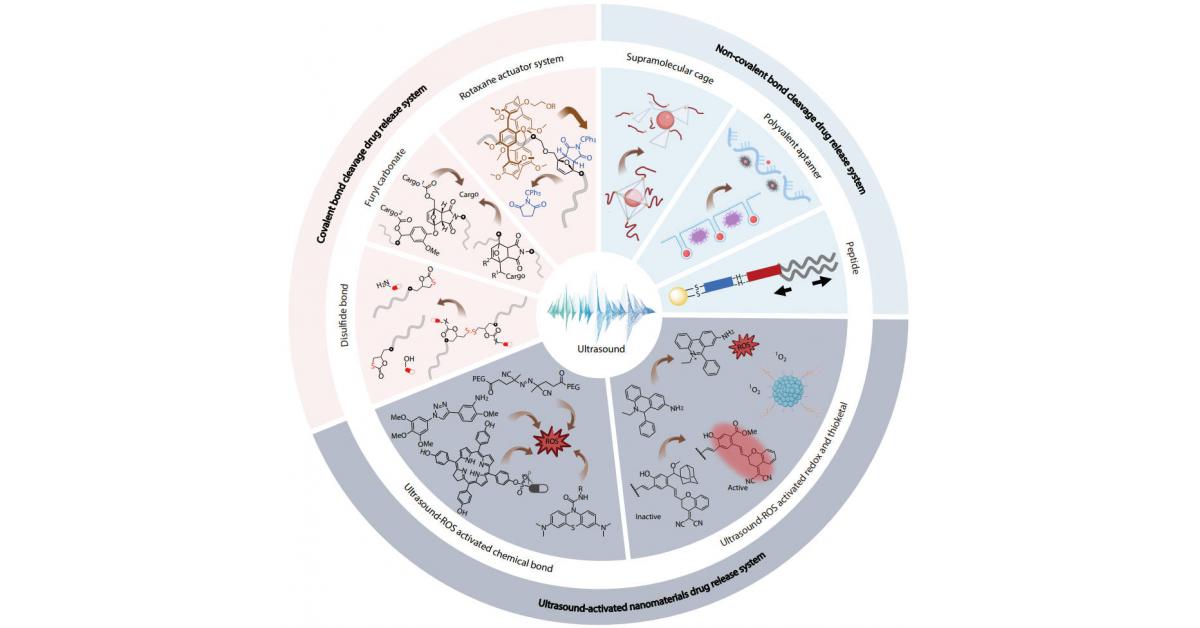
    Schematic diagram of ultrasound-induced drug activation systems.

    GA, UNITED STATES, November 19, 2025 /EINPresswire.com/ — Ultrasound offers a non-invasive and deeply penetrative means of controlling drug activation with high spatial and…

    Continue Reading

  • England and Wales Cricket Board (ECB)

    England and Wales Cricket Board (ECB)

    England Men U19s will face Pakistan, Scotland and hosts Zimbabwe in the group stages of the 2026 ICC U19 World Cup, set to take place in January and February.

    Hosted by Zimbabwe and Namibia, the tournament features four groups of…

    Continue Reading

  • Bond ETFs gaining investor attention. What to know before investing

    Bond ETFs gaining investor attention. What to know before investing

    Momo Productions | Digitalvision | Getty Images

    If you’re thinking about putting money into bond exchange traded funds (ETFs) rather than mutual funds, you’re not alone.

    Fixed-income ETFs have pulled in nearly $344 billion through Oct. 31 this year, compared with $138 billion going into fixed income mutual funds, according to Morningstar Direct. It’s part of the larger trend of investors preferring ETFs: In October alone, about $74 billion flowed out of mutual funds, while ETFs attracted $166 billion.

    And while ETFs have some advantages over mutual funds, and bonds are viewed as safer investments than stocks, experts say it’s important to know what you’re buying.

    “You have to remember the role of bonds in a portfolio,” said Dan Sotiroff, senior analyst for passive strategies research at Morningstar. “It’s usually to serve as a ballast — and how big of one is something you have to sort out on your own or with your advisor.”

    ‘Legitimate edge’

    Both mutual funds and ETFs let you invest in a fund that holds a mix of underlying investments. The advantages of ETFs range from lower costs to tax efficiency to their trading all day in the open market. (Mutual funds are only priced once a day, after the markets close at 4 p.m. Eastern Time.)

    One reason for assets flowing to bond ETFs is simply that more have been launched in recent years, especially those that are actively managed — meaning professionals are choosing which bonds to invest in — which previously was the sole province of bond mutual funds. In contrast, passively-managed ETFs track an index, and their performance mimics that benchmark, for better or worse.

    “Active management has a legitimate edge,” Sotiroff said. Managers there “can bring something different to the equation and have a shot at outperforming their benchmark.” 

    More from ETF Strategist:

    Here’s a look at other stories offering insight on ETFs for investors.

    The number of actively managed bond ETFs (511) has surpassed the number of passive bond ETFs (393), according to Morningstar.

    The active funds come with higher expense ratios — the yearly fees paid by investors, expressed as a percentage of the fund’s total assets. Investors pay an average of 0.35% for actively managed bond ETFs, versus 0.10% for passively managed bond funds.

    Know what bonds you’re buying

    Also remember that because bonds pay interest, those ETFs distribute monthly payments to investors, who face taxes on that income if the ETFs are held in a taxable brokerage account. If they are in an individual retirement account or 401(k) account, any growth is tax-deferred and then subject to ordinary income tax rates when money is withdrawn after age 59½. If they’re held in a Roth IRA account, withdrawals are tax-free.

    And whether you consider passive or active bond ETFs, it’s important to consider the type of bonds you’re investing in, experts say. For example, U.S. Treasurys and corporate bonds with solid credit ratings are considered investment-grade, meaning that there’s less risk of default.

    “The correlation with stocks is really low and that’s important to keep in mind” when seeking to diversify, Sotiroff said.

    Investment-grade bonds tend to generate less income than riskier bonds, while high-yield corporate bonds with lower investment ratings may offer higher yields but come with a greater chance of default.

    If you are relying on bonds for income in retirement, trying to squeeze too much income out of your bond portfolio could end up backfiring.

    Bond ETFs “are basically funding our clients’ living expenses, so we need to be liquid and high quality,” said certified financial planner Tim Videnka, chief investment officer and principal with Forza Wealth Management in Sarasota, Florida.

    Bonds lose money, too

    But as with all investments, bonds can lose money, too, Videnka said.

    In 2022, as the Federal Reserve began raising its benchmark interest rate to fight high inflation, bond prices slumped (prices move inversely to yield), and the year ended as the worst ever bonds, with major bond indexes posting large losses.

    The year 2022 “showed you can lose money in the bond market,” said Videnka. “People can sometimes forget what can happen when there’s real fear.”

    One reason bond prices fall when rates rise is because newly-issued debt comes with higher interest rates, making existing bonds with lower rates less valuable — pushing down their price.

    Although the Federal Reserve lowered its benchmark interest rate — the federal funds rate — in October for the second time this year, it remains far higher than was the case for years before the Fed started raising rates in 2022. The fed funds rate is the rate that commercial banks charge one another for overnight borrowings to meet reserve requirements, and it ripples through the economy, affecting the rate charged for mortgages, auto loans and credit card debt as well as the interest rate on bonds and savings accounts.

    “If you go back 15 years ago, after the [2008-2009] financial crisis, we were in a 0% rate environment and then Covid hit and we had another 0% rate environment,” Sotiroff said.

    “Now you actually have [positive] interest rates … you have some returns that make bond ETFs attractive,” he said.

    Continue Reading