Mutations in a gene associated with Crohn’s disease have been found to rob critical immune cells of their ability to switch modes, causing them to overreact and trigger inflammation.
Variations in the NOD2 gene have been linked to Crohn’s in

Mutations in a gene associated with Crohn’s disease have been found to rob critical immune cells of their ability to switch modes, causing them to overreact and trigger inflammation.
Variations in the NOD2 gene have been linked to Crohn’s in

The iPhone 15 Pro was the first iPhone capable of running Apple Intelligence. Apple’s routine is that as the new slew of iPhones are launched that the Pro and Pro Max models of the previous generation are immediately discontinued. Here’s how…
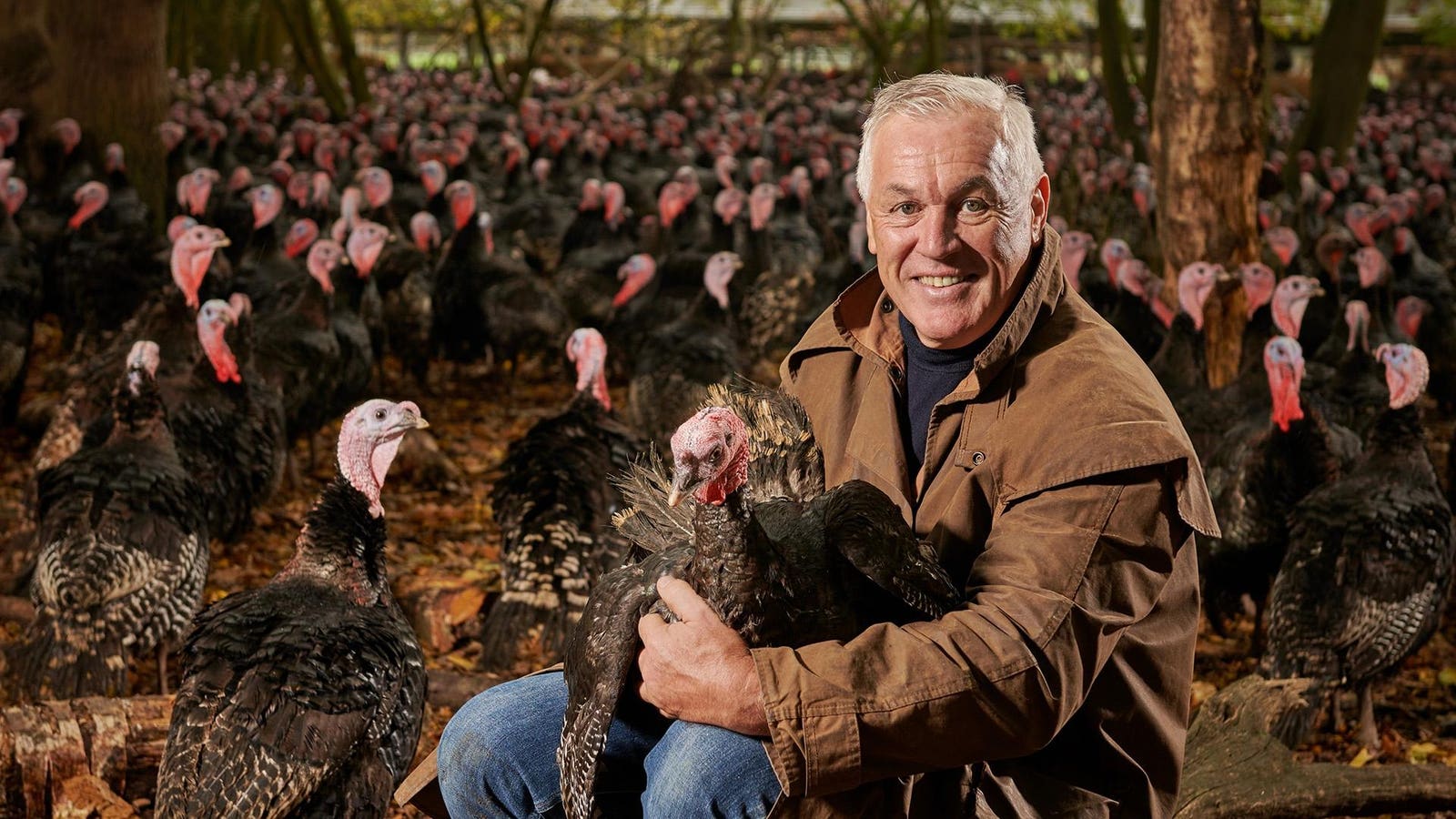
After two decades of breeding what the Times of London once called the “Rolls-Royce of turkey,” Paul Kelly wanted to learn from experts with generations of knowledge in America, where turkey farming originated. But once the Briton arrived in 2003, and after spending several weeks visiting turkey farms across Virginia, West Virginia, North Carolina, Massachusetts and Pennsylvania, Kelly was “amazed” to find no farmer or butchery maintained the American traditions, including dry-plucking and hanging, that have set the Essex, England-based KellyBronze apart.
Then again, when a frozen American Butterball costs about a $1 a pound and you’re asking customers to pay around $15 a pound—or nearly $500 for a 32-lb. turkey—high quality has to come with more than a high price.
“I thought, it’s almost impertinent for an Englishman to take turkeys to America,” says Kelly. “But there’s an opportunity there. I started looking, and we took it big.”
Kelly, 62, is now the owner of the only USDA-approved turkey plant in the U.S. that dry-plucks and hangs its birds, which many believe creates crispier skin and better flavor. Since purchasing 130 acres in the foothills of the Blue Ridge Mountains in Crozet, Virginia a decade ago, Kelly has opened America’s first newly built turkey hatchery in years.
KellyBronze, which sells its turkeys at Eataly and other high-end retailers across America, had 2024 revenue of $28 million. About 4% of that comes from the U.S., but Kelly expects that to be 25% within three years as he increases production in Virginia—and he is aiming for annual revenue will hit $80 million by 2028.
Founded in 1971 by Kelly’s parents, Derek and Mollie, KellyBronze is 100% family-owned and has never taken any private investment, though there have been many offers over the years. The business has grown steadily for the past six decades with little debt, and it currently has none. “I have slept at night knowing that every decision we made, we could afford to make, rather than hoping it worked,” says Kelly, who admits that the business is challenging as the bulk of revenue comes in November, December and January. “But, in America, bang, we bought the farm, we built the plant, not having sold one turkey. We were taking risks but risks we could afford.”
Kelly acknowledges the high price of his turkeys can be a “problem” but he is quick to point out that his birds are also three times the age of the typical frozen turkey, and lose 3% of their weight during hanging, and it’s all done by hand, which increases labor costs.
“People aren’t buying it to save money, are they?” asks Kelly. “The sales of amazing wines and the best champagnes go through the roof at Thanksgiving in America, the same as here at Christmas. Not everyone can afford it, but for those that can, it’s there.”
In the U.K, KellyBronze supplies high-end butchers and retailers like Harrods and Selfridges. The Royal Family as well as chef and restaurateur Gordon Ramsay have also supported the brand for years.
The Eaten Path: “We are never going to be Butterball,” Kelly says. “We are a small niche player and we just want to be producing the best possible turkey we can for Thanksgiving.”
KellyBronze
In addition to Kelly’s 130 acres in Virginia, the family owns 90 acres across Scotland and England, where it rents another 140 acres. There are also now 13 British farmers raising turkeys for KellyBronze, including British celebrity chef Jamie Oliver, who started raising a flock five years ago, after spending 25 years as a customer. Oliver calls KellyBronze “the turkey equivalent of Wagyu beef or Pata Negra ham—simply the best of its kind.”
“I became a turkey farmer not out of necessity, but to support an extraordinary artisan family and their craft,” Oliver tells Forbes. “The Kelly family are a shining example of what’s right in British farming. They brought back values and methods that were nearly lost to history.”
Now, after more than 50 years in business, KellyBronze is finally ready to feast on America’s high-end turkey market. “We are never going to be a Butterball. We are never going to be big,” says Kelly. “We are a small niche player and we just want to be producing the best possible turkey we can for Thanksgiving.”
Kelly’s parents bought a small farm the year he was born in 1963. His father worked at a big poultry company and after many years he left so the family could start their own turkey business in 1971 when Kelly was 8 years old. Back then, the British turkey industry was producing what was known as “New York Dressed” birds because, as Kelly explains, “the whole tradition of what we do came from America.”
When Kelly returned to the farm after graduating from an agricultural college attached to Scotland’s Glasgow University in 1983, he pushed his family to take their farming to the next level. In 1984, he changed the family’s breed from a white Wrolstad turkey that originated in Oregon to “the old traditional bronze breed.”
Farm To Table: KellyBronze dry-plucks and hangs its turkeys in the American tradition, which many believe creates crispier skin and better flavor.
KellyBronze
He also started bringing the birds outside where they could roam, dust-bathe, and peck in peace. The Kellys also started dry-plucking and then hanging the birds—at first for 7 days and now for 2 to 3 weeks. It was an expensive approach to a type of poultry that is traditionally quite cheap.
“It was a race to the bottom,” he recalls of British turkey farmers at the time. “We were the laughingstock of the industry.”
That first year, the Kellys had an annual revenue around $300,000 (or about $930,000 today). Despite the slow sales, the family doubled down. In 1987, the Kellys bought a former dairy farm for $90,000 at 10% interest over 10 years. The buildings and 5 acres of grasslands (where Kelly later built a house and now lives) helped the family expand its breeding and allowed them to build a small processing facility. “It was a huge step for us but gave us the space to supply the increased demand that came,” Kelly says. “It proved to be the best investment ever.”
By 1990, “the butchers were phoning us,” and by 1994, sales had skyrocketed to $1.2 million. After adding local farmers to their network throughout the 1990s, in 2001, KellyBronze was appointed by then-Prince Charles’ organic food brand Duchy Originals to farm its Christmas turkeys.
In 2003, revenue reached $3.8 million and Kelly was ready to broaden his understanding of traditional techniques and learn from farms in the United States, where it all began. The first turkeys are said to have been imported to England back in 1526, when a trader named William Strickland brought back six birds he obtained from Native Americans during an early voyage across the Atlantic. Eating turkey at Christmastime became fashionable at King Henry VIII’s court, cementing the turkey’s place as a symbol of festivity. The birds then traveled back across the Atlantic, as the colonists at Jamestown in Virginia had shipments of domesticated turkeys arriving on boats from England.
And while no turkey was ever formally recorded at the Pilgrims’ first Thanksgiving with the Wampanoag in Plymouth, Massachusetts in 1621, they were plentiful in the region. Benjamin Franklin once famously called the turkey “a much more respectable bird” than the bald eagle and “a true original Native of America. Eagles have been found in all countries, but the turkey was peculiar to ours.” He even described turkey as “a bird of courage.”
Born To Be Wild: KellyBronze is now producing 4,600 turkeys in the U.S. this year, and Kelly’s hatchery has the capacity to produce 15,000 “poults” every month.
Levon Biss for Forbes
Kelly says the stock he is raising in Virginia is inspired by “the original traditional turkey that was produced in America hundreds of years ago with the Pilgrims.” In 2014, he brought his turkeys back to the continent they originated on, buying his farm for $750,000, and spending another $2.75 million on infrastructure upgrades—with help from a $1 million bank loan that’s already been paid off.
KellyBronze is now producing 4,600 turkeys in the U.S. this year, and Kelly opened his own hatchery in 2018, which has the capacity to produce 15,000 “poults” every month. It’s currently at 5,500 per year and Kelly wants to open another on the East Coast and one on the West Coast.
Doing business in America isn’t easy. For one, sales are super lumpy—95% of Kelly’s U.S. sales occur at Thanksgiving—and KellyBronze might get hit with tariffs from the Trump Administration’s trade war. Kelly shipped turkey eggs from the U.K. to his U.S. hatchery just before the tariff start date. Next season, if the tariffs continue, the eggs could face charges of a few thousand dollars.
“My dream would be for people to order it in January or February of every year. They put their name on one and we’ll grow it to order,” says Kelly, whose son, Toby, 31, and daughter Ella, 28, are now running parts of KellyBronze. “The potential is huge.”

QUICK FACTS
What it is: Barred spiral galaxy Messier 61, AKA NGC 4303
Where it is: 55 million light-years away in the constellation Virgo
When it was shared: Oct. 28, 2025
Even before its full science operations have begun, the Vera C. Rubin…

Watch On
Tune in on Nov. 16 to witness detailed telescopic views of interstellar comet 3I/ATLAS as it races headlong away from the sun on…
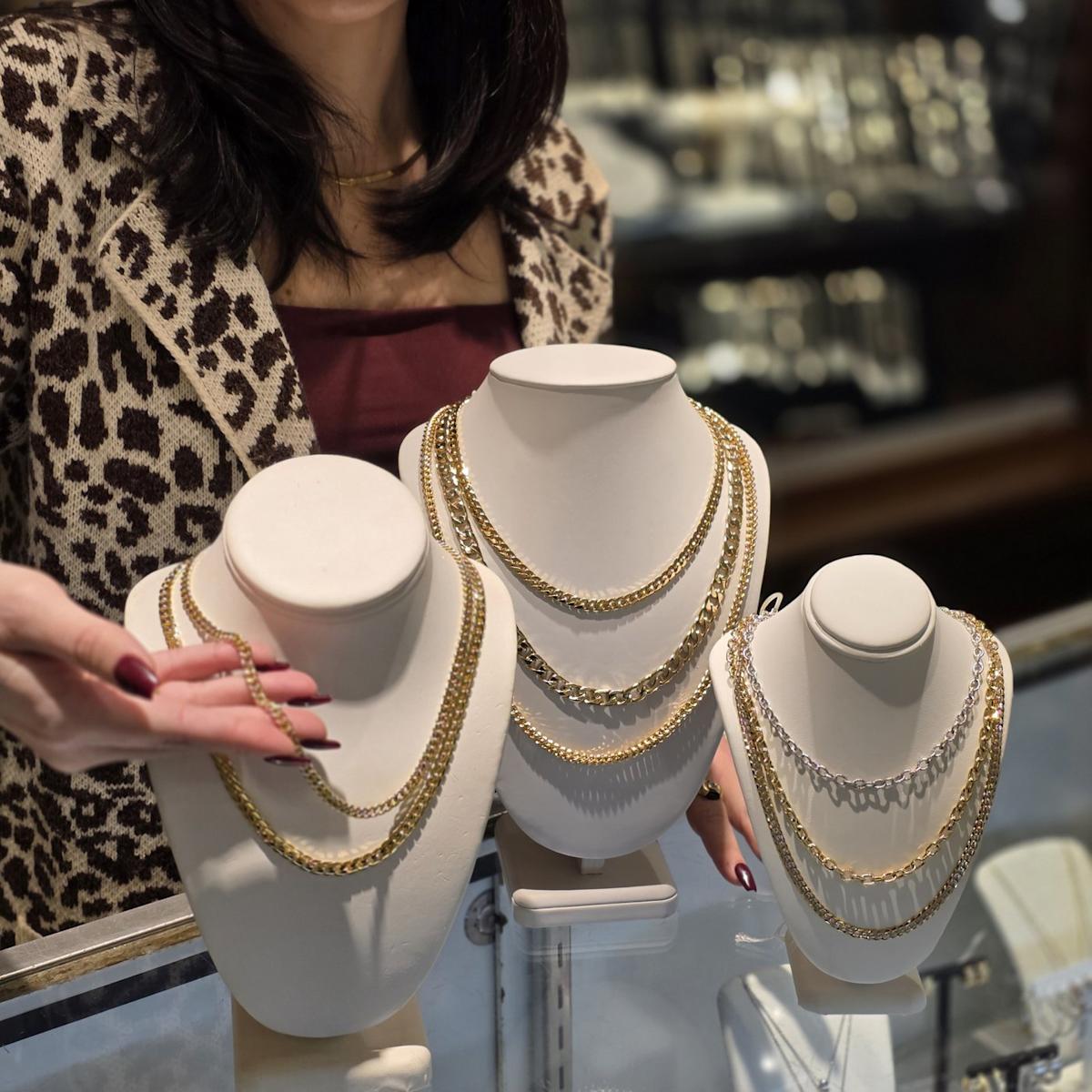
Jewelry hasn’t lost its shine for gift-givers this holiday season, but business owners are expecting a bit more price sensitivity from customers after a surge in gold prices this year.
The holiday season remains a key period for the jewelry industry, with gift items accounting for a significant share of yearly revenues. But jewellers have had to raise prices as the cost of gold sharply increased — soaring roughly 55 per cent year-to-date to top the US$4,000 per ounce mark.
“Anybody and everybody I believe is raising prices and if they’re not, they should be. Because what you have in stock, you cannot replace for the same price if you’re going to reorder it today,” said Colin Nash, president of the Canadian Jewelry Group and owner of Nash Jewellers.
Based on what his business has seen, consumers are still spending so far this year, but by lesser amounts in the face of rising prices — not just for gold, but for the cost of living overall.
“I think that we’re still going to get the traffic, it’s just a question of how much and what are they going to be buying,” he said.
Nash said he thinks some price-sensitive consumers may avoid higher-end gold products altogether in favour of less expensive sterling silver items.
James Poag, co-owner of James O. Poag Jewellers, said he is also seeing consumers keeping a tighter grip on their wallets.
“Maybe some of the product mixes are changing, we’re seeing a lot of lab-grown diamonds and a lot of larger hollow pieces of jewelry as opposed to heavier cast pieces just due to the price of gold,” he said.
He’s also seen an increase in repairs, with people choosing to restore older pieces instead of replacing them, while other customers are trading in older pieces of jewelry and repurposing them into a new design.
Larger jewelry brands are also making adjustments.
Mejuri CEO and co-founder Noura Sakkijha said in a statement that the company introduced 10-karat solid gold products to provide more accessible price points. She added that offering a wide range of materials, including 10- and 14-karat gold as well as vermeil and sterling silver, gives consumers more choice.
“We also made selective and measured price adjustments on certain 14-karat pieces to reflect raw material increases. At the same time, we’re seeing customers explore different materials and gravitate toward more delicate pieces in gold, which we expect to continue during the holiday season,” she said.
But not all price adjustments come from decisions made at the store level.
Nash said that since his company works with higher-end brands like Rolex, Tudor and Roberto Coin, those brands dictate price increases and set their own manufacturer’s suggested retail price. He said once a brand decides that a price increase is needed, it notifies any stores carrying their product to follow suit.

DUBAI, United Arab Emirates, Nov. 16, 2025 (GLOBE NEWSWIRE) — Mutuum Finance (MUTM) is entering one of its most important development stages. The project has been moving steadily across its roadmap, and with Roadmap Phase 2 now nearing completion, interest around the new crypto has grown even stronger. As funding approaches the $20 million mark, the community is watching closely as the next crypto development phase prepares to open the door to the project’s first major product release.
A Clear Vision for a DeFi Crypto Lending Protocol
Mutuum Finance is building a decentralized lending protocol designed for users who want a secure and transparent way to supply assets and access liquidity. The system is powered by smart contracts on Ethereum and aims to streamline the way lenders and borrowers interact. The project focuses on automation, stability and long term sustainability, which has helped it gain traction among DeFi crypto followers looking for early projects with clear development results.
Since its launch in early 2025, Mutuum Finance has continued to grow its community. The project has now raised $18.7 million, drawing steady interest at each presale stage. It has also reached 18,000 holders, a strong milestone for a new crypto still in its development cycle. These numbers show consistent activity and rising demand across multiple market conditions.
The presale has been a major part of Mutuum Finance’s early traction. It began at $0.01 in Phase 1 and progressed to $0.035 in the current Phase 6. This marks a 250% increase from the starting price, one of the reasons why more buyers have taken interest as new stages opened.
Phase 6 itself has been moving quickly. Allocation has now passed 88%, signaling strong demand as the project advances toward the next price level. Many buyers are following the remaining supply closely because each stage has a fixed rate. Once Phase 6 sells out, the price will not return to current levels. This has added a sense of urgency across the community, especially with development milestones approaching.
Token Distribution and Expanded Access for Buyers
Mutuum Finance has a total supply of 4 billion MUTM tokens. Out of this supply, 45.5%, equal to 1.82 billion tokens, is allocated for the presale. This distribution ensures broad early access while giving the ecosystem room to grow after launch.
So far, the presale has sold 800 million tokens, showing stable progress across all phases. With Phase 6 nearing completion, the presale is entering a decisive stage as the team moves closer to Roadmap Phase 3.

To make entry easier, the project now supports card purchases with no limits. This update was announced on X and helped open the presale to users who do not want to rely only on on-chain transactions. The expanded payment options have supported a rise in new buyers as Phase 6 inches toward closure.
Advancing Through Roadmap Phase 2
Roadmap Phase 2 has focused on building and refining the main systems that will power the lending protocol. The team has been working on the liquidity pool mechanics, mtToken logic, interest rate model, debt tracking and liquidation functions. These components form the foundation of the upcoming V1 release.
Phase 2 has also included internal testing, risk checks and preparation for the first public version. The team has emphasized stability and clear design, which is important for a DeFi protocol that plans to handle large amounts of value. As this stage nears completion, it marks a major step forward and sets the groundwork for the next key milestone.
According to the official announcement on X, the first version of the protocol will go live in Q4 2025 on the Sepolia testnet. This version will include the liquidity pool, mtTokens, debt tokens and the liquidator bot. Having a confirmed release window has become a major confidence point for the community, since it shows that the project is moving on schedule.
V1 is expected to introduce the first real look at how Mutuum Finance will operate. Users will be able to test deposits, borrowing, liquidation functions and the mtToken growth system. For a new crypto project moving through its roadmap, delivering a clear and dated milestone is often seen as one of the strongest indicators of momentum.
Security Measures and Community Trust
Security remains one of the core priorities for Mutuum Finance. The project completed a CertiK review and achieved a 90 out of 100 Token Scan score, which is a positive result for a protocol still preparing for its first version. Alongside the audit, the team runs a $50,000 bug bounty to encourage early discovery of code issues. These steps have helped build trust within the community as the project moves into more advanced stages of development.
With Phase 6 over 88% allocated, funding at $18.7 million, a growing user base and V1 confirmed for Q4 2025, Mutuum Finance has entered one of its strongest periods so far. Roadmap Phase 2 is close to completion, and the project is preparing to shift into the next stage of development.
As the DeFi crypto sector continues to evolve, Mutuum Finance is positioning itself as a rising new crypto with clear progress, strong community activity and a roadmap that continues to move forward as expected.
For more information about Mutuum Finance (MUTM) visit the links below:
Website: https://www.mutuum.com
Linktree: https://linktr.ee/mutuumfinance

A hotel in China has become the centre of discussion online after it introduced a special wake-up service that lets guests…
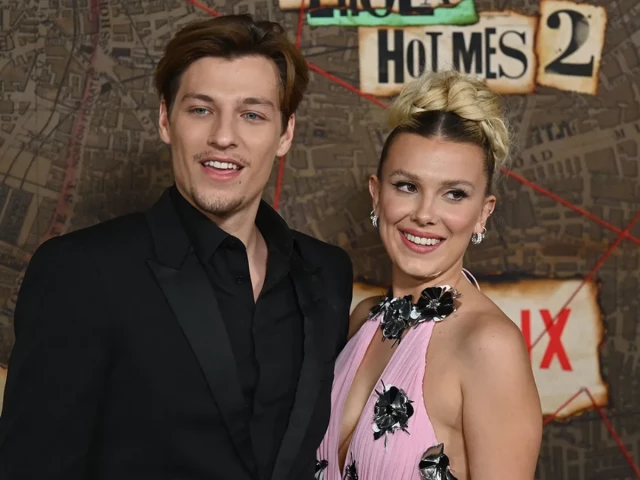
Earlier, fans criticised Bongiovi for not helping Millie Bobby Brown with their baby during recent outings
A newly surfaced video allegedly recorded a…