Australian speedster Josh Hazlewood was ruled out of the first Ashes Test against England at Perth, starting on November 21, due to a hamstring injury.
The 34-year-old was representing New South Wales in the Sheffield Shield clash against…

Australian speedster Josh Hazlewood was ruled out of the first Ashes Test against England at Perth, starting on November 21, due to a hamstring injury.
The 34-year-old was representing New South Wales in the Sheffield Shield clash against…

Pope Leo XIV welcomes actors, filmmakers, directors, and scriptwriters for an audience in the Vatican, and challenges them to be “witnesses of hope, beauty and truth” in our world today.
By Kielce Gussie
The Vatican’s Apostolic…

Madison Beer gets “bored” performing some of her old songs live.
The 26-year-old star “cherishes” being able to sing and singled out Nothing Matters But You as…


Pakistan football team’s preparations for their AFC Asian Cup qualifier against Syria have taken a major hit, with dynamic midfielder Adil Nabi suffering a hamstring injury during training — an untimely setback that now leaves him…

Spotify has begun beta testing AI-powered audiobook recaps for iOS users, aiming to simplify resuming listening sessions. The feature summarizes audiobooks up to the point where users last stopped, letting them quickly catch up.
Currently, recaps…
Globant reported third-quarter 2025 results with revenue of US$617.14 million, slightly above the previous year’s figure, but net income and earnings per share both declined substantially year-over-year, prompting concerns about operational efficiency.
The company announced a US$125 million share repurchase program and highlighted record growth in its AI-driven pipeline, including expanded partnerships and increasing client adoption of subscription-based AI solutions.
We’ll examine how Globant’s earnings miss, despite pipeline growth and a buyback, shapes its investment outlook going forward.
These 13 companies survived and thrived after COVID and have the right ingredients to survive Trump’s tariffs. Discover why before your portfolio feels the trade war pinch.
To be a Globant shareholder today, you need to believe that its AI-driven offerings and expanding partnerships will convert a record pipeline into sustained, profitable growth, despite evidence of near-term earnings pressure. The latest results saw revenue edge higher, but declining margins and a cautious Q4 outlook reinforce that the pace of digital transformation projects and client adoption of new AI models remain the most important catalysts, while unpredictability in deal conversions is the key risk. In the short term, the impact of this earnings miss reinforces concerns about demand softness rather than changing the underlying drivers, so the main risk remains material for now.
Among the recent announcements, Globant’s US$125 million share repurchase program stands out in context. It signals confidence in its long-term opportunity, but also draws attention to current margin pressure and the need to reassure investors as the business works to scale its new AI and subscription-oriented initiatives. This move does not reduce the importance of converting backlog into actual revenue, especially given the subdued growth outlook.
By contrast, investors should be aware of how persistent delays in deal conversions and an unpredictable pipeline could affect…
Read the full narrative on Globant (it’s free!)
Globant’s narrative projects $3.0 billion revenue and $242.1 million earnings by 2028. This requires 6.1% yearly revenue growth and a $131.8 million earnings increase from $110.3 million.
Uncover how Globant’s forecasts yield a $95.62 fair value, a 57% upside to its current price.
Six Simply Wall St Community members provided fair value estimates for Globant, ranging from US$61.97 to US$120.50 per share. With revenue growth continuing to trail analyst expectations, the risks from delayed deal closures and slower client demand remain at the forefront for many investors.

Google is now testing its own version of Apple’s NameDrop, more than two years after Apple introduced the feature with iOS 17 in 2023. Apple’s tool lets users share files and contact details by bringing two iPhones together, and Google seems…
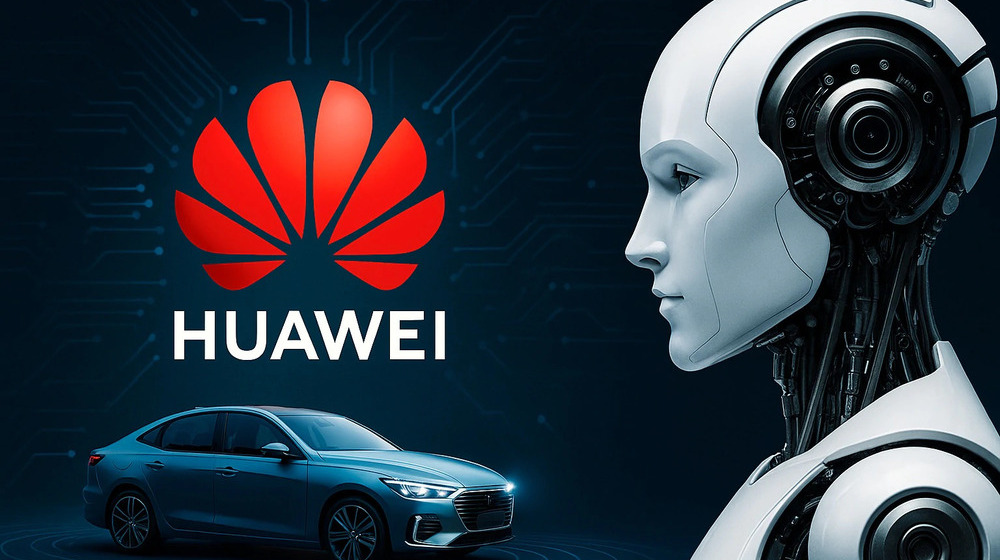
Huawei Habo has taken a major step in the field of physical artificial intelligence by investing in GigaAI, a fast-growing startup focused on world-model-based general intelligence. The move comes as part of Huawei’s efforts to expand its capabilities in embodied intelligence and next-generation autonomous technologies.
GigaAI’s technology is already being tested in autonomous driving, robotics, and general embodied intelligence applications. It operates through a complete software-hardware ecosystem designed for physical intelligence. The GigaWorld platform supports driving intelligence and advanced embodied systems. The GigaBrain foundational model powers adaptive world-model-based decision-making, while the Maker General Embodied Ontology provides structured knowledge tools for developers and physical agents.
Together, these components create an end-to-end solution for complex environments.
Huawei’s investment aligns with its ongoing shift from VLA (Vision-Language-Action) models toward a WA (World-Action) strategy. WA relies on visual and physical signals to control intelligent agents instead of depending heavily on language models.
This strategy, supported by Huawei Intelligent Automotive Solutions BU CEO Jin Yuzhi, forms an important part of Huawei’s long-term AI roadmap. By supporting GigaAI, Huawei aims to accelerate progress in world-model research, physical AI, and embodied intelligence across autonomous mobility and robotics.
GigaAI recently closed its Series A1 funding round, securing more than one hundred million yuan ($14 million) in early November. Huawei Habo Investment and Huakong Fund jointly led the round. This follows GigaVision’s successful Pre-A and Pre-A+ rounds in August, during which it raised several hundred million yuan.
For everyday users, these developments could lead to safer autonomous vehicles, more capable home robots, and AI assistants that can respond more effectively to real-world scenarios instead of relying only on digital inputs.
Analysts believe the shift toward physical AI could spark a technological transition similar to the early smartphone era, bringing intelligent machines into daily life in more practical ways.
Founded in 2023, GigaAI is China’s first startup dedicated to world-model research for physical AI. The company aims to develop general intelligence systems capable of understanding and interacting with real-world environments.
Its mission centers on building intelligent systems that can predict, adapt, and function in physical settings, laying the groundwork for future advances in robotics, autonomous driving, and embodied AI.
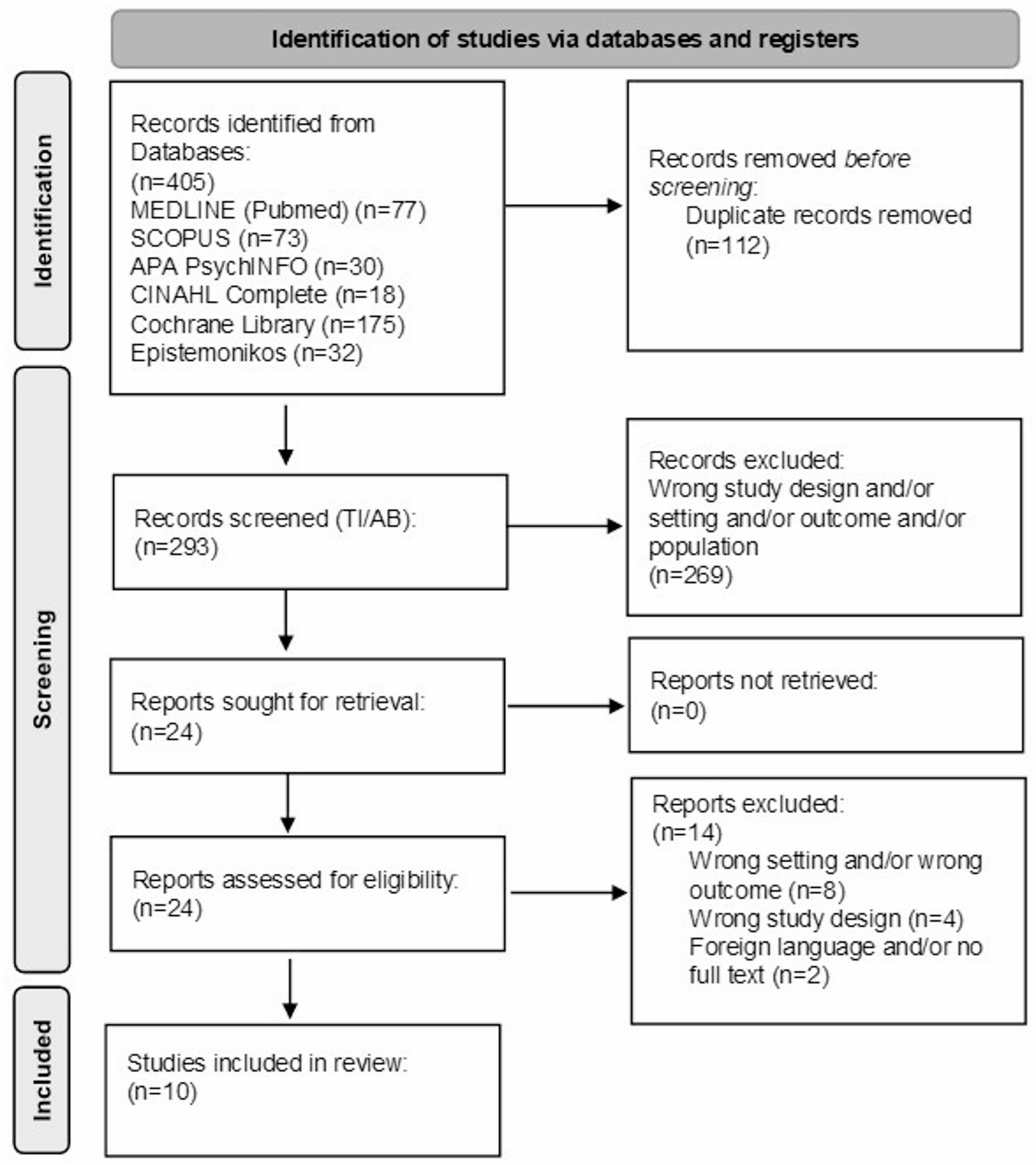
We identified 405 literature reviews with 364 primary studies in the five databases and removed 112 publications due to duplication. The reviews were published between 2012 and 2021. We excluded 269 publications after screening…