Author: admin

  • South Korean growers sue state power utility, blaming climate change for crop damage

    South Korean growers sue state power utility, blaming climate change for crop damage

    SEOSAN, South Korea — Hwang Seong-yeol stood at the edge of a golden field, watching nervously as a combine harvester crawled through his rice, churning up mud and stalks. Its steady hum filled the damp autumn air as grain poured into a truck waiting at the other end of the muddy paddy.

    It was the final day of what Hwang said was one of his toughest seasons in three decades of farming. He and other farmers feel helpless against increasingly erratic weather that they link to climate change and damage to their crops. It has complicated their work and cast uncertainty over their futures.

    Hwang is one of five South Korean farmers who recently sued the state utility Korea Electric Power Corporation and its power-generating subsidiaries, alleging that their reliance on coal and other fossil fuels has accelerated climate change and damaged their crops.

    The lawsuit raises questions about whether power companies’ role in driving climate change, and the resulting agricultural losses, can be quantified. It is the first of its kind in South Korea, said Yeny Kim, a lawyer with the Seoul-based nonprofit Solutions for Our Climate, who is handling the case.

    The case underscores the challenges South Korea, a manufacturing power that industrialized long after the Western nations now pressuring others to abandon fossil fuels, faces in transitioning to cleaner energy.

    Hwang’s fields are on a reclaimed coastal plain along South Korea’s western sea, where glimmering waterways crisscross dark, rich soil and flocks of migratory geese drift overhead, moving like a giant, living quilt.

    A remarkably rainy September and October followed a bitterly cold spring that stunted plant growth. Summer floods caused further damage before the wet autumn bred fungal disease.

    Hwang would have preferred to harvest in drier weather but had to do so sooner as relentless rains pushed rice stalks into the soil, causing the ripe grains to sprout. That day in late October was only the second dry day after 18 straight days of rain.

    “It’s really unsettling – we know how much rice we should normally get from 30,000 pyeong (25 acres) of land, but the yield has been steadily declining every year,” said Hwang, who expects this year’s harvest to be 20% to 25% below normal.

    “We began to question why it’s always the farmers — who haven’t done anything wrong — that end up suffering the consequences of the climate crisis. Shouldn’t we be demanding something from those who are actually causing it?”

    Farmers are “inherently vulnerable” to climate change, said Kim, the lawyer.

    In an annual climate report in April, South Korea’s government detailed how a year of extreme weather events in 2024, the country’s hottest year ever, triggered a series of “agricultural disasters” of heavy summer rains that destroyed thousands of hectares (acres) of cropland, followed by weeks of intense heat that wrecked still more crops, mostly rice.

    Kim and her colleagues decided to file the lawsuit, which represents plaintiffs from across South Korea, after speaking with Hwang and others at farmers markets.

    They say KEPCO, which holds a monopoly on electricity transmission and fully owns its subsidiaries, should bear some blame for the destabilized weather, citing what they say are excessive carbon emissions and a lagging transition to renewable energy.

    From 2011-2022, the companies produced about 30% of South Korea’s greenhouse gas emissions and roughly 0.4% of global emissions, based on Kim’s analysis of publicly available data.

    “Therefore, they should also bear 0.4% of the responsibility for the farmers’ losses,” Kim said.

    The lawsuit seeks initial damage claims of 5 million won ($3,400) per client, an amount likely to be adjusted as the case proceeds. The plaintiffs are also symbolically seeking 2,035 won ($1.4) each to urge the government to phase out coal power plants by 2035, ahead of its 2040 target.

    Renewable energy accounted for only 10.5% of the national energy mix in 2024, and the five KEPCO subsidiaries relied on coal for more than 71% of the electricity they produced that year, according to government data.

    KEPCO told The Associated Press it considers carbon reduction a key responsibility, citing its goal of cutting emissions 40% by 2030 from 2018 levels. But it declined to comment further on the lawsuit, saying it “cannot share information that could influence the verdict.”

    Experts say mounting debt, now at over 200 trillion won ($137 billion), that accumulated over decades of government policies that kept electricity rates low for households and industries, limits the utility’s ability to expand and modernize the power grid or invest in renewable energy.

    Yun Sun-Jin, a professor at Seoul National University, said the lawsuit has symbolic value but questioned whether blame could fall solely on KEPCO, given that everyone benefits from its cheap electricity.

    It would be difficult to prove the utility directly caused farm losses, when climate change is a “global problem,” she said.

    It does draw attention to South Korea’s need for a more effective approach to renewable energy, Yun said, including deregulating solar investments, expanding sources such as offshore wind, and ending KEPCO’s monopoly over electricity transmission to encourage other competitors with diverse technologies.

    South Korea is expected to reach its target of 32.95% renewable energy by around 2038 — far slower than the 33.49% average in 2023 among developed economies in the Organization for Economic Cooperation and Development, according to the Institute for Energy Economics and Financial Analysis.

    Some experts, including Yun, warn that South Korea’s slow shift to renewable energy could hinder its ambitions in advanced semiconductors and artificial intelligence, as its tech giants face global pressure to operate on clean power.

    “Climate change and carbon neutrality are not just environmental concerns — they are economic issues, ultimately about jobs and our survival,” Yun said.

    The impact of extreme weather resulting from climate change is far reaching in South Korea.

    Farmers now face higher costs and must use more labor to produce the same or lower yields.

    Ma Yong-un, an apple farmer in the southeastern town of Hamyang, said he is using more pesticides as pests and diseases become harder to control due to prolonged heat and humidity. The apples that thrived in cooler weather during his father’s days are less plentiful and tasty, he said.

    From tangerine farmers on Jeju island to strawberry growers in Sancheong to the southeast, farmers are trying to devise ways to survive.

    For the first time since he began farming in 2011, Ma coated all the fruit on his 2,200 trees with a mixture of copper sulfate and lime to prevent fungal infections and skin damage from intense sunlight.

    He began to think seriously about climate change in 2018, when a heavy April snowstorm damaged flower buds, leading to one of his worst harvests. Farming is becoming harder each year and he constantly wonders how much longer he can carry on.

    “I think about that every day,” said Ma, who is raising two teenage boys with his wife. “The biggest concern is my children.”

    Continue Reading

  • Will Pakistan’s defence overhaul strengthen or upset its military balance? | Military News

    Will Pakistan’s defence overhaul strengthen or upset its military balance? | Military News

    Islamabad, Pakistan – Pakistan has codified the most ambitious restructure of its military and judiciary in decades after President Asif Ali Zardari signed his assent to ratify the country’s 27th Constitutional Amendment on Thursday.

    The…

    Continue Reading

  • Thomson Hospital Champions A Holistic Approach To Men’s Health

    Thomson Hospital Champions A Holistic Approach To Men’s Health

    KUALA LUMPUR, Nov 14 — When it comes to health, men are often reluctant to seek medical attention until symptoms become severe.

    At Thomson Hospital Kota Damansara, specialists are urging men to take a…

    Continue Reading

  • Ukraine used its Flamingo cruise missile alongside domestically produced drones to strike “several dozen objects” in Russian-occupied territories and inside Russia itself on Thursday, the Ukrainian military general staff said. The…

Continue Reading

  • WA Farm Direct highlights Bravo apple’s heart health benefits | News

    WA Farm Direct highlights Bravo apple’s heart health benefits | News

    New research shows the burgundy apple has one of the highest levels of flavonoids in Australia  

    Bravo marketer WA Farm Direct has enlisted the help of health professionals to  draw attention to the fruit’s health benefits as the 2025…

    Continue Reading

  • Atlas 5 rocket launches U.S. communications satellite

    Atlas 5 rocket launches U.S. communications satellite

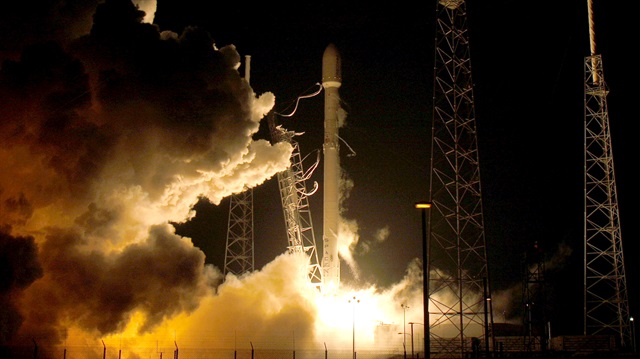
    A United Launch Alliance (ULA) Atlas rocket launches a payload of 27 Project Kuiper satellites for Amazon from Launch Complex 41 at 8:09 AM at the Cape Canaveral Space Force Station, Florida on Thursday September 25, 2025. Photo by Joe Marino/UPI…

    Continue Reading

  • CEO Southeast Asia’s top bank DBS says AI adoption already paying off

    CEO Southeast Asia’s top bank DBS says AI adoption already paying off

    Tan Su Shan, chief executive officer of DBS Group Holdings Ltd., speaking at the Singapore Fintech Festival in Singapore, on Nov. 12, 2025.

    Bloomberg | Bloomberg | Getty Images

    SINGAPORE – Amid fears of an artificial intelligence bubble, much has been made of recent reports suggesting that AI has yet to generate returns for companies investing billions into adopting the tech. 

    But that’s not what the chief executive of Southeast Asia’s largest bank is seeing — she says her firm is already reaping the rewards of its AI initiatives, and it’s only just the beginning. 

    “It’s not hope. It’s now. It’s already happening. And it will get even better,” DBS CEO Tan Su Shan told CNBC  on the sidelines of Singapore Fintech Week, when asked about the promise of AI adoption.  

    DBS has been working to implement artificial intelligence across its bank for over a decade, which helped prepare its internal data analytics for recent waves of generative and agentic AI. 

    Agentic AI is a type of artificial intelligence that relies on data to proactively make independent decisions, plan and execute tasks autonomously, with minimal human oversight.

    Tan expects AI adoption to bring DBS an overall revenue bump of more than 1 billion Singapore dollars (about $768 million) this year, compared to SG$750 million in 2024. That assessment is based on about 370 AI use cases powered by over 1,500 models throughout its business. 

    “The proliferation of generative AI has been transformative for us,” Tan said, adding that the company was experiencing a “snowballing effect” of benefits thanks to machine learning. 

    A major area in which DBS has applied AI is in its financial services to institutional clients, with AI used to collect and leverage data for clients in order to better contextualize and personalize offerings. 

    According to Tan, this has resulted in “faster and more resilient” teams. The CEO believes that these uses of AI have contributed to a recent uptick in the bank’s deposit growth as compared to competitors’.

    The company also recently launched a newly enhanced AI-powered assistant for corporate clients known as “DBS Joy,” which assists clients with unique corporate banking queries around the clock. 

    ROI concerns 

    Despite Tan’s strong convictions about AI, recent evidence suggests that many companies are struggling to turn their AI investments into tangible profits. 

    MIT released a report in July that found 95% of 300 publicly disclosed AI initiatives, encompassing generative AI investments of $30–$40 billion, had failed to achieve real returns. 

    However, at least in the banking sector, there are signs that the tides are turning. 

    While DBS doesn’t differentiate spending in generative AI from other in-house investments, other major banks have recently offered this comparison. 

    JPMorgan Chase CEO Jamie Dimon stated in an interview with Bloomberg TV last month that the bank is already breaking even on its approximately $2 billion of annual investments in AI adoption. That represents “just the tip of the iceberg,” he added.

    Those expectations are shared by DBS, which plans to continue to accelerate its AI development to become an AI-powered bank.

    The ultimate goal, according to Tan, is for its generative AI to develop into a trusted financial advisor for clients, including retail users who are expected to interact with personalized AI agents through the DBS banking app. 

    The bank already has over 100 AI algorithms that analyze users’ data to provide them with personalized “nudges,” such as alerts on incoming shortfalls, product recommendations, and other insights. 

    Continued AI investments 

    While DBS may already be reaping rewards from its AI adoption, Tan acknowledged that it will require continued investments, not only in capital, but in the time needed to reskill employees. 

    The company has launched several AI reskilling initiatives across departments this year and has even deployed a generative AI-powered coaching tool to support these efforts. 

    This will help the company automate mundane work and refocus its staff on building and maintaining human-to-human relationships with customers, rather than reducing headcount, Tan said. 

    “We’re not freezing hiring, but it does mean reskilling. And that’s a journey. It’s a never-ending journey … a constant evolution.”

    Continue Reading

  • China house prices decline by most in a year

    China house prices decline by most in a year

    Stay informed with free updates

    China’s house prices have declined by the most in a year, while industrial production and investment figures both missed expectations, underlining pressure on policymakers to maintain growth in the world’s second-largest economy.

    New home prices fell 0.45 per cent in October from the previous month, the most since October last year and greater than a 0.4 per cent decline in September, according to data released by China’s National Bureau of Statistics on Friday.

    Industrial production rose 4.9 per cent from a year earlier, trailing a forecast of 5.5 per cent in an analyst poll by Reuters and the 6.5 per cent growth in September. Retail sales in October expanded 2.9 per cent, better than expectations of 2.8 per cent in the Reuters poll but down from 3 per cent the previous month. Both were the weakest readings since August 2024.

    Fixed asset investment, meanwhile, continued to fall, recording a 1.7 per cent decline year to date on a year earlier year, worse than forecasts of a 0.8 per cent drop and a 0.5 per cent contraction to September.

    Fu Linghui, spokesperson of the National Bureau of Statistics, said that while the overall economy was operating “relatively smoothly”, with progress in developing new industries, there were “many unstable and uncertain factors in the external environment”.

    “There is significant pressure to adjust domestic economic structure, which pose several challenges to maintaining stable economic operation,” Fu said.

    Some content could not load. Check your internet connection or browser settings.

    China is grappling with what economists call a “two-speed” economy, with trade and exports broadly holding up growth despite US President Donald Trump’s trade war, while the domestic economy suffers from weak demand and a prolonged bout of deflation.

    Authorities announced a pivot to bolstering domestic demand more than a year ago, which has included easing monetary policy, issuing stimulus bonds and unveiling programmes to support households.

    But those efforts have yet to significantly revitalise consumption, which has been hit by a years-long slowdown in the real estate market that has weighing on household spending and consumer confidence.

    The NBS said the year-to-date decline in property development investment had deepened from 13.9 per cent to 14.7 year on year by the end of October.

    “Today’s data signals the ongoing weakness in housing investment and developer sentiment,” Yuhan Zhang, principal economist at the Conference Board said in a new report. “The second-hand market, in particular, reflects structural oversupply and weak consumer confidence.”

    He said China had modest and uneven growth in fixed-asset investment in manufacturing, led by autos and transport equipment.

    “We will continue to see policy-directed investment in infrastructure, advanced manufacturing, and industrial upgrading,” Zhang said.

    Additional contributions by Wenjie Ding in Beijing. Data visualisation by Haohsiang Ko in Hong Kong

    Continue Reading

  • Just a moment…

    Just a moment…

    Continue Reading

  • Blue Origin launches New Glenn rocket carrying NASA spacecraft to Mars – news.cgtn.com

    Blue Origin launches New Glenn rocket carrying NASA spacecraft to Mars – news.cgtn.com

    1. Blue Origin launches New Glenn rocket carrying NASA spacecraft to Mars  news.cgtn.com
    2. NASA’s ESCAPADE mission to Mars — twin UC Berkeley satellites dubbed Blue and Gold — will launch in early November  Berkeley News
    3. Blue Origin set for space…

    Continue Reading