BEIJING (Reuters) – China’s Premier Li Qiang will attend the Group of 20 summit in South Africa from November 21 to November 23, the foreign ministry said on Thursday.
Li will also attend a Shanghai Cooperation…
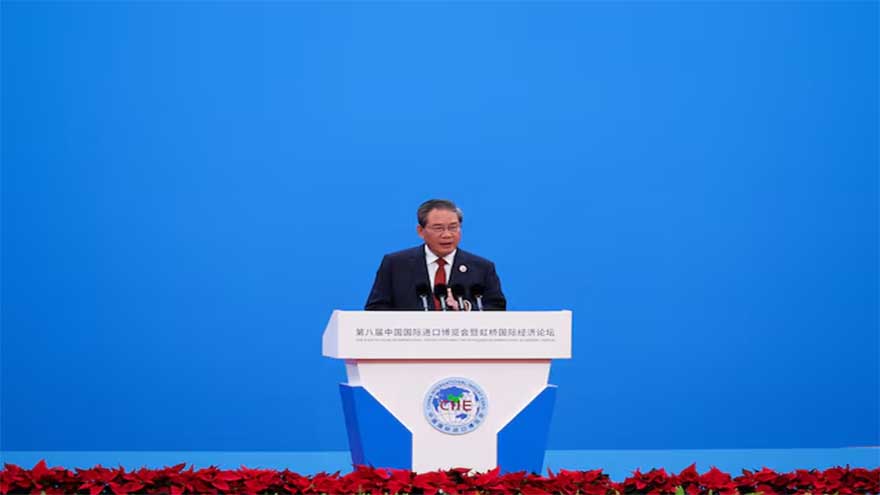
BEIJING (Reuters) – China’s Premier Li Qiang will attend the Group of 20 summit in South Africa from November 21 to November 23, the foreign ministry said on Thursday.
Li will also attend a Shanghai Cooperation…

Double wage rules in China have been clarified under Judicial Interpretation II, reducing ambiguity for employers. The new interpretation explains when double wages apply, clarifies exemptions, and standardizes calculation methods. This article provides practical compliance guidance for HR teams. (Also see our series article: China’s New Judicial Interpretation II on Labor Disputes: Key Themes at a Glance)
On August 1, 2025, China’s Supreme People’s Court (SPC) issued the long-awaited Judicial Interpretation II on the Application of Law in Labor Dispute Cases (Fa Shi [2025] No. 12, hereinafter “Judicial Interpretation II” or Interpretation II”), along with a set of illustrative cases. Both took effect on September 1, 2025.
This interpretation aims to unify judicial standards in labor disputes and clarify several long-standing ambiguities under the PRC Labor Contract Law, including the controversial “double wage” rule for failing to sign written labor contracts.
Find Business Support
Under Article 82 of the Labor Contract Law, employers who do not conclude a written labor contract within one month of employment must pay the employee double wages for each month without a contract. While this rule is designed to protect employees, its application has often been inconsistent, creating compliance risks for foreign-invested enterprises (FIEs). Judicial Interpretation II addresses these gaps by:
For HR teams and compliance managers, understanding these updates is critical to avoid costly disputes and ensure smooth labor relations. This article explains when double wages must be paid, how to calculate them, and what the exemptions mean for employers under the latest judicial guidance.
Under Article 82 of the PRC Labor Contract Law, employers who fail to conclude a written labor contract within one month from the employee’s start date must pay the employee double wages for each month without a contract, up to a maximum of 11 months. Similarly, if an employer fails to enter into an open-ended labor contract when legally required, double wages apply from the date such obligation arises.
However, the original law did not specify any exceptions to this rule, which often led to disputes and inconsistent judgments. In practice, circumstances can be complex, placing all liability on the employer may be unfair when delays result from factors beyond their control. Judicial Interpretation II addresses this gap by introducing clear exemptions and calculation standards, reducing uncertainty for both employers and employees.
Article 7
Where a laborer requests the employer to pay double wages on the grounds that the employer failed to conclude a written labor contract, the people’s court shall support such claim in accordance with the law, except where the employer adduces evidence to prove any of the following circumstances: (1) The failure to conclude a contract was due to force majeure; (2) The failure to conclude a contract was due to the laborer’s own intent or gross negligence; (3) Other circumstances as provided by laws or administrative regulations.
In practice, courts have recognized that not all failures to sign a written labor contract should automatically result in double wage liability. For example, the Shanghai High People’s Court Opinions on Applying the Labor Contract Law state that if an employer has fulfilled its good-faith obligations, and the failure to sign was due to force majeure, unexpected circumstances, or the employee’s refusal, such cases do not constitute “failure to conclude a written labor contract” by the employer.
Building on these regional practices, Judicial Interpretation II (Article 7) now provides nationwide clarity by adopting a more restrictive and fair approach. It specifies that when an employee claims double wages for lack of a written contract, courts will not support the claim if the employer can prove any of the following:
This provision emphasizes substantive review of the reasons behind the failure to sign. If the employer can show evidence that it delivered a written or electronic contract and had no deliberate intent to avoid signing, it may be exempt from double wage liability, even if the contract was ultimately not signed. This demonstrates the importance of documenting contract delivery and communication efforts as part of HR compliance.
Force majeure, recognized under civil law as a ground for exemption from liability, also applies in labor contract disputes. If an employer cannot sign a contract due to force majeure, and there is a direct causal link between the event and the failure to sign, the employer bears no fault and is exempt from paying double wages. However, the burden of proof lies with the employer to establish this causal connection.
When the failure to sign is due to the employee’s intentional act or gross negligence, the employer is not required to pay double wages. Judicial practice supports this principle: if the employer has fulfilled its good-faith obligation to conclude the contract, and the responsibility lies entirely with the employee, courts typically reject double wage claims.
Find Business Support

For example, in Illustrative Case No. 3 released alongside Interpretation II, the employer repeatedly urged the employee to renew the contract, but the employee refused, hoping to claim double wages by citing company dissolution rumors. The court ruled that the employee’s intentional refusal absolved the employer of liability. Similarly, for employees in HR or managerial roles responsible for contract administration, failure to sign may often be attributed to their own gross negligence or intent, and courts will allocate responsibility accordingly.
Notably, during the drafting process, the exemption clause evolved from “due to the employee’s own reasons” to “due to the employee’s intentional act or gross negligence,” reflecting a more precise and rigorous standard focused on employee fault.
Article 8
Where the term of a labor contract expires and any of the following circumstances applies, the people’s court shall determine that the term of the labor contract is automatically extended in accordance with the law, and it shall not be deemed as a failure by the employer to conclude a written labor contract: (1) The employer is prohibited from terminating the labor contract as provided in Article 42 of the Labor Contract Law; (2) The service period has not yet expired as provided in Article 17 of the Implementation Regulations of the Labor Contract Law; (3) The term of office has not yet expired as provided in Article 19 of the Trade Union Law.
Judicial Interpretation II (Article 8) confirms that when a labor contract expires but is automatically extended by law, the employer is not liable for double wages during the extension period. This aligns with mainstream judicial practice and addresses situations where employers cannot renew contracts due to statutory restrictions.
Under the Labor Contract Law and related regulations, automatic extension applies in the following cases:
In these scenarios, the law deems the contract extended, even if the employer does not sign a new written contract. Because the employee’s rights remain protected, there is no need to impose double wage liability. This rule prevents employers from being penalized for circumstances beyond their control, such as statutory prohibitions or ongoing obligations.
Article 9
Where there is evidence to prove the existence of circumstances as specified in Paragraph 3 of Article 14 of the Labor Contract Law, i.e., “it shall be deemed that the employer has concluded an open-ended labor contract with the laborer,” and the laborer requests to conclude a written labor contract with the employer, the people’s court shall support such claim in accordance with the law; where the laborer requests the employer to pay double wages for the period deemed as an open-ended labor contract on the grounds that the employer failed to timely supplement the written labor contract, the people’s court shall not support such claim.
Judicial Interpretation II (Article 9) narrows the scope of double wage claims in cases involving open-ended labor contracts. Under Article 14(3) of the Labor Contract Law, if an employer fails to sign a written contract for one year from the employee’s start date, the law deems that an open-ended labor contract has been established. In such cases, the employee may request the employer to supplement the written contract, but cannot claim double wages for the deemed period.
This clarification reinforces the punitive nature of double wage liability. It is intended to encourage timely contract signing, not to create windfall gains for employees. By limiting claims, the rule prevents abuse of rights and strikes a balance between protecting employees and avoiding excessive penalties for employers.
Find Business Support
Judicial Interpretation II (Article 6) provides a clear calculation method for double wages, resolving inconsistencies in past practice. The rule clarifies that if an employer fails to conclude a written labor contract in accordance with the law, double wages shall be calculated on a monthly basis; if the period is less than one month, calculation shall be based on the actual working days of that month.
This change standardizes the approach for partial months, ensuring precision and fairness. For example, if an employee works 20 days without a written contract and their monthly salary is RMB 5,000, the double wage should be calculated based on the actual working days, not an estimated or “blurred” formula.
Article 6
Where an employer fails to conclude a written labor contract with a laborer in accordance with the law, it shall pay the laborer double wages on a monthly basis; if the period is less than one month, payment shall be calculated based on the actual working days in that month.
The final text of Interpretation II replaces the draft term payable days (“计薪日”) with actual working days (“实际工作日”) as the basis for calculation. This distinction matters because:
For example, in October 2025 (31 days), with nine weekend rest days (including adjusted rest days) and four statutory holidays (three days National Day holiday + 1 day Mid-Autumn Festival):
Of course, the above discussion is based on normal circumstances. In special cases, such as when an employee works on rest days or statutory holidays, those days are naturally counted as actual working days as well.
One common misunderstanding is confusing the “payable days” and “actual working days” mentioned in Judicial Interpretation II with the monthly averages defined in the Ministry of Human Resources and Social Security (MOHRSS) notice on wage conversion standards (MOHRSS Notice [2025] No. 2). The MOHRSS document specifies:
These figures are annual averages used for standardizing wage calculations (for example, converting a monthly salary to a daily or hourly rate). They smooth out variations in month length and holiday distribution. By contrast, Judicial Interpretation II refers to the actual number of working days in a specific month, not an annual average. This distinction is critical for calculating double wages accurately.
Judicial Interpretation II states that double wages for a full month should be calculated by month. But what does “month” mean in this context?
In judicial practice, “by month” is generally understood as a natural month (calendar month, from the first day to the last day of the same month. This interpretation ensures clarity and operational consistency. If “month” were treated as any arbitrary 30 or 31-day period, calculation start and end points would become confusing and prone to disputes.
Based on our understanding, Article 6 of Judicial Interpretation II supports this reading:
Example: How to calculate double wages
Suppose an employee joins on July 15, 2025, with a monthly salary of RMB 20,000, and the company fails to sign a written labor contract. The employee works full attendance from August 15 to August 31 (11 actual working days), works normally throughout September, and then resigns on October 10 after working six days and taking four statutory holidays (National Day and Mid-Autumn). Normal wages (including overtime payment) have already been paid, but the employee claims double wages for the period without a contract (August 15–October 10).
Known data:
Step 1: August (partial month):
From August 15 to 31, the employee worked 11 actual days. Double wage = 919.54 × 11 = RMB 10,114.94.
Step 2: September (full month):
September is a complete natural month, so double wage = monthly salary = RMB 20,000.
Step 3: October (partial month):
From October 1 to 10, the employee worked 6 days (excluding 4 holidays). Double wage = 919.54 × 6 = RMB 5,517.24.
Total double wage = 10,114.94 + 20,000 + 5,517.24 = RMB 35,632.18.
Find Business Support
For employers, preventing double wage disputes starts with proactive compliance and thorough documentation. First and foremost, companies should establish a standardized contract management process to ensure written labor contracts are signed within the statutory one-month period.
When delays occur due to circumstances beyond the employer’s control, such as force majeure or the employee’s refusal to sign, it is critical to retain evidence. This includes official emergency notices, disaster alerts, and written or electronic communication records (emails, SMS, chat logs) showing repeated attempts to conclude the contract. Such documentation demonstrates good-faith efforts and can exempt the employer from liability under Judicial Interpretation II.
Employers should also be aware of automatic extension scenarios. Before a labor contract expires, HR teams must verify whether a statutory extension applies, such as during maternity leave, medical treatment, or union duties. In these cases, issuing a written extension notice that specifies the extended term helps prevent misunderstandings and disputes.
Finally, HR professionals should be trained on the correct calculation rules for double wages. Calculations should always be based on the actual working days in the specific month. By combining timely contract execution, clear communication, and meticulous record-keeping, employers can significantly reduce compliance risks and protect their interests.
About Us
China Briefing is one of five regional Asia Briefing publications. It is supported by Dezan Shira & Associates, a pan-Asia, multi-disciplinary professional services firm that assists foreign investors throughout Asia, including through offices in Beijing, Tianjin, Dalian, Qingdao, Shanghai, Hangzhou, Ningbo, Suzhou, Guangzhou, Haikou, Zhongshan, Shenzhen, and Hong Kong in China. Dezan Shira & Associates also maintains offices or has alliance partners assisting foreign investors in Vietnam, Indonesia, Singapore, India, Malaysia, Mongolia, Dubai (UAE), Japan, South Korea, Nepal, The Philippines, Sri Lanka, Thailand, Italy, Germany, Bangladesh, Australia, United States, and United Kingdom and Ireland.
For a complimentary subscription to China Briefing’s content products, please click here. For support with establishing a business in China or for assistance in analyzing and entering markets, please contact the firm at china@dezshira.com or visit our website at www.dezshira.com.

A coalition led by Iraq’s prime minister has won the country’s parliamentary elections, Baghdad’s electoral commission has said.
Mohammed Shia al Sudani, who has led the Middle Eastern nation since 2022, was seeking a second term in…

Gustav Borg, the fictional filmmaker played by Stellan Skarsgård in director Joachim Trier’s “Sentimental Value,” is at a stage in his career where he spends most of his time collecting lifetime achievement awards and attending…

Scientists have issued a chilling warning regarding the city-killier asteroid, 2024 YR4,…

Daniel Sandford,UK correspondent and
Joshua Askew,South East
 Surrey Police
Council staff tried to check on 10-year-old Sara Sharif the day before she was murdered by her father and…

Former England captain Michael Vaughan has said that the current group of players must respect the opinion of former cricketers, who he felt desperately wanted the side to win the Ashes against Australia Down Under. The 51-year-old said that the…

A few years ago, the idea that a feature could be generated — written, shot and “acted” — largely by artificial intelligence felt like science fiction. Now, OpenAI’s Sora 2 can spit out hyper-real video from a prompt, “AI talent”…

This tripartite agreement will empower public and private enterprises with locally hosted solutions that comply with regional data protection laws and enable digital independence.
NAIROBI, KENYA | MUMBAI, INDIA, November 13, 2025: In a landmark move to advance Africa’s digital transformation agenda, Tata Consultancy Services (TCS) (BSE: 532540, NSE: TCS), Sybyl, and IXAfrica Data Centre Limited (iXAfrica) have announced a strategic partnership to establish and scale sovereign cloud infrastructure in Kenya and other East African countries. Through a Memorandum of Understanding with both Sybyl and iXAfrica, TCS aims to empower governments, enterprises, and innovators with secure, locally hosted cloud offerings that comply with national data residency and sovereignty requirements, marking a major milestone in Africa’s journey towards digital independence.
TCS, Sybyl and iXAfrica will combine their strengths to build a robust foundation for digital transformation in East Africa. TCS will bring its sovereign cloud and global cloud expertise, Sybyl will bring its regional engineering and customer support expertise, and iXAfrica will provide secure, scalable AI ready data centre infrastructure. With complementary strength, the trio will ensure enterprises benefit from world-class technology, local implementation, and resilient data hosting. As Africa doubles down on its digital transformation agenda, data sovereignty has become a defining issue across the continent. Several national governments and enterprises are increasingly seeking solutions that ensure data is housed within a country’s borders, regulated as per regional laws, and managed through secure and robust infrastructure. This partnership directly addresses that urgent need by offering a trusted, built-in-Africa cloud environment.
TCS will deploy TCS Sovereign Secure CloudTM, a bespoke offering for government, public enterprises, and regulated industries, that offers a sovereign cloud with integrated AI to drive data, operational, and digital sovereignty. It will provide the sovereign cloud architecture, deployment frameworks, and security expertise, drawing from its global leadership in IT services, consulting, and digital transformation.
Satishchandra Doreswamy, Vice President & Head, Cloud Unit – Growth Markets, TCS, “We offer a resilient and future-ready cloud infrastructure, powered by AI-driven intelligence, that can be tailored to specific needs of our customers. With built-in compliance to global and local regulatory authorities, our sovereign cloud fuels future-forward business models while meeting the most stringent standards for privacy and regulatory requirements. It is the ideal solution for countries and enterprises that are looking to safeguard their digital sovereignty through robust cloud technology.”
Sybyl, one of East Africa’s leading systems integrators, will lead local implementation, support, and customer enablement, leveraging its deep regional expertise in enterprise technology solutions and managed services. Shailendra Yadav, CEO, Sybyl Kenya & Tanzania, said, “Digital independence must deliver real gains. By running sovereign cloud in iXAfrica’s AI-ready campus along with TCS’ cloud expertise, we cut currency exposure, foreign policy risks, keep services reachable on local routes during outages, and create skilled jobs for Kenyans and Africans as a whole”
Home to East Africa’s leading carrier-neutral and AI-ready data centre campus (NBOX1), iXAfrica will provide the secure, scalable, and energy-efficient infrastructure hosting the Sovereign Cloud. Snehar Shah, CEO, iXAfrica, said, “Data sovereignty is the cornerstone of Africa’s digital future. By hosting Sovereign Cloud infrastructure within iXAfrica’s AI-ready campus, we are ensuring that African data stays in Africa, secure, sustainable, and ready to power the next generation of innovation.”
A sovereign cloud infrastructure leverages economies of scale of cloud computing while strictly protecting data, complying with privacy needs, ensuring operational sovereignty, and enabling easy access to the full range of cloud services with powerful computing. It has applications across sectors such as banking, telecom, public sector, and enterprise sectors. By leveraging locally hosted and globally secure cloud environments, both public and private enterprises are empowered to operate within a framework that fully supports compliance with national data protection laws. This ensures that sensitive data remains within the country’s borders while adhering to rigorous regional and international security standards.
TCS’ sovereign cloud offering is designed to future-proof companies by providing access to advanced AI and analytics capabilities. Enterprises will also gain the advantage of end-to-end managed services and local technical expertise. This comprehensive support enables organisations to seamlessly adopt, operate, and scale their cloud solutions, fostering confidence and resilience in the rapidly evolving digital landscape.
This initiative is aimed at creating jobs that will employ local talent, strengthen local digital infrastructure, and position East Africa as a strategic technology hub for Africa as a whole. TCS has operated in Africa for almost two decades and has over 50 clients in the region. It serves most of the region’s large enterprises including top telecommunication companies, leading banking and insurance firms, as well as utilities and public enterprises. Additionally, TCS has been awarded the Top Employer Award for nine consecutive years in the region.