Author: admin

  • Can a ship-shaped Shanghai shop put wind in China’s luxury sales?

    Can a ship-shaped Shanghai shop put wind in China’s luxury sales?

    As you round the corner on Shanghai’s Shimen Second Road, a giant ship appears like an apparition. Suspended from its hull, the anchor that descends to the street is in the shape of two six-foot-tall letters: LV.

    “The Louis”, a ship-shaped exhibition space and store, is the brainchild of Louis Vuitton and an attempt to navigate the choppy waters of China’s luxury market. Once the driver of global growth, it is now a source of uncertainty for the world’s biggest brands.

    “It’s not often you see a brand making this big an investment . . . and I know it’s not long-term,” said Grace Sze, a tourist from Hong Kong queueing to enter. “To spend that much money, I think it’s amazing.”

    Louis Vuitton has not disclosed the cost of its new ship, which has an exhibition, including a robotic arm testing the hinges on vintage Louis Vuitton suitcases, a café and a gift shop where small handbags are available for Rmb15,500 ($2,104).

    But the group’s owner LVMH said it had helped drive a 7 per cent year-on-year increase in China sales in the third quarter, albeit from a low base. In Shanghai, the brand says it has drawn in hundreds of thousands of visitors since it opened in June.

    “It’s a lot of fun, a lot of excitement,” said LVMH chief financial officer Cécile Cabanis. “All our neighbours are very happy that it’s driving so much traffic.”

    LVMH says the Louis Vuitton exhibition space and store helped drive a 7% year-on-year increase in China sales in the third quarter © VCG/Getty Images

    But glamorous installations like this aside, there is a persistent sense of caution in China’s luxury market. Brands are retreating to the most exclusive locations, adjusting to slower growth and changing consumer sentiment.

    As a four-year property slowdown grinds on and consumer prices remain stuck in deflation, there are signs of people are reining in their spending and looking for discounts.

    In their most recent results, brands insisted the market had stabilised but continued to warn about the outlook.

    “Overall the macro has not changed fundamentally,” Cabanis said, citing continued pressures in the property market and around employment. “We consider it’s still going to take time until we have a rebound.”

    Other luxury groups including Prada, Hermès and Kering — owner of Gucci — said they saw early signs that the Chinese market had stopped declining. But improvements came against a low base.

    A Gucci pop-up store with floral-themed decor and a large display perfume bottle, with people walking past at night.
    A Gucci pop-up store in Shanghai © CFOTO/Future Publishing/ Getty Images

    “Chinese consumption remains under pressure,” said Nick Anderson, an analyst at Berenberg.

    From the early 2000s, China was the luxury industry’s engine of growth as rapid economic expansion fuelled a rising middle class keen to display its new wealth. By the time the Covid-19 pandemic arrived, Boston Consulting Group estimated the country made up a quarter of global demand.

    But after China’s strict Covid lockdowns came to an abrupt end in 2022, the rebound in consumer spending was much smaller than expected, weighing heavily on the global luxury market, which according to Bain entered its first slowdown in 15 years in 2024.

    “During the boom times [brands] overextended and covered too many cities,” said Nick Bradstreet, head of Asia Pacific retail at estate agent Savills.

    Before Covid, they would target 40 to 50 cities across China and “the only discussion would be how long it’s going to take to get there”, he said. But today, they target fewer places, and the 10 biggest cities account for 70 per cent of all the country’s luxury sales.

    A woman photographs vintage Louis Vuitton trunks displayed in front of a curved wall covered with historical photos and documents.
    The Louis Vuitton ship is expected to be showcased for a four-year period © VCG /Getty Images

    The Louis Vuitton ship exterior is not permanent but is expected to remain in place for four years, according to a person familiar with the details. Other brands have also sought to draw in crowds with exhibitions, including a Gucci event in Shanghai this year celebrating its signature Bamboo bag, where craftspeople were flown in from Italy.

    Outside, crowds of tourists stop to take photos to the extent that signs with “filming guidelines” have been put up nearby.

    “It makes sense that LVMH did this while the market is down,” said one industry veteran. “The Chinese market was not improving, so they needed to do something to move the market for themselves.” 

    But they also questioned its appeal to the industry’s core consumers. “The ship is fun and exciting to people who have seen it on TikTok, but would you ever see Hermès or Chanel park a cruise ship in the middle of a city?”

    Mannequins dressed in designer clothing are displayed in transparent cylinders, with visitors and a large fashion image reflected throughout the multisensory Louis Vuitton flagship.
    Mannequins dressed in designer clothing at the Louis Vuitton exhibition space © VCG/Reuters

    Anderson suggested the pre-Covid global luxury boom was driven by one-off factors, including US stimulus and the rise of the Chinese consumer. The global market for luxury goods is expected to grow between 0 and 4 per cent in 2025, according to Bain’s estimates. Between 1996 and 2024, the rate was 5 to 6 per cent a year.

    Much of the outlook hinges on a handful of China’s biggest cities, and whether the huge crowds drawn to spectacles like the Louis Vuitton ship are willing to spend.

    Ms Lei, visiting from Shanghai’s Pudong district, did not get anything but already has two Louis Vuitton bags, bought about a decade ago. “Now it’s a time of decline for the economy,” she said, but added: “If I like it . . . I can definitely buy it.”

    Continue Reading

  • Today’s Hurdle hints and answers for November 8, 2025

    Today’s Hurdle hints and answers for November 8, 2025

    If you like playing daily word games like Wordle, then Hurdle is a great game to add to your routine.

    There are five rounds to the game. The first round sees you trying to guess the word, with…

    Continue Reading

  • The Michelin-pedigree chef breaking the kitchen garden rules

    The Michelin-pedigree chef breaking the kitchen garden rules

    In a small kitchen garden in London, on an autumn harvest day, chef Isaac McHale thrusts a copy of a paperback by Christopher Stocks from 2009, called Forgotten Fruits: The Stories Behind Britain’s Traditional Fruit and Vegetables, into my…

    Continue Reading

  • don’t throw the baby out with the bathwater

    don’t throw the baby out with the bathwater

    Tidying my drawers this week, I found some research notes I wrote in the late 1990s. It was my last job in stockbroking — I was an internet stock analyst at a time when technology, media and telecoms (TMT) shares were shooting skywards. 

    By 2000, commentators were screaming “bubble”. That April my firm, Dresdner Kleinwort, alongside Goldman Sachs, led the IPO of Deutsche Telekom internet subsidiary T-Online. The market was jittery. Remarkably, the T-Online IPO got away successfully — its shares rising more than 40 per cent at the end of the first day. It was probably the last to do so. The “tech wreck” was already under way.

    As talk of bubbles in artificial intelligence (AI) stocks grows, there are some lessons to apply from those years. Chief among these is not to throw the baby out with the bathwater. 

    The long-term investment thesis underpinning my old research notes and driving share prices was roughly correct. Internet access went from being a tool for the scientific community to a global phenomenon that would transform all our lives. However, the forecast profits took much longer to arrive than expected. 

    AI has similar potential — and, maybe, risks. It’s not surprising that investors are getting excited — perhaps, in some instances, overexcited. But calling the top may not be necessary.

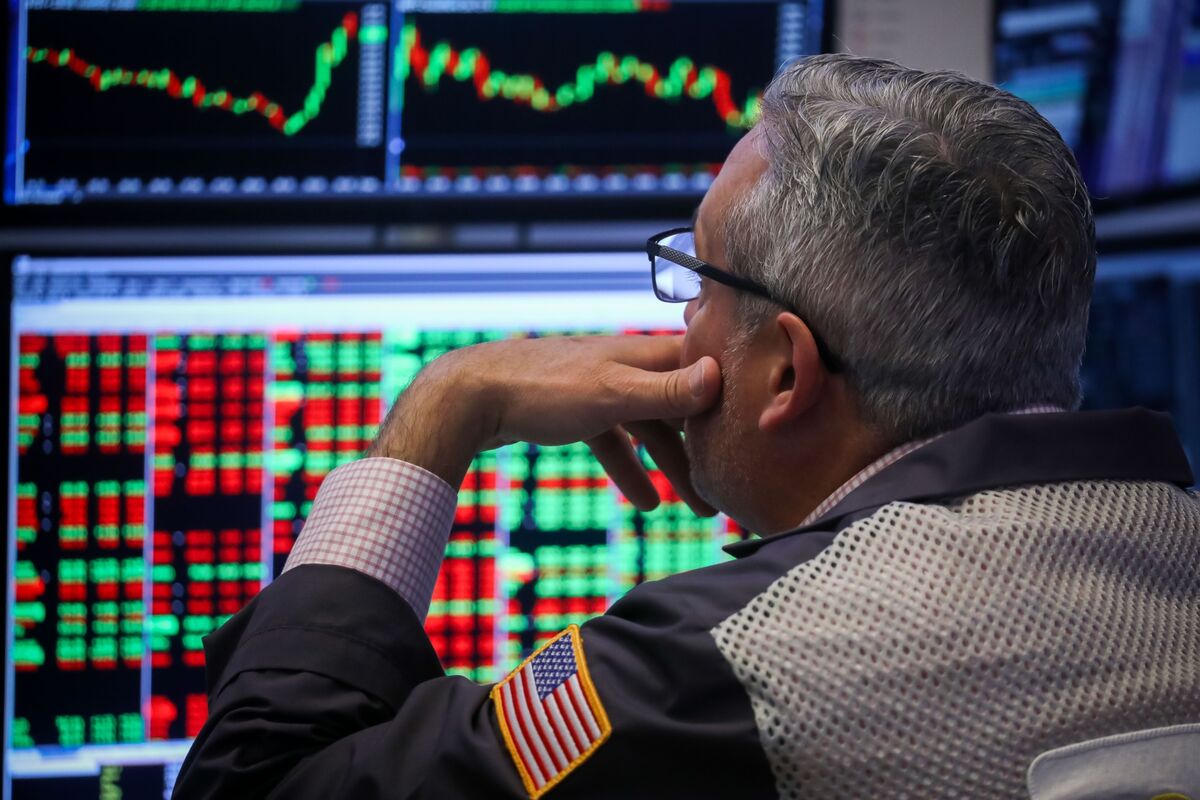
    While it pays to be cautious, listening to perpetual bears will make you poor as well as depressed. The last week has seen a modest sell-off in the tech-dominated Nasdaq index, led by Palantir. But a stock operating in opaque businesses and whose share has risen 150 per cent this year is an easy target. The Nasdaq fell by nearly 20 per cent in the late summer of 1998, shaking out those investors getting the heebie-jeebies. However, it then rose over threefold in the next 18 months. 

    A feature of the TMT bubble was that this was a winner-takes-all game. Many of today’s “hyperscalers” — including Microsoft, Amazon, Oracle, Meta and Google — were winners of that battle. They are spending billions today as if it is the same war. It might not be. 

    Those investing most may find they are not carving the defensive moats they hope for. I was struck that Airbnb, a poster child of a data-based business, chose China’s Alibaba rather than OpenAI to apply AI to its customer service. 

    To invest in any of the hyperscalers you need to assess whether the revenues they generate over the long term for their computing capacity will justify what it costs to build. We can only guess how much consumers, businesses and governments will be prepared to pay for the productivity improvements promised. Last week’s financial releases showed that investors are more confident in Amazon and Alphabet (Google) than Oracle and Meta — indeed, corporate debt investors are now asking for higher yields on further bond issuance by these companies.

    If a bubble is building then we have to think about not just when it will burst, but how. The crash of 2008 saw nearly everything pop — banks most explosively. The tech crash was a slow-motion affair in comparison, with many fewer victims. The Nasdaq bubble “burst” in March 2000, but investors had a good six months to take their profits before the bear market really took hold. 

    Back then, the best thing to do was to sell everything anywhere near the TMT bubble as babies got slung when the bubble burst (though most TMT stocks were on ridiculous valuations by then). Fortunately, there were many modestly priced shares beyond TMT that were still worth buying. The best were mining companies — some trading at a fraction of the cost of opening their mines. 

    Concerns about “the bubble” are principally concerns about global equity indices. The Magnificent Seven technology stocks make up over 20 per cent of these indices. Outside the Seven, non-US technology businesses — such as Alibaba, TSMC and several other semiconductor companies — are also exposed to the same theme, as are the companies supplying power to the data centres. 

     So how do you negotiate the path between trying to time the bubble and getting caught by everything AI-related being abandoned when it pops? 

    Be led by valuations. Take Microsoft, for instance. Its shares look merely stretched, not ridiculous. The big difference between today and 2000 is that these companies have cash flow. Back then most did not. The question that matters most is this: are they using that cash flow and profits wisely? It was concerns about Meta’s heavy capital expenditure that took the shares down last week, while Amazon rose on its strong cloud cash flows, despite spending a similar amount on AI. 

    If individual stocks become too aggressively valued and their investment case hyper-optimistic, sell them. Gradually, your exposure to tech will drop.

    We do not own Tesla or Nvidia and have just pulled the plug on Meta. Consequently, we have about 9 per cent in Magnificent Seven stocks, not 20 per cent. We may have retreated too soon, but if you chose to do likewise, you may have found you’ve banked some decent profits. 

    And the good news today is that, as in 2000, there are plenty of stocks in out-of-favour sectors — such as healthcare or consumer staples — which look like attractive new homes for the money. We have just bought a holding in Nestlé, which is about as far from the excitement of AI as you can get. Its coffee, chocolate and pet litter businesses are not to be sniffed at, but a yield of nearly 4 per cent in Swiss francs looks pretty sweet.

    Long term, the benefits of AI should be improved productivity in a range of sectors. In the loathed oil sector, Schlumberger has just launched an AI system for improving efficiency in hydrocarbon production, including reducing leaks of methane. This stock is on 14 times earnings and a 3 per cent yield — valuations more often seen in UK equities than American.

    In short, the lesson I carried over into fund management from 2000 was that if the valuations of the shares you are buying seem reasonable then you need not worry too much about the stretched valuations of the shares others own.

    Simon Edelsten is a fund manager at Goshawk Asset Management. Goshawk funds own Microsoft, Amazon, Alibaba, Taiwan Semiconductor Manufacturing Co, Nestlé and Schlumberger

    Continue Reading

  • Xu Yangtian, Shein’s mysterious founder under fire

    Xu Yangtian, Shein’s mysterious founder under fire

    It was supposed to be a triumph: Shein’s emergence from the shadows of online retail into a permanent physical boutique in one of the world’s most recognisable department stores in Paris, the global capital of fashion.

    Instead, the China-founded fast fashion giant is this week dealing with French street protests, a government-led effort to ban it from operating in the country and allegations that third-party sellers on its site have been touting machetes, knuckle dusters and sex dolls that looked like children.

    For Shein, the outcry in France is just the latest in a series of controversies that have plagued its years-long, multi-jurisdiction campaign to become a public company. For publicity shy founder Xu Yangtian, they will serve as a reminder that high-profile campaigns carry their own set of risks.

    “He’s extremely low-key and inconspicuous,” says Hu Jianlong, founder of Shenzhen consultancy Brands Factory, adding that even Shein employees would struggle to correctly identify him.

    “But if a company reaches such a large scale, with employees all over the world and then they are preparing for an IPO . . . At that point, it’s very difficult to maintain a low profile.”

    Xu was born in Zibo, a manufacturing city in eastern China’s Shandong province, according to people who know him.

    But while his name occasionally appears in company press releases, Shein’s website carries no picture or biographical information about its founder. He has never given a media interview, is rarely photographed publicly and hasn’t posted on social media for nearly a decade. There has even been confusion about his English name, which he changed from Chris to Sky.

    A few details have been reported about his early life. Born in 1983, he got his first taste of international trade while at Qingdao university in the 2000s, sourcing orders of everything from gaskets to spark plugs. After graduation he moved to Nanjing where he founded an ecommerce business, touting a range of consumer goods directly to customers. Later, he co-founded wedding dress seller Sheinside, a precursor to the fast fashion company of today.

    Shein’s low prices and vast choice led to meteoric success in western markets, particularly the US. Algorithms scour the web for trending ideas and feed them to designers, who then place orders with a network of about 7,000 contract suppliers, many clustered in Panyu, a manufacturing suburb of Guangzhou.

    The company tests the popularity of new designs via ultra-small orders, only ordering more when it is sure there will be demand. This model allows Shein to offer millions of designs at any one time, according to a person familiar with the company, compared to tens of thousands at other mass market retailers.

    “Xu effectively turned supply chain agility into a strategic weapon, disrupting legacy brands like H&M, Zara and Forever 21,” says Brittain Ladd, a US supply chain consultant who previously worked at Amazon and Dell.

    But western retailers argue the company unfairly exploits customs tax exemptions granted to small value packages, known as de minimis in the US, allowing it to undercut domestic rivals.

    US President Donald Trump’s ending of these exemptions — and similar efforts in the EU and the UK — has driven down Shein’s valuation just as it seeks to list its shares.

    The location if its listing has also been in flux. While the company initially hoped to list in New York, allegations from lawmakers that it employs forced labour in its supply chain led it to focus on a London IPO.

    A disagreement between Chinese and UK regulators over the language in its risk disclosure prompted a second pivot, this time to Hong Kong, where it has filed for a listing confidentially. Once valued at as much as $100bn, some investors are pushing the group to cut its valuation to around $30bn to speed up the process.

    “Shein is at a critical point of figuring out its business model for the next five to 10 years,” says Sheng Lu, a professor at the University of Delaware who studies the fashion industry. “The challenge is the growth, how to keep expanding, how to further satisfy their investors, especially if they need to think about an IPO.”

    In 2023, Shein launched a third party market place, in response to competition from nimble rival Temu. This allowed it to diversify into new categories, but sowed the seeds of its troubles in France.

    French finance minister Roland Lescure has called the “horrors” for sale on Shein’s marketplace “disgusting”. Ministers said on Thursday that all Shein packages had been blocked for the past 24 hours as customs agents searched through them. The French government has also called for the EU to take action against Shein flouting European laws, including going so far as levying fines equivalent to 6 per cent of global revenues if it does not comply.

    Xu now lives in Singapore, where the company moved its headquarters in 2022. Several people describe him as “shy” and introverted. One who has worked with him called him “rough around the edges”.

    While some partners would like Xu to take a more public-facing role before the company lists its shares, the latest controversies explain his reticence. The backlash in France may only serve as a reminder of the comforts of near anonymity.

    william.langley@ft.com, eleanor.olcott@ft.com, adrienne.klasa@ft.com

    Continue Reading

  • Egypt International Oscar Film ‘Happy Birthday’: Sarah Goher Interview

    Egypt International Oscar Film ‘Happy Birthday’: Sarah Goher Interview

    This Oscar season, you may find yourself falling in love with an eight-year-old maid and celebrating Happy Birthday. That is the title of the coming-of-age drama film, directed and co-written by Sarah Goher in her feature directorial debut,…

    Continue Reading

  • AI-developed controller directs satellite in pioneering in-orbit maneuver

    AI-developed controller directs satellite in pioneering in-orbit maneuver


    by Robert Schreiber

    Berlin, Germany (SPX) Nov 08, 2025


    A team at Julius-Maximilians-Universitat Wurzburg (JMU) has achieved a significant milestone on the road to space autonomy by successfully testing an artificial…

    Continue Reading

  • Nationwide recall of alfalfa sprouts linked to ‘unusual strain’ of salmonella after dozens infected across Australia | Health

    Nationwide recall of alfalfa sprouts linked to ‘unusual strain’ of salmonella after dozens infected across Australia | Health

    Health authorities have issued a nationwide recall of alfalfa sprouts, urging people not to eat affected products, after at least 44 people across Australia contracted an unusual strain of salmonella.

    The recall applied to 125g packets of sprouts produced by Parilla Fresh, which included: Aussie Sprouts Alfalfa Sprouts, Hugo’s Alfalfa Onion & Garlic Sprouts, Hugo’s Alfalfa & Radish Sprouts, Hugo’s Alfalfa & Onion Sprouts, Hugo’s Salad Sprouts, Hugo’s Alfalfa & Broccoli Sprouts and Hugo’s Trio Sprouts Selection.

    The notice applied to products sold in supermarkets and grocers nationally, with use-by dates up to and including 20 November 2025.

    Sign up: AU Breaking News email

    It followed a joint investigation by interstate health and food regulatory authorities after an increase in a particular salmonella infection.

    At least 44 people nationwide had been identified with the “unusual strain of salmonella”, including 18 people in New South Wales, nine in Victoria and 15 in Queensland, health authorities from each state said.

    Health authorities said the affected alfalfa sprouts were sold in multiple supermarkets including Coles, Woolworths, IGA and other independent grocers and stores in NSW, Queensland, Victoria, the Northern Territory, Australia Capital Territory and South Australia.

    Keira Glasgow, the director of the One Health Branch at NSW Health, said consumers should check their fridge and avoid eating any of the affected products, which could make them ill.

    “Anyone who has consumed alfalfa sprouts should be on the lookout for symptoms, which include: headache, fever, stomach cramps, diarrhoea, nausea and vomiting,” she said.

    Symptoms usually started 6-72 hours after exposure, and could last for up to a week.

    “Most people recover within a week by having lots of rest and drinking plenty of fluids such as water or oral hydration drinks from a pharmacy,” Glasgow said.

    “While anyone can get salmonella infection, infants, the elderly and people with poor immune systems are more likely to have severe illness.

    skip past newsletter promotion

    “These people may need antibiotics from their doctor or, in more severe cases, hospitalisation.”

    An investigation is under way involving authorities across jurisdictions.

    The recall notice from Food Standards Australia New Zealand advised: “Consumers should not eat this product. Consumers should return the product(s) to the place of purchase for a full refund. Any consumers concerned about their health should seek medical advice.”

    Continue Reading

  • Internal Rift Rocks Pakistan Hockey as Head Coach Backs Out of Bangladesh Tour

    Internal Rift Rocks Pakistan Hockey as Head Coach Backs Out of Bangladesh Tour

    Just as momentum appeared to be building for the Pakistan hockey team, progress has been disrupted by reports that head coach Tahir Zaman has refused to travel with the squad to Bangladesh for a crucial three-match series.

    Continue Reading

  • ‘Silent Hill 2’ for Xbox leaks on the Microsoft Store — here’s how it also hints at an upcoming November Xbox showcase 🤔

    ‘Silent Hill 2’ for Xbox leaks on the Microsoft Store — here’s how it also hints at an upcoming November Xbox showcase 🤔

    Silent Hill 2 Remake is coming to Xbox, with evidence now reaching fever pitch.

    Silent Hill 2 is a legendary survival horror title from Konami. Released originally on the PlayStation 2, the game follows James into the notorious and haunted town,…

    Continue Reading