The biggest shopping event of the year is here, and Samsung is turning up the brightness this Black Friday with spectacular savings on its cutting-edge QLED TVs, featuring Real QLED…
The biggest shopping event of the year is here, and Samsung is turning up the brightness this Black Friday with spectacular savings on its cutting-edge QLED TVs, featuring Real QLED…

Europe ranks as second largest eCrime target globally amid intensifying “Big Four” nation-state activity
AUSTIN, Texas and Fal.Con Europe 2025, Barcelona – November 3, 2025 – CrowdStrike (NASDAQ: CRWD) today released the 2025 European Threat Landscape Report, revealing that European organizations accounted for nearly 22% of global ransomware and extortion victims — second only to North America. Ransomware operations are moving faster than ever, with CrowdStrike observing adversary groups like SCATTERED SPIDER increasing ransomware deployment speed by 48%, with the average attack now taking just 24 hours.
Adversaries operating in and targeting Europe benefited from underground marketplaces commoditizing services like Malware-as-a-Service, initial access brokerage, and phishing toolkits. In parallel, state-sponsored adversaries from Russia, China, North Korea, and Iran expanded regional targeting across industries, reflecting the growing convergence of eCrime and geopolitical threats.
European Threat Landscape Report Highlights:
Based on frontline intelligence from CrowdStrike Counter Adversary Operations, which tracks more than 265 named adversaries, the report reveals:
“The cyber battlefield in Europe is more crowded and complex than ever,” said Adam Meyers, head of Counter Adversary Operations at CrowdStrike. “We’re seeing a dangerous convergence of criminal innovation and geopolitical ambition, with ransomware crews using enterprise-grade tools and state-backed actors exploiting global crises to disrupt, persist, and conduct espionage. In this high-stakes environment, intelligence-led defense powered by AI and guided by human expertise is the only combination designed to stop cyber threats.”
Download the full 2025 European Threat Landscape Report to gain valuable insights and mitigation strategies to stay ahead of cyber adversaries in Europe’s increasingly complex threat landscape.
About CrowdStrike
CrowdStrike (NASDAQ: CRWD), a global cybersecurity leader, has redefined modern security with the world’s most advanced cloud-native platform for protecting critical areas of enterprise risk – endpoints and cloud workloads, identity and data.
Powered by the CrowdStrike Security Cloud and world-class AI, the CrowdStrike Falcon® platform leverages real-time indicators of attack, threat intelligence, evolving adversary tradecraft and enriched telemetry from across the enterprise to deliver hyper-accurate detections, automated protection and remediation, elite threat hunting and prioritized observability of vulnerabilities.
Purpose-built in the cloud with a single lightweight-agent architecture, the Falcon platform delivers rapid and scalable deployment, superior protection and performance, reduced complexity and immediate time-to-value.
CrowdStrike: We stop breaches.
Learn more: https://www.crowdstrike.com/
Follow us: Blog | X | LinkedIn | Instagram
Start a free trial today: https://www.crowdstrike.com/trial
© 2025 CrowdStrike, Inc. All rights reserved. CrowdStrike and CrowdStrike Falcon are marks owned by CrowdStrike, Inc. and are registered in the United States and other countries. CrowdStrike owns other trademarks and service marks and may use the brands of third parties to identify their products and services.
Media Contacts
Jake Schuster
CrowdStrike Corporate Communications
press@crowdstrike.com
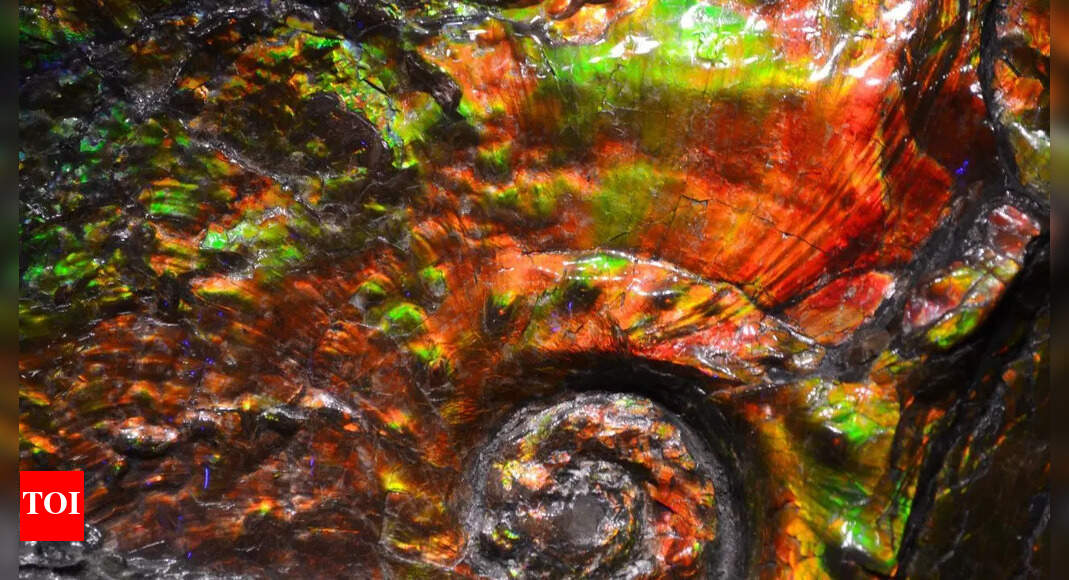
Beneath the shale beds of southern Alberta lies one of Earth’s most extraordinary natural treasures, a gemstone that captures light as vividly today as it did when dinosaurs roamed. Known as Ammolite, this fossilised shell gleams with…
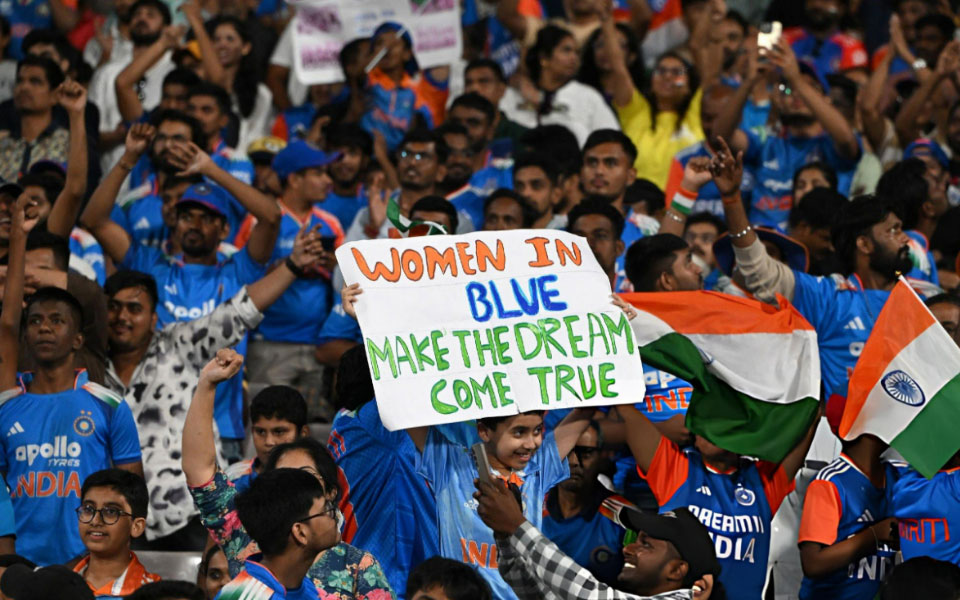
The Dr DY Patil Sports Academy in Navi Mumbai was packed to the rafters as it hosted the Women’s World Cup 2025 final between India and South Africa on Sunday, November 2. Indian fans turned the stadium into a sea of blue that egged Harmanpreet…

It was a historic win for the Indian Women’s team, who defeated South Africa and lifted the trophy of the Women’s World Cup 2025. The match had many highlights, but it was Shafali Verma who came as a surprise package. While…
The partnership recently researched the issue of overspeeding and freight wagon defects across the UK’s rail network.
While incidents of trains traveling above permitted speeds are rare, they do pose a risk to safety. The IRR used train…
Rondo Energy and EDP to install Heat-as-a-Service solution for HEINEKEN, powered by solar on-site and renewables through the grid, and supported by the European Investment Bank and Breakthrough Energy Catalyst.
LISBON, Portugal, Nov. 3, 2025 /PRNewswire/ — HEINEKEN, Rondo Energy, and EDP have contracted to deploy a 100 MWh Rondo Heat Battery (RHB) at Central de Cervejas e Bebidas Brewery and Malting Plant, part of HEINEKEN Company in Portugal. The installation will be the largest heat battery in the beverage industry worldwide, providing continuous, renewable steam to HEINEKEN’s local operation.
The Rondo Heat Battery charges with intermittent electricity, converts and stores that energy as high-temperature heat, and delivers safe, 24-hour, zero-carbon steam. It is designed to reduce or eliminate reliance on traditional fossil-fired boilers. At the Lisbon site, the heat battery will provide 7 MWs of steam for brewing processes, charged by renewable electricity supplied through the grid and by on-site solar. EDP will supply HEINEKEN with this steam under a Heat-as-a-Service model, with Rondo providing the battery and EDP supplying the solar installation and complementing electricity through the grid.
Slashing the brewery’s emissions comes without changing HEINEKEN’s operations: the Rondo-provided steam is identical to fossil-fired steam, but the carbon emissions are not.
“By combining our strengths with EDP and Rondo, we’re unlocking new ways to power our brewery operations more efficiently,” said Magne Setnes, Chief Supply Chain Officer at HEINEKEN. “This project not only helps us reduce our reliance on conventional energy, it shows how practical innovation and strong partnerships can deliver meaningful improvements across our supply chain.”
HEINEKEN’s Lisbon facility has already decided to use on-site solar for power, and electric heat pumps for its hot water needs. The heat battery opens a new path to deep decarbonization, by delivering what has been one of the hardest-to-decarbonize brewery needs: high-temperature steam.
This deployment supports HEINEKEN’s “Brew a Better World” strategy, which includes a net zero ambition across its value chain by 2040 starting by decarbonizing all its production sites by 2030.
The project taps into the attractive solar resource in Portugal to help Portugal deliver on its ambitious decarbonization plans, including a 55% cut in greenhouse gas emissions by 2030.
How The Rondo Battery Works
The Rondo Heat Battery charges with intermittent and low-cost electricity, stores electricity as heat in refractory brick, and delivers steam on-demand at any conditions up to over 100 bar, with no combustion and no emissions. It can deliver continuous 24-hour steam, heat and/or electricity, serving as a drop-in replacement for fossil fuel-fired boilers or cogeneration systems.
By pairing intermittent and low-cost electricity with the Rondo Heat Battery, industries can replace fossil fuels while maintaining round-the-clock operations. Globally, electrifying heat could reduce industrial emissions by gigatons and reshape the energy landscape.
European Investment Bank & Breakthrough Energy Catalyst Support
This project is backed by the European Investment Bank (EIB) and Breakthrough Energy Catalyst as part of an EU–Catalyst partnership investment of €75 million announced in 2024 to scale Rondo’s heat battery deployments across Europe.
“Boosting competitiveness and decarbonizing Europe’s industry through affordable renewable energy is a key priority for the EIB Group,” said EIB Vice President Karl Nehammer. “Through our new Climate Bank Roadmap, we are prioritizing innovative solutions such as Rondo’s heat battery. This project is exactly the kind of public-private partnership we aim to support more of in the future.”
“Rondo’s heat batteries offer a unique pathway toward energy security for European industry, allowing companies like Heineken to implement a solution that is affordable, reliable, and clean,” said Mario Fernandez, Head of Breakthrough Energy Catalyst. “Catalyst exists to accelerate the deployment of critical technologies, and we are thrilled to support a project, along with our European Partners, that can provide round-the-clock decarbonized heat for manufacturing in this moment of need.”
Iberia’s “Untapped” Industrial Advantage
Bloomberg New Energy Finance’s Jenny Chase has pointed out that solar power is changing the world, observing that “by 2030, in most countries on a sunny day for a few hours, wholesale electricity will be free.” The Rondo Heat Battery harvests this electricity with a cost of storage lower than any chemical battery, to supply energy low enough in cost to replace fossil fuel steam.
Charging during the cheapest 6 hours of electricity per day, the heat battery converts this low-cost, intermittent renewable electricity into low-cost, 24-hour heat and steam for industry. The system also offers highly flexible demand to the grid that not only soaks up electricity when solar is abundant, it also uses the network outside of peak demand, making better use of the existing electricity network.
“Iberia can be Europe’s low-cost and low-carbon industrial manufacturing base,” said Eric Trusiewicz, CEO of Rondo Energy. “We are thrilled to be installing our first Rondo Heat Battery in Iberia, and to support HEINEKEN to reach its goals. We look forward to helping industries across Iberia cut costs and carbon, and help Iberia capitalize on the opportunity.”
This project will serve as a model for other industries – from dairies and food processing to pulp and paper, chemicals, and pharmaceuticals. With many Iberian facilities having space for solar installations on-site or near-site, and growing access to inexpensive renewable electricity through the grid, the region can emerge as Europe’s gateway to cost-competitive, clean energy for industry.
Rondo and EDP’s Heat-as-a-Service Model to HEINEKEN
This project is delivered under a Heat-as-a-Service (HaaS) model. The heat battery is combined with EDP’s own investments in on-site solar, electrical system upgrade and grid electricity supply, all to deliver steam directly to HEINEKEN. This turnkey package solution – combining heat storage, on-site renewable supply, and grid electricity optimization – allows companies like HEINEKEN to adopt advanced technology without operational complexity. The involvement of two of the world’s leading companies – HEINEKEN in food and beverage and EDP in energy systems – is a testament to the breadth of benefits that heat batteries can bring to industrial facilities, renewable developers, and grid operators.
“At EDP, we believe the future of industry will be driven by partnerships and breakthrough ideas. Deploying the world’s largest heat battery in the beverage sector – integrated into a brewery solution and powered by solar panels and a complementary green PPA – is not just about technology; it is about proving what is possible when we dare to push the boundaries. Together with HEINEKEN and Rondo, we are raising the bar for sustainability, one pint at a time,” states Miguel Stilwell d’Andrade, CEO of EDP.
About HEINEKEN:
HEINEKEN is the world’s pioneering beer company. It is the leading developer and marketer of premium and non-alcoholic beer and cider brands. Led by the Heineken® brand, the Group has a portfolio of more than 340 international, regional, local and specialty beers and ciders. With HEINEKEN’s over 85,000 employees, we brew the joy of true togetherness to inspire a better world. Our dream is to shape the future of beer and beyond to win the hearts of consumers. We are committed to innovation, long-term brand investment, disciplined sales execution and focused cost management. Through “Brew a Better World”, sustainability is embedded in the business. HEINEKEN has a well-balanced geographic footprint with leadership positions in both developed and developing markets. We operate breweries, malteries, cider plants and other production facilities in more than 70 countries. Most recent information is available on our Company’s website and follow us on LinkedIn and Instagram.
About Rondo:
Rondo is purpose-built for industrial facilities: Rondo Heat Batteries are constructed from proven, durable materials and are designed for seamless integration with existing industrial equipment and processes. Whether deployed as a drop-in replacement for retiring fossil-fueled heating equipment or as a resilient complement to existing systems, Rondo requires no disruptive changes to customers’ operations.
Building on strong momentum, including multiple full industrial-scale heat batteries in deployment globally, Rondo is actively scaling deployment and manufacturing. Rondo currently operates the world’s largest heat battery for industry, a 100 MWh Rondo Heat Battery. Rondo Energy is headquartered in California, with a global team throughout North America, Europe and Australia. Heat batteries are also known in the industry as electric thermal energy storage (ETES), or thermal batteries.
About EDP
EDP is a global leader in the energy sector, with operations in Europe, North America, South America, and Asia-Pacific. The company operates across four major business platforms – Renewable Generation Assets, Networks, Client Solutions, and Global Energy Management – and employs around 12,000 people worldwide.
The group is one of the world’s largest energy producers, with a global and diversified portfolio of onshore and offshore wind, solar, and hydropower assets, totaling more than 29 GW of installed capacity. In Portugal, EDP is the market leader in the liberalized energy market, serving more than three million customers across the country.
Through EDP Commercial, the company positions itself as a partner in the energy transition for households and businesses, offering a portfolio that includes solar and storage solutions across more than 10 markets, electric mobility solutions, and other products that accelerate customers’ decarbonization. EDP prides itself on being one of the world’s greenest energy companies, generating over 90% of its electricity from renewable sources. It is recognized as one of the world’s most sustainable utilities by the Dow Jones Sustainability Index and is committed to achieving carbon neutrality by 2040, accelerating the global energy transition.
SOURCE Rondo Energy

Cancer often develops silently, with early signs so subtle that they are easily ignored or mistaken for minor health issues. According to Dr Jayesh Sharma, Consultant Surgical Oncologist at ITSA Hospitals in Raipur, paying attention to small…

November 14, 2025: With the waning crescent moon before sunrise, look for the Andromeda Galaxy, the nearest large galaxy to the Milky Way. The Great Square of Pegasus guides the way to this deep sky object visible from rural settings without…