
South Korean actress Kim Sung-eun, a mother of three, continues to dazzle fans with her incredibly youthful and radiant skin, leaving many wondering about her secret. While celebrities often credit expensive…
Author: admin
-

Chinese Report Neutral-Atom Quantum Computer Enters Commercial Use
Insider Brief
- China’s first atomic quantum computer, “Hanyuan No. 1,” has entered commercial use with more than 40 million yuan in orders, including sales to a China Mobile subsidiary and Pakistan, according to Hubei Daily.
- The system, developed by the Chinese Academy of Sciences’ Innovation Academy for Precision Measurement Science and Technology with support from Hubei’s “Pioneer” program, uses cold atoms as qubits and operates at room temperature to reduce energy and maintenance costs.
- Hubei Daily reported that the project built a full domestic supply chain through the province’s Optics Valley cluster and is developing a national quantum computing center to expand industrial applications in finance, logistics, and materials research.
- Photo by geralt on Pixabay
China’s first atomic quantum computer has entered commercial use, signaling a milestone in the country’s effort to achieve technological self-reliance in quantum information science. The system, called “Hanyuan No. 1,” has received more than 40 million yuan in orders, including delivery to a subsidiary of China Mobile and an international sale to Pakistan, according to an article on Hubei Daily, computer translated into English.
Chinese media describe Hanyuan No. 1 as an atomic quantum computer — a Chinese term that likely refers to quantum computers built on the manipulation of individual neutral or “cold” atoms trapped and controlled by lasers. Internationally, this technology is known as neutral-atom quantum computing, an approach that offers advantages in scalability and stability without the need for the ultra-low temperatures required by superconducting quantum systems.
Developed by the Innovation Academy for Precision Measurement Science and Technology under the Chinese Academy of Sciences, the project received funding from the Hubei Provincial Department of Science and Technology through a “Pioneer” program that targets key emerging technologies, according to the newspaper, which serves as the official newspaper of the Hubei Provincial Party Committee and covers the region’s science and economic developments.
Teams from Wuhan University, Zhongke Kuyuan Technology, the Optics Valley Information Optoelectronics Innovation Center, the Wuhan Institute of Quantum Technology, and Huazhong University of Science and Technology also contributed.
The launch marks China’s first complete quantum system using cold atoms as qubits.
According to Hubei Daily, the Hanyuan No. 1 contains 100 qubits, the basic computational units of a quantum computer, and reaches a reliability level comparable to international standards. Its entire system reportedly fits within three standard equipment racks and operates at room temperature, dramatically reducing energy use and maintenance requirements compared with superconducting machines. The paper indicated that the system can already handle complex applications in areas such as financial modeling and logistics optimization, which are two fields with use cases that could benefit from quantum computing.
Local Industry, Global Competition
The Hubei Daily specifically mentions that the Hanyuan project leveraged Hubei’s strong optoelectronics manufacturing base — known nationally as Optics Valley — to build a domestic supply chain for these components. The team established a full R&D pipeline, from chip growth and packaging to system testing. Engineers succeeded in producing high-performance lasers that meet the precision control requirements for atomic qubits while consuming only one-tenth the energy of comparable foreign systems.
The domestically produced components helped the team avoid foreign supply chain dependencies and lower costs, reinforcing China’s drive toward technological self-sufficiency in advanced computing, the newspaper reported.
Beyond the hardware, the project also aims to build a full commercial ecosystem around the technology. Researchers from Wuhan University and the Wuhan Institute of Quantum Technology developed a cloud-based computing platform that allows users to design and test quantum algorithms without specialized physics knowledge.
The system integrates visual programming tools, hardware optimization and large-scale simulation capabilities.
Quantum Computing Ecosystem
According to Hubei Daily, more than 50 universities and companies have joined the project to begin exploring quantum applications. The project team is also constructing China’s first neutral-atom quantum computing power center, designed to host clusters of machines that will provide continuous 24-hour computing services. Once operational, the facility will focus on computationally demanding problems such as financial risk analysis and the modeling of industrial systems. The center is expected to serve more than a thousand enterprise clients annually.
The Hubei Daily article suggested that the province’s deep integration of research institutions, manufacturing partners and universities was critical to achieving the project’s goals. The Optics Valley industrial zone provided access to specialized fabrication and testing capabilities, while provincial officials coordinated resources for system integration and commercial deployment. The combination created what officials described as a complete industrial chain, from laboratory research to production and delivery.
Provincial leaders said the achievement is evidence of Hubei’s emerging role as a national center for advanced computing technologies and its growing importance in China’s broader strategy for scientific and industrial modernization.
Chinese researchers view the device as an early step toward scalable quantum computing that can support real-world problem solving.
While the system operates on a smaller scale than machines being developed by global competitors, its stability, room-temperature operation and local component production make it an important proof of concept for China’s neutral-atom approach. The project’s leaders have said future plans include improving system performance and expanding computing clusters to support high-end applications such as materials design and pharmaceutical discovery.
Continue Reading
-

Obiri smashes long-standing course record to regain New York City Marathon title | REPORT
Hellen Obiri regained her title at the TCS New York City Marathon, taking almost three minutes off the course record to win the World Athletics Platinum Label road race in 2:19:51 on Sunday (2).
She was joined on the podium by compatriots and…
Continue Reading
-

Opec+ to pause oil output rises next year after warnings of glut
Unlock the Editor’s Digest for free
Roula Khalaf, Editor of the FT, selects her favourite stories in this weekly newsletter.
Opec+ has responded to fears of an oil glut by pausing its plans to increase production next year.
Eight members of the oil producers’ group said they would add another 137,000 barrels a day of crude in December, but then halt any further rises in January, February and March.
The group said the pause was due to “seasonality”. Oil demand in the first quarter is generally weaker after the end of the holiday season when oil refineries often go into maintenance.
The eight Opec+ countries, led by Saudi Arabia and Russia, have steadily increased their production quotas this year, by 2.91mn b/d including next month’s rise, equivalent to about 2.7 per cent of global oil demand. But they have slowed the pace in recent months.
December’s planned increase follows a small rise in October and November as producers respond to forecasts of an oil glut next year.
Last week, Wael Sawan, Shell’s chief executive, became the latest industry boss to cite the risk, saying “there is a credible scenario of oversupply in the market next year”.
The small increase in December also suggests Opec+ is not anticipating that large volumes of Russian oil will be removed from the market in the near term by the latest round of US sanctions.
At the end of October, the US imposed sanctions on Russia’s two largest oil companies, Rosneft and Lukoil, and secondary sanctions on any financial institutions that do business with them.
Oil prices, which had fallen to a five-month low of around $60 a barrel ahead of the sanctions, rose to $65 in response.
Energy Aspects, a research company, estimated that between 1.4mn and 2.6mn b/d of Russian crude could be affected by the sanctions, with India’s imports being the worst hit.
But the market remains sceptical that the sanctions will seriously impede the flow of Russian oil, given the extensive structures that Moscow has built since 2022 to work around attempts to control its exports.
Jorge León, head of geopolitical analysis at Rystad Energy, a research company, said it remained too early to tell how serious the effect of the sanctions would be.
“Crude export numbers look steady, but that is because that crude was produced a month ago or so. In reality, exports will start showing some signals in three to four weeks,” he said. “But the Russians are very worried.”
Continue Reading
-

Galaxy S26 family may be announced earlier than anyone thought
Leaked Galaxy S26 series dummies | Image Credit – Sonny Dickson
The Samsung Galaxy S26 series will be unveiled in San Francisco on February 25, according to a South Korean outlet,
Continue Reading
-

Israeli Gaza strike kills 1, sides trade blame for truce violations
NUSEIRAT: The UN agency for Palestinian refugees, or UNRWA, announced this week that following the start of the ceasefire Gaza, it was reopening some schools in the territory, with children gradually returning to…Continue Reading
-

India space agency launches its heaviest satellite
The picture shows CMS-03 satellite sent into orbit from the tower LVM3-M5, on November 2, 2025.— X/@isro India launched its heaviest ever communication satellite on Sunday, the latest step in the country’s…
Continue Reading
-
Obiri smashes long-standing course record to regain New York City Marathon title | REPORTS
Hellen Obiri regained her title at the TCS New York City Marathon, taking almost three minutes off the course record to win the World Athletics Platinum Label road race in 2:19:51 on Sunday (2).
She was joined on the podium by compatriots and…
Continue Reading
-
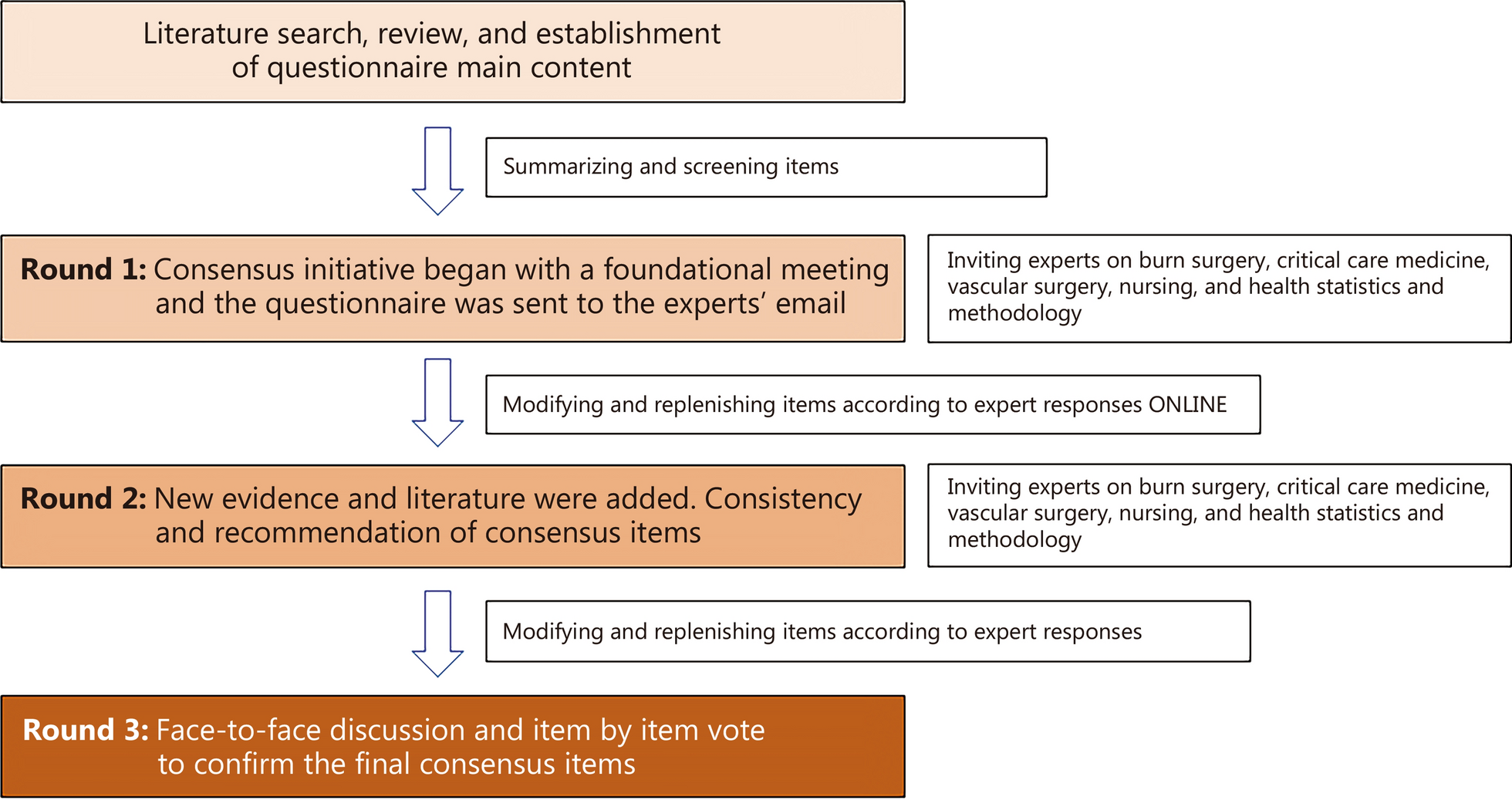
Chinese expert consensus on prevention, diagnosis, and management of venous thromboembolism in adult burn patients (2024) | Military Medical Research
Statistical results
Basic information of experts
A total of 37 experts in the field of burn surgery, critical care medicine, vascular surgery, nursing, and health statistics and methodology were selected, and all 37 questionnaires were returned….
Continue Reading
-

Patriots Running Back and Safety Depth in Focus Ahead of Sunday’s Game vs. the Falcons
Foxborough, MA – The Patriots are looking to extend their winning streak to six games when they host the Atlanta Falcons, and the game-day roster is set for Sunday’s game at Gillette Stadium.
New England’s game-day inactives are RB…
Continue Reading