A new study suggests that certain spider web decorations help a spider figure out where prey has hit the web. The effect shows up as a small time advantage and, more importantly, as vibrations reaching more sensing points.
The work centers on the…

A new study suggests that certain spider web decorations help a spider figure out where prey has hit the web. The effect shows up as a small time advantage and, more importantly, as vibrations reaching more sensing points.
The work centers on the…

Far above your head, in the atmosphere between Earth and outer space, an invisible process is occurring. The increasing concentration of carbon dioxide is already manifesting itself in impacts beyond heat waves, melting ice, and rising seas. It…

The government is in the process of drafting a legal package aimed at amending existing laws to mandate digital payment solutions at business and retail outlets as part of its push towards a cashless economy as reported by Express Tribune.
The report confirmed that the draft legal package proposes amendments to the Payment Systems and Electronic Fund Transfers Act, 2007, making it mandatory for businesses to offer at least one digital payment method, including QR code facilities. Local governments will be authorised to ensure compliance and enforcement.
The Capital Development Authority (CDA) and Islamabad Capital Territory (ICT) are revising bylaws to mandate digital payment acceptance at all retail outlets within their jurisdiction. Provincial governments are also expected to amend or enact new Digital Payment Acts to enforce the same requirement for businesses in their areas.
In the interim, local governments and regulatory authorities have been instructed to issue notifications for the installation of digital payment acceptance facilities at retail outlets.
Sui Southern Gas Company (SSGC) and Sui Northern Gas Pipelines Limited (SNGPL) have begun printing Raast QR codes on consumer bills. Together, the two companies serve 10.74 million customers with annual collections of Rs384.91 billion. Over 21,400 consumers have paid their gas bills using Raast QR codes, contributing Rs51.8 million in payments.
Meanwhile, 10 out of 11 electricity distribution companies (DISCOs) have adopted Raast QR codes for bill payments, with Tesco also signing up. To date, over 27,900 consumers have paid electricity bills through Raast QR codes, amounting to Rs128 million in transactions. The total consumer base of all DISCOs is 35 million, with annual collections around Rs4 trillion.
The National Database and Registration Authority (NADRA) has introduced Raast QR payments at its service centres and through its mobile application. Currently, 949 NADRA centres are enabled for Raast QR payments, and the feature is integrated into the PAK ID app, which has 10.7 million users. As a result, cashless transactions at NADRA facilities have risen from 66% to 76% by October 2025.
Raast QR payments now account for 10% of all cashless transactions and 13% of daily applications processed through the PAK ID app. The total potential for digital collections through this system is estimated at Rs28.47 billion, with a consumer base of 27.2 million.
The CDA has also mandated the display of Raast QR codes at retail outlets in Islamabad, with 38,819 stores now enabled to accept payments. A Merchant Acquisition Committee has been established to oversee the process, with 12 participating banks facilitating the initiative.
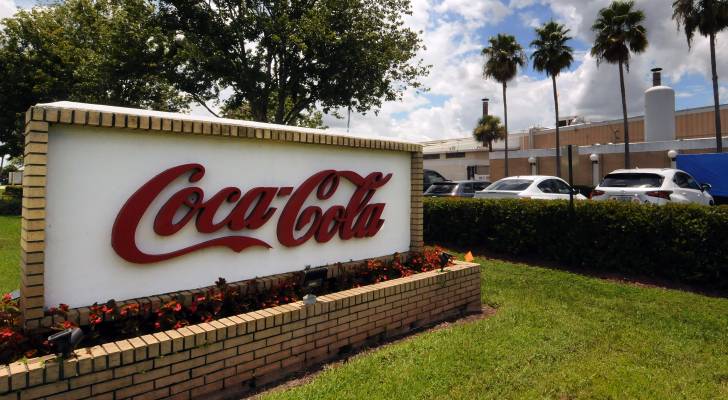
Thousands of cans containing Coca-Cola products have been recalled due to potential metal contamination.
The affected Coca-Cola Zero Sugar, Coca-Cola and Sprite cans fell under a Class II recall, which the Food and Drug Administration (FDA) uses to describe products that “may cause temporary or medically reversible adverse health consequences or where the probability of serious adverse health consequences is remote.”
Recalled products can be identified using the following codes:
Coca-Cola Zero Sugar 12-ounce can (12 pack) / Codes: 49000042559 and FEB0226MAA
Coca-Cola Zero Sugar 12-ounce can (35 pack) / Codes: 49000058499 and FEB0226MAA
Coca-Cola 12-ounce can (24 pack) / Codes: 49000012781 and JUN2926MAA
Coca-Cola 12-ounce can (35 pack) / Codes: 49000058468 and JUN2926MAA
Sprite 12-ounce can (35 pack) / Codes: 49000058482 and JUN2926MAA
Sprite 12-ounce can (12 pack) / Codes: 49000028928 and JUN2926MAA
Sprite 12-ounce can (12 pack) / Codes: 49000028928 and JUN3026MAB
According to TODAY, a company spokesperson said that the recalled products were only distributed in Texas, specifically in the Rio Grande Valley and San Antonio, and that all affected products have been removed from store shelves. (1)
It seems in this case the harm done to the public was limited, but product defects are no joke, and can result in serious harm to consumers and companies. So, how will this recall impact Coca-Cola?
Whenever a recall of a given product is announced, there’s the risk that it could damage the brand’s reputation and prompt consumers not to buy it. If a bad product causes injury, it could also result in legal action. It’s common for a company’s stock price to fall following negative news of any sort, and a recall fits that category.
The bottling plant that sent out the affected Coca-Cola cans initiated a recall on Oct. 3, and FDA labelled it a Class II recall on Oct. 20. Shares of Coca-Cola remained pretty flat in the days following Oct. 3. The day after the FDA’s classification, shares of Coca-Cola actually rose to their highest level in October at the time. And while they’ve retreated since, as of Oct. 29, they’re pretty much exactly back where they were on Oct. 20.
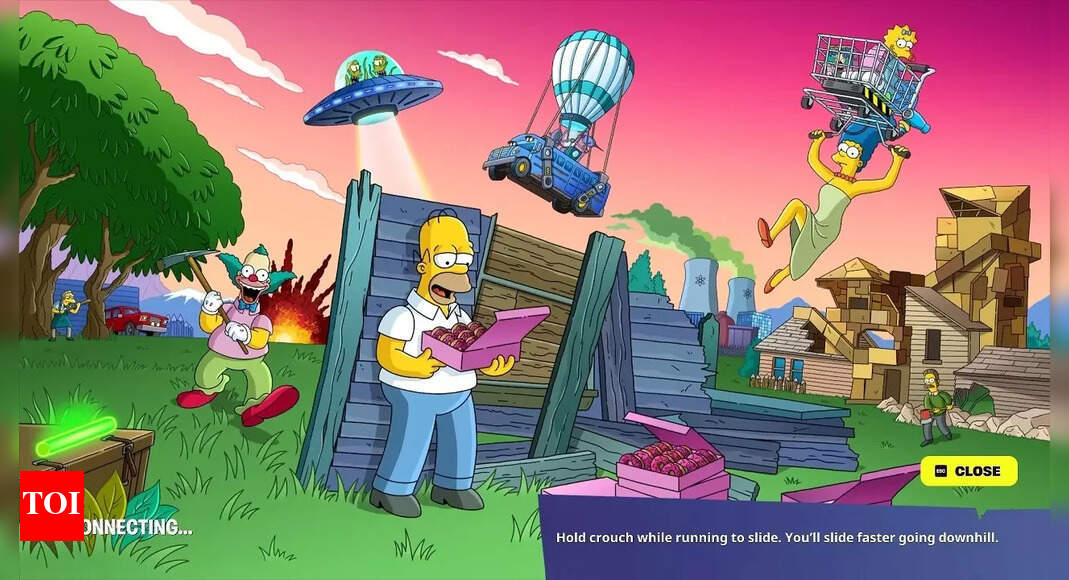
Fortnite players around the world are experiencing server downtime today as Epic Games is rolling out the highly anticipated Simpsons collaboration. This scheduled maintenance began on Saturday, November 1, at 11:30 AM ET.The maintenance break…
The logo of Chinese-owned semiconductor company Nexperia is displayed at the chipmaker’s German facility, after the Dutch government seized control and auto industry bodies sounded the alarm over the possible impact on car production, in Hamburg, Germany, Oct. 23, 2025.
Jonas Walzberg | Reuters
Netherlands-based chipmaker Nexperia is at the heart of a standoff between the European Union, the U.S. and China that has triggered a near-crisis for global automakers.
The Dutch government seized control of Nexperia, owned by the Chinese company Wingtech, in October, citing national security concerns. The move prompted Beijing to block Nexperia products from leaving China.
Meetings are underway in Europe Saturday to attempt to defuse the escalating issue, and Chinese and U.S. authorities appear to be opening up a pathway for Nexperia’s China-based operations to resume exporting critical automotive chips.
For now, however, the auto industry’s supply chain still hangs in the balance.
The dispute is threatening vehicle production worldwide as automakers warn of looming shortages of the chipmaker’s components, which are critical to basic electrical functions in cars and challenging to replace on short notice.
The battle has unfolded amid heightened scrutiny of Chinese-linked tech firms from Western governments, including the U.S., which recently tightened export-control rules to limit technology transfers to Chinese-owned entities.
Nexperia’s owner, Wingtech, was put on a U.S. blacklist in December 2024 for its alleged role “in aiding China’s government’s efforts to acquire entities with sensitive semiconductor manufacturing capability.”
Here’s what to know about where the dispute stands, and why it matters.
Nexperia manufactures billions of so-called foundation chips — transistors, diodes and power management components — that are produced in Europe, assembled and tested in China, and then re-exported to customers in Europe and elsewhere. Around 70% of chips made in the Netherlands are sent to China to be completed and re-exported to other countries.
The chips are basic and inexpensive, but are needed in almost every device that uses electricity. In cars, those chips are used to connect the battery to motors, for lights and sensors, for braking systems, airbag controllers, entertainment systems and electric windows.
Nexperia had sales of $2 billion last year.
In late October, automakers, such as Volkswagen, Nissan Motor and Mercedes-Benz, sounded the alarm about potential production cuts if Nexperia’s chip exports are curtailed for long.
While automakers typically have some stockpiles and alternative suppliers, it is difficult to switch supply sources overnight.
In September, the Dutch government invoked a Cold War-era law to effectively take control of Nexperia, amid concerns that its Chinese owner was planning to shift intellectual property to another company it owned. A Dutch court also suspended Nexperia CEO, Wingtech founder Zhang Xuezhen, citing mismanagement.
Beijing retaliated weeks later by imposing export controls on certain Nexperia products made in China, escalating tensions and fueling fears of a broader supply chain shock. That prompted the company to tell carmakers it could no longer guarantee supplies.
But signs of a breakthrough have started to emerge.
On Friday, reports said the U.S. plans to announce that Nexperia will resume sending chips under a framework agreement reached during talks between President Donald Trump and Chinese leader Xi Jinping, citing sources familiar with the matter. And on Saturday, China said it will exempt some Nexperia chips from its export ban. Chinese officials did not specify what those exemptions could entail.
“We will comprehensively consider the actual situation of the enterprise and exempt eligible exports,” The Chinese Commerce Ministry said in a statement.
If finalized, the exemptions could ease immediate pressure on automakers. But the broader dispute over ownership, technology control and security oversight remains unresolved.

Bowhead whales can live past 200 years, yet they rarely show the wear and tear we expect from such long lives.
A new study tracks that staying power to a protein that helps fix dangerous breaks in DNA, offering a fresh way to think about healthy…

It’s a new month, and there’s another new weekend of action across Europe!
We kick things off in the Premier League with two big clashes as league leaders Arsenal visit Burnley, while