Author: admin

  • Rio Tinto and Canada Growth Fund announce transaction to advance Canadian production of scandium

    SOREL-TRACY, Québec — Rio Tinto and Canada Growth Fund Inc. (CGF) are pleased to announce a transaction to advance the Canadian production of scandium oxide in Sorel-Tracy, Québec at the facility under construction at Rio Tinto’s Critical Minerals and Metallurgical Complex. CGF will invest approximately C$25 million to support production at North America’s sole facility capable of supplying this material, expanding the facility’s nameplate capacity to nine tonnes per annum and strengthening Canada’s critical minerals supply chain.

    Scandium is a rare and strategically important metal, essential for high-performance aluminium alloys, solid oxide fuel cells, and a range of new and emerging technologies. Its significance lies in its role as an enabling element, enhancing the performance of materials and technologies beyond conventional limits. Scandium’s strategic importance will continue to grow as global industries advance toward electrification, carbon neutrality, and the utilization of high-performance materials. 

    Today, the global market for scandium remains small with China producing most refined scandium globally. Rio Tinto’s demonstration plant, which began production in 2022, currently accounts for the entirety of North American scandium supply and is one of the few meaningful sources of supply within the Organisation for Economic Co-operation and Development. Through the successful deployment of the demonstration plant, Rio Tinto is established a scalable, reliable, and sustainable source of scandium for North America. 

    Rio Tinto Iron and Titanium and Diamonds Managing Director Sophie Bergeron said: “Rio Tinto is pleased to partner with CGF and the Government of Canada to expand our Canadian production of scandium oxide, a high-performance material used for advanced manufacturing and energy generation. This project leverages an innovative process developed in Canada by our scientists, fully supplied from our domestic mining and metallurgical assets to provide a secure, North American supply of this critical mineral.”

    Canada Growth Fund Investment Management President and Chief Executive Officer Yannick Beaudoin said: “With its unique investment mandate, CGF invests into innovative transaction structures that directly support projects of strategic priorities. This transaction, completed alongside an established operating partner, enables us to unlock new models for risk-sharing and value creation that advance Canada’s supply chain resilience strategy. Our commitment to the Project demonstrates how targeted investment and disciplined structuring can deliver tangible benefits for the Canadian industry and economy.”

    PSP Investments President and Chief Executive Officer Deborah K. Orida said: “We are delighted to bring PSP Investments’ rigorous investment process, depth of expertise and arm’s length governance model to the execution of CGF’s mandate. With today’s announcement, CGF continues to provide innovative solutions that enable the development of important projects, improving Canada’s investment climate, and contributing to PSP’s foresight on the evolution of the critical minerals supply chain.” 

    Rio Tinto has pioneered a breakthrough process to extract and produce high-purity scandium directly from the waste streams of titanium dioxide production at its Rio Tinto Iron and Titanium — Québec operations, eliminating the need for additional mining and minimizing environmental impact. Recognized as a critical mineral by Canada, the United States, Australia, and other jurisdictions, scandium is globally dispersed yet typically occurs in very small concentrations, intricately bound with other minerals and metals, rendering its extraction and refinement both technically challenging and cost prohibitive. 

    It is the most effective known microalloying element for strengthening aluminium, imparting enhanced flexibility, heat and corrosion resistance, and reduced weight, attributes that confer strategic advantages for defense platforms and lightweight vehicle manufacturing. Its unique properties also elevate the performance of solid oxide fuel cells, which are increasingly deployed as alternative power solutions for buildings, medical facilities, and data centers.

    Transaction Highlights

    • CGF’s investment of approximately C$25 million will be made through an equity-like financial royalty structure.
    • In connection with this investment, the Government of Canada (GoC) has agreed to enter into two commercial agreements with the Project and Rio Tinto:
    1. An offtake agreement with Rio Tinto whereby the GoC commits to purchase a volume of scandium;
    2. A marketing and storage agreement, under which Rio Tinto will assist with marketing and storing the scandium on behalf of the GoC.


     Contacts 

    Please direct all enquiries to media.enquiries@riotinto.com 

    Media Relations, Canada

    Simon Letendre 
    M +1 514 796 4973 

    Rio Tinto plc 

    6 St James’s Square 
    London SW1Y 4AD 
    United Kingdom 
    T +44 20 7781 2000 

    Registered in England 
    No. 719885

    Rio Tinto Limited 

    Level 43, 120 Collins Street 
    Melbourne 3000 
    Australia 
    T +61 3 9283 3333 

    Registered in Australia 
    ABN 96 004 458 404   

    Category: RTFT


    Continue Reading

  • ‘Grand Theft Auto’ Studio Accused of Union Busting After Firings

    ‘Grand Theft Auto’ Studio Accused of Union Busting After Firings

    Take-Two Interactive Software Inc.’s Rockstar Games fired dozens of employees in a move that a British trade union said was designed to prevent the workers from unionizing. The company said they were fired for misconduct.

    The Grand Theft Auto…

    Continue Reading

  • The Athletic: LeBron James announces “Happy Spooky Halloween,” a new children’s book

    The Athletic: LeBron James announces “Happy Spooky Halloween,” a new children’s book

    Editor’s Note: Read more NBA coverage from The Athletic here. The views on this page do not necessarily reflect the views of the NBA or its teams. 

    ***

    On a day when doorbells are ringing and jack-o’-lanterns glow across the country,…

    Continue Reading

  • New coronavirus subspecies with SARS-CoV-2–like mutation discovered in Brazilian bat

    New coronavirus subspecies with SARS-CoV-2–like mutation discovered in Brazilian bat

    KatarzynBialasiewicz / iStock

    Seven new illnesses and two additional deaths have been reported in multistate Listeria outbreak tied to prepared pasta meals, the Centers for Disease Control and Prevention (CDC) and Food and Drug Administration…

    Continue Reading

  • Africa takes lead in emerging market rally as ‘real’ assets attract investors

    Africa takes lead in emerging market rally as ‘real’ assets attract investors

    Unlock the Editor’s Digest for free

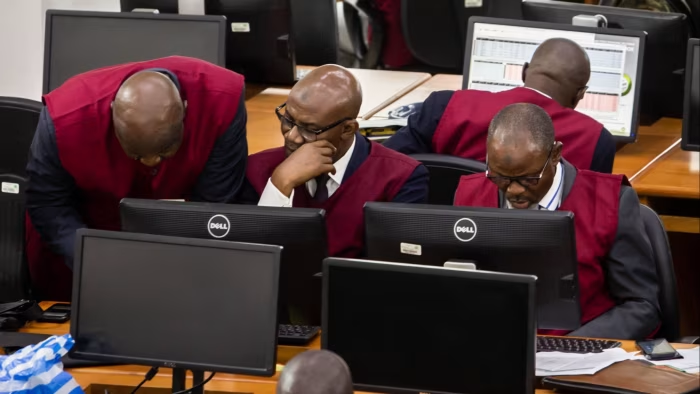
    Africa’s stocks, bonds and currencies are leading the hottest streak for emerging markets in years after record metals prices, a weaker US dollar and painful economic and currency reforms paid off for the continent’s investors.

    South African, Nigerian, Kenyan and Moroccan stocks have returned at least 40 per cent this year in US dollar terms, ahead of a 31 per cent dollar gain for an MSCI emerging-market share gauge that is itself the strongest since 2017.

    This year’s $5tn boost in the MSCI benchmark’s market value to $26tn has been dominated by Asian chipmaker and technology shares as part of the global frenzy for artificial intelligence stocks.

    Yet the rising concentration of these bets has led some investors to call for diversifying into markets that were on the global sidelines for most of the past decade, but which boast old-fashioned, emerging-market exposure to commodity, consumer and banking stocks.

    “You have really had a new dawn for Africa, with the main tailwind being strong commodity prices” along with the fading of a series of defaults and devaluations since 2022, said James Johnstone, co-head of emerging and frontier markets at Redwheel.

    “We think that the world is very fully invested in digital assets and the diversification that comes from real assets [such as African commodity stocks] is becoming a more important part of people’s portfolios,” Johnstone said.

    The biggest overall percentage gains have been in smaller African markets that were grappling with financial collapse and runaway inflation just a few years ago, and this year faced US trade barriers and the withdrawal of aid.

    Ghana’s and Zambia’s stock markets have more than doubled in US dollar terms as prices for gold and copper, their biggest exports, hit records this year and lifted their recovery from debt defaults earlier this decade.

    Farouk Miah, investment manager at All Africa Partners, a London-based asset manager, said: “The global market is seeing that these markets are putting in place reforms that are yielding results and translating to stable FX and equities doing well.”

    The Ghanaian cedi, Zambian kwacha and Congolese franc are up by a quarter to a third against the dollar this year in spot terms, behind only the Russian rouble in global currency rankings. Annual inflation in Zambia fell to the lowest in more than two years this month, at just below 12 per cent, while Ghana’s inflation rate has dropped into single digits.

    The Nigerian naira has been stable for more than a year after wild oscillations to record lows last year, following two devaluations that plunged its value more than 70 per cent against the dollar.

    The dollar debts of African governments have also rallied this year with most now trading at yields of less than 10 per cent, a level that makes new borrowing prohibitively expensive.

    Kenya and Angola recently sold bonds to refinance debts that had looked difficult to roll over last year. Senegal is the biggest quandary for debt investors, as the West African nation is in talks with the IMF over the fallout from a hidden loan scandal, with its bond yields at about 13 per cent.

    South African and Nigerian domestic government bonds have outperformed the 16 per cent gain in a JPMorgan index of local currency emerging-market debt this year that has also been the best in years.

    South Africa and Nigeria were removed from the Financial Action Task Force’s money laundering so-called “grey list” last month, a relief for banks and investors on top of other structural reforms in both countries.

    The yield on South Africa’s 10-year rand debt has fallen from more than 11 per cent at the peak of April’s global tariff panic to less than 9 per cent, the lowest since 2018. Investors have bet the country’s central bank will succeed in lowering an official inflation target to 3 per cent from the current 3 per cent to 6 per cent, which some estimate could eventually anchor yields much lower than at present.

    African stock markets have ridden high on past commodity booms only to fall back again, epitomised by Nigeria over the past decade.

    Despite this year’s strong performances, Johnstone at Redwheel said the number of global funds dedicated to African markets had fallen in recent years, with the “vast majority” of this year’s activity being driven by local investors. They have shifted cash from high-yielding domestic bonds into stocks such as banks that remain valued at low multiples, he said.

    “You have seen a very dramatic rise in some of these stock markets, but they remain dramatically cheap and dramatically under-owned” by global investors, he said.

    Continue Reading

  • A Request for NASA to Release Scientific Data on 3I/ATLAS | by Avi Loeb | Oct, 2025

    A Request for NASA to Release Scientific Data on 3I/ATLAS | by Avi Loeb | Oct, 2025

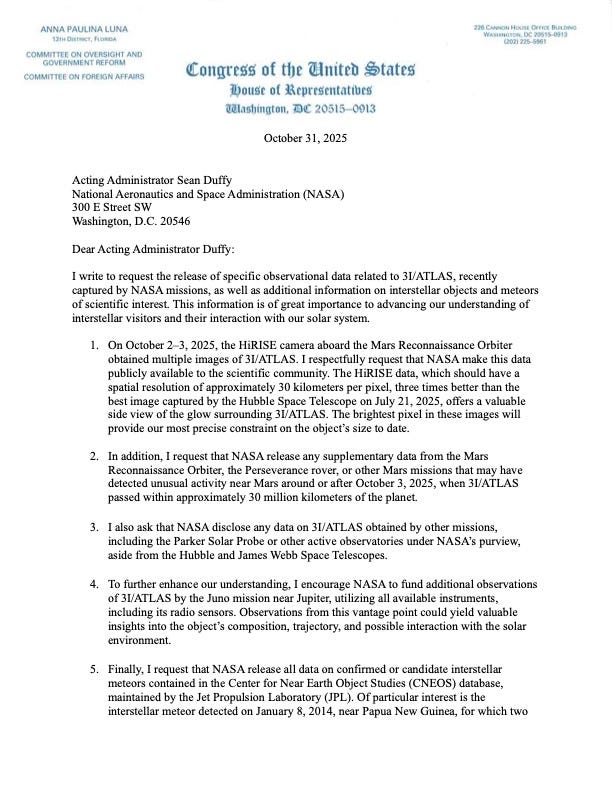
    During my recent podcast interview with Joe Rogan (accessible here), I had mentioned the unfortunate circumstances, under which NASA had not released for four weeks the images collected by the HiRISE camera onboard the Mars Reconnaissance…

    Continue Reading

  • Group encounters a rare giant oarfish while diving off the coast

    Group encounters a rare giant oarfish while diving off the coast

    Divers off Taiwan’s Ruifang District filmed a giant oarfish, Regalecus glesne, in shallow water. The clip surfaced in June 2023 and shows a long, ribbon-shaped fish moving slowly. It drew attention online within days as viewers marveled and…

    Continue Reading

  • Oil Prices Unmoved by Trump-Xi Meeting

    Oil Prices Unmoved by Trump-Xi Meeting

    This report provides an overview of global oil and natural gas market trends, including price changes, production data, and geopolitical developments impacting energy.

    The Trump-Xi meeting in South Korea, frequently lauded as a potential icebreaker moment between the United States and China, failed to provide any momentum to oil markets as discussions centered more on fentanyl than crude oil or LNG. As such, this weekend’s OPEC+ meeting is the next trend-setting market for the market at large, even if this time around reports all seem to indicate the same outcome – a 137,000 b/d ‘modest’ increase. Thus, ICE Brent could linger around $65 per barrel for slightly longer. 

    Saudi Arabia Expected to Cut Prices. The combination of higher Middle Eastern exports and a flattening Dubai futures curve will prompt Saudi Aramco (TADAWUL:2222) to slash its Asian formula prices to multi-month lows, with analysts predicting a month-over-month cut of $1.00 to $1.50 per barrel.  

    US, China Temporarily Suspend Port Fees. China’s Commerce Ministry announced that Beijing and Washington have agreed to suspend reciprocal port fees that have buoyed shipping markets in recent months, however the Trump administration is still yet to confirm the one-year suspension.   

    India Never Stopped Buying Russian. India’s largest refiner Indian Oil bought five cargoes of Russian oil for December arrival from non-sanctioned entities this week, equivalent to a 120,000 b/d supply, saying that the company will continue importing Russian barrels if they are in compliance with sanctions. 

    Gunvor Mops Up Lukoil Assets. Russia’s second-largest oil producer Lukoil (MCX:LKOH) said it had accepted an offer from global trading house Gunvor to buy its international assets, including Iraq’s giant West Qurna 2 oil field (producing 480,000 b/d) and several refineries across Europe.  

    Mozambique to Dispute LNG Development. The Mozambique government said it would challenge the updated budget and schedule of TotalEnergies’ (NYSE:TTE) 13 mtpa Mozambique LNG project, following reports that costs had risen by 4.5 billion in the four years that it was stalled due to security concerns. 

    China’s Teapots Come Back to Life. Improved refinery margins and returning downstream capacity have lifted refinery runs in China’s Shandong region to 71% in October, the highest reading in 2025 so far, however many will be forced to curb throughput as Beijing’s crude import quotas are running out.

    Nigeria to Tax Fuel Imports. The Nigerian government has approved a 15% import duty on gasoline and diesel, part of its long-standing plan to boost domestic refining as the shaky performance of the 650,000 b/d Dangote refinery didn’t lead to a full halt in imports, still importing 170,000 b/d of gasoline. 

    Set OilPrice.com as a preferred source in Google here.

    Greenland Oil Drilling, Here We Go. According to US oil services firm Sproule, the gross recoverable resources of Greenland are estimated to be around 13 billion barrels with most of those volumes located in the untapped Jameson Basin in the east of the island, spurring drilling interest for 2026-2027.

    Brazil Expands into Colombia’s Gas. Colombia’s state-controlled oil firm Ecopetrol (NYSE:EC) has formed a joint venture with Brazil’s Petrobras (NYSE:PBR) to market natural gas from the offshore Sirius block, holding an estimated 6 Tcf of natural gas and believed to start producing by 2029-2030.

    Henry Hub Balloons on Surging LNG Exports. As the Henry Hub gas futures started trading December-delivery contracts, the US gas benchmark surpassed the $4 per MMBtu mark and jumped almost 20% from where the November 2025 contract settled on Wednesday, buoyed by robust feedgas demand.  

    Qatar Locks In More Indian Demand. QatarEnergy signed a 17-year sales and purchase agreement with India’s Gujarat State Petroleum Corporation to deliver 1 mtpa of liquefied gas, with first deliveries starting in 2026 on a delivered ex-ship basis and pricing believed to be near mid-12% of the Brent slope.   

    Kuwait Floods Asia with More Crude. Kuwait has sold 3 million barrels of extra crude to Asia after an unplanned outage at its giant 615,000 b/d Al Zour refinery, coming after a fire on October 21, lowered the country’s own oil needs, adding to oversupply concerns in the Asian markets. 

    Doctor Copper Surges Again. Copper is set to log a third straight monthly gain after hitting an all-time nominal high of $11,200 per metric tonne this Wednesday, only to subside towards the end of the week on a stronger dollar, boosted by hedge funds increasing their long positions to a 8-month high.

    By Michael Kern for Oilprice.com

    More Top Reads From Oilprice.com


    Continue Reading

  • Petrol up by Rs2.43, diesel by Rs3.02 as govt revises prices

    Petrol up by Rs2.43, diesel by Rs3.02 as govt revises prices

    Petrol price rises to Rs265.45 per litre, and high-speed diesel to Rs278.44 per litre for the next 15 days

    People wait for their turn to get fuel at a petrol station in Peshawar on January 30, 2023. Photo: Reuters/ File

    The federal government has raised prices of petroleum products by up to Rs3.02 per litre for the next 15 days, with the new rates taking effect from November 1, 2025.

    According to a notification issued by the Ministry of Finance on Friday, the price of petrol has been jacked up by Rs2.43 per litre, bringing it up from Rs263.02 to Rs265.45 per litre. The price of high-speed diesel has been raised by Rs3.02 per litre, from Rs275.42 to Rs278.44 per litre.

    Officials said the increase follows recent upward trends in international oil prices and is likely to add to the people’s woes as they have already been facing inflationary pressures.

    On October 15, the federal government had announced a reduction in prices of petroleum products by up to Rs5.66 per litre.

    According to a notification issued by the Ministry of Finance, the price of petrol had been cut by Rs5.66 per litre, bringing it down from Rs268.68 to Rs263.02 per litre. The price of high-speed diesel had been reduced by Rs1.39 per litre, from Rs276.81 to Rs275.41 per litre.

    The price of kerosene oil had also been lowered by Rs3.26 per litre, from Rs184.97 to Rs181.71, while light diesel oil had been reduced by Rs2.74 per litre, from Rs165.50 to Rs162.76 per litre.

    Continue Reading

  • New brain-like computer could bring self-learning AI to devices

    New brain-like computer could bring self-learning AI to devices

    A team of engineers at The University of Texas at Dallas has developed a small-scale computer prototype that learns more like the human brain.

    The brain-inspired hardware can recognize patterns and make predictions using far fewer training…

    Continue Reading