A 1940 self-portrait by famed Mexican artist Frida Kahlo has sold for $54.7m (£41.8m, A$84.7m) at a New York art auction, setting a new top sale price for a work by any female artist.
El sueño (La cama), or The Dream (The Bed), which depicts…

A 1940 self-portrait by famed Mexican artist Frida Kahlo has sold for $54.7m (£41.8m, A$84.7m) at a New York art auction, setting a new top sale price for a work by any female artist.
El sueño (La cama), or The Dream (The Bed), which depicts…

 PA Media
Kings of Leon, Neil Young & The Chrome Hearts and The Lumineers have been announced as headliners at a brand new 30,000-capacity music festival in Essex.
State…

Sometimes you need something badly enough that you’ll put up with anything to make it happen. Even if it means that you end up having to race in a car park. Ask Bernie Ecclestone…
There used to be a place outside Las Vegas called the Stardust…

The owner of the Fukushima nuclear power plant is edging closer to having one of its reactors restarted for the first time since the 2011 disaster.
Hideyo Hanazumi, the governor of the Niigata region, where Japan’s largest nuclear power plant is located said the prefecture would give its consent for restart.
It will need final approval from Japan’s nuclear regulator before the plan to resume operations at the Kashiwazaki-Kariwa facility, operated by Tepco, goes ahead.
If approved, it would be the first time Tepco has been allowed to recommence nuclear reactor operations in Japan since its Fukushima plant went into meltdown following a tsunami.
Residents in Niigata are divided over whether the plant should be restarted or not.
Hanazumi told a news conference on Friday that, once approved, the decision would then be discussed in December at a prefectural government assembly, where he would seek the assembly’s approval.
The approval would be for the recommencement of operations at the Kashiwazaki-Kariwa plant’s No 6 reactor, followed by the No 7.
The resumption of operations at the facility is part of Tepco’s business reconstruction plan following the Fukushima meltdown – when the plant’s reactors were flooded, causing radiation to leak out and forcing 150,000 people to be evacuated from the area.
Eighteen-thousand people were killed in the 9.0-magnitude earthquake and tsunami that preceded it.
Following the disaster, Tepco was ordered to pay trillions of Japanese yen in damages to those affected and is also paying for the plant’s decommissioning costs.
A survey released by Niigata prefecture last month suggested 50% of the its residents supported the plant’s restart, while 47% were against it. It also indicated that almost 70% of people in the prefecture were concerned about Tepco running the plant.
Fourteen nuclear reactors have already resumed operations in Japan since the Fukushima disaster.
Friday’s decision demonstrates Japan’s desire to move towards increased use of atomic energy to reduce its dependence on fossil fuels as it pursues a goal of net zero carbon emissions.

The uptake of higher-tier (4+) clean cooking solutions, especially in last mile communities, is a critical but often underfunded and insufficiently prioritised need. Despite a diversity of viable technologies, including pure electric cooking (eCooking) powered by photovoltaic systems (solar PV) and PV-supported biomass gasifier stoves, as well as ethanol stoves, their widespread adoption remains a challenge due to various barriers, including upfront costs and low awareness among end-users about potential financial and health benefits. However, the decreasing cost of solar PV modules, and the increasing affordability of PV-supported clean cookstoves and appliances, have made that specific category of technologies more financially viable, cost-competitive and better aligned with the Nationally Determined Contributions to the Paris Agreement on climate change (NDCs).
PV-supported cooking addresses both climate change mitigation and adaptation by reducing CO2 and other pollutant emissions by decreasing the dependence on unsustainably harvested biomass from local (and often fragile) ecosystems. With significant advancements and cost reductions in PV-supported clean cooking, scaling these solutions can help bridge the Emissions Gap and support several Sustainable Development Goals. Overcoming barriers to uptake requires supply and demand-side interventions, including affordable financing for viable business models discussed in this report, to facilitate household adoption of clean cooking technologies through scalable market-based approaches.
The report is co-published with the World Food Programme (WFP) and the Global Platform for Action on Sustainable Energy in Displacement Settings (GPA), in support of the objectives of the Global electric Cooking Coalition (GeCCo) and the multistakeholder Solar electric Cooking Partnership (SOLCO).

He took four more after lunch, including the key wicket of Stokes, as England lost six wickets for 67 runs after lunch, including the last five for 12 runs.
Starc picked off the last two wickets on consecutive balls to remove Jamie Smith (33) and…
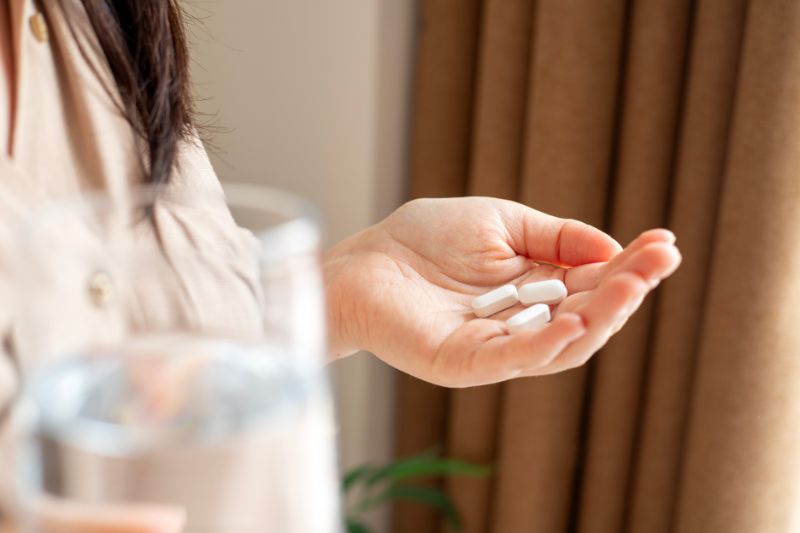
Antidepressant drugs cause profound changes to the human gut microbiome, but these changes could be mitigated by prebiotics, according to a major new study.
Scientists from the University of Ottawa…
Terms
While we only use edited and approved content for Azthena
answers, it may on occasions provide incorrect responses.
Please confirm any data provided with the related suppliers or
…