Pakistan cricket received a welcome boost this week as several national stars made noteworthy gains in the latest ICC Player ODI Rankings.
Leg-spinner Abrar Ahmed achieved a historic career milestone in ODIs, while senior batters Babar…

Pakistan cricket received a welcome boost this week as several national stars made noteworthy gains in the latest ICC Player ODI Rankings.
Leg-spinner Abrar Ahmed achieved a historic career milestone in ODIs, while senior batters Babar…
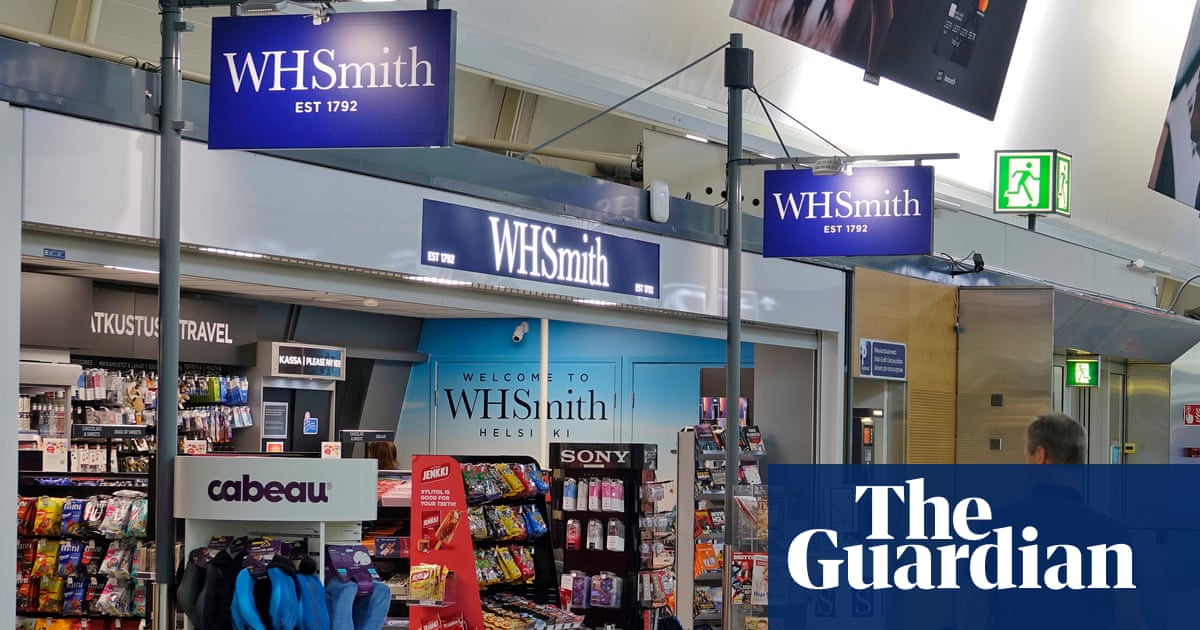
WH Smith’s chief executive has stepped down with immediate effect, after a review found accounting failures in its North American division, prompting the retailer to slash its profit outlook.
Nearly £600m was wiped off the company’s market value when the blunder emerged in August. Shares took a 42% one-day plunge from which they have not yet recovered, leaving the travel shop chain reeling shortly after the sale of its high street business, which has been rebranded as TGJones by its new owners.
Carl Cowling, who had been WH Smith’s group chief executive for six years, will be replaced on an interim basis by the company’s UK chief executive, Andrew Harrison, until a permanent replacement is found.
His departure came as an independent investigation by Deloitte said it had found “shortcomings” in the retailer’s North American division that exaggerated supplier income, leading the group to overstate profits at its US business by as much as £50m.
The review found weaknesses in the composition of the US finance team, as well as insufficient systems, controls and review procedures for supplier income in its commercial and finance teams. It also found the group had limited oversight of US finance processes.
Annette Court, the WH Smith chair, apologised and said the company recognised “the importance of strengthening controls, governance and reporting procedures across the group.”
She added: “Our priority now is to rebuild trust and credibility and to improve the performance and profitability of our North America division. We are confident that the actions we have taken and will continue to implement over the months ahead will ensure a strong foundation for the business going forward.”
Cowling said: “Whilst the issues identified in the Deloitte review arose in our North American division, I recognise the seriousness of this situation and as group CEO feel it is only right that I step down from my position.”
WH Smith, which is now focusing on its travel business and branches in airports and railway stations, had previously identified North America as a growth opportunity.
after newsletter promotion
It warned that it expected profits for its US arm for 2024-25 to be between £5m and £15m, down from the £55m originally forecast and below the £25m announced on 21 August when the accounting blunder was first revealed.
WH Smith’s group profits are forecast to be between £100 and £110m for the year to 31 August, about 55% lower than last year.
Cowling will remain employed by WH Smith until the end of February to ensure an orderly handover. The company said it would look to new leadership to “implement the remediation plan” and take the company through the next phase of its strategy to focus on its shops at global travel hubs.
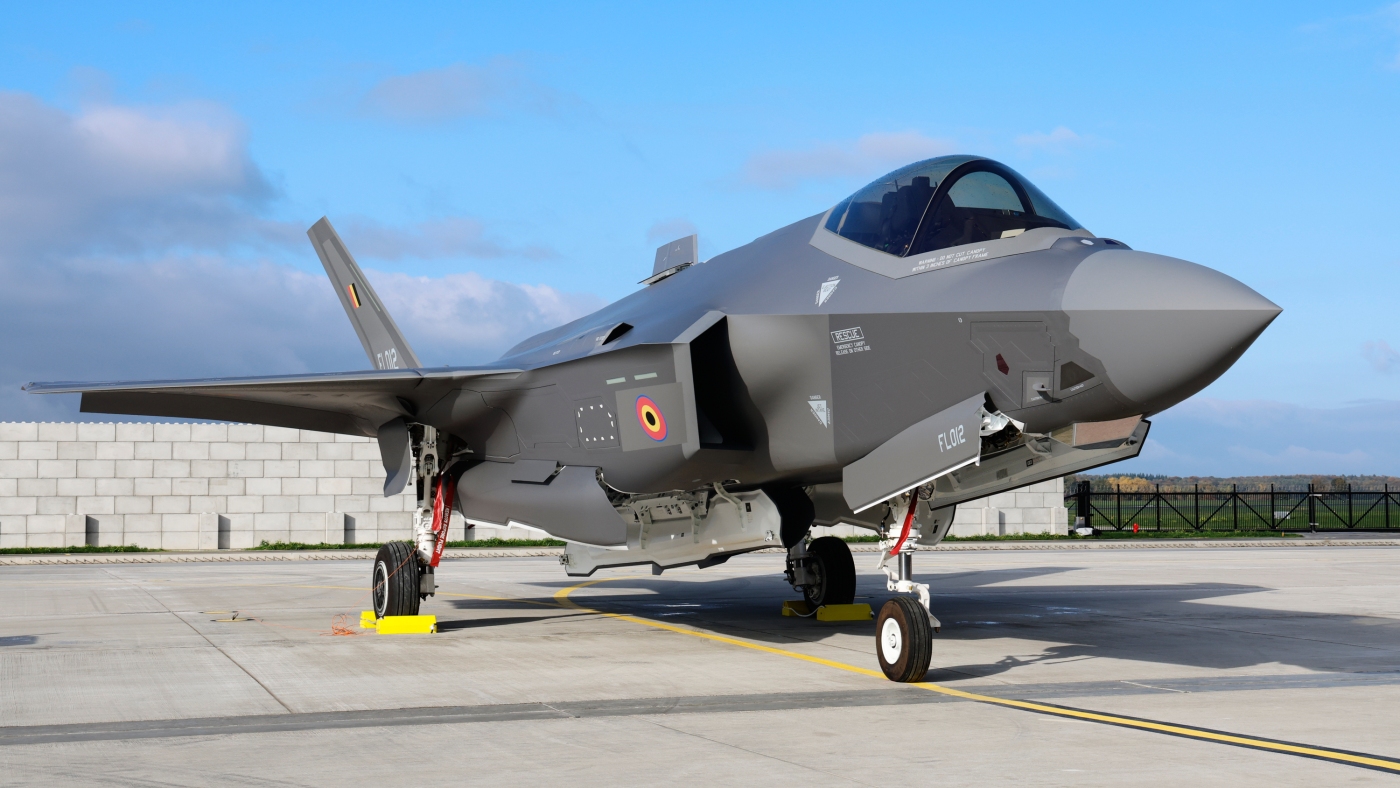
An F-35A Lightning II sits on the runway at the Florennes Airbase in Florennes, Belgium, Oct. 13, 2025.
…

Laurence Cawley
BBC News

In the same month he handed over his keys to the bailiffs, the BBC saw a similar three-bedroom property in the same Thetford street as Mr Da Costa Diogo’s on the market
As we mentioned in an earlier post, we spoke to Jose who had his Norfolk home repossessed.
After this happened, Jose was given emergency accommodation in a small ground-floor studio in north Suffolk.
“I left my house with one suitcase and a bag of essentials and told the council ‘I’m homeless’,” he said.
“It’s a roof over my head. I’m trying to keep things simple because what is the point of complicating things?
“I’m alive and I carry on.”
In the same month he handed over his keys to the bailiffs, the BBC saw a similar three-bedroom property in the same Thetford street as Mr Da Costa Diogo’s on the market for £160,000 – almost double the amount he owed.

Running from May 2023 to late 2025, the two-year effort brought…

At least 10,000 women and girls were imprisoned in Ireland’s Magdalene laundries, forced into unpaid labour and subject to cruelty and suffering. This documentary narrated by Imelda Staunton tells the story of the campaign to hold the Irish…

Arsenal and Visit Rwanda to conclude landmark eight-season partnership in June 2026
Arsenal and the Rwanda Development Board have mutually agreed to conclude their partnership at the end of this season, bringing to a close an eight-season…

19 November 2025
Euro area current account balance
(EUR billions unless otherwise indicated; working day and seasonally adjusted data)
Source: ECB.
The current account of the euro area recorded a surplus of €23 billion in September 2025, an increase of €1 billion from the previous month (Chart 1 and Table 1). Surpluses were recorded for goods (€30 billion) and services (€12 billion). These were partly offset by deficits for secondary income (€17 billion) and primary income (€3 billion).
Current account of the euro area
(EUR billions unless otherwise indicated; transactions; working day and seasonally adjusted data)
Source: ECB. Note: Discrepancies between totals and their components may be due to rounding.
Data for the current account of the euro area
In the 12 months to September 2025, the current account recorded a surplus of €306 billion (2.0% of euro area GDP), compared with a surplus of €414 billion (2.7% of euro area GDP) one year earlier. This decrease was mainly driven by a switch from a surplus (€51 billion) to a deficit (€21 billion) for primary income, but also by a larger deficit for secondary income (up from €164 billion to €189 billion) and a reduction in the surplus for services (down from €168 billion to €155 billion). These developments were partly offset by a slightly larger surplus for goods (up from €360 billion to €362 billion).
Selected items of the euro area financial account
(EUR billions; 12-month cumulated data)
Source: ECB. Notes: For assets, a positive (negative) number indicates net purchases (sales) of non-euro area instruments by euro area investors. For liabilities, a positive (negative) number indicates net sales (purchases) of euro area instruments by non-euro area investors.
In direct investment, euro area residents made net investments of €161 billion in non-euro area assets in the 12 months to September 2025, following net disinvestments of €234 billion one year earlier (Chart 2 and Table 2). Non-residents invested €76 billion in net terms in euro area assets in the 12 months to September 2025, following net disinvestments of €470 billion one year earlier.
In portfolio investment, euro area residents’ net purchases of non-euro area equity increased to €213 billion in the 12 months to September 2025, up from €157 billion one year earlier. Over the same period, net purchases of non-euro area debt securities by euro-area residents increased to €655 billion, up from €464 billion one year earlier. Non-residents’ net purchases of euro area equity increased to €410 billion in the 12 months to September 2025, up from €364 billion one year earlier. Over the same period, non-residents made net purchases of euro area debt securities amounting to €320 billion, declining from €400 billion one year earlier.
Financial account of the euro area
(EUR billions unless otherwise indicated; transactions; non-working day and non-seasonally adjusted data)
Source: ECB. Notes: Decreases in assets and liabilities are shown with a minus sign. Net financial derivatives are reported under assets. “MFIs” stands for monetary financial institutions. Discrepancies between totals and their components may be due to rounding.
Data for the financial account of the euro area
In other investment, euro area residents recorded net acquisitions of non-euro area assets amounting to €377 billion in the 12 months to September 2025 (down from €434 billion one year earlier), while their net incurrence of liabilities was €298 billion (up from €24 billion one year earlier).
Monetary presentation of the balance of payments
(EUR billions; 12-month cumulated data)
Source: ECB. Notes: “MFI net external assets (enhanced)” incorporates an adjustment to the MFI net external assets (as reported in the consolidated MFI balance sheet items statistics) based on information on MFI long-term liabilities held by non-residents, available in b.o.p. statistics. B.o.p. transactions refer only to transactions of non-MFI residents of the euro area. Financial transactions are shown as liabilities net of assets. “Other” includes financial derivatives and statistical discrepancies.
The monetary presentation of the balance of payments (Chart 3) shows that the net external assets (enhanced) of euro area MFIs increased by €244 billion in the 12 months to September 2025. This increase was driven by the current and capital accounts surplus and euro area non-MFIs’ net inflows in other investment and portfolio investment equity. These developments were partly offset by euro area non-MFIs’ net outflows in other flows, portfolio investment debt and direct investment.
In September 2025 the Eurosystem’s stock of reserve assets increased to €1,622.2 billion up from €1,507.8 billion in the previous month (Table 3). This increase was largely driven by positive price changes (€112.7 billion), due to an increase in the price of gold, and, to a lesser extent, by net acquisitions of assets (€4.6 billion). These were partly offset by negative exchange rate changes (€2.9 billion).
Reserve assets of the euro area
(EUR billions; amounts outstanding at the end of the period, flows during the period; non-working day and non-seasonally adjusted data)
Source: ECB. Notes: “Other reserve assets” comprises currency and deposits, securities, financial derivatives (net) and other claims. Discrepancies between totals and their components may be due to rounding.
Data for the reserve assets of the euro area
Data revisions
This press release incorporates revisions to the data for July 2025 and August 2025. These revisions modified the figures previously published in August 2025 for the current account balance mainly due to revisions in goods imports.
Next releases:
For media queries, please contact Benoît Deeg, tel.: +49 172 1683704.