Ø SBP Weekly Data Report
http://www.sbp.org.pk/ecodata/index2.asp
https://www.dawn.com/news/1951376/how-real-is-forex-stability
Ø Pakistan paid $2.7b in interest to IMF alone. Can it ever break free?
Ø SBP Weekly Data Report
http://www.sbp.org.pk/ecodata/index2.asp
https://www.dawn.com/news/1951376/how-real-is-forex-stability
Ø Pakistan paid $2.7b in interest to IMF alone. Can it ever break free?

Nov. 7-13, 2025
An Indigenous group attended the opening ceremony of the People’s Summit offsite from the COP30 climate conference, while other people walked along the river at sunset in Belem, Brazil. Jose Rivera prayed before an image of the…

The mining sector sits at the heart of the global economy and is a foundational component of the energy transition. However, macroeconomic and geopolitical shifts pose unique and unpredictable risks to commodities markets and mining operations globally.
The unpredictable, time-sensitive nature of geopolitical events can have immediate repercussions on the production of critical resources. Unplanned disruptions—stemming from geopolitical shocks, along with climate events, equipment failures, cyberattacks, or people risks—can halt production, drive financial losses, and undermine stakeholder confidence. Building business resilience in this volatile political environment requires a comprehensive political risk management strategy.
The mining sector is uniquely exposed to geopolitical tensions due to the high international competition and demand for the critical materials and metals necessary for industrial development, electrification, and decarbonization efforts. For instance, demand for lithium is expected to surge by 40 times by 2040.
This reliance creates vulnerabilities, particularly as the production and processing of critical minerals tend to be concentrated in a few countries. This concentration exacerbates supply constraints. Latin America, for example, a region with high political volatility, holds over half of the world’s lithium, two-fifths of its copper, and a quarter of its nickel.
This concentration often gives rise to resource nationalism. Resource nationalism occurs when countries assert control over their natural resources, prioritizing domestic ownership to maximize economic benefits. For foreign-owned mines, this can manifest as:
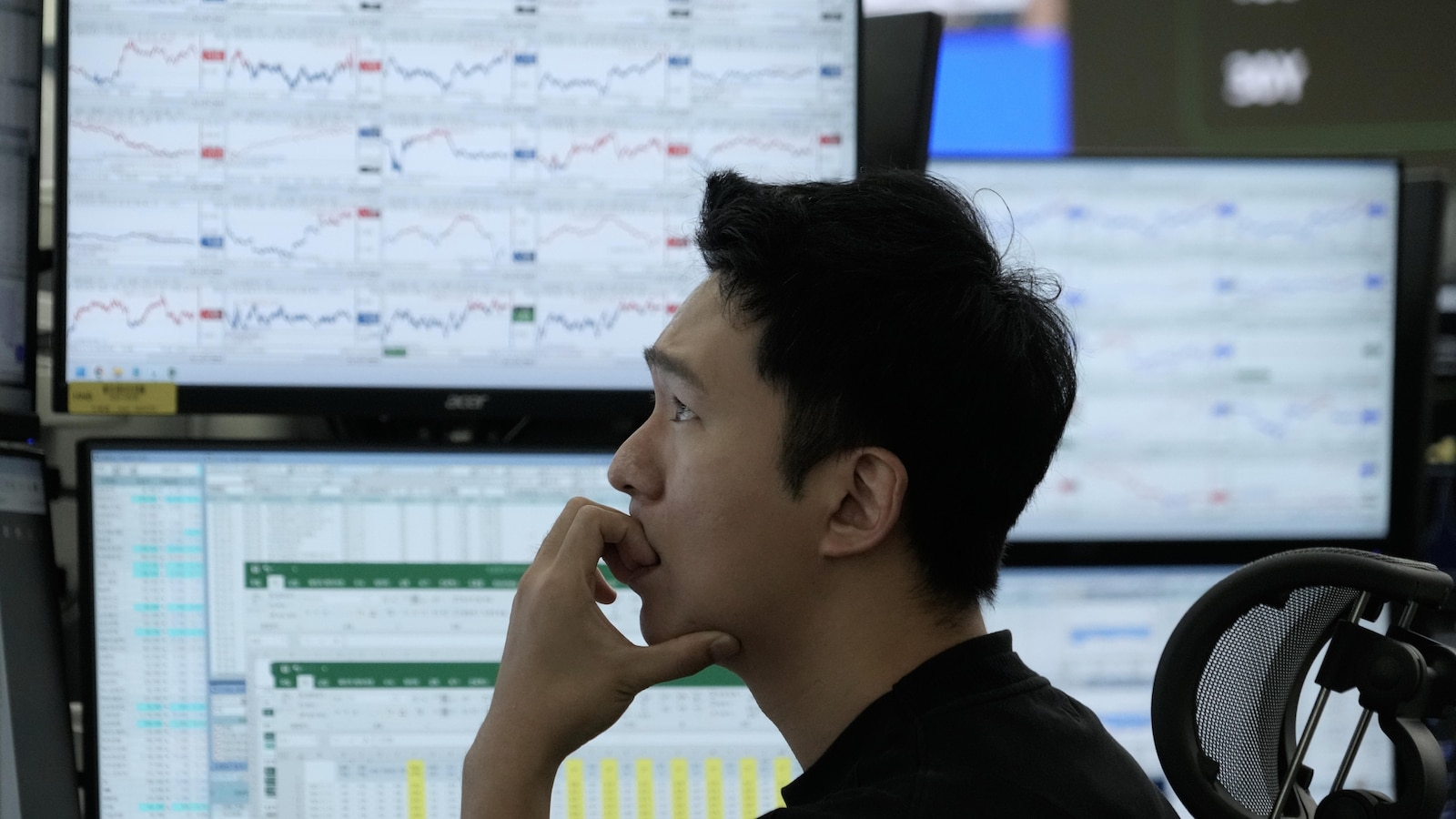
MANILA, Philippines — Asian shares retreated on Friday, tracking Wall Street’s tumble to one of its worst days since April as Nvidia and other AI superstar stocks kept dropping on worries their prices have shot too high.
U.S. futures were nearly unchanged and oil prices advanced.
South Korea’s Kospi led the regional decline, falling 3.2% to 4,038.61 amid the global tech sell-off. Samsung Electronics shed 4.1% and SK Hynix was down 6.4%. LG Energy Solutions gave up 3.7%.
Taiwan’s Taiex lost 1.7%.
Japan’s Nikkei 225 fell nearly 1.7% to 50,438.99, reversing the previous day’s gains. SoftBank Group led the slide, plunging 5.7% amid losses in its technology and AI related investments.
In Chinese markets, Hong Kong’s Hang Seng index shed 1.3% to 26,732.99, while the Shanghai Composite index slipped nearly 0.2% to 4,022.89.
Data on Friday showed China’s factory output grew at a 14-month low of 4.9% year-on-year in October, down from 6.5% in September and below expectations of 5.5%. Investment in fixed asset such as factory equipment also fell 1.7% year-on-year in the January to October period.
Persisting weakness in property investments were a key factor dragging on business investment.
In Australia, the S&P /ASX 200 dropped 1.4% to 8,628.30 as hopes the Reserve Bank of Australia will cut rates faded after a strong jobs report.
India’s BSE Sensex slid 0.4%.
On Thursday, the U.S. stock market tumbled to one of its worst days since its springtime sell-off. Doubts over whether interest rate cuts that Wall Street has been banking on will actually happen also have dimmed investor sentiment.
The S&P 500 sank 1.7% to 6,737.49, pulling further from its all-time high set late last month. It was the worst day in a month for the index at the heart of many 401(k) accounts and the second-worst since April’s plunge after President Donald Trump shocked the world with his “Liberation Day” tariffs.
The Dow Jones Industrial Average dropped 1.7% from its record set the day before, to 47,457.22.
The Nasdaq composite lost 2.3% to 22,870.36.
Nvidia was the heaviest weight on the market after the chip company fell 3.6%. Other stocks swept up in the artificial-intelligence frenzy also struggled, including drops of 7.4% for Super Micro Computer, 6.5% for Palantir Technologies and 4.3% for Broadcom.
Questions have been rising about how much higher AI darlings can go following their already spectacular gains. Early this month, Palantir had gained nearly 174% for the year so far, for example.
Such sensational performances have been one of the top reasons the U.S. market has hit records despite a slowing job market and high inflation. AI stock prices have shot so high, though, that they’re drawing comparisons to the 2000 dot-com bubble, which ultimately burst and dragged the S&P 500 down by nearly half.
In the meantime, stocks outside of AI also fell across Wall Street as traders worried the Federal Reserve may not deliver another cut to interest rates in December, as many had been expecting.
Lower interest rates can invigorate the economy and raise prices for investments, even though they can also worsen inflation. A halt in cuts could undermine U.S. stock prices after they already ran to records partly on expectations for more reductions.
Expectations have come down sharply in recent days that the Fed will cut its main interest rate for a third time this year. Traders now see roughly a coin flip’s chance of that, 51.9%, down from nearly 70% a week ago, according to data from CME Group.
In other dealings early Friday, U.S. benchmark crude oil added 90 cents to $59.59 per barrel. Brent crude, the international standard, rose 87 cents to $63.88 per barrel.
The U.S. dollar slipped to 154.47 Japanese yen from 154.54 yen. The euro rose to $1.1641 from $1.1635.
___
AP Business Writers Stan Choe and Matt Ott contributed.

SYLHET, Bangladesh (AP) — Opener Mahmudul Hasan Joy and captain Najmul Hossain Shanto scored centuries as Bangladesh defeated Ireland by an innings and 47 runs in the first cricket test on Friday.
Joy’s career-best 171 and Shanto’s 100…

A fifth case of bird flu has been confirmed at a commercial poultry site in Norfolk.
The Department for Environment, Food and Rural Affairs (Defra) said the H5N1 virus was confirmed at a premises near Poringland, Norfolk, and at another premises…
The sample sources were diverse, including eye secretions, sputum, abscesses, blood, bronchoalveolar lavage fluid,…