Inspector General of Police (IGP) Islamabad Syed Ali Nasir Rizvi chaired a high-level meeting at the Central Police Office to review major investigations and Safe City operations in the federal capital.
An official told APP on Sunday that the…

Inspector General of Police (IGP) Islamabad Syed Ali Nasir Rizvi chaired a high-level meeting at the Central Police Office to review major investigations and Safe City operations in the federal capital.
An official told APP on Sunday that the…

Initial findings reveal Irfan was illegally detained and tortured during interrogation, leading to his death
The Federal Investigation Agency (FIA) has…
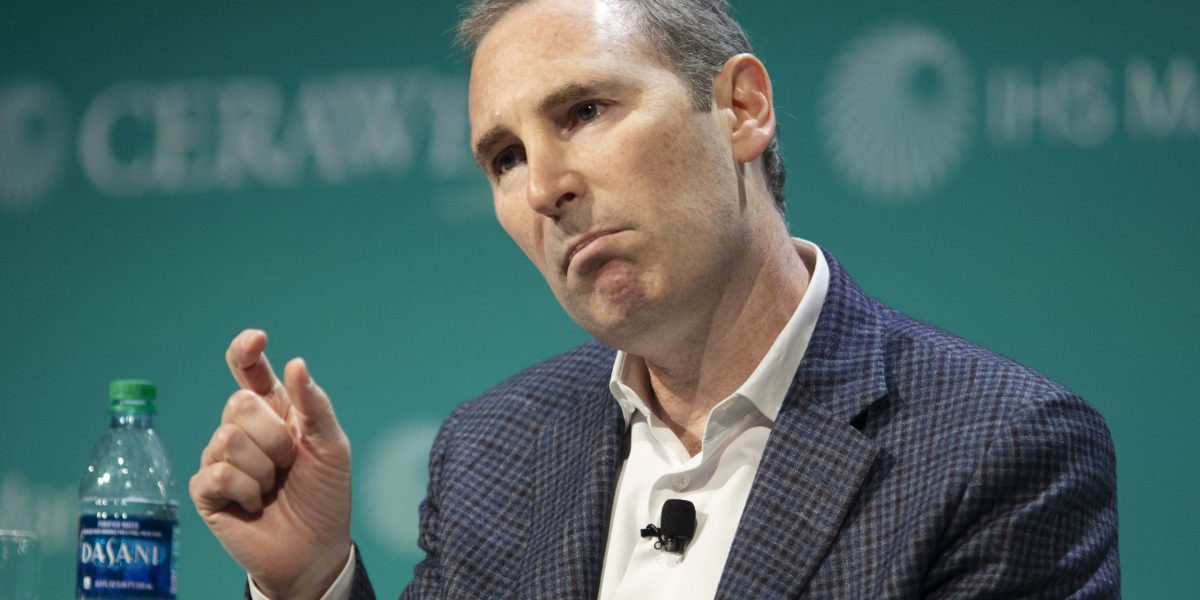
In case you were unsure about Amazon’s ability to monetize artificial intelligence, “the everything store” assigned a staggering dollar figure to the performance of its AI shopping assistant, Rufus, estimating the chatbot will generate an additional $10 billion in annualized sales for the company.
The disclosure came during Amazon’s third-quarter earnings call on Thursday, when CEO Andy Jassy shared new metrics demonstrating the tool’s growing influence on customer behavior. According to Jassy, 250 million shoppers have used Rufus this year, with monthly active users growing 140% year over year and interactions increasing 210%.
And here’s a killer stat from Amazon: Customers who engage with Rufus during their shopping journey are 60% more likely to complete a purchase compared to those who don’t use the assistant.
“Rufus is expected to generate over $10 billion in annual incremental sales for us,” Jassy said on the call, highlighting what has become one of Amazon’s most visible bets on consumer-facing AI.
Amazon reported third-quarter revenue rose 13% to $180.2 billion, exceeding analyst expectations of $177.8 billion. The company’s cloud-computing division, Amazon Web Services, posted 20% revenue growth to reach $33 billion—its fastest expansion since 2022, Jassy said.
Rufus, which launched in beta in February 2024, is a shopping assistant that’s embedded directly into Amazon’s mobile app and website. Amazon trained Rufus on its entire product catalog, as well as customer reviews, community Q&As, and information from across the web. Shoppers can ask questions from broad product comparisons—like differences between trail and road running shoes—to specific questions about individual items, like whether a certain coat is suitable for winter.
Rufus represents Amazon’s strategy to keep customers within its ecosystem rather than losing them to search engines like Google, where they might discover competing retailers, or other AI engines like ChatGPT. By answering product questions and offering recommendations without requiring users to leave Amazon’s platform, the goal of Rufus is to train people that Amazon can help you do research about its available products, in addition to simply advertising and selling them.
Amazon launched Rufus in the U.S. before rolling out the chatbot across the UK, India, France, Germany, Italy, Spain, and Canada. Amazon continually improved the tool throughout 2025; just last week, it introduced a feature called “Help Me Decide,” which uses algorithms to offer guidance when shoppers feel overwhelmed by choices.
The $10 billion sales estimate is tied to what Amazon internally calls “downstream impact,” a metric the company uses to measure how specific features or services drive additional consumer spending across its marketplace. For Rufus, this means tracking purchases that result from interactions with the chatbot, even if those transactions don’t happen immediately. The company employs a seven-day rolling attribution model to capture delayed conversions.
Business Insider reported in April that internal planning documents projected Rufus would indirectly contribute over $700 million in operating profits for the year, with expectations to reach $1.2 billion in profit contributions by 2027. Those projections included revenue from advertisements embedded within Rufus responses to user queries.
Jassy’s remarks during the earnings call emphasized how AI is reshaping Amazon’s retail operations. He noted the company has also launched generative AI features that convert product summaries and reviews into audio clips, and has expanded from covering hundreds of products at launch to millions currently. Another tool, Amazon Lens, allows customers to use their smartphone cameras to search for products visually, with tens of millions of customers using it each month.
Amazon’s advertising business also posted strong results, with revenue climbing 22% to $17.6 billion in the third quarter. Jassy attributed part of that growth to the company’s demand-side platform, which has been enhanced with new features over the past 20 months and now integrates ad inventory from Netflix, Spotify, and SiriusXM.
The Rufus announcement comes amid broader questions about Amazon’s investments in AI infrastructure. The company raised its 2025 capital expenditure forecast from $118 billion to $125 billion, with CFO Brian Olsavsky indicating that spending will likely increase again in 2026. Much of that investment is directed toward building data centers and acquiring the computing power needed to support AI applications across Amazon’s cloud and retail operations.
On Wednesday, Amazon officially opened Project Rainier, an $11 billion AI data center designed to train and run models from Anthropic, the startup behind the Claude chatbot. Amazon has invested $8 billion in Anthropic and announced that the company plans to use 1 million custom Amazon Trainium2 chips by the end of 2025.
Just days before the earnings report, Amazon confirmed it would eliminate approximately 14,000 corporate positions,. During the call, Jassy addressed the cuts, describing them as driven by a desire to operate with “fewer layers and more ownership” rather than by financial pressures or AI automation. However, a memo sent to affected employees cited AI as “the most transformative technology we’ve seen since the Internet,” stating it enables companies to innovate faster than before. Despite the workforce reductions, Amazon shares surged more than 13% in after-hours trading following the earnings announcement, reflecting investor optimism about the company’s cloud acceleration and AI momentum.

Israel once again breached the ceasefire, launching a drone strike on a vegetable market in Gaza City.
Residential buildings in Khan Younis and Rafah were also targeted by shelling. In the past 24 hours, three…

Indonesia’s Janice Tjen defeated Australia’s Kimberly Birrell to capture the Chennai Open 2025 WTA 250 tennis tournament title at SDAT Stadium on Sunday.
World No. 82 Janice Tjen beat Kimberly Birrell, 117th in the women’s singles tennis…


Lee Soo Man resisted the title at first. “King of K-pop” sounded too brash, too nightclub-esque — like something you’d see on a neon sign in Itaewon, a nightlife neighborhood in the South Korean capital Seoul once popular with U.S….

You’re probably familiar with classic sauropod dinosaurs – the four-legged herbivores famous for their long necks and tails. Animals such as Brachiosaurus, Apatosaurus and Diplodocus have been standard fixtures in science museums since the…

Bank of New York Mellon (BK) has shown steady performance over the past year, and its latest results offer investors a closer look at its current position in the financial sector. Shares have climbed nearly 39% year to date.
See our latest analysis for Bank of New York Mellon.
Bank of New York Mellon’s momentum has been impressive, with a year-to-date share price return of 39.43% and a total shareholder return of 46.49% over the past year. This strong performance has been fueled by renewed investor interest in financials and a robust earnings trend. This suggests that market confidence in the bank’s long-term prospects is gathering pace.
If this kind of sustained growth has you rethinking what’s possible in today’s market, it could be the perfect time to broaden your search and discover fast growing stocks with high insider ownership
The question now is whether Bank of New York Mellon’s impressive rally still leaves room for future gains, or if the current price already reflects all of its potential. This has investors wondering if a true opportunity remains.
With the narrative fair value estimate at $118.07, Bank of New York Mellon’s last close of $107.93 suggests there could still be room for upside, drawing keen attention to the metrics behind this call.
Accelerated investment in digital platforms (including digital asset custody, AI integration, and the NEXEN ecosystem), coupled with strong early adoption, positions BNY Mellon for improved operating leverage and net margin expansion over the coming years. Scalable technology helps reduce costs and increases cross-selling opportunities.
Read the complete narrative.
Curious what bold forecasts are fueling this target? The narrative relies heavily on key operational breakthroughs, higher profit margins, and a valuation multiple below the industry. Which numbers matter most for future upside? Dive in to discover the assumptions that could reshape expectations.
Result: Fair Value of $118.07 (UNDERVALUED)
Have a read of the narrative in full and understand what’s behind the forecasts.
However, persistent outflows in investment management or an extended period of market volatility could undermine the positive growth narrative presented by Bank of New York Mellon.
Find out about the key risks to this Bank of New York Mellon narrative.
While multiples-based analysis suggests that Bank of New York Mellon looks undervalued compared to industry averages and its own fair ratio, the SWS DCF model offers a more cautious take. According to our DCF estimates, the current share price is actually trading above fair value, which hints at less upside than some might expect. Could patient investors see a better entry point ahead?