
Author: admin
-

ABB chosen to supply technology for BC Ferries’ New Major Vessels
- ABB’s integrated power, propulsion and control solution has been chosen for BC Ferries’ four new hybrid-electric major vessels
- The New Major Vessels have been designed to minimize emissions and underwater radiated noise (URN), with the goal of contributing to quieter and cleaner operations in the Strait of Georgia
ABB will supply a complete package of power, propulsion and control technology for four new double-ended passenger and car ferries operated by British Columbia Ferry Services (BC Ferries). One of the largest ferry operators in the world, BC Ferries provides year-round vehicle and passenger service on 25 routes to 47 terminals, carrying approximately 9.7 million vehicles and 22.7 million passengers annually 1. Demand on the ferry system is expected to increase as the province’s population is forecast to grow 44 percent2 by 2046.
The hybrid-electric ferries, which will replace four end-of-life vessels, are part of the BC Ferries’ New Major Vesselsprogram, aimed at delivering safe, environmentally sustainable and reliable operations in and around the Strait of Georgia, the body of water separating Vancouver Island from the Lower Mainland of British Columbia. The order was booked in the fourth quarter of 2025.
Scheduled for delivery beginning in 2029 from China Merchants Industry Weihai (CMI Weihai) Shipyard, the vessels will be equipped with ABB’s gearless, steerable Azipod® electric propulsion.The system offers proven reliability thanks to significantly fewer moving parts than mechanical thrusters, while the special propeller design helps reduce underwater radiated noise (URN). This helps safeguard at-risk species, such as the Southern Resident killer whale, and preserve one of the world’s most biologically rich marine ecosystems3.
ABB’s Onboard DC Grid™ power distribution system will serve as the backbone for efficient energy flow, minimizing conversion losses and enabling higher overall system efficiency and lower emissions than comparable propulsion arrangements.
Each ferry will be equipped to accommodate up to 70 megawatt-hours (MWh) of battery energy storage. This enables efficient hybrid operations today and supports a future shift to fully electric, zero-emission service. The hybrid configuration uses biofuel or renewable diesel and continuously balances energy between generators and batteries. Each vessel can also connect to a high-capacity shore charging system rated above 60 megawatts (MW) for full electric operation. This system is more than 100 times more powerful than the fastest public electric vehicle charging stations in North America, which typically deliver up to 500 kilowatts (kW) per plug. This high-capacity charging supports fast turnaround in port and enables the transition to zero-emission operations.
ABB’s digital solutions will give crews a clear overview of ship operations and support safe, efficient journeys. These digital technologies are intended to help BC Ferries deliver an improved travel experience for passengers while reducing environmental impact.
“BC Ferries’ New Major Vessels represent the largest capital investment in our history and are essential to renewing our fleet, increasing capacity on our busiest routes, and strengthening system resilience,” said Nicolas Jimenez, President & CEO, BC Ferries. “Their design reflects what our customers value most: comfort, accessibility and environmental stewardship. With diesel-battery hybrid technology that can operate on bio and renewable diesel today and transition to full electrification as infrastructure evolves, these ships are a critical part of building a cleaner, quieter, and more reliable ferry system for the future.”
“We proudly support BC Ferries’ goals to reduce greenhouse gas emissions from their operations, striving to meet British Columbia’s 2030 greenhouse gas emissions reduction target for the transportation sector4 by at least 27 percent by 2030, from 2008 levels, in support of a cleaner future for British Columbia, and its ambitions to transition to all-electric operation,” said Rune Braastad, President, ABB’s Marine & Ports division. “ABB’s deep roots in Canada make it possible to support generational infrastructure projects like the New Major Vessels.”
“Winning the contract to deliver such a wide scope of solutions is highly significant for ABB’s marine business in North America,” said Timo Vesala, Head of Sales, Marine Systems, Americas, ABB’s Marine & Ports division. “As someone who lives and works in Vancouver, I recognize the importance of this initiative for British Columbia – not only in providing consistently reliable and resilient ferry services, but also in helping local communities experience cleaner air and quieter waterways.”
ABB is a global technology leader in electrification and automation, enabling a more sustainable and resource-efficient future. By connecting its engineering and digitalization expertise, ABB helps industries run at high performance, while becoming more efficient, productive and sustainable so they outperform. At ABB, we call this ‘Engineered to Outrun’. The company has over 140 years of history and around 110,000 employees worldwide. ABB’s shares are listed on the SIX Swiss Exchange (ABBN) and Nasdaq Stockholm (ABB). www.abb.com
[1] British Columbia Ferry Services Inc. Annual Report to the British Columbia Ferries Commission – Year ended March 31, 2025.
[2] https://www.bcferries.com/in-the-community/projects/new-major-vessels
[3] https://georgiastrait.org/issues/about-the-strait-2/
[4] https://www.bcferries.com/web_image/hf0/hce/8910527397918.pdf
Continue Reading
-

Estonian astronomers stumble upon interstellar matter jet | News
While observing the binary star R Aquarii in the constellation Aquarius, scientists at the Tartu Observatory discovered that the system’s jets of matter are emitted precisely at the moment when the two stars come into close contact. The…
Continue Reading
-

Is Lactose Intolerance Reversible? New Research Says Symptoms May Be Flexible
For anyone who has ever had to mentally calculate the consequences of a slice of pizza or a splash of milk in coffee, lactose intolerance is more than a minor inconvenience. It shapes daily habits, social situations, and long-term dietary…
Continue Reading
-
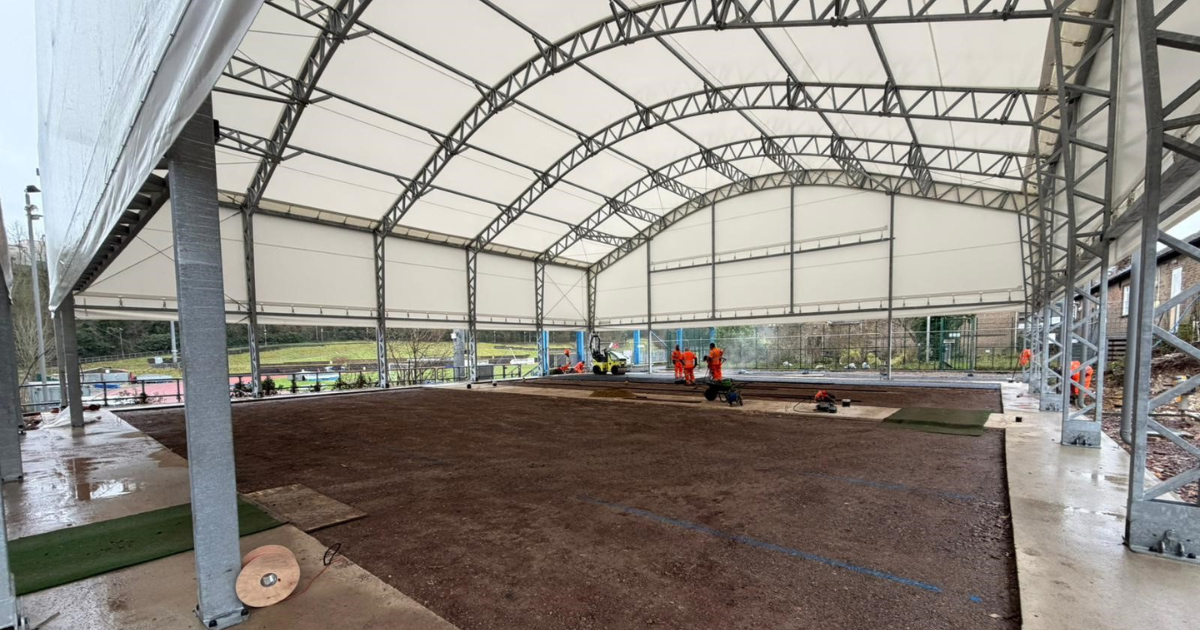
New covered padel courts at Withdean Sports Complex opening soon
Game4Padel, the UK’s leading operator of padel clubs, will be opening the three new padel courts at Withdean Sports Complex, next month – in partnership with Freedom Leisure and the council.
These will be the first covered courts in the…
Continue Reading
-

Predicting the effect of CRISPR-Cas9-based epigenome editing
All cells within a multicellular organism have the same genetic sequence up to a minuscule number of somatic mutations. Yet, many cell types exist with diverse morphological and functional traits. Epigenetics is an important regulator and driver of this diversity by allowing differences in cellular state and gene expression despite having the same genotype (Taherian Fard and Ragan, 2019). Indeed, cells traversing the trajectory from pluripotency through terminal differentiation have essentially the same genotype.
Epigenetic modifications such as post-translational modifications (PTMs) to histone proteins are involved in many vital regulatory processes influencing genomic accessibility, nuclear compartmentalization, and transcription factor binding and recognition (Reik et al., 2001; Kouzarides, 2007; Gibney and Nolan, 2010; Klemm et al., 2019; Hafner and Boettiger, 2023; Zhang and Reinberg, 2001). The Histone Code Hypothesis suggests that combinations of different histone PTMs specify distinct chromatin states, thereby regulating gene expression (Strahl and Allis, 2000; Jenuwein and Allis, 2001).
The field of epigenome editing has produced new tools for understanding the outcomes of epigenetic perturbations that promise to be useful for therapeutics by enabling fine-tuned control of gene expression (Matharu and Ahituv, 2020; Thakore et al., 2016; Goell and Hilton, 2021; Stricker et al., 2017). Currently, small molecule drugs are used to potently interfere with epigenetic regulation of gene expression. For example, Vorinostat inhibits histone deacetylases, thereby impacting the epigenetic landscape (Estey, 2013; Yoon and Eom, 2016). However, small molecules globally disrupt the epigenome and transcriptome and therefore are not suitable for targeting individual dysregulated genes nor clarifying epigenetic regulatory mechanisms (Swaminathan et al., 2007). Meanwhile, numerous tools have been designed to harness catalytically dead Cas9 (dCas9) to target epigenetic modifiers to DNA sequences encoded in guide RNAs (gRNAs) (Jinek et al., 2012; Mali et al., 2013; Hilton et al., 2015; Stepper et al., 2017; Kwon et al., 2017; Li et al., 2021). CRISPR-Cas9-based epigenome editing strategies facilitate unprecedented, precise control of the epigenome and gene activation, providing a path to epigenetic-based therapeutics (Cheng et al., 2019).
A major challenge for epigenome editing is designing gRNAs that can achieve a desired level of transcriptional or epigenetic modulation. Finding effective gRNAs currently typically requires expensive and low-throughput experimental strategies (Mohr et al., 2016; Liu et al., 2020; Mahata et al., 2023). An alternative approach would be to computationally model how epigenome editing impacts histone PTMs as well as how perturbing these PTMs would consequently impact gene expression.
To understand how histone PTMs relate to gene expression, large epigenetic and transcriptomic datasets are required. Advancements in high-throughput sequencing have allowed quantification of gene expression and profiling of histone PTMs. Large consortia have performed an extensive number of assays across a wide variety of cell types (The ENCODE Project Consortium, 2012; Kundaje et al., 2015; Barrett et al., 2012).
These include measurements of histone PTMs, transcription factor binding, gene expression, and chromatin accessibility. These data have enhanced our understanding of how histone PTMs and other chromatin dynamics impact transcriptional regulation (Keung et al., 2015; Rao et al., 2014; Holoch and Moazed, 2015).
Studying the function of these histone PTMs, however, has been largely limited to statistical associations with gene expression, which may not capture causal relationships (Karlić et al., 2010; Stillman, 2018; Singh et al., 2016). For example, deep learning has been successful in predicting gene expression from epigenetic modifications, such as transcription factor binding (Schmidt et al., 2017), chromatin accessibility (Schmidt et al., 2020), histone PTMs (Singh et al., 2016; Sekhon et al., 2018; Frasca et al., 2022; Singh et al., 2017; Hamdy et al., 2022; Chen et al., 2022), and DNA methylation (Zhong et al., 2019). However, these studies predict gene expression as binary levels instead of a continuous quantity. Finally, as statistical associations can be driven by non-causal mechanisms, it is unclear whether such computational models learn mechanistic, causal relationships between various epigenetic modifications and gene expression. Beyond modeling the relationship between histone PTMs and gene expression, to fully describe how a particular gRNA would affect gene expression, a model of how epigenome editing affects histone PTMs is also required. To our knowledge, there currently are no computational models that can accurately model, in silico, the impact of epigenome editing on histone PTMs.
Motivated by these observations, we explored models for how epigenome editing impacts histone PTMs as well as how histone PTMs impact gene expression. We used data available through ENCODE (Schreiber et al., 2020a; The ENCODE Project Consortium, 2012) to train a model of how histone PTMs impact gene expression. Our model is highly predictive of endogenous expression and learns an understanding of chromatin biology which is consistent with known patterns of various histone PTMs (Kimura, 2013). To test this model in the context of epigenome editing, we generated perturbation data using the dCas9-p300 histone acetyltransferase system (Hilton et al., 2015). The dCas9-p300 system is thought to act primarily through local acetylation of histone lysine residues, particularly histone subunit H3 lysine residue 27 (H3K27ac). Therefore, we modeled the impact of dCas9-p300 on the epigenome as a local increase in the H3K27ac profile near the target site; since the precise effect of these perturbations is unknown, we tried a variety of potential modification patterns. We then applied our trained model to predict the impact of these putative H3K27ac modifications on gene expression (Figure 1). We found that our models, which are designed to predict gene expression values, were effective in ranking relative fold-changes among genes in response to the dCas9-p300 system, achieving a Spearman’s rank correlation of ∼0.8. However, their performance in ranking fold-changes within individual genes was less successful when compared to the prediction of gene expression across cell types from their native epigenetic signatures. We offer possible explanations in the discussion section.
Schematic of the epigenome editing prediction pipeline.
The pipeline uses epigenetic data to train models to predict endogenous gene expression. These models were used to predict fold-change in gene expression based on perturbed histone PTM input data, and their predictions were validated using CRISPR-Cas9-based epigenome editing data.
Continue Reading
-
A geometric shape regularity effect in the human brain
Long before the invention of writing, the very first detectable graphic productions of prehistoric humans were highly regular non-pictorial geometric signs such as parallel lines, zig-zags, triangular, or checkered patterns (Henshilwood et al., 2018; Waerden, 2012). Human cultures throughout the world compose complex figures using simple geometrical regularities such as parallelism and symmetry in their drawings, decorative arts, tools, buildings, graphics, and maps (Tversky, 2011). Cognitive anthropological studies suggest that, even in the absence of formal western education, humans possess intuitions of foundational geometric concepts such as points and lines and how they combine to form regular shapes (Dehaene et al., 2006; Izard et al., 2011). The scarce data available to date suggests that other primates, including chimpanzees, may not share the same ability to perceive and produce regular geometric shapes (Close and Call, 2015; Dehaene et al., 2022; Sablé-Meyer et al., 2021; Saito et al., 2014; Tanaka, 2007), though unintentional-but-regular mark-marking behavior has been reported in macaques (Sueur, 2025). Thus, studying the brain mechanisms that support the perception of geometric regularities may shed light on the origins of human compositionality and, ultimately, the mental language of mathematics. Here, we provide a first approach through the recording of functional MRI and magneto-encephalography signals evoked by simple geometric shapes such as triangles or squares. Our goal is to probe whether, over and above the pathways for processing the shapes of images such as faces, places, or objects, the regularities of geometric shapes evoke additional activity.
The present brain-imaging research capitalizes on a series of studies of how humans perceive quadrilaterals (Sablé-Meyer et al., 2021). In that study, we created 11 tightly matched stimuli that were all simple, non-figurative, textureless four-sided shapes, yet varied in their geometric regularity. The most regular was the square, with four parallel sides of equal length and four identical right angles. By progressively removing some of these features (parallelism, right angles, equality of length, and equality of angles), we created a hierarchy of quadrilaterals ranging from highly regular to completely irregular (Figure 1A). In a variety of tasks, geometric regularity had a large effect on human behavior. For instance, for equal objective amounts of deviation, human adults and children detected a deviant shape more easily among shapes of high regularity, such as squares or rectangles (<5% errors), than among irregular quadrilaterals (>40% errors). The effect appeared as a human universal, present in preschoolers, first-graders, and adults without access to formal western math education (the Himba from Namibia), and thus seemingly independent of education and of the existence of linguistic labels for regular shapes. Strikingly, when baboons were trained to perform the same task, they showed no such geometric regularity effect.
Measuring and modeling the perceptual similarity of geometric shapes.
(A) The 11 quadrilaterals used throughout the experiments (colors are consistently used in all other figures). (B) Sample displays for the behavioral visual search task used to estimate the 11 × 11 shape similarity matrix. Participants had to locate the deviant shape. The right insert shows two trials from the behavioral visual search task, used to estimate the 11 × 11 shape similarity matrix. Participants had to find the intruder within nine shapes. (C) Multidimensional scaling of human dissimilarity judgments; the gray arrow indicates the projection on the Multi-Dimensional Scaling (MDS) space of the number of geometric primitives in a shape. (D) The behavioral dissimilarity matrix (left) was better captured by a geometric feature coding model (middle) than by a convolutional neural network (right). The graph at right (E) shows the general linear model (GLM) coefficients for each participant. An accompanying explainer video is provided in Figure 1—video 1.
Baboon behavior was accounted for by convolutional neural network (CNN) models of object recognition, but human behavior could only be explained by appealing to a representation of discrete geometric properties of parallelism, right angle, and symmetry, in this and other tasks. We sometimes refer to this model as ‘symbolic’ because it relies on discrete, exact, rule-based features rather than continuous representations (Sablé-Meyer et al., 2022). In this representational format, geometric shapes are postulated to be represented by symbolic expressions in a ‘language-of-thought’, for example ‘a square is a four-sided figure with four equal sides and four right angles’ or equivalently by a computer-like program from drawing them in a Logo-like language (Sablé-Meyer et al., 2022).
We therefore formulated the hypothesis that, in the domain of geometry, humans deploy an additional cognitive process specifically attuned to geometric regularities. On top of the circuits for object recognition, which are largely homologous in human and non-human primates (Bao et al., 2020; Kriegeskorte et al., 2008b; Tsao et al., 2008), the human code for geometric shapes would involve a distinct ‘language of thought’, an encoding of discrete mathematical regularities and their combinations (Cavanagh, 2021; Dehaene et al., 2022; Fodor, 1975; Leeuwenberg, 1971; Quilty-Dunn et al., 2022; Sablé-Meyer et al., 2022; Sablé-Meyer et al., 2021).
This hypothesis predicts that the most elementary geometric shapes, such as a square, are not solely processed within the ventral and dorsal visual pathways, but may also evoke a later stage of geometrical feature encoding in brain areas that were previously shown to encode arithmetic, geometric, and other mathematical properties, that is the bilateral intraparietal, inferotemporal, and dorsal prefrontal areas (Amalric and Dehaene, 2016; Amalric and Dehaene, 2019). We hypothesized that (1) such cognitive processes encode shapes according to their discrete geometric properties including parallelism, right angles, equal lengths, and equal angles; (2) the brain compresses this information when those properties are more regularly organized, and thus exhibit activity proportional to minimal description length (Chater and Vitányi, 2003; Dehaene et al., 2022; Feldman, 2003); and (3) these computations occur downstream of other visual processes, since they rely on the initial output of visual processing pathways.
Here, we assessed these spatiotemporal predictions using two complementary neuroimaging techniques (functional MRI and magnetoencephalography [MEG]). We presented the same 11 quadrilaterals as in our previous research and used representational similarity analysis (Kriegeskorte et al., 2008a) to contrast two models for their cerebral encoding, based either on classical CNN models or on exact geometric features. In the fMRI experiment, we also collected simpler images contrasting the category of geometric shapes to other classical categories such as faces, places, or tools. Furthermore, to evaluate how early the brain networks for geometric shape perception arise, we collected those fMRI data in two age groups: adults and children in first grade (6 years old, this year was selected as it marks the first year French students receive formal instruction in mathematics). If geometric shape perception involves elementary intuitions of geometric regularity common to all humans, then the corresponding brain networks should be detectable early on.
Continue Reading
-
Exclusive: Pakistan and Indonesia closing in on jets and drones defence deal, sources say – Reuters
- Exclusive: Pakistan and Indonesia closing in on jets and drones defence deal, sources say Reuters
- Pakistan, Indonesia to set up JTC to boost trade Dawn
- First Lady Bibi Aseefa Bhutto Zardari in a meeting with Vice Minister of Trade of Indonesia,…
Continue Reading
-
Pakistan,Uzbekistan stress sustained momentum in relations – RADIO PAKISTAN
- Pakistan,Uzbekistan stress sustained momentum in relations RADIO PAKISTAN
- Ministers of Foreign Affairs of Uzbekistan and Pakistan hold phone talks to discuss preparations for upcoming high- and top-level meetings Dunyo
- Uzbek and Kazakh presidents…
Continue Reading
-

‘My daughter helped shape new autistic Barbie doll’
 Mattel
Penelope’s reaction to the new doll formed part of the research process The launch of the first autistic Barbie doll has been welcomed by campaigners as a step towards more “authentic, joyful” representation for neurodivergent children.
The…
Continue Reading