The actor Noel Clarke has been arrested over an attempted rape, which allegedly took place in 2007.
The former Doctor Who star is also facing allegations of exposure and sexual assault by touching.
A spokesperson for the Metropolitan police said:…

The actor Noel Clarke has been arrested over an attempted rape, which allegedly took place in 2007.
The former Doctor Who star is also facing allegations of exposure and sexual assault by touching.
A spokesperson for the Metropolitan police said:…

This study finds that current air capacity between India and the United Arab Emirates is failing to keep pace with rising travel demand, potentially reducing the economic benefits that stronger air connectivity can support.
Under existing capacity levels, up to 27% of forecast India–UAE passenger demand could go unserved by 2035. This would represent a cumulative shortfall of about 54.5 million journeys, including 13.2 million on the Abu Dhabi–India corridor alone.
The report highlights strong structural growth in India’s aviation market. Their travelling class has grown from 24% of the population in 2010 to 40% in 2024, or nearly 300 million people. As a result, air travel demand is expected to grow by 7.2% per year through 2035, adding nearly 22 million passenger journeys annually.
India–UAE air travel demand is growing rapidly, underpinned by rising incomes, expanding international trade, and increasing outbound and inbound tourism.
– Matthew Dass, Director of Consulting
The study also quantifies the economic impact of the UAE–India air corridor. With current capacity constraints, GDP contributions is expected to grow at a 3% CAGR over the next five years; easing constraints could lift growth to 5.5%–7%. Doubling Abu Dhabi–India seat capacity alone could generate an additional $7.2 billion in GDP over five years and support more than 170,000 jobs per year.
Beyond immediate impacts, improved connectivity could contribute to productivity gains of up to $9 billion annually by 2035, support trade and investment, and put downward pressure on fares through increased capacity and competition.
*The study was commissioned by Etihad Airways and conducted by Tourism Economics.

In a recent study, investigators compared treatment protocols for oligometastatic prostate cancer, analyzing metastasis-directed therapy (MDT) plus the standard of care (SOC) versus SOC alone to discern the overall effectiveness of MDT for this…

The last thing she asked me to make for her was my broccoli cheddar potato soup.
I worked on that recipe for quite a while to get the nutrition where I wanted it. It has lots of secret vegetables but is still creamy and comforting, and she loved…

Vendors chasing “zero-CVE” container images on top of traditional Linux distributions are running into structural limits in upstream release models. CVEs remain a useful, but imperfect metric, for measuring safety.
We all want zero…
Insider Brief
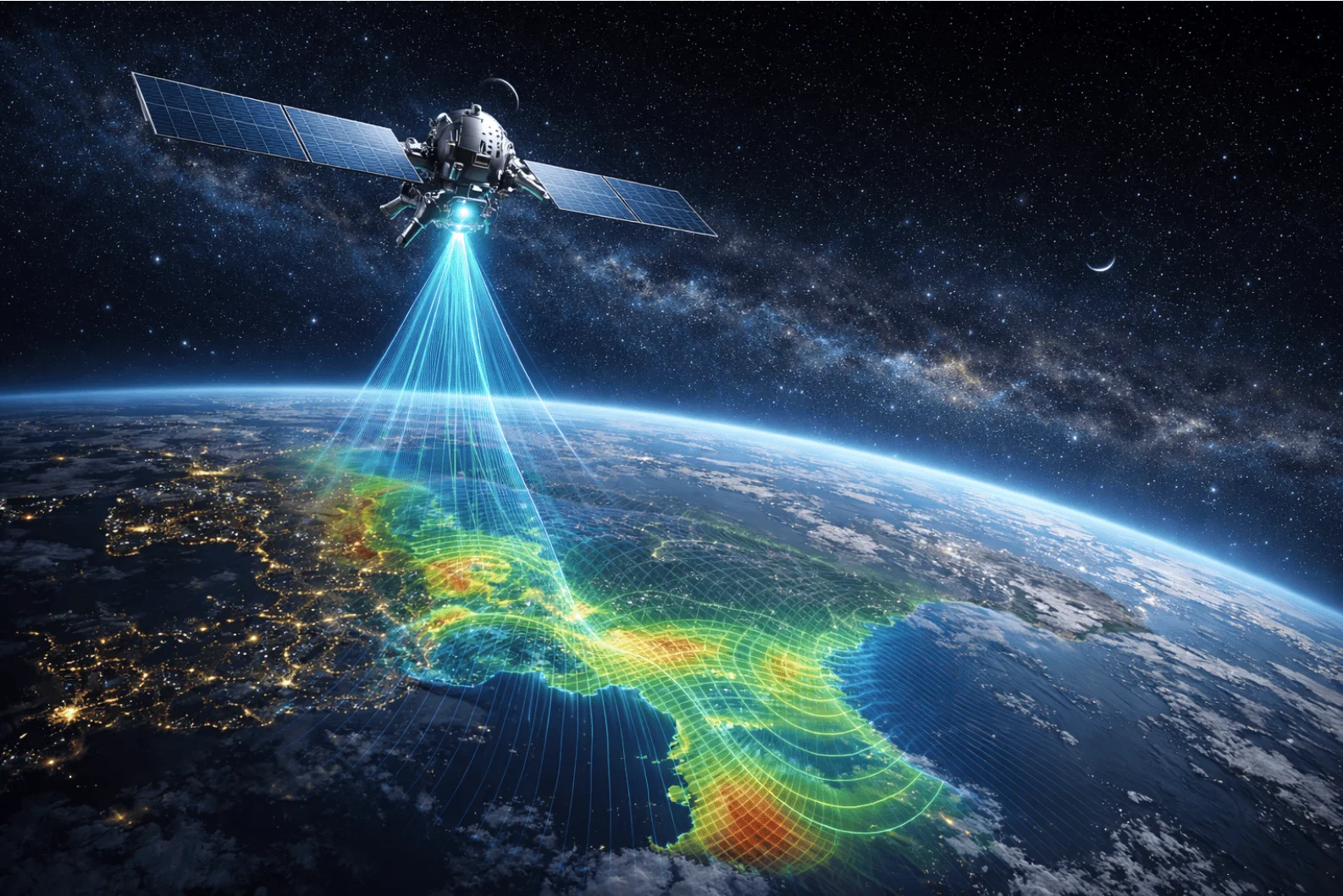
PRESS RELEASE — Infleqtion, a global leader in quantum sensing and quantum computing powered by neutral-atom technology, announced its role as a collaborator on NASA’s Quantum Gravity Gradiometer Pathfinder (QGGPf) mission. Led by NASA’s Jet Propulsion Laboratory (JPL), the mission will fly the first quantum sensor capable of measuring the Earth’s gravitational field and its gradients; signals that are used today to monitor mass dynamics on the planet’s surface. The quantum instrument will be aboard a dedicated satellite in low Earth orbit (LEO). This program follows Infleqtion’s announcement to go public through a merger with Churchill Capital Corp X (NASDAQ: CCCX).
The QGGPf mission is designed to demonstrate quantum sensor technologies that could transform how Earth’s gravity is measured from space. The quantum sensor is designed to monitor mass dynamics across the planet’s surface, including changes in water, ice and land, while operating in microgravity, which enables longer interaction times and correspondingly improved measurement sensitivities. As a technology pathfinder, the mission will help inform the design of future science-grade instruments, representing a major step forward in U.S. leadership in space-based quantum sensing and strategic intelligence.
This project showcases what is possible when NASA and U.S. industry collaborate to push the boundaries of frontier science and technology. QGGPf builds on NASA’s long legacy of space-based gravity mapping and applies Infleqtion’s quantum engineering capabilities to enable a new class of measurement techniques designed specifically for the microgravity environment of space.
A Quantum Leap in Geospatial Precision and Strategic Sensing
With more than $20 million in contracted mission funding to date, the QGGPf mission, with contributions from NASA’s Goddard Space Flight Center, the University of Texas at Austin, Infleqtion, Monarch Quantum, and Jemba9, will fly the first standalone quantum gravity sensor in orbit.
“Quantum sensing opens an entirely new domain for U.S. space leadership,” said Dana Anderson, Chief Science Officer at Infleqtion. “By deploying this technology in orbit, we are demonstrating the feasibility of quantum gravity sensing in space and laying the groundwork for future capabilities that can deliver unprecedented insight into our planet.”
By directly measuring subtle variations in Earth’s gravitational field, the mission aims to demonstrate technologies that will help reduce risk for future quantum gravity instruments. These future systems could enable higher-resolution insights into how underground water, ice, and natural resources shift over time, critical data for understanding planetary health, strengthening national resilience, and supporting long-term economic and security planning. The one-year mission is expected to launch in 2030.
Proven Quantum Heritage
QGGPf builds on work done by JPL and Infleqtion on the Cold Atom Lab (CAL) program aboard the International Space Station, and on NASA’s long heritage mapping Earth’s gravitational field through the GRACE mission series.
Infleqtion’s role on the QGGPf project includes the design, maturation, and integration of the quantum core of the sensor, encompassing its vacuum, laser, and control subsystems. The cold-atom system, based on ultracold rubidium atoms cooled to near absolute zero, is designed to enable direct gravity gradient measurements from space with unprecedented precision.
Accelerating Quantum-to-Space Transition
The mission further marks a significant milestone in America’s growing quantum ecosystem, showcasing how public–private relationships can accelerate the transition from fundamental research to operational capability. Beyond Earth science, quantum sensing in space will enable advances in navigation, resource management, and national security, where precision and autonomy are critical.
NASA and Infleqtion plan to complete the instrument hardware development over the next three years, followed by flight demonstration.
To learn more about how Infleqtion’s quantum technologies are enabling advances in space exploration, navigation, remote sensing, and defense, visit https://infleqtion.com/space-and-frontier/.

Says Japan stood with Pakistan in difficult times particularly during climate-related disasters
President Zardari attends a reception marking the 66th birthday of Emperor Naruhito of Japan. Photo: APP
You don’t have permission to access “http://www.olympics.com/en/milano-cortina-2026/news/winter-olympics-2026-the-kl%C3%A6bo-era-can-anyone-stop-norway-s-cross-country-king-in-the-sprint/” on this server.
Reference…