Author: admin

  • Data centers seeking a home face increasing local opposition

    Data centers seeking a home face increasing local opposition

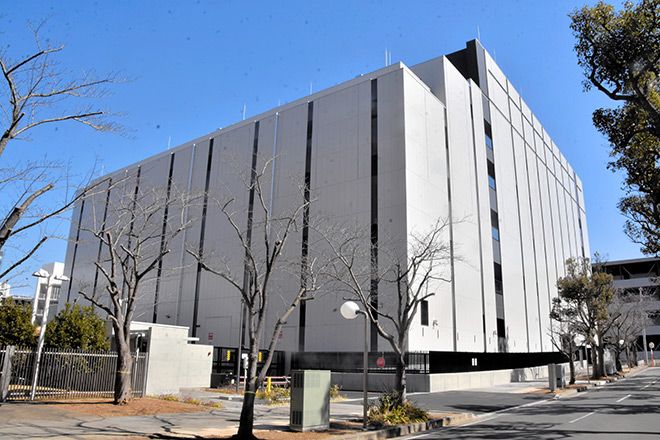
    Plans to place computerized data centers are drawing protests from residents in many parts of Japan, who aren’t happy about their nondescript facades nor see any benefits from hosting them. 

    The demand for data centers (DCs) is growing exponentially amid advances in artificial intelligence, among other factors.

    Data centers proving unpopular among locals seem puzzling, given that these establishments provide perks, such as increased tax revenue, for regional communities.

    Turning to those advantages, Inzai, Chiba Prefecture, outside Tokyo, has been recruiting data center operators so aggressively that the city is known by the nickname “DC Ginza” in tribute to the busy Ginza shopping district in the capital.

    A tour of one of Japan’s leading data center clusters, as well as its surrounding municipalities, provides a look at the enigmatic situation facing the essential facilities in an era of information technology.

    Inzai city saw a spate of data center building projects get under way rapidly during the 2010s. It is currently lined by a total of 30 such establishments operated, for example, by the U.S. Google LLC and an affiliate of Amazon.com Inc.

    The municipality attracted considerable attention among business operators because it is particularly resistant to flooding and other natural disasters, thanks to its stable ground. Likewise helpful was the city’s prime location, easily accessible from central Tokyo and Narita Airport.

    Construction is still progressing in locations across Inzai, with the number of data centers projected to reach 45 or so by 2028.

    TAX INCOME MORE THAN DOUBLES OVER DECADE

    Inzai city has been fully reaping the benefits of accommodating data centers.

    Data centers are subjected to a higher permanent asset tax rate than logistics warehouses and similar facilities, since taxation applies to the servers densely arranged on respective floors, in addition to the land and buildings.

    Servers used at data centers are costly, in particular. They need to be replaced every few years to keep pace with technological advances, helping stabilize tax revenues for host municipalities.

    Proceeds from permanent asset taxes were 16.5 billion yen ($105 million) for Inzai city in fiscal 2024, more than double the 7.9 billion yen recorded 10 years ago.

    Former Inzai Mayor Masanao Itakura, who led the municipal initiative to attract data centers, recounted how their existence has contributed to an improved quality of life for citizens.

    “A lot of public services, inclusive of providing free meals to students at elementary and junior high schools, were made possible owing to the financial support from tax yields from data centers,” Itakura said.

    However, land redevelopment in Inzai is already approaching its limits.

    Home to a plethora of data centers, the Otsuka district in front of Chiba Newtown Chuo Station is fully occupied by existing and planned establishments.

    The DPDC Inzai Park, which sits north of Inzai-Makinohara Station, no longer has any vacancies, and the same is true for the other major data center site, the Matsuzaki industrial complex, in southern Inzai.

    The specialized premises suitable for setting up data centers for industrial purposes in urbanization-restricted zones are now occupied virtually to the fullest.

    MASSIVE POWER USE

    The local energy supply grid is similarly constrained and burdened.

    TEPCO Power Grid Inc. stated that the Inzai area has gone through two rounds of substation enhancement in anticipation of rising electricity demand at data centers there.

    The current energy supply capacity comes to 1.7 gigawatts, enough to power 480,000 average households. This figure is a result of an unprecedented investment in the city with a population of only 110,000.

    The energy distribution still falls short of actual needs.

    TEPCO Power Grid is looking to hike capacity by an additional 0.6 gigawatt by fiscal 2027. Even with this boost, the available power will be insufficient to meet the estimated total consumption of existing and envisioned data centers.

    The utility is considering further investment, yet a public relations representative of TEPCO Power Grid acknowledged that the process “is believed to take some time.”

    An executive of the operator of a data center in Inzai noted that more businesses are currently looking outside the city.

    “Although few locations are better suited than Inzai, adequate sites are scarce, making it unrealistic to plan new construction projects going forward,” said the senior official. “Operators are increasingly turning their attention en masse to regions outside Inzai.”

    LOOK BEYOND INZAI

    Having lost sight of the “most appropriate site” for them, data center firms are setting their eyes on regions around Inzai, provoking a hostile reaction from residents at times.

    A program was unveiled in 2022 toward putting a data center in Nagareyama in Chiba Prefecture.

    Featuring four stories above ground and one basement, the facility was expected to boast an overall floor space of 34,000 square meters on commercial land near the city hall.

    People living in the neighborhood did not roll out the red carpet for the massive building, as data centers offer almost no local jobs and contribute little to the vitality of the regional communities.

    One opponent in Nagareyama thus noted the planned establishment could simply “create an oppressive atmosphere when seen from Nagareyama Station.”

    Another voiced opposition, insisting, “It is easy to imagine that a data center (near a residential area) would be deemed as an unwelcome facility” among citizens.

    The third-party committee set up by Nagareyama city held a mediation meeting, only to find that the developer had dropped the plan in 2024.

    “The data center was not even anticipated” by residents, pointed out a representative from the city planning division of Nagareyama. “They may have thought of the large, sparsely windowed building, with effectively no people coming or going, as unsettling.”

    The previous candidate site for the data center is reportedly undergoing the construction of an apartment and a commercial facility for now.

    Residents of Shiroi, Chiba Prefecture, are alike raising objections, as more than one data center building program has been proposed there. They claim that this type of facility could “cast shadows and infringe on their right to sunlight.”

    Even in Inzai, the leading host city, Mayor Kengo Fujishiro has questioned an endeavor to install a data center in a prime location in front of Chiba Newtown Chuo Station on the Hokuso Line.

    Fujishiro wrote on his social media account: “An establishment appropriate to the community should be developed there–not a data center at this time.”

    Locals have launched a drive to stop the facility as well.

    It is, however, extremely difficult for residents and authorities to pressure data center operators to give up their construction in succession.

    Unlike factories and cemeteries, data centers are free from regulations on construction and installation from the perspective of emissions, noise and negative public health effects.

    With no apparent disadvantages to surrounding areas anticipated, data centers are therefore treated as “offices” in legal terms.

    Keeping this background in mind, a municipal official expressed concerns, saying, “Stopping a building program is impossible as long as the procedures are legal. Resorting to excessive tactics could instead expose us to lawsuits.”


    Continue Reading

  • Can-do attitude fuels bar chain that offers tinned food to drinkers

    Can-do attitude fuels bar chain that offers tinned food to drinkers

    OSAKA—A chain of bars whose cuisine consists of canned food is on the comeback trail and increasingly targeting foreign travelers.

    Clean Brothers Inc.’s first bar, called Mr. Kanso, opened in the Minami-Horie district in Osaka’s Nishi Ward in 2002. It featured the unconventional service of selling canned food to imbibers and allowing them to consume the products in-store.

    Mr. Kanso bars offer about 300 varieties of canned delicacies from around Japan, such as “takoyaki” (octopus dumplings), “dashimaki” (Japanese rolled omelet) and Miyazaki beef.

    The number of franchisees across Japan had reached 44 in 2015.

    But the figure has dropped to 32 in 2025, a consequence of the COVID-19 pandemic.

    “Everyone’s lifestyle changed,” said Michio Kawabata, 37, a board member in charge of public relations. “It seems many people shifted to drinking at home.”

    FAMILY AFFAIR

    The company is named after a project initiated by a group of artists led by Kawabata’s father Yoshihito, 71.

    When Yoshihito was creating modern art pieces, he was also working as a manager for office buildings.

    In 1998, he came up with an idea to clean up communal areas of buildings and lend the empty spaces to artists to display their works.

    Yoshihito joined hands with eight others to found Clean Brothers, hoping to give young artists the exposure they needed.

    A warehouse company asked them to operate a shop at a planned redevelopment site for a limited time. Thus, the first Mr. Kanso bar was born.

    Clean Brothers decided to offer only cans of food at the bar because they have a long shelf life and require almost no cooking.

    Customers would choose their favorite cans from shelves, move to the bar counter, and eat the contents with drinks.

    The strategy proved successful.

    Yoshihito serves as chairman of Clean Brothers, while his first son, Keiji, 42, is president and second son, Takeshi, 40, is managing director. Michio is the third son.

    Clean Brothers’ product information states that it offers “‘omoroi’ (amusing) products born from a flash of inspiration.”

    At least 20 of them are original items, including a can of takoyaki, which is priced at 635 yen ($4). It once sold about 10,000 cans a year.

    Other original brand canned products are “happosai” (stir-fried mixed vegetables), “chanko-nabe” hot pot, paella and even cheesecake.

    CONSTANT ADJUSTMENTS

    Clean Brothers is aware it can’t compete on price with major seafood companies that can distribute mass-produced canned products to retailers.

    The bar company’s product development has largely been a long trial-and-error process.

    In canning, food is sealed in a container and sterilized by heat.

    But the initial problem with takoyaki dumplings was that they melted with sauce while being heated.

    Clean Brothers made adjustments, including thickening the sauce, to accumulate know-how.

    The challenge for dashimaki omelet was how to keep the color, shape and firmness.

    Mr. Kanso is now growing popular among the increasing numbers of inbound tourists for its novelty. The tourists have created a new business opportunity for Clean Brothers.

    The majority of foreign customers want to return home with souvenirs of things they have tasted in Japan, the company said, adding that they prefer “luxury items.”

    Canned beef, tuna, scallops and other high-end products sell well among them, the company said.

    Cans of flavored nuts are also enjoying brisk sales.

    Following takoyaki, wasabi and curry-themed flavors, the company is set to release the “mentaiko” (hot pollock roe) flavor.

    “We will continue performing trial-and-error experiments,” Michio said.

    Currently, Clean Brothers directly manages four Mr. Kanso bars and operates an online shop.

    The company opened a Mr. Kanso in Taiwan in 2019, although it is now closed. The canned food bar also came to Hong Kong in 2021.


    Continue Reading

  • Bulldogs Battle Past Tigers In SEC Thriller

    Bulldogs Battle Past Tigers In SEC Thriller

    By John Frierson
    Staff Writer

    In an SEC opener with a bit of everything, from blocks and dunks galore to 50 combined fouls, plus a buzzer-beating jumper to force overtime by Auburn, the No. 23-ranked Georgia men’s basketball team closed the extra…

    Continue Reading

  • Schellart, W. P. Quantifying the net slab pull force as a driving mechanism for plate tectonics. Geophys. Res. Lett. 31, (2004).

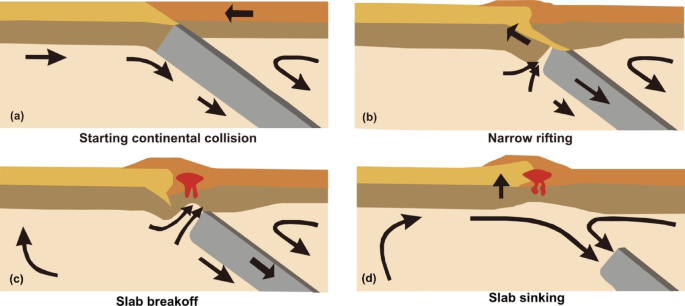
  • Huw Davies, J. & von Blanckenburg, F. Slab breakoff: A model of lithosphere detachment and its test in the magmatism…

Continue Reading

  • South Wales Metro electrification aims to cut Cardiff gig queues

    South Wales Metro electrification aims to cut Cardiff gig queues

    Spending on rail infrastructure is a political hot potato in Wales with Plaid Cymru in particular arguing that Wales is being short changed by as much as £4bn because HS2 was designated an England and Wales project.

    In June the Chancellor Rachel Reeves announced that the Treasury would be providing £300m for five new stations around Cardiff and Newport between 2026 and 2030, and a series of improvement works including measures to improve capacity in north Wales.

    Another £48m would be spent on the South Wales Metro.

    The Welsh government said it is pushing for further electrification of lines around Wales.

    But it doesn’t believe devolving sections of lines such as the Great Western – which runs from stations such as Swansea and Cardiff, into England and to Paddington in London – is the solution.

    “I’m not sure we’re wanting the devolution of it,” said minister for delivery Julie James.

    “Really what we want is the funding formulas to be right and the organisation of it to be right so that we have a loud voice for Wales in what is done in Wales and actually we have a very good working relationship with the UK government about which railway stations will be invested in.

    “I’m not a separatist politician at all. I want to work inside the UK infrastructure. It’s very important to me that the Great Western Railway line goes all the way to London seamlessly, you know, I don’t want it to only work to the border.

    “If you did devolve the whole of rail infrastructure to Wales, you’d want to be really certain that all the money that you needed for that came with, I’d be very concerned whether that would happen as a one off event.”

    Once the tri-mode trains are in operation on the Rhymney Valley line, new trains will be introduced on the Ebbw Vale, Cheltenham and Maesteg routes.

    Continue Reading

  • Houston 67-60 Cincinnati (Jan 3, 2026) Game Recap – ESPN

    1. Houston 67-60 Cincinnati (Jan 3, 2026) Game Recap  ESPN
    2. Bearcats Set to Face Top-10 Houston in Exciting Big 12 Opener This Weekend  Qoo10.co.id
    3. Big 12 Conference Play Preview For Houston Basketball  CBB Review
    4. Flemings, No. 8 Houston Cougars to…

    Continue Reading

  • Whittingham Announces Coaching Staff for Defense, Special Teams

    Whittingham Announces Coaching Staff for Defense, Special Teams

    • Jay Hill Named U-M’s Lester Family Defensive Coordinator (Jan. 2)

    ANN ARBOR, Mich. — University of Michigan J. Ira and Nicki Harris Family Head Football Coach Kyle Whittingham announced Saturday (Jan. 3) the hiring of the defensive coaching…

    Continue Reading

  • Auburn rallies late, falls in OT at No. 23 Georgia in SEC opener – Auburn Tigers

    Auburn rallies late, falls in OT at No. 23 Georgia in SEC opener – Auburn Tigers

    ATHENS, Ga. – If the rest of the SEC season is anything like Auburn’s conference opener, Tiger fans are in for a wild ride.

    Auburn scored four points in the final second of regulation to force overtime before falling to No. 23 Georgia 104-100…

    Continue Reading

  • ‘Lost’ star Evangeline Lilly reveals brain damage after beach fall

    ‘Lost’ star Evangeline Lilly reveals brain damage after beach fall

    LONDON, ENGLAND – FEBRUARY 16: Evangeline Lilly attends the UK Gala Screening of Marvel’s Ant-Man and the Wasp: Quantumania, at BFI IMAX Waterloo on February 16, 2023 in London, England. (Gareth Cattermole/Getty Images for Disney)

    Continue Reading