7 January 2026
Agriculture Victoria introduced a new procedure on 5 January to provide a new option for interstate trading of produce from protected cropping systems: Pest Free Production Site for Tomato Potato Psyllid…

7 January 2026
Agriculture Victoria introduced a new procedure on 5 January to provide a new option for interstate trading of produce from protected cropping systems: Pest Free Production Site for Tomato Potato Psyllid…
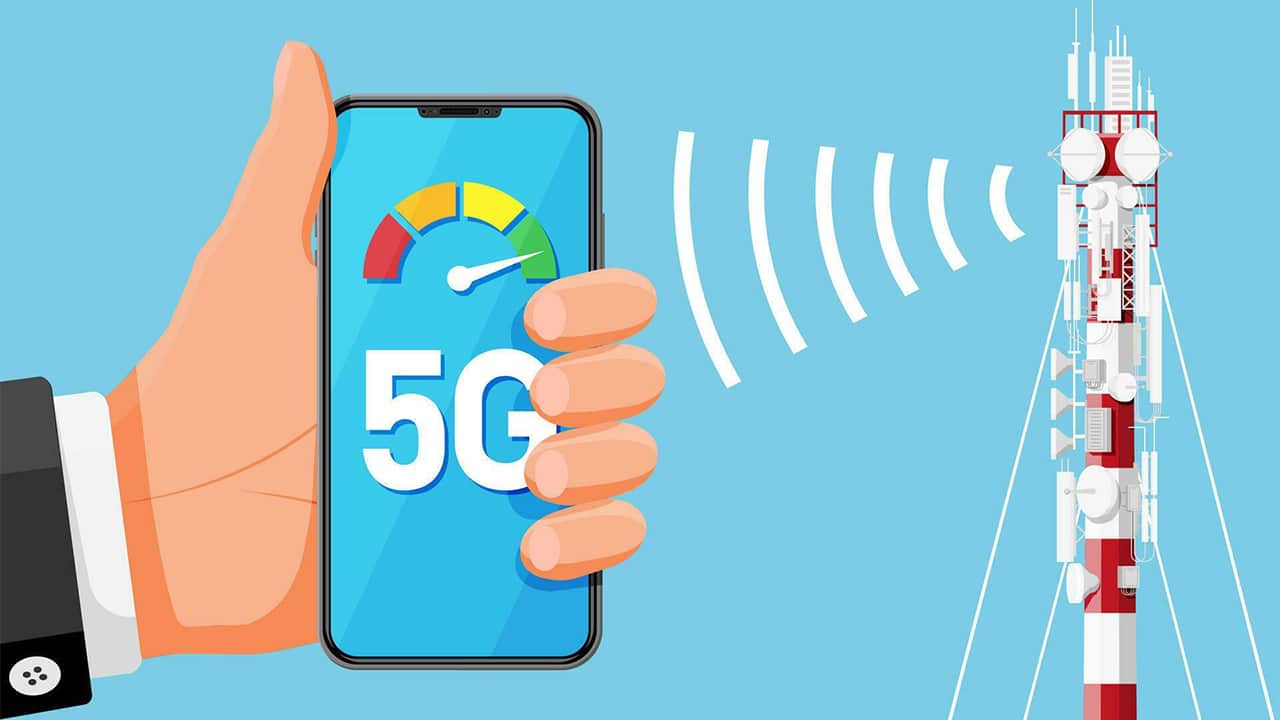
The Telecom Operators Association of Pakistan (TOA) has warned the government against pushing ahead with a rapid rollout of next-generation mobile networks without first addressing the high cost of compatible mobile devices.
They argue that a premature 5G rollout could drain scarce foreign exchange and divert capital away from upgrading existing infrastructure, even though millions of mobile users remain offline more than a decade after the country’s first 4G auction. Industry leaders say that experience should serve as a warning as authorities prepare the 5G sale.
Aamir Ibrahim, chairperson of the Telecom Operators Association of Pakistan, urged policymakers to prioritize consumer affordability and real‑world usability before accelerating rollout timelines. Pakistan’s digital future, he said, will depend less on how quickly 5G is launched and more on whether ordinary citizens can afford compatible devices and see enough value in staying connected. “Technology introduction by itself does not transform societies. Using that technology does,” he said.
While public debate on 5G has centred on global competitiveness and future readiness, Ibrahim said it has largely ignored a basic question: who will actually use 5G in Pakistan?
Industry estimates indicate that only about 2% of mobile users currently own a 5G‑enabled handset. Entry‑level 5G smartphones cost about Rs. 90,000, while high‑end iPhone models can reach Rs. 700,000. With most subscribers on prepaid plans and average incomes low, Ibrahim said device prices alone shut most Pakistanis out of any meaningful 5G experience.
Local manufacturing trends underscore the concern. Between 2019 and late 2025, Pakistan assembled roughly 152 million mobile devices domestically, with nearly 60% of them basic 2G feature phones. Even within smartphones, output has been concentrated in low‑cost 4G models, with virtually no 5G handsets made locally.
Ibrahim noted that adding 5G capability significantly raises handset production costs because of more advanced modems and radio components. In a price‑sensitive market, even modest cost increases can push phones beyond the reach of mass‑market buyers. Retooling assembly lines to support 5G typically takes several months, he added, limiting how quickly local manufacturers can respond even if policy signals improve.
Financing constraints add another hurdle. Unlike developed markets, where operators bundle devices with service plans and offer instalment options, Pakistan lacks a mature consumer credit system. Customers generally have to pay the full price upfront, putting high‑end smartphones beyond many households.
Ibrahim warned that spectrum policy focused only on rollout deadlines and coverage obligations, without addressing these demand‑side barriers, risks leaving operators with underused infrastructure. “An expensive and empty 5G network would not be a marginal shortcoming. It would be a national failure,” he said.
He also pointed to a broader “usability gap” in Pakistan’s digital landscape. Even where networks are available, millions remain offline because of limited digital skills, a shortage of relevant local content, and low trust in digital services. More than ten years after the first 4G auction, about one in four mobile customers still does not use mobile broadband.
Without fixing these structural issues, Ibrahim cautioned, 5G could widen rather than narrow the digital divide, serving a small urban elite while leaving most of the population behind. He called on regulators and the government to pursue a more balanced strategy that includes lowering taxes on devices, enabling handset financing schemes and aligning spectrum policy with consumer realities.
Ultimately, he argued, 5G’s success in Pakistan should be judged not by auction revenues or coverage maps but by how many people can participate meaningfully in the digital economy. “Pakistan does not need to win a race to launch 5G defined elsewhere,” Ibrahim said. “It needs a digital policy that prioritizes affordability, usability and long‑term inclusion over speed and symbolism.”

Iranian security forces fired tear gas to disperse demonstrators at Tehran’s Grand Bazaar on Tuesday, as a rights group said more than two dozen people have been killed in a…
Pockets of protests erupting across Iran over the past week have intensified pressure on a dysfunctional government struggling to manage a spiraling economic crisis.
But a dramatic US…

Henri Rousseau was extravagantly admired and lavishly condescended to, often by the same people at the same time. The poet Apollinaire, among his most enthusiastic champions, bundled each word of praise with a put-down, conceding that “he was…


2025 was a transformative year for the World Economic Forum and its Global Alliance for Women’s Health. One key outcome was the Women’s Health Impact Tracking platform (WHIT), which was built to answer a simple, high-stakes question: are we making real progress in closing the women’s health gap, and where should action go next?
The blueprint made the case that closing the women’s health gap is both a moral imperative and a growth strategy. WHIT helps translate that case into measurable progress by tracking key indicators across conditions and countries.
Incubated at the Forum and shaped through consultations with 70-plus experts, WHIT will benefit from expert stewardship at NUS Medicine to scale its reach, develop metrics for more conditions and more countries, and strengthen its long-term impact.
An earlier report from the Forum and McKinsey Health Institute, estimated that closing the women’s health gap could boost the global economy by at least $1 trillion a year by 2040, while improving health and quality of life for millions.
Building on that work, the blueprint examined nine conditions that together drive about one-third of the women’s health gap: breast cancer, cervical cancer, menopause, endometriosis, premenstrual syndrome (PMS), post-partum haemorrhage, maternal hypertensive disorder, migraine and ischaemic heart disease.
Closing the gap for these nine conditions alone could add approximately 27 million disability-adjusted life years (DALYs) annually, equivalent to 2.5 additional healthy days per woman per year and deliver $400 billion in annual global GDP by 2040, the white paper added.
Yet the data points to a core challenge: women’s health priorities remain underfunded and under-measured relative to burden.
For example, PMS, menopause, maternal health conditions, cervical cancer and endometriosis make up 14% of the women’s health burden but receive less than 1% of cumulative research funding (2019–2023) for the 64 conditions driving the women’s health gap.
Clinical research gaps deepen the problem. Only 10% of clinical trials for key conditions impacting the health of women report sex-specific data. And while 54% of the women’s health burden is in low- and middle-income countries, only 23% of clinical trials for these nine conditions focus on these regions.
These insights point to the same conclusion: closing the gap requires solutions — and it requires the ability to consistently track whether solutions are working, reaching women, and being measured properly.
WHIT was created to translate the Blueprint to Close the Women’s Health Gap agenda into practice by providing indicators that track progress on closing the women’s health gap globally, across conditions and countries.
At its core, WHIT tracks progress across three drivers of the gap:
This makes WHIT deliberately action-oriented: it helps decision-makers focus on what can be improved, not only what is broken.
Access to clearer, actionable data
WHIT translates complex datasets into accessible, synthesised insights, making women’s health data easier to understand, compare and use. It provides a unified evidence base to inform decisions across policy-making, research, advocacy and funding.
Deeper insight into conditions that matter most
As a first-of-a-kind metrics dashboard focused on conditions that differently affect women, WHIT enables more targeted action on care delivery, effectiveness of medical treatments for women, and data availability. It highlights where the greatest needs and opportunities lie.
Smarter investments through transparency and alignment
By revealing misalignments between disease burden and resourcing, WHIT helps direct funding toward high-impact conditions and geographies. It complements and amplifies existing datasets, including the Institute for Health Metrics and Evaluation (IHME) Global Burden of Disease and World Health Organization (WHO) mortality data, enabling governments, businesses and researchers to triangulate insights and monitor progress at global and national levels.
As WHIT moves to NUS Medicine, its next phase will focus on expanding condition coverage beyond the initial nine conditions, improving the quality of data, strengthening participation across countries – particularly in low- and middle-income settings – and deepening use cases for stakeholders across disciplines.
The transition supports three practical priorities:
From pilot to scale
WHIT launched to measure progress on an initial set of conditions and countries. With NUS Medicine as its new host, the platform will expand to more conditions and more geographies, building on an architecture designed for scaling.
Science that can meet policy and investment
WHIT’s focus on efficacy, care delivery and data helps ground decisions in what works for women, what reaches women, and what needs to be measured to accelerate progress.
Transparency and comparability
Stewardship by NUS Medicine helps ensure open access, robust governance and greater visibility among policy-makers, researchers and practitioners, creating the ecosystem for collaborations needed to sustain progress.
The goal is to support ministries of health and partners in adopting shared indicators and improving routine reporting, enabling WHIT to become a long-term, scalable tool that drives accountability and accelerates progress worldwide for women’s health.

Koray Kavukcuoglu is the chief technology officer of DeepMind and Google’s chief AI architect.
He has been leading the work to develop Gemini 3, the Big Tech company’s latest AI large language model (LLM), which was released in November. One…

Skincare brand Topicals announced on Wednesday it has closed a round of funding with participation from the WNBA star Angel Reese and the Nigerian singer Rema, as well as other figures from the entertainment and sports industries. Terms of the…