Harbor porpoises don’t have the luxury of long breaks. They’re small, burn energy fast, and need to eat almost constantly just to keep up with their metabolism.
So when something interferes with their feeding time, it’s not a minor…
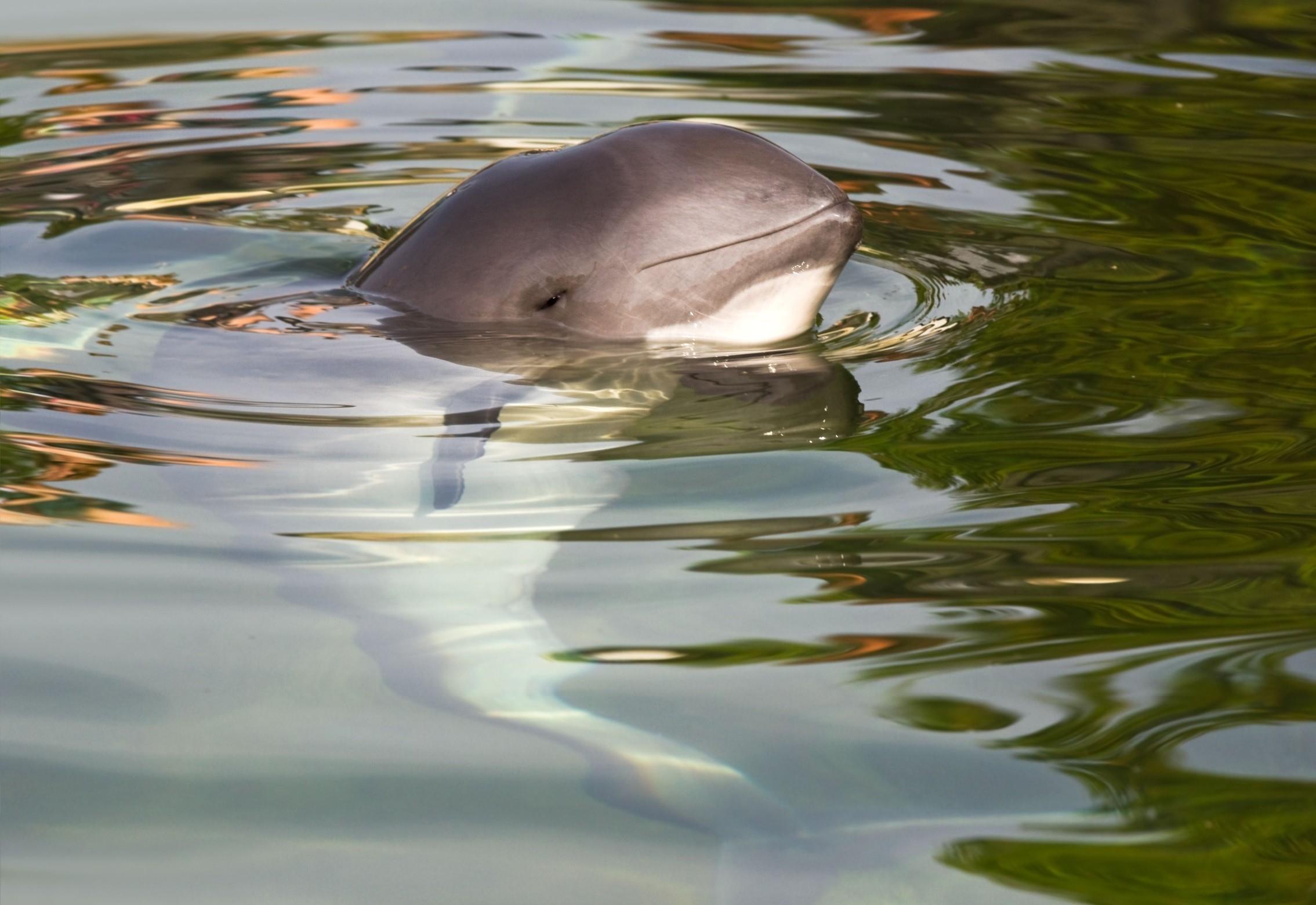
Harbor porpoises don’t have the luxury of long breaks. They’re small, burn energy fast, and need to eat almost constantly just to keep up with their metabolism.
So when something interferes with their feeding time, it’s not a minor…

Books
Culture
Ginny Tapley Takemori has been awarded the Great Britain Sasakawa Foundation Translation Prize for her translation of…
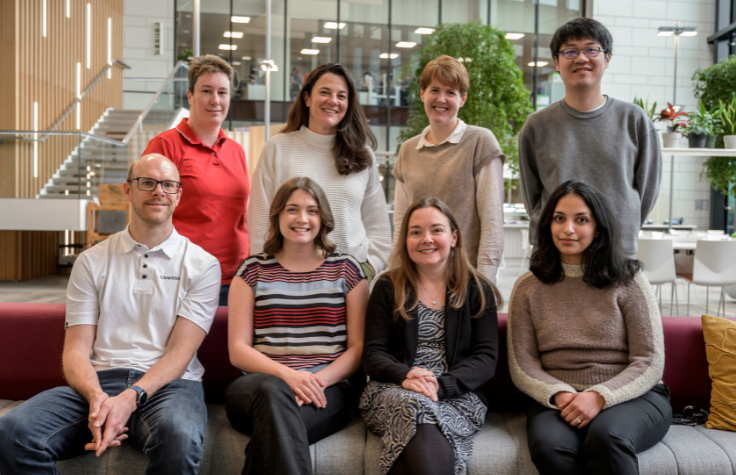
At 16, Fraser didn’t know what she wanted to do with her life. But she found an opportunity to work in a lab at a local university near her home in Bristol, England. There, she assisted with simple tasks like plating E. coli onto agar plates and preparing buffers. “I was really inspired to work in that environment because it’s cool, right?” she says. “I just really enjoyed technology, and science, and discovering new things.”
That early exposure led her down the path to obtain a PhD in biochemistry. Academic research, however, felt a bit lonely. She preferred teamwork, and decided biotechnology might be a better fit. “It was actually quite hard to find somebody who would take you on as someone fresh out of your studies,” Fraser says. Fortunately, a scientist at Solexa—a DNA sequencing company that would later be acquired by Illumina in 2007—took a chance and hired her as an entry-level PhD scientist in the library prep group.
After studying in the high-end laboratories of Imperial College London, moving into Solexa’s simple office space—housed in a loading bay for delivery trucks—was a shock. In the years following Illumina’s acquisition, Fraser saw incredible transformation: a surge in colleagues, new leadership, and expanded resources to push sequencing innovation further than ever before.

She didn’t know that her first full-time job would turn into two decades at Illumina—where she is now an associate director in assay R&D and a force behind launching Illumina’s cutting-edge library prep solutions. Fraser is particularly excited about the upcoming commercial release of constellation, the Illumina mapped read sequencing technology that eliminates the entire up-front library preparation workflow for whole human genome sequencing.
Constellation performs “tagmentation” on the flow cell surface—a process of binding, and fragmentation—which dramatically reduces hands-on prep time, lowers the potential to introduce errors, and allows reconstruction of longer genomic sequences through use of a brand new bioinformatic pipeline. It simplifies whole-genome sequencing, delivering Illumina’s most complete genome—and Fraser has been one of the scientific leaders bringing this innovation to life.
“In order to get DNA into a state where it can go onto the sequencer, you currently have to do a library prep step, and that can be complicated. It requires expertise,” she explains. With constellation, the sequencer does all the hard work, and users can simply place DNA directly on the instrument—no library prep required.
Because library prep occurs directly on the flow cell surface, DNA fragments physically close to one another on the original strand tend to remain close together on the flow cell. By applying advanced bioinformatics approaches, scientists can extract this “proximity” information to disentangle complex “dark” regions of the genome.

Recognizing women and girls in science
The constellation team at Illumina includes over 100 scientists globally, each leveraging their unique expertise to develop the cutting-edge solution.
February 11 is International Day of Women and Girls in Science, an annual event declared by the United Nations General Assembly in 2015. The 2026 theme centers around closing the gender gap in STEM. According to a 2024 report from UNESCO, retention of women in STEM is strongly influenced by institutional and workplace conditions.
At this point in her career, Fraser doesn’t see gender as a defining part of her identity as a scientist or leader. “I work with a lot of amazing women scientists and men scientists,” she says. “And maybe, I’m lucky, right?” For Fraser, the norm is a mixed-gender team that treats each other with respect. But she sees how biases may deter younger girls from pursuing science.
Battling bias for the younger generations
A few years ago, Fraser and Vicki Thompson, a staff scientist on her team, were invited to present at a local primary school’s “Genomics 101 in the Classroom” event. Dressed in their lab coats, Fraser and Thomspon observed the one hundred young students as they filed into the assembly. “In the front row, one child said to another with absolute astonishment: ‘Oh my gosh, it’s two women,’” she recalls. “And we were shocked that they were expecting men.”
For that student, Fraser and Thomson challenged some previously held assumptions about who can be a scientist. Representation still clearly matters. Giving women scientists opportunities to present their work can be eye-opening for young girls who may have never imagined themselves in a STEM career.
“Science is for everybody.” Fraser says. “It doesn’t matter who you are, where you’re from—you just have to have a passion to go after it.”
From her first agar plates to the launch of constellation, Fraser’s commitment to simplifying sequencing not only fuels this launch—it helps open doors for the next generation of scientists.
Learn how mapped read technology works with Louise and discover the power of constellation.

Britney Spears has sold the rights to her music catalog, which includes hits such as Toxic, Baby One More Time and Gimme More, according to media reports.
The music publisher Primary Wave is said to have purchased the pop star’s music rights on…

“Sure, the points are important but most importantly, I have to have a performance that I won’t regret,” Kagiyama told Olympics.com. “I am going all out from start to finish. I’m going to add a quad…

Apple is planning to launch new MacBook Pro models as soon as early March, but if you can, this is one generation you should skip because there’s something much better in the works.
We’re waiting on 14-inch and 16-inch MacBook Pro models…

Quetta, Feb 10 (SocialNews.XYZ) The second phase of ‘Operation Herof’ launched by the Baloch Liberation Army (BLA) showcased…
-With images-
Scientists have uncovered new DNA-binding proteins from some of the most extreme environments on Earth and shown that they can improve rapid medical tests for infectious diseases.
The international research team, led by…